

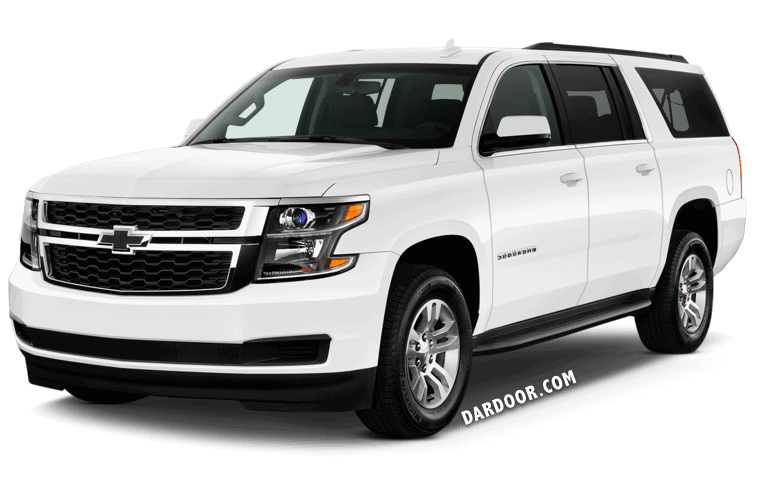
Get the OEM workshop repair resources with the wiring diagram for your 2014-2019 Chevrolet Suburban Repair Manual ↗ in one convenient, downloadable PDF.
2014-2019 Chevrolet Suburban Repair Manual
$24.90
Why Choose This Manual?
- Authorized Procedures: The same guide used by official Chevrolet technicians.
- DIY Friendly: Straightforward explanations, perfect for owners and professional mechanics alike.
- Cost-Effective: Save on service fees by handling maintenance yourself.
- Trusted Reference: Keep your Suburban in prime condition with factory-standard methods.
Ideal For
- Chevrolet Suburban Owners (2014-2019) wanting dealership-quality repair instructions.
- Professional Technicians needing official documentation for accurate diagnoses and service.
- Enthusiasts & DIYers seeking thorough, step-by-step guidance with high-quality illustrations.
This manual provides detailed instructions for maintenance, disassembly, reassembly, component inspection, adjustment, and diagnostics—intended for use by experienced mechanics. Proper application of this guide will help ensure thorough repairs and maintain your vehicle in peak condition.
Important Note: Before purchasing this manual, please check whether your vehicle is subject to any active service recalls ↗, as authorized dealerships may perform necessary repairs free of charge. When replacing parts, always use genuine OEM components ↗ to ensure safety, reliability, and long-term performance.
Table of Contents: 2014-2019 Chevrolet Suburban Repair Manual
Sample Pages
CAUTION ↗: This OEM service and workshop repair manual provides detailed procedures for maintenance, disassembly, reassembly, inspection, adjustment, and diagnostics. It is intended as a comprehensive guide for experienced mechanics. To ensure thorough and accurate repairs that maintain your vehicle’s optimal performance, please read and follow this manual carefully. When replacing parts during any repair work, always use genuine Chevrolet parts to ensure quality, safety, and reliability.
🚙 2014–2019 Chevrolet Suburban – Full Guide (Specs, Issues, Recalls, DTCs & More)
The 2014-2019 Chevrolet Suburban is a full-size SUV that is well-suited for families, long road trips, and towing. Known for its spacious interior, robust powertrain, and excellent towing capacity, it is a popular choice for those needing both utility and comfort. However, like any vehicle, it has some commonly reported issues. Here’s a comprehensive overview of the 2014-2019 Chevrolet Suburban.
⚙️ Technical Specifications & Performance
- Engines: 5.3L EcoTec3 V8 (355 hp), 6.2L EcoTec3 V8 (420 hp, LTZ/Premier)
- Transmissions: 6-speed auto (2014–2018), 10-speed auto (2019 6.2L)
- Drivetrain: RWD or 4WD with low-range transfer case
- Towing Capacity: 8,000–8,300 lbs (properly equipped)
- Fuel Economy: ~15–23 mpg depending on engine and drivetrain
- Seating: Up to 9 passengers (varies by trim)
Key Features of the 2014-2019 Chevrolet Suburban
Engine Options
- 5.3L V8: 355 horsepower and 383 lb-ft of torque.
- 6.2L V8 (Available on higher trims): 420 horsepower and 460 lb-ft of torque.
Transmission
- 6-speed automatic (2014-2018).
- 8-speed automatic (introduced for 2015 and offered on some trims).
- 10-speed automatic (introduced in 2018 for 6.2L engine).
Fuel Economy
- 5.3L V8: ~15-16 mpg city / 22-23 mpg highway.
- 6.2L V8: ~14 mpg city / 20 mpg highway.
Towing Capacity
- Up to 8,300 pounds when properly equipped.
Trims
- LS, LT, Premier (2017+), and special editions like the RST (2018+).
Notable Features
- Available four-wheel drive (4WD) for off-road and all-weather capability.
- Spacious interior with seating for up to nine passengers.
- Advanced safety features: lane keep assist, forward collision alert, blind-spot monitoring, and rear cross-traffic alert.
- Optional Magnetic Ride Control for improved handling and ride comfort.
- Large cargo space: Up to 121.7 cubic feet with second- and third-row seats folded.
🚙 2014–2019 Chevrolet Suburban – Mechanic & Electrical Issues, Recalls
The 2014–2019 Chevrolet Suburban is a full-size SUV built on GM’s K2XX platform, offering three rows of seating, V8 power, and exceptional towing capacity. Known for comfort, size, and utility, the Suburban is a staple for families and fleets. However, it also carries some mechanical and electrical concerns that buyers should know.
🔧 Top 10 Mechanical Issues (Cause & Repair)
- Excessive oil consumption (5.3L V8)
Cause: AFM (Active Fuel Management) lifter/oil control issues.
Repair: Replace valve cover baffles, update PCV, or delete AFM system. - Transmission hard shifts (6L80/90)
Cause: Worn torque converter clutch (TCC) or degraded ATF.
Repair: Flush/replace ATF with Dexron VI; rebuild or replace torque converter. - Premature brake wear
Cause: Heavy curb weight causes rotor warping under heat.
Repair: Replace with heavy-duty rotors/pads; torque wheels properly. - Rear differential noise
Cause: Pinion bearing wear.
Repair: Rebuild differential with new bearings. - Cooling system leaks
Cause: Plastic radiator tank cracks.
Repair: Replace radiator with updated unit; flush coolant. - Suspension clunking
Cause: Worn stabilizer bar bushings and end links.
Repair: Replace sway bar links and bushings. - Fuel pump module failure
Cause: Overheating pump from low tank levels.
Repair: Replace pump module; keep fuel above 1/4 tank. - Engine misfires
Cause: Carbon buildup on intake valves (direct injection engines).
Repair: Walnut blasting or induction cleaning. - Exhaust manifold bolt breakage
Cause: Heat cycling weakens OEM bolts.
Repair: Drill/extract broken bolts; replace with high-strength bolts. - Steering vibration
Cause: EPS column or worn intermediate shaft.
Repair: Replace intermediate shaft or recalibrate EPS.
💡 Top 10 Electrical Issues (Cause & Repair)
- AC blower intermittent
Cause: Failing blower motor resistor.
Repair: Replace resistor pack and wiring harness. - Infotainment screen blackout
Cause: Internal Mylink module fault.
Repair: Update firmware or replace HMI module. - Battery drain overnight
Cause: Radio or OnStar module not sleeping.
Repair: Diagnose parasitic draw; replace/update faulty module. - Power liftgate failure
Cause: Weak liftgate struts or control module fault.
Repair: Replace struts; recalibrate/replace module. - Instrument cluster failures
Cause: Stepper motor malfunction.
Repair: Replace cluster or stepper motors. - Door lock actuator failure
Cause: Motor gear wear.
Repair: Replace affected actuator. - Trailer wiring faults
Cause: Corrosion in trailer connector.
Repair: Clean/replace connector; reseal. - TPMS sensor faults
Cause: Dead internal batteries.
Repair: Replace TPMS sensors; relearn system. - Airbag light on
Cause: Seat belt pretensioner wiring issue.
Repair: Replace harness connector or pretensioner. - HUD (Head-Up Display) failure (Premier models)
Cause: Internal projector motor fault.
Repair: Replace HUD assembly.
Common Issues Reported By Owners
1. Transmission Problems
- Issue: The 6-speed and 8-speed automatic transmissions in some Suburbans have been reported to experience rough shifting, slipping, or hesitation.
- Symptoms: Hard or jerky shifts, delayed gear engagement, or shuddering during acceleration.
- Solution: Regularly replace transmission fluid and ensure software updates are applied. Persistent issues may require a torque converter replacement or transmission repair.
2. Air Conditioning (AC) System Failures
- Issue: AC condenser failure is a common problem, leading to the loss of cooling function.
- Symptoms: Warm air blowing from vents, hissing noises, or visible refrigerant leaks.
- Solution: Replace the AC condenser with an updated or high-quality part. Regular AC system maintenance can help prevent issues.
3. Excessive Oil Consumption
- Issue: The 5.3L V8 engine is prone to excessive oil consumption, often due to issues with the Active Fuel Management (AFM) system.
- Symptoms: Low oil levels between oil changes, oil warning light, or engine misfires.
- Solution: Monitor oil levels regularly and consider disabling the AFM system using an aftermarket tuner. GM issued technical service bulletins for this issue, so check with a dealer for potential fixes.
4. Magnetic Ride Control Suspension Issues (High Trims)
- Issue: Models equipped with Magnetic Ride Control (e.g., LTZ or Premier trims) may experience suspension problems, including leaks or component failure.
- Symptoms: Harsh ride, clunking noises, or suspension warning lights.
- Solution: Inspect and replace faulty shock absorbers or struts. While expensive, aftermarket solutions may offer cost-effective replacements.
5. Steering Issues
- Issue: Some owners report loss of power steering at low speeds or while turning, often related to electrical issues in the power steering system.
- Symptoms: Heavy steering effort or intermittent loss of power assist.
- Solution: Inspect the power steering system for faults, and replace any defective components. GM issued a recall for some models, so check with a dealership for coverage.
6. Brake Pedal Feel and Performance
- Issue: Suburban models may experience a hard brake pedal feel due to a failing vacuum pump or booster.
- Symptoms: Increased effort required to stop the vehicle, longer stopping distances, or a warning light on the dashboard.
- Solution: Replace the vacuum pump or brake booster. GM issued a recall to address this issue, so verify if your vehicle is eligible for free repairs.
7. Electrical System Problems
- Issue: Electrical glitches, such as malfunctioning power windows, infotainment system issues, or intermittent warning lights, have been reported.
- Symptoms: Random warning messages, unresponsive infotainment screen, or non-functioning power accessories.
- Solution: Inspect the battery, wiring, and fuses for faults. Ensure all software updates are applied to resolve glitches.
8. Paint and Rust Issues
- Issue: Some owners report peeling paint or rust development on the body and undercarriage, particularly in areas exposed to road salt.
- Symptoms: Visible paint peeling, rust spots, or corrosion on the frame.
- Solution: Address rust early by sanding and applying rustproofing. Regular washing, especially of the undercarriage, can help prevent rust in salt-prone regions.
🛠️ Maintenance Schedule
| Interval ⏱️ | Service Task 🔧 |
|---|---|
| Every 7,500 miles | Engine oil & filter replacement |
| Every 15,000 miles | Tire rotation, brake inspection |
| Every 30,000 miles | Air filter, cabin filter replacement |
| Every 45,000 miles | Transmission fluid & filter service |
| Every 60,000 miles | Coolant flush, differential fluid replacement |
| Every 100,000 miles | Spark plugs, serpentine belt replacement |
Maintenance Tips for the 2014-2019 Chevrolet Suburban
- Oil Changes: Use high-quality synthetic oil and change it every 5,000–7,500 miles to protect the engine.
- Transmission Service: Replace transmission fluid every 45,000–60,000 miles to ensure smooth operation and prevent premature wear.
- Brake System: Inspect brake pads, rotors, and the vacuum pump regularly, particularly if you notice a hard brake pedal.
- Suspension Care: Check for wear in the suspension components, especially if equipped with Magnetic Ride Control.
- Cooling System: Flush and replace the coolant every 5 years or 100,000 miles to avoid overheating.
- Tire Maintenance: Rotate tires every 6,000–8,000 miles and ensure proper alignment to prevent uneven wear.
- Battery Health: Test the battery annually and clean terminals to prevent electrical issues.
🚘 Top Competitors
⚠️ Recalls, Advisories & Safety Alerts
- Brake pedal pivot nut recall: May loosen, affecting braking.
- Front passenger airbag inflator (Takata): Potential rupture under deployment.
- Steering assist loss: EPS failure leading to sudden heavy steering.
- Fuel pump module recall: Risk of engine stalling due to faulty module.
More details can be verified with Consumer Reports ↗.
Diagnostic Trouble Codes (DTC)
ECM Codes
| P0300 | Random Misfire Detected |
| P0171 | System Too Lean |
| P0442 | EVAP Small Leak |
| P0106 | MAP Sensor Range/Performance |
| P0113 | IAT Sensor High |
| P0420 | Catalyst Efficiency Below Threshold |
| P0507 | Idle Control System RPM High |
| P219A | Fuel Trim Cylinder Imbalance |
| P0089 | Fuel Pressure Regulator Performance |
| P2097 | Post Catalyst Fuel Trim System Rich |
TCM Codes
| P0700 | Transmission Control System Malfunction |
| P0717 | Input Speed Sensor No Signal |
| P0730 | Incorrect Gear Ratio |
| P0741 | TCC Stuck Off |
| P0796 | Pressure Control Solenoid C |
| P0776 | Pressure Control Solenoid B |
| P0841 | Transmission Fluid Pressure Sensor |
| P2714 | Pressure Control Solenoid D |
| P2763 | Turbine Speed Sensor High |
| P189C | Gear Selector Implausible |
ABS / ESC Codes
| C0035 | LF Wheel Speed Sensor |
| C0040 | RF Wheel Speed Sensor |
| C0050 | RR Wheel Speed Sensor |
| C0110 | ABS Pump Motor Circuit |
| C0196 | Yaw Rate Sensor |
| C0186 | Lateral Acceleration Sensor |
| C0710 | Steering Angle Sensor |
| C0899 | Low Voltage Detected |
| C121C | Torque Request Denied |
| C1403 | Brake Booster Pressure Sensor |
SRS Airbag Codes
| B0012 | Driver Frontal Deployment Loop High |
| B0013 | Driver Frontal Deployment Loop Open |
| B0022 | Passenger Deployment Loop High |
| B0023 | Passenger Deployment Loop Open |
| B0051 | OCS System Fault |
| B0079 | Right Side Impact Sensor |
| B0081 | Left Side Impact Sensor |
| B0100 | SDM Internal Fault |
| B1001 | SDM Configuration Error |
| B1325 | Control Module Low Voltage |
Body Control / CAN Codes
| U0100 | Lost Communication with ECM |
| U0140 | Lost Communication with BCM |
| U0121 | Lost Communication with ABS |
| U0155 | Lost Communication with Cluster |
| U0422 | Invalid Data from BCM |
| U0184 | Lost Communication with Radio |
| U0199 | Lost Communication with Door Module |
| U110E | Lost Communication with Power Steering |
| U113E | Lost Communication with Park Assist |
| U1123 | Lost Communication with TPMS |
| Brands | |
|---|---|
| File Format | |
| File Language | English |
| File Size | 301.6 MB |
| Page Count | 13,754 |
| Wiring Diagram Included | YES |
| Delivery Method | Instant Fast Download Speed (The download link will appear on the checkout page after payment is complete) |
| Permissions | All Permissions, No Password Protected |
| Searchable & Printable | YES |
Related products
-

2009-2010 Chevrolet Traverse Repair Manual
$16.90 Add to cart -
2006-2017 Chevrolet Captiva Repair Manual
$19.90 Add to cart -

2012-2017 Holden Colorado Repair Manual
$16.90 Add to cart -
2014-2017 Chevrolet Corvette Repair Manual C7
$24.90 Add to cart -

2010-2013 Chevrolet Camaro Repair Manual
$24.90 Add to cart -
2007-2009 Chevrolet Silverado 1500 Repair Manual
$19.90 Add to cart -

2007-2013 Cadillac Escalade Repair Manual
$19.90 Add to cart -
2017 Chevrolet Colorado Wiring Diagram
$16.90 Add to cart