Geely EX5: The value proposition reshaping the compact electric SUV market
The most aggressively priced compact electric SUVs globally

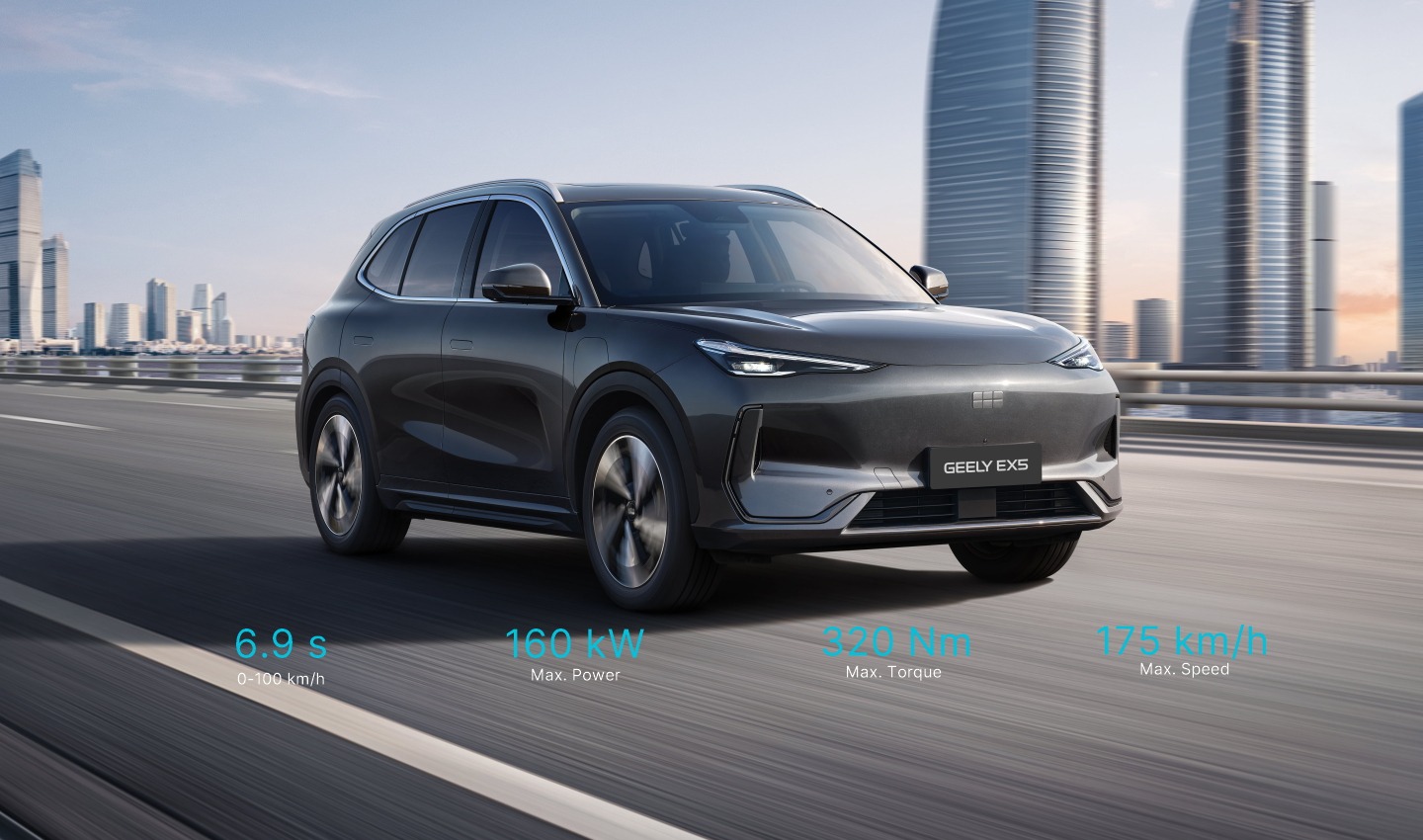
The Geely EX5 emerges as one of the most aggressively priced compact electric SUVs globally, offering premium features—including massaging seats, head-up display, and 160kW fast charging—at prices 20-40% below comparable rivals. Launched in August 2024 as the Galaxy E5 in China, this battery-electric crossover has rapidly expanded to 33+ countries with over 210,000 units sold within 14 months, making it Geely’s fastest-growing global model. The EX5 directly challenges the BYD Atto 3’s market dominance with superior charging speed, quicker acceleration (6.9 seconds to 100 km/h), and class-leading space efficiency. However, reviewers consistently criticize its anonymous styling and overzealous driver assistance systems that require calibration refinement.
Who should consider buying this vehicle
The Geely EX5 targets value-conscious families, first-time EV buyers, and commuters seeking maximum features without premium pricing. Real owners frequently cite comparisons with the BYD Atto 3, Kia EV5, and Tesla Model Y before choosing the EX5—primarily because it delivers similar or better equipment at significantly lower cost. Australian owners report paying $40,990-$44,990 AUD for equipment levels that would cost $20,000 more on competing vehicles.
The rear cabin space is particularly praised by families, with owners describing “palatial legroom” and practical storage solutions including under-seat drawers. The vehicle’s 1,715-1,765 kg curb weight makes it “featherweight in EV terms”—comparable to a hybrid Toyota RAV4 rather than typical electric SUVs. Owners switching from petrol vehicles appreciate the straightforward driving experience: “Very easy to just get in and drive,” noted one Australian buyer after 2,500 kilometers.
The EX5 is less suited for driving enthusiasts seeking engaging dynamics, those prioritizing distinctive styling, or buyers requiring longer range for frequent highway travel. The single-motor front-wheel-drive configuration and comfort-oriented suspension tuning prioritize refinement over sportiness. Professional reviewers describe the handling as “adequate” rather than exciting, with some body roll in corners.
Running costs favor the EX5 significantly. Australian prepaid service plans cost just $517 for three years or $1,642 for seven years—among the lowest in the EV segment. The 7-8 year vehicle warranty and 8-year battery warranty exceed most competitors, providing strong ownership confidence for this relatively unknown brand.
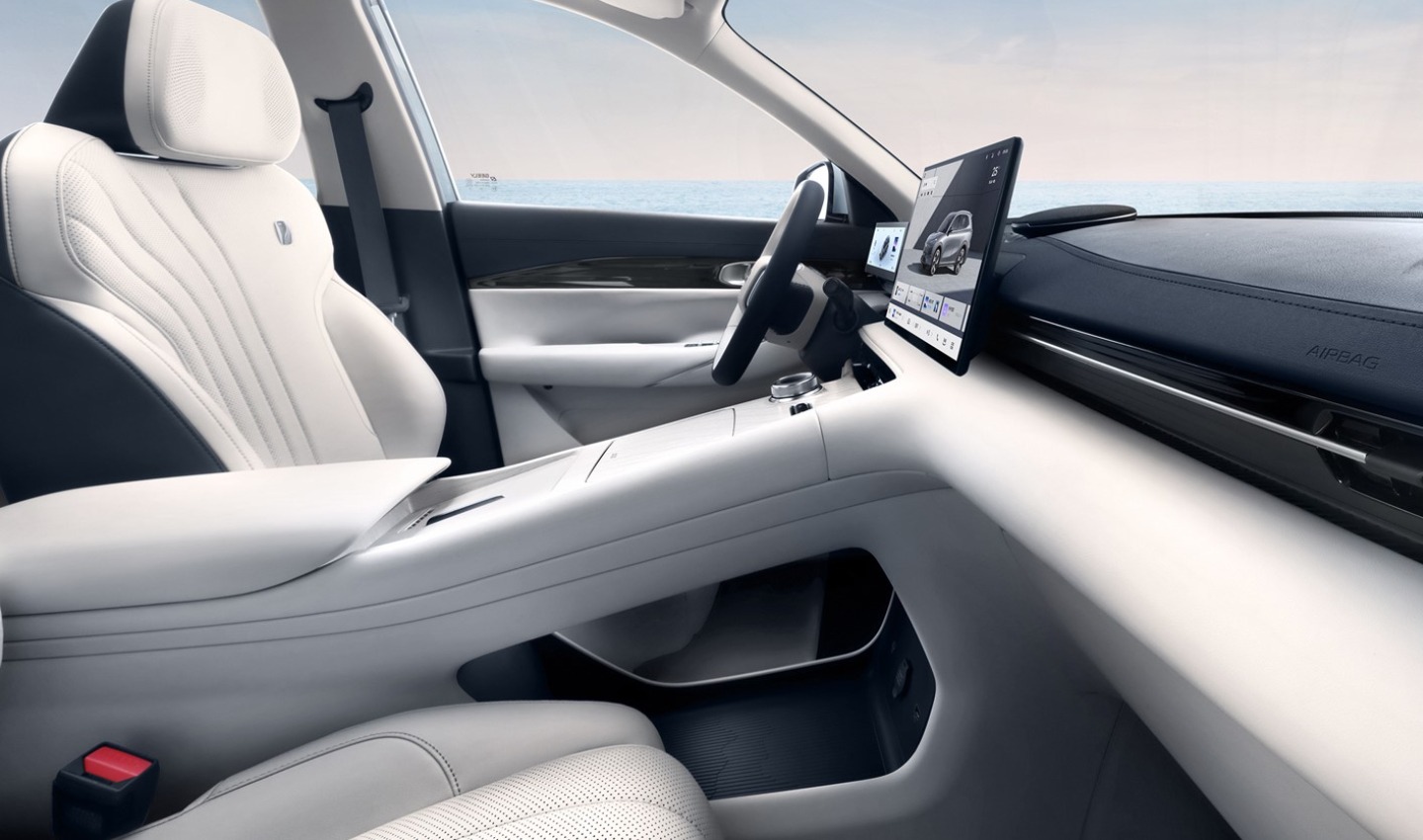
Competitive positioning reveals clear value leadership
The Geely EX5 positions itself firmly in the budget-to-mid-range segment with a clear strategy: offer premium-tier technology at mainstream prices to build brand awareness in new markets. This approach directly mirrors Geely’s successful playbook with Volvo and Polestar but targets the mass market.
Against its primary rival, the BYD Atto 3, the EX5 delivers meaningful advantages: double the DC fast charging speed (160kW versus 80kW), quicker acceleration (6.9s versus 7.3s), and superior space utilization (67.2% claimed). Both vehicles use LFP battery chemistry and similar battery capacities, but the EX5’s Aegis Short Blade battery claims enhanced safety credentials, passing a 36-tonne tank crush test that exceeds Chinese standards by 1.8 times.
The Kia EV3, crowned What Car? Car of the Year, offers superior range with its 81kWh battery option (600km WLTP) and more refined ADAS systems, but starts at similar pricing with fewer standard features. The Skoda Elroq matches the EX5 on charging speed and offers the Volkswagen Group’s established dealer network, though pricing runs approximately 10-15% higher for comparable specifications.
| Competitor | Price Position | Key Advantage Over EX5 | Key Disadvantage vs EX5 |
|---|---|---|---|
| BYD Atto 3 | Similar | Established brand trust | Slower charging (80kW) |
| MG ZS EV | Lower | Brand recognition | Slower charging, less power |
| Kia EV3 | Higher | Better range options | Fewer standard features |
| Tesla Model Y | 30% higher | Supercharger network | Minimalist interior, higher price |
| Skoda Elroq | 10-15% higher | VW Group dealer network | Less standard equipment |
Geely benefits from its ownership of Volvo, Polestar, and Lotus—technologies and engineering expertise flow between these brands. Lotus engineers specifically tuned the EX5’s suspension for UK and Australian markets, addressing local road conditions. This corporate ecosystem gives Geely credibility that Chinese EV startups like NIO and Xpeng cannot match.
Global availability spans 33 countries but excludes North America
The EX5 has achieved remarkable geographic reach within its first year. China remains the primary market, where the Galaxy E5 nameplate delivers pricing from just RMB 109,800 (~$15,335 USD) for the base 60.2kWh model, making it one of the most affordable capable electric SUVs available.
Export markets now include the UK, Australia, New Zealand, Thailand, Indonesia, Vietnam, Malaysia, Singapore, UAE, Saudi Arabia, Brazil, Mexico, and multiple European countries including Greece, Poland, Croatia, Slovenia, and the Balkan region. CKD (Complete Knock Down) assembly operations have begun in Indonesia and Egypt to reduce import costs in those regions.
Regional pricing varies dramatically due to tariffs, shipping, and local market positioning. The EX5 costs approximately $15,335 in China, $26,200 in Australia, $37,400 in the UK, and $45,000+ in continental Europe. This 3x price differential between China and European markets reflects import duties, EU tariff considerations, and Geely’s market-by-market pricing strategy.
The vehicle sells under different brand names depending on market. In Malaysia, Singapore, Nepal, and Trinidad and Tobago, Proton—Geely’s Malaysian subsidiary—markets the identical vehicle as the Proton eMas 7. This brand localization leverages Proton’s established presence in Southeast Asian markets where Geely remains unknown.
North America remains absent from current and announced launch plans. No timeline exists for US or Canadian availability, likely due to regulatory complexity, tariff exposure, and Geely’s strategic prioritization of markets with more favorable EV incentive structures.
Technical specifications demonstrate engineering competence
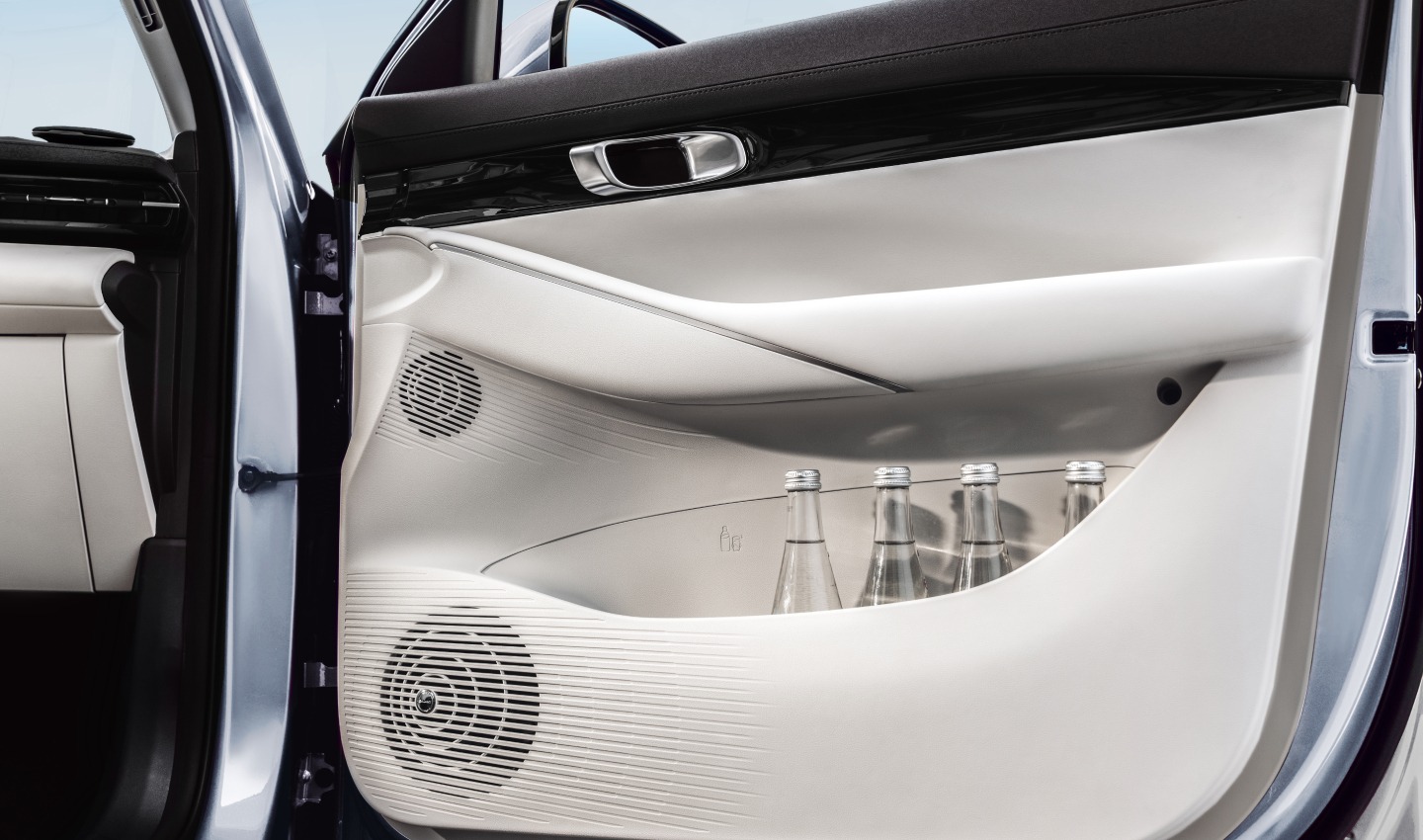
The EX5 debuts Geely’s GEA (Global Intelligent New Energy Architecture) platform, a derivative of the SEA platform underpinning Zeekr, Smart, and Polestar vehicles. This represents the first Geely model developed simultaneously in left-hand and right-hand drive configurations, compliant with regulations in 89 countries.
Battery configurations have evolved since launch. The original 2024 lineup offered 49.52kWh (440km CLTC) and 60.22kWh (530km CLTC) LFP battery options. The 2026 model year introduces a larger 68.39kWh battery achieving 610km CLTC range while discontinuing the smaller pack. The Aegis Short Blade battery uses Cell-to-Body integration, reducing weight and improving structural rigidity.
| Specification | Value |
|---|---|
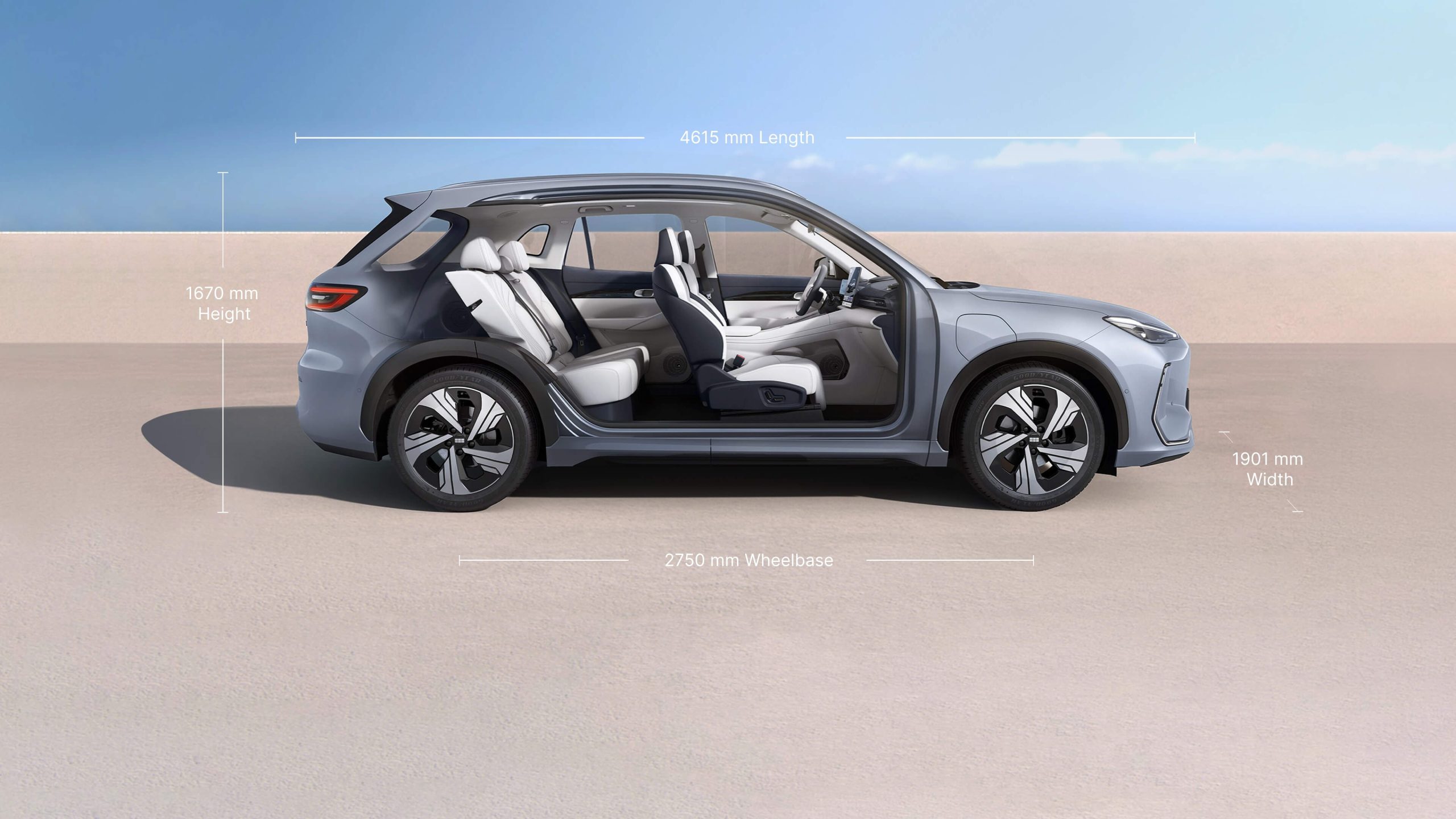
| Dimensions | 4,615 × 1,901 × 1,670 mm |
| Wheelbase | 2,750 mm |
| Motor | 160kW (215hp) / 320Nm PMSM |
| Drivetrain | Front-wheel drive |
| 0-100 km/h | 6.9 seconds |
| Top Speed | 175 km/h |
| Battery Options | 60.22kWh / 68.39kWh (LFP) |
| WLTP Range | 410-430 km (60.2kWh) |
| DC Fast Charging | 100-160kW (region-dependent) |
| 10-80% Charge Time | ~28 minutes |
| Drag Coefficient | Cd 0.269 |
Charging capability stands out as class-leading. DC fast charging reaches 160kW in UK/European markets and 100kW in Australia/APAC markets—both significantly faster than rivals. The 30-80% charge completes in approximately 20 minutes. Standard 11kW AC charging enables full overnight charges in 5-6 hours. Vehicle-to-Load (V2L) capability at 3.3kW allows external device powering, while V2V supports 6kW vehicle-to-vehicle charging.
Real-world efficiency testing by professional reviewers achieved 10.8-15.8 kWh/100km depending on driving conditions and wheel size. Australian testers recorded 13.5 kWh/100km averages—better than Tesla Model Y efficiency figures. The standard heat pump maintains winter efficiency while battery preconditioning optimizes fast charging performance.
Standard equipment justifies the value narrative
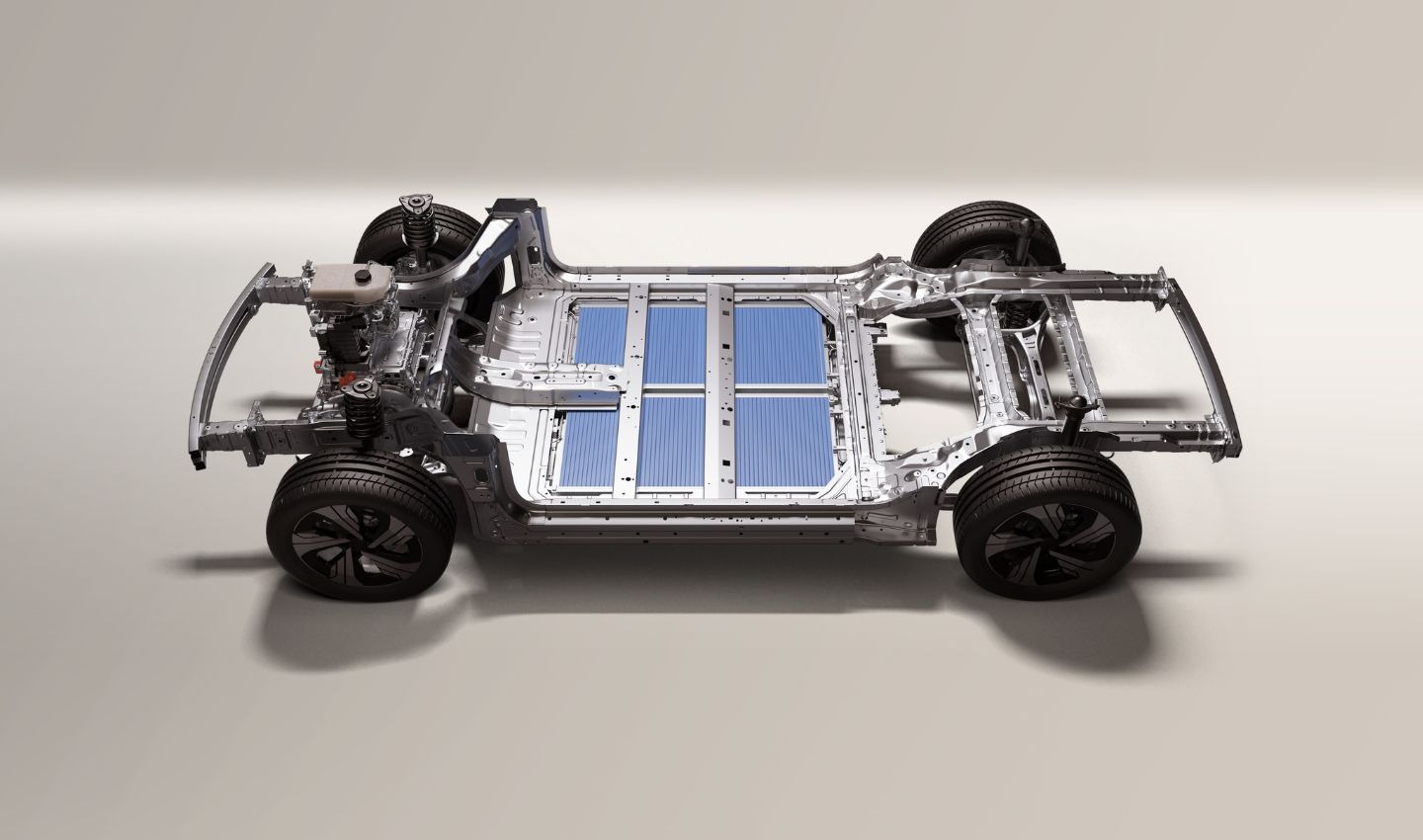
The EX5’s equipment levels have generated consistent praise across markets. Even base trims include features typically reserved for top specifications on competing vehicles.
Technology features center on the 15.4-inch 2.5K resolution touchscreen running Flyme Auto OS, developed by Meizu (now Geely-owned). The 10.2-inch digital instrument cluster provides essential driving information, while the optional 13.8-inch head-up display projects navigation and speed data at 12,000 nits brightness. Higher trims add a 16-speaker, 1000-watt Flyme Sound audio system.
Comfort equipment on higher trims includes “Zero Gravity” front seats with massage and ventilation functions—a feature Carwow noted as “unheard of” at this price point. The panoramic sunroof opens rather than serving as a fixed glass panel. Interior storage includes 33 designated compartments, and the 461-liter cargo area expands to 1,877 liters with rear seats folded.
Driver assistance systems provide Level 2 capability including adaptive cruise control with stop-and-go, lane centering, automatic highway lane change, autonomous emergency braking, blind spot monitoring, rear cross-traffic alert with automatic braking, 360-degree camera system, and driver attention monitoring. These systems represent the EX5’s most criticized aspect—reviewers universally note overly aggressive calibration that produces false warnings.
Safety credentials are strong, with 5-star ratings from Euro NCAP (2025) and ANCAP (2025). Euro NCAP awarded 86% for adult occupant protection, 87% for child protection, 83% for vulnerable road users, and 83% for safety assist features. Seven airbags are standard including a front center (far-side) airbag.
Professional reviews reveal a competent if unexciting vehicle
Automotive publications across UK, Australia, and New Zealand have tested the EX5 extensively, with consensus emerging around clear strengths and weaknesses.
Driving dynamics receive mixed assessments. Carwow called it the “best-driving Chinese car yet,” praising firm suspension that keeps the vehicle controlled through corners. However, Autocar assessed it as “at or below class average,” noting the soft seats cause backache on longer drives and the ADAS technology is “infuriating.” Australian reviewers appreciated the Lotus-tuned local suspension, with CarExpert noting “minimal body movements” and excellent bump absorption. The NRMA found suspension “a little too soft, with dampers too slow to react.”
Build quality receives consistent praise across publications. Interior materials “look and feel like they’ve come from a much posher car,” according to Carwow, with comparisons to Polestar’s minimalist design aesthetic and material quality “up there with Audi or Mercedes.” The NRMA described build quality as “exceptional for a car at this price point.” One notable criticism from Autocar: the faux leather produces a “pervasive and deeply unpleasant vinyl smell.”
Efficiency and range perform as advertised. Top Gear achieved 4.0 miles/kWh on UK roads, translating to approximately 240 real-world miles from the 60.2kWh battery. Australian testing delivered average consumption of 13.5 kWh/100km, with efficient driving dropping below 11 kWh/100km. Owners report realistic expectations are 350-380km of mixed driving rather than the 430km WLTP claim—a reasonable 15-20% reduction consistent with other EVs.
Design criticism appears in nearly every review. Top Gear described the styling as “as plain as motoring gets—like an own-brand packet of ready salted crisps.” Autocar called it “bland.” The South China Morning Post noted it looks “smart, if a little on the generic side.” This design anonymity may help or hurt depending on buyer preferences—some appreciate understated vehicles while others want distinctive appearance.
Owner experiences highlight real-world strengths and frustrations
Early owner feedback from Australian forums, Facebook groups, and UK publications reveals genuine satisfaction tempered by specific complaints.
The dominant positive theme is value. Owners consistently describe comparing the EX5 to BYD Atto 3, Kia EV5, and Tesla Model Y before purchasing, concluding the Geely offered “far better value than all the others—actually similar to some makes $20,000 more expensive.” One owner noted test-driving the Atto 3 and disliking its “guitar strings and weird aircon vents” interior design, finding the EX5’s more conventional approach preferable.
Real-world ownership appears straightforward. One buyer completed two 400km road trips within the first weeks of ownership without issues. Another reported 2,500km driven and being “very happy—it’s very easy to just get in and drive.” The vehicle’s 1,715kg weight makes it feel nimble compared to heavier electric SUVs.
The primary frustration involves driver assistance systems. Multiple owners report the driver monitoring system triggers false “distraction detected” warnings within minutes of driving, particularly affecting those wearing sunglasses. Speed limit warnings activate with zero tolerance margin—beeping at 101 km/h in a 100 km/h zone. Lane keeping assist experiences inconsistent performance, sometimes failing to maintain lane position. These calibration issues, while adjustable through settings menus, create initial negative impressions that require owner effort to resolve.
Missing features frustrate some owners. The Australian version lacks features standard on the Chinese model, including dashcam recording, mmWave radar sensors, and 50W wireless charging. Android Auto support arrived late via over-the-air update, with some markets still waiting. The included home charger isn’t “smart,” limiting resale value for owners who upgrade. Small cupholders that don’t fit standard drink bottles represent a surprising oversight.
Ownership community engagement mirrors early Tesla and BYD enthusiast behavior, with active Facebook groups like “Geely EX5 Owners and Fans Australia” sharing tips, updates, and delivery tracking. This engaged community suggests owners feel invested in the product’s success despite recognizing its imperfections.
For buyers prioritizing value, space, and technology features over driving excitement or distinctive styling, the EX5 delivers compelling economics. The 7-8 year warranty addresses brand trust concerns while Geely’s ownership of Volvo and Polestar provides engineering credibility that pure Chinese brands cannot match.
The vehicle’s weaknesses—anonymous design, overactive driver assistance systems, comfort-oriented dynamics—are real but addressable. Software updates can refine ADAS calibration, and styling preference remains subjective. Early reliability signals appear positive, though the vehicle’s youth (under 18 months in most markets) prevents definitive long-term conclusions.
For competitive analysis purposes, the EX5 demonstrates Chinese manufacturers’ ability to match or exceed incumbent specifications while maintaining meaningful price advantages. BYD, MG, and now Geely have moved beyond “cheap but compromised” positioning into “better value without sacrifice”—a transition that will reshape global EV market dynamics throughout the remainder of this decade.