
 385 km
 235 km/h
  4.4 Sec
  950 km/h
Charging Port Type CCS Type 2 (Charging Port type affects charging station compatibility.) 
Max AC Charging 11 KW Home Charging, 3-Phase support. On-board AC charger (inverter) Capacity affects AC charging speed. Max DC Charging 350 KW (233 KW at 400 V) Maximum power the car can accept from a DC faster charger. Architecture 800 V Higher power train voltage means faster charging and better efficiency. Battery Capacity (Usable) 80.0 kWh Net battery capacity that is available for use. Tested Range (EU -WLTP)
479 km Estimated Distance of a Full Charge Tested Range (USA – EPA) 423 km Estimated Distance of a Full Charge Motor / Power Performance Around 360 kW (483 hp) AWD (2 motors) Torque 800 Nm Peak Toque of the car’s electric motor 0-100 km/h 4.4 Second acceleration time from standstill to 100 km/h Top Speed 235 km/h Maximum speed the car can reach Charging 10→ 80% 19 minutes Under Ideal Conditions Drive Type AWD (2 Motor) PMSM (front), PMSM (rear)
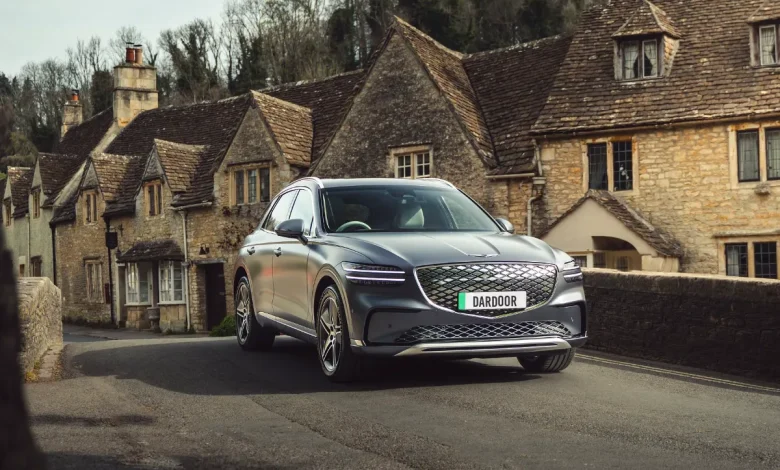
Genesis GV70 Electrified: Luxury performance paradox
About Genesis GV70 Electrified AWD 🚘
Performance that punches above its price
The GV70 Electrified’s dual-motor setup produces 429 horsepower and 516 lb-ft of torque in standard operation, but press the boost button on the steering wheel and output surges to 483 horsepower for 10-second bursts. This translates to verified 0-60 mph times between 3.7 and 4.1 seconds across multiple professional tests—Car and Driver clocked it at 3.8 seconds, actually quicker than the BMW M3 in their long-term fleet. That’s remarkable for a 5,038-pound electric SUV wearing eco-focused tires that struggle to harness the immediate torque.
The power delivery feels more refined than explosive. Unlike some EVs that slap you with unmodulated acceleration, the Genesis engineers calibrated the throttle response for smooth, progressive power buildup. U.S. News described how it “rockets up to highway speeds with total ease” while maintaining composure, and multiple reviewers praised the lack of drama despite the substantial output. The instant torque never feels overwhelming or artificial—it feels like an extremely potent turbocharged engine with zero lag.
Where the GV70 Electrified truly distinguishes itself is handling dynamics. The battery pack’s low mounting position drops the center of gravity significantly below the gas model, creating more planted, secure cornering behaviorwithout sacrificing the comfortable ride quality that defines the Genesis brand philosophy. The standard adaptive suspension reads the road ahead using forward cameras and proactively adjusts damping—a feature typically reserved for six-figure vehicles. Car and Driver noted it “feels light on its feet in corners,” while Business Car called it “one of the most refined motors I’ve ever driven.” The steering offers genuine feedback with appropriate weight, neither overly light nor artificially heavy.
The brake pedal remains the primary complaint. The transition between regenerative and friction braking can feel inconsistent, with slightly spongy pedal feel during that handoff. It’s not dangerous or problematic, just not as seamlessly integrated as the best implementations. The available i-Pedal one-pedal driving mode works well for those who prefer minimal brake usage.
Interior excellence that justifies the luxury badge
Step inside and you immediately understand Genesis’s value proposition. Car and Driver directly compared the materials to Bentley, specifically highlighting the knurled metal shift dial and control surfaces that demonstrate obsessive attention to detail. The base Advanced trim includes genuine leather upholstery, while the $6,800 Prestige package upgrades to quilted Nappa leather that rivals anything from Stuttgart or Munich at this price point.
The dashboard design conceals air vents within a dark upper layer, creating clean visual lines interrupted only by metallic accents and the dual-screen setup: a 14.5-inch center touchscreen paired with a 12.3-inch digital gauge cluster. The 2026 model receives a significant upgrade to a unified 27-inch OLED curved display that will be class-leading. Physical controls remain for critical functions—a refreshing choice in an era of touchscreen-everything interfaces. The haptic controls for seat and climate adjustments integrate seamlessly into the dashboard’s surface.
Front seats provide heating, ventilation, and massage functionality with Ergo Motion support that’s genuinely effective on long drives. The wide door openings and high roofline make entry and exit effortless, while the panoramic sunroof enhances the sense of space. Rear seat passengers get 37.2 inches of legroom—adequate for adults but not class-leading. The Model Y offers over 40 inches, and the larger BMW iX provides even more room. Cargo capacity measures 28.9 cubic feet behind the rear seats, expanding to 56.9 cubic feet with the 60/40 split-folding seats down. Car and Driver’s testing fit seven carry-on suitcases behind the seats and 22 total with seats folded.
The Prestige package adds a 15-speaker Lexicon audio system that reviewers consistently praised. The premium sound system delivers exceptional clarity and staging, particularly impressive given many luxury brands charge thousands for comparable audio upgrades. Active noise canceling and acoustic laminated windows create an exceptionally quiet cabin—multiple reviewers noted the GV70 Electrified as quieter than the gas version with superior wind suppression at highway speeds.
Technology that balances capability and usability
Genesis equipped the GV70 Electrified with comprehensive driver assistance systems that rival vehicles costing significantly more. Highway Driving Assist 2 handles lane centering with adaptive cruise control and can automatically change lanes on highways when appropriate. The system works smoothly in stop-and-go traffic and maintains natural speed adjustments that don’t feel robotic. Forward Collision-Avoidance Assist 2 detects pedestrians, cyclists, and vehicles with automatic emergency braking at intersections and during turns.
The Blind-Spot View Monitor displays a live camera feed in the digital instrument cluster when you signal—genuinely useful for tight parking lots and highway merging. Remote Smart Parking Assist lets you park or exit tight spots using the key fob from outside the vehicle. The 360-degree surround-view camera provides excellent visibility with multiple viewing angles. Genesis achieved IIHS Top Safety Pick+ certification, the organization’s highest accolade.
The infotainment interface strikes a balance between modern functionality and intuitive operation. Wireless Apple CarPlay and Android Auto became standard for 2025, addressing a previous shortcoming. The touchscreen responds quickly to inputs with clean graphics and logical menu structures. A rotary dial controller on the center console provides redundancy for those who prefer tactile controls while driving. Genesis Connected Services enables smartphone app functionality for remote climate pre-conditioning, charge monitoring, and vehicle location.
The fingerprint authentication system allows personalized driver profiles with biometric security—adjusting seats, mirrors, climate preferences, and infotainment settings automatically upon entry. It’s a premium touch that adds genuine convenience beyond novelty. The head-up display (Prestige package) projects clear information without being distracting, and the augmented reality navigation option overlays directions onto the real-world view.
Charging speed versus range: the fundamental tradeoff
The GV70 Electrified’s 77.4 kWh battery pack delivers a 236-mile EPA range—the vehicle’s most significant compromise compared to competitors. The Tesla Model Y Long Range AWD achieves 327 miles (91 miles more), while the BMW iX xDrive50 reaches 324 miles. Real-world highway testing typically yields around 200 miles at 70 mph, with Edmunds achieving 255 miles in their mixed-driving range test and MotorTrend recording 199 miles in sustained highway driving.
For context, that 236-mile rating translates to realistically planning 180-200 mile highway legs between charging stops in normal weather. Cold temperatures reduce range by approximately 30%, common across all EVs but particularly noticeable when starting with less total capacity. The 91 MPGe combined efficiency also trails segment leaders—the Model Y achieves 134 MPGe, nearly 50% better efficiency.
However, Genesis compensated with charging capability that ranks among the fastest in the industry. The 800-volt architecture enables peak charging rates up to 240 kW, achieving 10-80% in just 18-20 minutes at 350 kW DC fast chargers. Real-world testing showed even more impressive results: Edmunds added 100 miles in only 13 minutes, while MotorTrend gained 125 miles in 15 minutes. That’s transformative for road trip viability—you can add substantial range during a quick coffee break.
Genesis includes three years of complimentary 30-minute DC fast-charging sessions at Electrify America chargers, effectively providing free road trip charging throughout the warranty period. Access to Tesla’s Supercharger network via a free NACS adapter (for early adopters) adds flexibility, though the 800V Genesis architecture charges slower at 480V Tesla stations—typically around 134 kW versus the 240 kW capability at compatible chargers.
Home charging takes approximately 7-8 hours on a 240V Level 2 charger, adding 30-40 miles per hour of charging. The practical reality: if you charge at home nightly, the 236-mile range suffices for daily driving while the ultra-fast charging capability eliminates anxiety on longer trips.
Value proposition: where the GV70 Electrified wins decisively
At $68,400 including destination, the Genesis undercuts the BMW iX xDrive50 by nearly $20,000 while delivering comparable luxury and more power. The comparison becomes more favorable when examining standard equipment: adaptive suspension, premium leather, panoramic sunroof, heated and ventilated front seats with massage, wireless charging, comprehensive driver assistance, and the Lexicon audio upgrade via Prestige package—all for $75,100 total.
The BMW iX xDrive50 starts at $88,425 and requires option packages to match feature content. The Model Y Long Range AWD costs $50,630, offering significant savings but sacrificing the traditional luxury materials and build quality that define premium segments. Tesla’s minimalist interior relies on technology rather than craftsmanship, with synthetic materials throughout and touchscreen-dependent controls that polarize buyers.
| Feature | Genesis GV70 Electrified | Tesla Model Y LR | BMW iX xDrive50 |
|---|---|---|---|
| Base Price | $68,400 | $50,630 | $88,425 |
| Power | 483 hp (boost) | 384 hp | 516 hp |
| 0-60 mph | 3.8 seconds | 4.4 seconds | 4.0 seconds |
| EPA Range | 236 miles | 327 miles | 324 miles |
| DC Fast Charging | 18 min (10-80%) | 27 min | 35 min |
| Cargo Space | 56.9 cu ft | 76.2 cu ft | 77.9 cu ft |
| Interior Quality | Excellent | Good | Excellent |
Genesis also offers a 10-year/100,000-mile powertrain warranty—substantially better coverage than BMW’s 4-year/50,000-mile basic warranty or Tesla’s 8-year battery warranty. The complimentary maintenance (3 years/36,000 miles) and charging further enhance ownership value. These factors compound over time: three years of free DC fast charging could save $1,500-2,000 depending on usage, while the maintenance coverage adds another $1,000-1,500 in value.
The Genesis qualifies for the full $7,500 federal tax credit thanks to Alabama production, effectively reducing the price to $60,900—making the value proposition even more compelling against European competitors that don’t qualify for credits.
Conclusion: redefining luxury EV expectations
The 2025 Genesis GV70 Electrified accomplishes what seemed improbable: delivering genuine luxury, thrilling performance, and ultra-fast charging at a price that undercuts established competitors by significant margins. It forces a fundamental question about modern electric luxury vehicles—do you prioritize maximum range and efficiency (Tesla Model Y), ultimate prestige and technology (BMW iX), or the best balance of luxury, performance, and value?
For enthusiasts who appreciate driving dynamics, interior craftsmanship, and don’t require 300+ mile range, the GV70 Electrified presents a compelling answer. The 236-mile range becomes manageable when you can add 100 miles in 13 minutes, and the $20,000 saved versus a BMW buys substantial gasoline for years if range anxiety persists. Genesis proved that emerging luxury brands can compete directly with German flagships through smart engineering choices and aggressive value positioning.
The real insight: Genesis identified that many luxury buyers don’t actually need Tesla’s range or BMW’s brand prestige—they want a beautifully crafted vehicle that drives exceptionally well and doesn’t feel compromised by electrification. The GV70 Electrified delivers that experience while saving thousands, fundamentally challenging the premium electric SUV segment’s pricing assumptions. As traditional manufacturers chase range numbers, Genesis focused on the complete ownership experience and won Car and Driver’s 10Best and Editors’ Choice recognition as validation.
For tech-focused buyers who value driving engagement and appreciate luxury details over maximum digital integration, the GV70 Electrified represents perhaps the most satisfying electric SUV currently available under $75,000. It’s not perfect—range could be better, the brake feel could be more consistent—but it succeeds brilliantly at its core mission of delivering accessible luxury with genuine performance credibility.
Reasons to Buy Genesis GV70 Electrified AWD
Why You'll Love It 😘
1. Exceptional value proposition
$68,400 starting price delivers $88,000+ worth of luxury and performance. You get genuine Nappa leather, adaptive suspension, comprehensive driver assistance, premium audio, and 483 horsepower for thousands less than BMW, Mercedes, or Audi equivalents. The 10-year/100,000-mile powertrain warranty, 3 years complimentary maintenance, and 3 years free DC fast charging add substantial ownership value. Factor in the $7,500 federal tax credit (effective price: $60,900) and you’re approaching Tesla Model Y pricing with dramatically superior luxury.
2. Blistering performance with refined manners
3.8-second 0-60 mph acceleration in a package that prioritizes comfort over raw aggression. The dual-motor setup delivers instant torque without the violent lurch of some EVs, while the low center of gravity from the battery placement creates genuinely engaging handling dynamics. The adaptive suspension with road-preview technology delivers both spirited driving capability and luxury car ride quality—a balance competitors struggle to achieve.
3. Industry-leading charging speed
18-minute 10-80% charging times fundamentally change road trip viability. While 236 EPA miles trails competitors, the 800-volt architecture’s 240kW peak charging rate means you add 100 miles in just 13 minutes. That’s transformative for long-distance travel—competitors with 300+ mile range often need 30-40 minutes for equivalent charging. Plus, access to Tesla Superchargers (via complimentary NACS adapter) and 20,000+ charging points makes infrastructure concerns minimal.
4. Genuinely premium interior craftsmanship
Materials and build quality that genuinely rival six-figure luxury vehicles. The knurled metal controls, quilted Nappa leather, real wood trim, and meticulous fit-and-finish demonstrate obsessive attention to detail. Car and Driver specifically compared materials to Bentley, noting the GV70 Electrified’s interior surpasses anything from Tesla and matches BMW at half the price. The 27-inch OLED display (2026 model), Lexicon audio system, massage seats, and fingerprint authentication create a distinctly premium experience.
5. Comprehensive ownership experience
Genesis redefines luxury car ownership beyond the vehicle itself. Three years of complimentary scheduled maintenance means zero oil changes or service costs. The Genesis-to-You valet service picks up your vehicle for service and provides a courtesy car. Complimentary DC fast charging for 3 years eliminates road trip fuel costs. The warranty coverage (10 years powertrain vs. BMW’s 4 years) provides genuine peace of mind. This holistic approach to ownership experience distinguishes Genesis from established luxury brands still charging for basic services.
Reasons Not to Buy Genesis GV70 Electrified AWD
Why You Might Think Twice 🤔
1. Limited real-world range
236 EPA miles drops to 180-200 miles at 70 mph highway speeds. While charging speed partially compensates, those requiring frequent 200+ mile highway trips without charging stops will find this limiting. Cold weather can reduce range by 30%, yielding real-world winter highway range around 140-160 miles between charges. Tesla Model Y Long Range offers 327 EPA miles (approximately 280 miles real-world highway), providing substantially more flexibility.
2. Compromised cargo space
56.9 cubic feet maximum cargo capacity trails segment leaders. The Tesla Model Y offers 76.2 cubic feet, while BMW iX provides 77.9 cubic feet—both significantly more practical for families or those hauling gear. The lack of a front trunk (frunk) further limits cargo versatility compared to purpose-built EV platforms. If maximum cargo utility matters, the GV70 Electrified’s conventional SUV architecture shows its limitations.
3. Inconsistent brake pedal feel
The transition between regenerative and friction braking lacks the seamlessness of top competitors. While not dangerous or problematic, the slightly spongy brake pedal feel and occasional inconsistency in the handoff between systems detracts from the otherwise refined driving experience. Tesla’s implementation feels more natural, and even the BMW iX provides more consistent brake modulation. This becomes noticeable during frequent stop-and-go driving.
4. Limited availability and service network concerns
Not available in all U.S. states; serviced through Hyundai dealerships. While Genesis offers premium pickup/delivery valet service, the underlying service infrastructure relies on Hyundai’s network rather than dedicated Genesis facilities. Some owners report technicians less familiar with EV-specific systems, leading to longer diagnostic times for electrical issues. The limited dealership footprint means test drives and immediate service access can be challenging outside major metro areas.
5. Unproven long-term reliability for electric powertrain
Genesis lacks extensive EV ownership history compared to Tesla. While the conventional GV70 demonstrates solid reliability, the electric powertrain’s long-term durability remains unproven at scale. Some early owners report electronic gremlins, power delivery inconsistencies requiring multiple service visits, and battery management software issues. Genesis’s extended warranty provides protection, but potential buyers should acknowledge the risk inherent in relatively new electric platforms versus Tesla’s decade-plus of EV production refinement.
Key Owner-Reported Issues for Genesis GV70 Electrified AWD
Key Owners-Reported Issues 🗒️
| Combined Efficiency | 198 Wh/km* |
|---|---|
| Total System Power | 360 kW (483 PS) |
| Total Torque | 700 Nm |
| 0–100 km/h | 4.4 s |
| Top Speed | 235 km/h |
| Drive | AWD (dual-motor) |
*Approximate combined range and efficiency based on EV-Database listing. (Real-world range depends on conditions.)
Global pricing comparison
The Genesis GV70 Electrified 2025 shows significant price variation across markets, reflecting local taxes, import duties, and positioning strategies:
| Country | Base Price (Local Currency) | USD Equivalent* | Notes |
|---|---|---|---|
| United States | $65,875 | $65,875 | Base Advanced trim; $7,500 federal tax credit available |
| South Korea | ₩75,200,000 | ~$51,700 | Includes EV tax incentives; home market pricing |
| United Kingdom | £65,915 | ~$82,650 | 2025 model; includes VAT at 20% |
| Australia | AUD $127,800 | ~$82,900 | Single fully-loaded variant; before on-road costs |
| UAE | Not officially available | N/A | Standard GV70 gasoline: AED 215,500 (~$58,700) |
| Germany | ~€72,000 | ~$76,300 | Estimate based on EU pricing; includes 19% VAT |
| Canada | Not officially available | N/A | Expected 2026 introduction at ~CAD $88,000 |
| Japan | Not officially sold | N/A | Genesis has limited presence; no current plans |
| China | ¥548,000 | ~$75,200 | Imported model; local production not announced |
| France | ~€70,000 | ~$74,200 | EU pricing similar to Germany; varies by incentives |
Notes:
- USD equivalents calculated using November 2025 exchange rates and may fluctuate
- Many markets offer additional local/regional EV incentives reducing effective purchase price
- Specifications and trim levels vary by market
- Some markets include complimentary charging packages or extended warranties
- Import duties and local taxes significantly impact pricing outside production markets
- U.S. pricing is most competitive due to Alabama production and IRA tax credit eligibility
The United States and South Korea represent the most favorable pricing due to local production (U.S.) and home market advantages (Korea). European and Australian markets pay significant premiums reflecting import duties, VAT, and luxury vehicle taxes. The GV70 Electrified’s absence from some major markets (Canada, most of Middle East) reflects Genesis’s cautious EV expansion strategy.
Real-World Range Estimates
Between 275 – 555 km
| Condition | City | Highway (110 km/h) | Combined |
|---|---|---|---|
| 🌤️ Mild Weather | 465 km | 355 km | 410 km |
| 🌦️ Average Weather | — | — | 379 km |
| ❄️ Cold Weather | 285 km | 225 km | 255 km |
Indication of real-world range in several situations.
- ❄️ Cold Weather: “worst-case” (−10 °C with heating).
- 🌤️ Mild Weather: “best-case” (23 °C without A/C).
- 🛣️ Highway assumes a constant 110 km/h.
- 🏎️ Actual range depends on speed, driving style, weather and route conditions.
Long Distance Suitability (1-Stop Range) ★★★☆☆
| First Stop Distance | 277 km | First Stop Duration | 2h 31min |
| Charging Stop | 0km | Charging Stop | 15 min |
| Second Stop Distance | 200 km | Second Stop Duration | 1h 49min |
| Total Distance | 477 km | Total Duration | 4h 35min |
| Weather | 1-Stop Range |
|---|---|
| 🌤️ Mild Weather | 495 km |
| 🌦️ Average Weather | 430 km → ★★★☆☆ |
| ❄️ Cold Weather | 345 km |


The “Long Distance Suitability” is a 5-star rating indicating how suitable a vehicle is for long trips. It’s based on the 1-Stop Range: total distance with one 15-minute DC fast-charging stop.
2025 thresholds:
- 0☆ <200 km;
- 1★ 200–325;
- 2★ 325–450;
- 3★ 450–575;
- 4★ 575–700;
- 5★ >700 km.
- Half-stars are assigned by linear interpolation.
Battery Details
| Nominal / Usable Capacity | 84.0 kWh / 84.0 kWh |
|---|---|
| Battery Type / Cathode | Lithium-ion • NCM |
| Architecture / Nominal Voltage | 800 V / — |
| Cells / Pack Config | No data |
| Form Factor / Name | — |
| Warranty | 8 years / 160,000 km |
Charging Overview
| Category | Details |
|---|---|
| Home/Destination (AC) | Type 2 (left-rear); on-board 11 kW AC charger; 0→100% ≈ 9 h. |
| Fast DC (CCS) | CCS (left-rear); peak 233 kW; approx average ~190 kW (10→80%); 10→80% ~19 min. |
| Plug & Charge | Supported. |
| Autocharge | Supported. |
| Battery Preconditioning | Supported. |
Home & Destination Charging (0 → 100%)
Charging is possible by using a regular wall plug or a charging station. Public charging is always done through a charging station. How fast the EV can charge depends on the charging station (EVSE) used and the maximum charging capacity of the EV. The table shows all possible options for charging the Genesis Electrified GV70; some charging modes may not widely exist in all countries.
| Europe — Type 2 (IEC 62196) | ||||
|---|---|---|---|---|
| Charging Point | Max. Power | Power | Time (0→100%) | Rate |
| Wall Plug (230 V / 1×10 A) | 2.3 kW | 2.3 kW | 36 h | 10 km/h |
| 1-Phase 16 A (230 V) | 3.7 kW | 3.7 kW | 22 h | 18 km/h |
| 1-Phase 32 A (230 V) | 7.4 kW | 7.4 kW | 11 h | 36 km/h |
| 3-Phase 16 A (400 V) | 11 kW | 11 kW | 8 h | 48 km/h |
| 3-Phase 32 A (400 V) | 22 kW | 22 kW† | 4 h 30 m | 94 km/h |
† limited by onboard charger.
Fast Charging (10 → 80%)
Connector: Combined Charging System (CCS Combo 2). Rapid charging enables longer trips by adding as much range as possible in the shortest time. Charging power will decrease significantly after ~80% SoC; typical rapid charging rarely exceeds 80% SoC.
| Charging Point | Max. Power | Avg. Power | Time (10→80%) | Rate |
|---|---|---|---|---|
| CCS 50 kW | 50 kW | 50 kW | 120 min | 160 km/h |
| CCS 100 kW | 100 kW | 100 kW† | 60 min | 320 km/h |
| CCS 150 kW | 150 kW | 140 kW† | 45 min | 420 km/h |
| CCS 175 kW | 175 kW | 160 kW† | 38 min | 470 km/h |
| CCS 350 kW | 233 kW† | 190 kW† | 19 min | 600 km/h |
† limited by vehicle capabilities. Actual charging rates may differ due to outside temperature, battery state and driving style.
Claimed Charging Specs (Manufacturer)
- Max. Power = maximum power provided by charge point
- Avg. Power = average power over session from 10% to 80%
- Time = time to charge from 10% to 80%
- Rate = average charging speed over session
| Max. Power | Charge From | Charge To | Time | Rate |
|---|---|---|---|---|
| 233 kW | 10 % | 80 % | 19 min | 600 km/h |
Performance & Drivetrain
| Total Power / Torque | 360 kW • 700 Nm |
|---|---|
| 0–100 km/h | 4.4 s |
| Top Speed | 235 km/h |
| Drive | AWD (dual-motor) |
Energy Consumption & Efficiency
| Basis | Range | Rated Consumption | Vehicle Consumption | Fuel-eq. |
|---|---|---|---|---|
| Real Range | 379 km | — | 198 Wh/km | 2.2 L/100 km |
| WLTP | 479 km | 192 Wh/km | 163 Wh/km | 2.1 L/100 km |
- TEL = Test Energy Low
- TEH = Test Energy High (if applicable).
- Rated = official figures as published by the manufacturer; includes charging losses.
- Vehicle = calculated battery energy used for propulsion and on-board systems.
Real Energy Consumption Estimation
Between 144 – 291 Wh/km
| Scenario | City | Highway | Combined |
|---|---|---|---|
| ❄️ Cold Weather | 212 Wh/km | 286 Wh/km | 244 Wh/km |
| 🌤️ Mild Weather | 147 Wh/km | 224 Wh/km | 173 Wh/km |
- ❄️ Cold Weather: “worst-case” (−10 °C with heating).
- 🌤️ Mild Weather: “best-case” (23 °C without A/C).
- 🛣️ Highway assumes a constant 110 km/h.
- 🏎️ Actual range use depends on speed, driving style, weather and route conditions.
Safety rating: top-tier protection ★★★★★
The 2025 Genesis GV70 Electrified earned the prestigious IIHS Top Safety Pick+ designation, the organization’s highest safety award. This achievement places Genesis ahead of virtually every luxury competitor—the brand secured more Top Safety Pick+ awards than any other manufacturer as of September 2024.
IIHS crash test results
The GV70 Electrified earned “Good” ratings (highest possible) across all major crashworthiness categories:
- Small overlap front crash test: Good
- Updated moderate overlap front test: Good
- Updated side impact test: Good
- Roof strength: Good
- Head restraints & seats: Good
The vehicle also achieved “Good” ratings for:
- Headlight performance (standard LED projector headlights)
- Pedestrian crash prevention systems
- Automated emergency braking with pedestrian detection
NHTSA safety ratings ★★★★★
The 2025 Genesis entire lineup earned 5-star overall safety ratings from the National Highway Traffic Safety Administration, representing the highest level of occupant protection in government crash testing.
Standard safety equipment
Every GV70 Electrified includes comprehensive driver assistance technology:
- Forward Collision-Avoidance Assist with Pedestrian Detection
- Highway Driving Assist 2 (lane centering with adaptive cruise)
- Blind-Spot Collision-Avoidance Assist with Blind-Spot View Monitor
- Lane Keeping Assist and Lane Following Assist
- Rear Cross-Traffic Collision-Avoidance Assist
- Safe Exit Assist (prevents door opening into traffic)
- Parking Collision-Avoidance Assist
- Driver Attention Warning
- Remote Smart Parking Assist
The robust safety suite combined with excellent structural integrity validates Genesis’s commitment to passenger protection, matching or exceeding European luxury rivals at a significantly lower price point.
Dimensions & Weight
| L × W × H | 4715 × 1910 × 1630 mm |
|---|---|
| Wheelbase | 2875 mm |
| Weight (EU) / GVWR / Payload | 2310 kg / 2845 kg / 610 kg |
| Cargo Volume (up / max / frunk) | 503 L / 1678 L / 25 L |
| Roof Load | 100 kg |
| Tow Hitch | yes • 750 kg unbraked / 1800 kg braked |
| Turning Circle | 11.5 m |
| Platform | — |
| Body / Segment / Roof Rails | SUV • D – Large • Yes |
| Heat Pump | No data |
Bidirectional Charging (V2X / BPT)
| Capability | Status | Meaning |
|---|---|---|
| V2L (Vehicle-to-Load) | Yes (3.7 kW AC) | Power external devices from the vehicle |
| V2H (Vehicle-to-Home) | No | Home backup / whole-home power |
| V2G (Vehicle-to-Grid) | No | Export energy to grid |
| BPT (Battery Power Transfer) | Yes (umbrella) | Bidirectional features |
Features and capacities per available spec listings.
Miscellaneous
| Seats / ISOFIX | 5 seats • ISOFIX ×2 |
|---|---|
| Platform / Segment | — / D – Large |
* = estimated value where indicated. Average energy consumption & range assume moderate drive style and climate. Real-life values may differ significantly. Pricing may not reflect all regions. No rights can be derived from the information on this site.
Preceding Model
| Metric | 2022-2024 Electrified GV70 | MY25-26 Electrified GV70 | Δ |
|---|---|---|---|
| Battery Capacity | 77.4 kWh | 84.0 kWh | +6.6 kWh |
| 0–100 km/h | 4.2 s | 4.4 s | −0.2 s* |
| WLTP Range | 370–420 km | 423 km† | +3–6%† |
Comparison uses available data and approximate values where earlier gen may vary by market/year. *Acceleration varies by test methodology; †WLTP listed by Genesis worldwide site.
1-Stop Range Definition ✋
For vehicles without fast-charging capability, only the distance of the first stop is considered.
🚗 Driving Profile
- Begin with a fully charged battery
- Stop 1: Drive until the battery reaches 10% state-of-charge (SoC)
- Perform a 15-minute fast charge
- Stop 2: Continue driving until the battery again reaches 10% SoC
📋 Assumptions
- Driving speed, climate, and environmental conditions are based on Real Range Highway data
- No additional time required to initiate or stop the charging session
- The charging station always delivers the maximum power requested by the vehicle
- The battery is assumed to be in optimal health and condition
⚠️ Important Note : In real-world driving, it is practically impossible to replicate these conditions exactly.
This benchmark should therefore be viewed as a comparative metric, designed to evaluate vehicles under standardized conditions rather than predict exact trip distances.
5-Star Rating Definition ⭐️
- The 1-Stop Range rating in 2025 is a practical benchmark for EVs: it measures the distance a vehicle can travel after a single 15-minute charging session, under combined real-world weather conditions.
- This rating provides a clear, star-based measure of long-distance travel practicality—judged by how far a car can go after a single 15-minute DC fast charge.
- The rating puts instant, comparable context on each EV’s long-distance travel ability, helping buyers easily compare real-world charging performance between models.
- This value is translated into star ratings: In 2025, the system assigns stars as follows:
| Star Rating | 1-Stop Range (combined conditions) |
|---|---|
| ☆ | less than 200 km |
| ★ | 200 km to 325 km |
| ★★ | 325 km to 450 km |
| ★★★ | 450 km to 575 km |
| ★★★★ | 575 km to 700 km |
| ★★★★★ | more than 700 km |
- The 1-Stop Range is calculated using real-world benchmarks in three temperature scenarios to show suitability for road trips, regardless of weather.
- Half-star ratings interpolate between these whole-star bands, so a result of 490 km would earn 3½ stars.
- This system makes it easier for drivers to quickly assess and compare vehicles for long-distance suitability, regardless of ambient temperature or charging conditions.
Fast Charging (10 -> 80%) ⚡
- Max. Power: maximum power provided by charge point
- Avg. Power: average power provided by charge point over a session from 10% to 80%
- Time: time needed to charge from 10% to 80% Rate: average charging speed over a session from 10% to 80%
EV Charger Connector Types 🔌

This table provides a quick reference for which plug types are used for AC vs DC charging and their regional prevalence. Here’s a comparative table of major EV charger connector types, showing whether they are for AC or DC charging, their suitability, and the countries/regions where they are widely adopted:
| Connector Type | AC/DC | Suitability | Countries/Regions Adapted |
|---|---|---|---|
| Type 1 (SAE J1772) | AC | Standard US/Japan AC, slow–medium | USA, Canada, Japan |
| Type 2 (Mennekes) | AC | European AC standard, universal | Europe, UK, Australia, South Africa |
| Tesla (North America) | AC/DC | Tesla vehicles only, fast Supercharge | USA, Canada |
| CCS1 (Combo 1) | DC | US fast DC charge, some AC support | USA, Canada |
| CCS2 (Combo 2) | DC | Europe fast DC charge, AC support | Europe, UK, Australia, South Africa |
| CHAdeMO | DC | Nippon/Japanese, some global DC | Japan, parts of Europe, USA |
| GB/T (AC/DC) | AC/DC | China national standard, all speeds | China |
| Tesla (Europe) | DC | European Tesla fast charging (CCS2) | UK, Europe |
- Type 1 (J1772): Used for AC charging in North America and Japan; now fading in favor of CCS1 for DC.
- Type 2 (Mennekes): Universal AC connector across Europe; most wallboxes/public AC points use this.
- CCS (Combined Charging System): CCS1 for North America, CCS2 for Europe/Australia/South Africa. Enables both AC and high-power DC charging in one socket, now the global DC fast charge standard.
- CHAdeMO: Used mostly for rapid DC charging in Japan and some regions; declining outside Japan as CCS adoption grows.
- GB/T: Unique AC and DC connectors for China, incompatible with Western standards.
- Tesla: Proprietary plug in North America; now shifting to “NACS” standard which will be more widely adopted by Ford, GM, and others. In Europe, Tesla uses CCS Type 2, fully compatible with local standards.