
 440 km
 185 km/h
  5.2 Sec
  1080 km/h
Charging Port Type CCS Type 2 (Charging Port type affects charging station compatibility.) 
Max AC Charging 10.5 KW Home Charging, 3-Phase support. On-board AC charger (inverter) Capacity affects AC charging speed. Max DC Charging 240 KW (97 kW at 400V) Maximum power the car can accept from a DC faster charger. Architecture 800 V Higher power train voltage means faster charging and better efficiency. Battery Capacity (Usable) 80.0 kWh Net battery capacity that is available for use. Tested Range (EU -WLTP)
521-546 km Estimated Distance of a Full Charge Tested Range (USA – EPA) 475 km Estimated Distance of a Full Charge Motor / Power Performance Around 239 kW (320 hp) AWD Torque 605 Nm Peak Toque of the car’s electric motor 0-100 km/h 5.2 Second acceleration time from standstill to 100 km/h Top Speed 185 km/h Maximum speed the car can reach Charging 10→ 80% 18 minutes Under Ideal Conditions Drive Type AWD PMSM (front)
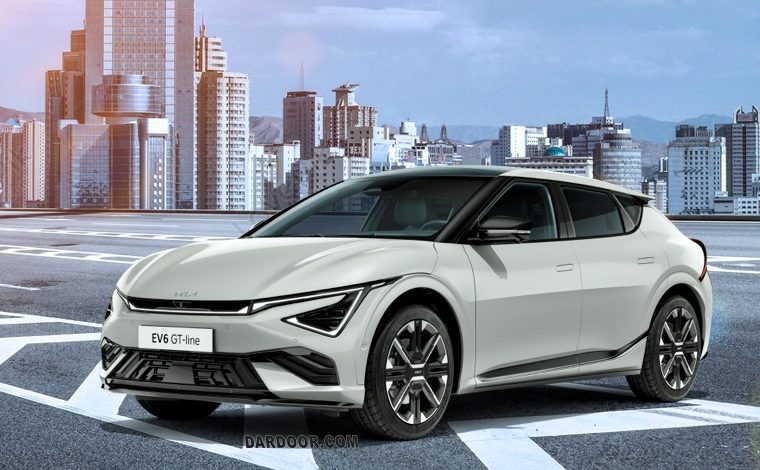
About Kia EV6 AWD 🚘
The Kia EV6 AWD is a dual-motor electric crossover offering all-wheel drive performance with impressive range and rapid charging capability.
Reasons to Buy Kia EV6 AWD
Why You'll Love It 😘
- Ultra-fast 800V charging architecture – Charges from 10-80% in approximately 18 minutes at compatible high-power stations, minimizing downtime on long trips
- Distinctive, futuristic design – Bold styling with sharp lines and a progressive aesthetic that stands out from conventional crossovers
- Strong AWD performance – Dual-motor setup delivers responsive acceleration and confident handling in various weather and road conditions
- Spacious, tech-forward cabin – Generous interior room paired with dual curved displays, advanced driver assistance systems, and premium materials
- Excellent warranty coverage – Industry-leading 10-year/100,000-mile battery warranty and comprehensive powertrain protection provide peace of mind
Reasons Not to Buy Kia EV6 AWD
Why You Might Think Twice 🤔
- Relatively premium price point – Higher initial cost compared to some competitors, though federal tax credits may help offset the investment
- Limited rear visibility – Sloping roofline and thick rear pillars create larger blind spots, requiring greater reliance on camera systems
- Modest frunk capacity – Front trunk storage is minimal compared to some rivals, limiting extra cargo flexibility
- Potentially firm ride quality – Sport-tuned suspension can feel stiff over rough pavement, particularly on models with larger wheels
- Evolving infotainment system – While updated, the interface and connectivity features continue to receive refinements and may lack some polish
| Efficiency | 182 Wh/km |
|---|---|
| Power / Torque | 239 kW (325 PS) • 605 Nm |
| 0–100 km/h | 5.2 s |
| Top Speed | 185 km/h |
| Drive | AWD |
Price & Regional Availability
| Region/Country | Model/Trim | Price (Local Currency) | Price (USD Equivalent) | Notes |
|---|---|---|---|---|
| United States | EV6 AWD Light | $48,700 | $48,700 | Before $7,500 federal tax credit |
| EV6 AWD Wind | $52,500 | $52,500 | ||
| EV6 AWD GT-Line | $56,200 | $56,200 | ||
| Canada | EV6 AWD Long Range | CAD $59,995 | ~$44,500 | Eligible for provincial incentives |
| EV6 AWD GT-Line | CAD $64,995 | ~$48,200 | ||
| United Kingdom | EV6 AWD GT-Line | £54,025 | ~$68,000 | After UK grant deductions |
| Germany | EV6 AWD GT-Line | €58,990 | ~$64,500 | Government incentives may apply |
| France | EV6 AWD GT-Line | €59,990 | ~$65,600 | Eligible for ecological bonus |
| Norway | EV6 AWD Long Range | NOK 549,900 | ~$51,000 | No VAT on EVs |
| Netherlands | EV6 AWD GT-Line | €57,995 | ~$63,400 | |
| Australia | EV6 AWD GT-Line | AUD $82,700 | ~$54,200 | |
| South Korea | EV6 AWD Long Range | ₩52,370,000 | ~$38,500 | Home market pricing |
| Japan | EV6 AWD | ¥5,990,000 | ~$41,000 | Limited availability |
| China | EV6 AWD | ¥259,800 | ~$36,000 | Local production pricing |
| UAE | EV6 AWD GT-Line | AED 189,900 | ~$51,700 | |
| Singapore | EV6 AWD | SGD $288,999 | ~$215,000 | Includes COE (Certificate of Entitlement) |
Important Notes:
- Prices are approximate and subject to change based on trim levels, optional packages, and dealer pricing
- USD equivalents are estimated based on current exchange rates and may fluctuate
- Many regions offer additional government incentives, tax credits, or rebates that can significantly reduce the effective purchase price
- Some markets may have different battery configurations (Standard Range vs. Long Range) affecting pricing
- Delivery fees, registration costs, and local taxes not included
- Singapore pricing reflects the city-state’s unique vehicle quota system, making it an outlier
- Availability and specific trim levels vary by mark
Real-World Range Estimates
Between 315 – 640 km
| Condition | City | Highway (110 km/h) | Combined |
|---|---|---|---|
| ❄️ Cold Weather (−10°C, heating) | 430 km | 315 km | 370 km |
| 🌤️ Mild Weather (23°C, no A/C) | 640 km | 405 km | 505 km |
| Combined | — | — | 440 km |
Indication of real-world range in several situations.
- ❄️ Cold Weather: “worst-case” (−10 °C with heating).
- 🌤️ Mild Weather: “best-case” (23 °C without A/C).
- 🛣️ Highway assumes a constant 110 km/h.
- 🏎️ Actual range depends on speed, driving style, weather and route conditions.
Long Distance Experience ★★★½☆
| First Stop Distance | 319 km | First Stop Duration | 2h 54min |
| Charging Stop | 0km | Charging Stop | 15 min |
| Second Stop Distance | 230 km | Second Stop Duration | 2h 6min |
| Total Distance | 549 km | Total Duration | 5h 15min |


The “Long Distance Experience” is a 5-star rating indicating how suitable a vehicle is for long distances. It’s based on the 1-Stop Range: total distance with one 15-minute DC fast-charging stop.
2025 thresholds:
- 0☆ <200 km;
- 1★ 200–325;
- 2★ 325–450;
- 3★ 450–575;
- 4★ 575–700;
- 5★ >700 km.
-
½ Half-stars are assigned by linear interpolation.
| 1-Stop Range (Total Distance) | Charging Stop | Total Trip Time (benchmark) |
|---|---|---|
| 549 km (First leg 319 km + Second leg 230 km) | 15 min | 5h 15m (2h54m + 15m + 2h06m) |
Battery Details
| Nominal / Usable Capacity | 84.0 kWh / 80.0 kWh* |
|---|---|
| Battery Type / Cathode | Lithium-ion • NMC |
| Architecture / Nominal Voltage | 800 V • 697 V nominal |
| Cells / Pack Configuration | 384 cells • 192s2p |
| Form Factor / Name | Pouch • No data |
| Warranty | 7 years / 150,000 km |
Charging Overview
| Category | Details |
|---|---|
| Home / Destination (AC) | Type 2 (Rear Right) • 11 kW AC • 0→440 km: 8h 45m • 51 km/h |
| Fast Charging (DC) | CCS (Rear Right) • Max: 263 kW • 10–80% avg: 205 kW • 44→352 km: 17 min • 1080 km/h • Autocharge: Yes |
| Plug & Charge | Supported, • Protocol: ISO 15118-2 |
| Battery Preconditioning | Possible: Yes • Automatic via Navigation: Yes |
Home & Destination Charging (0 → 100%)
Charging possible via wall plug or charging station. Speed depends on EVSE and vehicle’s AC charging limit. Public charging always via dedicated EVSE.
Europe (Type 2 – IEC 62196)
| Charging Point | Max. Power | Power | Time | Rate |
|---|---|---|---|---|
| Wall Plug (230V / 1×10A) | 2.3 kW | 2.3 kW | 41 hours | 11 km/h |
| 1-phase 16A (230V / 1×16A) | 3.7 kW | 3.7 kW | 25h 30m | 17 km/h |
| 1-phase 32A (230V / 1×32A) | 7.4 kW | 7.4 kW | 12h 45m | 35 km/h |
| 3-phase 16A (400V / 3×16A) | 11 kW | 11 kW | 8h 45m | 50 km/h |
| 3-phase 32A (400V / 3×16A) | 22 kW | 11 kW † | 8h 45m | 50 km/h |
† = Limited by on-board charger, vehicle cannot charge faster.
Fast Charging (10 → 80%)
Connector: Combined Charging System (CCS Combo 2). Rapid charging enables longer trips by adding as much range as possible in the shortest time. Charging power will decrease significantly after ~80% SoC; typical rapid charging rarely exceeds 80% SoC.
Before you read the table:
- Max. Power: maximum power provided by charge point
- Avg. Power: average power over 10% → 80%
- Time: time needed for 10% → 80%
- Rate: average charging speed over 10% → 80%
| Charging Point | Max. Power | Avg. Power | Time | Rate |
|---|---|---|---|---|
| CCS (50 kW DC) | 50 kW | 50 kW | 71 min | 260 km/h |
| CCS (100 kW DC) | 100 kW | 95 kW † | 37 min | 490 km/h |
| CCS (150 kW DC) | 150 kW | 130 kW † | 27 min | 680 km/h |
| CCS (175 kW DC) | 175 kW | 145 kW † | 24 min | 770 km/h |
| CCS (350 kW DC) | 263 kW † | 205 kW † | 17 min | 1080 km/h |
- Autocharge : enables automatic charging session initiation at supported CCS stations.
- Plug & Charge : provides automatic charging session initiation at supported CCS stations using ISO 15118 protocol.
- Actual charging rates may vary based on ambient temperature, battery condition, and driving habits.
Claimed Charging Specs (Manufacturer)
The table below shows the claimed specifications from the manufacturer for charging. Specifications can differ from the table above for a variety of reasons, and real-world tests (when available) may show different results.
Definitions
- Max. Power: maximum charge power during session
- Charge From: SoC where session starts
- Charge To: SoC where session ends
- Time: time needed for charging session
| Max. Power | Charge From | Charge To | Time |
|---|---|---|---|
| 258 kW | 10% | 80% | 18 min |
Performance
| Acceleration (0–100 km/h) | 5.2 s |
|---|---|
| Top Speed | 185 km/h |
| Electric Range (EVDB Real Range) | 440 km |
| Total Power / Torque | 239 kW (325 PS) • 605 Nm |
| Drive | AWD |
Bidirectional Charging (V2X / BPT)
| Capability | Status | What it means |
|---|---|---|
| V2L (Vehicle-to-Load) | Yes • Max 3.6 kW AC | Use the car as a power source for devices/tools. |
| V2H (Vehicle-to-Home) | No | Home backup / household power. |
| V2G (Vehicle-to-Grid) | No | Export energy back to the grid. |
| BPT (Battery Power Transfer) | Partial | Umbrella term for bidirectional features; here it’s effectively V2L only. |
V2L Outlet Details
| Exterior Outlet(s) | Interior Outlet(s) |
|---|---|
| 1 × Type 2 (adapter) | 1 × Standard socket |
Energy Consumption
| Standard / Basis | Range | Rated Consumption | Vehicle Consumption | Fuel-eq. |
|---|---|---|---|---|
| EVDB Real Range | 440 km | — | 182 Wh/km | Vehicle: 2.0 l/100km |
| WLTP (TEL) | 546 km | 170 Wh/km | 147 Wh/km | Rated: 1.9 • Vehicle: 1.6 l/100km |
| WLTP (TEH) | 521 km | 177 Wh/km | 154 Wh/km | Rated: 2.0 • Vehicle: 1.7 l/100km |
TEL (Test Energy Low) and TEH (Test Energy High) represent standardized test conditions. Rated figures reflect official values published by the manufacturer. Rated consumption and fuel equivalency calculations include charging losses. Vehicle figures represent actual battery energy consumed for propulsion and onboard systems, excluding charging losses.
Real Energy Consumption Estimation
Between 125 – 254 Wh/km
| Condition | City | Highway (110 km/h) | Combined |
|---|---|---|---|
| Cold Weather | 186 Wh/km | 254 Wh/km | 216 Wh/km |
| Mild Weather | 125 Wh/km | 198 Wh/km | 158 Wh/km |
- ❄️ Cold Weather: “worst-case” (−10 °C with heating).
- 🌤️ Mild Weather: “best-case” (23 °C without A/C).
- 🛣️ Highway assumes a constant 110 km/h.
- 🏎️ Actual range use depends on speed, driving style, weather and route conditions.
Safety Ratings – North America ★★★★★
| Model | NHTSA Overall Rating | NHTSA Frontal Crash | NHTSA Side Crash | NHTSA Rollover | IIHS Overall Rating | IIHS Top Safety Pick |
|---|---|---|---|---|---|---|
| Kia EV6 AWD | ★★★★★ | ★★★★★ | ★★★★★ | ★★★★ | Good in all tests | Top Safety Pick+ (2023) |
| Region | Rating | Details |
|---|---|---|
| Europe (Euro NCAP) | Year: 2022 | Adult 90% • Child 86% • Vulnerable Road Users 64% • Safety Assist 87% |
Kia EV6 AWD Notable Safety Features:
- Highway Driving Assist 2 (HDA 2) with lane-centering
- Forward Collision-Avoidance Assist with pedestrian, cyclist, and junction detection
- Blind-Spot Collision-Avoidance Assist
- Rear Cross-Traffic Collision-Avoidance Assist
- Safe Exit Warning (prevents door opening when vehicles approach)
- Remote Smart Parking Assist (on GT-Line)
Dimensions & Weight
| Length × Width × Height | 4695 mm × 1880 mm × 1575 mm |
|---|---|
| Wheelbase | 2900 mm |
| Weight (Unladen EU) | 2160 kg |
| GVWR / Max Payload | 2600 kg / 515 kg |
| Cargo (seats up / max / frunk) | 490 L / 1290 L / 20 L |
| Roof Load | 80 kg |
| Tow Hitch / Towing (unbraked / braked) / Vertical Load | Yes • 750 kg / 1800 kg • 100 kg |
Miscellaneous
| Seats / ISOFIX | 5 people • ISOFIX: Yes (2 seats) |
|---|---|
| Turning Circle | 11.6 m |
| Platform / EV-Dedicated | HMG E-GMP • Yes |
| Body / Segment | SUV • JC – Medium |
| Roof Rails | No |
| Heat Pump | Yes (standard equipment varies by country) |
* = Estimated values based on moderate driving habits and temperate climate conditions. Average energy consumption and range figures are provided for reference only. Actual performance may vary significantly. Pricing information may not reflect current rates in all regions. This information is provided for informational purposes only and does not constitute a guarantee or warranty.
Predecessor Comparison
| Metric | Previous EV6 Long Range AWD | EV6 Long Range AWD (2024–2026) | Δ |
|---|---|---|---|
| Real Range (Combined) | — | 440 km | — |
| DC 10–80% | — | 17 min (avg 205 kW) | — |
| Efficiency | — | 182 Wh/km | — |
Competitor Comparison – North America
| Model | Real Range | DC Fast Charge (10-80%) | Efficiency (EPA) | Starting Price (USD) | Key Differentiator |
|---|---|---|---|---|---|
| Kia EV6 AWD Long Range | ~260-280 miles | ~18 minutes | 3.0 mi/kWh (77.4 kWh battery) | $48,700 | Ultra-fast 800V charging architecture |
| Tesla Model Y Long Range AWD | ~300-315 miles | ~27 minutes | 3.5 mi/kWh (75 kWh battery) | $47,990 | Superior efficiency and Supercharger network |
| Ford Mustang Mach-E AWD Extended Range | ~270-290 miles | ~38 minutes | 3.0 mi/kWh (91 kWh battery) | $54,995 | Larger battery capacity, iconic branding |
| Hyundai IONIQ 5 AWD Long Range | ~260-280 miles | ~18 minutes | 3.0 mi/kWh (77.4 kWh battery) | $50,800 | Platform twin with 800V, retro-futuristic design |
| Volkswagen ID.4 AWD Pro | ~250-270 miles | ~38 minutes | 2.9 mi/kWh (82 kWh battery) | $48,050 | Traditional SUV design, smooth ride quality |
| Nissan Ariya e-4ORCE | ~260-280 miles | ~35 minutes | 2.7 mi/kWh (87 kWh battery) | $54,485 | Refined interior, ProPILOT Assist 2.0 |
Detailed Analysis
- Range Leader: Tesla Model Y Long Range AWD offers the best real-world range at ~300-315 miles, thanks to superior efficiency (3.5 mi/kWh) despite a smaller battery.
- Charging Speed Champion (Tie): Kia EV6 AWD and Hyundai IONIQ 5 AWD both charge 10-80% in approximately 18 minutes at 350kW stations, thanks to their shared 800V E-GMP platform—significantly faster than competitors.
- Efficiency Winner: Tesla Model Y leads with 3.5 mi/kWh, extracting more range from less battery capacity through optimized aerodynamics and powertrain efficiency.
- Best Value: Tesla Model Y and Volkswagen ID.4 AWD offer competitive pricing, though the Kia EV6 provides better charging speed at a similar price point.
- Platform Siblings: The Kia EV6 and Hyundai IONIQ 5 share the same E-GMP platform, offering nearly identical performance specs but different design philosophies—the EV6 is sportier and more conventional, while the IONIQ 5 embraces retro-futuristic styling with a more spacious, lounge-like interior.
Key Takeaways
- If charging speed matters most: Choose the Kia EV6 AWD or Hyundai IONIQ 5 AWD for industry-leading 18-minute charging times
- If maximum range is priority: The Tesla Model Y Long Range AWD offers 30-50 more miles than competitors
- If ride comfort matters: The Volkswagen ID.4 AWD provides the smoothest, most traditional SUV driving experience
- If budget is tight: The Tesla Model Y and VW ID.4 offer the lowest starting prices in this segment
Frequently Asked Questions
1. How fast can the Kia EV6 AWD charge? The EV6 AWD features an 800V charging architecture that enables ultra-fast charging. At a compatible 350kW DC fast charger, it can charge from 10% to 80% in approximately 18 minutes. On a standard 50kW charger, expect about 73 minutes for the same charge level. Using a Level 2 home charger (11kW), a full charge takes around 7 hours.
Please note that due to its 800V architecture, the Kia EV6’s charging speed is limited to 100kW at 400V DC chargers.
2. What is the real-world range of the EV6 AWD? The EPA-estimated range is approximately 282 miles (454 km) for the Long Range AWD model. Real-world range varies based on driving conditions, weather, speed, and driving habits. In cold weather with heating active, expect 20-30% range reduction. Highway driving at sustained speeds of 70+ mph will also reduce range compared to mixed city/highway driving.
3. Does the EV6 AWD qualify for federal tax credits? As of 2024-2025, eligibility for the $7,500 federal EV tax credit depends on where the vehicle is manufactured and battery component sourcing requirements. Check with your dealer and the IRS website for current eligibility, as rules have changed. Some EV6 variants may qualify for partial or full credits, while others may not, depending on the model year and production location.
4. What is the warranty coverage on the EV6 AWD? Kia offers industry-leading warranty coverage: 10 years/100,000 miles on the battery and electric powertrain, 5 years/60,000 miles basic warranty, and 5 years/100,000 miles anti-perforation warranty. This provides exceptional peace of mind compared to many competitors. Roadside assistance is included for 5 years with unlimited mileage.
5. How does the AWD system work in winter conditions? The dual-motor AWD system provides power to both front and rear wheels, offering improved traction on snow, ice, and wet surfaces. The system continuously monitors conditions and adjusts power distribution automatically. Combined with winter tires, the EV6 AWD performs confidently in cold climates, though range will be reduced when using cabin heating.
6. What are the key differences between the EV6 AWD trims? The main trims include Light (base AWD), Wind (mid-level with enhanced features), and GT-Line (sport-oriented with premium amenities). Key differences include wheel sizes (19″ to 20″), interior materials, technology features, and styling elements. The GT-Line adds sportier exterior design, upgraded seats, and enhanced driver assistance features. All AWD models share the same dual-motor powertrain producing around 320 horsepower.
7. How much cargo space does the EV6 AWD offer? The EV6 provides 24.4 cubic feet of cargo space behind the rear seats and 50.2 cubic feet with the rear seats folded. The front trunk (frunk) offers only 0.7 cubic feet—enough for charging cables but limited compared to some competitors. The flat floor and wide opening make loading large items relatively easy despite the coupe-like roofline.
8. What technology and safety features are included? Standard features vary by trim but generally include: dual 12.3-inch curved displays (digital instrument cluster and infotainment), wireless Apple CarPlay and Android Auto, Highway Driving Assist 2, Forward Collision Avoidance, Blind-Spot Collision Avoidance, Lane Keeping Assist, and Rear Cross-Traffic Collision Avoidance. Higher trims add features like augmented reality heads-up display, 360-degree camera, and Remote Smart Parking Assist.
9. What is the vehicle-to-load (V2L) capability? The EV6 AWD includes bidirectional charging capability, allowing you to power external devices and appliances directly from the vehicle’s battery. The V2L adapter (may be sold separately) provides up to 1.9kW of power from the interior outlet or up to 3.6kW from the external charging port. This feature is ideal for camping, tailgating, emergency backup power, or powering tools at job sites.
10. How does maintenance compare to a gas-powered vehicle? EV maintenance is significantly simpler and less expensive than traditional vehicles. There are no oil changes, transmission services, spark plug replacements, or exhaust system repairs. Regular maintenance includes tire rotations, brake fluid checks (though regenerative braking reduces brake wear), cabin air filter replacement, and coolant system checks. Most owners report 40-60% lower maintenance costs over the vehicle’s lifetime compared to comparable gas-powered SUVs.
1-Stop Range Definition ✋
For vehicles without fast-charging capability, only the distance of the first stop is considered.
🚗 Driving Profile
- Begin with a fully charged battery
- Stop 1: Drive until the battery reaches 10% state-of-charge (SoC)
- Perform a 15-minute fast charge
- Stop 2: Continue driving until the battery again reaches 10% SoC
📋 Assumptions
- Driving speed, climate, and environmental conditions are based on Real Range Highway data
- No additional time required to initiate or stop the charging session
- The charging station always delivers the maximum power requested by the vehicle
- The battery is assumed to be in optimal health and condition
⚠️ Important Note : In real-world driving, it is practically impossible to replicate these conditions exactly.
This benchmark should therefore be viewed as a comparative metric, designed to evaluate vehicles under standardized conditions rather than predict exact trip distances.
5-Star Rating Definition ⭐️
- The 1-Stop Range rating in 2025 is a practical benchmark for EVs: it measures the distance a vehicle can travel after a single 15-minute charging session, under combined real-world weather conditions.
- This rating provides a clear, star-based measure of long-distance travel practicality—judged by how far a car can go after a single 15-minute DC fast charge.
- The rating puts instant, comparable context on each EV’s long-distance travel ability, helping buyers easily compare real-world charging performance between models.
- This value is translated into star ratings: In 2025, the system assigns stars as follows:
| Star Rating | 1-Stop Range (combined conditions) |
|---|---|
| ☆ | less than 200 km |
| ★ | 200 km to 325 km |
| ★★ | 325 km to 450 km |
| ★★★ | 450 km to 575 km |
| ★★★★ | 575 km to 700 km |
| ★★★★★ | more than 700 km |
- The 1-Stop Range is calculated using real-world benchmarks in three temperature scenarios to show suitability for road trips, regardless of weather.
- Half-star ratings interpolate between these whole-star bands, so a result of 490 km would earn 3½ stars.
- This system makes it easier for drivers to quickly assess and compare vehicles for long-distance suitability, regardless of ambient temperature or charging conditions.
Fast Charging (10 -> 80%) ⚡
- Max. Power: maximum power provided by charge point
- Avg. Power: average power provided by charge point over a session from 10% to 80%
- Time: time needed to charge from 10% to 80% Rate: average charging speed over a session from 10% to 80%
EV Charger Connector Types 🔌

This table provides a quick reference for which plug types are used for AC vs DC charging and their regional prevalence. Here’s a comparative table of major EV charger connector types, showing whether they are for AC or DC charging, their suitability, and the countries/regions where they are widely adopted:
| Connector Type | AC/DC | Suitability | Countries/Regions Adapted |
|---|---|---|---|
| Type 1 (SAE J1772) | AC | Standard US/Japan AC, slow–medium | USA, Canada, Japan |
| Type 2 (Mennekes) | AC | European AC standard, universal | Europe, UK, Australia, South Africa |
| Tesla (North America) | AC/DC | Tesla vehicles only, fast Supercharge | USA, Canada |
| CCS1 (Combo 1) | DC | US fast DC charge, some AC support | USA, Canada |
| CCS2 (Combo 2) | DC | Europe fast DC charge, AC support | Europe, UK, Australia, South Africa |
| CHAdeMO | DC | Nippon/Japanese, some global DC | Japan, parts of Europe, USA |
| GB/T (AC/DC) | AC/DC | China national standard, all speeds | China |
| Tesla (Europe) | DC | European Tesla fast charging (CCS2) | UK, Europe |
- Type 1 (J1772): Used for AC charging in North America and Japan; now fading in favor of CCS1 for DC.
- Type 2 (Mennekes): Universal AC connector across Europe; most wallboxes/public AC points use this.
- CCS (Combined Charging System): CCS1 for North America, CCS2 for Europe/Australia/South Africa. Enables both AC and high-power DC charging in one socket, now the global DC fast charge standard.
- CHAdeMO: Used mostly for rapid DC charging in Japan and some regions; declining outside Japan as CCS adoption grows.
- GB/T: Unique AC and DC connectors for China, incompatible with Western standards.
- Tesla: Proprietary plug in North America; now shifting to “NACS” standard which will be more widely adopted by Ford, GM, and others. In Europe, Tesla uses CCS Type 2, fully compatible with local standards.