Great Wall Motors Poer: Comprehensive 2025 Review
The Great Wall Motors (GWM) Poer represents China’s ambitious entry into the global pickup truck market, offering a compelling blend of modern technology, robust construction, and competitive pricing.
The 2025 Great Wall Motors Poer (also sold as Cannon in some markets) is a value‑focused midsize pickup that offers generous tech and safety equipment, solid comfort and real off‑road capability, but trails class leaders on outright performance and brand perception in some regions. It is particularly compelling in markets where it significantly undercuts rivals like the Ford Ranger and Toyota Hilux on price while matching or exceeding them on features.
GWM says POER stands for “Powerful, Off‑road, Enjoyable and Reliable,” and uses the badge across its pickup line, including Cannon, Shanhai Cannon and King Kong derivatives. By 2025, GWM pickups are selling well over 10,000 units per month globally and expanding strongly outside China, making the Poer a key pillar of the brand’s international strategy.
Global Presence
The GWM Poer operates under several brand identities depending on the market. In China, it’s marketed as the Great Wall Poer or GWM Poer. In Thailand and several Southeast Asian markets, it’s sold as the GWM Poer but with market-specific features. In Australia and New Zealand, it was initially launched as the GWM Ute before being rebranded to align with global naming. In South Africa and some Latin American markets, it maintains the Poer nameplate. This multi-naming strategy reflects GWM’s approach to tailoring the vehicle’s identity to local market preferences.
Engine Options and Powertrain
The 2025 Poer lineup offers multiple powertrain configurations:
Diesel Engine: The primary powerplant is a 2.0-liter turbocharged diesel engine producing approximately 160-170 horsepower and 400 Nm of torque. This four-cylinder common-rail diesel injection engine features variable geometry turbocharging and meets Euro 5 or Euro 6 emissions standards depending on the market.
Gasoline Engine: Select markets receive a 2.0-liter turbocharged gasoline engine generating around 190 horsepower and 360 Nm of torque, providing stronger acceleration characteristics for buyers who prioritize performance over fuel economy.
Hybrid Option: Some regions now offer a plug-in hybrid electric vehicle (PHEV) variant combining a gasoline engine with an electric motor, delivering improved fuel efficiency and reduced emissions for urban environments.
Transmission and Drivetrain
The Poer comes equipped with an 8-speed automatic transmission across most variants, developed by ZF, which provides smooth shifting and contributes to improved fuel economy. Earlier models featured a 6-speed manual transmission in base trims, though this option has become increasingly rare in 2025 models.
Drivetrain options include rear-wheel drive (4×2) for entry-level variants and part-time four-wheel drive (4×4) systems with electronic shifting for off-road capable models. Higher-specification variants feature an advanced 4WD system with multiple terrain modes, differential locks, and low-range gearing for serious off-road capability.
Most 2025 Poer variants feature:
- 8‑ or 9‑speed automatic transmissions depending on engine and market, tuned for smooth low‑speed response and highway efficiency.
- Part‑time or full‑time 4WD/4×4 with high/low range, often using a BorgWarner‑type transfer case, plus electronic rear differential lock on higher trims.
- Selectable drive modes (Normal, Eco, Sport, Snow/Sand/Mud) to adjust throttle, gearbox and traction control behavior for varying conditions.
Together, this gives the Poer credible off‑road and towing ability while staying easy to drive in daily urban use.
Dimensions and Capacity
The Poer’s dimensions position it squarely in the mid-size pickup segment:
- Overall length: approximately 5,370-5,440 mm (depending on variant)
- Width: around 1,880-1,930 mm
- Height: approximately 1,830-1,900 mm
- Wheelbase: 3,140-3,230 mm
- Cargo bed length: 1,520-1,800 mm (depending on cab configuration)
These dimensions put it very close to a Hilux/Ranger in footprint, with similar cabin and bed space.
Payload and Towing: The Poer offers impressive load-carrying capabilities with payload ratings typically between 800-1,000 kg depending on configuration. Towing capacity reaches up to 3,000-3,500 kg when properly equipped, making it competitive with established rivals in the segment.
Cab Configurations: Available in both double cab (four-door) and extended cab configurations, with the double cab being the predominant choice in most markets.
Suspension and Chassis
The Poer utilizes a traditional body-on-frame construction with a ladder chassis, essential for durability and load-carrying capability. The front suspension features an independent double-wishbone setup, while the rear employs a multi-link live axle with leaf springs. This combination provides a reasonable balance between on-road comfort and off-road capability, though ride quality when unladen can be somewhat firm, as is typical for work-oriented pickups.
As mentioned, Poer uses a conventional pickup chassis and suspension recipe:
- Front: independent double‑wishbone or similar coil‑spring setup for improved comfort and steering precision.
- Rear: leaf‑spring solid axle tuned for payload and towing, with ride comfort heavily improved compared with older Chinese pickups.
Reviewers often comment that the Poer rides more like an SUV than a basic work truck, especially in better‑equipped trims.
Brake System
The braking system consists of ventilated disc brakes on all four wheels in higher trims, with some base models featuring rear drum brakes. The system includes ABS (Anti-lock Braking System), EBD (Electronic Brake-force Distribution), and brake assist. Higher specification models add electronic parking brakes and auto-hold functionality.
Fuel Economy
Fuel consumption varies by powertrain, driving conditions and market:
- Diesel 4×2: approximately 7.5-8.5 L/100km (combined cycle)
- Diesel 4×4: approximately 8.5-9.5 L/100km (combined cycle)
- Gasoline variants: approximately 9.5-11.0 L/100km (combined cycle)
- PHEV variant: claimed 2.0-3.0 L/100km in hybrid mode with electric range of 80-100 km
Real-world fuel economy tends to run slightly higher, particularly under heavy loads or during off-road driving.
With a 75–80 L tank, most owners can expect a practical range of 600–700 km between fills in combined driving. Fuel efficiency is competitive for the class, though not segment‑leading.
Technology and Features
The 2025 Poer has significantly upgraded its technology offerings to compete with more established brands:
Infotainment: Even mid‑spec 2025 Poer versions come with a generous tech package:
- Central touchscreen typically around 12.3 inches in many trims, with Apple CarPlay and Android Auto support. iqcars
- Digital instrument cluster or semi‑digital cluster on higher variants.
- 360‑degree camera system, front and rear parking sensors, and keyless start on many mid/high trims.
The interface is modern and reasonably responsive, though some early reviews mention occasional lag and a learning curve for certain menus. reddit
Safety & Driver Assistance: Safety is a notable strength relative to cost:
- Passive safety: up to six or eight airbags, including front, side and curtain units, plus ISOFIX child‑seat anchors in the rear.
- Active safety: ESC, traction control, hill‑start assist and hill‑descent control are widely available. sayarabay
- ADAS: Forward Collision Warning, Autonomous Emergency Braking, Lane Departure Warning/Assist, Blind Spot Monitoring, Rear Cross‑Traffic Alert and sometimes Adaptive Cruise Control feature on better‑equipped trims. icartea
These systems bring the Poer up toward the safety spec of newer Japanese and European rivals, and related GWM pickups have achieved strong crash ratings in ANCAP testing.
Convenience Features: Keyless entry and push-button start, automatic climate control, wireless phone charging, panoramic sunroof (select trims), power-adjustable driver’s seat with memory function, and ambient lighting.
Cabin Design and Comfort
The Poer’s cabin is aimed at lifestyle and family buyers as much as tradespeople, with design and feature levels that punch above its price. Key aspects include:
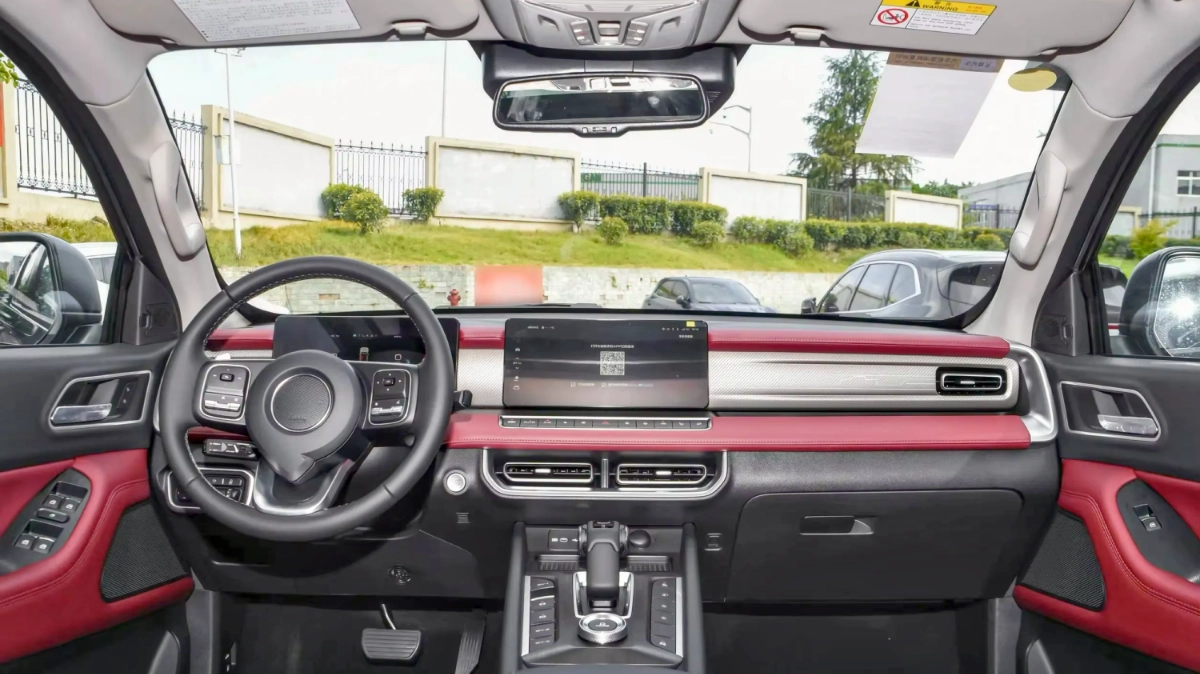
- Car‑like dashboard with soft‑touch areas on upper trims, modern design cues and robust plastics in high‑wear areas.
- Supportive front seats, ample rear legroom for adults, and plenty of storage spaces around the cabin. reddit
- Interior options up to leather upholstery, electric driver seat adjustment and ambient lighting on premium versions.
Owners generally praise seat comfort and space, but some note that the factory audio system is weak and often a candidate for aftermarket upgrades. reddit
Interior Quality and Design
The Poer’s interior represents a substantial improvement over earlier Chinese pickups, though it still trails segment leaders in some areas. The cabin features soft-touch materials on upper surfaces, with harder plastics on lower sections and door panels. Build quality has improved markedly, with better panel gaps and reduced squeaks and rattles compared to previous generations.
The dashboard design is modern and functional, dominated by the central touchscreen. Digital instrument clusters are available on higher trims, replacing traditional analog gauges. Seating is generally comfortable for long journeys, with adequate support, though some owners report the seats could use more lateral bolstering. Rear seat space in double cab models is competitive with rivals, offering reasonable legroom and headroom for adult passengers.
Storage solutions include a center console box, door pockets, cupholders, and in some variants, under-seat storage. The overall ambiance is utilitarian but increasingly refined.
Trims, Variants and Different Names
Global Nameplate Strategy
GWM uses multiple names for essentially the same base truck depending on market: carsales.com
- China and some export markets: Poer or Pao.
- Australia and New Zealand: usually branded as GWM Ute with Cannon, Cannon‑L and Cannon‑X trims.
- Malaysia and Brunei: Poer Ruman and Poer Sucan, with “Ruman” and “Sukan” referencing Malay words for “house” and “sport.”
- Spin‑offs: Shanhai Cannon and King Kong Poer for larger or more rugged derivatives.
This naming approach lets GWM tailor the brand message to local tastes while leveraging the same core architecture. gwm-club
Typical Trim Walk (Example Structure)
Exact labels differ by market, but a common hierarchy looks like:
- Entry/Work: basic fabric seats, manual air‑con, steel or simple alloy wheels, limited ADAS but full ESC/ABS.
- Mid/Platinum: alloy wheels, larger touchscreen with CarPlay/Android Auto, 360‑camera, extra airbags and more advanced driver assistance.
- High/Luxury: leather seats, power adjustment, full ADAS suite, LED lighting, upgraded interior finishes and more extensive chrome or off‑road styling.
In some markets (e.g., UK Poer 300), spec structures are tuned towards company‑car and fleet buyers who want a mix of comfort and low BiK costs.
Pricing varies significantly by market but generally ranges from $25,000-$45,000 USD equivalent, positioning the Poer as a value proposition against Japanese and American competitors.
Market Position and Popularity
The Poer’s market position is that of a value-oriented alternative to established brands. In markets like Thailand, Australia, and South Africa, it has gained traction among buyers seeking modern features and capability at lower price points than Toyota Hilux, Ford Ranger, or Isuzu D-Max alternatives.
Sales have been strongest in Southeast Asia, where GWM has invested heavily in distribution networks and after-sales support. In Australia, initial reception was cautious but has improved as the brand establishes reliability credentials. European sales remain limited, with the Poer facing stiff competition from well-entrenched rivals.
The vehicle appeals primarily to commercial users seeking cost-effective fleet solutions, recreational users wanting occasional off-road capability without premium pricing, and value-conscious buyers willing to consider emerging brands.
Competitors
The Poer competes directly with:
- Toyota Hilux ↗
- Ford Ranger ↗
- Isuzu D-Max ↗
- Mitsubishi Triton ↗
- Nissan Navara ↗
- Mazda BT-50 ↗
- Volkswagen Amarok ↗
- Chevrolet Colorado (in some markets) ↗
Relative to these, the Poer’s main differentiators are a higher standard equipment level, more modern in‑cab tech and a lower purchase price. Its key disadvantages are weaker brand heritage, uncertain long‑term resale values and less extensive dealer networks in some regions. reddit
Pros and Cons
Advantages:
- Strong value: more equipment and safety tech for less money than many established rivals.
- Comfortable ride and refined cabin, especially on higher trims, making it family‑friendly as well as work‑capable.
- Modern safety and ADAS suite, including AEB, lane keeping and 360‑camera on many mainstream variants.
- Growing global footprint and improving parts support, including regional hubs (e.g., Middle East/Africa).
Disadvantages:
- Brand is still building a track record; resale values and long‑term perceptions lag Japanese rivals.
- Infotainment and audio quality can be weak or buggy; some owners describe the factory sound system as particularly poor.
- Diesel particulate filter (DPF) behavior can annoy some owners who do frequent short trips or idling.
- Not the most powerful or quickest in the class, especially when heavily loaded or towing at the upper limit.
Owner Feedback, Complaints and Common Issues
Reliability Snapshot
Early owner reports for the Poer are cautiously positive:
- Multiple owners in Middle Eastern markets report 14–27,000 km and 1+ year of ownership with no major mechanical failures or warranty claims.
- Service centers in some regions have improved in scheduling and turnaround, reflecting GWM’s ramp‑up of aftersales operations.
Independent summaries of P‑Series/Poer issues suggest the trucks are broadly reliable so far, with problems more focused on minor components and software than core powertrain failures. thehonestmechaniccolorado
Common Complaints and Issues
From owner forums and independent workshops, recurring themes include:
- Diesel DPF cycles: users who do short city runs or long idling note frequent regeneration events, which can cause higher fuel consumption and occasional smell or fan noise.
- Infotainment glitches: occasional freezing, slow boot times or Bluetooth quirks, which may be addressed with software updates.
- Weak sound system: several owners criticize the stock speakers and overall audio quality, often upgrading aftermarket if warranty allows.
- Build‑quality niggles: sporadic reports of interior rattles, wind noise around mirrors and minor trim misalignments on early units.
Serious mechanical or electrical failures appear relatively rare at this stage, but long‑term durability data beyond 100–150,000 km is still limited compared with long‑established competitors. reddit
Build Quality Concerns:
Water ingress around door seals and rear windows has been reported in some vehicles. Paint quality and durability vary, with some owners noting premature fading or chipping. Interior trim pieces, particularly around the center console and door panels, can develop rattles over time. Tailgate alignment issues and difficulty latching have affected some units.
Other Issues:
Air conditioning performance has been inconsistent, with some units struggling in extreme heat. Fuel gauge inaccuracy has been reported in some models. Brake squeal, while not affecting performance, is an annoyance for some owners.
It’s important to note that issue frequency varies significantly by market and production period, with newer models showing fewer problems as GWM refines manufacturing processes.
Who the 2025 GWM Poer Suits
The 2025 GWM Poer represents a credible alternative in the competitive mid-size pickup market, particularly for buyers prioritizing value and modern features over brand heritage. While it doesn’t yet match the refinement, resale value, or proven reliability of segment leaders like the Toyota Hilux or Ford Ranger, it offers a compelling package for specific use cases. icartea
The vehicle is best suited for buyers who want a well-equipped, capable pickup for personal or light commercial use, appreciate modern technology, and are comfortable with a developing brand. As GWM continues expanding its global presence and addressing quality concerns, the Poer’s market position should strengthen, though establishing long-term brand credibility remains the primary challenge ahead.