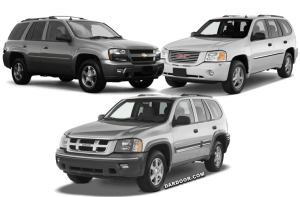
2009–2010 Chevrolet Traverse — OEM Workshop Service & Repair Manual (PDF)
| File Type |
PDF |
| File Language |
English |
| You’ll Get |
90 MB |
| Wiring Diagram |
Included |
| Delivery Method |
Instant Download |
Also Known As
- GMC Acadia
- Buick Enclave
- Saturn Outlook
Key Features
Complete OEM Coverage
Includes all service, repair, and maintenance procedures across every system.
Wiring Diagrams Included
Factory electrical schematics, connector views, grounds, and power distribution.
Diagnostics & DTCs
Dealer troubleshooting flowcharts, fault codes, and test procedures.
User-Friendly PDF
Fully searchable, indexed, and printable for workshop or home use.
What’s Inside
- Engine repair & overhaul procedures
- Automatic transmission & drivetrain service
- Brakes, ABS, suspension & steering systems
- Complete electrical wiring diagrams
- Body, interior, HVAC & SRS/airbag systems
- Maintenance schedules, torque specs & fluid capacities
Download & Compatibility
Delivery: Instant digital PDF download
Compatibility: Windows • macOS • iOS • Android
This manual provides detailed instructions for maintenance, disassembly, reassembly, component inspection, adjustment, and diagnostics—intended for use by experienced mechanics. Proper application of this guide will help ensure thorough repairs and maintain your vehicle in peak condition.
Important Note: Before purchasing this manual, please check whether your vehicle is subject to any active service recalls, as authorized dealerships may perform necessary repairs free of charge. When replacing parts, always use genuine OEM components to ensure safety, reliability, and long-term performance.
CONTENTS: 2009-2010 Chevrolet Traverse Repair Manual
Engine
-
- Engine Exhaust
- Engine Mechanical – 2.8L, 3.0L, 3.2L, or 3.6L
- Engine Controls and Fuel – 2.8L, 3.0L, 3.2L, or 3.6L
- Engine Cooling
- Engine Electrical
Transmission
-
- Transfer Case – Getrag 790
- Automatic Transmission – 6T70/6T75
Brakes
-
- Antilock Brake System
- Hydraulic Brakes
- Park Brake
- Disc Brakes
Driveline/Axle
-
- Propeller Shaft
- Rear Drive Axle
- Wheel Drive Shafts
Suspension
-
- Front Suspension
- Rear Suspension
- Tire Pressure Monitoring
Steering
-
- Power Steering
- Steering Wheel and Column
HVAC
-
- HVAC – Automatic
- HVAC – Manual
- Heating, Ventilation, and Air Conditioning
Safety and Security
-
- Immobilizer
- Object Detection
- Remote Functions
- Seat Belts
- Supplemental Inflatable Restraints
Seats
Driver Information and Entertainment
-
- Cellular, Entertainment, and Navigation
- Secondary and Configurable Customer Controls
- Displays and Gages
Power and Signal Distribution
-
- Data Communications
- Power Outlets
Body Hardware and Trim
-
- Exterior Trim
- Floor Coverings and Headlining
- Instrument Panel and Console Trim – Repair
- Instrument Panel and Console Trim – Specifications
- Interior Trim and Paneling
- Interior Trim and Paneling – Repair
Body Systems
-
- Fixed and Moveable Windows
- Horns
- Lighting
- Roof
- Sunroof
- Mirrors
- Vehicle Access
- Wipers and Washers
Body Repair
-
- Frame and Underbody
- Bolted Exterior Body Panels and Closures
- Bumpers and Fascias
Wiring
Owners Manuals
-
- 2009 Buick Enclave Owner Manual
- 2010 Buick Enclave Owner Manual
SAMPLE PAGES
CAUTION ↗: This OEM service and workshop repair manual provides detailed procedures for maintenance, disassembly, reassembly, inspection, adjustment, and diagnostics. It is intended as a comprehensive guide for experienced mechanics. To ensure thorough and accurate repairs that maintain your vehicle’s optimal performance, please read and follow this manual carefully. When replacing parts during any repair work, always
use genuine Chevrolet parts to ensure quality, safety, and reliability.
🚙 2009–2010 Chevrolet Traverse (1st Gen) — Specs, Common Problems, Recalls/TSBs, DTC Codes & Verdict
2009–2010 Chevrolet Traverse is a 3-row crossover SUV built on GM’s Lambda platform, known for roomy seating and highway comfort—but also known for early-model timing-chain wear, power-steering issues, and occasional electrical gremlins.
🧬 Traverse Siblings (Same Platform)
- 🟤 GMC Acadia (Lambda sibling)
- ⚪ Buick Enclave (Lambda sibling)
- 🪐 Saturn Outlook (Lambda sibling)
⚙️ Technical Specs & Performance
- 🛠️ Engine: 3.6L V6 (LLT) DOHC
- ⚡ Power: ~281 hp
- 🧲 Torque: ~266 lb-ft
- ⚙️ Transmission: 6-speed automatic
- 🛞 Drivetrain: FWD or AWD
- 👨👩👧👦 Seating: 7–8 passengers (trim dependent)
- ⛽ Fuel Economy (typical): ~16–18 mpg city / ~23–24 mpg highway (varies by FWD/AWD)
- 🧳 Strength: Excellent interior space + comfortable ride
🔧 Top 10 Common Mechanical Issues (Root Cause ✅ + Fix 🛠️)
- ⛓️ Timing chain stretch / rattle (3.6 LLT)
🔍 Root cause: Oil-life extended too long + varnish/sludge + high load; chain guides/tensioners wear.
🛠️ Fix: Verify with cam/crank correlation + P0008/P0009; replace chains/guides/tensioners; shorten oil intervals (synthetic recommended).
- 🛞 Transmission shift flare / harsh shifts
🔍 Root cause: Fluid degradation, pressure-control issues, worn clutch packs/valve body behavior over time.
🛠️ Fix: Scan for TCM codes; service fluid with correct spec; perform adapt relearn; repair valve body/solenoids if needed.
- 💧 Power steering whine / loss of assist
🔍 Root cause: Pump wear, aeration/contamination, internal leaks; known coverage/TSB activity exists for Lambda steering issues.
🛠️ Fix: Flush system with correct fluid, replace pump; some cases require gear/valve housing service.
- 🧊 Cooling system leaks / overheating
🔍 Root cause: Water pump seep, hose junction leaks, radiator/thermostat aging.
🛠️ Fix: Pressure test; replace water pump/thermostat as needed; refill/bleed properly to prevent air pockets.
- 🛑 Premature brake wear / pulsation
🔍 Root cause: Heavy curb weight + stop-and-go heat; rotor hot spots or caliper slide issues.
🛠️ Fix: Inspect slides/calipers, replace pads/rotors, torque wheels correctly; flush brake fluid at intervals.
- 🧯 Exhaust leaks / catalytic efficiency codes
🔍 Root cause: Exhaust gasket leaks or aging converters; misfires can accelerate catalyst wear.
🛠️ Fix: Repair leaks first; diagnose misfires; replace converter only after confirming fuel trims and O2 sensor health.
- 🛞 Wheel bearing humming
🔍 Root cause: Bearing wear from mileage + load; sometimes worsens with uneven tire wear.
🛠️ Fix: Road test + chassis ears; replace hub/bearing assembly; align and rotate tires.
- 🦾 Engine mounts vibration
🔍 Root cause: Hydraulic mount wear causes idle/drive vibration and clunks.
🛠️ Fix: Inspect mounts under load; replace failed mounts; verify no misfire causing excessive vibration.
- 🛞 Suspension clunks (links/bushings/struts)
🔍 Root cause: Stabilizer links and control-arm bushings wear under vehicle weight.
🛠️ Fix: Replace worn links/bushings; inspect struts; align afterward.
- 🧴 Oil consumption / seepage
🔍 Root cause: PCV behavior, ring/cylinder wear over time, gasket seepage.
🛠️ Fix: Check PCV, monitor consumption, repair leaks (valve covers/oil pan), keep oil level strict to protect timing chains.
💡 Top 10 Common Electrical Issues (Root Cause ✅ + Fix 🛠️)
- 🔋 Battery drain (parasitic draw)
🔍 Root cause: Module staying awake (radio, BCM, door circuits), weak battery aging.
🛠️ Fix: Perform parasitic draw test; isolate fuse circuit; update module programming if applicable; replace battery if weak.
- 📟 Radio / infotainment glitches
🔍 Root cause: Software bugs, failing head unit, poor connections.
🛠️ Fix: Check grounds/connectors; update firmware if available; replace unit if confirmed faulty.
- 🚪Power locks / windows intermittent
🔍 Root cause: Door harness fatigue, switch failure, BCM control issues.
🛠️ Fix: Inspect wiring in door jamb; repair harness; test switches; scan BCM for codes.
- 💡 Headlight/DRL issues
🔍 Root cause: Socket heat damage, ground resistance, relay problems.
🛠️ Fix: Load-test circuits; repair grounds; replace melted sockets/relays.
- 🚨 ABS/traction warning lights
🔍 Root cause: Wheel speed sensor faults, corroded connectors, tone ring issues.
🛠️ Fix: Read ABS codes; inspect sensor wiring; clean/replace sensor; verify bearing/tone ring condition.
- 🎈 Airbag light (SRS lamp)
🔍 Root cause: Seat connector resistance, impact sensor faults, harness connection issues.
🛠️ Fix: Scan SRS codes; repair connectors/harness; follow OEM procedures (SRS safety).
- 🧠 CAN communication faults
🔍 Root cause: Network voltage drop, weak grounds, failing module causing bus disruption.
🛠️ Fix: Check charging system and grounds; scan all modules; isolate network shorts and failing controllers.
- 🔑 Keyless entry / remote issues
🔍 Root cause: Weak fob battery, receiver/antenna issues, BCM logic.
🛠️ Fix: Replace fob battery; re-learn fob; test antenna/receiver; scan BCM.
- 🧊 HVAC blower intermittent
🔍 Root cause: Blower resistor/module failure, connector overheating.
🛠️ Fix: Replace resistor/module; inspect connector for heat damage; verify blower motor current draw.
- ⛽ Fuel pump module/control concerns (where applicable)
🔍 Root cause: Module contamination or control issues can affect fuel delivery on some GM platforms.
🛠️ Fix: Diagnose fuel pressure + commanded vs actual; follow applicable recall/repair instructions if vehicle is involved.
📊 Pros ✅ & Cons ⚠️
| ✅ Pros |
⚠️ Cons |
| 👨👩👧👦 Very roomy 3-row cabin |
⛓️ Early 3.6 timing-chain risk if oil neglected |
| 🛣️ Smooth highway comfort |
🧯 Potential power-steering issues |
| 🧳 Good family practicality |
⛽ Fuel economy is average for the size |
| 🛞 Available AWD |
🛑 Brake/rotor wear on heavy vehicle |
| 💺 Comfortable seating position |
⚙️ Aging electronics can cause intermittent faults |
🗓️ Maintenance Schedule (Practical Owner-Friendly)
| ⏱️ Interval |
🛠️ What to Do |
| Every 5,000 miles / 8,000 km |
🛢️ Oil + filter, 🔄 rotate tires, 👀 inspect brakes & fluids |
| Every 15,000 miles / 24,000 km |
🌬️ Engine air filter, 🧼 cabin filter, 🛞 alignment check |
| Every 30,000 miles / 48,000 km |
⚙️ Transmission fluid service (as needed), 🧯 inspect steering & suspension |
| Every 50,000 miles / 80,000 km |
🛑 Brake fluid service, 🔋 battery/charging test, 🧊 coolant inspection |
| Every 100,000 miles / 160,000 km |
🧊 Coolant flush, 🔥 spark plugs (as needed), ⛓️ monitor timing-chain symptoms |
🏁 Top Competitors (With Dardoor Links)
📢 Recalls, Advisories & TSBs (10 Key Items)
⚠️ Important: Recalls/coverage vary by VIN and region. Always verify using official lookup tools.
- 🧷 Recall: Second-row seat belt interference when seatback returns upright (Traverse/Acadia/Enclave/Outlook).
- 🎈 Recall: Seat-mounted side impact airbag wiring harness connector corrosion/loose crimps may disable airbags (GM safety recall 14030).
- 🧳 Recall: Power liftgate strut/prop rod concern (power liftgate prop rod recovery).
- ⛽ Recall: Chassis electronic module internal contamination / fuel pump flow control module service risk (broad GM campaign scope includes Traverse).
- 🧯 Special Coverage / Bulletin: Loss of power steering assist coverage program for Lambda vehicles.
- 🔧 Service Bulletin: Steering system flush + pump replacement procedure (power steering condition guidance).
- 🅿️ Recall: Parking brake-related recall coverage appears on aggregated recall listings for 2009 Traverse (verify VIN for applicability).
- 🧱 Recall: Transmission shift cable / lever-related recall category appears in 2009 recall listings (verify exact campaign by VIN).
- 🔌 Recall: Electrical system recall category appears in 2009 recall listings (verify exact campaign by VIN).
- 🧩 Recall/Notice listing reference: 2010 Traverse has multiple NHTSA-reported recalls listed by major aggregators (verify details by VIN).
🧾 DTC Trouble Code List
🚗 Engine Control Module (ECM)
| Code |
Meaning |
| P0008 |
⛓️ Engine Position System Performance (Bank 1) |
| P0009 |
⛓️ Engine Position System Performance (Bank 2) |
| P0171 |
🌬️ System Too Lean (Bank 1) |
| P0174 |
🌬️ System Too Lean (Bank 2) |
| P0300 |
🔥 Random/Multiple Cylinder Misfire |
| P0420 |
🧯 Catalyst Efficiency Below Threshold (Bank 1) |
| P0430 |
🧯 Catalyst Efficiency Below Threshold (Bank 2) |
| P0016 |
🧭 Crank/Cam Correlation (Bank 1 Sensor A) |
| P0101 |
📈 MAF Sensor Performance |
| P0128 |
🧊 Coolant Thermostat (Below Regulating Temp) |
⚙️ Transmission Control Module (TCM)
| Code |
Meaning |
| P0700 |
⚙️ TCM Requested MIL Illumination |
| P0711 |
🌡️ Transmission Fluid Temperature Sensor Range/Perf |
| P0722 |
🛞 Output Speed Sensor No Signal |
| P0730 |
🔁 Incorrect Gear Ratio |
| P0741 |
🌀 TCC System Performance/Stuck Off |
| P0751 |
🧲 Shift Solenoid A Performance |
| P0756 |
🧲 Shift Solenoid B Performance |
| P0776 |
ضغط Pressure Control Solenoid Performance |
| P0796 |
🧰 Pressure Control Solenoid C Performance |
| P0872 |
📉 Transmission Fluid Pressure Sensor Low |
🛑 ABS / ESC (Brake System)
| Code |
Meaning |
| C0035 |
🛞 LF Wheel Speed Sensor Circuit |
| C0040 |
🛞 RF Wheel Speed Sensor Circuit |
| C0045 |
🛞 LR Wheel Speed Sensor Circuit |
| C0050 |
🛞 RR Wheel Speed Sensor Circuit |
| C0110 |
🧠 Pump Motor Circuit Malfunction |
| C0131 |
📟 ABS Pressure Sensor Circuit |
| C0242 |
⚠️ PCM Indicated TCS Malfunction |
| C0245 |
⚠️ Wheel Speed Mismatch |
| C0265 |
🧠 EBCM Relay Circuit |
| C0550 |
🧩 EBCM Internal Malfunction |
🎈 SRS Airbag System
| Code |
Meaning |
| B0012 |
🎈 Driver Frontal Deployment Loop Fault |
| B0013 |
🎈 Passenger Frontal Deployment Loop Fault |
| B0020 |
🪑 Side Airbag Deployment Loop Fault |
| B0022 |
🧷 Pretensioner Deployment Loop Fault |
| B0040 |
📟 SDM (Airbag Module) Configuration Error |
| B0051 |
🧍 Occupant Classification System Fault |
| B0079 |
🛡️ Rollover/Side Impact Sensor Fault |
| B0083 |
🔌 PPS/Seat Sensor Communication Fault |
| B0092 |
🧠 SDM Internal Fault |
| U0171 |
📡 Lost Comm With Restraints System Sensor |
🧠 Body Control / CAN Communication
| Code |
Meaning |
| U0001 |
📡 High Speed CAN Communication Bus |
| U0073 |
📡 Control Module Communication Bus Off |
| U0100 |
🧠 Lost Communication With ECM/PCM |
| U0121 |
🛑 Lost Communication With ABS Module |
| U0140 |
🚪 Lost Communication With BCM |
| U0155 |
📟 Lost Communication With IPC (Cluster) |
| B1325 |
🔋 System Voltage Out of Range |
| B1370 |
💡 Ignition Switch Circuit Fault |
| B3055 |
🔑 Key/Immobilizer System Fault |
| B3128 |
🚪 Door Lock Circuit Fault |
🏁 Final Verdict
✅ Best for: Families who need true 3-row space and comfort at a great used value.
⚠️ Watch out for: Any timing-chain noise/correlation codes, power-steering assist symptoms, and neglected oil maintenance history.
⭐ Overall: A comfortable and practical 3-row SUV—excellent when maintained well, but early-model ownership is safest with proof of frequent oil changes and a clean diagnostic scan.