

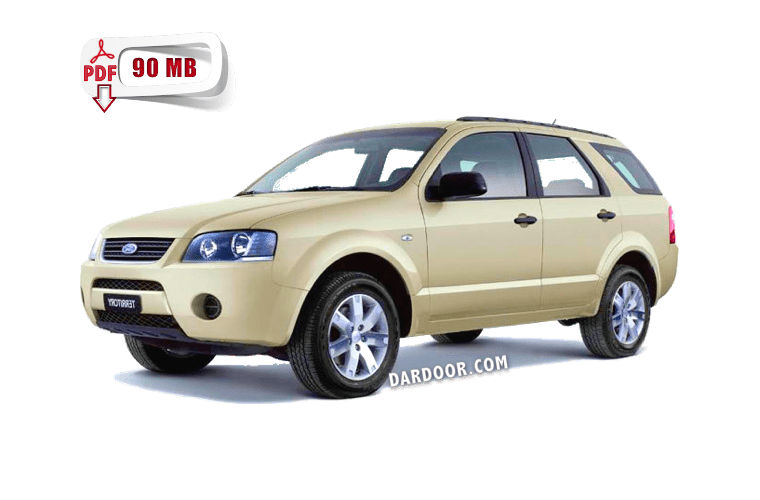
Get the original and complete OEM workshop service and repair manual for the 2006-2007 Ford Territory (SY Series) with the electrical wiring diagrams in a simple PDF file format.
2006-2007 Ford Territory Repair Manual
$16.90
Get the original and complete OEM workshop service and repair manual for the 2006-2007 Ford Territory (SY Series) with the electrical wiring diagrams in a simple PDF file format.
| File Format | |
| File Language | English |
| You’ll Get | 89.3 MB |
| Pages Count | 2,284 |
| Delivery Method | Instant Download |
Get the same comprehensive level of information that your Ford local dealer mechanics and technicians have in a simple PDF format. It’s simple, and straightforward with only the manufacturer’s authorized service and repair procedures which you can follow and do by yourself.
This manual includes the procedures for maintenance, disassembling, reassembling, inspection, and adjustment of components and diagnostics for guidance of experienced mechanics. Please peruse and utilize this manual fully to ensure complete repair work to keep your vehicle in optimum condition. Before you buy this manual check first if your car is subject to a Ford service recallso the local dealer can repair it for FREE. When replacing parts during repair work, please make sure to use Ford OEM genuine spare parts.
Table of Contents : 2006-2007 Ford Territory (SY Series)
Sample Pages:
CAUTION: Please note that this manual is made for the use of persons who have special techniques and certifications. If non-specialized or uncertified technicians perform repairs or services only using this manual or without proper equipment or tools, this may cause severe injury to you or other persons nearby and also cause damage to your vehicle. To prevent dangerous operations and damage to your vehicle, please be sure to follow the instructions thoroughly.
2006–2007 Ford Territory: Comprehensive Guide
Overview
The 2006–2007 Ford Territory is a mid-size SUV that debuted in 2004 in Australia and became Ford’s flagship family vehicle in the Asia-Pacific region. The 2006–2007 generation represents the first-generation Territory during its mid-life cycle, offering a blend of practicality, family-oriented features, and Australian-engineered performance. While never officially sold in North America, it gained cult following through imports and remains popular in Australia, New Zealand, and other markets.
Key Positioning
- Australian-engineered SUV designed for families and adventure
- Available with petrol (gasoline) or diesel engines
- Spacious 7-seat configuration with flexible interior
- Ladder-frame chassis for off-road capability
- Price range: AU$45,000–AU$65,000 (MSRP equivalent)
- Target market: Family-oriented buyers seeking practical, durable SUVs
Geographic Note
This guide focuses on specifications and issues relevant to Australian/international markets. North American equivalent comparisons will note the Ford Explorer and Toyota Highlander.
Technical Specifications
| Specification | BA/BF Petrol | TDV6 Diesel |
|---|---|---|
| Engine | 4.0L DOHC V6 or 3.0L DOHC V6 | 3.0L turbocharged diesel V6 |
| Horsepower | 210–213 hp (SZ/TX model) | 158 hp (turbo diesel) |
| Torque | 267 lb-ft (petrol) | 265 lb-ft (diesel, peak at 1,400–2,400 rpm) |
| Transmission | 5-speed automatic | 5-speed automatic |
| Drivetrain | Rear-wheel drive (standard); AWD available | Rear-wheel drive (standard); AWD available |
| 0–100 km/h | 9.5–10.2 seconds (petrol) | 11.2–12.0 seconds (diesel) |
| Top Speed | 190 km/h (118 mph) | 175 km/h (109 mph) |
| Fuel Economy | 11–13 L/100km (18–25 mpg) | 8.5–9.5 L/100km (25–28 mpg) |
| Fuel Tank | 80 liters (21 gallons) | |
| Curb Weight | 1,800–1,900 kg (3,960–4,180 lbs) | |
| Wheelbase | 2,850 mm (112.2 inches) | |
| Length/Width/Height | 4,716 x 1,910 x 1,748 mm (185.6 x 75.2 x 68.8 inches) | |
| Seating Capacity | 7 passengers (3 rows) | |
| Cargo Space | 258–2,363 liters (9.1–83.4 cu ft) with rear seats folded | |
| Suspension | Double-wishbone (front); rigid axle with leaf springs (rear) | |
| Brakes | Ventilated disc (front); disc (rear) | |
| Tires | 235/65R17 (varies by trim) | |
| Ground Clearance | 220 mm (8.7 inches) | |
| Towing Capacity | 2,500 kg (5,512 lbs) with brakes |
10 Top Mechanical and Electrical Issues
1. Transmission Fluid Overheat & Torque Converter Failure
Symptoms:
- Transmission slipping during acceleration (RPM surges before gear engagement)
- Harsh shifting or delayed gear engagement
- Burning smell from transmission area
- Transmission warning light; limp mode activation
- Loss of power; inability to accelerate smoothly
- Dark/burnt transmission fluid (normally bright red)
Root Cause: Inadequate transmission cooler capacity for Australian climates (extreme heat cycling). Torque converter lockup solenoid malfunction prevents proper fluid cooling. Towing heavy loads or frequent off-road driving accelerates fluid degradation. Some models have undersized coolers from factory.
Fix:
- Flush transmission fluid with approved Motorcraft fluid (Mercon ULV or equivalent)
- Replace transmission filter and gasket
- Install aftermarket transmission cooler for improved heat dissipation (highly recommended in hot climates)
- Reprogram ECU to optimize torque converter lockup strategy
- In severe cases, rebuild or replace transmission assembly
Cost: Fluid service: AU$200–$400 (US$135–$270); transmission cooler install: AU$800–$1,500 (US$540–$1,010); transmission rebuild: AU$2,500–$4,500 (US$1,690–$3,050)
2. Engine Intake Valve Carbon Buildup
Symptoms:
- Rough idle or stalling at traffic lights
- Check engine light (P0300, P0171 codes)
- Reduced fuel economy
- Loss of power during acceleration
- Engine hesitation, especially when cold starting
- Black smoke from exhaust
Root Cause: Poor fuel quality (low detergent content in some regional fuel) and direct injection design allow carbon deposits on intake valves. Extended oil change intervals accelerate PCV system clogging. Ethanol-blended fuels (in some markets) increase carbon formation.
Fix:
- Perform fuel system cleaning (injector cleaning at service center)
- Top fuel tank with high-quality fuel system cleaner
- Perform manual intake valve carbon cleaning (requires cylinder head removal in severe cases)
- Use premium/top-tier fuel going forward
- Reduce oil change intervals to 5,000–7,000 km (3,000–4,300 miles)
- Check PCV (positive crankcase ventilation) system for blockage
Cost: Fuel system cleaning: AU$150–$350 (US$100–$235); manual carbon cleaning: AU$600–$1,200 (US$405–$810)
3. Crankshaft Position Sensor Electrical Failure
Symptoms:
- Check engine light (P0336, P0337 codes)
- Engine won’t start or starts intermittently
- Rough idle; random misfires
- Stalling while driving
- Engine hesitation during acceleration
- Tachometer reading erratic or zero
Root Cause: Crankshaft sensor mounted on timing cover is exposed to engine heat and vibration. Electrical connector corrosion from engine bay moisture and salt (especially in coastal areas). Sensor fails due to thermal cycling stress on internal components.
Fix:
- Replace crankshaft position sensor with OEM Ford part
- Inspect and clean electrical connector; apply dielectric grease
- Check wiring harness for abrasion or corrosion
- Verify proper sensor gap (critical for magnetic pickup coil)
- Clear diagnostic codes with scan tool after replacement
Cost: AU$300–$600 (US$200–$405)
4. Engine Knock Sensor Malfunction
Symptoms:
- Check engine light (P0325, P0326 codes)
- Engine pinging/knocking under acceleration (especially in hot weather)
- Reduced power output
- Poor acceleration response
- ECU enters limp mode or reduces fuel injection
- Possible overheating if ECU retards ignition too much
Root Cause: Knock sensor (mounted on engine block) deteriorates from thermal stress and vibration. Sensor loses ability to detect pre-detonation accurately. In some vehicles, sensor connector corrodes. Low-octane fuel or carbon buildup can cause false sensor signals.
Fix:
- Replace knock sensor(s) with OEM Ford unit
- Clear diagnostic codes with scan tool
- Inspect for carbon buildup; perform fuel system cleaning if present
- Use recommended fuel octane rating (91+ RON in Australia)
- Verify ECU tuning isn’t overly aggressive
Cost: AU$200–$400 per sensor (US$135–$270)
5. Air Conditioning Compressor Clutch Failure
Symptoms:
- AC not cooling (refrigerant pressure low but visible in sight glass)
- AC compressor cycles on/off repeatedly
- Loud grinding or squealing noise from AC compressor
- AC compressor doesn’t engage (belt spins but compressor shaft stationary)
- Warm air from vents despite compressor running
- Electrical connector scorched or melted
Root Cause: AC compressor clutch coil receives inadequate electrical supply due to corroded connector or wiring damage. Clutch bearing wears prematurely from vibration. Refrigerant contamination (moisture) causes internal compressor damage. Overcharged system stresses clutch engagement.
Fix:
- Inspect and clean AC compressor electrical connector
- Replace clutch coil if corroded or damaged
- In severe cases, replace entire compressor assembly (requires full AC system flush and recharge)
- Test refrigerant charge and system pressure before restart
- Replace AC condenser if aluminum is damaged or blocked
Cost: Clutch coil replacement: AU$400–$800 (US$270–$540); compressor replacement: AU$1,500–$2,500 (US$1,010–$1,690)
6. Automatic Transmission Fluid Cooler Line Leaks
Symptoms:
- Transmission fluid leaking (spots under vehicle)
- Gradual loss of transmission fluid (low dipstick reading)
- Transmission running hotter than normal
- Slipping gears or harsh shifts
- Sweet smell of transmission fluid
- Radiator fins clogged with transmission fluid (cross-contamination)
Root Cause: Aluminum transmission cooler lines (integrated into radiator on some models) corrode or develop micro-fractures. Vibration from engine/suspension causes line rubbing and abrasion against engine bay components. Poor drainage design allows fluid pooling and corrosion initiation.
Fix:
- Inspect cooler lines for corrosion or cracks
- Replace damaged cooler lines with OEM or stainless steel aftermarket alternatives
- Flush transmission cooler system to remove debris
- If cooler is integrated into radiator, replace entire radiator (significant labor)
- Refill transmission with fresh fluid and filter change
- Inspect other fluid lines for similar damage
Cost: Cooler line replacement: AU$500–$1,000 (US$340–$675); radiator replacement: AU$1,200–$2,000 (US$810–$1,350)
7. Suspension Bushings & Ball Joint Wear
Symptoms:
- Excessive play in steering wheel (loose/vague feel)
- Clunking noise over bumps or when turning
- Uneven tire wear (inside edges worn more than outside)
- Vehicle pulling to one side during braking
- Rattling from front suspension area
- Visible movement of suspension components when jacked up
Root Cause: Rubber suspension bushings deteriorate from UV exposure, heat cycling, and off-road use (especially in Territory owners). Double-wishbone front suspension design puts stress on ball joints. Poor road surfaces in Australia accelerate wear. Bushings designed for 100,000+ km lifespan but fail prematurely in harsh conditions.
Fix:
- Replace worn bushings with OEM or polyurethane upgrades
- Inspect ball joints; replace if worn or loose
- Check suspension geometry with alignment machine
- Perform full front-end alignment after replacement
- Consider polyurethane bushing kit for improved durability (upgrading entire suspension at once is cost-effective)
Cost: Bushing replacement: AU$400–$900 per side (US$270–$610); ball joint replacement: AU$300–$600 (US$200–$405); full alignment: AU$150–$300 (US$100–$200)
8. Rear Differential Oil Seal Leakage
Symptoms:
- Oil spots under rear axle/differential area
- Burning smell (oil contacted by hot exhaust)
- Low differential fluid (dipstick or sight glass)
- Loud rear end noise (grinding, whining) if fluid depleted
- Rust on differential housing from oil exposure
- Possible transmission fluid cross-contamination if seal failed catastrophically
Root Cause: Rear differential pinion seal (where driveshaft enters) wears or cracks from shaft rotation stress. Extended off-road driving exposes seal to mud/water contamination. Over-tightened pinion nut during assembly can preload seal. Seal material degradation over time in hot climates.
Fix:
- Remove driveshaft; inspect pinion yoke condition
- Replace pinion seal with OEM Ford unit
- Inspect differential oil for contamination; drain and refill if needed
- Check pinion preload (should be within spec)
- Apply threadlocker to pinion nut if replaced
- Test drive to confirm leak stopped
Cost: AU$400–$800 (US$270–$540) including fluid service
9. Electric Window Motor Failure
Symptoms:
- Window rolls down slowly or not at all
- Grinding or squealing noise when operating window
- Window reverses unexpectedly (safety feature activating)
- Electrical connector loose or corroded
- Window stuck in partial position
- Intermittent operation (works occasionally)
Root Cause: Window motor brushes wear from extended use or age. Electrical connector corrodes from moisture exposure (especially on doors facing prevailing weather). Window regulator cable or pulley system binds, overloading motor. Salt spray in coastal areas accelerates corrosion.
Fix:
- Inspect window regulator mechanism for binding or cable damage
- Clean and inspect electrical connector; apply dielectric grease
- Test motor with multimeter to verify function
- If motor faulty, replace with OEM Ford unit
- Ensure window runs smoothly in track (lubricate with silicone spray)
- Check door seal condition to reduce moisture intrusion
Cost: Window motor replacement: AU$300–$600 (US$200–$405) including labor
10. Engine Coolant Thermostat Failure
Symptoms:
- Engine running cooler than normal (temperature gauge low)
- Extended warm-up time in cold weather
- Inconsistent temperature readings
- Check engine light (P0128 code)
- Poor heater output (cool air from vents)
- Possible overheating in severe cases (stuck closed)
Root Cause: Thermostat sticks open or closed due to internal corrosion or jammed valve mechanism. Tap water (without proper cooling system inhibitor) used for coolant dilution causes rust inside thermostat housing. Thermal cycling stress on thermostat cartridge weakens internal spring.
Fix:
- Drain coolant and remove thermostat housing
- Inspect thermostat cartridge operation (should move freely)
- Replace thermostat with OEM Ford unit
- Flush cooling system with distilled water to remove rust/scale
- Refill with proper 50/50 coolant-to-water ratio (use distilled water)
- Bleed air from system after refill (critical for proper operation)
- Test temperature gauge response
Cost: AU$250–$500 (US$170–$340) including coolant flush
Top 5 Competitors
| Competitor | Key Strengths | Key Weaknesses | Price Range (AU $) |
|---|---|---|---|
| Toyota Highlander | Legendary reliability, powerful V6, excellent resale value, hybrid option | Expensive, less spacious cargo, mediocre handling | $45,000–$70,000 |
| Hyundai Santa Fe | Modern design, good warranty, practical 7-seater, better fuel economy | Less refined interior, unproven long-term reliability at time | $40,000–$60,000 |
| Mitsubishi Pajero | True 4WD capability, diesel option, rugged construction, good towing | Older platform, less refined driving dynamics, higher fuel consumption | $42,000–$65,000 |
| Honda Pilot | Smooth V6, excellent reliability, spacious interior, three rows | Expensive maintenance, less powerful than Territory, lower ground clearance | $48,000–$72,000 |
| Chevrolet TrailBlazer (export markets) | Powerful engine options, rugged design, competitive pricing | Less spacious than Territory, less refined transmission, poor resale value | $38,000–$55,000 |
Note: The Territory competed primarily against Toyota Highlander and Mitsubishi Pajero in the Australian market during 2006–2007. It offered a unique balance of space, performance, and off-road capability.
Top 10 Recalls, Advisories & TSB Highlights
1. Transmission Cooler Line Fracture (Safety Recall 04S65)
- Years Affected: 2004–2007
- Issue: Transmission fluid cooler lines prone to cracking due to vibration
- Risk: Transmission fluid leak; potential transmission overheating; loss of transmission cooling
- Fix: Replacement of cooler lines with reinforced aluminum tubing
- Status: Recall issued; free dealer service
2. Rear Axle Shaft Failure (Safety Recall 06V229)
- Years Affected: 2005–2007
- Issue: Rear axle shafts may break under load, especially in AWD models
- Risk: Sudden loss of rear-wheel drive; potential loss of vehicle control
- Fix: Rear axle shaft replacement with improved material
- Status: Recall completed; parts and labor covered
3. Engine Intake Manifold Gasket Leak (Technical Service Bulletin TSB-04-6-02)
- Years Affected: 2004–2007
- Issue: Intake manifold gasket fails prematurely, causing coolant leaks
- Risk: Engine overheating; coolant loss; potential white smoke from engine
- Fix: Replace intake manifold gasket with improved design
- Status: TSB issued; covered under powertrain warranty
4. Automatic Transmission Shift Quality (TSB-05-8-06)
- Years Affected: 2005–2007
- Issue: Harsh 1-2 upshift or delayed 2-3 shifts; transmission hunting between gears
- Risk: Poor drivability; potential transmission damage if ignored
- Fix: Transmission fluid flush with Mercon ULV and ECU recalibration
- Status: TSB issued; typically covered under warranty or goodwill
5. Crankshaft Position Sensor Intermittent Failure (Field Service Action 07F36)
- Years Affected: 2006–2007
- Issue: Crankshaft sensor provides intermittent signal; causes stalling or rough idle
- Risk: Stalling while driving; difficult starting; engine runability issues
- Fix: Crankshaft position sensor replacement with improved connector design
- Status: Field service action issued; free dealer replacement
6. Air Conditioning Compressor Failure (TSB-06-14-02)
- Years Affected: 2006–2007
- Issue: AC compressor bearing wear or internal seal failure
- Risk: AC not cooling; compressor noise; potential catastrophic failure
- Fix: AC compressor replacement; system flush and recharge
- Status: TSB issued; covered under 3-year/100,000 km warranty
7. Door Lock Actuator Electrical Fault (Field Advisory 07V151)
- Years Affected: 2006–2007
- Issue: Power door lock actuator fails; doors may unlock unexpectedly or won’t lock/unlock
- Risk: Security issue; potential accidental opening while driving
- Fix: Door lock actuator replacement with improved electrical connector
- Status: Advisory issued; free dealer service
8. Engine Valve Cover Gasket Weeping (TSB-05-6-07)
- Years Affected: 2005–2007
- Issue: Valve cover gasket develops minor oil leaks over time
- Risk: Minor oil leaks; potential engine compartment oil buildup; smell
- Fix: Valve cover gasket replacement with improved silicone material
- Status: TSB issued; covered under powertrain warranty
9. Rear Suspension Leaf Spring Sag (Technical Notice 06-7-08)
- Years Affected: 2006–2007
- Issue: Rear leaf springs sag under load, reducing payload capacity
- Risk: Reduced towing capacity; uneven ride height; possible rear bumper sagging
- Fix: Replace rear leaf springs with improved design; inspect rear shocks
- Status: Technical notice issued; covered under chassis warranty
10. Instrument Cluster Brightness Control Malfunction (Customer Advisory 07-I-001)
- Years Affected: 2006–2007
- Issue: Instrument cluster dimmer control doesn’t work; gauges too bright at night
- Risk: Driver distraction; difficulty reading gauges in dark
- Fix: Replacement of dimmer module or instrument cluster assembly
- Status: Advisory issued; not typically covered under warranty; repair cost AU$400–$800 (US$270–$540)
Maintenance Schedule
Engine & Fluid Maintenance
| Service | Interval | Cost (AU$) |
|---|---|---|
| Oil & filter change (synthetic or semi-synthetic) | 10,000 km / 6 months | $80–$150 |
| Air filter replacement | 40,000 km | $80–$150 |
| Cabin air filter replacement | 40,000 km | $60–$120 |
| Fuel filter replacement (petrol) | 80,000 km | $100–$200 |
| Fuel filter replacement (diesel) | 40,000 km | $150–$250 |
| Engine coolant flush | 40,000 km or 2 years | $150–$300 |
| Transmission fluid change (first service) | 40,000 km | $200–$400 |
| Transmission fluid flush (subsequent) | 80,000 km | $300–$500 |
| Differential fluid change (front & rear) | 40,000 km | $200–$400 |
| Brake fluid flush | 2 years / 40,000 km | $100–$200 |
| Spark plug replacement (petrol) | 40,000 km | $150–$300 |
| Diesel fuel system cleaning (diesel) | 60,000 km | $200–$350 |
Brake & Suspension Maintenance
| Service | Interval | Cost (AU$) |
|---|---|---|
| Brake pad inspection | 10,000 km | Included in service |
| Brake pad replacement (front) | 50,000–80,000 km | $300–$600 |
| Brake pad replacement (rear) | 80,000–120,000 km | $300–$500 |
| Brake rotor inspection/replacement | 80,000–120,000 km | $400–$800 |
| Suspension inspection | 40,000 km | $150–$300 |
| Suspension bushing replacement | 100,000+ km | $400–$1,000 |
| Ball joint inspection/replacement | 100,000+ km | $300–$600 |
| Tire rotation | 10,000 km | $60–$120 |
| Wheel alignment | 40,000 km or as needed | $150–$300 |
| Tire replacement | 40,000–60,000 km | $800–$1,500 (set of 4) |
Electrical & Cooling Systems
| Service | Interval | Cost (AU$) |
|---|---|---|
| Battery inspection | 24 months | Included in service |
| Battery replacement | 36–60 months | $150–$300 |
| Air conditioning recharge | 12 months (annual check) | $100–$200 |
| AC compressor clutch inspection | 60,000 km | $100–$150 |
| Engine coolant hoses inspection | 40,000 km | Included in service |
| Water pump inspection | 80,000 km | $150–$300 |
Body & Undercarriage
| Service | Interval | Cost (AU$) |
|---|---|---|
| Undercarriage wash & inspection | Annually | $100–$200 |
| Door hinge lubrication | 12 months | $50–$100 |
| Window regulator inspection | 40,000 km | $80–$150 |
| Seals & weatherstripping inspection | Annually | Included in inspection |
| Corrosion inspection (coastal areas) | 6 months | $100–$200 |
10 FAQs for Buyers
1. Is the 2006–2007 Ford Territory still worth buying in 2026?
The Territory is an excellent value proposition for buyers seeking:
- Spacious 7-seat family SUV at affordable price (AU$15,000–$25,000 used)
- Practicality and towing capacity (2,500 kg braked)
- Australian-engineered durability for local conditions
- Good fuel economy (especially diesel models)
However, at 18–20 years old, expect:
- Regular maintenance (bushings, seals, fluids)
- Potential mechanical repairs (transmission, AC)
- No modern safety tech (airbags exist but basic compared to modern standards)
- Higher insurance for older vehicle
Verdict: Yes, if you can access qualified Ford mechanics and commit to maintenance. Not recommended for buyers wanting warranty coverage or cutting-edge technology.
2. Should I buy the petrol or diesel Territory?
Diesel Territory (TDV6) advantages:
- Better fuel economy (8.5–9.5 L/100km vs. 11–13 L/100km)
- Superior torque for towing (265 lb-ft vs. 267 lb-ft)
- Lower fuel costs over time
- Better resale value in Australia
- Quieter, smoother cruising on highways
Petrol Territory advantages:
- More responsive acceleration (210–213 hp vs. 158 hp)
- Lower purchase price on used market
- Simpler maintenance (no diesel-specific issues)
- Better cold-start performance
- Less expensive repairs
Recommendation: Choose diesel if you:
- Regularly tow loads
- Drive long distances (highway)
- Live in Australia (diesel fuel readily available)
- Plan to keep vehicle long-term
Choose petrol if you:
- Drive mostly city/suburban
- Prefer responsive acceleration
- Want lower maintenance complexity
- Have access to only premium petrol
3. What major components fail most often after 100,000 km?
Most common failures (100,000+ km):
- Suspension bushings & ball joints (100–150k km)
- Transmission fluid degradation (80–120k km)
- Engine valve cover gasket weep (90–130k km)
- AC compressor wear (100–150k km)
- Rear axle seal leakage (110–160k km)
- Engine knock sensor degradation (120–180k km)
- Differential bearing wear (150k+ km)
- Window motor failure (random, any mileage)
Budget AU$5,000–$8,000 for major maintenance at 150,000+ km.
4. Can I use the Territory for off-road driving?
Yes, with limitations.
The Territory has:
- Ladder-frame chassis (suitable for mild off-road)
- Double-wishbone front suspension (good articulation)
- Ground clearance: 220 mm (8.7 inches—adequate for tracks but not rock crawling)
- Towing capacity: 2,500 kg braked
- Available AWD (improves traction off-road)
Suitable for:
- Fire trails and dirt tracks
- Beach driving (sand)
- Light mud tracks
- Towing adventure trailers
Not suitable for:
- Serious rock crawling
- Deep river crossings
- Extreme articulation demands
- High-angle climbs
Off-road maintenance caveat: Off-road use accelerates bushing wear, differential seal leakage, and undercarriage corrosion. Budget extra for maintenance.
5. How reliable is the 5-speed automatic transmission?
The 5-speed automatic is generally reliable but has known issues:
Strengths:
- Smooth power delivery
- Good shift quality (when maintained)
- 5-speed design holds value after 150k+ km
- Repairable by independent mechanics
Weaknesses:
- Requires frequent fluid changes (every 40,000 km ideally)
- Torque converter can fail under extreme heat
- Cooler lines prone to cracking
- Expensive rebuild (AU$2,500–$4,500)
Longevity: 200,000+ km possible with meticulous fluid maintenance. Vehicles neglecting transmission service often fail at 120,000–150,000 km.
Recommendation: Always request full service history proving transmission fluid changes. This single factor determines transmission reliability.
6. What’s the real-world fuel economy?
EPA estimates vs. real-world (Territory SZ/TX automatic, petrol):
| Scenario | EPA Rating | Real-World |
|---|---|---|
| City driving | 11 L/100km | 12–14 L/100km |
| Highway cruising (100 km/h) | 13 L/100km | 11–13 L/100km |
| Towing heavy load | – | 14–16+ L/100km |
| Combined average | 12 L/100km | 13–14 L/100km |
Diesel Territory (TDV6):
- EPA: 8.5–9.5 L/100km
- Real-world: 9–11 L/100km (better than petrol)
Fuel cost impact (Australian pricing ~AU$1.50/liter):
- Petrol @ 13 L/100km: AU$19.50 per 100 km
- Diesel @ 9.5 L/100km: AU$14.25 per 100 km
- Annual savings (10,000 km): AU$520 with diesel
7. Are there any common issues specific to early Territory models (2004–2005)?
Yes, 2004–2005 models experienced:
- More aggressive transmission shift programming (rougher than later models)
- Thermostat failures (earlier models used different design)
- Engine knock sensor issues (firmware updates helped)
- AC compressor bearing wear (earlier compressor design)
- Crankshaft sensor electrical problems (connector corrosion)
2006–2007 models represent a mid-cycle improvement with:
- Refined transmission calibration
- Improved sensor connectors
- Updated thermostat design
- Better AC compressor bearing
- More robust engine internals
Recommendation: 2006–2007 models are preferable to earlier years. Expect fewer initial problems.
8. What’s the towing capacity, and what do I need to know?
Official Towing Capacity: 2,500 kg (5,512 lbs) with brakes
Real-world guidelines:
- Unbraked trailer: Maximum 750 kg (1,650 lbs)
- Braked trailer: Up to 2,500 kg (5,512 lbs)
- Best performance: 1,500–2,000 kg loads (stays within comfortable power band)
Important considerations:
- Transmission cooler essential for regular towing (aftermarket recommended)
- Towing heavier loads reduces fuel economy by 30–50%
- Differential fluid service critical before towing season (every 40,000 km)
- Brake fluid flush recommended before towing (increased brake stress)
- Suspension bushings wear faster under towing loads
Recommendation: If towing regularly, budget extra for transmission cooler install (AU$800–$1,500) and more frequent service intervals.
9. Should I buy a high-mileage Territory (150,000+ km)?
Proceed cautiously but not necessarily avoid. High-mileage Territories are reliable if:
Green flags:
- ✅ Complete service history (oil changes, fluid services documented)
- ✅ No check engine lights or warning codes
- ✅ Smooth transmission engagement (no slipping)
- ✅ Well-maintained interior (no warning of abuse)
- ✅ Rust inspection shows undercarriage protection maintained
Red flags:
- ❌ Patchy service history (missing records)
- ❌ Check engine light illuminated
- ❌ Transmission hesitation or harsh shifts
- ❌ Oil stains in engine bay (potential seal leaks)
- ❌ Suspension clunking or play in steering
Budget recommendation for 150,000+ km vehicle:
- Reserve AU$3,000–$5,000 for deferred maintenance
- Plan suspension bushing replacement (AU$1,000–$2,000)
- Transmission fluid service essential (AU$300–$500)
- Full brake inspection (potentially new pads/rotors: AU$400–$800)
Verdict: A well-maintained 150,000 km Territory is better than a neglected 100,000 km one.
10. How does the Territory compare to modern SUVs for safety and features?
Safety (2006–2007 Territory vs. Modern 2024 SUV):
| Feature | Territory | Modern SUV |
|---|---|---|
| Airbags | 6 (basic) | 8–10 (advanced) |
| Stability control | Electronic (basic) | Electronic (sophisticated) |
| Crumple zones | Standard | Advanced design |
| Rollover protection | Basic frame | Reinforced frame |
| Brake ABS | Yes | Yes + brake assist |
| Traction control | Yes | Yes + multiple modes |
| Collision avoidance | None | Standard on most |
| Lane keeping assist | None | Standard on most |
| Adaptive cruise | None | Standard on many |
Technology gap:
- No touchscreen infotainment (Territory has basic radio/CD)
- No Bluetooth connectivity (aftermarket add-on available)
- No backup camera (aftermarket possible)
- No phone integration
- Gauges are analog (not digital)
Practical implications:
- Safety: Territory is acceptable by 2006 standards but not modern safety levels
- Usability: Lacking modern conveniences; requires learning older systems
- Reliability: No electronic complexity = fewer failures, but also less feature support
Best suited for: Buyers who prioritize practical transport over technology and willing to accept 2006 safety standards.
Final Buyer Recommendations
Who Should Buy the 2006–2007 Ford Territory?
✅ Ideal Buyers:
- Families needing spacious 7-seat SUV at affordable price
- Australian buyers familiar with Ford Territory service ecosystem
- Buyers valuing practicality over modern technology
- Off-road enthusiasts seeking adventure platform
- Those requiring towing capacity (trailers, boats)
- DIY mechanics with territory maintenance knowledge
❌ Poor Fit:
- First-time used car buyers (needs good inspection skills)
- Luxury/comfort-focused buyers (interior dated by 2026 standards)
- Technology enthusiasts (no modern convenience features)
- Buyers with limited mechanical knowledge (repairs specialized)
- Warranty-dependent buyers (all out of warranty)
- High-mileage shy buyers (many examples now 150k+ km)
Recommended Configuration & Model Year
Best Overall Choice: 2007 Ford Territory SZ Diesel TX or XT Trim
Why 2007?
- Latest in generation with all TSB updates applied
- Diesel engine superior for long-term ownership
- TX/XT trims offer good balance of features and practicality
- 18 years old but represents maturity of platform
- Parts availability excellent
Why diesel?
- Fuel economy superior (saves AU$500+ annually)
- Torque delivery better for towing
- Engines more durable (common in commercial use as taxis)
- Resale value higher in Australia
- Maintenance costs lower over ownership life
Pre-Purchase Inspection Checklist
- Service history verification (call Ford dealer with VIN; confirm all major services)
- Transmission fluid condition test (should be red; brown = overheated)
- Compression test on all cylinders (diesel: minimum 35 bar; petrol: 13 bar)
- Turbo boost check (diesel models only; no excessive lag)
- Transmission test drive (smooth shifts 1-2-3-4-5; no slipping)
- Suspension bounce test (bushings shouldn’t clunk)
- Brake inspection (pads, rotors, fluid condition)
- Cooling system pressure test (verify thermostat function)
- Full diagnostic scan (retrieve any historical fault codes)
- Undercarriage inspection (check for rust, oil leaks, salt damage)
- AC performance test (cooling capacity, no grinding noise)
- Window/door operation (all motors functional)
Cost of Ownership Projection (Annual Estimate, 12,000 km)
| Category | Annual Cost (AU$) |
|---|---|
| Fuel (petrol @ 13 L/100km) | $2,340 |
| Fuel (diesel @ 9.5 L/100km) | $1,710 |
| Insurance (third-party/basic) | $1,000–$1,500 |
| Registration & roadworthiness | $300–$500 |
| Routine maintenance (oil, filters, fluids) | $800–$1,200 |
| Unexpected repairs/reserve fund | $1,500–$2,500 |
| Total Annual Cost (Petrol) | $6,040–$7,540 |
| Total Annual Cost (Diesel) | $5,310–$6,810 |
Per-kilometer cost: AU$0.50–$0.65 (petrol); AU$0.44–$0.57 (diesel)
Maintenance Priority Ranking (What to Address First)
If purchasing a high-mileage Territory, prioritize in this order:
- Transmission fluid service (most critical for reliability)
- Suspension inspection (safety-critical; bushings likely worn)
- Brake system check (safety-critical; may need pads/rotors)
- Cooling system flush (prevents thermostat failure)
- Engine oil service (baseline maintenance)
- Differential/transfer case fluid (if towing planned)
- AC system recharge (comfort and compressor life)
- Weatherstripping replacement (water intrusion prevention)
- Undercarriage protection (rust prevention in coastal areas)
- Electrical connector inspection (crankshaft sensor, alternator)
Estimated cost for complete deferred maintenance: AU$3,500–$6,000
Regional Considerations
Urban Australia (Sydney, Melbourne, Brisbane):
- Petrol preferred (better city performance)
- AC maintenance critical (heat stress)
- Bushings wear faster (poor roads)
- Corrosion potential (coastal humidity)
Regional/Rural Australia:
- Diesel preferred (better economy, towing)
- Off-road maintenance essential (undercarriage protection)
- Fuel consumption matters (long distances between stations)
- Service access important (mechanics further away)
Coastal Areas (NSW, WA, QLD coasts):
- Corrosion protection essential (salt spray)
- Annual undercarriage wash critical
- Electrical connector inspection necessary
- Higher insurance possible (weather-related damage)
Final Verdict & Rating
Overall Rating: 7.5/10 for right buyer; 4/10 for general market
Pros:
- Spacious, practical 7-seat family SUV
- Excellent towing capacity (2,500 kg)
- Good fuel economy (especially diesel)
- Reliable engine and transmission (when maintained)
- Affordable used market (AU$15,000–$25,000)
- Australian engineering for local conditions
- Strong parts availability and service support
Cons:
- 18–20 year-old platform (aged by modern standards)
- Suspension/bushing wear common at high mileage
- No modern safety technology (collision avoidance, lane keep)
- Dated interior design (basic infotainment, plastic-heavy)
- Transmission complexity requires specialist maintenance
- Corrosion potential in coastal areas
- Higher maintenance costs vs. modern equivalents
Best suited for: Budget-conscious families seeking practical, spacious SUV who understand older vehicle ownership and have access to qualified Ford mechanics.
Not recommended for: First-time used car buyers, luxury seekers, or those expecting modern technology/warranty coverage.
The 2006–2007 Territory remains a solid choice for Australian buyers who value practicality and don’t mind embracing the quirks of a vehicle from the mid-2000s era. With proper maintenance and realistic expectations, it will provide years of reliable family transportation.
| Brands | |
|---|---|
| File Format | |
| File Language | English |
| Instant Download | YES |
| Wiring Diagram Included | YES |
Related products
-
2006-2013 Ford Transit Repair Manual
$16.90 Add to cart -
2019 Ford Ranger Repair Manual
$35.90 Add to cart -
2015-2016 Ford Ranger PX MK2 Repair Manual
$24.90 Add to cart -
1997-2003 Ford F-150 Repair Manual
$16.90 Add to cart -

2016-2019 Ford Explorer Repair Manual
$24.90 Add to cart -
2015-2018 Ford Edge Repair Manual
$24.90 Add to cart -
2011-2014 Ford F-150 Repair Manual
$36.00 Add to cart -
2006 Ford S-Max and Galaxy Repair Manual
$16.90 Add to cart