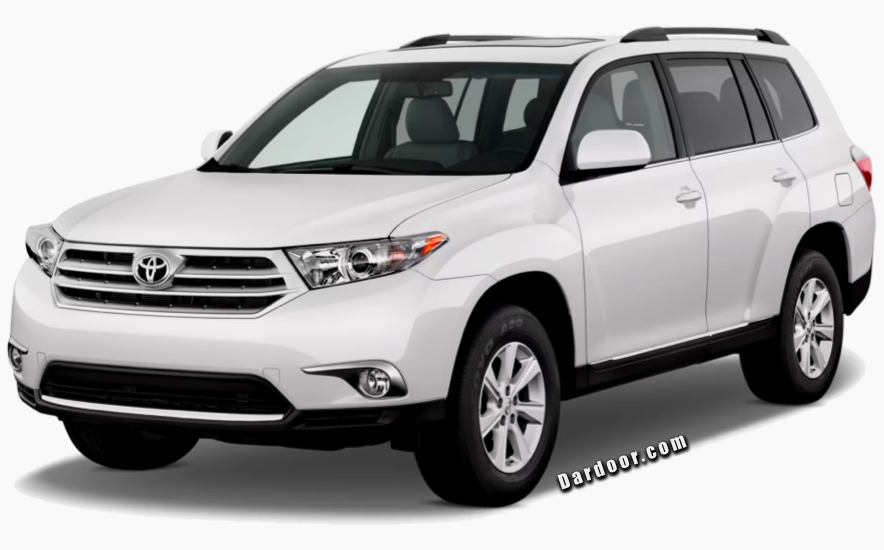
This is the original OEM workshop manual for the 2008-2013 Toyota Highlander Limited, with the wiring diagram, also known as the Toyota Kluger in Australia.
🎯 Who this guide is for: owners, DIYers, technicians, and used-car shoppers who want the most common problems, typical repair costs, and what to check before buying.
Technical Specs (Typical for 2008–2013)
- Class: Midsize crossover SUV (3-row available)
- Drivetrain: FWD or AWD (varies by trim)
- Engines (varies by year/trim):
- 3.5L V6 (most common)
- 2.7L I4 (later years)
- Hybrid option (select years/trims)
- Transmission: Automatic (varies by engine/year)
- Towing (varies): commonly up to ~3,500 lb (4-cyl) and up to ~5,000 lb (V6, properly equipped)
- Notes: Specs depend heavily on engine/trim/market—always confirm by VIN/build sheet.
Performance & Driving
- Comfort-first tuning: smooth ride, family-friendly cabin, good road isolation.
- V6 models feel strong and confident at highway speeds; 4-cylinder prioritizes economy.
- AWD is helpful for winter traction, but it’s not a hardcore off-roader.
- Real-world tip: keep tires aligned and fluids fresh—these SUVs rack up miles fast, and neglected maintenance shows up as “mystery” noises.
Top 10 Common Mechanical Issues (Owner-Reported) — Symptoms • Root Cause • Fix • Cost
1- Oil cooler line leak (V6 models)
– Symptoms: Oil spots under front, burning oil smell, low oil level warning, oily underbody.
– Root Cause: Aging rubber oil cooler hose/line section can seep or rupture with heat cycles.
– Fix: Replace oil cooler line assembly with updated/metal line where available; clean area and verify no further leaks.
– Cost to Fix: $250–$650 (typical) / $800–$1,500 (if run low on oil and secondary damage occurs)
2- Water pump seep / coolant smell (V6)
– Symptoms: Sweet coolant odor, pink/white crusting near pump, slow coolant loss, occasional overheating.
– Root Cause: Water pump seal/bearing wear over time.
– Fix: Replace water pump (often bundled with belt, idlers, fresh coolant); pressure-test after repair.
– Cost to Fix: $500–$1,200
3- Overheating from radiator / hose aging
– Symptoms: Temp gauge climbing, coolant loss, heater weak, coolant stains at radiator seams.
– Root Cause: Plastic end tanks, seals, and hoses age; small leaks become big quickly under load.
– Fix: Pressure test; replace radiator/hoses as needed; new cap; proper bleed procedure.
– Cost to Fix: $300–$1,100
4- Front control arm bushings / ball joints wear
– Symptoms: Clunks over bumps, wandering steering, uneven tire wear, vibration under braking.
– Root Cause: Rubber bushing fatigue + road salt + heavy family-hauler duty.
– Fix: Inspect joints/bushings; replace control arms or bushings; align afterward.
– Cost to Fix: $450–$1,400 (pair + alignment)
5- Brake vibration / rotor thickness variation
– Symptoms: Steering wheel shake while braking, pulsation through pedal.
– Root Cause: Heat + pad deposits + rotor runout; sometimes wheel torque issues.
– Fix: Measure runout; replace/true rotors; replace pads; torque wheels correctly; bed-in pads.
– Cost to Fix: $250–$800 (axle) / $900–$1,600 (both axles)
6- Exhaust leak / heat shield rattle
– Symptoms: Rattle at idle, ticking on acceleration, exhaust smell near cabin sometimes.
– Root Cause: Corroded heat shield fasteners or small exhaust gasket leaks with age.
– Fix: Secure/replace heat shields; smoke-test exhaust; replace gaskets/hardware if leaking.
– Cost to Fix: $80–$350 (heat shield) / $250–$1,000 (leak repair varies)
7- Engine mounts worn (V6)
– Symptoms: Vibration at idle, clunk on gear changes, harshness under throttle.
– Root Cause: Mount rubber collapses over mileage; fluid-filled mounts can leak.
– Fix: Inspect mounts; replace failed mount(s); recheck drivetrain alignment.
– Cost to Fix: $350–$1,200
8- A/C compressor or condenser issues
– Symptoms: Warm air, noisy compressor, oily residue at condenser, intermittent cooling.
– Root Cause: Compressor wear, leak at seals, or condenser corrosion/impact damage.
– Fix: Recover/recharge with leak test; replace failed component; replace drier where required; evacuate properly.
– Cost to Fix: $250–$600 (diagnosis + recharge) / $900–$2,200 (component replacement)
9- AWD transfer case / rear differential seepage (AWD)
– Symptoms: Fluid spots, damp housings, whining under load (if low), burning gear oil smell.
– Root Cause: Seal aging + fluid neglect; salt exposure accelerates seepage.
– Fix: Clean and confirm leak; replace seals; service fluids; check for vent blockage.
– Cost to Fix: $250–$900 (seals + fluid) / $1,200–$2,800 (if damage from low fluid)
10- EVAP system leaks (loose cap / cracked hoses)
– Symptoms: Check Engine light, fuel smell, failed emissions test, code for leak/purge flow.
– Root Cause: Aging hoses, purge/vent valve issues, loose/failed gas cap seal.
– Fix: Smoke-test EVAP; replace cap/hoses/valves as needed; clear and verify readiness monitors.
– Cost to Fix: $120–$650
⚠️ Is it safe to drive with these mechanical issues?
Some issues are “annoying” (heat shield rattle), but others are not negotiable: coolant leaks/overheating, brake pulsation with long stopping distances, and drivetrain fluid loss can quickly become unsafe. If the temperature gauge climbs or you see active leaking, fix it before daily driving.
Some issues are “annoying” (heat shield rattle), but others are not negotiable: coolant leaks/overheating, brake pulsation with long stopping distances, and drivetrain fluid loss can quickly become unsafe. If the temperature gauge climbs or you see active leaking, fix it before daily driving.
Top 10 Common Electrical Issues (Owner-Reported) — Symptoms • Root Cause • Fix • Cost
1- Battery drain / parasitic draw
– Symptoms: Dead battery after sitting, slow crank, random dash warnings after jump-starts.
– Root Cause: Aging battery, interior lights/door switches, aftermarket accessories, or modules staying awake.
– Fix: Battery & alternator test; parasitic draw test; isolate circuit; rewire accessories to ignition source.
– Cost to Fix: $180–$450 (battery/diagnosis) / $450–$1,200 (if module/repair work needed)
2- Check Engine light from oxygen sensor aging
– Symptoms: MIL on, reduced fuel economy, failed emissions readiness.
– Root Cause: O2 sensor response slows with age; exhaust leaks can mimic sensor failure.
– Fix: Verify leaks; check live data; replace affected sensor; clear and confirm monitors run.
– Cost to Fix: $220–$650 (per sensor, installed)
3- TPMS warning light (sensor battery end-of-life)
– Symptoms: TPMS light on, intermittent warning, no actual tire pressure loss.
– Root Cause: TPMS sensor internal batteries die after years.
– Fix: Replace sensors (best during tire service); program IDs; verify system reset procedures.
– Cost to Fix: $220–$800 (depending on how many sensors)
4- Door lock actuator failure
– Symptoms: Locks don’t respond, slow lock/unlock, one door inconsistent.
– Root Cause: Actuator motor wear and mechanism drag over time.
– Fix: Confirm power/ground; replace actuator; lubricate latch linkage.
– Cost to Fix: $250–$650 (per door)
5- Power window switch/regulator issues
– Symptoms: Window slow, stops midway, won’t auto-up/down, grinding noises.
– Root Cause: Regulator wear, dry channels, switch wear, anti-pinch calibration drift.
– Fix: Lube channels; reset auto function; replace regulator/motor or switch if confirmed.
– Cost to Fix: $180–$850
6- HVAC actuator clicking / incorrect vent mode
– Symptoms: Clicking behind dash, air stuck on defrost or wrong vents, inconsistent temp.
– Root Cause: Actuator gear wear or lost calibration.
– Fix: Run HVAC self-test; recalibrate; replace faulty actuator if needed.
– Cost to Fix: $220–$900
7- Instrument cluster/interior light flicker
– Symptoms: Flickering backlight, dim cluster, random warning lights that disappear.
– Root Cause: Low voltage, loose ground, aging illumination circuits.
– Fix: Load-test battery; clean grounds; check alternator ripple; repair connections.
– Cost to Fix: $120–$650 / $650–$1,500 (if cluster repair needed)
8- Radio/infotainment glitches
– Symptoms: Frozen screen, no audio, random reboots, Bluetooth issues (if equipped).
– Root Cause: Aging head unit components, software instability, voltage dips.
– Fix: Check updates (where supported); reset; verify power/ground; repair/replace unit if failed.
– Cost to Fix: $150–$450 (diagnosis) / $450–$1,800 (repair/replace)
9- Key fob/remote range issues
– Symptoms: Short range, intermittent unlocking, “Key not detected” style behavior (if smart features).
– Root Cause: Weak fob battery, antenna issues, interference.
– Fix: Replace fob battery first; test spare key; scan body codes; inspect antennas if persistent.
– Cost to Fix: $10–$80 (battery) / $180–$700 (diagnosis/antenna work)
10- ABS/VSC lights triggered by wheel speed sensor faults
– Symptoms: ABS light on, VSC/TRAC light, traction control disabled messages.
– Root Cause: Wheel speed sensor damage, corroded tone ring, harness issues, low voltage events.
– Fix: Scan ABS codes; inspect sensor and wiring; replace sensor; clean tone ring; confirm battery health.
– Cost to Fix: $180–$650 (per sensor) / $650–$1,400 (if hub/tone ring work required)
Pros & Cons
| Pros | Cons |
|---|---|
| Comfortable, quiet, family-friendly road manners | V6 models can be thirsty in city driving |
| Strong long-term durability when maintained | Neglect turns “cheap Toyota” into expensive catch-up maintenance |
| Practical 3-row packaging (depending on trim) | Third row is best for kids/short trips |
| AWD option is excellent for winter traction | AWD adds fluid services and potential seepage points |
| Huge parts availability + tons of shop familiarity | Older tech feels dated vs modern competitors |
Maintenance Schedule
| Interval | Service | Notes |
|---|---|---|
| Every 5,000 mi / 8,000 km | Oil & filter; tire rotation; inspect brakes/fluids | Short trips/towing = stick to 5k |
| Every 15,000 mi / 24,000 km | Cabin filter; inspect suspension/steering; check battery/charging | Catch bushings early to save tires |
| Every 30,000 mi / 48,000 km | Engine air filter; brake fluid check; alignment check | Brake fluid service is cheap insurance |
| Every 50,000–60,000 mi / 80,000–96,000 km | Transmission service (severity-based); coolant inspection; belts/hoses | Towing/hills/heat = shorter interval |
| Every 60,000 mi / 96,000 km (AWD) | Transfer case + rear diff fluid | More frequent if towing/off-road/salt |
| Every 100,000–120,000 mi / 160,000–190,000 km | Spark plugs (V6); cooling system deep inspection | Do water pump/radiator proactively if seepage appears |
Always match intervals to “severe service” if you tow, idle a lot, do short trips, or drive in heavy snow/salt.
Top Competitors
- Honda Pilot (2008–2013) ↗
- Chevrolet Traverse (2009–2012) ↗
- Ford Edge (2007–2014) ↗
- Mazda CX-9 (2007–2015) ↗
- Nissan Murano (2009–2014) ↗
🚨 Top 10 Recalls, Advisories & TSB Highlights (Verify by VIN)
Recalls and campaigns vary by production date and country. Always verify with your VIN using official recall tools (NHTSA in the US, Transport Canada in Canada, or Toyota’s official recall lookup).
- Airbag system recalls (including inflator-related campaigns) — Verify VIN; repairs are typically dealer-performed at no charge.
- Brake system advisories — Certain ABS/VSC behaviors may have service bulletins; confirm by VIN and dealer history.
- Fuel system advisories — Some Toyota populations have fuel pump or fuel system campaigns; confirm applicability.
- Steering-related service updates — Some vehicles receive TSB guidance for noises/feel; inspect before replacing parts.
- ECM/PCM calibration updates — Software updates may address drivability complaints in specific conditions.
- Seat belt / pretensioner advisories — Some vehicles have inspection/repair guidance for warning lights.
- Trailer/towing equipment advisories — If equipped with tow package, verify wiring and hitch installation compliance.
- Lighting or DRL advisories — Some model years have bulb/socket/ground issues addressed via service guidance.
- Body sealing/water intrusion advisories — Sunroof drains and rear hatch seals can have TSB-style fixes.
- Owner advisory: check open recalls before buying used — The best “repair” is a free dealer recall completion.
DTC Trouble Codes (10 per Module — Separate Tables)
Engine Control Module (ECM) — 10 Common Codes
| DTC | What It Means | Likely Root Cause | Recommended Fix |
|---|---|---|---|
| P0300 | Random/Multiple Cylinder Misfire | Ignition, fuel, vacuum leak | Check plugs/coils; smoke test; fuel trim diagnosis |
| P0302 | Cylinder 2 Misfire | Coil/plug/injector | Swap coil test; inspect plug; injector balance |
| P0171 | System Too Lean (Bank 1) | Vacuum leak, MAF, fuel pressure | Smoke test; clean MAF; fuel pressure test |
| P0174 | System Too Lean (Bank 2) | Vacuum leak, MAF, fuel pressure | Same as P0171; compare bank trims |
| P0420 | Catalyst Efficiency (Bank 1) | Cat aging, O2 drift, exhaust leak | Check leaks; verify O2 data; repair misfire first |
| P0430 | Catalyst Efficiency (Bank 2) | Cat aging, O2 drift, exhaust leak | Same as P0420 |
| P0455 | EVAP Large Leak | Cap, hose crack, vent/purge | Smoke EVAP; inspect cap; test valves |
| P0441 | EVAP Purge Flow Incorrect | Purge valve stuck | Command purge; replace valve if stuck |
| P0128 | Coolant Thermostat Below Temp | Thermostat, low coolant | Replace thermostat; fix leaks; bleed correctly |
| P0335 | Crankshaft Position Sensor | Sensor/wiring | Inspect harness; scope sensor; replace if confirmed |
Transmission Control Module (TCM) — 10 Common Codes
| DTC | What It Means | Likely Root Cause | Recommended Fix |
|---|---|---|---|
| P0700 | Transmission Control System (MIL Request) | TCM stored fault | Read TCM codes; diagnose underlying cause |
| P0717 | Input/Turbine Speed Sensor No Signal | Sensor/wiring | Check harness; test sensor; replace if needed |
| P0722 | Output Speed Sensor No Signal | Sensor/wiring | Inspect sensor/harness; verify with scan data |
| P0741 | TCC Performance/Stuck Off | Solenoid/valve body, fluid | Check slip data; service fluid; solenoid tests |
| P0751 | Shift Solenoid A Performance | Solenoid/valve body | Electrical checks; fluid condition; repair as needed |
| P0761 | Shift Solenoid C Performance | Solenoid/valve body | Command tests; replace if faulty |
| P0776 | Pressure Control Solenoid Performance | Debris/valve body wear | Pan inspection; pressure tests; valve body service |
| P2714 | Pressure Control Solenoid D Performance | Hydraulic control | Electrical + hydraulic diagnosis |
| P0730 | Incorrect Gear Ratio | Low fluid, slip | Check fluid; adaptions; pressure test |
| P0796 | Pressure Control Solenoid C Performance | Valve body/solenoid | Electrical tests; fluid service; repair |
ABS / ESC (Brake System) — 10 Common Codes
| DTC | What It Means | Likely Root Cause | Recommended Fix |
|---|---|---|---|
| C0200 | FR Wheel Speed Sensor | Sensor/tone ring/wiring | Inspect sensor gap; repair harness; replace sensor |
| C0205 | FL Wheel Speed Sensor | Sensor/tone ring/wiring | Same as above |
| C0210 | RR Wheel Speed Sensor | Sensor/tone ring/wiring | Same as above |
| C0215 | RL Wheel Speed Sensor | Sensor/tone ring/wiring | Same as above |
| C1241 | Low Battery Voltage | Battery/alternator/grounds | Test battery/charging; clean grounds |
| C1336 | Zero Point Calibration Undone | Calibration lost | Perform zero point calibration procedure |
| C1201 | Engine Control System Malfunction | ECM fault triggers VSC | Fix engine codes first |
| C1256 | Accumulator Low Pressure | Hydraulic/ABS unit issue | Confirm with scan data; inspect hydraulics |
| C1441 | Yaw Rate Sensor Output | Sensor/calibration | Calibrate; replace if confirmed |
| C1300 | ABS ECU Malfunction | ECU/power/ground | Check power/ground; ECU diagnosis |
SRS Airbag System — 10 Common Codes
| DTC | What It Means | Likely Root Cause | Recommended Fix |
|---|---|---|---|
| B1801 | Driver Airbag Squib Circuit | Clock spring/connector | Inspect clock spring; SRS connectors |
| B1811 | Passenger Airbag Squib Circuit | Connector/wiring | Inspect connectors; verify resistance |
| B1650 | Occupant Classification System | Seat sensor/calibration | Calibrate; inspect seat wiring |
| B1785 | Side Airbag Circuit | Seat harness issue | Inspect seat wiring; repair/replace |
| B1795 | Curtain Airbag Circuit | Pillar/roof harness | Inspect connectors; repair wiring |
| B1000 | SRS ECU Malfunction | ECU/power fault | Check power/ground; replace ECU if confirmed |
| B1100 | Airbag Sensor Assembly | Sensor module fault | Confirm with scan tool; replace if needed |
| B1150 | Front Impact Sensor | Sensor damage/corrosion | Inspect sensor; replace if faulty |
| B1180 | Pretensioner Circuit | Pretensioner/wiring | Inspect connectors; replace if needed |
| B1660 | Seat Belt Buckle Switch | Switch/wiring | Inspect buckle wiring; replace buckle if faulty |
Body Control / CAN Communication — 10 Common Codes
| DTC | What It Means | Likely Root Cause | Recommended Fix |
|---|---|---|---|
| U0100 | Lost Comm With ECM/PCM | CAN/low voltage | Test battery; inspect CAN wiring; check grounds |
| U0121 | Lost Comm With ABS | CAN/power issue | Verify ABS power/ground; CAN continuity |
| U0140 | Lost Comm With BCM | BCM power/ground | Check fuses; grounds; connector integrity |
| U0155 | Lost Comm With Cluster | Cluster network fault | Check cluster supply; wiring |
| U0184 | Lost Comm With Radio | Infotainment network | Check radio power/ground; network hub |
| B1241 | Low Voltage (Body ECU) | Battery/charging | Load-test battery; alternator output |
| B2312 | Door Lock Circuit | Actuator/wiring | Test actuator; repair wiring |
| B2321 | Back Door Switch | Switch/harness | Test switch; repair harness |
| B2799 | Immobilizer Malfunction | Key/antenna/ECU | Try spare key; scan immobilizer; re-register keys |
| U0073 | CAN Bus Off | Short/open, module pulling bus | Isolate modules; inspect CAN; repair wiring |
Pro tip: If you see a bunch of U-codes at once, check battery voltage and charging ripple first. Low voltage causes “network chaos.”
❓ Frequently Asked Questions (FAQ)
Is the 2008–2013 Toyota Highlander reliable?
Generally yes — especially when owners stay on top of oil changes, cooling system health, and suspension wear. Most “big bills” come from neglected leaks (oil cooler line, water pump) or long-term wear items (control arms, mounts, brakes).
What should I check before buying a used Highlander from these years?
Check for oil leaks near the front of the engine (oil cooler line area), coolant crusting around the water pump/radiator, front-end clunks (control arms), smooth transmission shifts, and whether ABS/VSC lights have ever appeared. A pre-purchase inspection is worth it.
What’s the most expensive common repair?
Worst-case costs usually come from overheating events (if coolant leaks are ignored), AWD unit damage from low fluid, or major A/C repairs. Catch leaks early and costs stay reasonable.
Is it safe to drive with the VSC/TRAC/ABS lights on?
You can often drive cautiously to a shop, but stability/traction features may be disabled. If braking feels abnormal or the ABS light is on, get it diagnosed quickly — especially in winter conditions.
Which engine is best?
The V6 is the most popular for performance and towing capability. The 4-cylinder is typically chosen for economy, but it will feel slower when loaded with passengers. The best choice depends on your usage.
How often should transmission fluid be serviced?
If you tow, drive in mountains, or do lots of city stop-and-go, service it more often than “lifetime” marketing suggests. A conservative approach helps longevity.
Why does my Highlander clunk over bumps?
Common causes include front control arm bushings, sway bar links, or worn engine mounts. A quick suspension inspection usually finds it.
Why is my battery dying overnight?
The most common culprits are an aging battery, a door switch/interior light staying on, or an accessory (dash cam) wired to constant power. A parasitic draw test will pinpoint the circuit.
What are the best maintenance “must-dos” to make it last?
Keep oil changes frequent, fix any coolant leaks early, service AWD fluids if equipped, keep tires aligned/balanced, and address warning lights before they snowball into bigger repairs.
🏆 Final Verdict
The 2008–2013 Toyota Highlander earns its reputation as a dependable family SUV — not because it’s “magic,” but because its common problems are usually predictable and manageable. If you buy one with a clean maintenance history and you treat leaks and suspension wear early, it’s the kind of SUV that quietly racks up mileage for years.
📌 Best advice: prioritize a well-maintained example, confirm recall status by VIN, and budget a little for catch-up maintenance if the previous owner was “oil-change-only.”