

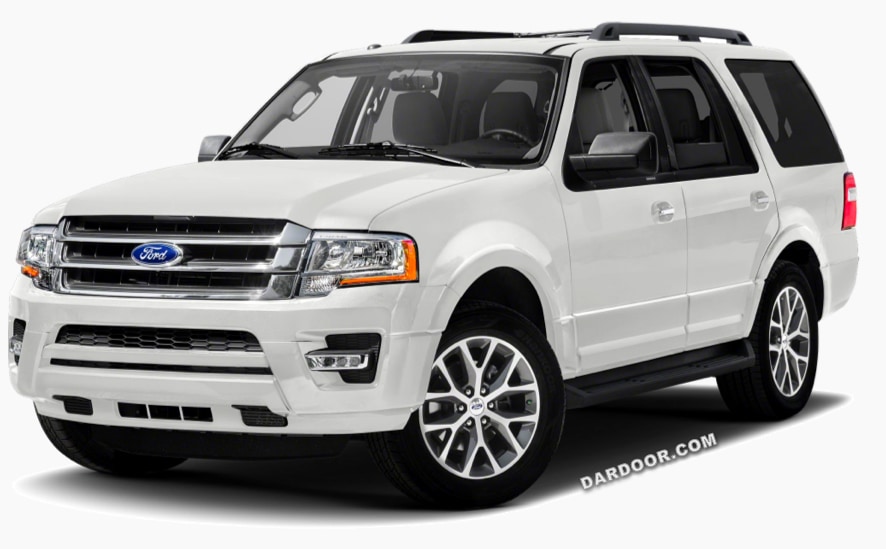
Get the the OEM Workshop Manual for 2015-2017 Ford Expedition – Complete with wiring diagrams in PDF Format
2015-2017 Ford Expedition Repair Manual
$26.90
Get the same level of detailed information that your official Ford dealer relies on with the original OEM workshop manual for the 2015-2017 Ford Expedition ↗. This comprehensive PDF includes detailed wiring diagrams and covers every aspect of service, repair, and maintenance.
| File Format | |
| File Language | English |
| You’ll Get | 183 MB |
| Page Count | 12,612 |
| Wiring Diagram | Included |
| Delivery Method | Instant download |
Features:
- Complete Coverage: Extensive details on every service, repair, and maintenance task for Ford Expedition models from 2015 to 2017.
- Detailed Wiring Diagrams: Clear and precise wiring diagrams to assist in troubleshooting and repairs.
- Step-by-Step Instructions: Simple, illustrated instructions for everything from basic tasks to full engine rebuilds.
- Expert Guidance: Comprehensive information trusted by Ford technicians for accurate service and repair.
Ensure your Ford Expedition gets the best care with this indispensable manual. Get your PDF copy today and maintain your vehicle with confidence!
This manual provides detailed instructions for maintenance, disassembly, reassembly, component inspection, adjustment, and diagnostics—intended for use by experienced mechanics. Proper application of this guide will help ensure thorough repairs and maintain your vehicle in peak condition.
Important Note: Before purchasing this manual, please check whether your vehicle is subject to any active service recalls, as authorized dealerships may perform necessary repairs free of charge. When replacing parts, always use genuine OEM components to ensure safety, reliability, and long-term performance.
Table of Contents : 2015-2017 Ford Expedition Repair Manual
1- General Information
-
- Commonly Used Abbreviations
- Trouble Shooting – Basic Procedures
- Emission Control Abbreviations
- Emission Applications
- Common Specifications and Procedures
- DTC Index
- Engine Overhaul Procedures
- Reminder Indicator Reset Procedures
2- Engine
-
- Starting System
- Exhaust System
- Engine Cooling System
- Engine Ignition System – 3.5L GTDI
- Engine Ignition System – 3.7L TI-VCT
- Engine Ignition System – 5.4L
- Engine Mechanical – 3.5L GTDI
- Engine Mechanical – 3.7L TI-VCT
- Engine Mechanical – 5.4L (3V)
- Engine Mechanical – 5.4L
- Fuel System – General Information
- Fuel Tank & Lines
3- Engine Performance
-
- Accessory Drive Belt
- Electronic Engine Controls
- Engine Controls – Introduction
- Engine Controls – Pinpoint Tests
- Engine Controls – Powertrain DTC Charts & Descriptions
- Engine Controls – Reference Values
- Engine Controls – Symptom Charts
- Engine Controls – Acceleration Control System
- Engine Controls – Description & Operation
- Engine Controls – Diagnostic Methods
- Engine Controls – Fuel Charging And Controls – 5.4L
- Fuel Charging System & Fuel Control System – Turbocharger 3.5L GTDI
- Fuel Charging System & Fuel Control System – 3.7L TI-VCT
- Fuel Charging System & Fuel Control System – 3.5L GTDI
- Engine Emission Control System
- Evaporative Emissions System
- Firing Order & Cylinder Identification
- Intake Air Distribution System & Intake Air Filtering System
4- Transmissions
-
- Automatic Transmission – 6R80
- Automatic Transmission Cooler
- Automatic Transmission Cooling System
- Automatic Transmission External Controls
- Transfer Case
- Four Wheel Drive (4WD) Systems
- Four Wheel Drive Systems
5- Brakes
-
- Anti-Lock Brake System (ABS) And Stability Control
- Brake System – General Information
- Rear Disc Brake System
- Front Disc Brake System
- Auxiliary Brake System
- Hydraulic Brake System Actuation
- Parking Brake System – Parking Brake & Actuation
- Power Brake Actuation – Brake Booster
6- Driveline/Axles
-
- Driveline System – General Information
- Driveshaft
- Front Drive Axle/Differential
- Rear Drive Axle/Differential – Ford 9.75 Inch Ring Gear
- Rear Drive Halfshafts
- Front Drive Halfshafts
7- Suspension
-
- Suspension System – General Information
- Ford Wheel Alignment Specifications
- Rear Suspension
- Front Suspension (4WD)
- Front Suspension (RWD)
- Vehicle Dynamic Suspension
- Wheels & Tires
8- Steering
-
- Steering Column
- Steering Column Switches
- Steering System
- Power Steering System
9- Accessories and Body, CAB
-
- APIM Hardware Testing
- Anti-Theft System – Passive Anti-Theft System (PATS)
- Anti-Theft System – Perimeter
- Body Panel System – Body Closures
- Body Panel System – Body Repairs
- Body Panel System – Front End Body Panels
- Body Panel System – Body System – General Information
- Bumper System
- Clock System
- Cruise Control System
- Exterior Lighting System
- Exterior Trim & Ornamentation
- Full Frame & Body Mounting
- Handles, Locks, Latches And Entry Systems
- Horn System
- Information Center – Instrumentation, Message Center, And Warning Chimes
- Information System And Entertainment System
- Instrument Cluster Illumination And Panel Illumination
- Instrument Panel And Console
- Interior Lighting System
- Interior Trim And Ornamentation
- Module Communications Network
- Module Configuration System
- Multifunction Electronic Modules
- Parking Aid System
- Rear View Mirror
- Seat System – Seats
- Sunroof – Roof Opening Panel
- Universal Transmitter – Remote Convenience System
- Windows And Glass – Glass, Frames And Mechanisms
- Wiper System & Washer System
10- Restraints
-
- Safety Belt System
- Supplemental Restraint System
11- HVAC
- Cabin Air Filter
- Auxiliary Climate Control
- Climate Control System
- Climate Control System – General Information And Diagnostics
12- Electrical
-
- OEM Component Harness Location Views
- OEM Connector End Views
- OEM Connector Repair Procedures
- OEM Electrical Wiring Diagram Introduction
- OEM Fuse And Relay Information
- OEM Ground Distribution
- OEM Vehicle Repair Location Charts
- OEM Wiring Diagram Symbols
- OEM Wiring Diagrams Component Testing
- OEM Wiring Diagrams
- OEM Wiring Harness Overview
- Battery, Battery Mounting & Battery Cables
- Charging System
- High Voltage Converter/PowerPoint Inverter
- System Wiring Diagrams
SAMPLE PAGES
CAUTION ↗: This OEM service and workshop repair manual provides detailed procedures for maintenance, disassembly, reassembly, inspection, adjustment, and diagnostics. It is intended as a comprehensive guide for experienced mechanics. To ensure thorough and accurate repairs that maintain your vehicle’s optimal performance, please read and follow this manual carefully. When replacing parts during any repair work, always use genuine Ford parts to ensure quality, safety, and reliability.
2015–2017 Ford Expedition (U324) — Specs, Common Problems, Maintenance, Recalls, DTC Codes
Technical Specs & Performance
Powertrain
- Engine: 3.5L EcoBoost V6 (Twin-Turbo)
- Output: 365 hp • 420 lb-ft (typical factory rating)
- Transmission: 6-speed automatic (SelectShift on many trims)
- Drivetrain: RWD or 4WD (low-range on 4WD models)
- Fuel tank (typical): ~34 gal (varies by configuration)
Performance (Typical)
- 0–60 mph: ~7 seconds (trim/weight/drivetrain dependent)
- Towing (properly equipped): up to ~9,200 lbs (varies by wheelbase/4WD/tow package)
- Seating: Up to 8 (depending on 2nd-row setup)
Size & Practicality (Typical)
- Body style: Full-size SUV (standard wheelbase + EL/Max long wheelbase in some markets)
- Strengths: high towing capability, large cabin, strong highway power
📝 Note: Exact specs vary by trim (XLT/Limited/King Ranch/Platinum), wheelbase, and drivetrain.
Top 10 Common Mechanical Issues (Reported) — Root Cause + Fix
- Turbocharger rattle / reduced boost (underboost feel)
– Root cause: wastegate wear, actuator issues, boost leaks, or carbon buildup affecting airflow control.
– Fix: smoke-test intake/charge pipes, repair leaks, inspect wastegate play/actuator operation, clean/inspect MAP/charge-air sensors; replace turbo/actuator if out of spec. - Misfires under load (shudder, flashing MIL)
– Root cause: worn spark plugs, weak coils, moisture intrusion, or heavy carbon on valves/injectors (DI engines).
– Fix: replace plugs at proper gap/interval, swap coils as needed, inspect boots, consider injector service; intake valve cleaning if carbon-related. - Timing chain stretch / cam phaser noise (rattle on start)
– Root cause: oil maintenance delays, chain wear, tensioner/guide wear over mileage.
– Fix: verify oil pressure/condition, check cam correlation, replace timing set (chains/guides/tensioners) if confirmed; keep strict oil-change intervals. - Coolant leaks (sweet smell, low coolant)
– Root cause: aging hoses, fittings, water pump seepage, or plastic connector fatigue.
– Fix: pressure test, replace leaking hose/fitting, inspect water pump and thermostat housing; refill with correct coolant and bleed properly. - 6R80 harsh shifts / delayed engagement
– Root cause: old fluid, adaptive shift strategy out of range, solenoid wear, or valve body issues.
– Fix: service transmission fluid (correct spec), perform adaptive relearn, scan for TCM codes, update calibration if applicable; valve body/solenoids if persistent. - Rear suspension sag or “floaty” ride
– Root cause: worn shocks/struts, tired rear springs, or air-leveling components (if equipped).
– Fix: inspect for leaks/wear, replace shocks and/or springs; repair air lines/compressor if equipped. - Steering feel changes / clunks over bumps
– Root cause: worn tie rods, ball joints, sway bar links/bushings (common on heavy SUVs).
– Fix: inspect front end, replace worn joints/links/bushings, align vehicle. - Brake vibration / pulsation
– Root cause: rotor hot spots/warping from towing, heavy braking, or caliper slide issues.
– Fix: measure rotor runout, replace/turn rotors as appropriate, service caliper slides, upgrade pads for towing use. - Exhaust leaks / ticking sound
– Root cause: manifold gasket leakage, fastener fatigue, or cracks over heat cycles.
– Fix: locate leak (smoke/soapy test), replace gasket/hardware, repair cracked sections. - Engine overheating in severe use (towing/hot weather)
– Root cause: cooling system inefficiency (radiator, fan, thermostat), low coolant, or restricted airflow.
– Fix: verify fan operation, clean radiator stack, replace thermostat if sticking, restore coolant level, inspect for leaks and blockage.
Top 10 Common Electrical Issues (Reported) — Root Cause + Fix
- HVAC blower motor stops / intermittent (burning smell possible)
– Root cause: blower motor failure or overheating resistor/module wiring behind glove box area.
– Fix: inspect connector for heat damage, replace blower motor/resistor as needed; ensure recall remedy performed if applicable. - Rearview camera image blank/distorted/inverted
– Root cause: camera module/PCB faults or connector issues.
– Fix: verify power/ground, inspect harness, replace camera; check for recall coverage. - Battery drain (overnight dead battery)
– Root cause: modules not going to sleep (SYNC/infotainment, door modules), aftermarket accessories, weak battery.
– Fix: parasitic draw test, update modules if needed, repair faulty module, replace aging battery with correct spec. - SYNC/infotainment freezing, reboot loops, Bluetooth issues
– Root cause: software bugs, APIM faults, corrupted settings.
– Fix: master reset, update software, inspect APIM connections; replace APIM if repeated failures. - Parking sensors intermittent / false beeps
– Root cause: harness damage, moisture in sensors, connector corrosion in bumper area.
– Fix: scan for parking aid faults, inspect/repair harness, replace sensor(s), clean and reseal connectors. - Power running boards intermittent (if equipped)
– Root cause: water intrusion, worn motor/gear, hinge binding, control module faults.
– Fix: clean/lube pivots, inspect wiring, replace motor/module as needed; recalibrate if supported. - Door lock/Keypad issues (no response)
– Root cause: keypad/door module fault, wiring in door jamb, low voltage events.
– Fix: check for broken wires in hinge boot, test door module, reprogram/replace as required. - Instrument cluster warnings that don’t match conditions
– Root cause: cluster software glitches or communication errors.
– Fix: scan for network/IPC codes, update cluster calibration, repair CAN issues if found. - Trailer wiring faults (no lights / intermittent)
– Root cause: corrosion in connector, damaged harness near hitch, blown fuses from shorts.
– Fix: test trailer plug pins, repair harness, use dielectric grease, confirm fuse/relay integrity. - Airbag light on / seat belt pretensioner warnings
– Root cause: pretensioner circuit resistance/corrosion, seat wiring movement, connector issues.
– Fix: scan SRS codes, inspect under-seat connectors, repair/replace pretensioner components; verify recall repairs where applicable.
✅ Pros & ❌ Cons
| ✅ Pros | ❌ Cons |
|---|---|
| Strong EcoBoost torque & confident highway passing | Turbo/ignition maintenance can be costly at higher mileage |
| Excellent towing capability when properly equipped | Real-world fuel economy can drop noticeably when towing |
| Spacious 3-row cabin and big cargo area | Some owners report interior rattles and trim noise over time |
| Comfortable ride for long trips | Blower motor/under-dash electrical concerns (check recall status) |
| Wide aftermarket + strong service support | Heavy SUV wear items (brakes/suspension) can add up |
🗓️ Maintenance Schedule (Practical Guide)
| Interval | Service Items | Why It Matters ✅ |
|---|---|---|
| Every 5,000–8,000 mi (8,000–13,000 km) | Oil & filter • Inspect fluids • Check leaks | Protects turbos/timing system and reduces sludge risk |
| Every 15,000 mi (24,000 km) | Engine air filter • Tire rotation • Brake inspection | Maintains efficiency, tire life, and braking performance |
| Every 30,000 mi (48,000 km) | Brake fluid check • Alignment check • Battery test | Helps prevent braking issues and electrical gremlins |
| Every 45,000–60,000 mi (72,000–96,000 km) | – Spark plugs (EcoBoost critical) • Replace cabin filter | Reduces misfires under load and protects coils/turbos |
| Every 60,000–100,000 mi (96,000–160,000 km) | Transmission service (usage dependent) • Coolant inspection | Improves shift quality and cooling system reliability |
| Before/After heavy towing season | Inspect hitch/wiring • Check brakes/rotors • Cooling check | Prevents overheating, brake fade, and trailer electrical faults |
📝 Tip: If you tow often, shorten oil, brake, and transmission service intervals. The EcoBoost platform rewards clean oil and timely plugs.
🏁 Top Competitors
- 🟦 Chevrolet Tahoe (2014–2019) — Dardoor Manual Link ↗
- 🟥 GMC Yukon (2014–2019) — Dardoor Manual Link ↗
- 🟩 Toyota Sequoia (All manuals category) — Dardoor Manual Link ↗
- 🟨 Nissan Armada (2015) — Dardoor Manual Link ↗
- ⬛ Cadillac Escalade (2007–2013) — Dardoor Manual Link ↗
📣 Recalls, Advisories & Safety Alerts
⚠️ Important: Recall coverage depends on VIN, build date, and market. Always verify using your VIN (Ford/Transport Canada/NHTSA databases).
- Recall: Rearview camera may show distorted/inverted/blank image (includes 2015–2017 Expedition coverage under certain campaigns).
- Recall: Rearview camera connector/PCB terminal issues (notably affecting some 2015 units).
- Recall: Front HVAC blower motor failure behind glovebox may increase fire risk (2015–2017).
- Recall: Brake master cylinder leak into brake booster can reduce braking performance (notably 2016–2017 under key campaigns).
- Recall: Expanded brake master cylinder campaign coverage on certain 2017–2018 applications (some 2017 Expeditions included).
- Recall: Seat belt pretensioner concern (warning light / unintended deployment risk in certain campaigns; verify VIN coverage).
- TSB/SSM: Instrument cluster overspeed warning displayed without reaching the speed (software-related cluster behavior).
- TSB/SSM: Parking aid sensor harness availability/service guidance for certain 2015–2017 Expedition/Navigator applications.
- TSB/SSM: HVAC blower intermittently inoperative guidance for certain Ford/Lincoln platforms including Expedition/Navigator ranges.
- TSB/SSM: No-start with DTC P025A stored (fuel pump module control circuit guidance noted for some 2016–2017 applications).
✅ Best practice: Before buying or servicing, run a VIN recall check and ask a dealer to confirm open campaigns.
DTC Trouble Code List
🧠 Engine Control Module (ECM)
| Code | Meaning (Typical) | Likely Area to Check 🔍 |
|---|---|---|
| P0300 | Random/Multiple Cylinder Misfire | Plugs/coils, injectors, vacuum leaks |
| P0171 | System Too Lean (Bank 1) | Intake leaks, MAF/MAP, fuel delivery |
| P0174 | System Too Lean (Bank 2) | Intake leaks, fuel trims, PCV |
| P0299 | Turbo/Supercharger Underboost | Boost leaks, wastegate, charge piping |
| P0012 | Camshaft Timing Over-Retarded (Bank 1) | Oil quality, VCT solenoid, timing wear |
| P0016 | Crank/Cam Position Correlation | Timing chain stretch, sensor issues |
| P0128 | Coolant Thermostat (Below Regulating Temp) | Thermostat, coolant level, sensor |
| P0456 | EVAP Leak (Very Small) | Gas cap, purge/vent, EVAP lines |
| P0420 | Catalyst Efficiency Below Threshold | O2 sensors, exhaust leaks, cat health |
| P2106 | Throttle Actuator Control System (Forced Limited Power) | Throttle body, wiring, related faults |
⚙️ Transmission Control Module (TCM)
| Code | Meaning (Typical) | Likely Area to Check 🔍 |
|---|---|---|
| P0715 | Input/Turbine Speed Sensor Circuit | Sensor, wiring, connector |
| P0720 | Output Speed Sensor Circuit | Sensor, tone ring, wiring |
| P0731 | Gear 1 Incorrect Ratio | Fluid condition, internal slip, solenoids |
| P0732 | Gear 2 Incorrect Ratio | Valve body/solenoids, clutches |
| P0741 | TCC Performance / Stuck Off | Torque converter, solenoid, fluid |
| P0750 | Shift Solenoid A Malfunction | Solenoid, valve body, harness |
| P0775 | Pressure Control Solenoid B | Solenoid, pressure issues, fluid |
| P0868 | Transmission Fluid Pressure Low | Fluid level, pump, leaks |
| P087A | Transmission Fluid Pressure Sensor/Switch | Pressure switch, wiring |
| P2701 | Friction Element Apply Time Range/Performance | Adaptive learn, internal wear, fluid |
🛑 ABS / ESC (Brake System)
| Code | Meaning (Typical) | Likely Area to Check 🔍 |
|---|---|---|
| C0031 | LF Wheel Speed Sensor Signal | Sensor, tone ring, harness |
| C0034 | RF Wheel Speed Sensor Signal | Sensor, hub, wiring |
| C0040 | Wheel Speed Sensor (General) | Sensor plausibility, wiring faults |
| C0051 | Steering Wheel Position Sensor | SAS calibration, sensor alignment |
| C0110 | Pump Motor Circuit | ABS pump, relay, power/ground |
| C1095 | ABS Hydraulic Pump Motor Circuit Failure | Pump motor, wiring, module |
| C1145 | Wheel Speed Sensor Signal Missing | Hub bearing play, sensor gap |
| C1233 | Wheel Speed Sensor Rear Center Input Missing | Rear sensor, harness routing |
| C1288 | Brake Pressure Transducer Input | Pressure sensor, calibration |
| U0121 | Lost Communication With ABS Module | CAN wiring, module power/ground |
🎈 SRS Airbag System
| Code | Meaning (Typical) | Likely Area to Check 🔍 |
|---|---|---|
| B0020 | Driver Frontal Deployment Loop | Clockspring, connectors, module |
| B0022 | Passenger Frontal Deployment Loop | Harness, connectors, module |
| B0051 | Deployment Commanded / Event Data | Module history, crash data |
| B0092 | Pretensioner Circuit Fault | Seat belt pretensioner wiring |
| B00A0 | Occupant Classification System | Seat sensor/calibration |
| B00D5 | Side Airbag Circuit | Seat wiring, connectors |
| B1193 | Airbag Diagnostic Monitor Fault | Module power/ground, internal fault |
| B1881 | Airbag Indicator Circuit | Cluster indicator, wiring |
| B1B02 | Passenger Seat Belt Sensor | Buckle switch, harness |
| U0151 | Lost Communication With Restraints Control | CAN, module power/ground |
– Body Control / CAN Communication
| Code | Meaning (Typical) | Likely Area to Check 🔍 |
|---|---|---|
| U0100 | Lost Communication With ECM/PCM | CAN wiring, power/grounds |
| U0101 | Lost Communication With TCM | CAN lines, connector corrosion |
| U0121 | Lost Communication With ABS | ABS module, CAN integrity |
| U0140 | Lost Communication With BCM | BCM power/ground, network |
| U0155 | Lost Communication With Instrument Cluster | IPC connector, CAN faults |
| U0199 | Lost Communication With Telematics | TCU/module sleep/wake issues |
| U0401 | Invalid Data Received From ECM/PCM | Software mismatch, sensor plausibility |
| U0415 | Invalid Data Received From ABS | Network noise, module faults |
| U0422 | Invalid Data Received From BCM | BCM calibration, wiring |
| B10D7 | Accessory/Module Configuration Fault (Generic) | Module coding, battery/voltage events |
🧠 Reminder: DTC meanings vary by scan tool, module strategy, and calibration. Always confirm with live data and pinpoint tests.
🏆 Final Verdict
✅ The 2015–2017 Ford Expedition is a strong choice if you want big towing capability, real 3-row space, and effortless highway power from the EcoBoost V6.
The key to a happy ownership experience is preventive maintenance (oil + spark plugs on time), keeping an eye on cooling system health, and addressing electrical comfort issues early—especially HVAC blower and camera-related concerns.
- ⭐ Best for: families who tow, road-trip often, or need maximum space
- ⚠️ Watch-outs: turbo/ignition upkeep, suspension/brake wear, module/sleep battery drains
- 🔍 Must-do before buying used: scan modules, verify recall/campaign completion, inspect service history
| Brands | |
|---|---|
| File Format | |
| File Language | English |
| File Size | 183 MB |
| Page Count | 12,612 |
| Wiring Diagram Included | YES |
| Instant Download | YES |
| Searchable & Printable | YES |
Related products
-

2012-2014 Ford Kuga Repair Manual
$19.90 Add to cart -

2015-2018 Ford Focus MK3 Repair Manual
$24.90 Add to cart -
2006-2007 Ford Territory Repair Manual
$16.90 Add to cart -
2011-2014 Ford F-150 Repair Manual
$36.00 Add to cart -

2013-2015 Ford Mustang Repair Manual
$19.90 Add to cart -
2008-2014 Ford Falcon FG Repair Manual
$17.90 Add to cart -

2019 Ford Ranger Repair Manual
$35.90 Add to cart -
2011 Ford Ranger Repair Manual
$16.90 Add to cart