The Complete EV Bidirectional Charging Revolution: How V2G, V2H, and V2L Are Transforming Electric Vehicles Into Energy Powerhouses
Introduction: EVs as Dynamic Energy Ecosystems
Electric vehicles are no longer just transportation tools — they’re evolving into intelligent energy systems capable of revolutionizing how we generate, store, and distribute power. Bidirectional charging technology enables EVs to not only consume electricity but actively contribute back to homes, the electrical grid, and portable devices. This paradigm shift transforms every electric vehicle into a mobile power plant, opening unprecedented opportunities for energy independence, grid stability, and revenue generation.
The global bidirectional charging market is experiencing explosive growth, projected to expand from $70 million in 2025 to $844.1 million by 2035 — a remarkable 28.3% compound annual growth rate (CAGR). This surge reflects the growing recognition that EVs equipped with bidirectional capabilities can address critical energy challenges while providing tangible financial benefits to owners.
Understanding Bidirectional Charging: The Technical Foundation
Bidirectional charging employs sophisticated power electronics that enable energy flow in both directions through inverter-based systems. The core component is the on-board bidirectional charger (OBC), which utilizes advanced silicon carbide (SiC) or gallium nitride (GaN) transistors to achieve up to 97% efficiency while maintaining optimal thermal stability.
Technical Architecture Breakdown
| Technology Component | Function | Key Specifications |
| SiC MOSFETs | Bidirectional power conversion | 1,200V rating, 97% efficiency |
| Communication Protocols | EV-Grid synchronization | ISO 15118-20, CHAdeMO 3.0 |
| Smart Energy Management | AI-driven load optimization | Real-time demand prediction |
| Battery Management | Cycle optimization | >4,000 cycles, <3% annual degradation |
The latest ISO 15118-20 standard provides the communication framework enabling secure, standardized bidirectional power transfer between EVs and charging infrastructure. This protocol ensures seamless integration with smart grids while maintaining cybersecurity through mandatory TLS 1.3 encryption.
The Three Pillars of Bidirectional Charging
V2L (Vehicle-to-Load): Portable Power Liberation
Vehicle-to-Load represents the most accessible form of bidirectional charging, converting EVs into mobile generators capable of powering external devices. Modern V2L systems typically provide 1.9-3.6 kW of continuous power through standard AC outlets.
Real-World Applications:
- Camping and outdoor activities: Power cooking equipment, lighting, and electronics
- Emergency backup: Run critical household appliances during outages
- Construction sites: Operate power tools and equipment in remote locations
- Vehicle-to-Vehicle (V2V) charging: Emergency assistance to stranded EVs
Technical Specifications by Brand:
- Hyundai/Kia E-GMP Platform: 3.6 kW total (1.9 kW external port + 1.8 kW internal outlet)
- Tesla Cybertruck: 9.6 kW through five outlets (four 120V @ 2.4 kW each, one 240V @ 9.6 kW)
V2H (Vehicle-to-Home): Residential Energy Independence
Vehicle-to-Home technology enables EVs to power entire households, providing both cost savings and energy security. Modern V2H systems can deliver 9.6-11.5 kW of continuous power — sufficient to run most home appliances simultaneously.
Economic Impact:
A fully charged Ford F-150 Lightning with its 131 kWh battery can power an average home for 3 days at full load or up to 10 days with essential systems only. This capability proves invaluable during grid outages, natural disasters, or planned maintenance.
Installation Requirements:
V2H implementation requires specialized bidirectional home charging equipment, including:
- Bidirectional wallbox charger (e.g., Ford Charge Station Pro)
- Home integration system with automatic transfer switching
- Smart energy management software for load prioritization
V2G (Vehicle-to-Grid): Revenue-Generating Grid Services
Vehicle-to-Grid technology transforms EVs into distributed energy resources (DERs), enabling participation in utility markets for frequency regulation, peak shaving, and load balancing. V2G participants can generate substantial revenue while supporting grid stability.
Revenue Potential:
- Frequency regulation services: $40-50 per vehicle monthly
- Peak demand reduction: $1,000-2,000 annually in Georgia, $15,000-16,000 in Virginia
- Long-term projections: Up to $10,000 over 10 years with optimal participation
Grid Benefits:
When scaled across thousands of vehicles, V2G can provide gigawatts of flexible capacity, reducing the need for expensive peaking power plants while enabling higher penetration of renewable energy sources.
Market Growth and Economic Opportunities
Explosive Market Expansion
The bidirectional EV charging sector is experiencing unprecedented growth across multiple market segments:
- Global V2G market: $4.28 billion in 2025, reaching $34.84 billion by 2035
- Bidirectional charger hardware: $1.5-2.0 billion currently, projected $8-10 billion by 2030
- Customer participation rates: 60-70% of EV owners interested with proper incentives
Revenue Streams and Business Models
For EV Owners:
- Grid services compensation: $50-100 monthly average
- Time-of-use arbitrage: Buy low at night, sell high during peak hours
- Emergency power savings: Avoid generator costs and fuel expenses
For Fleet Operators:
- Demand charge reduction: Lower peak electricity costs
- Grid service aggregation: Pool vehicles for higher-value contracts
- Operational cost optimization: Reduce total cost of ownership
Battery Impact and Longevity Concerns
Minimal Degradation with Smart Management
Recent comprehensive studies demonstrate that properly managed bidirectional charging has minimal impact on battery lifespan:
- RWTH Aachen/Mobility House study: V2G adds only 1.7-5.8 percentage points of degradation over 10 years
- Korean Institute research: Controlled V2G use increases degradation by only 4-6% over a decade
- Renault Ampere data: Vehicles retain 94% battery capacity after 10 years with V2G participation
Optimized Charging Strategies
Modern battery management systems (BMS) employ sophisticated algorithms to minimize wear:
- Partial state-of-charge cycling to avoid stress from deep discharges
- Temperature management to prevent thermal degradation
- Smart scheduling to balance revenue generation with battery health
- Shallow discharge limits typically 20-80% state of charge range
Leading EVs with Bidirectional Capabilities
Tesla: Cybertruck Powershare Revolution
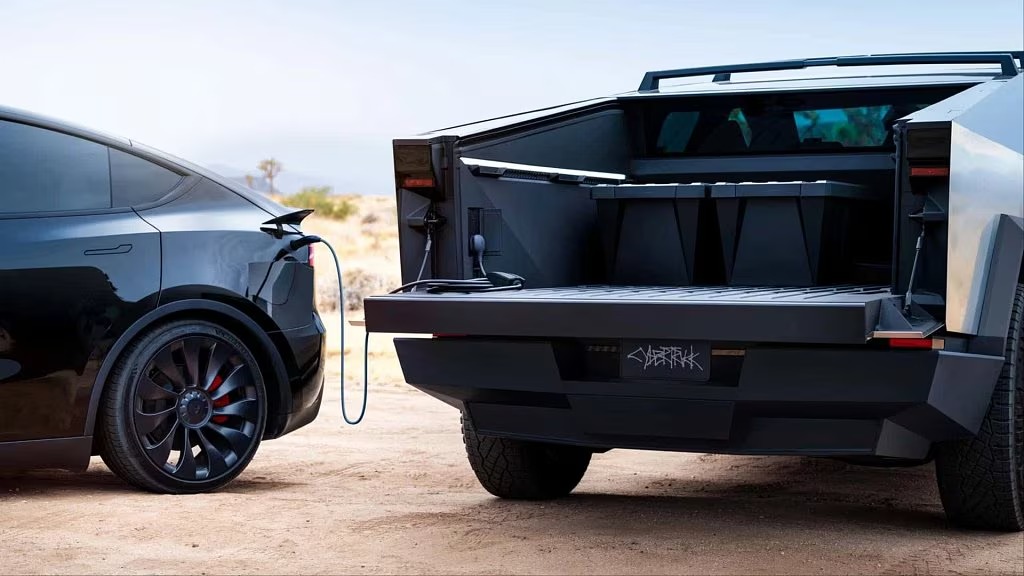
The Tesla Cybertruck currently stands as the only Tesla model offering full V2X capabilities through its Powershare system:
Specifications:
- V2H power output: 11.5 kW continuous via NACS port
- V2L capabilities: 9.6 kW through five onboard outlets
- Battery capacity: 123+ kWh (sufficient for 3 days home backup)
- Integration: Tesla Gateway and Universal Wall Connector required
Ford: Pioneer in V2H Technology
Ford F-150 Lightning established the V2H market with its Intelligent Backup Power:

Key Features:
- Power output: 9.6 kW continuous (Pro Power Onboard)
- Home backup duration: 3 days full power, 10 days essential loads
- Installation partner: Sunrun for home integration systems
Hyundai Motor Group: V2L Innovation Leaders
Hyundai and Kia pioneered accessible V2L technology across their E-GMP platform:

Model Coverage:
- Advanced V2X: Kia EV9, EV3; Hyundai Ioniq 9 (full V2G/V2H/V2L)
- V2L Standard: Ioniq 5, Ioniq 6, Kia EV6, Genesis GV60/GV70/G80
- Power output: 3.6 kW total (shared between external and internal outlets)
Volkswagen Group: Comprehensive Integration
VW Group offers bidirectional charging across its 77 kWh battery variants:
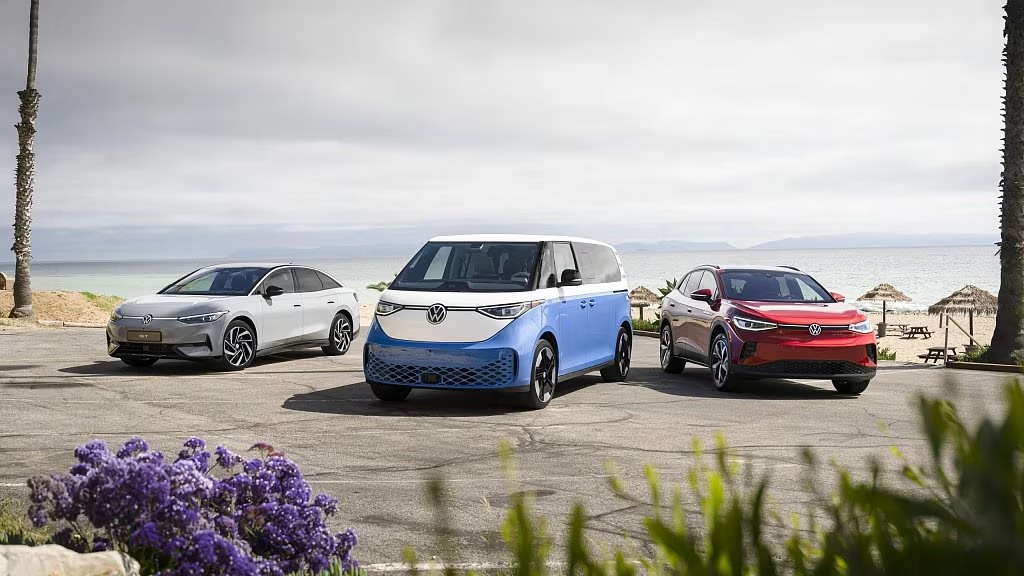
Brand Coverage:
- Volkswagen: ID.3, ID.4, ID.5, ID.7, ID.Buzz
- Audi: Q4 e-tron
- Škoda: Enyaq, Elroq
- Cupra: Tavascan, Born
General Motors: Ultium Platform Expansion
GM’s Ultium architecture enables V2X across multiple brands:
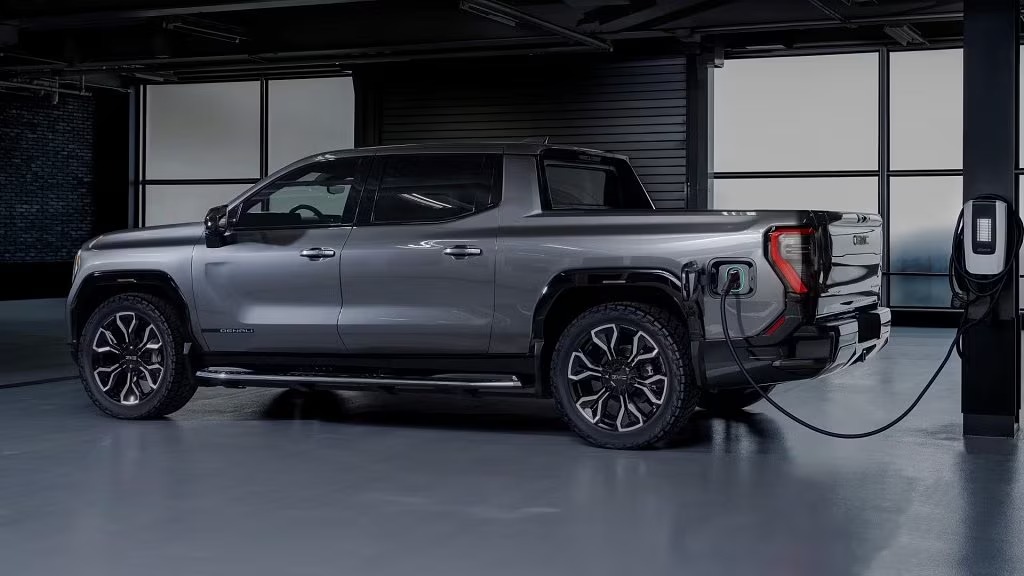
Model Portfolio:
- Chevrolet: Silverado EV, Equinox EV, Blazer EV
- Cadillac: Lyriq (2024+), Vistiq, Escalade IQ, Optiq
- GMC: Sierra EV, Hummer EV (with 19.2 kW charger option)
Nissan: V2G/V2H Pioneers
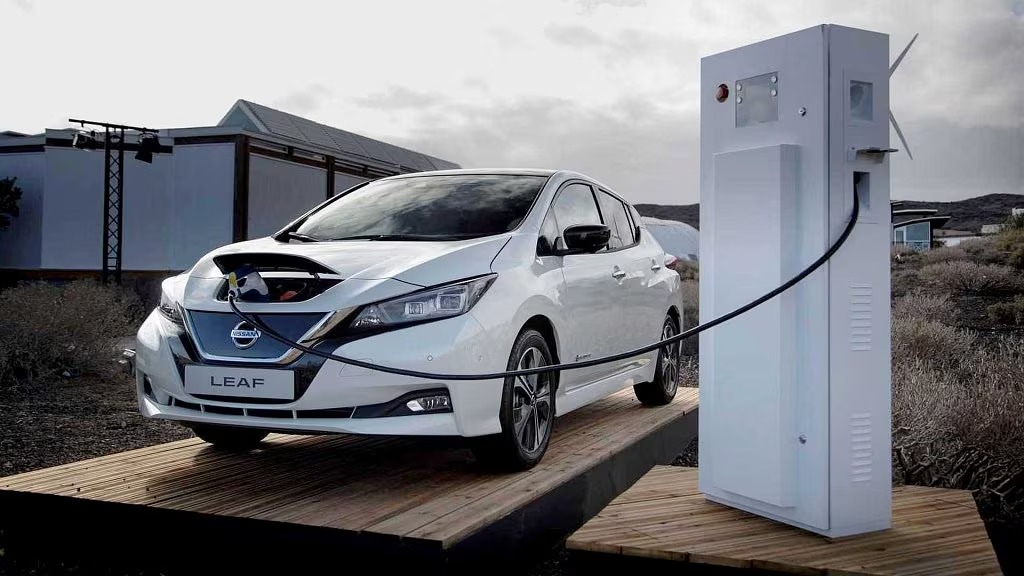
Nissan Leaf (2025 Third-Generation)
- Capabilities: Full V2X (V2L, V2H, V2G)
- Power Output: 1.5 kW via two 120V outlets (US models)
- Technical Details: New 75.1 kWh battery, 214 hp, 303-mile EPA range. Transitions from CHAdeMO to CCS/NACS for bidirectional support
- Market Significance: One of the longest-running V2G vehicles, pioneering since early 2010s
Nissan Ariya
- Capabilities: Hardware-ready for V2H/V2G, currently inactive
- Status: Awaiting software activation via OTA update
- Power Output: Not yet specified
- Technical Foundation: 87 kWh battery (AWD), 389 hp max, up to 304 miles range
Geely Holding (Polestar/Volvo/Zeekr): Comprehensive V2X Integration

Polestar 3 & 4
- Capabilities: Full V2X (V2L, V2H, V2G)
- Power Output: Up to 10.3 kW discharge capability
- Testing Status: Successfully demonstrated with Ambibox bidirectional charger without modifications
- Technical Specs: 111 kWh battery (Polestar 3), dual-motor AWD, up to 315 miles range
Polestar 2
- Current Status: V2L only
- Future Plans: V2H/V2G capabilities expected via software updates
- Technical Foundation: 78 kWh battery, 231-408 hp depending on variant
Volvo EX30
- Capabilities: Full V2X confirmed
- Power Output: Not officially disclosed
- Technical Specs: 69 kWh battery (64 kWh usable), 200-315 kW power, 435 km WLTP range
- Charging: 11 kW AC, 150 kW DC fast charging
Volvo EX90
- Capabilities: Full V2X (V2L, V2H, V2G)
- Power Output: Up to 11 kW bidirectional AC
- Technical Specs: 111 kWh battery, 402-510 hp, 310 miles EPA range
- Significance: Volvo’s first model with integrated bidirectional charging
Zeekr X
- Capabilities: V2L only via external adapter
- Power Output: Via Type 2 adapter
- Technical Specs: 69 kWh battery (66 kWh usable), 200-315 kW, 400-440 km WLTP
- Limitation: No V2H/V2G currently available
Zeekr 7X
- Capabilities: V2L confirmed
- Power Output: 3.3 kW AC via Type 2 adapter outlet
- Technical Specs: 75-100 kWh batteries, 310-475 kW power, 480-615 km range
- Charging: 800V architecture, 360 kW DC (10-80% in 13-16 minutes)
Renault: AC Bidirectional Innovation
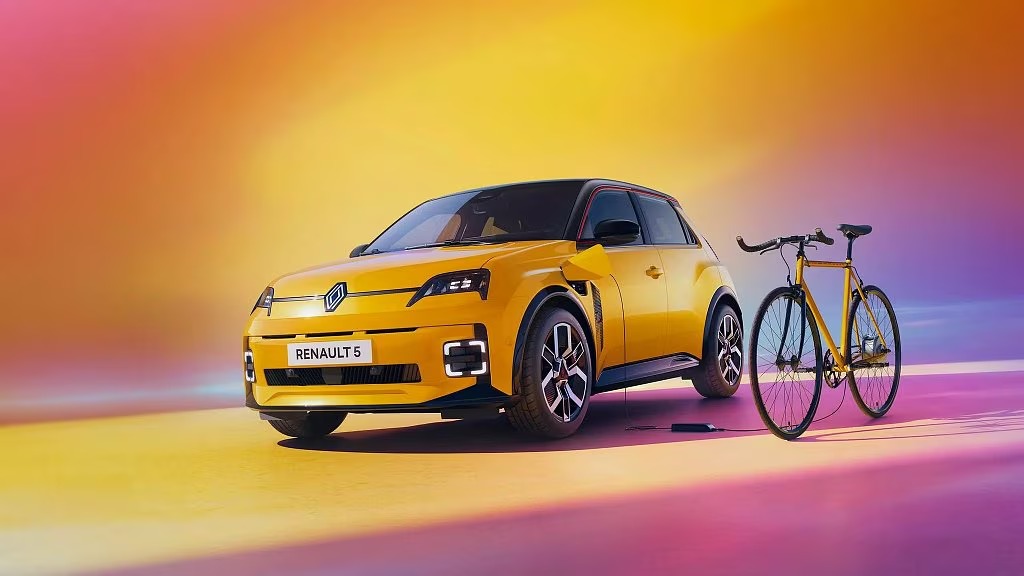
Renault 5 E-Tech (R5)
- Capabilities: Full V2X (V2L, V2H, V2G)
- Power Output: 11 kW bidirectional AC charger
- Technical Innovation: Uses AC bidirectional charging (not DC like most competitors), simplifying home integration
- System: Mobilize PowerBox Verso + Mobilize electricity contract
- Revenue Potential: Up to 50% of home charging costs offset in France
- Technical Specs: Ampere platform, B-segment EV
Renault 4 E-Tech
- Capabilities: Full V2X with same 11 kW bidirectional AC OBC as R5
- Launch: 2025
- Technical Foundation: Shares bidirectional architecture with R5
Renault Scenic E-Tech & Megane E-Tech
- Status: Awaiting official V2X confirmation
- Expectation: May receive bidirectional capabilities via OTA updates
BYD: Comprehensive V2L Deployment
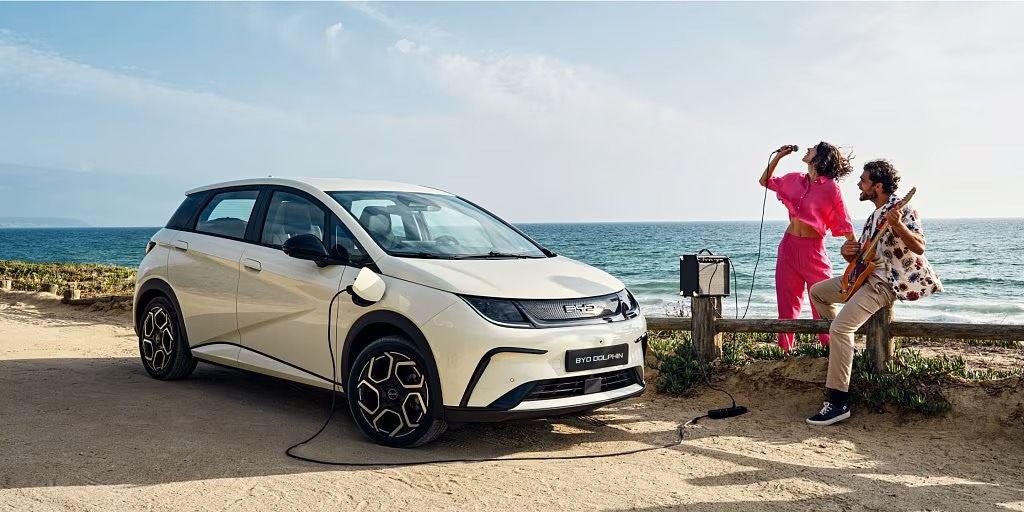
BYD Dolphin
- Capabilities: V2L only
- Power Output: 3.3 kW rated (3.6 kW maximum via OBC)
- Technical Specs: 44.9-60.5 kWh battery, 70-150 kW power, up to 427 km range
BYD Atto 3
- Capabilities: V2L only
- Power Output: 3.3 kW rated, real-world testing shows 2.2 kW continuous at 10A @ 220V
- Testing: Successfully sustained 10A continuous, 12-14A peak for short durations
- Technical Specs: 60.5 kWh battery, 150 kW DC charging
BYD Seal
- Capabilities: V2L only
- Power Output: 3.3 kW rated (3.6 kW OBC maximum)
- Technical Specs: 82.5 kWh battery, 150 kW RWD or 390 kW AWD, up to 570 km WLTP
BYD Seal U, Sealion 7, Han, Tang
- Capabilities: V2L across entire lineup from 2024+ production
- Power Output: 3.3 kW standard
- Future Outlook: Full V2X expected with upcoming Atto 2
Xpeng: V2L with V2X Roadmap

Xpeng G6
- Capabilities: V2L confirmed, V2X planned for 2025
- Power Output: 3.5 kW (6 kW listed in some markets) via Type 2 adapter
- Technical Specs: 68.5-80.8 kWh batteries, 218-358 kW power, 510-625 km range
- Charging: 800V architecture, 451 kW peak DC charging (5C capable), 10-80% in 12 minutes
Xpeng G9 & P7
- Capabilities: V2L confirmed (3.5 kW via adapter)
- Future Plans: V2X functionality optimistically expected 2025
- Technical Foundation: Similar bidirectional OBC architecture as G6
MG: Standard V2L Across Range
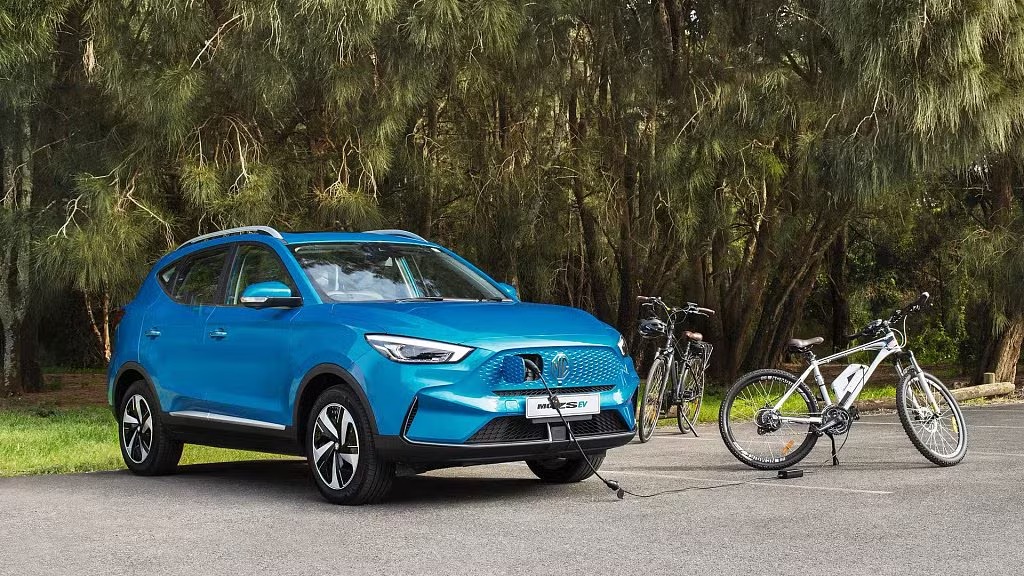
MG4
- Capabilities: V2L standard
- Power Output: 3.3 kW
- Technical Specs: 51-64 kWh batteries, 150-435 PS, 218-329 miles range
- User Feedback: Some users report inadequate power for certain applications
MG5 / MGS5 EV
- Capabilities: V2L (3.3 kW)
- Technical Specs: 49-64 kWh batteries, 170 kW RWD, 298 miles WLTP (Long Range)
MG ZS EV (2021+)
- Capabilities: V2L from 2021 model year onward
- Power Output: 3.3 kW
MG Cyberster
- Capabilities: V2L included
- Technical Specs: 77 kWh battery, 503 PS AWD, 0-62 mph in 3.2s, 276 miles WLTP
Stellantis (Peugeot/Citroën): Early V2G Pioneers
Peugeot iOn (2018+) & Citroën C-Zero (2017+)
- Capabilities: Full V2G/V2H pioneers
- Historical Significance: Among earliest EVs with bidirectional charging
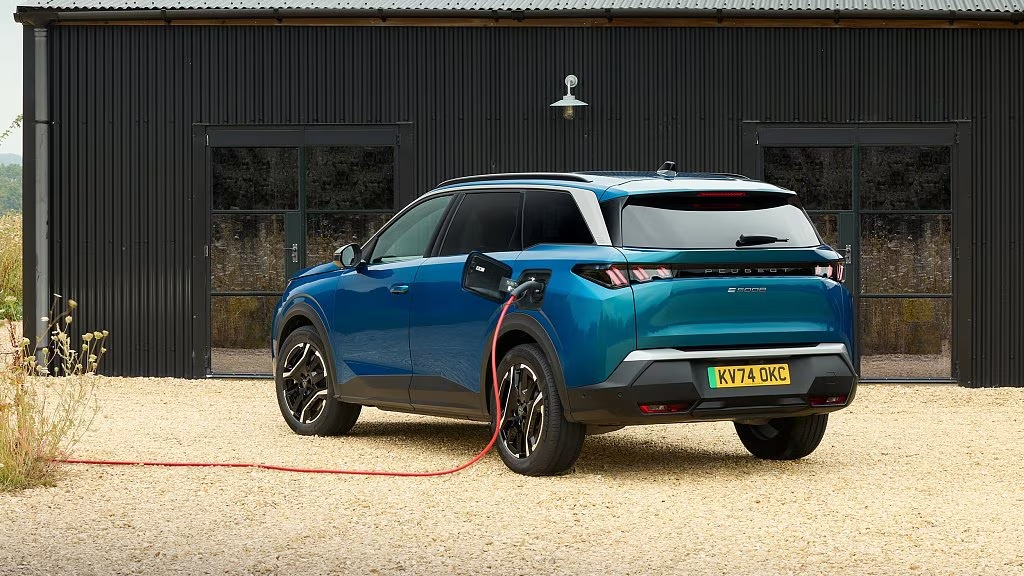
Peugeot e-3008 & e-5008
- Capabilities: V2L only (added September 2025)
- Power Output: Up to 3 kW via adapter
- Technical Specs:
- e-3008: 73-98 kWh batteries, 210-230 hp, 527-700 km WLTP range
- e-5008: Similar specs, 7-seater configuration, 668 km max range
- Future: V2H/V2G not currently announced
Rivian: High-Power V2X Coming

Rivian R1T & R1S
- Current Status: V2L via standard 110V outlets
- Announced: 24 kW DC bidirectional charger (highest power V2H in market)
- Timeline: Charger announced 2024 Investor Day, release date TBD
- Technical Foundation: All R1T/R1S hardware-capable, awaiting software activation via CCS port
- Future Platform: R2 will feature 11 kW AC bidirectional charger
- Battery: 135-180 kWh options, sufficient for extended home backup
Lucid: Premium V2X Development
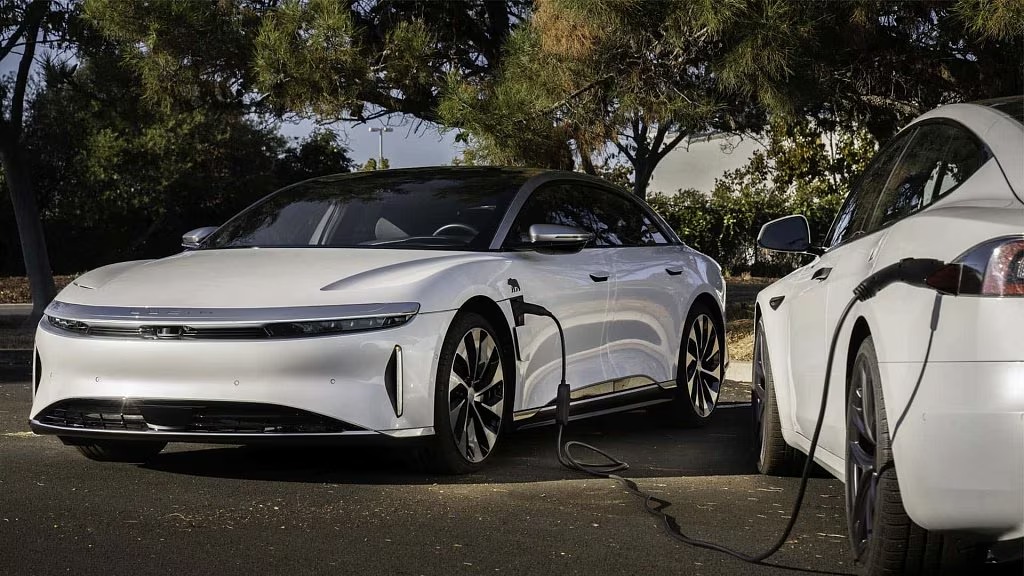
Lucid Air
- Current Capabilities: V2L via RangeXchange (9.6 kW V2V charging)
- Announced: V2H and V2G coming via future updates (no timeline)
- Technical Details: 240V AC @ 9.6 kW single-phase output for V2V
- Battery: 88-118 kWh options, up to 516 miles EPA range
- Hardware Status: Bidirectional hardware included, requires software activation
Lucid Gravity
- Expected: V2X capabilities similar to Air
- Outlets: Standard 120V outlets included
- Status: Launch pending, V2H/V2G not yet confirmed
General Motors Ultium Platform: Comprehensive V2H Deployment
Chevrolet Silverado EV, Equinox EV, Blazer EV (2024+)
- Capabilities: V2H via GM Energy PowerShift Charger
- V2G Status: Pilot programs with PG&E in California
- Incentives: Up to $4,500 for GM Energy V2H Bundle in PG&E territory
- Technical System: GM Energy PowerShift + V2H Enablement Kit
Cadillac Lyriq (2024+), Vistiq, Escalade IQ, Optiq
- Capabilities: Full V2H across Ultium lineup
- Important Note: Lyriq requires 2024+ model year for bidirectional support
- V2G Timeline: Pilot testing, broader rollout expected by 2026
GMC Sierra EV & Hummer EV (2024+)
- Capabilities: V2H capable
- Hummer Specification: Optional 19.2 kW on-board charger required for full capability
- Status: 2024+ model years with Ultium platform
Key Technical Findings
Market Maturity by Technology:
- V2L: 95.6% of analyzed models (43/45) — essentially standard
- V2H: 42.2% of models (19/45) — growing rapidly
- V2G: 22.2% of models (10/45) — early adoption phase
- Full V2X: 22.2% (10/45) — premium/forward-thinking brands
Power Output Ranges:
- V2L: 1.5-10.3 kW (most common: 3.3 kW)
- V2H: 9.6-24 kW (Rivian’s 24 kW DC leads the market)
- Charging Integration: Mix of DC-based (Ford, Rivian, Tesla) and AC-based (Renault) approaches
Regional Leaders:
- 🇨🇳 China: BYD, Xpeng, Zeekr (V2L universal, V2X emerging)
- 🇪🇺 Europe: Renault, Volkswagen Group, Volvo/Polestar (V2X focus)
- 🇺🇸 North America: GM, Ford, Rivian, Tesla (V2H emphasis, V2G pilots)
- 🇰🇷 Korea: Hyundai/Kia (covered in your original article)
Infrastructure and Standardization Challenges
Charging Connector Compatibility
CHAdeMO vs. CCS: The connector standard significantly impacts bidirectional capabilities:
| Standard | Bidirectional Support | Regional Adoption | Technical Advantages |
| CHAdeMO | Full V2G/V2H since launch | Japan, declining elsewhere | Purpose-built for bidirectional flow |
| CCS | Limited until ISO 15118-20 | Europe, North America | Integrated AC/DC, higher power potential |
| NACS | Emerging with Tesla integration | Expanding rapidly | Compact design, Tesla ecosystem |
Market Evolution: While CHAdeMO offers mature bidirectional functionality, CCS is rapidly gaining V2G capabilities through ISO 15118-20 implementation. Tesla’s NACS connector is becoming increasingly adopted by other manufacturers, potentially standardizing around Tesla’s ecosystem.
Infrastructure Investment Requirements
Widespread V2G deployment requires significant infrastructure upgrades:
- Bidirectional charger costs: €200,000+ per commercial installation
- Grid integration: Smart grid communication and control systems
- Utility partnerships: Revenue-sharing frameworks and grid service contracts
- Standardization: Harmonized protocols across manufacturers and regions
Future Outlook: The V2X Revolution
Technology Convergence
The convergence of multiple technologies is accelerating V2X adoption:
- Solid-state batteries: Higher cycle life, improved safety margins
- AI-driven energy management: Predictive optimization of charging/discharging
- Blockchain energy trading: Peer-to-peer energy transactions
- 5G connectivity: Real-time grid communication and response
Policy and Regulatory Support
Government initiatives are crucial for market development:
- California, UK, EU: Regulatory frameworks recognizing V2G grid services
- Utility incentives: Compensation mechanisms for grid support services
- Building codes: Requirements for V2X-ready electrical installations
- Safety standards: Harmonized protocols for bidirectional power flow
Market Transformation Timeline
2025-2027: Foundation Phase
- Standardization of ISO 15118-20 implementation
- Major automaker V2X rollouts across model lines
- Pilot utility programs expanding to commercial scale
2028-2030: Mainstream Adoption
- Cost reduction through manufacturing scale
- Consumer awareness driving purchase decisions
- Grid integration becoming standard utility practice
2030+: Ecosystem Integration
- EVs as standard distributed energy resources
- Vehicle-to-everything (V2X) enabling smart city integration
- Energy independence for residential and commercial customers
Investment and Market Opportunities
For EV Owners
Financial Benefits:
- Revenue generation: $1,500+ annually through utility programs
- Energy cost reduction: 25% savings through load shifting
- Emergency preparedness: Eliminate backup generator costs
Consideration Factors:
- Battery warranty terms: Ensure V2G participation doesn’t void coverage
- Installation costs: $10,000-20,000 for complete V2H systems
- Utility program availability: Varies significantly by region
For Fleet Operators
Strategic Advantages:
- Operational cost reduction: Lower peak demand charges
- Revenue diversification: Grid service contract income
- Sustainability goals: Enhanced carbon footprint reduction
For Utilities and Grid Operators
Value Propositions:
- Grid flexibility: Distributed storage reducing infrastructure investment
- Renewable integration: Storage enabling higher wind/solar penetration
- Customer engagement: New service offerings and revenue streams
Conclusion: The Bidirectional Future Is Now
Bidirectional charging represents more than a technological advancement — it’s a fundamental shift toward decentralized energy systems where every electric vehicle becomes an active grid participant. With market projections showing explosive growth, mature battery management minimizing degradation concerns, and expanding model availability across all major manufacturers, the question is no longer whether bidirectional charging will succeed, but how quickly it will transform our energy infrastructure.
The convergence of V2G revenue opportunities, V2H energy independence, and V2L portable power creates compelling value propositions for consumers, fleet operators, and utilities alike. As charging standards consolidate around ISO 15118-20 and infrastructure investment accelerates, we’re witnessing the emergence of the first truly bidirectional transportation ecosystem.
For early adopters, the benefits are already tangible: reduced energy costs, emergency backup capabilities, and participation in emerging energy markets. For the broader energy system, bidirectional EVs offer a path toward grid resilience, renewable integration, and distributed energy democracy.
The future of electric mobility is bidirectional — and that future is arriving faster than most realize.
About the Technology: Bidirectional charging transforms electric vehicles from energy consumers into dynamic grid assets, enabling vehicle-to-grid (V2G), vehicle-to-home (V2H), and vehicle-to-load (V2L) applications through advanced power electronics and standardized communication protocols.
Market Data Sources: Market projections and technical specifications compiled from MarketsandMarkets, Custom Market Insights, industry publications, and manufacturer specifications as of October 2025.
About the Technology: Bidirectional charging transforms electric vehicles from energy consumers into dynamic grid assets, enabling vehicle-to-grid (V2G), vehicle-to-home (V2H), and vehicle-to-load (V2L) applications through advanced power electronics and standardized communication protocols.
Market Data Sources: Market projections and technical specifications compiled from MarketsandMarkets, Custom Market Insights, industry publications, and manufacturer specifications as of October 2025.