2014 Nissan Leaf (ZE0 Series) OEM Workshop Service & Repair Manual – PDF Download
Access the original OEM service and workshop repair manual for the 2014 Nissan Leaf, ZE0 series, first generation, in a simple and easy-to-use PDF format. This is the same factory manual used by Nissan dealer technicians to diagnose, maintain, and repair your vehicle with confidence and accuracy.
| File Format |
PDF |
| File Language |
English |
| You’ll Get |
107 MB |
| Delivery Method |
Instant Download |
Repair your 2014 Nissan Leaf with confidence using official factory-authorized information.
Whether you are carrying out routine maintenance, troubleshooting an electrical issue, or working on
major repairs, this manual provides the factory-approved procedures and technical information you need.
Key Features
- Original OEM Manual The exact workshop documentation used by Nissan dealership technicians.
- Complete Repair Coverage Includes service, maintenance, diagnostics, and repair procedures for all major systems.
- Wiring Diagrams Included Factory electrical schematics for accurate troubleshooting and repair work.
- User-Friendly PDF Searchable, printable, and easy to use on desktop, tablet, or mobile devices.
What’s Covered
- Routine maintenance schedules and service procedures
- Electric motor and EV drivetrain repair information
- High-voltage battery system and related components
- Charging system diagnostics and repair procedures
- Brakes, suspension, steering, and chassis systems
- Complete electrical system and wiring diagrams
- HVAC, body, interior, and safety systems
- Diagnostic Trouble Codes (DTCs) and troubleshooting flowcharts
Why Choose This Manual?
Trusted Factory Information
Get the same expert guidance Nissan professionals rely on every day.
Perfect for DIY and Professional Use
Suitable for home mechanics, workshops, and technicians who need reliable repair information.
Save Time and Money
Diagnose problems correctly and follow factory procedures to avoid costly mistakes.
Download & Compatibility
Delivery: Instant digital PDF download
Compatibility: Windows • macOS • iOS • Android
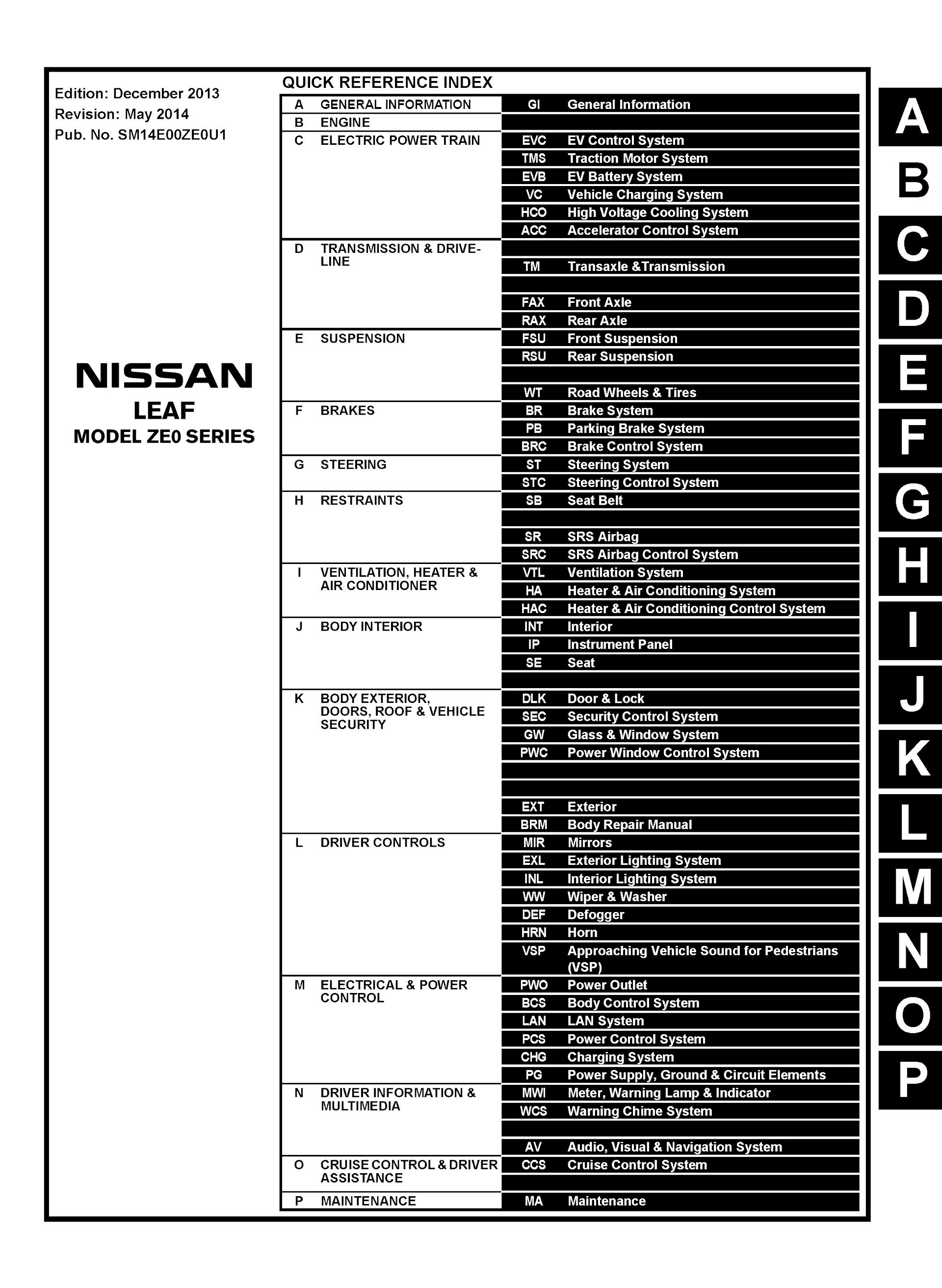
Table of Contents : 2014-2015 Nissan Leaf Repair Manual
SAMPLE PAGES
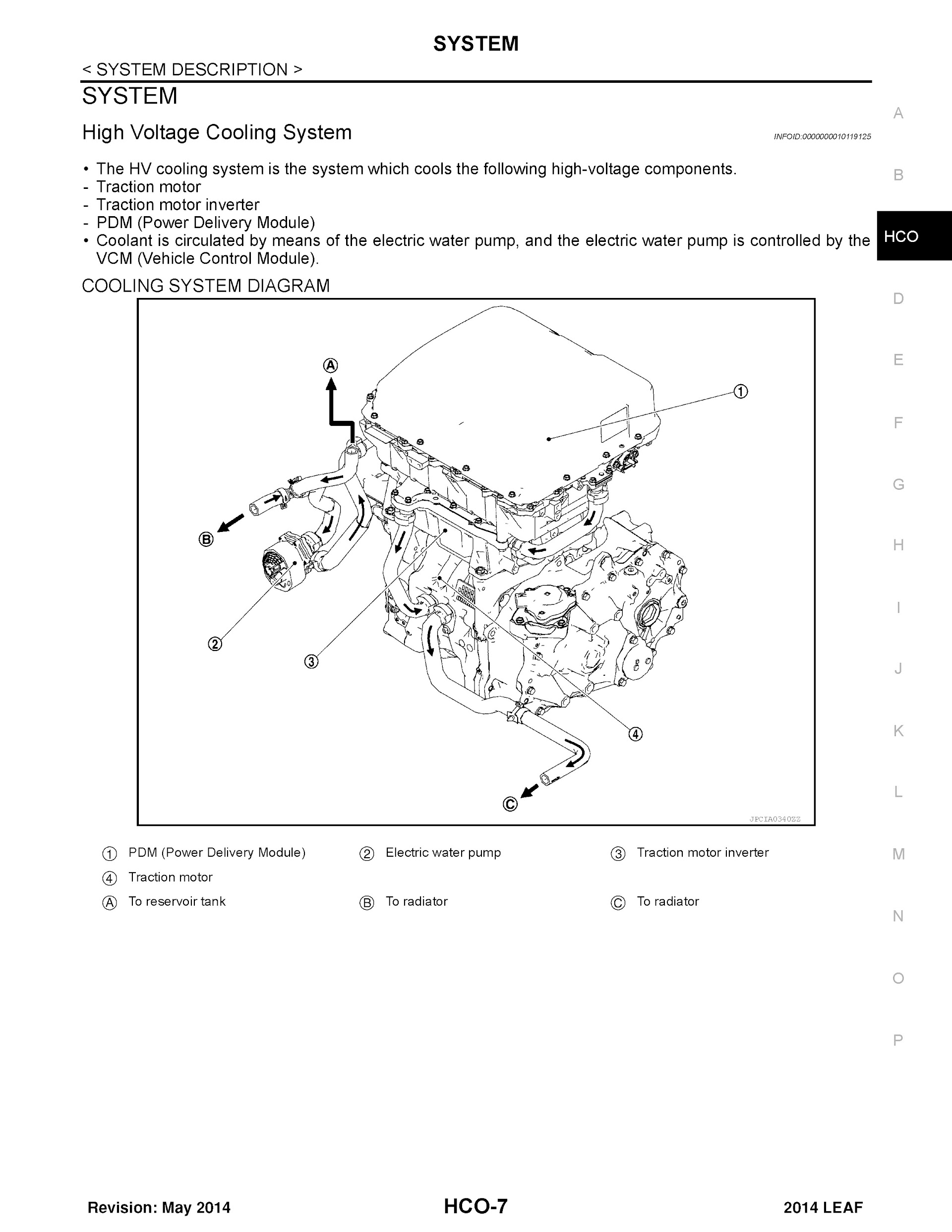
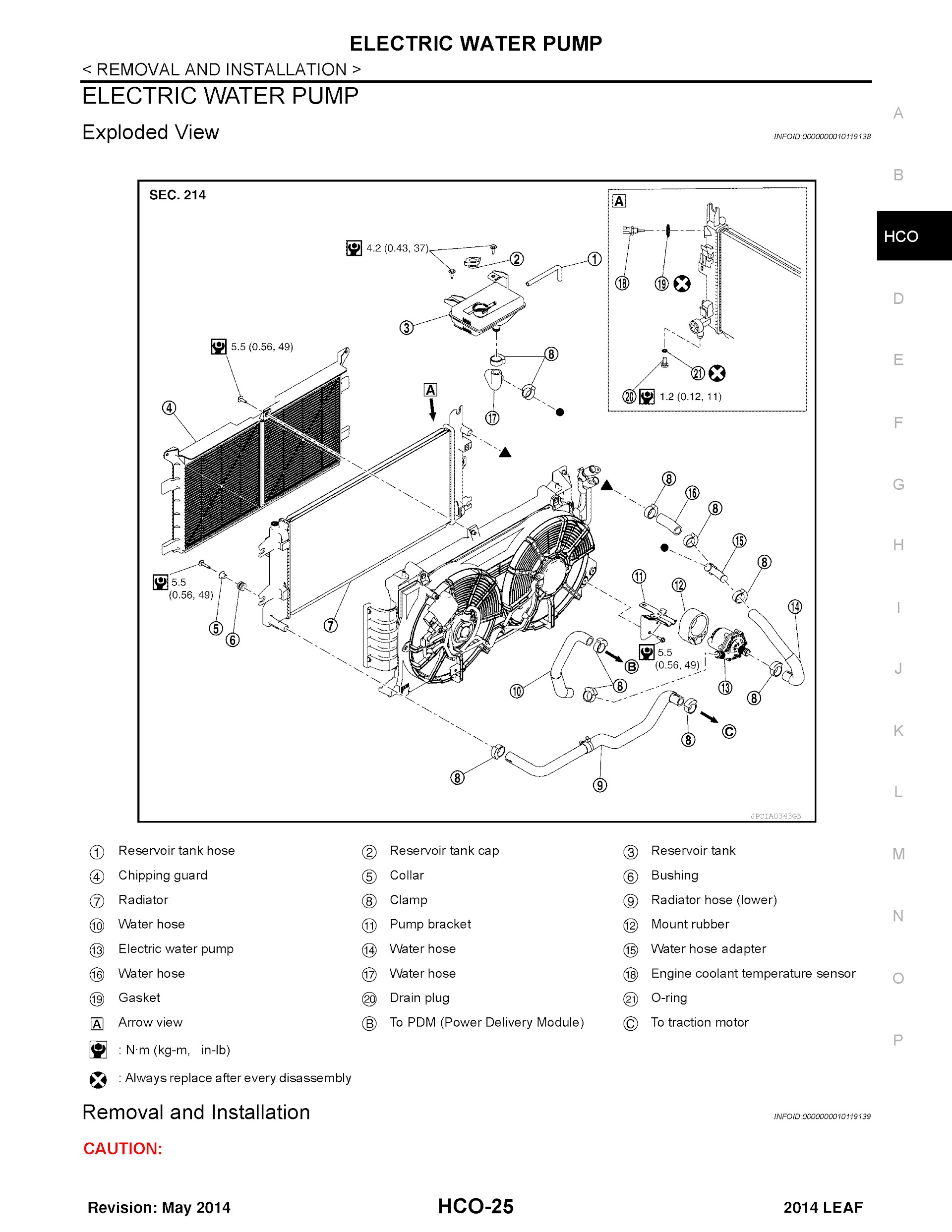
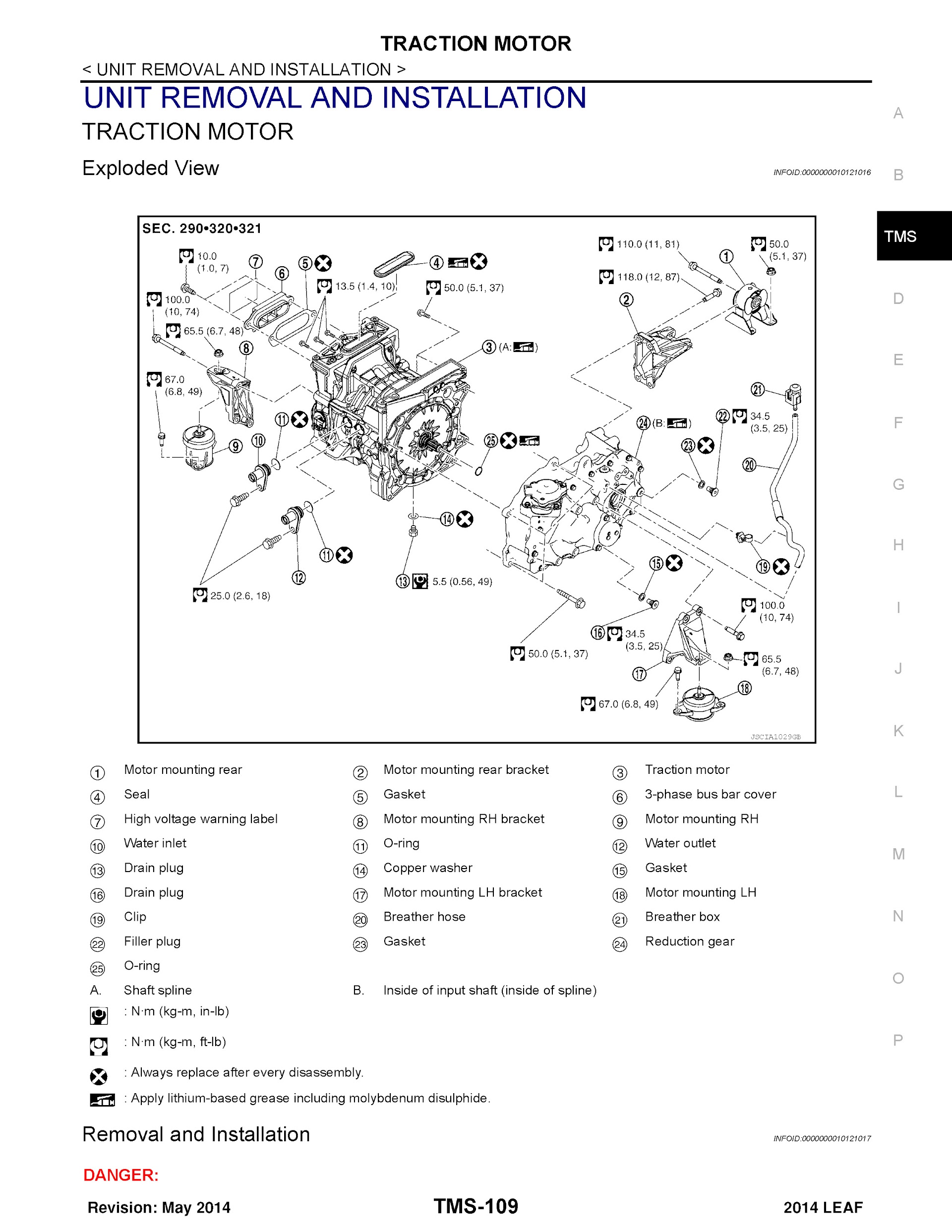
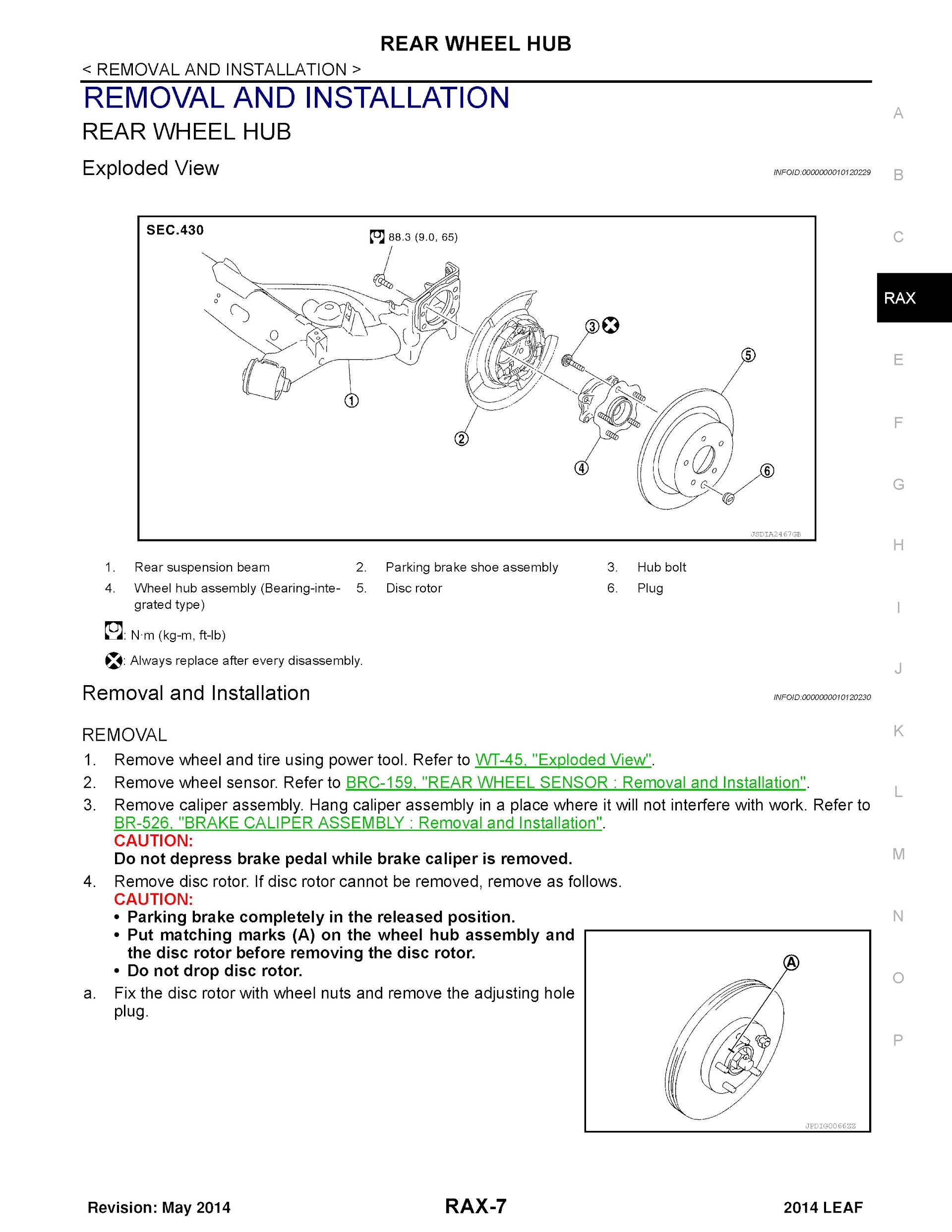
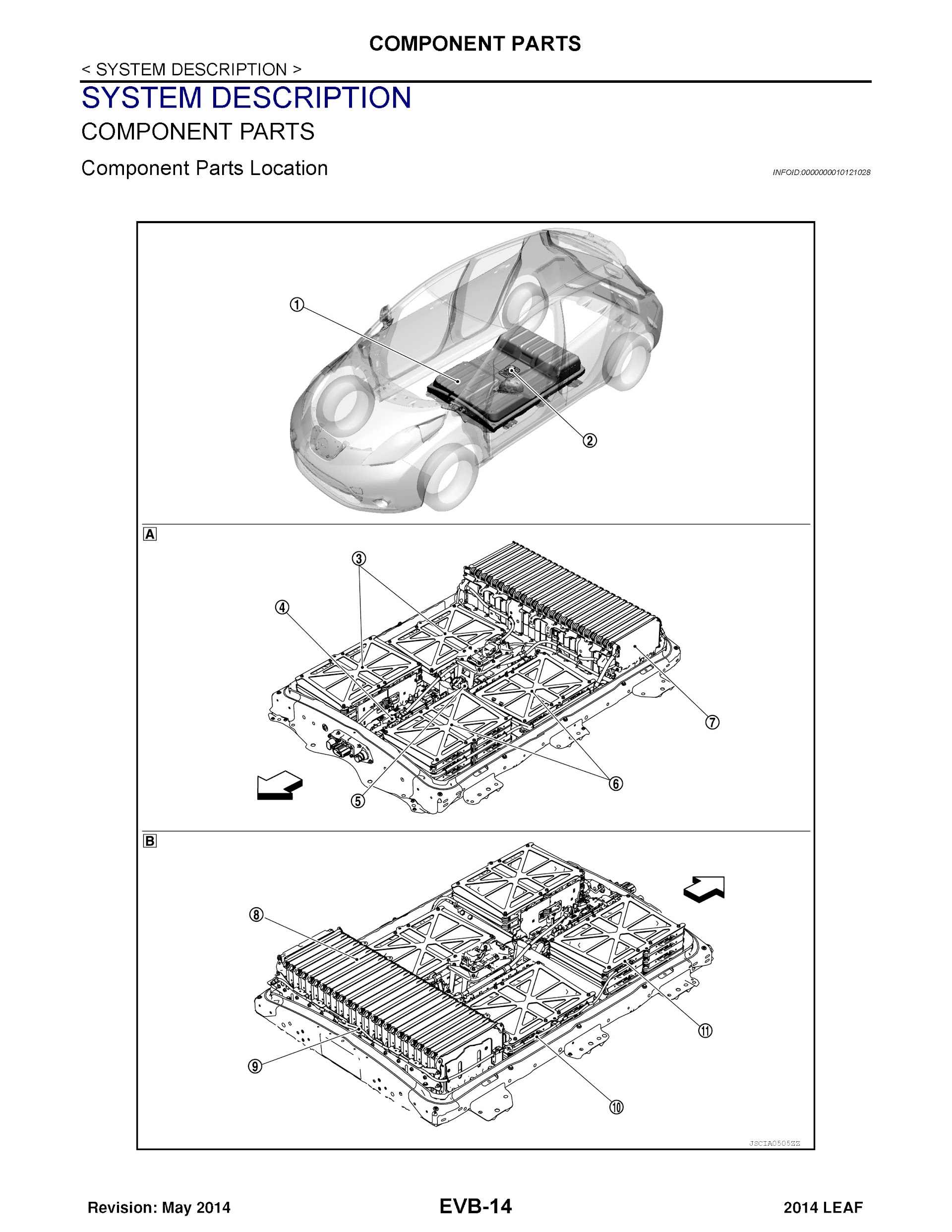
CAUTION: Please note that this manual is made for the use of persons who have special techniques and certifications. If non-specialized or uncertified technicians perform repairs or service only using this manual or without proper equipment or tools, this may cause severe injury to you or other persons nearby and also cause damage to your vehicle. In order to prevent dangerous operations and damage to your vehicle, please be sure to follow the instructions thoroughly.
2014–2015 Nissan Leaf: Complete Buyer’s Guide
Overview
The 2014–2015 Nissan Leaf represents the second-generation refresh of Nissan’s pioneering mass-market electric vehicle. These model years brought meaningful improvements to range, technology, and refinement over the original 2011–2013 models.
What’s New for 2014–2015:
- 2014: Significant updates including redesigned exterior, improved interior materials, enhanced battery chemistry (optional higher capacity), updated infotainment with Around View Monitor
- 2015: Carried over with minor updates; introduced DC fast charging as standard on more trims
Technical Specifications
Battery & Powertrain
2014 Model Year:
- Standard Battery: 24 kWh lithium-ion (S and SV trims)
- Optional Battery: 30 kWh lithium-ion (SL trim, marketed as “Leaf S with Charge Package”)
- Motor: 80 kW (107 hp), 187 lb-ft torque
- Drive: Front-wheel drive
- EPA Range: 84 miles (24 kWh), ~100 miles (30 kWh estimated real-world)
2015 Model Year:
- Same powertrain options as 2014
- EPA Range: 84 miles (24 kWh), official EPA not separately rated for 30 kWh
Charging
Standard Equipment:
- 3.3 kW onboard charger (Level 2: ~7 hours for 24 kWh)
- Optional 6.6 kW onboard charger (Level 2: ~3.5 hours for 24 kWh)
- CHAdeMO DC fast charging capability (available): 80% charge in ~30 minutes
Charging Ports:
- Level 1 (120V): 20+ hours
- Level 2 (240V): 3.5–7 hours depending on charger
- DC Fast (CHAdeMO): 30 minutes to 80%
Dimensions & Weight
- Length: 175.8 inches
- Width: 69.7 inches
- Height: 61.0 inches
- Wheelbase: 106.3 inches
- Curb Weight: ~3,200–3,300 lbs (varies by trim)
- Cargo Space: 23.6 cubic feet (rear seats up)
Performance
- 0-60 mph: ~10.5 seconds
- Top Speed: ~90 mph (electronically limited)
- Efficiency: 114–126 MPGe combined (EPA)
Trim Levels
2014:
- S (base)
- SV (mid-level)
- SL (top trim, includes 30 kWh option)
2015:
Top 10 Mechanical & Electrical Issues
1. Battery Capacity Degradation
-
- Symptoms: Reduced driving range, “missing” battery capacity bars on dashboard gauge, fewer miles per charge than when new
- Root Cause: Lithium-ion battery chemistry degrades over time, accelerated by high temperatures (especially in hot climates like Arizona, Texas, Southern California), frequent DC fast charging, and high mileage. The 2014–2015 Leaf uses air cooling (not liquid), making it more vulnerable to heat.
- Fix: Battery replacement is the only permanent solution. Individual module replacement possible but uncommon. Software updates may recalibrate gauge but won’t restore capacity.
- Cost: $5,500–$8,500+ for used replacement battery pack; new battery ~$8,000–$12,000+ installed (often exceeds vehicle value). Many owners simply accept reduced range.
2. 12V Auxiliary Battery Failure
-
- Symptoms: Car won’t start, dashboard warnings, electrical accessories not functioning, “clicking” sound when attempting to start, complete loss of power
- Root Cause: The 12V battery powers all accessories and the computer system that activates the main drive battery. These batteries typically last 3–5 years and fail more quickly if the vehicle sits unused for extended periods.
- Fix: Replace 12V auxiliary battery (located under hood, standard automotive battery)
- Cost: $150–$300 (battery + labor)
3. Onboard Charger (OBC) Failure
-
- Symptoms: Vehicle won’t charge on Level 1 or Level 2, charging error lights, “Unable to Charge” message, charge port light flashing red
- Root Cause: Internal component failure in the 3.3 kW or 6.6 kW onboard charger module, often due to heat stress, power surges, or manufacturing defects
- Fix: Replace onboard charger module (located in front of vehicle near motor compartment)
- Cost: $1,200–$2,500 (parts + labor); aftermarket/used parts can reduce cost to $800–$1,500
4. Electric Motor Bearing Noise
-
- Symptoms: Whining, grinding, or humming noise from motor compartment during acceleration, noise increases with speed
- Root Cause: Wear on electric motor bearings, particularly in higher-mileage vehicles (>80,000 miles), sometimes related to manufacturing tolerances
- Fix: Replace electric motor assembly or motor bearings (requires significant disassembly)
- Cost: $3,000–$6,000 for motor replacement; bearing replacement alone $1,500–$2,500 if caught early
5. Reduction Gear/Transmission Issues
-
- Symptoms: Clunking noise when shifting from Park to Drive/Reverse, grinding sounds during acceleration, juddering at low speeds
- Root Cause: Worn reduction gear bearings, insufficient lubrication, or internal gear wear. The Leaf uses a single-speed reduction gear (not a traditional transmission).
- Fix: Reduction gear oil change may help if caught early; severe cases require gearbox replacement
- Cost: Gear oil service $150–$300; gearbox replacement $2,500–$4,500
6. DC Fast Charging (CHAdeMO) Port Failure
-
- Symptoms: Fast charging doesn’t initiate, error messages at DC charging stations, overheating at charge port, charger won’t connect/communicate
- Root Cause: Worn or corroded CHAdeMO port contacts, damaged pins, communication module failure, thermal damage from repeated high-current charging
- Fix: Replace CHAdeMO charge port assembly and/or communication control module
- Cost: $800–$1,800 (parts + labor)
7. Brake Actuator/ABS Module Issues
-
- Symptoms: Brake warning light, ABS warning light, reduced regenerative braking, grinding noise when braking, soft brake pedal feel
- Root Cause: Failure of the integrated brake actuator/ABS module, which blends regenerative and friction braking. Common issue across Nissan EVs of this era.
- Fix: Replace brake actuator assembly (dealer repair typically required due to programming needs)
- Cost: $1,500–$3,000 (parts + labor + programming)
8. Power Inverter Failure
-
- Symptoms: Vehicle won’t move, power loss, warning lights (turtle mode), error codes related to inverter
- Root Cause: Failure of power inverter that converts DC battery power to AC for the motor, often due to heat stress or internal component failure
- Fix: Replace power inverter module
- Cost: $2,000–$4,000 (parts + labor); used/rebuilt units $1,200–$2,500
9. HVAC Heater Failure
-
- Symptoms: No heat in cabin, reduced heat output, HVAC fan works but air is cold, high battery consumption for heating
- Root Cause: Electric resistance heater element failure, heater relay failure, or coolant pump issues. The Leaf uses electric resistance heating which is energy-intensive.
- Fix: Replace heater element, relay, or coolant pump depending on diagnosis
- Cost: $500–$1,200 (heater element replacement); $300–$600 (relay); $400–$800 (pump)
10. Tire Pressure Monitoring System (TPMS) Sensor Failures
-
- Symptoms: TPMS warning light stays on, incorrect tire pressure readings, “Check Tire Pressure” message despite correct pressure
- Root Cause: TPMS sensor battery depletion (sensors last ~7–10 years), sensor damage during tire service, corrosion
- Fix: Replace failed TPMS sensor(s) and reprogram system
- Cost: $50–$100 per sensor + $50–$100 programming; $250–$500 for all four sensors
Top 5 Competitors (2014–2015)
- Range: 82 miles EPA
- Price When New: ~$27,500
- Advantages: Torquier motor (327 lb-ft), fun to drive, lower price
- Disadvantages: Much smaller (subcompact), limited availability (CA/OR markets only), discontinued after 2016
- Range: 76 miles EPA
- Price When New: ~$29,000–$35,000
- Advantages: More traditional sedan design, higher quality interior
- Disadvantages: Less range than Leaf, slower charging, limited rear headroom due to battery placement
3. 2014–2015 Volkswagen e-Golf
- Range: 83 miles EPA
- Price When New: ~$35,000
- Advantages: Premium feel, better driving dynamics, refined interior
- Disadvantages: Higher price, limited availability, slower DC fast charging
- Range: 81 miles EPA (BEV), 150 miles (with range extender)
- Price When New: ~$42,000–$46,000
- Advantages: Unique design, premium brand, carbon fiber construction, available range extender
- Disadvantages: Much higher price, expensive repairs, unconventional styling, narrow tires
- Range: 84 miles EPA
- Price When New: ~$32,000
- Advantages: Fun, nimble city car, stylish Italian design
- Disadvantages: Two-door only, very limited space, California/Oregon compliance car only, questionable reliability
Top 10 Recalls, Advisories & TSB Highlights
Recalls
1. NHTSA Recall 14V-394 (July 2014)
-
-
- Issue: Front passenger occupant classification system may incorrectly classify occupant
- Risk: Airbag may not deploy properly
- Fix: Replace occupant classification control unit
- Vehicles Affected: ~48,000 (2013–2014 models)
2. NHTSA Recall 16V-025 (January 2016)
-
-
- Issue: Brake software error may cause increased stopping distance
- Risk: Increased crash risk
- Fix: Reprogram brake system software
- Vehicles Affected: ~46,000 (2013–2015 models)
3. NHTSA Recall 15V-423 (July 2015)
-
-
- Issue: Magnetic sensor in parking brake may malfunction
- Risk: Vehicle may roll away when parked
- Fix: Replace parking brake actuator
- Vehicles Affected: ~9,500 (2013–2014 models)
4. NHTSA Recall 18V-120 (March 2018)
-
-
- Issue: Backup camera may not display image
- Risk: Reduced rear visibility increases crash risk
- Fix: Replace or reprogram display unit
- Vehicles Affected: Various Nissan models including some 2014–2015 Leafs
Technical Service Bulletins (TSBs)
5. TSB NTB14-058 (2014)
-
- Issue: Battery capacity loss information
- Description: Guidance for dealers on battery degradation, capacity loss bar indicators, and customer communication
- Fix: Information bulletin only; advises customers on expected degradation patterns
6. TSB NTB15-076 (2015)
-
- Issue: Charge port door won’t open or close properly
- Description: Charge port door latch may stick or fail
- Fix: Lubricate or replace charge port door latch mechanism
- Cost: Typically covered under warranty; $150–$300 if out of warranty
7. TSB IT14-019 (2014)
-
- Issue: Carwings/NissanConnect EV telematics system connectivity issues
- Description: System may not connect, lose connection, or fail to send vehicle data
- Fix: Software update for telematics control module
- Cost: Usually free at dealer
8. TSB NTB14-084 (2014)
-
- Issue: Tire pressure monitoring system false warnings
- Description: TPMS may give false low pressure warnings
- Fix: Reprogram TPMS module, check sensor functionality
- Cost: Usually covered under warranty
9. TSB NTB15-032 (2015)
-
- Issue: Reduction gear whining noise
- Description: Whining or humming from reduction gear, especially during acceleration
- Fix: Check gear oil level, replace if necessary; severe cases may need gear replacement
- Cost: Oil service $200–$400; gear replacement covered under powertrain warranty if applicable
10. TSB IT15-042 (2015)
-
- Issue: Navigation system freezing or slow response
- Description: Infotainment system may freeze, lag, or require restart
- Fix: Software update for navigation/infotainment system
- Cost: Usually free at dealer
Maintenance Schedule
Every 5,000 Miles or 6 Months
-
- Tire Rotation: $50–$100 (many dealers offer free)
- Brake Inspection: Visual check (included with rotation)
- Cabin Air Filter Inspection: Replace if dirty ($30–$60 DIY; $80–$150 dealer)
Every 12,000 Miles or 12 Months
-
- Tire Rotation: If not done at 6 months
- Brake System Inspection: Check pads, rotors, fluid level
- Suspension/Steering Inspection: Visual check
- 12V Battery Check: Load test
Every 15,000 Miles or 12 Months
-
- Brake Fluid Replacement: $80–$150 (critical for EVs due to regenerative braking)
Every 30,000 Miles or 24 Months
-
- Reduction Gear Oil Change: $150–$300 (often overlooked but important)
- Cabin Air Filter Replacement: If not done earlier
- Coolant Inspection: Check level and condition (EV battery cooling system)
Every 60,000 Miles or 48 Months
-
- Brake Fluid Flush: $100–$200
- Coolant Replacement (Battery System): $150–$300
- 12V Battery Replacement: $150–$300 (if not done earlier)
Every 100,000+ Miles or 72 Months
-
- EV Battery Coolant Replacement: $200–$400
- Major Inspection: Comprehensive check of all systems
As Needed
-
- Tire Replacement: $400–$800 for set (Leaf uses low rolling resistance tires)
- Brake Pad Replacement: $200–$400 per axle (last much longer due to regen braking; many Leafs reach 100k+ on original pads)
- Wiper Blades: $20–$60
- 12V Battery: $150–$300 every 3–5 years
Overall Maintenance Cost: Expect $300–$600 annually for routine maintenance (significantly less than gas vehicles due to no oil changes, transmission service, exhaust system, etc.)
10 Buyer FAQs
1. How much range should I expect in real-world driving?
With a healthy 24 kWh battery, expect 60–75 miles in mixed driving, 50–60 miles with highway driving or cold weather, and 80+ miles in ideal conditions (warm weather, gentle driving). The 30 kWh battery adds approximately 20–25% more range. Range degrades with battery age—a well-used 2014–2015 may only get 50–60 miles on the 24 kWh pack.
2. How can I check battery health before buying?
Check the battery capacity bars on the dashboard (right side of charge gauge). A new Leaf has 12 bars; 11 bars = ~85% capacity; 10 bars = ~75%; 9 bars or fewer = significant degradation. Ask for a LeafSpy app reading (requires OBD-II Bluetooth adapter)—look for State of Health (SOH) percentage. Above 80% is decent; 70–80% is acceptable for a cheap commuter; below 70% means very limited range.
3. Is the Leaf still covered under battery warranty?
Nissan’s original battery warranty was 5 years/60,000 miles against defects and capacity loss below 9 bars. A 2014–2015 Leaf is well beyond this coverage period unless purchased with an extended warranty. Used car warranties typically don’t cover batteries comprehensively. Assume you’re buying as-is regarding battery health.
4. Can I install a faster home charger?
Yes, but you need a Leaf with the optional 6.6 kW onboard charger (standard on SL; optional on SV). The base 3.3 kW charger can’t utilize faster Level 2 charging even if you install a 240V/40A circuit. Check the window sticker or ask the seller. A 6.6 kW charger will fully charge the 24 kWh battery in ~3.5 hours on a 240V/30A circuit.
5. What’s the deal with CHAdeMO vs. CCS charging?
The 2014–2015 Leaf uses CHAdeMO (Japanese standard) for DC fast charging. This network is shrinking in North America as CCS becomes dominant. Tesla uses its own Supercharger network (now opening to some EVs with CCS). CHAdeMO stations still exist at many EA/EVgo locations but are becoming less common. If you need road trip capability, verify CHAdeMO availability on your routes.
6. Are parts expensive or hard to find?
Common parts (brake pads, 12V battery, cabin filters, wipers) are standard and affordable. EV-specific parts (battery modules, onboard charger, inverter, motor) are expensive but less frequently needed. Used parts from salvage Leafs can save money. The Leaf has strong aftermarket support due to high sales volumes.
7. Can I replace just one battery module instead of the whole pack?
Technically yes, but practically difficult. Battery modules can be individually replaced, but you need matching cells with similar degradation levels, specialized tools, and knowledge of high-voltage systems. Most shops won’t do this due to liability. It’s typically all-or-nothing on battery replacement.
8. Will cold weather kill my range?
Yes, significantly. Expect 30–40% range loss in winter (below 32°F) due to battery chemistry efficiency loss and cabin heating. The Leaf uses resistive heating which is energy-intensive. Pre-conditioning while plugged in helps. Winter range on a 24 kWh battery may drop to 40–50 miles.
9. Is the Leaf safe in a crash?
Yes. The 2014–2015 Leaf earned a 5-star overall rating from NHTSA and Top Safety Pick from IIHS. Standard safety features include 6 airbags, stability control, and ABS. Available features include Around View Monitor and Moving Object Detection. The battery pack is well-protected in the floor structure.
10. Should I buy a 2014 or wait for a 2015?
Minimal differences between model years. 2014 brought the major refresh; 2015 was a carryover year with minor updates. Focus on battery health, overall condition, mileage, and price rather than model year. A well-maintained 2014 with good battery health beats a neglected 2015.
Final Buyer Recommendations
✅ Buy If:
- Short Commute: Your daily round-trip is under 50 miles with reliable home charging
- Second Car: You have another vehicle for longer trips
- Budget-Conscious: You want the absolute cheapest EV experience (~$6,000–$10,000 used)
- Maintenance Savings: You value low running costs and minimal maintenance
- City Driving: Primarily urban/suburban use with nearby charging infrastructure
- Environmental Goals: You want to reduce emissions without spending Tesla money
⚠️ Proceed with Caution If:
- Battery Degradation: Vehicle shows 10 or fewer capacity bars
- Hot Climate: You live in Arizona, Texas, or Southern California (accelerates battery degradation)
- No Home Charging: Relying solely on public charging is inconvenient
- Long Commute: Need more than 60–70 miles of range daily
- Road Trips: Need to drive more than 50 miles regularly (CHAdeMO network limitations)
❌ Avoid If:
- Only Vehicle: You need one car to do everything
- High Mileage Needs: Daily driving exceeds 60+ miles
- Extreme Climates: Very hot or very cold regions without garage parking
- No Charging Access: No home or workplace charging available
- Limited Budget: Can’t afford potential battery replacement ($5,500–$8,500)
Sweet Spot Purchase:
Look for a 2014–2015 SV or SL with:
- 11–12 battery capacity bars remaining
- Under 50,000 miles
- 6.6 kW onboard charger
- CHAdeMO fast charging
- Complete service records
- Price: $7,000–$10,000
Inspection Checklist:
- Battery capacity bars (aim for 11–12)
- LeafSpy OBD reading if possible (SOH >80%)
- Test all charging modes (Level 1, Level 2, DC fast if possible)
- Check for motor/reduction gear noise
- Verify 12V battery age and condition
- Test regenerative braking smoothness
- Check for recall completion
- Inspect charge port for damage/corrosion
- Review CarFax for accident history
- Test in cold weather if possible (range verification)
What is the final verdict?
The 2014–2015 Nissan Leaf is an excellent, affordable entry into EV ownership for the right buyer with realistic expectations. It’s reliable, cheap to run, and perfect for short commutes. However, battery degradation is inevitable, range is limited, and it’s best as a second vehicle. If your daily needs align with its capabilities and you have home charging, it’s a tremendous value. If you need range, versatility, or have no charging access, look elsewhere.