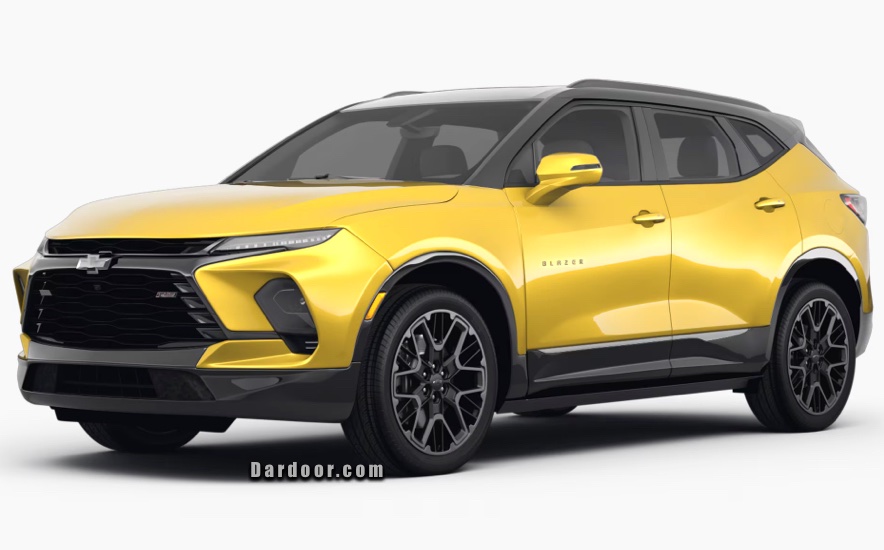
Get the original OEM workshop service and repair manual for the 2019–2023 Chevrolet Blazer, available in a convenient and searchable PDF format.
Overview
The 2019–2023 Chevrolet Blazer revived the Blazer name as a two-row midsize crossover. Built on GM’s C1 platform, it balances sporty styling with everyday utility and multiple powertrains. This guide covers all engines 2.0L Turbo (LSY), 2.5L NA (LCV), and 3.6L V6 (LGX)—with real owner-reported issues, costs, recalls, and diagnostics.
Technical Specs (by Engine)
- 2.0L Turbo I4 (LSY): ~230 hp / 258 lb-ft, 9-speed automatic, FWD/AWD
- 2.5L NA I4 (LCV): ~193 hp / 188 lb-ft, 9-speed automatic, FWD/AWD
- 3.6L V6 (LGX): ~308 hp / 270 lb-ft, 9-speed automatic, FWD/AWD
- Towing: up to ~4,500 lb (V6 w/ tow package)
- Fuel: Regular unleaded (premium not required)
🏁 Performance & Driving
- LSY 2.0T: Strong mid-range torque; best balance of power and economy.
- LCV 2.5L: Adequate for commuting; least complex and lowest running costs.
- LGX V6: Quick acceleration and best towing; higher maintenance potential.
- Turbocharger Oil Feed Restriction (LSY)
– Symptoms: Loss of boost, whining noise, check-engine light
– Root Cause: Oil coking or restricted feed line
– Fix: Inspect oil feed/return; clean or replace lines; update oil interval
– Cost to Fix: $350–$1,800 - Timing Chain Stretch (LGX)
– Symptoms: Rattle on cold start, cam correlation codes
– Root Cause: Chain wear from oil quality/intervals
– Fix: Replace timing set; verify oiling
– Cost: $2,200–$3,800 - PCV System Failure (LGX)
– Symptoms: Oil consumption, rough idle, lean codes
– Root Cause: PCV diaphragm failure
– Fix: Replace PCV cover/components
– Cost: $300–$900 - 9-Speed Transmission Harsh Shifts
– Symptoms: Hesitation, shudder, hard 1–2 shifts
– Root Cause: Calibration or valve-body wear
– Fix: Software update; fluid service; valve-body repair if needed
– Cost: $180–$2,500 - Cooling System Leaks
– Symptoms: Coolant smell, overheating warning
– Root Cause: Hose/radiator seam degradation
– Fix: Pressure test; replace leaking component
– Cost: $250–$1,200 - Rear Differential Noise (AWD)
– Symptoms: Whine or clunk on acceleration
– Root Cause: Fluid breakdown or bearing wear
– Fix: Fluid service; rebuild if noisy persists
– Cost: $180–$2,000 - Engine Mount Wear
– Symptoms: Vibration at idle, clunk on throttle
– Root Cause: Hydraulic mount leakage
– Fix: Replace mounts; re-torque drivetrain
– Cost: $400–$1,200 - Fuel Injector Fouling (Direct Injection)
– Symptoms: Rough idle, misfires
– Root Cause: Carbon buildup on intake valves
– Fix: Walnut blast or intake service
– Cost: $450–$900 - Exhaust Flex Pipe Leak
– Symptoms: Ticking noise, exhaust smell
– Root Cause: Heat cycling cracks
– Fix: Replace flex section
– Cost: $300–$900 - Wheel Bearing Wear
– Symptoms: Humming increasing with speed
– Root Cause: Bearing fatigue
– Fix: Replace hub assembly
– Cost: $350–$900
- Infotainment Freezing / Black Screen
– Symptoms: Screen rebooting or unresponsive
– Root Cause: Software instability
– Fix: Software update/reflash
– Cost: $0–$250 - Backup Camera Failure
– Symptoms: Black or distorted image
– Root Cause: Camera moisture intrusion or wiring
– Fix: Replace camera or repair harness
– Cost: $200–$600 - Battery Drain / No-Start
– Symptoms: Dead battery overnight
– Root Cause: Parasitic draw from modules
– Fix: Draw test; module update; new battery
– Cost: $150–$450 - TPMS Warning
– Symptoms: Tire light on
– Root Cause: Sensor battery failure
– Fix: Replace TPMS sensor(s)
– Cost: $80–$300 per wheel - Power Liftgate Malfunction
– Symptoms: Won’t open/close fully
– Root Cause: Module or strut sensor failure
– Fix: Relearn; replace struts/module
– Cost: $250–$1,200 - HVAC Blend Door Actuator
– Symptoms: Clicking, wrong vent temp
– Root Cause: Actuator gear wear
– Fix: Replace actuator; recalibrate
– Cost: $180–$600 - Smart Key Detection Issues
– Symptoms: “Key Not Detected”
– Root Cause: Weak fob battery/antenna fault
– Fix: Replace battery; diagnose antenna
– Cost: $20–$300 - Parking Sensor False Alerts
– Symptoms: Constant beeping
– Root Cause: Contaminated or failed sensor
– Fix: Clean or replace sensor
– Cost: $120–$400 - Instrument Cluster Flicker
– Symptoms: Dim or intermittent gauges
– Root Cause: Voltage instability or cluster fault
– Fix: Charging system test; repair/replace cluster
– Cost: $250–$1,200 - OnStar / Telematics Errors
– Symptoms: Connectivity warnings
– Root Cause: Module firmware or antenna issue
– Fix: Dealer reprogram; antenna replacement
– Cost: $0–$400
| Pros | Cons |
|---|---|
| Stylish design, strong V6 option | 9-speed transmission behavior |
| Good infotainment features | Interior quality varies by trim |
| Multiple engine choices | Some electrical gremlins reported |
| Interval | Service |
|---|---|
| 5,000–7,500 mi | Oil & filter, tire rotation |
| 30,000 mi | Brake inspection, cabin/engine filters |
| 60,000 mi | Transmission fluid (severe use), AWD fluids |
| 100,000 mi | Spark plugs (V6), coolant inspection |
- Ford Edge ↗
- Honda Passport ↗
- Toyota Highlander ↗
- Hyundai Santa Fe ↗
- Nissan Murano ↗
- Fuel pump module failure (stall risk)
- Transmission control software updates
- Rear seat belt pretensioner concerns
- Rear suspension fastener torque checks
- Brake vacuum pump inspection
- Airbag indicator illumination
- Electronic power steering calibration
- Rear camera image loss
- HVAC software reprogramming
- OnStar/telematics module updates
Always verify recalls by VIN through GM or NHTSA.
Is the 2019–2023 Chevrolet Blazer reliable?
Overall reliability is average to above average when maintained. The 2.5L LCV is the simplest and lowest-risk, while the V6 offers performance at higher maintenance cost.
Which engine is best?
The 2.0L Turbo (LSY) offers the best balance of power and efficiency. The 2.5L is cheapest to own; the V6 is best for towing.
Are transmission problems common?
Some owners report harsh shifting from the 9-speed. Many cases improve with software updates and fluid services.
Is it safe to drive with a check-engine light?
Minor emissions codes may be drivable short-term, but misfire, transmission, brake, or airbag warnings should be addressed immediately.
What maintenance matters most?
Short oil intervals, transmission software updates, and timely fluid services—especially for AWD components.
The 2019–2023 Chevrolet Blazer delivers bold styling and flexible powertrains. Choose carefully by engine: the 2.5L is simplest, the 2.0T is the sweet spot, and the V6 is best for performance. Stay on top of software updates and maintenance, and the Blazer can be a solid midsize crossover ownership experience.
Disclaimer: This guide is informational and does not replace the factory service manual or dealer diagnosis. Always verify recalls by VIN and follow manufacturer service procedures.