

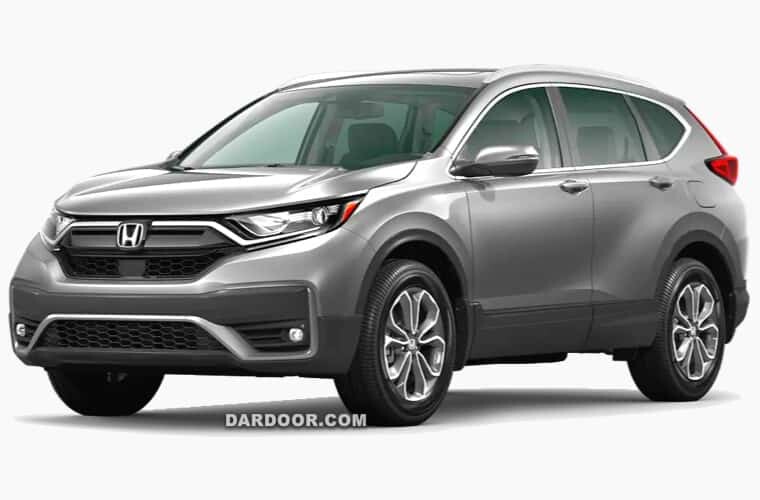
Get the original OEM manual for the 2018-2022 Honda CR-V Wiring Diagram, in PDF format.
2018-2022 Honda CR-V Wiring Diagram
$19.90
2018-2022 Honda CR-V OEM Wiring Diagram Manual – Instant PDF Download
⚡ The Ultimate Electrical Guide for Your Honda CR-V!
Get the official OEM workshop wiring diagram manual for the 2018-2022 Honda CR-V in an easy-to-use PDF format. This comprehensive guide provides the same manufacturer-approved wiring schematics used by Honda dealership technicians, ensuring precise electrical diagnostics and repairs.
| File Format | |
| File Language | English |
| You’ll Get | 29.8 MB |
| Pages Count | 392 |
| Delivery Method | Instant Download |
| Searchable & Printable | YES |
Key Features:
✅ Complete Wiring Diagrams – Covers all electrical circuits and components.
✅ Detailed Circuit Layouts – Essential for troubleshooting and repairs.
✅ Manufacturer-Authorized Instructions – The same guide used by Honda professionals.
✅ User-Friendly PDF Format – Instant access on any device, print only what you need.
🛠 Why Choose This Manual?
Whether you’re a professional technician or a DIY enthusiast, this factory-approved Honda CR-V wiring manualprovides the most accurate and reliable electrical repair information available.
📥 Download Now & Take Full Control of Your Honda’s Electrical System!
Avoid electrical guesswork—get the trusted OEM wiring diagram manual today and ensure precision in every repair!
🔗 Instant PDF Download – Available Now!
This electrical wiring manual includes the procedures for maintenance, disassembling, reassembling, inspection, and adjustment of electrical components and diagnostics for guidance of experienced technicians. Please use this manual to ensure complete repair work to keep your vehicle in optimum condition.
Table of Contents : 2018-2022 Honda CR-V Wiring Diagram
Sample Pages
CAUTION: This OEM service and workshop repair manual provides detailed procedures for maintenance, disassembly, reassembly, inspection, adjustment, and diagnostics. It is intended as a comprehensive guide for experienced mechanics. To ensure thorough and accurate repairs that maintain your vehicle’s optimal performance, please read and follow this manual carefully. When replacing parts during any repair work, always use genuine Honda parts to ensure quality, safety, and reliability.
Common Issues with the 2018-2022 Honda CR-V
The 2018-2022 Honda CR-V is a compact SUV known for its practicality, reliability, and excellent fuel economy. It offers a spacious interior, a smooth ride, and advanced safety features, making it one of the best-selling SUVs in its segment. Available with a 1.5L turbocharged engine or a 2.0L hybrid powertrain (starting in 2020), the CR-V delivers a balance of efficiency and performance, appealing to both daily commuters and families.
Common Issues
While the Honda CR-V is generally well-regarded, some common issues have been reported:
- Oil Dilution (2017-2019 Turbo Models)
- Issue: Some owners of the 1.5L turbocharged engine experienced excessive oil dilution, leading to increased fuel smell inside the cabin.
- Symptoms: Strong fuel odor, high oil levels due to fuel mixing, and occasional rough idling.
- Remedy: Honda issued software updates and extended warranties for affected vehicles. Regular oil changes and monitoring oil levels help prevent problems.
- Infotainment System Glitches
- Issue: The HondaLink infotainment system occasionally freezes, lags, or disconnects from Apple CarPlay/Android Auto.
- Symptoms: Touchscreen unresponsiveness, loss of audio, or connectivity issues.
- Remedy: Software updates from Honda often resolve these problems. Resetting the system can also help.
- Battery Drain Issues
- Issue: Some owners reported premature battery drain, possibly due to the keyless entry system staying active.
- Symptoms: Vehicle failing to start after being parked for a few days.
- Remedy: A higher-capacity battery or periodic driving can help maintain charge levels.
- CVT Transmission Performance (Some Models)
- Issue: Some CR-Vs equipped with Continuously Variable Transmission (CVT) experienced hesitation or delayed acceleration.
- Symptoms: Sluggish acceleration, inconsistent power delivery.
- Remedy: Regular CVT fluid changes (every 30,000–50,000 miles) and software updates can improve shifting performance.
- Windshield Cracks (2019-2022 Models)
- Issue: Some owners reported windshield cracking unexpectedly without impact.
- Symptoms: Sudden cracks appearing, often starting from the edges.
- Remedy: Honda extended warranty coverage for some cases; otherwise, replacement may be needed.
- Climate Control System Issues
- Issue: The air conditioning (AC) system in some CR-Vs failed prematurely.
- Symptoms: Weak airflow, no cold air, or AC compressor failure.
- Remedy: Replacing the AC compressor or refrigerant leak fixes the issue.
Key Recalls
Between 2018 and 2022, several recalls have been issued for the Honda CR-V in North America. Notable recalls include:
- 2019 Honda CR-V Steering Wheel Wire Harness Recall: In May 2019, Honda Canada recalled approximately 17,951 units of the 2019 CR-V to replace steering wheel wire harnesses and Supplemental Restraint System (SRS) cable reels, and to install a protective cover on the steering wheel core. This action was taken to prevent potential damage that could lead to a short circuit, increasing the risk of a crash. hondanews.ca
- 2023-2025 Honda CR-V Steering Gearbox Recall: In October 2024, Honda North America voluntarily recalled approximately 239,000 vehicles, including certain 2023-2025 CR-V models, due to a defective part in the steering gearbox. The issue could result in increased steering effort and difficulty, or ‘sticky’ steering, posing an increased risk of a crash or injury. hondanews.ca
- 2013-2023 Honda CR-V Fuel Pump Recall: In December 2023, Honda recalled certain 2013-2023 CR-V vehicles due to potential fuel pump failures. The defective fuel pump inside the fuel tank could fail, leading to an engine stall while driving and increasing the risk of a crash. Kelley Blue Book
For the most accurate and up-to-date information on recalls specific to your vehicle, it’s recommended to use Honda North America’s recall lookup tool by entering your Vehicle Identification Number (VIN). honda.com
Performance Specs
| Model | Engine | Horsepower | Torque | Transmission | Drivetrain | 0-60 mph | Fuel Economy (MPG) |
| CR-V LX, EX, EX-L, Touring (2018-2022) | 1.5L Turbocharged I4 | ~190 hp | ~179 lb-ft | CVT | FWD / AWD | ~7.5 sec | ~28-30 city / 34-36 hwy |
| CR-V Hybrid (2020-2022) | 2.0L I4 + Electric Motor | ~212 hp | ~232 lb-ft | e-CVT | AWD | ~7.5 sec | ~40 city / 35 hwy |
Note: Performance varies slightly by trim and year.
Maintenance Schedule
Maintaining your CR-V regularly will ensure long-term reliability. Below is a general maintenance guide:
| Maintenance Item | Interval (Miles) | Interval (Km) |
| Oil Change (Synthetic 0W-20) | Every 5,000-7,500 | 8,000-12,000 |
| Transmission Fluid Change (CVT) | Every 30,000-50,000 | 48,000-80,000 |
| Brake Fluid Replacement | Every 30,000 | 48,000 |
| Coolant Flush & Replacement | Every 100,000 | 160,000 |
| Spark Plug Replacement | Every 100,000 | 160,000 |
| Air Filter Replacement | Every 15,000 | 24,000 |
| Cabin Air Filter Replacement | Every 15,000 | 24,000 |
| Tire Rotation & Alignment | Every 5,000-7,500 | 8,000-12,000 |
| Suspension & Steering Inspection | Every 30,000 | 48,000 |
Note: These are approximate intervals; check the owner’s manual for specific guidance.
Competitors
The Honda CR-V competes in the compact SUV market, offering a balance between reliability, efficiency, and practicality. Here’s how it compares:
| Competitor | Pros | Cons |
| Toyota RAV4 | Excellent reliability, available hybrid model | Stiffer ride, infotainment less intuitive |
| Mazda CX-5 | Sporty handling, premium interior feel | Smaller cargo space, firmer ride |
| Subaru Forester | Standard AWD, spacious cabin | Less powerful engine, CVT can feel sluggish |
| Nissan Rogue | Fuel-efficient, comfortable ride | Reliability concerns, less engaging drive |
| Hyundai Tucson | Modern tech, hybrid & PHEV options | Some trims lack power, long-term durability unknown |
| Ford Escape | Strong turbocharged options, hybrid available | Interior materials not as refined |
Pros & Cons
Pros:
✅ Spacious Interior: One of the largest cargo areas in its class with generous rear passenger space.
✅ Fuel Efficiency: Turbo and hybrid models deliver impressive MPG.
✅ Strong Reliability (Most Models): Honda’s reputation for durability makes it a dependable choice.
✅ Safety Features: Standard Honda Sensing suite includes adaptive cruise control, lane-keeping assist, and collision mitigation braking.
✅ Smooth & Comfortable Ride: The suspension is well-tuned for daily driving comfort.
✅ Hybrid Option (2020-2022): Offers class-leading fuel economy without sacrificing performance.
Cons:
❌ Oil Dilution (Turbo Models, 2017-2019): Some early models experienced fuel mixing with oil.
❌ Infotainment System Lag: Screen may be slow to respond at times.
❌ Windshield Cracking (2019-2022 Models): Reports of spontaneous cracks.
❌ CVT Performance: Some hesitation during acceleration, though generally smooth once moving.
❌ Battery Drain Issues: In rare cases, some owners report dead batteries after extended non-use.
Our Final Verdict
The 2018-2022 Honda CR-V remains one of the best compact SUVs due to its fuel efficiency, spacious cabin, and safety features. While minor issues such as infotainment glitches, CVT hesitation, and oil dilution (pre-2020 models) have been noted, Honda has addressed many of these concerns through updates.
If you’re looking for a reliable, comfortable, and fuel-efficient compact SUV with a practical design, the CR-V is a top choice. However, if you want a sportier ride, the Mazda CX-5 or Toyota RAV4 Hybrid may be better alternatives.
👉 Verdict: The Honda CR-V is an excellent compact SUV, especially in hybrid form (2020-2022). If you prioritize efficiency, practicality, and comfort, it’s one of the best options in its class.
| Brands | |
|---|---|
| File Format | |
| File Language | English |
| You'll Get | 29.8 MB |
| Page Count | 392 |
| Instant Download | YES |
Related products
-

2007-2011 Honda CR-V Repair Manual
$19.90 Add to cart -

2014-2016 Honda Odyssey Wiring Diagram
$26.00 Add to cart -

2004-2008 Honda Element Repair Manual
$16.90 Add to cart -

2010-2014 Honda Insight Hybrid Repair Manual
$16.90 Add to cart -

2002 Honda Civic Repair Manual
$16.90 Add to cart -

2016-2018 Honda HR-V Repair Manual
$16.90 Add to cart -
2000-2006 Honda Insight Repair Manual
$14.90 Add to cart -

2020-2022 Honda Civic Wiring Diagrams
$19.90 Add to cart