The Great Automotive Shrink: Why Global Car Brands Are Cutting Models in 2026
2026 has turned into a stress test for the global auto industry. Squeezed between aggressive Chinese competitors, the lingering economic fallout from the conflict in Iran, and steep U.S. import tariffs, the world’s biggest carmakers are pulling back hard. Layoffs are only part of the story — the deeper cut is happening to the model lineups themselves. Here’s a look at what the numbers actually show, which brands are trimming their ranges, and which cars may not be around much longer.
The Numbers Behind the Squeeze
This isn’t a vibes-based crisis — the financial data backs it up. Nearly every legacy automaker has reported the same story in 2026: flat or growing sales, but collapsing profitability.
- Volkswagen posted a 2025 operating profit of just €8.9 billion, down 53.5% year-over-year — its lowest level since 2016, the year the Dieselgate scandal was in full swing. Its operating margin dropped to just 2.8%, and even after cost cuts, the company’s own finance chief admitted margins remain far too low. VW is now weighing cutting as many as 100,000–150,000 jobs, roughly a fifth of its workforce, on top of plant closures.
- Porsche, VW’s former cash cow, saw operating profit collapse 93% to just €413 million, with return on sales crashing from 14.1% to 1.1%. Deliveries in China alone fell 26% to about 42,000 units in 2025, prompting the brand to halve its Chinese dealership network — from 150 down to 80 locations — by the end of 2026.
- Mercedes-Benz reported a 57% drop in full-year 2025 operating profit, to €5.8 billion, with China sales down 19% in a market that still accounts for roughly a third of the brand’s global volume. First-quarter 2026 results showed further pain, with the automotive division’s margin falling to 4.1% from 7.3% a year earlier.
- Toyota, despite selling more cars than ever, saw operating income fall roughly 20%, as U.S. tariffs alone cut about $9 billion from operating income in fiscal 2026 — enough to wipe out the company’s entire North American profit for the year.
- Tesla’s per-vehicle profit has also been sliding, dropping to around $2,140 per vehicle for the year through March 2026, down roughly 40% from $3,438 a year earlier, largely due to the expiration of the U.S. federal EV tax credit and intensifying Chinese competition.
Layered on top of company-specific missteps is a broader structural shift in the market. By early 2026, China had captured roughly a third of the entire global auto market, and Chinese brands now command close to 10% of the European market — a share analysts expect to climb toward 16% by 2030. Chinese-made vehicles carry an estimated 30% cost advantage along with increasingly competitive software, making it hard for European and Japanese brands to compete on price even as they cut costs elsewhere. Add tariff bills that have topped $35 billion industry-wide since 2025, plus the Iran conflict rattling fuel prices and consumer confidence, and the pressure to simplify model lineups starts to make a lot more sense.
Volkswagen: Cutting the Lineup in Half
The German auto industry has been hit particularly hard, losing ground to both American and Japanese rivals. Volkswagen has confirmed it is overhauling its model range because too many variants simply aren’t profitable enough. The plan: cut the lineup by roughly 50% across all group brands, and slash the number of trim/configuration combinations by 75%.
VW hasn’t named exact casualties yet, but the signals are hard to miss:
- Touareg — reportedly won’t get a next generation as the company shifts focus to more profitable models.
- ID.5 — the electric coupe-crossover never matched the sales success of its sibling, the ID.4, and could be phased out by 2027.
- T-Roc Cabriolet — seen as a “non-standard” variant that doesn’t pencil out financially.
- Polo (gas-powered) — losing ground in Europe to its electric stablemate, the ID. Polo.
- ID. Buzz — the electric minivan’s sales haven’t met expectations, leaving a future second generation in doubt.
VW is also expected to shrink its sprawling China-market lineup, where sales have suffered the most.
Porsche: Simplifying a Range That Got “Too Complex”
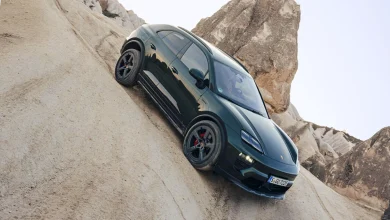
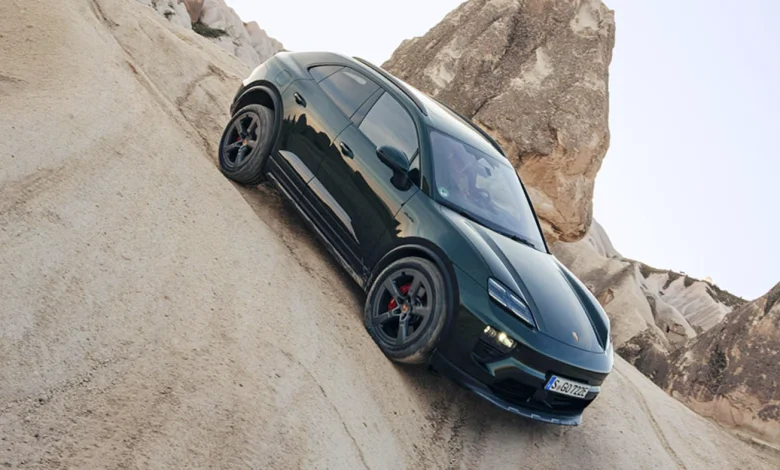
Porsche will end production of the gasoline-powered Macan by the end of July 2026, leaving the fully electric Macan EV as the sole version going forward. The brand has also already dropped both wagon variants of the Taycan in the U.S. market.
Porsche itself has acknowledged that its lineup became “too complex,” and new CEO Michael Leiters is now steering the company through what’s being called Strategy 2035 — a turnaround plan built on three pillars: Brand and Customer, Products and Technology, and Company and Operations. The goal is straightforward even if the fix isn’t: restore margins after profitability cratered to just 1.1% last year, and spend less energy managing complexity and more building cars people actually want.
Mercedes-Benz: Stepping Away from Entry-Level Cars
Mercedes-Benz is planning to halt assembly of certain models in Germany and has already begun closing local dealerships. The brand’s new strategy leans away from budget-friendly models entirely, effectively phasing out its junior A-Class and B-Class lines. Production of the B-Class minivan had already quietly ended by late last year. Going forward, Mercedes is also merging combustion and electric versions of models into shared body platforms rather than keeping them as separate lines.
Toyota: “Too Many Models” Is the Problem, Not the Solution
In June 2026, Toyota’s North American chief Kent Kohn admitted the company builds too many models — and that this sprawl is actively hurting the business rather than helping it. That admission lines up with the balance sheet: even after a 21.5% drop in operating income for fiscal 2026, Toyota is forecasting a further 20% decline for fiscal 2027, partly due to added costs from the Iran conflict. Toyota has already scrapped its planned Lexus LF-ZC electric sedan. Other names reportedly on the chopping block include the Mirai, the Crown, and select Tundra trims.
BMW: A Third Profit Warning in Three Years
BMW has so far avoided the scale of layoffs seen at Volkswagen and Mercedes, but it hasn’t escaped the pain. In June 2026 the automaker issued its third profit warning in three years, cutting its 2026 automotive EBIT margin forecast from 4-6% down to just 1-3% — a downgrade that wiped roughly €2 billion off expected profits, according to analysts at UBS. The warning cited a worsening passenger-vehicle market in China, which still accounts for roughly a third of BMW’s volumes, along with added costs tied to fallout from the Middle East conflict.
New CEO Milan Nedeljkovic is targeting a workforce reduction of up to 5% by the end of 2026 — around 7,700 jobs out of a headcount of roughly 155,000 — mostly through attrition rather than layoffs. One analyst described the warning as an “existential howl,” suggesting BMW’s troubles could be a preview of what’s coming for other European brands. BMW hasn’t announced specific model cuts, but has signaled a bigger restructuring push, including a possible rebalancing of production between Europe, the U.S., and China, ahead of a Capital Markets Day in September.
The Detroit Three: Tariffs, EV Retreat, and Idle Plants
American automakers are facing a different flavor of the same pressure — less about Chinese competition at home, more about tariffs and a sudden cooling of EV demand after the expiration of the U.S. federal EV tax credit.
- Ford cut its 2025 profit guidance by an estimated $1.5–2 billion due to tariff costs and had to curtail F-150 production amid supply disruptions.
- Stellantis posted a preliminary net loss of roughly $2.7 billion for the first half of 2025, driven by tariffs and restructuring charges, and idled its Warren Truck plant for several weeks.
- General Motors is scaling back its EV ambitions as demand cools: the company cut its Detroit Factory Zero plant to a single shift (about 1,200 jobs) starting in January 2026 and paused battery-cell production for six months at Ultium plants in Ohio and Tennessee, affecting roughly 2,100 more workers. GM took a $1.6 billion charge tied to its revised EV strategy, citing “slower near-term EV adoption” following the rollback of federal incentives.
Combined, the “Detroit Three” reported roughly $6.5 billion in tariff-related costs in 2025 alone.
Nissan: A 20% Smaller Lineup, Built on a Bigger Crisis
Nissan’s situation is arguably the most severe of any major global automaker right now. The company posted a net loss of about $4.5 billion for the fiscal year ended March 2025, followed by another loss of roughly $4.2 billion the year after — two consecutive multi-billion-dollar deficits that pushed Moody’s to downgrade Nissan’s credit outlook to non-investment grade.
Under its “Re:Nissan” recovery plan, the automaker is cutting about 20,000 jobs globally (roughly 15% of its workforce) and shrinking its manufacturing footprint from 17 plants down to 10, including the closure of its once-flagship Oppama plant in Japan by March 2028. It’s targeting roughly $3.4 billion in cost savings. New CEO Ivan Espinosa has even declined to rule out an eventual sale of the company — an unusually candid admission for a sitting chief executive.
On the model side, Espinosa announced in April 2026 that Nissan would shrink its range by about 20%, going from 56 models down to 45. No official list yet, but likely candidates include the plug-in hybrid Rogue (a rebadged Mitsubishi Outlander PHEV) and the Altima, which saw sales dry up last year. At the same time, Nissan is trying to compress product development time from over 50 months to 37, with a plug-in hybrid Rogue and a redesigned Sentra among its nearer-term launches meant to offset the cuts.
Volvo: Pulling Its Cheapest EV from a Key Market
Volvo has already withdrawn its most affordable electric model, the EX30, from the U.S. market. The car is built on a Chinese platform, and after President Trump’s tariffs on Chinese-made vehicles took effect, Volvo tried rerouting production through Belgium — only to run into similar cost barriers there. For now, U.S. production of the EX30 isn’t planned, though it will keep selling in Canada and Mexico.
Tesla: Trimming the Sedan and the Big SUV
Tesla halted production of the Model S sedan and Model X SUV at its Fremont, California plant as of May 2026. Notably, the company appears to be repurposing part of that capacity for humanoid robot production, with a reported $2 billion investment planned for the site by the end of 2026.
Hyundai: Saying Goodbye to the Wagon
Hyundai has decided to exit the wagon segment altogether. The last of its kind, the i30 Wagon, is being discontinued without a direct replacement — a model that was mostly kept alive by corporate fleet demand rather than retail buyers.
Dodge: Killing a Model That Was Actually Selling
Dodge is ending production of the Hornet, despite it being the brand’s second best-selling model in 2025. The catch: sales collapsed by 54% amid the broader downturn, forcing production in Italy to stop. Interestingly, its mechanical twin, the Alfa Romeo Tonale, remains on sale in the U.S. unaffected.
Honda: A Historic First Loss
Honda’s 2026 numbers stand out even in a rough year for the industry. The automaker posted an operating loss of ¥414.3 billion (about $2.6 billion) for the fiscal year ending March 2026 — a stunning reversal from the roughly ¥1.2 trillion profit it booked the year before, and the first annual loss in Honda’s history as a public company. The company attributed the loss largely to more than $9 billion in EV-related restructuring charges, layered on top of tariff costs and a slowdown in EV demand following the rollback of U.S. federal incentives.
In response, CEO Toshihiro Mibe scrapped Honda’s target of EVs making up 20% of sales by 2030 and abandoned plans for a full transition to EVs and fuel-cell vehicles by 2040, pivoting the company back toward hybrids. Honda has also delayed a planned EV battery plant in Canada by two years. The company expects to return to profitability through cost-cutting and stronger hybrid sales, but the reversal illustrates just how quickly the ground has shifted under automakers that bet heavily on a fast EV transition.
Hyundai and Kia: Record Sales, Shrinking Profits
The Hyundai Motor Group tells a slightly different story from its European and Japanese peers: sales keep hitting records, but U.S. tariffs are eating deep into the profit those sales generate. Hyundai reported a 21.7% drop in net profit for 2025 (down about $7.1 billion) despite record global sales of 4.1 million vehicles and record revenue of roughly $130 billion. The company absorbed an additional 4.1 trillion won (about $2.9 billion) in costs tied to the 25% U.S. tariffs introduced in April 2025, later reduced to 15% after a trade deal — tariffs that Hyundai says it was only able to offset by about 60%.
Kia’s picture is similar: 2025 operating profit fell 28.3% to 9.08 trillion won, even as the brand posted its highest-ever annual sales of just over 3.1 million vehicles and record revenue above 100 trillion won. Kia said U.S. tariffs alone cost it roughly 3.3 trillion won ($2.3 billion) for the year, with the pressure continuing into 2026 — first-quarter operating profit fell another 26.7%. Both brands are responding not by shrinking their lineups so much as relocating production: Hyundai Motor Group is investing $7.6 billion in a new Georgia plant capable of building up to 300,000 EVs a year, part of a broader push toward 1–1.2 million units of annual U.S. production capacity by 2028, aimed at reducing tariff exposure at the source.
The View From China: BYD and GAC Feel the Squeeze Too
It’s worth noting that Chinese automakers — often cast as the disruptive force squeezing everyone else — are not immune to the pressure themselves. A brutal domestic price war has pushed China’s auto industry profit margin down to a historic low of 4.1% in 2025, and further still to 2.9% in the first two months of 2026, according to the China Passenger Car Association.
BYD, the industry’s dominant player, saw its 2025 net profit fall 19% to 32.6 billion yuan despite revenue growing 3.4% — its first annual profit decline in four years. The pain accelerated into 2026: first-quarter net profit collapsed 55.4% year-over-year to just 4.08 billion yuan, the steepest quarterly drop since 2020, as aggressive discounting from rivals like Geely and Xiaomi forced BYD into its own round of price cuts. Domestic NEV sales fell nearly 30% in the quarter, and the company is now leaning heavily on exports — overseas shipments jumped more than 50% and now account for around 45% of total deliveries — to offset the weakness at home.
GAC (Guangzhou Automobile Group) had it worse, posting its first-ever annual loss in 2025 at roughly 8.8 billion yuan. Other Chinese players fared little better: Changan’s profit fell 44%, Li Auto swung to an operating loss, and even Geely — one of the few to grow — only managed flat profit as it traded lower prices for higher volume. Industry-wide, Chinese passenger vehicle sales fell more than 20% in the first quarter of 2026 alone, and analysts now expect a wave of consolidation, with the market’s dozens of automakers eventually shrinking to somewhere between five and seven major players by 2030.
The takeaway: the global auto industry’s troubles aren’t simply “the West versus China.” They’re closer to an industry-wide margin collapse, driven by overcapacity, tariffs, and an EV transition that turned out to be more expensive and less linear than almost anyone planned for — with even the most aggressive Chinese EV makers now cutting their own costs to survive.
The Bigger Picture
Taken together, these cuts paint a clear picture: automakers are no longer trying to have a car for every niche. For decades, the winning strategy was breadth — a trim, body style, and powertrain for every possible buyer. That model made sense when margins were healthy and demand was growing. It stops making sense when tariffs alone can wipe out a company’s profits in its most important market, and when a new class of Chinese competitors can undercut you by 30% on cost while matching or beating you on software and features.
The response across the industry looks remarkably similar regardless of country of origin or price segment: fewer variants, fewer body styles, more shared platforms, and a much sharper focus on which vehicles actually make money. Porsche’s shift from “volume” to “value” is the clearest articulation of the strategy, but Volkswagen’s 50% lineup cut, Mercedes’ retreat from entry-level cars, and Toyota’s admission that it simply builds too many models all point the same direction.
Expect this trend to accelerate rather than reverse. With global light-vehicle sales projected to stay roughly flat through 2026, and Chinese market share in Europe alone expected to nearly double by 2030, the incentive to chase volume with sprawling lineups keeps shrinking. The era of “a model for every buyer” may be giving way to a leaner playbook: fewer cars, built to earn their keep.