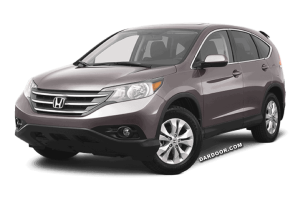
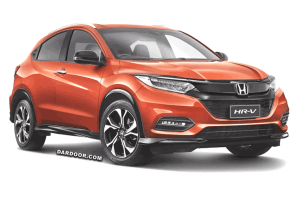
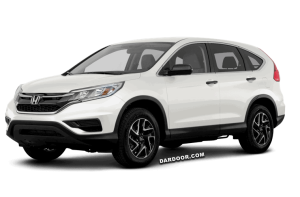
This is the original OEM workshop electrical manual for the 2012-2020 Honda Brio wiring diagrams in PDF format.
2012–2019 Honda Brio — Specs, Common Problems, Maintenance, Recalls/TSBs & DTC Codes
Quick Overview 🚗 The 2012–2019 Honda Brio is a subcompact hatchback designed primarily for urban markets in Asia, Africa, and Latin America. Known for simplicity, fuel efficiency, and Honda reliability, it uses naturally aspirated petrol engines and basic electronics—but owners still report recurring mechanical and electrical issues as mileage increases.
Overview 🧭
The Honda Brio (first generation) was sold between 2012 and 2019 with a focus on affordability, ease of maintenance, and compact dimensions. It shares mechanical DNA with other small Honda models and is generally durable, but suspension wear, clutch issues, and aging electrical components are common as vehicles age.
Technical Specs & Performance ⚙️
| Item | Specification |
|---|---|
| Body Style | 5-door subcompact hatchback |
| Engine | 1.2L i-VTEC inline-4 (NA petrol) |
| Power | 88–90 hp (market dependent) |
| Transmission | 5-speed manual / 5-speed automatic |
| Drivetrain | Front-wheel drive (FWD) |
| Fuel Economy (avg) | ~5.5–6.0 L/100 km combined |
Top 10 Common Mechanical Issues 🧰
- Premature Clutch Wear (Manual)
- 👀 Symptoms: Slipping clutch, high engagement point, burning smell
- 🔎 Root Cause: Light-duty clutch design and frequent stop-and-go driving
- ✅ Fix: Replace clutch disc, pressure plate, and release bearing
- 💰 Cost to Fix: $450–$900
- Suspension Bushing Wear
- 👀 Symptoms: Clunking noises, poor ride quality, uneven tire wear
- 🔎 Root Cause: Soft rubber bushings deteriorate on rough roads
- ✅ Fix: Replace worn control arm bushings or assemblies
- 💰 Cost to Fix: $180–$600
- Front Strut & Shock Absorber Failure
- 👀 Symptoms: Excessive bouncing, nose dive under braking
- 🔎 Root Cause: High mileage and poor road conditions
- ✅ Fix: Replace struts/shocks in pairs; perform wheel alignment
- 💰 Cost to Fix: $300–$900
- Brake Rotor Warping
- 👀 Symptoms: Steering wheel vibration during braking
- 🔎 Root Cause: Thin rotors prone to heat distortion
- ✅ Fix: Replace rotors and pads; torque wheels properly
- 💰 Cost to Fix: $220–$500
- Engine Mount Deterioration
- 👀 Symptoms: Excess vibration at idle, clunk on acceleration
- 🔎 Root Cause: Rubber mount fatigue over time
- ✅ Fix: Replace failed mounts
- 💰 Cost to Fix: $150–$450
- Manual Transmission Gear Notchiness
- 👀 Symptoms: Hard shifting, gear grind when cold
- 🔎 Root Cause: Old gear oil or worn synchros
- ✅ Fix: Change transmission fluid; rebuild if severe
- 💰 Cost to Fix: $90–$250 / $900–$1,800 (rebuild)
- Cooling Fan Motor Failure
- 👀 Symptoms: Overheating in traffic, fan not engaging
- 🔎 Root Cause: Motor wear or relay failure
- ✅ Fix: Replace fan motor or relay
- 💰 Cost to Fix: $200–$450
- Oil Leaks (Valve Cover Gasket)
- 👀 Symptoms: Oil smell, oil residue on engine
- 🔎 Root Cause: Gasket hardening with age
- ✅ Fix: Replace valve cover gasket
- 💰 Cost to Fix: $120–$300
- Wheel Bearing Noise
- 👀 Symptoms: Humming noise increasing with speed
- 🔎 Root Cause: Bearing wear from road impacts
- ✅ Fix: Replace affected wheel bearing
- 💰 Cost to Fix: $200–$450 per wheel
- Exhaust Heat Shield Rattle
- 👀 Symptoms: Metallic rattling under car
- 🔎 Root Cause: Corroded fasteners or thin shield metal
- ✅ Fix: Re-secure or replace heat shield
- 💰 Cost to Fix: $50–$200
Top 10 Common Electrical Issues 💡
- Battery Drain / Weak Battery
- 👀 Symptoms: No-start, dim lights
- 🔎 Root Cause: Small battery capacity and short trips
- ✅ Fix: Replace battery; test charging system
- 💰 Cost to Fix: $120–$250
- Power Window Regulator Failure
- 👀 Symptoms: Window stuck or slow movement
- 🔎 Root Cause: Cable/regulator wear
- ✅ Fix: Replace window regulator assembly
- 💰 Cost to Fix: $180–$450 per door
- Central Locking Malfunction
- 👀 Symptoms: Doors not locking/unlocking consistently
- 🔎 Root Cause: Actuator motor failure
- ✅ Fix: Replace door lock actuator
- 💰 Cost to Fix: $150–$400
- Blower Motor Failure
- 👀 Symptoms: No airflow from vents
- 🔎 Root Cause: Motor brush wear
- ✅ Fix: Replace blower motor
- 💰 Cost to Fix: $180–$350
- Dashboard Warning Lights Flicker
- 👀 Symptoms: Random warning lights
- 🔎 Root Cause: Weak battery or poor ground connections
- ✅ Fix: Clean grounds; replace battery if weak
- 💰 Cost to Fix: $80–$250
- Headlight Bulb Burnout
- 👀 Symptoms: One or both headlights out
- 🔎 Root Cause: Vibration and bulb heat
- ✅ Fix: Replace bulbs in pairs
- 💰 Cost to Fix: $30–$120
- Horn Failure
- 👀 Symptoms: Horn not working
- 🔎 Root Cause: Horn unit corrosion or relay failure
- ✅ Fix: Replace horn or relay
- 💰 Cost to Fix: $50–$180
- Fuel Gauge Inaccuracy
- 👀 Symptoms: Erratic fuel level readings
- 🔎 Root Cause: Worn fuel level sender
- ✅ Fix: Replace fuel pump/sender unit
- 💰 Cost to Fix: $350–$700
- Radio/Infotainment Failure
- 👀 Symptoms: No sound, unit won’t power on
- 🔎 Root Cause: Internal circuit failure
- ✅ Fix: Repair or replace head unit
- 💰 Cost to Fix: $200–$600
- ABS Warning Light
- 👀 Symptoms: ABS light illuminated
- 🔎 Root Cause: Wheel speed sensor failure
- ✅ Fix: Replace faulty ABS sensor
- 💰 Cost to Fix: $120–$300
Pros & Cons ✅❌
| Pros | Cons |
|---|---|
| Excellent fuel economy | Light build, limited crash protection |
| Simple and reliable engine | Basic interior and features |
| Low ownership costs | Suspension wears quickly on rough roads |
| Easy to maintain | Weak resale in some markets |
Maintenance Schedule 🗓️
| Interval | Service | Notes |
|---|---|---|
| Every 5,000–7,500 km | Engine oil & filter | Short trips = shorter intervals |
| Every 20,000 km | Air filter, brake inspection | Replace sooner in dusty areas |
| Every 40,000 km | Transmission fluid (MT/AT) | Improves shifting longevity |
| Every 60,000 km | Coolant, spark plugs inspection | Use Honda-spec fluids |
| Every 100,000 km | Full suspension & steering check | Replace worn components early |
Top 5 Competitors 🏁
- Toyota Wigo
- Suzuki Swift ↗
- Hyundai i10
- Kia Picanto ↗
- Ford Figo
Recalls & TSB Highlights 🚨
- Airbag inflator recall (Takata-related, market dependent)
- Seat belt pretensioner inspection campaigns
- Fuel pump relay advisory (select markets)
- ABS sensor wiring inspection TSB
- ECU software update for idle stability
- Brake master cylinder inspection advisory
- Door latch inspection campaign
- Steering column noise TSB
- HVAC blower resistor inspection
- General safety recall verification recommended by VIN
DTC Trouble Codes 🧠
Engine Control Module (ECM)
| DTC | Description |
|---|---|
| P0171 | System too lean |
| P0300 | Random misfire |
| P0301 | Cylinder 1 misfire |
| P0101 | MAF range/performance |
| P0420 | Catalyst efficiency |
| P0128 | Coolant thermostat |
| P0457 | EVAP leak |
| P0113 | IAT sensor high |
| P0505 | Idle control system |
| P0606 | ECU processor fault |
Transmission Control Module (TCM)
| DTC | Description |
|---|---|
| P0700 | TCM fault request |
| P0730 | Incorrect gear ratio |
| P0715 | Input speed sensor |
| P0720 | Output speed sensor |
| P0740 | Torque converter clutch |
| P0750 | Shift solenoid A |
| P0760 | Shift solenoid C |
| P0780 | Shift malfunction |
| P0810 | Clutch position switch |
| P0868 | Low transmission pressure |
ABS / ESC
| DTC | Description |
|---|---|
| C0035 | Front wheel speed sensor |
| C0040 | Rear wheel speed sensor |
| C0110 | ABS pump motor |
| C0121 | Valve relay |
| C0140 | ABS control failure |
| C0215 | Wheel speed discrepancy |
| C0235 | Yaw sensor fault |
| C0265 | EBD malfunction |
| C0300 | ABS ECU fault |
| C0800 | Low system voltage |
SRS Airbag System
| DTC | Description |
|---|---|
| B0001 | Driver airbag circuit |
| B0010 | Passenger airbag circuit |
| B0020 | Side airbag left |
| B0025 | Side airbag right |
| B0040 | Seat belt pretensioner |
| B0051 | Occupant sensor |
| B0065 | Airbag control unit |
| B0070 | Crash sensor |
| B0090 | Airbag indicator |
| B0100 | SRS wiring fault |
Body Control / CAN
| DTC | Description |
|---|---|
| U0100 | Lost comm with ECM |
| U0140 | Lost comm with BCM |
| U0155 | Cluster communication |
| B1200 | Door lock circuit |
| B1241 | Low battery voltage |
| B1300 | ECU power failure |
| B1350 | Ignition input |
| B1400 | Interior light circuit |
| B1600 | Immobilizer fault |
| U3000 | CAN bus fault |
FAQ ❓
Is the Honda Brio reliable?
Yes. With basic maintenance, the Brio is mechanically durable, though suspension and clutch wear are common in high-traffic cities.
Is the Brio good for long-distance driving?
It can handle highway trips, but it’s optimized for city use and comfort is limited compared to larger cars.
What is the most expensive repair?
Clutch replacement and transmission rebuilds are among the highest-cost repairs on older vehicles.
Does the Brio have major recalls?
Some markets had Takata airbag recalls. Always verify by VIN.
Final Verdict 🏁
The 2012–2019 Honda Brio is a dependable, low-cost city car with predictable wear points rather than major design flaws. It’s best suited for urban commuting, first-time buyers, or budget-conscious owners who prioritize simplicity and fuel economy over comfort and advanced features.