2007–2013 Kia Carens (UN) — OEM Workshop Service & Auto Repair Manual + Wiring Diagrams (PDF)
Download the original OEM workshop service and auto repair manual for the 2007–2013 Kia Carens (second-generation UN, also known as Rondo in North America) in a simple, user-friendly PDF format. This complete factory package includes wiring diagrams and technical guidance manuals, giving you dealer-level procedures for accurate diagnostics, maintenance, and repairs.
| File Format |
PDF |
| File Language |
English |
| You’ll Get |
257.4 MB |
| Page Count |
3,314 |
| Wiring Diagram |
Included |
| Delivery Method |
Instant Download |
Use factory-level documentation to diagnose faster, repair correctly, and maintain your Kia Carens with confidence.
Key Features
Complete OEM Coverage
Factory-approved service and repair procedures across all major systems.
Wiring Diagrams
Electrical schematics, connector views, grounds, fuses/relays, and power distribution.
Technical Guidance Manuals
Extra troubleshooting guidance, system explanations, and diagnostic workflows where provided.
Searchable PDF
Quick navigation with print-ready pages for workshop or home use.
What’s Inside
- Maintenance schedules, fluids, capacities, and torque specifications
- Engine mechanical, cooling, lubrication, fuel & emissions systems
- Transmission & driveline service procedures
- Brakes (ABS where equipped), suspension, and steering
- Electrical systems: wiring diagrams, connectors, grounds, fuse/relay locations
- Body, interior, HVAC, and safety systems (SRS/airbags)
- Diagnostics: DTC references, test procedures, and troubleshooting flowcharts
Download & Compatibility
Delivery: Instant digital PDF download
Compatibility: Windows • macOS • iOS • Android
This manual provides detailed instructions for maintenance, disassembly, reassembly, component inspection, adjustment, and diagnostics—intended for use by experienced mechanics. Proper application of this guide will help ensure thorough repairs and maintain your vehicle in peak condition.
Important Note: Before purchasing this manual, please check whether your vehicle is subject to any active service recalls, as authorized dealerships may perform necessary repairs free of charge. When replacing parts, always use genuine OEM components to ensure safety, reliability, and long-term performance.
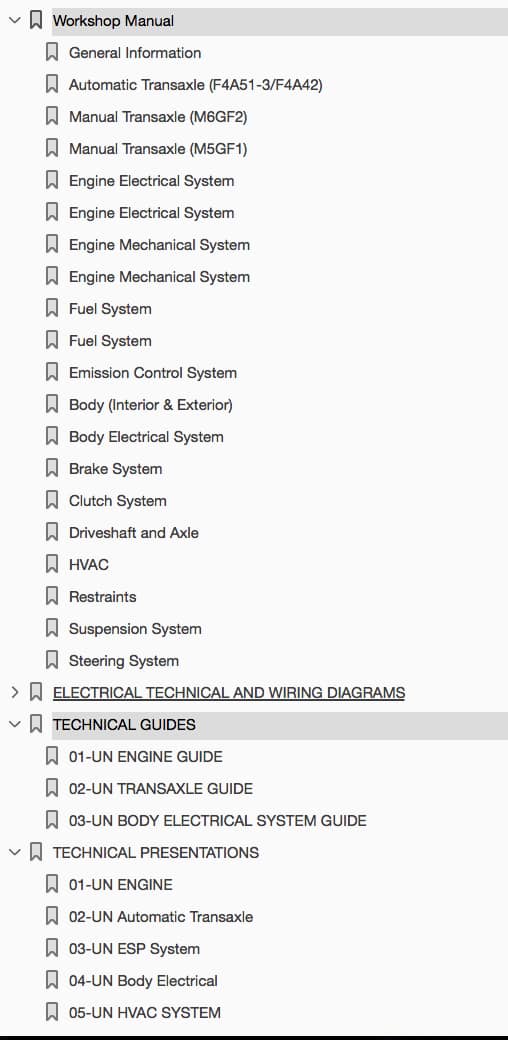
Table of Contents : 2007-2013 KIA Carens Repair Manual
SAMPLE PAGES
CAUTION: This OEM service and workshop repair manual provides detailed procedures for maintenance, disassembly, reassembly, inspection, adjustment, and diagnostics. It is intended as a comprehensive guide for experienced mechanics. To ensure thorough and accurate repairs that maintain your vehicle’s optimal performance, please read and follow this manual carefully. When replacing parts during any repair work,
always use genuine Kia parts to ensure quality, safety, and reliability./box]
2007–2013 Kia Carens: Comprehensive Buyer’s Guide
Overview
The 2007–2013 Kia Carens (also known as Rondo in North America) is a compact MPV (Multi-Purpose Vehicle) that bridges the gap between a traditional sedan and a minivan. Designed for families needing practicality without the bulk of a full-size van, it offered flexible seating configurations and decent value for money.
Market Position: Budget-friendly family hauler competing against small crossovers and compact MPVs
Available Configurations: 5-seat or 7-seat layouts depending on market and trim level
Technical Specifications
Engine Options
- 2.0L Gasoline I4: ~140-143 hp, ~137 lb-ft torque
- 2.4L Gasoline I4: ~172-175 hp, ~168 lb-ft torque (select markets)
- 1.6L Diesel I4: ~115 hp, ~192 lb-ft torque (Europe/Asia)
- 2.0L Diesel I4: ~140 hp, ~235 lb-ft torque (Europe/Asia)
Transmission
- 5-speed manual
- 4-speed automatic (2.0L gasoline)
- 5-speed automatic (2.4L gasoline, select markets)
Dimensions
- Length: 4,545-4,560 mm (179 inches)
- Width: 1,805-1,830 mm (71 inches)
- Height: 1,610-1,640 mm (63-65 inches)
- Wheelbase: 2,750 mm (108 inches)
- Cargo Capacity: 492-1,650 liters (17-58 cubic feet) with seats folded
Drivetrain
- Front-wheel drive (FWD) only
Fuel Economy
- Gasoline: 20-26 mpg combined (varies by engine/transmission)
- Diesel: 35-45 mpg combined (European cycle)
Suspension
- Front: MacPherson strut
- Rear: Multi-link independent suspension
Brakes
- Front: Ventilated disc
- Rear: Solid disc
10 Top Mechanical and Electrical Issues
1. Timing Chain Tensioner Failure (2.0L Diesel)
-
- Symptoms: Rattling noise on cold starts, metallic clattering from engine bay, rough idle, check engine light
- Root Cause: Defective timing chain tensioner design allows excessive slack; oil starvation due to infrequent oil changes accelerates wear
- Fix: Replace timing chain, tensioner, guides, and related components; use manufacturer-specified oil and intervals
- Cost: $800–$1,800 (higher if engine damage occurred)
2. Dual Mass Flywheel Failure (Manual Transmission, Diesel)
-
- Symptoms: Vibration during acceleration, clunking noise when engaging clutch, difficulty shifting, juddering at low RPM
- Root Cause: Normal wear amplified by aggressive driving, towing, or city driving with frequent stops; springs inside flywheel break down
- Fix: Replace dual mass flywheel and clutch assembly simultaneously
- Cost: $900–$1,600
3. EGR Valve Carbon Buildup (Diesel Engines)
-
- Symptoms: Loss of power, black smoke from exhaust, rough idle, increased fuel consumption, check engine light (P0401, P0404 codes)
- Root Cause: Exhaust gas recirculation valve becomes clogged with carbon deposits from incomplete combustion, especially with short trips
- Fix: Clean or replace EGR valve, clean intake manifold, update ECU software if available
- Cost: $200–$600 (cleaning); $400–$900 (replacement)
4. Throttle Body Failure
-
- Symptoms: Erratic idle, stalling at stops, poor acceleration response, check engine light (P0120, P0122, P2135 codes)
- Root Cause: Carbon buildup or electronic throttle actuator motor failure; contamination from blow-by gases
- Fix: Clean throttle body initially; replace if cleaning doesn’t resolve issue; ECU relearn procedure required
- Cost: $50–$150 (cleaning); $300–$650 (replacement)
5. Alternator Failure
-
- Symptoms: Dimming lights, battery warning light, electrical accessories malfunctioning, difficulty starting, whining noise from engine bay
- Root Cause: Bearing wear, voltage regulator failure, or diode pack deterioration; water intrusion in some cases
- Fix: Replace alternator; check battery and charging system for related issues
- Cost: $350–$700
6. Power Steering Pump Failure
-
- Symptoms: Whining/groaning noise when turning, heavy steering especially at low speeds, fluid leaks under vehicle
- Root Cause: Pump seal deterioration, bearing wear, or contaminated power steering fluid; lack of regular fluid changes
- Fix: Replace power steering pump, flush system, check for leaks in hoses and rack
- Cost: $400–$800
7. Air Conditioning Compressor Failure
-
- Symptoms: No cold air, grinding/squealing noise from AC compressor, AC clutch not engaging, oil leaks around compressor
- Root Cause: Clutch bearing failure, internal seal deterioration, or refrigerant contamination; lack of regular AC system use
- Fix: Replace AC compressor, evacuate and recharge system, replace receiver-drier, check for leaks
- Cost: $600–$1,200
8. Suspension Bushing Deterioration
-
- Symptoms: Clunking over bumps, wandering steering, uneven tire wear, creaking noises during turns
- Root Cause: Rubber bushings (especially front control arm and rear trailing arm) deteriorate from age, road salt, and normal wear
- Fix: Replace worn bushings; alignment required after replacement
- Cost: $300–$700 (depending on which bushings)
9. Fuel Injector Issues (Diesel)
-
- Symptoms: Hard starting, misfires, black smoke, poor fuel economy, rough idle, check engine light (P0201-P0204 codes)
- Root Cause: Carbon buildup from poor fuel quality, internal injector wear, or seal failure allowing fuel leakage
- Fix: Remove and clean injectors or replace failed units; use fuel system cleaner regularly as preventative
- Cost: $400–$1,000 (cleaning); $800–$2,000+ (replacement)
10. Window Regulator Failure
-
- Symptoms: Slow window operation, grinding noise, window falls into door, window stuck in up or down position
- Root Cause: Plastic components in regulator mechanism break; cable fraying; motor gear wear
- Fix: Replace window regulator assembly and/or motor
- Cost: $250–$500 per window
Top 5 Competitors
- More engaging driving dynamics
- Better interior quality
- Similar sliding rear doors (huge advantage for tight parking)
- Less cargo space than Carens
2. Opel/Vauxhall Zafira (2005–2014)
- Flex7 seating system very versatile
- Available with more powerful engines
- Better European market support
- Higher maintenance costs
3. Ford C-MAX (2007–2019)
- More refined driving experience
- Better build quality
- Good diesel engine options
- Slightly higher purchase price
4. Toyota Verso (2009–2018)
- Superior reliability reputation
- Better resale value
- More conservative styling
- Higher initial cost
- More premium feel
- Excellent practicality
- Strong engines
- Significantly higher maintenance and repair costs
Top 10 Recalls, Advisories & TSB Highlights
Note: Recall availability varies significantly by market (North America, Europe, Asia). The Carens/Rondo had relatively few major recalls compared to some competitors.
1. Corrosion-Related Structural Issues (Various Markets)
- Issue: Excessive corrosion on rear subframe and suspension mounting points
- Action: Inspection and replacement of affected components; protective coating application
2. Seat Belt Pretensioner Recall (Select Markets)
- Issue: Front seat belt pretensioners may not deploy correctly in collision
- Action: Replace seat belt assemblies
3. ABS Module Software Update
- Issue: ABS may activate unnecessarily on certain road surfaces
- Action: ECU software update
4. Steering Column Lock Failure (Diesel Models)
- Issue: Electronic steering lock may fail to disengage, preventing starting
- Action: Replace steering column lock assembly or apply software update
5. Fuel Tank Strap Corrosion (Cold Climate Markets)
- Issue: Fuel tank retaining straps corrode prematurely, risking tank detachment
- Action: Inspect and replace straps; apply anti-corrosion treatment
6. Brake Light Switch Recall
- Issue: Brake light switch may fail, causing brake lights not to illuminate
- Action: Replace brake light switch
7. Child Safety Lock Issue
- Issue: Rear door child safety locks may not engage properly
- Action: Inspect and replace door lock mechanisms
8. Cooling System Hose Deterioration (TSB)
- Issue: Certain coolant hoses deteriorate prematurely, leading to leaks
- Action: Inspect and replace affected hoses
9. Door Latch Mechanism (Cold Weather)
- Issue: Door latches may freeze or fail to engage in cold weather
- Action: Lubricate latches; replace if damaged
10. Diesel Particulate Filter (DPF) Software Update
- Issue: DPF regeneration cycle too infrequent, leading to clogging
- Action: ECU software update to optimize regeneration
Recommendation: Check with your local Kia dealer using the VIN to verify which recalls apply to a specific vehicle.
Maintenance Schedule
Every 6 Months or 5,000 Miles (8,000 km)
- Engine oil and filter change (diesel and turbocharged engines)
- Tire rotation
- Visual brake inspection
- Fluid level checks
Every 12 Months or 10,000 Miles (15,000 km)
- Engine oil and filter change (gasoline engines)
- Cabin air filter replacement
- Inspect brake pads/discs
- Check exhaust system
- Inspect suspension components
Every 2 Years or 20,000 Miles (30,000 km)
- Engine air filter replacement
- Fuel filter replacement (diesel)
- Inspect drive belts
- Check battery condition
- Brake fluid replacement
Every 3 Years or 30,000 Miles (45,000 km)
- Spark plugs replacement (gasoline)
- Transmission fluid inspection/change (automatic)
- Coolant system flush
- Power steering fluid change
- Inspect timing chain/belt (depends on engine)
Every 4 Years or 40,000 Miles (60,000 km)
- Replace timing belt (if equipped; 2.0L gasoline in some markets)
- Inspect timing chain (diesel engines)
- Replace transmission fluid (automatic)
- Inspect/replace water pump
Every 60,000 Miles (100,000 km)
- Major service: all fluids, filters, belts
- Inspect suspension bushings thoroughly
- Check steering components
- Valve clearance check (where applicable)
Diesel-Specific:
- DPF cleaning/regeneration as needed (monitor warning lights)
- EGR valve cleaning every 30,000-40,000 miles recommended
10 Frequently Asked Questions for Buyers
1. Is the Kia Carens reliable?
Generally yes, but reliability varies by engine type. Gasoline models tend to be more reliable than diesels, which can suffer from DPF, EGR, and injector issues. Proper maintenance is critical. Expect typical issues for a budget Korean MPV of this era.
2. Which engine should I choose?
For reliability and lower maintenance: 2.0L or 2.4L gasoline. For fuel economy and torque: 2.0L diesel, but be prepared for higher maintenance costs and potential issues. The 1.6L diesel is underpowered for a vehicle this size.
3. What’s the real-world fuel economy?
Gasoline: 22-28 mpg combined; Diesel: 38-45 mpg combined (European driving). City driving significantly reduces diesel efficiency if DPF regeneration cycles are interrupted.
4. Are parts expensive?
Parts are generally affordable compared to European brands. Many components are shared with other Kia/Hyundai models. Aftermarket parts availability is decent. Diesel-specific parts (injectors, DPF) can be costly.
5. Is it good for long-distance driving?
Decent for highway cruising, though not the quietest or most refined. Diesel models are better suited for long distances due to torque and fuel economy. Seats can be firm for some people on very long journeys.
6. How does the 7-seat version work?
Third-row seats are suitable for children or short adults only. Access is tight. Cargo space is minimal with all seats up. Better as a 5-seater with occasional 7-seat capability.
7. What should I look for when buying used?
Full service history (especially oil changes), evidence of timing belt/chain replacement, no warning lights, test all electrical functions, check for rust on subframe/suspension mounts, listen for unusual engine noises, verify DPF status on diesels.
8. Are automatic transmissions reliable?
The 4-speed and 5-speed automatics are generally reliable if serviced properly. Change transmission fluid every 40,000-50,000 miles despite “lifetime fill” claims. Some report sluggish shifts when cold.
9. Does it hold its value well?
Depreciation is steep, which is good for used buyers but bad for original owners. Kia’s improving reputation has helped somewhat, but it’s still not as strong as Toyota or Honda for resale.
10. Is it expensive to insure?
Generally inexpensive to insure due to modest performance, good safety ratings, and lower replacement costs. Insurance group ratings are typically low-to-moderate.
Final Buyer Recommendations
Who Should Buy:
- Budget-conscious families needing flexible seating and decent practicality
- Second-car buyers wanting occasional 7-seat capability without minivan size
- Commuters who prioritize value over refinement (diesel models for high mileage)
- First-time MPV buyers testing the segment without major financial commitment
Who Should Avoid:
- Buyers prioritizing refinement – rivals like Mazda5 or VW Touran offer better dynamics and quality
- Those needing genuine 7-seat comfort – third row is cramped
- Performance enthusiasts – this is a practical family hauler, not a driver’s car
- Buyers averse to maintenance – especially diesel models require diligent upkeep
Best Value Propositions:
✅ 2.0L Gasoline with Manual Transmission – Most reliable, lowest maintenance costs, adequate performance
✅ 2010-2011 Models – Post-facelift improvements, before late-life wear accumulates
✅ Well-Maintained Ex-Fleet Vehicles – Often have complete service records
Models to Approach Carefully:
⚠️ High-Mileage Diesels Without Full Service History – Risk of expensive repairs
⚠️ 2007-2008 Early Production – More initial quality issues
⚠️ Vehicles from High-Corrosion Areas – Check subframe and suspension thoroughly
Pre-Purchase Inspection Checklist:
- ✓ Complete service history verification
- ✓ Timing belt/chain replacement evidence (or budget for it)
- ✓ Diesel DPF status and last regeneration
- ✓ Undercarriage rust inspection (especially rear subframe)
- ✓ Test all electrical systems (windows, AC, locks)
- ✓ Listen for unusual engine noises (cold start especially)
- ✓ Check for transmission smoothness
- ✓ Verify no outstanding recalls
- ✓ Brake and suspension condition
- ✓ Check for oil leaks and fluid condition
Our Verdict
The 2007-2013 Kia Carens offers solid value as a used family MPV, particularly for buyers who prioritize practicality and affordability over prestige and refinement. It’s not the most exciting vehicle, but with proper maintenance and realistic expectations, it serves as a competent family hauler. Gasoline models are recommended for reliability, while diesels suit high-mileage drivers willing to invest in maintenance.
Budget for ownership: Set aside $500-1,000 annually for maintenance beyond routine servicing, especially after 80,000 miles. At this age, expect to address wear items like bushings, alternators, and cooling system components.
Best alternatives if budget allows: Mazda5 (better driving experience), Toyota Verso (superior reliability), or Ford C-MAX (refinement and efficiency balance).