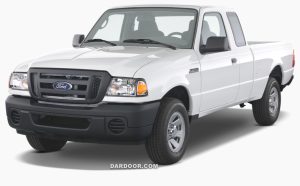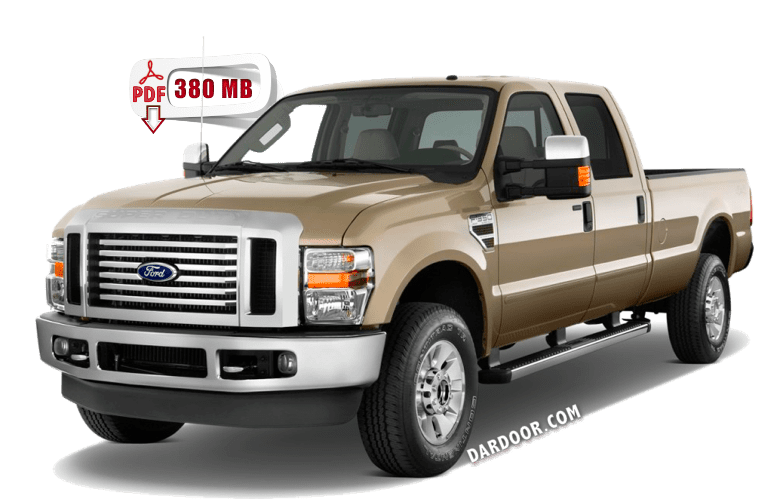
2006-2011 Ford Super Duty F250 F550 Repair Manual

$24.90

Get the official factory workshop manual for the 2006–2011 Ford Super Duty lineup—F-250, F-350, F-450, and F-550 (P356 Series).

2006–2011 Ford Super Duty F-250 / F-350 / F-450 / F-550 (P356) — OEM Workshop Service & Repair Manual (PDF)

Get the official factory workshop manual for the 2006–2011 Ford Super Duty lineup—F-250, F-350, F-450, and F-550 (P356 Series). This is the same dealer-level documentation used by Ford technicians, including precise procedures, torque specs, diagnostics, and wiring information so you can service and repair with confidence.

File Format PDF
File Language English
You’ll Get 380 MB
Page Count 6,654
Delivery Method Instant Download
Searchable & Printable YES
Wiring Included NO

Engines Covered

  • Diesel: 6.0L Power Stroke, 6.4L Power Stroke, 6.7L Power Stroke
  • Petrol: 5.4L

Key Features

Complete OEM Coverage

Factory procedures for service, repair, and maintenance across all systems.

Step-by-Step Procedures

Correct sequences, torque specs, special tools, and safety notes.

Diagnostics & DTCs

Flowcharts, testing routines, and fault-code troubleshooting.

Searchable & Printable

Fast navigation PDF—print only the pages you need.

What’s Inside

  • Engine mechanical, fuel, air & emissions (6.0L/6.4L/6.7L diesel; 5.4L petrol)
  • Cooling, lubrication, intake & exhaust systems
  • Automatic/manual transmissions & transfer cases
  • Driveline, axles, hubs & wheel bearings
  • Brakes, ABS, stability control
  • Steering, suspension, and frame
  • Body, interior, HVAC, restraints
  • Maintenance schedules, fluids, capacities, and torque specs

Download & Compatibility

Delivery: Instant digital PDF download
Compatibility: Windows, macOS, iOS, Android

Work to factory standards—reduce guesswork and get repairs right the first time.

This manual provides detailed instructions for maintenance, disassembly, reassembly, component inspection, adjustment, and diagnostics—intended for use by experienced mechanics. Proper application of this guide will help ensure thorough repairs and maintain your vehicle in peak condition.

Important Note: Before purchasing this manual, please check whether your vehicle is subject to any active service recalls, as authorized dealerships may perform necessary repairs free of charge. When replacing parts, always use genuine OEM components to ensure safety, reliability, and long-term performance.

Contents: 2006-2011 Ford Super Duty Repair Manual

Contents 2011 Ford Super Duty Repair Manual

Sample Pages


CAUTION: This OEM service and workshop repair manual provides detailed procedures for maintenance, disassembly, reassembly, inspection, adjustment, and diagnostics. It is intended as a comprehensive guide for experienced mechanics. To ensure thorough and accurate repairs that maintain your vehicle’s optimal performance, please read and follow this manual carefully. When replacing parts during any repair work, always use genuine Ford parts to ensure quality, safety, and reliability.

🛻 2006–2011 Ford Super Duty (F-250 • F-350 • F-450 • F-550) — Specs, Issues + Fixes, Maintenance, DTC Codes & Competitors

The 2006–2011 Ford Super Duty lineup spans light commercial to serious vocational work. Gas V8/V10 and Power Stroke diesel options, 4×2/4×4 drivetrains, and chassis-cab variants make these trucks tow and haul champs—so long as you keep up with cooling, emissions, and fluid service.

⚙️ Technical Specifications & Performance

  • Gas Engines: 5.4L Triton V8 (~300 hp), 6.8L Triton V10 (~362 hp)
  • Diesels: 6.0L Power Stroke V8 (’06–’07), 6.4L V8 (’08–’10), 6.7L V8 (’11) — torque 570–735+ lb-ft (varies by MY)
  • Transmissions: 5-/6-speed automatics, 6-speed manual (select trims/years)
  • Drivetrain: RWD or 4×4; solid front axle; limited slip/locking diffs available
  • Max Tow (properly equipped): ~12,500–24,500 lb (conventional/gooseneck; configuration dependent)
  • Payload: ~2,500–6,000+ lb (bed/chassis-cab dependent)
  • Fuel Economy (real-world): highly usage dependent; idle and load have outsized impact

🔧 Top 10 Mechanical Issues — with Cause & Repair

  1. EGR cooler failure (6.0L/6.4L)
    Cause: Coolant/soot contamination overheats the EGR cooler, cracking cores.
    Repair: Pressure test and replace EGR cooler; check oil cooler ∕ coolant flow; consider updated cooler + thorough cooling-system service.
  2. Oil cooler restriction (6.0L)
    Cause: Silicate dropout and debris clog passages, starving the EGR cooler and turbo of flow.
    Repair: Replace oil cooler; flush/convert coolant to spec; install updated screen; monitor EOT/ECT delta.
  3. Turbo sticking/underboost
    Cause: VGT vanes coke up from short trips/soot; actuator corrosion.
    Repair: Remove/clean or replace turbo; verify boost control, MAP/EBP sensors; reprogram if applicable.
  4. Head gasket failure (primarily tuned/abused 6.0L)
    Cause: Elevated cylinder pressures + stretched TTY head bolts.
    Repair: Machine heads if needed; install new gaskets and upgraded head studs; update cooling/emissions root causes.
  5. DPF/regen complaints (6.4L/6.7L)
    Cause: Excessive idling/short trips prevent full regen; ash loading; sensor faults.
    Repair: Perform service regen; repair exhaust temp/DPF pressure sensors; replace DPF if at ash limit; update PCM.
  6. Fuel-in-oil (6.4L) or fuel system aeration
    Cause: Injector over-fueling, post-injection for regen, or leaks into crankcase.
    Repair: Diagnose injectors; update calibration; change oil; correct leaks; verify high-pressure fuel system.
  7. Front end “death wobble”
    Cause: Worn track bar bushings, tie-rod ends, ball joints; out-of-spec caster.
    Repair: Replace worn components; set caster/toe; quality steering damper; torque/inspect track bar bracket.
  8. Transmission shudder/harsh shifts
    Cause: Sheared ATF/friction modifiers; TCC strategy or solenoid wear.
    Repair: Full fluid exchange with correct spec; replace filter/solenoids as needed; PCM/TCM reflash; add aux cooler for heavy tow.
  9. Driveshaft/CV joint vibration
    Cause: Worn u-joints/CV, bent shaft, or angle issues after lift/load changes.
    Repair: Replace u-joints/CV; balance or replace shaft; correct pinion/shaft angles; re-torque leaf hardware.
  10. Brake pulsation/warped rotors
    Cause: Heat spots from towing/long grades; uneven lug torque; seized slide pins.
    Repair: Replace rotors/pads; service caliper slides; torque lugs properly; consider severe-duty pads/rotors.

💡 Top 10 Electrical Issues — with Cause & Repair

  1. FICM (Fuel Injection Control Module) low voltage (6.0L)
    Cause: FICM power board solder/driver failures; weak batteries/alternator.
    Repair: Test charging; replace/repair FICM; update calibration; maintain batteries in pairs.
  2. Injector circuit contribution codes
    Cause: Harness chafing, connector corrosion, or failing injector coils.
    Repair: Repair harness; clean terminals; replace affected injectors; run power balance test.
  3. Instrument cluster “Christmas tree”
    Cause: Low system voltage/poor grounds causing CAN faults.
    Repair: Load-test batteries; clean grounds; alt ripple test; clear DTCs and retest.
  4. TPMS/ABS warning interplay
    Cause: Weak wheel-speed sensors or dirty tone rings.
    Repair: Replace sensor; clean/inspect tone ring; verify harness at knuckles.
  5. HVAC blower inoperative
    Cause: Failed blower resistor or motor over-current.
    Repair: Replace resistor pack and blower motor if draw high.
  6. Trailer lighting faults
    Cause: Corroded 7-pin connector or trailer module water intrusion.
    Repair: Clean/replace connector; reseal module; dielectric grease; check fuses.
  7. Door lock actuator failures
    Cause: Internal motor/gear wear; moisture ingress.
    Repair: Replace actuator; verify latch operation; re-sync remotes if needed.
  8. Airbag warning (OCS/clock spring)
    Cause: Seat Occupant Classification mat fault or spiral cable fatigue.
    Repair: Replace failed component; clear SRS DTCs; reroute/secure harness.
  9. Upfitter wiring gremlins
    Cause: Add-on equipment splices causing shorts/back-feeds.
    Repair: Audit circuits; restore OEM routing; add relays/fuses correctly.
  10. Parasitic draw (modules awake)
    Cause: Module not sleeping due to CAN chatter/aftermarket devices.
    Repair: Ammeter draw test; isolate circuit; software updates; repair culprit module/device.

📊 Pros & Cons

Pros 👍 Cons 👎
Towing/hauling capability across trims Front-end wear can lead to wobble
Broad powertrain choices (gas/diesel) Diesel emissions hardware needs diligent service
Upfitter-friendly chassis and wiring Fuel economy suffers with heavy loads/idle
Parts availability & strong aftermarket Older 6.0L/6.4L reputation requires buyer diligence
Durable ladder frame & solid axles Ride can be stiff unloaded

🛠️ Maintenance Schedule (severe-duty friendly)

Interval ⏱️ Recommended Service 🔧
Every 5,000 mi (8,000 km) Engine oil & filter (diesel sooner if idling/towing); inspect belts/hoses; rotate tires
Every 10,000–15,000 mi Fuel filter(s) — diesel; air filter inspect/replace (dusty use more often)
Every 30,000 mi ATF level/condition check; service breathers; clean MAF/EBP/MAP (diesel)
Every 45,000–60,000 mi Automatic transmission service (fluid/filter); brake fluid flush
Every 60,000 mi Axle/front diff/transfer case fluids (towing/4×4 usage)
Every 100,000 mi Coolant service; spark plugs (gas); serpentine belt; inspect water pump/thermostat
As needed DPF service regen; alignment after suspension work; battery load test (pairs on diesels)

🚘 Top Competitors

⚠️ Recalls, Advisories & Safety Alerts (summary)

  • Steering/track bar & tie-rod service campaigns: Insufficient torque or component wear on some trucks. 👉 Verify by VIN; replace/retorque as directed.
  • Airbag/SRS wiring connectors: Intermittent connection may illuminate lamp. 👉 Install revised connectors/retainers; clear DTCs.
  • Brake switch/stop-lamp issues: Faulty switch can affect lamps/shift interlock. 👉 Replace switch and confirm BCM function.
  • Diesel calibration updates: Driveability, regen frequency, and diagnostic robustness improvements. 👉 Update PCM/TCM to latest level.
  • Driveshaft/u-joint concerns (vocational use): Potential vibration/failure if service neglected. 👉 Inspect/replace; verify angles/balance.
🔎 Always confirm official campaigns by VIN with your market’s authority (e.g., NHTSA/Transport Canada).

🧾 Diagnostic Trouble Codes (DTC)

🚗 Engine Control Module (ECM)

Code Description
P0171 System Too Lean (Bank 1)
P0174 System Too Lean (Bank 2)
P0299 Turbo/Supercharger Underboost
P0401 EGR Flow Insufficient
P0420 Catalyst Efficiency Below Threshold
P2002 DPF Efficiency Below Threshold
P2459 DPF Regeneration Frequency
P0671 Glow Plug Cylinder 1 Circuit (diesel)
P0113 Intake Air Temp Sensor High
P0128 Coolant Thermostat Below Regulating Temp

⚙️ Transmission Control Module (TCM)

Code Description
P0700 Transmission Control System Malfunction (MIL request)
P0720 Output Speed Sensor Circuit
P0731 Gear 1 Incorrect Ratio
P0733 Gear 3 Incorrect Ratio
P0741 Torque Converter Clutch Performance/Stuck Off
P0751 Shift Solenoid A Performance/Stuck Off
P0756 Shift Solenoid B Performance/Stuck Off
P0871 Transmission Fluid Pressure Sensor C Range/Performance
P2703 Friction Element B Apply Time Range/Performance
P2714 Pressure Control Solenoid D Performance

🛑 ABS / ESC (Brake System)

Code Description
C0035 Left Front Wheel Speed Sensor Circuit
C0040 Right Front Wheel Speed Sensor Circuit
C0037 Left Rear Wheel Speed Sensor Circuit
C1095 Hydraulic Pump Motor Circuit
C1288 Pressure Transducer Main/Primary Circuit
C1234 Wheel Speed Mismatch
C1278 Yaw Rate Sensor Signal Fault
C116A ABS Function Disabled (module fault)
C1102 Battery Voltage Out of Range
C1233 LF Wheel Speed Sensor Signal Missing

🎈 SRS Airbag System

Code Description
B0001 Driver Frontal Deployment Control (Open/High)
B0020 Passenger Frontal Deployment Control
B0051 Crash Event Storage Full/ECU Locked
B00A0 Occupant Classification System Fault
B0092 Side Restraint Sensor RH Fault
B0095 Side Restraint Sensor LH Fault
B1193 Seatbelt Pretensioner RH Circuit
B1198 Seatbelt Pretensioner LH Circuit
B1B02 Passenger Airbag Squib Circuit Open
B1318 Battery Voltage Low (SRS Power)

🧠 Body Control / CAN Communication

Code Description
U0100 Lost Communication with ECM/PCM
U0121 Lost Communication with ABS Control Module
U0155 Lost Communication with Instrument Panel Cluster
U0140 Lost Communication with Body Control Module
U1900 CAN Communication Bus Fault
U0415 Invalid Data Received from ABS Module
U0422 Invalid Data Received from BCM
B210D Key Not Programmed (PATS)
B1342 ECU Fault (internal)
U0428 Invalid Data from Steering Control Module
Final Verdict & Conclusion : If you need a workhorse, a well-maintained 2006–2011 Super Duty is still a beast. The diesel trucks demand proactive cooling/emissions care and top-notch electrical health; the gas V8/V10s are simpler but thirsty. Buy on service history, refresh fluids and front-end components, and you’ll have a truck that tows hard, works daily, and survives the long haul. 🧰⛓️
Brands

File Format

PDF

File Language

English

You'll Get

380 MB

Page Count

6,654

Instant Download

YES

Wiring Diagram Included

NO