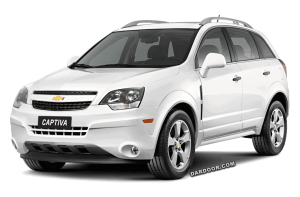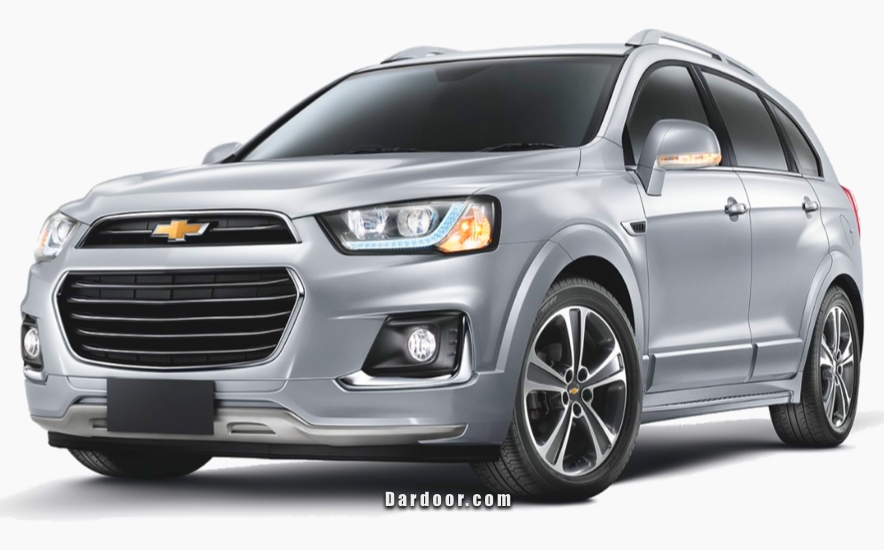
2011-2016 Chevrolet Captiva Repair Manual

$16.90

Download the official OEM workshop manual for the 2011–2016 Chevrolet Captiva—the same dealer-grade documentation used by Chevrolet technicians.

2011–2016 Chevrolet Captiva — OEM Workshop Service & Repair Manual (PDF)

Get the official OEM workshop manual for the 2011–2016 Chevrolet Captiva—the same dealer-grade documentation used by Chevrolet technicians. This comprehensive, easy-to-navigate PDF delivers step-by-step factory procedures, specifications, and detailed wiring diagrams so you can diagnose, service, and repair with confidence.


File Type PDF
File Language English
You’ll Get 204 MB
Wiring Diagram Included
Delivery Method Instant Download

Also called: –

  • Daewoo Winstorm (2006–2011)
  • Holden Captiva (2006–2010, 2015–2018)
  • Holden Captiva 7 (2011–2015)

Engines Covered:

  • 2.4L Gasoline
  • 3.5L Gasoline
  • 3.6L Gasoline

Key Features

Official OEM Content

Factory-authorized procedures, specs, and tolerances identical to dealership systems.

Complete Coverage

Engine, transmission, driveline, brakes, suspension, steering, HVAC, body, and electrical.

Wiring Diagrams

Clear schematics with connector views, grounds, fuses/relays, and power distribution.

User-Friendly PDF

Fully indexed and searchable; open on desktop or mobile, print only the pages you need.


What’s Inside

  • Maintenance schedules, capacities, torque specs
  • Step-by-step repair and adjustment procedures
  • Diagnostic flowcharts & DTC (trouble code) references
  • Component locations, connector pinouts, and harness routing
  • System overviews for engine, transmission, chassis, and electrical

Tip: Use the built-in PDF search to jump straight to sections, part names, or DTC codes.


Download & Compatibility

Delivery: Instant digital download (PDF)
Compatibility: Windows, macOS, iOS, Android

Work to factory standards and get it right the first time with trusted OEM data.


This manual provides detailed instructions for maintenance, disassembly, reassembly, component inspection, adjustment, and diagnostics—intended for use by experienced mechanics. Proper application of this guide will help ensure thorough repairs and maintain your vehicle in peak condition.

Important Note: Before purchasing this manual, please check whether your vehicle is subject to any active service recalls, as authorized dealerships may perform necessary repairs free of charge. When replacing parts, always use genuine OEM components to ensure safety, reliability, and long-term performance.

Sample Pages: 2011-2016 Chevrolet Captiva Repair Manual

2011-2016 Chevrolet Captiva Repair Manual2011-2016 Chevrolet Captiva Repair Manual2011-2016 Chevrolet Captiva Repair Manual2011-2016 Chevrolet Captiva Repair Manual


CAUTION: This OEM service and workshop repair manual provides detailed procedures for maintenance, disassembly, reassembly, inspection, adjustment, and diagnostics. It is intended as a comprehensive guide for experienced mechanics. To ensure thorough and accurate repairs that maintain your vehicle’s optimal performance, please read and follow this manual carefully. When replacing parts during any repair work, always use genuine Chevrolet parts to ensure quality, safety, and reliability.

🚙 2011–2016 Chevrolet Captiva — Specs, Issues (with Fixes), Maintenance, DTC Codes & Competitors

The Chevrolet Captiva (based on the GM Theta/Opel Antara platform) is a compact/midsize crossover offering 5–7 seats, efficient 4-cyl and V6 options, and available AWD. It’s popular with fleets thanks to low running costs, but owners should watch a few known trouble spots—especially cooling, timing, and transmission service.

⚙️ Technical Specifications & Performance

  • Engines (market-dependent): 2.4L I4 Ecotec (~167–182 hp), 3.0L/3.2L V6 (~258–268 hp), 2.2L turbo-diesel (~161–184 hp)
  • Transmissions: 6-speed manual (select markets), 6-speed automatic (FWD/AWD)
  • Drivetrain: FWD standard; optional on-demand AWD (Haldex-type)
  • 0–100 km/h (0–62 mph): ~8.6–11.5 s (by engine/drive)
  • Towing (braked): up to ~1,500–2,000 kg (engine/market dependent)
  • Fuel economy (combined): petrol ~8.5–10.5 L/100 km; diesel ~6.0–7.0 L/100 km
  • Seating / Cargo: 5 or 7 seats; split-fold rear; flat load floor

🔧 Top 10 Mechanical Issues — with Cause & Repair

  1. Thermostat housing & coolant flange leaks
    Cause: Heat-cycled plastic housings warp and O-rings harden.
    Repair: Replace housing/flange and O-ring; use updated parts; coolant flush/bleed.
  2. Water pump seep or failure
    Cause: Bearing/seal wear from extended intervals or coolant contamination.
    Repair: Replace pump and gasket; verify belt tension; pressure test cooling system.
  3. Timing chain rattle (2.4L)
    Cause: Chain stretch/tensioner wear due to oil quality/intervals.
    Repair: Fit new chain, guides, tensioner; update PCV baffle; use spec oil & OCI.
  4. Transmission shudder (6-speed auto)
    Cause: Sheared friction modifiers/varnished fluid; TCC shudder.
    Repair: Full fluid exchange with correct ATF + friction modifier; TCM reflash.
  5. Rear wheel bearings hum
    Cause: Moisture ingress & wear on hub assembly.
    Repair: Replace affected hub/bearing; torque axle nut to spec.
  6. AWD coupling (Haldex) pump issues
    Cause: Contaminated fluid clogs strainer; pump overheats.
    Repair: Service Haldex fluid/filter; replace pump if out of spec; clear DTCs.
  7. Intake manifold runner faults
    Cause: Linkage/bushing wear causing flap play & vacuum leaks.
    Repair: Replace manifold or runner actuator; new gasket; adapt reset.
  8. Exhaust flex pipe cracks
    Cause: Vibration & heat cycling at flex joint.
    Repair: Replace flex section or mid-pipe; inspect hangers/mounts.
  9. Front suspension clunks
    Cause: Worn sway-bar links/strut mounts/control-arm bushes.
    Repair: Replace worn components; alignment afterward.
  10. Brake judder / warped rotors
    Cause: Hot spots from towing/long descents; uneven lug torque.
    Repair: Replace rotors/pads; bed-in properly; torque lugs evenly.

💡 Top 10 Electrical Issues — with Cause & Repair

  1. Door lock actuator failure
    Cause: Motor/gear wear inside actuator.
    Repair: Replace affected actuator; check BCM for codes; re-sync key fobs.
  2. Blower motor resistor burns out
    Cause: High resistance/heat from worn motor draws.
    Repair: Replace resistor pack; test/replace blower motor if current draw high.
  3. Radio/infotainment rebooting
    Cause: Firmware glitches or internal power supply capacitor aging.
    Repair: Software update; master reset; replace head unit if recurrent.
  4. Backup camera intermittency
    Cause: Tailgate loom wire break at hinge area.
    Repair: Repair/replace loom; add strain relief; reseal connectors.
  5. Instrument cluster warning lights (multiple)
    Cause: Low battery/poor ground causes CAN faults.
    Repair: Load-test battery; clean grounds; check alternator ripple; clear DTCs.
  6. TPMS sensor failures
    Cause: Internal coin-cell battery depletion (7–10 years).
    Repair: Replace sensors; relearn procedure; verify RF hub.
  7. Alternator undercharge
    Cause: Worn brushes/diodes; belt slip.
    Repair: Replace alternator; fit new belt/tensioner; verify voltage under load.
  8. Power window inoperative
    Cause: Regulator cable fray or switch failure.
    Repair: Replace regulator/switch; lubricate guides; initialize pinch protection.
  9. Airbag light on (seat mat/clock spring)
    Cause: Fractured seat occupancy mat or spiral cable fatigue.
    Repair: Replace faulty mat/clock spring; clear SRS codes; update harness clips.
  10. Parasitic drain (OnStar/telematics/BCM wake)
    Cause: Module stays awake due to communication fault.
    Repair: Perform parasitic draw test; update software; replace offending module.

📊 Pros & Cons

Pros 👍 Cons 👎
Roomy cabin with configurable seating Average NVH; road noise on coarse surfaces
Available AWD for poor weather/light trails Transmission shudder if fluid neglected
Simple, proven GM mechanicals; easy parts Cooling system plastics prone to leaks
Diesel option (markets) for strong torque Interior feels dated vs. rivals
Good value in used market Electronics/actuators can be fussy with age

🛠️ Maintenance Schedule

Interval ⏱️ Recommended Service 🔧
Every 5,000–7,500 mi (8,000–12,000 km) Engine oil & filter; inspect belts/hoses; rotate tires
Every 15,000 mi (24,000 km) Cabin filter; brake inspection/clean & lube sliders
Every 30,000 mi (48,000 km) Engine air filter; fuel system cleaner; coolant check
Every 45,000–60,000 mi (72,000–96,000 km) Automatic transmission service; brake fluid flush
Every 60,000 mi (96,000 km) Spark plugs (petrol); PCV service; throttle body clean
Every 75,000 mi (120,000 km) Coolant replacement; inspect water pump/thermostat
Every 90,000 mi (144,000 km) Haldex/AWD coupling fluid & filter; rear diff fluid
As needed Wheel alignment; wiper blades; battery test

🚘 Top Competitors (manual links)

⚠️ Recalls, Advisories & Safety Alerts

  • Power steering hose/line: Possible leaks leading to assist loss in certain build ranges. ✅ Inspect hose routing; replace line & rebleed.
  • Brake light switch/interlock: Switch failure may cause inoperative brake lamps or shift-interlock. ✅ Replace switch; verify BCM programming.
  • Seatbelt anchorage torque: Improper torque on 2nd-row anchors in early production. ✅ Retorque/replace fasteners to spec.
  • Airbag wiring/connectors: Intermittent connection causing warning lamp. ✅ Install revised connector/retainer; clear SRS codes.
  • ECU/TCM calibration updates: Drivability or shift quality improvements via reflash. ✅ Update to latest calibrations.
📌 Always verify by VIN at your regional authority (e.g., NHTSA / Transport Canada/USA) for the exact, current recall list.

🧾 Diagnostic Trouble Codes (DTC)

Engine Control Module (ECM)

DTC Description
P0171 Fuel Trim System Too Lean (Bank 1)
P0300 Random/Multiple Cylinder Misfire
P0420 Catalyst System Efficiency Below Threshold
P0113 Intake Air Temperature Sensor High
P0128 Coolant Thermostat Below Regulating Temp
P0442 EVAP System Small Leak Detected
P0507 Idle Control System RPM Higher Than Expected
P0106 MAP Sensor Range/Performance
P2096 Post-Catalyst Fuel Trim Too Lean (Bank 1)
P0016 Crank/Cam Position Correlation (Bank 1 Sensor A)

Transmission Control Module (TCM)

DTC Description
P0700 Transmission Control System Malfunction (request MIL)
P0730 Incorrect Gear Ratio
P0741 TCC Stuck Off / Performance
P0717 Input/Turbine Speed Sensor No Signal
P0796 Pressure Control Solenoid C Performance
P0752 Shift Solenoid A Stuck On
P0776 Pressure Control Solenoid B Performance
P2764 Torque Converter/Turbine Speed Sensor Circuit Low
P0841 Transmission Fluid Pressure Sensor Range/Performance
P2714 Pressure Control Solenoid D Performance

ABS / ESC (Brake System)

DTC Description
C0035 Left Front Wheel Speed Sensor Circuit
C0040 Right Front Wheel Speed Sensor Circuit
C0055 Rear Wheel Speed Sensor Circuit
C0110 ABS Pump Motor Circuit
C0131 ABS Pressure Circuit
C0196 Yaw Rate Sensor Performance
C0186 Lateral Acceleration Sensor Circuit
C0161 Brake Switch Circuit
C0710 Steering Angle Sensor Circuit
C0899 Low Voltage Detected

SRS Airbag System

DTC Description
B0012 Driver Frontal Deployment Loop High
B0013 Driver Frontal Deployment Loop Open
B0022 Passenger Frontal Deployment Loop High
B0023 Passenger Frontal Deployment Loop Open
B0040 Passenger Pretensioner Circuit
B0051 OCS (Seat Occupancy) System Fault
B0079 Right Side Impact Sensor Circuit
B0081 Left Side Impact Sensor Circuit
B0100 SDM (Airbag Module) Internal Fault
B1001 SDM Configuration Error

 Body Control / CAN Communication

DTC Description
U0100 Lost Communication with ECM/PCM
U0140 Lost Communication with BCM
U0121 Lost Communication with ABS Module
U0155 Lost Communication with Instrument Cluster
U0422 Invalid Data Received from BCM
B1325 Control Module Power Circuit Low Voltage
B1370 Device Ignition 1 Circuit
B3808 Heated Seat Control Circuit
U0184 Lost Communication with Radio
U0199 Lost Communication with Door Module

✅ Final Verdict & Conclusion

The 2011–2016 Chevrolet Captiva is a practical, great-value crossover when maintained on time—especially cooling, transmission, and AWD services. It won’t out-luxury newer rivals, but it’s easy to live with, inexpensive to repair, and useful for families needing space and light towing. Choose a well-documented example, update fluids, and it’ll be a dependable daily all-rounder.

Brands

File Format

PDF

File Language

English

File Size

204 MB

Instant Download

YES

Wiring Diagram Included

YES