

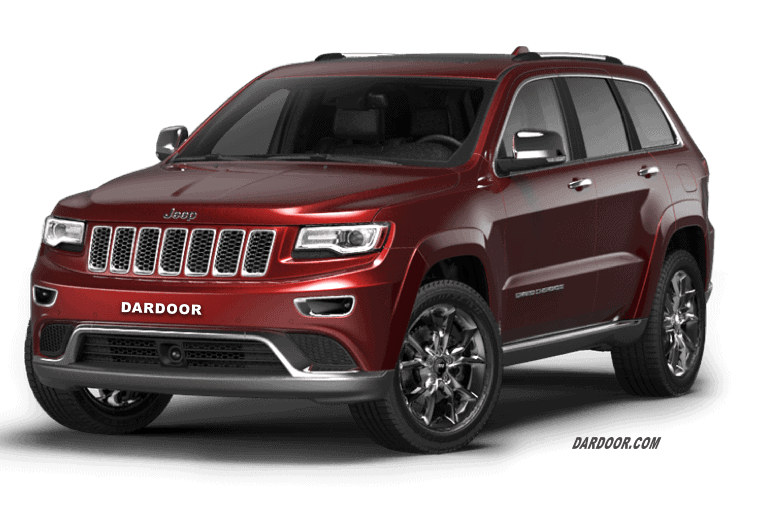
Get the OEM repair manual for the 2014 Jeep Grand Cherokee SRT (WK2) in a straightforward PDF format, complete with wiring diagrams in PDF.
2014 Jeep Grand Cherokee SRT Repair Manual
$24.90
OEM Workshop Manual for 2014 Jeep Grand Cherokee SRT (WK2)
Get the official repair manual for the 2014 Jeep Grand Cherokee SRT (WK2) in a straightforward PDF format, complete with wiring diagrams. This OEM workshop document provides the same detailed service, repair, and diagnostic information that Jeep dealer technicians use.
| File Format | |
| File Language | English |
| You’ll Get | 100.7 MB |
| Pages Count | 5,934 |
| Wiring Diagram | Included |
| Delivery Method | Instant Download |
Key Features:
- Comprehensive wiring diagrams for all electrical systems
- Detailed service, repair, and maintenance instructions
- Manufacturer-approved procedures for accurate diagnostics and repairs
- Simple, easy-to-navigate PDF format
Maintain and repair your 2014 Jeep Grand Cherokee SRT with confidence using this trusted OEM workshop manual.
Engines Covered:-
- 3.0 L Gasoline
- 3.0 L Turbo Diesel
- 3.6 L Gasoline
- 4.7 L Gasoline
- 5.7 L Gasoline
- 6.4 L HEMI Gasoline
This manual provides detailed instructions for maintenance, disassembly, reassembly, component inspection, adjustment, and diagnostics, tailored for experienced mechanics. Use this manual thoroughly to ensure comprehensive repair work and maintain your vehicle in peak condition.
Important Note: Before purchasing this manual, please verify if your vehicle is subject to any Jeep service recalls, as the local dealer may repair it free of charge. When replacing parts, ensure that only genuine Jeep OEM spare parts are used.
Table of Contents : 2014 Jeep Grand Cherokee SRT Repair Manual (WK2)
SAMPLE PAGES
A few pages will help you make the right decision
CAUTION: This manual is intended for use by individuals with specialized skills and certifications. If repairs or services are performed by non-specialized or uncertified technicians using only this manual or without the proper equipment and tools, there is a risk of severe injury to you or those nearby, as well as potential damage to your vehicle. To avoid hazardous operations and ensure vehicle integrity, please follow the instructions closely and use appropriate tools and equipment.
2014 Jeep Grand Cherokee SRT – Comprehensive Guide
Overview
The 2014 Jeep Grand Cherokee SRT is a high-performance luxury SUV that combines the practicality of a midsize SUV with supercar-level performance. It represents the ultimate expression of the WK2-generation Grand Cherokee, designed to compete with European performance SUVs.
Key Highlights:
- Supercharged V8 performance in a practical SUV package
- 0-60 mph in 4.8 seconds
- Luxury interior with sport-oriented features
- Advanced all-wheel-drive system
- Brembo brakes and adaptive suspension
Technical Specifications
| Category | Specification |
|---|---|
| Engine | 6.4L HEMI V8 (naturally aspirated) |
| Horsepower | 470 hp @ 6,250 rpm |
| Torque | 465 lb-ft @ 4,100 rpm |
| Transmission | 8-speed automatic (8HP70) |
| Drivetrain | Full-time all-wheel drive (AWD) |
| 0-60 mph | 4.8 seconds |
| Top Speed | 160 mph |
| Fuel Economy | 13 city / 19 highway / 15 combined mpg |
| Curb Weight | 5,150 lbs |
| Towing Capacity | 7,200 lbs |
| Fuel Tank | 24.6 gallons |
| Seating | 5 passengers |
| Cargo Space | 36.3 cu ft (68.3 cu ft seats folded) |
| Wheelbase | 114.8 inches |
| Brakes | 15-inch Brembo front, 13.8-inch rear |
| Suspension | Adaptive damping with Bilstein shocks |
| Wheels/Tires | 20-inch forged aluminum / Pirelli Scorpion Verde |
Top 10 Mechanical & Electrical Issues
1. Transmission Shudder/Jerking (8HP70)
-
- Symptoms: Vibration or shuddering during acceleration, especially at low speeds (15-40 mph); harsh shifting; hesitation
- Root Cause: Torque converter clutch wear, transmission fluid degradation, valve body issues
- Fix: Transmission fluid flush with Mopar ZF 8/9-speed fluid, torque converter replacement in severe cases, software updates
- Cost: $200-400 (fluid service), $1,500-3,000 (torque converter replacement)
2. HEMI Cylinder Head/Valve Seat Issues
-
- Symptoms: Check engine light, misfires (P0300-P0308 codes), rough idle, loss of power, ticking noise
- Root Cause: Valve seat dropping out of cylinder head due to inadequate interference fit (manufacturing defect on some engines)
- Fix: Cylinder head replacement (often covered under powertrain warranty if still active)
- Cost: $4,000-7,000 per cylinder head (out of warranty)
3. Transfer Case Failure
-
- Symptoms: Grinding noise, vibration at highway speeds, difficulty shifting into 4WD modes, “Service 4WD System” message
- Root Cause: Transfer case chain wear, bearing failure, insufficient lubrication, hard driving
- Fix: Transfer case rebuild or replacement, fluid service
- Cost: $2,500-4,500 (replacement), $300-500 (rebuild if caught early)
4. Differential Leaks & Bearing Noise
-
- Symptoms: Whining or howling noise from rear (especially during acceleration), fluid leaks under vehicle, vibration
- Root Cause: Differential pinion seal failure, bearing wear from aggressive driving, inadequate fluid maintenance
- Fix: Pinion seal replacement, differential bearing replacement, fluid service
- Cost: $400-800 (seal replacement), $1,500-2,500 (bearing replacement)
5. Brake System Issues (Rotors & Calipers)
-
- Symptoms: Pulsation when braking, squealing, longer stopping distances, uneven pad wear, brake fluid leaks
- Root Cause: Warped rotors from high-performance use, caliper piston corrosion, brake fluid moisture contamination
- Fix: Rotor resurfacing or replacement, caliper rebuild/replacement, brake fluid flush
- Cost: $800-1,500 (front rotors/pads), $600-1,000 (rear), $1,200-2,000 (calipers)
6. Adaptive Suspension Failure
-
- Symptoms: “Service Suspension System” warning, harsh ride, vehicle sagging on one corner, compressor running constantly
- Root Cause: Air spring leaks, compressor failure, valve block issues, shock absorber seal failure
- Fix: Air spring replacement, compressor replacement, shock replacement
- Cost: $400-700 per air spring, $800-1,200 (compressor), $600-1,000 per shock
7. Electrical Issues (TIPM/Fuse Box)
-
- Symptoms: Random electrical failures, fuel pump not priming, wipers activating randomly, horn not working, no start condition
- Root Cause: Totally Integrated Power Module (TIPM) relay failures, corrosion, software glitches
- Fix: TIPM replacement, relay replacement, software updates
- Cost: $800-1,500 (TIPM replacement), $200-400 (individual relay repair)
8. Fuel System Issues (Pump & Injectors)
-
- Symptoms: Hard starting, loss of power under load, rough idle, check engine light (P0087, P0191, P020X codes)
- Root Cause: Fuel pump failure, clogged fuel filter, injector failure from carbon buildup
- Fix: Fuel pump replacement, injector cleaning/replacement, fuel system service
- Cost: $600-1,200 (fuel pump), $200-400 per injector, $150-300 (cleaning service)
9. Cooling System Issues (Thermostat & Water Pump)
-
- Symptoms: Overheating, temperature gauge fluctuations, coolant leaks, heater not working properly
- Root Cause: Thermostat housing failure (common plastic housing crack), water pump seal failure, radiator leaks
- Fix: Thermostat housing replacement, water pump replacement, coolant flush
- Cost: $300-600 (thermostat housing), $500-900 (water pump), $150-250 (coolant service)
10. Exhaust Manifold Leaks & Bolts
-
- Symptoms: Ticking noise (especially cold start), exhaust smell in cabin, check engine light (P0420-P0430), reduced power
- Root Cause: Exhaust manifold bolt failure, manifold cracking from heat cycles, gasket failure
- Fix: Manifold bolt replacement with upgraded bolts, manifold replacement if cracked
- Cost: $400-800 (bolt replacement), $1,200-2,000 (manifold replacement)
Top 5 Competitors
1. Porsche Cayenne S/GTS (2014)
- Engine: 3.6L twin-turbo V6 (420 hp) / 4.8L V8 (420 hp GTS)
- Pros: Superior handling, more prestigious badge, better interior quality
- Cons: Much higher price ($70k-$85k vs $63k), more expensive maintenance, less cargo space
- 0-60: 5.2 seconds (S), 5.0 seconds (GTS)
2. BMW X5 M (F15, 2014)
- Engine: 4.4L twin-turbo V8 (567 hp)
- Pros: More powerful, better technology, superior interior
- Cons: Significantly more expensive ($93k), complex maintenance, reliability concerns
- 0-60: 4.0 seconds
3. Mercedes-Benz ML63 AMG (2014)
- Engine: 5.5L twin-turbo V8 (518 hp)
- Pros: More power, luxurious interior, AMG prestige
- Cons: Higher price ($95k), expensive repairs, smaller cargo area
- 0-60: 4.7 seconds
4. Range Rover Sport Supercharged (2014)
- Engine: 5.0L supercharged V8 (510 hp)
- Pros: Superior off-road capability, luxury interior, commanding presence
- Cons: Much higher price ($80k+), notorious reliability issues, expensive maintenance
- 0-60: 4.9 seconds
5. Cadillac Escalade (2014)
- Engine: 6.2L V8 (420 hp)
- Pros: More space, better towing, American luxury, lower running costs
- Cons: Less sporty, slower (6.1 sec 0-60), worse fuel economy, heavier
- 0-60: 6.1 seconds
Top 10 Recalls, Advisories & TSB Highlights
NHTSA Recalls:
1. NHTSA 14V-355 (June 2014) – Alternator Diode Issue
-
- Issue: Alternator diode can fail, causing loss of electrical power and stalling
- Vehicles Affected: ~800,000 vehicles
- Fix: Alternator inspection and replacement if necessary
2. NHTSA 14V-384 (July 2014) – Brake Booster
-
- Issue: Brake booster may develop vacuum leak, increasing stopping distance
- Vehicles Affected: ~25,000 vehicles
- Fix: Brake booster replacement
3. NHTSA 15V-022 (January 2015) – Occupant Restraint Control Module
-
- Issue: Software error may prevent airbag deployment in a crash
- Vehicles Affected: ~300,000 vehicles
- Fix: Software update to restraint control module
4. NHTSA 18V-120 (March 2018) – Fuel Pump Relay
-
- Issue: Fuel pump relay in TIPM can fail, causing engine stall without warning
- Vehicles Affected: ~1.1 million vehicles
- Fix: TIPM replacement with updated part
5. NHTSA 18V-565 (August 2018) – Side Airbag Inflator
-
- Issue: Side curtain airbag inflators may rupture
- Vehicles Affected: ~300,000 vehicles
- Fix: Side curtain airbag inflator replacement
Technical Service Bulletins (TSBs):
6. TSB 08-074-14 REV. B – Transmission Shudder
-
- Issue: Shudder or vibration during light acceleration
- Solution: Transmission fluid replacement with updated ZF fluid, software update
7. TSB 23-001-15 – Engine Tick on Cold Start
-
- Issue: Ticking noise from engine on cold start
- Solution: Revised camshaft and rocker arms installation procedure
8. TSB 05-002-16 – Brake Noise/Squeal
-
- Issue: Brake squeal or noise during light braking
- Solution: Updated brake pad material and rotor resurfacing
9. TSB 08-017-14 – No Start/Hard Start Condition
-
- Issue: Vehicle may not start or experience hard starting
- Solution: TIPM replacement, relay inspection, software updates
10. TSB 18-041-14 – HVAC Blend Door Noise
-
- Issue: Clicking or tapping noise from dashboard during temperature changes
- Solution: HVAC blend door actuator replacement
Maintenance Schedule
Every 5,000 Miles or 6 Months:
- Engine oil and filter change (0W-40 full synthetic recommended)
- Tire rotation
- Visual inspection of brakes, tires, fluids
Every 10,000 Miles or 12 Months:
- Cabin air filter replacement
- Visual inspection of suspension components
- Battery test
Every 20,000 Miles or 24 Months:
- Engine air filter replacement
- Inspect brake pads and rotors (performance use may require more frequent)
Every 30,000 Miles or 36 Months:
- Brake fluid flush (critical for Brembo brakes)
- Transmission fluid inspection
- Differential fluid inspection
- Transfer case fluid inspection
- Spark plug inspection
Every 60,000 Miles:
- Transmission fluid change (ZF 8-speed fluid)
- Differential fluid change (front and rear)
- Transfer case fluid change
- Coolant flush
- Spark plug replacement
Every 100,000 Miles:
- Major service interval
- All fluids replacement
- Suspension component inspection
- Timing chain inspection (though not typically requiring replacement)
Performance Driving Considerations:
- Track use: Check brake fluid before each event; inspect pads/rotors after
- More frequent oil changes (every 3,000-4,000 miles) if driven hard
- Tire pressure monitoring before spirited driving
- Differential fluid changes every 30,000 miles with performance use
10 FAQs for Buyers
Q1: Is the 2014 Grand Cherokee SRT reliable for a performance SUV? A: Moderately reliable compared to European competitors but requires diligent maintenance. The HEMI V8 is generally robust, but the transmission and drivetrain components can be expensive to repair. Budget $2,000-3,000 annually for maintenance and repairs beyond regular service.
Q2: What’s the real-world fuel economy? A: Expect 12-14 mpg in mixed driving, 10-11 mpg in city traffic, and 17-19 mpg on highway cruising. Premium fuel (91+ octane) is required. Annual fuel costs will be $3,500-4,500 based on 15,000 miles/year.
Q3: Can I use this as a daily driver? A: Yes, though it’s thirsty. The ride is firm but not punishing, and it has practical SUV space. However, the low ground clearance (8.1 inches) can be an issue in winter climates with deep snow.
Q4: How expensive is insurance? A: Very expensive. Expect $1,800-3,000 annually depending on your location and driving record. The SRT’s high performance classification puts it in a premium insurance bracket.
Q5: What should I look for when buying used? A: Service records (especially transmission and differential fluids), no modifications, clean CarFax, evidence of track use (excessive brake wear, tire wear), check for transmission shudder during test drive, look for leaks under the vehicle, and verify all recalls have been completed.
Q6: Are there common rust issues? A: Not typically, but check wheel wells, rocker panels, and underneath for rust if the vehicle was used in salt belt states. The exhaust system can rust prematurely.
Q7: How much does it cost to replace tires? A: $1,200-1,800 for a set of four quality performance tires (20-inch). Tires typically last 20,000-30,000 miles with normal driving, less with aggressive use.
Q8: Can I tow with the SRT? A: Yes, rated for 7,200 lbs, but frequent towing will accelerate transmission and differential wear. The cooling system is robust enough for towing duty.
Q9: Is the warranty transferable? A: Yes, the original factory warranty (3-year/36,000-mile basic, 5-year/100,000-mile powertrain) transfers to subsequent owners. However, most 2014 models are now out of warranty.
Q10: Should I buy an extended warranty? A: Highly recommended. Given the potential for expensive repairs (transmission, transfer case, differentials), a comprehensive extended warranty can provide peace of mind. Expect $2,000-4,000 for a good aftermarket warranty.
Final Buyer Recommendations
BUY IF:
- ✅ You want supercar performance in a practical SUV package
- ✅ You can afford $4,000-6,000 annually for fuel, maintenance, and repairs
- ✅ You prioritize performance over fuel economy
- ✅ You have access to a reliable independent mechanic or dealer
- ✅ You’re willing to be diligent about maintenance schedules
- ✅ You want American muscle with AWD capability
- ✅ You need to carry family/cargo while having serious performance
AVOID IF:
- ❌ Budget is tight – this is expensive to own and operate
- ❌ You need exceptional fuel economy
- ❌ You can’t afford premium fuel exclusively
- ❌ You live in an area with poor roads (low ground clearance)
- ❌ You’re looking for absolute reliability (consider Cayenne S)
- ❌ You can’t perform or budget for preventative maintenance
- ❌ You need a true off-roader (go with Trailhawk or Overland)
Value Assessment:
The 2014 Grand Cherokee SRT offers tremendous performance value compared to European competitors. You’re getting 470 hp, 0-60 in under 5 seconds, and legitimate luxury for $30,000-40,000 used (in 2024), while a comparable BMW X5 M or Porsche Cayenne GTS would cost $40,000-60,000 used.
Best Use Cases:
- Weekend warrior who needs a practical daily driver
- Enthusiast who prioritizes straight-line performance
- Family person who still wants excitement
- Someone stepping up from a muscle car but needs SUV utility
Pro Tips:
- Find one with records – Service history is worth $2,000-3,000 in reduced risk
- Inspect the transmission thoroughly – The 8HP70 is the biggest concern
- Check for modifications – Avoid heavily modified examples
- Budget accordingly – Don’t buy at your maximum budget; leave room for repairs
- Consider a pre-purchase inspection – $150-250 can save thousands
- Join SRT forums – Community knowledge is invaluable for DIY and finding good mechanics
Related products
-
2003 Jeep Wrangler Repair Manual
$14.90 Add to cart -
2014 Jeep Cherokee Trailhawk Repair Manual
$17.90 Add to cart -
2020-2023 Jeep Gladiator Repair Manual
$65.00 Add to cart -
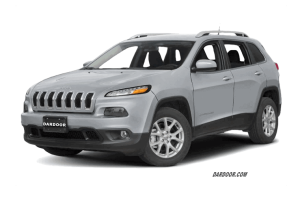
2014 Jeep Cherokee Latitude Repair Manual
$19.90 Add to cart -
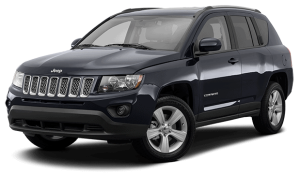
2014-2016 Jeep Compass and Patriot Repair Manual
$16.90 Add to cart -
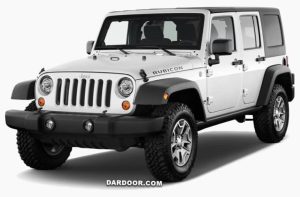
2018-2019 Jeep Wrangler JL Wiring Diagram
$16.90 Add to cart -
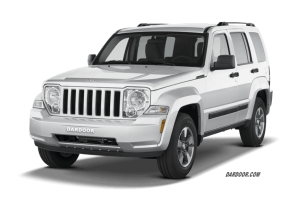
2008 Jeep Cherokee Liberty Repair Manual
$19.90 Add to cart -
2005 Jeep Liberty Repair Manual
$16.90 Add to cart