2014–2022 Volkswagen Passat B8 — OEM Workshop Service & Repair Manual (PDF)
Get the official factory workshop manual for the Volkswagen Passat B8 (Typ 3G, 2014–2022). This is the same dealer-level documentation used by Volkswagen technicians—complete with step-by-step procedures, torque specs, diagnostics, and detailed electrical wiring diagrams for precise troubleshooting and repairs.
Engines Covered: –
- 4-cyl. direct injection engine (1.8L and 2.0L, 4 V, EA 888 Gen III, Turbocharger, Chain Drive)
- 4-cylinder direct injection engine (1.5L engine, 4V, EA 211, Turbocharger)
| File Format | PDF |
| File Language | English |
| You’ll Get | 155.5 MB |
| Page Count | 7,078 |
| Wiring Diagrams | Included |
| Delivery method | Instant Download |
Work to factory standards—reduce guesswork and get repairs right the first time.
Key Features
Complete OEM Coverage
Factory procedures for service, repair, maintenance, and adjustments across all systems.
Wiring Diagrams
Full schematics, power distribution, grounds, fuse/relay layouts, connector views, and pinouts.
Diagnostics & DTCs
Guided fault-finding, testing routines, and troubleshooting flowcharts with spec values.
Searchable PDF
Bookmarks and keyword search for fast navigation; print only the pages you need.
Download & Compatibility
Delivery: Instant Digital PDF Download
Compatibility: Windows, macOS, iOS, Android
This manual provides detailed instructions for maintenance, disassembly, reassembly, component inspection, adjustment, and diagnostics—intended for use by experienced mechanics. Proper application of this guide will help ensure thorough repairs and maintain your vehicle in peak condition.
Important Note: Before purchasing this manual, please check whether your vehicle is subject to any active service recalls, as authorized dealerships may perform necessary repairs free of charge. When replacing parts, always use genuine OEM components to ensure safety, reliability, and long-term performance.
Contents: 2014-2022 Volkswagen Passat B8 Repair Manual
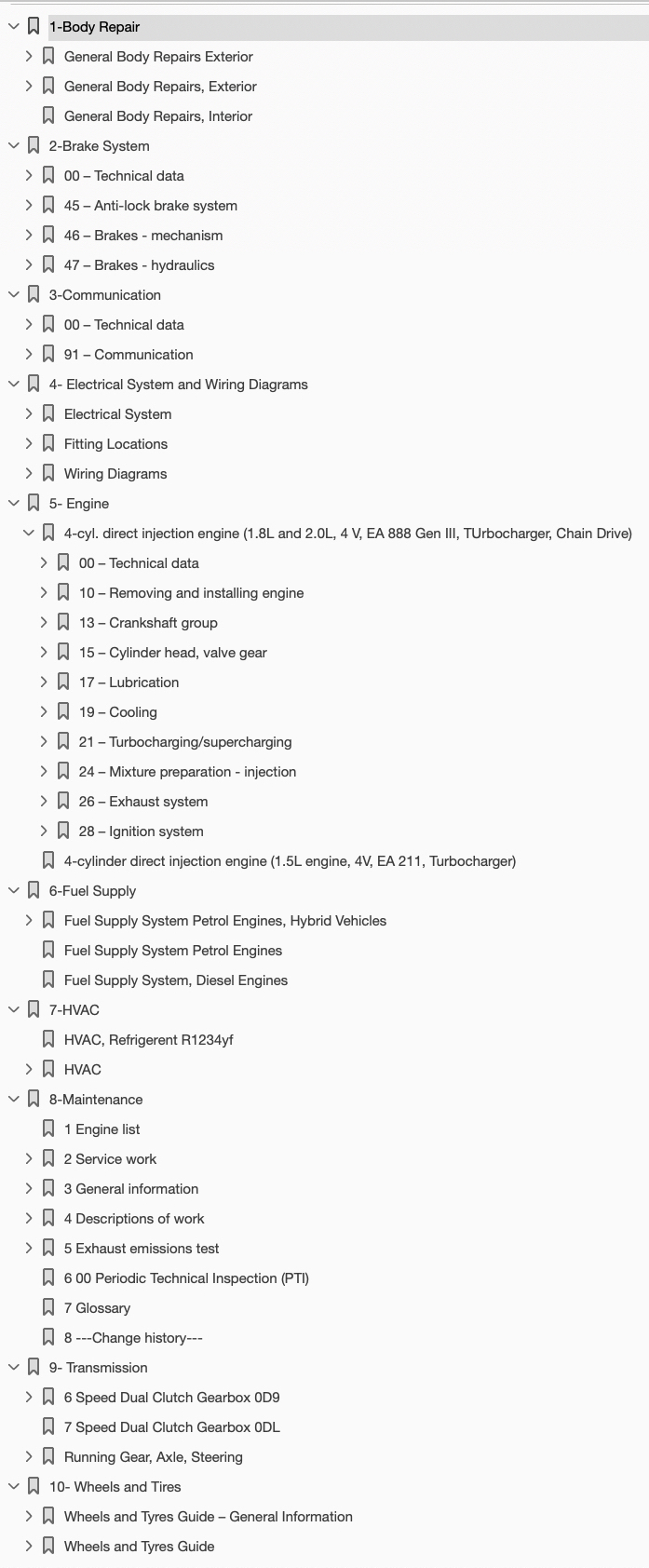
Sample Pages
CAUTION: This OEM service and workshop repair manual provides detailed procedures for maintenance, disassembly, reassembly, inspection, adjustment, and diagnostics. It is intended as a comprehensive guide for experienced mechanics. To ensure thorough and accurate repairs that maintain your vehicle’s optimal performance, please read and follow this manual carefully. When replacing parts during any repair work,
always use genuine Volkswagen parts to ensure quality, safety, and reliability.
2014–2022 Volkswagen Passat B8: Comprehensive Guide
Overview
The Volkswagen Passat B8 (2014–2022) is a mid-size sedan that represented the eighth generation of the Passat lineup globally. However, it’s important to note that the North American market received a different vehicle during most of this period:
- Global Markets (2014–2022): True B8 generation with MQB platform
- North America (2012–2019): NMS (New Midsize Sedan) based on older PQ46 platform
- North America (2020–2022): Limited version of the B8 before discontinuation
The B8 offered a refined driving experience, upscale interior, advanced technology, and efficient powertrains, positioning itself as a premium alternative to mainstream mid-size sedans.
Market Position: Slotted between mainstream sedans (Honda Accord, Toyota Camry) and entry-level luxury sedans (Audi A4, BMW 3 Series)
Technical Specifications
Engine Options (Global B8)
| Engine |
Displacement |
Power |
Torque |
0-60 mph |
Fuel Economy |
| 1.4 TSI |
1.4L I4 Turbo |
125-150 hp |
148-184 lb-ft |
9.5-10.5 sec |
40-45 mpg combined |
| 1.5 TSI |
1.5L I4 Turbo |
150 hp |
184 lb-ft |
9.0 sec |
42-47 mpg combined |
| 1.8 TSI |
1.8L I4 Turbo |
180 hp |
221 lb-ft |
7.5 sec |
32-36 mpg combined |
| 2.0 TSI |
2.0L I4 Turbo |
220-280 hp |
258-280 lb-ft |
6.0-6.5 sec |
28-32 mpg combined |
| 2.0 TDI |
2.0L I4 Diesel |
150-190 hp |
251-295 lb-ft |
8.0-9.0 sec |
50-55 mpg combined |
North American NMS (2012–2019)
| Engine |
Displacement |
Power |
Torque |
0-60 mph |
Fuel Economy |
| 2.5L I5 |
2.5L I5 |
170 hp |
177 lb-ft |
8.7 sec |
25 mpg combined |
| 1.8 TSI |
1.8L I4 Turbo |
170 hp |
184 lb-ft |
7.7 sec |
29 mpg combined |
| 3.6L VR6 |
3.6L V6 |
280 hp |
258 lb-ft |
6.1 sec |
23 mpg combined |
Transmission Options
- 6-speed manual
- 6-speed DSG (dual-clutch automatic)
- 7-speed DSG (dual-clutch automatic)
- 8-speed automatic (select markets)
Dimensions
- Length: 191.6 inches (4,867 mm)
- Width: 72.2 inches (1,832 mm)
- Height: 58.5 inches (1,486 mm)
- Wheelbase: 110.4 inches (2,791 mm)
- Cargo Volume: 15.9 cubic feet (450 liters)
- Curb Weight: 3,100-3,600 lbs depending on configuration
Platform
- Global B8: MQB (Modular Transverse Matrix)
- North American NMS: PQ46 (older platform)
Top 10 Mechanical & Electrical Issues
1. DSG Transmission Mechatronics Failure
Symptoms:
- Harsh shifting or jerking during gear changes
- Transmission slipping or hesitating
- Warning lights: “Gearbox Malfunction” or check engine light
- Inability to shift into certain gears
- Transmission going into limp mode
Root Cause: The mechatronics unit (electro-hydraulic control module) within the DSG transmission experiences internal valve body wear, solenoid failures, or software glitches. The unit combines mechanical valve bodies with electronic controls, and both components can fail due to heat stress, contaminated transmission fluid, or manufacturing defects.
Fix:
- Software update (if caught early): $150-300
- Mechatronics unit replacement: $2,500-4,500 installed
- Complete transmission overhaul (severe cases): $4,500-7,000
Prevention: Regular DSG service every 40,000 miles with proper VW-spec fluid
2. Thermostat Housing/Water Pump Failure
Symptoms:
- Engine overheating or running too cold
- Coolant leaks around the thermostat housing
- Check engine light with coolant temperature codes
- Heater not producing warm air
- Coolant warning light
Root Cause: The plastic thermostat housing becomes brittle over time due to heat cycling, leading to cracks and coolant leaks. The water pump (often integrated with the thermostat assembly on TSI engines) can fail due to impeller degradation, bearing wear, or seal failure. This is particularly common on 1.8T and 2.0T engines.
Fix:
- Thermostat housing replacement: $350-650
- Water pump replacement: $500-900
- Combined thermostat/water pump assembly: $700-1,200
- Timing belt service (if due): Add $800-1,500
Prevention: Use proper VW G13 coolant, inspect regularly after 60,000 miles
3. Carbon Buildup on Intake Valves (Direct Injection Engines)
Symptoms:
- Rough idle or misfires
- Reduced power and acceleration
- Poor fuel economy
- Check engine light with misfire codes (P0300-P0304)
- Hesitation during acceleration
Root Cause: TSI engines use direct fuel injection, which sprays fuel directly into the combustion chamber rather than onto the intake valves. Without fuel washing over the valves, oil vapor from the PCV system accumulates as carbon deposits. Over time, these deposits restrict airflow and cause performance issues.
Fix:
- Walnut blasting (intake valve cleaning): $400-800
- Chemical cleaning (less effective): $150-300
- Catch can installation (preventive): $200-400
Prevention: Install an oil catch can, use high-quality fuel, perform cleaning every 60,000-80,000 miles
4. High-Pressure Fuel Pump (HPFP) Failure
Symptoms:
- Difficulty starting, especially when cold
- Loss of power under acceleration
- Engine misfires or running rough
- Check engine light with fuel pressure codes
- Engine stalling or hesitation
Root Cause: The high-pressure fuel pump (driven by the camshaft) can fail due to internal wear, contaminated fuel, or manufacturing defects. The pump’s cam follower can wear down, causing metal shavings to contaminate the system. This is particularly common on 2.0 TSI engines from certain production years.
Fix:
- HPFP replacement: $800-1,500
- Cam follower replacement (preventive): $150-300
- Fuel system cleaning: $200-400
Prevention: Use quality fuel, replace cam follower every 60,000 miles, monitor for symptoms
5. PCV System and Diaphragm Failure
Symptoms:
- Excessive oil consumption (1 quart per 1,000 miles or more)
- Whistling or hissing noise from engine
- Rough idle
- Check engine light
- Oil leaks around valve cover
- White smoke from exhaust
Root Cause: The Positive Crankcase Ventilation (PCV) system uses a diaphragm valve integrated into the valve cover or oil separator. This diaphragm can tear or deteriorate, causing excessive crankcase pressure, which forces oil past seals and into the intake system. This creates oil consumption issues and contributes to carbon buildup.
Fix:
- PCV valve/diaphragm replacement: $250-500
- Complete valve cover replacement: $500-900
- Oil separator replacement: $400-700
Prevention: Regular oil changes with VW-spec oil, inspect PCV system during services
6. Ignition Coil and Spark Plug Failure
Symptoms:
- Engine misfires (especially under load)
- Rough idle
- Check engine light with misfire codes
- Reduced fuel economy
- Hesitation or stumbling during acceleration
- Difficulty starting
Root Cause: TSI engines use individual ignition coils for each cylinder. These coils can fail due to heat stress, moisture intrusion, or electrical shorts. The direct injection system creates high combustion pressures that stress ignition components. Spark plugs can foul prematurely due to carbon buildup or incorrect heat range.
Fix:
- Single ignition coil replacement: $80-150
- All four coils replacement (recommended): $300-600
- Spark plugs (set of 4): $80-150
- Combined coils and plugs: $400-750
Prevention: Replace spark plugs every 40,000-60,000 miles, replace coils at first sign of failure
7. Timing Chain Tensioner Failure
Symptoms:
- Rattling noise from engine on cold start
- Rough running or misfires
- Check engine light with timing-related codes
- Loss of power
- Engine won’t start (severe cases)
Root Cause: The timing chain tensioner (particularly on earlier 1.8T and 2.0T engines) can fail due to worn springs, stuck check valves, or oil starvation. When the tensioner fails, the timing chain becomes loose, causing timing issues and potentially catastrophic engine damage if the chain jumps or breaks.
Fix:
- Timing chain tensioner replacement: $800-1,500
- Complete timing chain kit: $1,500-2,800
- Engine replacement (if catastrophic failure): $5,000-8,000
Prevention: Regular oil changes with correct VW-spec oil, address rattling immediately
8. Electrical Window Regulator Failure
Symptoms:
- Windows moving slowly or unevenly
- Grinding or clicking noises when operating windows
- Window falling into door
- Window won’t move at all
- Window getting stuck partially open
Root Cause: The window regulator mechanism uses plastic components and cable guides that wear out or break over time. The regulator motor can also fail. This is a common issue across many VW models and affects all four doors, though driver and front passenger windows fail most frequently due to higher usage.
Fix:
- Single window regulator replacement: $300-500 per door
- Window motor replacement: $200-350
- Complete regulator assembly: $350-600 per door
- DIY (parts only): $100-200 per door
Prevention: None specific; consider replacing proactively after 100,000 miles
9. Sunroof Drain Tube Clogs and Water Leaks
Symptoms:
- Water pooling in footwells (front or rear)
- Musty smell in cabin
- Wet headliner or pillars
- Water stains on upholstery
- Electrical issues due to water damage
- Mold or mildew growth
Root Cause: The sunroof has four drain tubes (one at each corner) that channel water away from the cabin. These tubes can become clogged with debris, leaves, or dirt, causing water to overflow into the cabin. The drain tube connections can also separate or crack, particularly where they route through the A-pillars and quarters.
Fix:
- Drain tube cleaning: $100-250
- Drain tube replacement: $300-600
- Water damage remediation: $500-2,000+ depending on severity
- Headliner replacement (if damaged): $800-1,500
Prevention: Clear drain tubes annually with compressed air or flexible brush, park away from trees
10. Adaptive Front Lighting System (AFS) Malfunction
Symptoms:
- “AFS defective” warning message
- Headlights not turning with steering wheel
- Headlight range adjustment not working
- Check engine or warning lights
- One or both headlights stuck in one position
Root Cause: The adaptive headlight system uses stepper motors and sensors to adjust headlight aim based on steering angle, speed, and vehicle load. These motors can fail due to moisture intrusion, worn gears, or electrical issues. The control modules can also malfunction, and wiring harness connectors are prone to corrosion.
Fix:
- AFS module reset/recalibration: $100-200
- Stepper motor replacement (per headlight): $300-600
- Complete headlight assembly: $800-1,500 per side
- Control module replacement: $400-800
Prevention: Keep headlight assemblies dry, address warning lights promptly, avoid aftermarket bulbs
Top 7 Competitors
| Model |
Pros 👍 |
Cons 👎 |
| Volkswagen Passat B8 |
Spacious cabin; Smooth ride comfort; High safety ratings; Efficient engines |
DSG maintenance costs; Conservative styling; Infotainment glitches |
| Toyota Camry |
Excellent reliability; Strong resale value; Smooth hybrid; Comfort |
Less engaging handling; Higher price; Simpler interior styling |
| Honda Accord |
Sporty handling; Turbo engines; Roomy interior; Safety tech |
Firm ride; Road noise; Complex infotainment |
| Mazda6 |
Attractive design; Premium interior; Excellent driving feel |
Smaller boot; No AWD; Higher tire wear |
| Ford Mondeo/Fusion |
Balanced ride; Strong safety; Wide trims |
Poor resale; Average fuel economy; Interior plastics |
| Hyundai Sonata |
Value for money; Long warranty; Modern features |
Not sporty; Cabin plastics average; Engine noise |
| Kia Optima/K5 |
Good equipment; Affordable; Attractive design |
Lower resale; Average handling; Interior quality |
Top 10 Recalls, Advisories & TSB Highlights
Recalls
1. Takata Airbag Inflator Recall (Multiple Years)
- Issue: Defective airbag inflators can explode, sending metal fragments into cabin
- Affected: Millions of vehicles across multiple manufacturers including Passat
- Fix: Free airbag inflator replacement at VW dealers
2. Fuel Tank Flap Recall (2015–2016)
- Issue: Fuel tank flap may not close properly, allowing fuel vapors to escape
- Affected: 2015–2016 model years
- Fix: Replacement of fuel tank flap mechanism
3. Rear Spoiler Detachment (2012–2015 NMS)
- Issue: Rear decklid spoiler can detach while driving
- Affected: 2012–2015 Passat NMS models
- Fix: Spoiler reinforcement or replacement
4. Rear Coil Spring Fracture (2012–2014)
- Issue: Rear suspension coil springs can fracture and puncture tire
- Affected: 2012–2014 Passat models
- Fix: Rear spring replacement with improved design
5. Passenger Airbag Deactivation Issue (2014–2016)
- Issue: Passenger airbag may not deploy in crash due to faulty occupant detection
- Affected: 2014–2016 models with certain seat sensors
- Fix: Seat sensor and control module update
Technical Service Bulletins (TSBs)
6. DSG Transmission Software Update (2015–2019)
- Issue: Harsh shifts, shuddering, or hesitation during acceleration
- Solution: Software calibration update to improve shift quality
- TSB #: 37-18-05
7. Sunroof Wind Noise and Rattling (2014–2018)
- Issue: Excessive wind noise or rattling from sunroof area
- Solution: Adjustment of sunroof alignment and seal replacement
- TSB #: 50-17-08
8. Infotainment System Freezing/Rebooting (2015–2019)
- Issue: MIB II infotainment system freezes, reboots randomly, or loses functionality
- Solution: Software update and potential unit replacement under warranty
- TSB #: 48-18-02
9. Engine Oil Consumption (2014–2017 TSI Engines)
- Issue: Excessive oil consumption (1 quart per 1,000 miles or more)
- Solution: PCV system inspection/replacement, piston ring replacement (severe cases)
- TSB #: 01-17-03
10. Condensation in Headlights and Taillights (2015–2019)
- Issue: Moisture accumulation inside light assemblies
- Solution: Vent tube inspection, seal replacement, or light assembly replacement
- TSB #: 96-17-01
Maintenance Schedule
Every 10,000 Miles or 1 Year
- Engine oil and filter change
- Multi-point inspection
- Tire rotation
- Brake inspection
Every 20,000 Miles or 2 Years
- Cabin air filter replacement
- Engine air filter inspection
- Battery test
- Brake fluid level check
Every 40,000 Miles
- Engine air filter replacement
- DSG transmission service (if equipped)
- Inspect drive belts
- Fuel filter replacement (diesel models)
Every 60,000 Miles
- Spark plug replacement (TSI engines)
- Manual transmission fluid change
- Inspect suspension components
- Coolant system inspection
Every 80,000 Miles
- Replace drive belt
- Inspect timing chain tensioner
- Haldex AWD service (if equipped)
- Differential service (if equipped)
Every 100,000 Miles
- Timing chain inspection/replacement (if showing wear)
- Brake fluid replacement
- Coolant replacement
- Comprehensive inspection of all systems
Additional Maintenance Items
- DSG Transmission: Service every 40,000 miles
- Diesel Particulate Filter: Service/replacement as needed based on warning lights
- Brake pads: Typically 40,000-70,000 miles depending on driving
- Tires: 40,000-60,000 miles depending on type and driving
- Battery: 4-6 years typical lifespan
10 FAQs for Buyers
1. Is the Passat B8 reliable?
The Passat B8 has average reliability compared to competitors. It’s generally more reliable than earlier VW generations but doesn’t match Honda or Toyota dependability. Common issues include DSG transmission problems, carbon buildup, and cooling system failures. Budget $800-1,500 annually for maintenance and repairs beyond basic services. European models with simpler TSI engines tend to be more reliable than North American NMS models.
2. Which engine is most reliable?
The 1.8 TSI and 2.0 TDI (diesel) engines are generally most reliable. The 1.4 TSI is efficient but can have issues with carbon buildup. The 2.0 TSI performance variants are strong but require more maintenance. Avoid the North American 2.5L I5 if possible; it’s outdated and less refined. The 1.8 TSI offers the best balance of performance, reliability, and fuel economy.
3. Should I buy a manual or DSG transmission?
Manual transmission is more reliable and cheaper to maintain but harder to find, especially in North America. DSGoffers better performance and fuel economy but requires expensive service every 40,000 miles ($400-600) and can experience mechatronics failures ($2,500-4,500 repair). If you find a DSG model, ensure it has complete service history.
4. What should I look for when buying used?
- Complete service history, especially DSG and timing chain services
- No check engine lights or stored fault codes
- Carbon cleaning performed (TSI engines over 60,000 miles)
- No coolant leaks around thermostat housing
- Sunroof drain tubes clear (check for water in cabin)
- Window regulators functioning properly
- Test drive in multiple conditions (cold start, highway, city)
- Pre-purchase inspection by VW specialist
5. What’s the difference between North American and European Passat?
North American NMS (2012–2019): Larger, built on older PQ46 platform, different engines (2.5L I5, 1.8T, 3.6L VR6), built in Tennessee, designed specifically for North America
European/Global B8 (2014–2022): Smaller, built on modern MQB platform, broader engine range (1.4/1.5/2.0 TSI, 2.0 TDI), better technology, more refined driving dynamics
North American B8 (2020–2022): Limited version of global B8 before Passat discontinued in USA
6. How much does it cost to maintain annually?
Basic maintenance: $600-900 per year (oil changes, inspections, filters) With typical repairs: $1,200-2,000 per yearMajor service years: $2,000-3,500 (DSG service, carbon cleaning, timing components)
Maintenance costs are 30-50% higher than Honda/Toyota but 20-30% lower than Audi/BMW. Use independent VW specialists to save 30-40% versus dealerships.
7. Is the Passat good for high mileage?
Yes, if properly maintained. Many TSI engines exceed 200,000 miles with regular care. Key factors:
- Regular DSG service (every 40,000 miles)
- Timing chain inspection/replacement around 100,000-150,000 miles
- Carbon cleaning every 60,000-80,000 miles
- Quality oil changes every 10,000 miles maximum
- Address coolant system issues promptly
Avoid high-mileage examples without service history.
8. Are parts expensive?
Parts are moderately expensive, positioned between mainstream and luxury brands:
- Oil change: $60-100
- Brake pads: $150-300 (parts)
- Rotors: $200-400 (pair, parts)
- Ignition coils: $50-80 each
- Thermostat housing: $100-200
- Window regulator: $100-200
OEM parts are recommended for critical components. Aftermarket options from quality brands (Bosch, Mann, Bilstein) can save 20-40%.
9. Which trim level should I buy?
Comfortline/SE: Best value with good equipment, LED headlights, touchscreen, basic safety features
Highline/SEL: Premium interior, adaptive cruise, better audio, worth the upgrade if affordable
R-Line: Sporty appearance, stiffer suspension, 19″ wheels (higher tire costs)
Avoid base trim unless budget-limited—lacks key features and harder to resell.
10. Should I buy a Passat over a Camry or Accord?
Choose Passat if:
- You prioritize driving refinement and European feel
- You want more upscale interior materials
- You prefer sharper handling and highway composure
- You’re comfortable with higher maintenance costs
- You have access to a good VW specialist
Choose Camry/Accord if:
- Reliability and low ownership costs are top priorities
- You want minimal maintenance headaches
- You plan to keep the car beyond 150,000 miles
- You prefer proven, conservative engineering
- You want stronger resale value
Final Buyer Recommendations
✅ Strong Buy Scenarios
1. Well-Maintained Examples with Service History If you find a Passat B8 with complete service records showing DSG services, carbon cleaning, and no deferred maintenance, it can be an excellent value. Look for:
- Single-owner vehicles with dealer or VW specialist service history
- Recent major services completed (DSG, carbon cleaning, coolant system)
- No check engine lights or stored fault codes
- Clean CARFAX with no accidents
2. Certified Pre-Owned (CPO) Models VW CPO programs extend warranty coverage and include thorough inspections. Benefits:
- Extended powertrain warranty coverage
- Roadside assistance
- 24-hour support
- Peace of mind for first-time VW buyers
3. Lower Mileage European B8 Models (2015–2019) If you can find European-spec B8 models with:
- 1.8 TSI or 2.0 TDI engines
- Manual transmission or well-serviced DSG
- Under 80,000 miles
- Full service history
These represent the sweet spot for reliability, technology, and value.
⚠️ Proceed with Caution
1. High-Mileage Examples Without Service History DSG transmissions and TSI engines require specific maintenance. Without proof of:
- Regular DSG services every 40,000 miles
- Carbon cleaning
- Timing chain inspection
- Coolant system maintenance
Budget significantly for catch-up maintenance ($2,000-4,000).
2. Vehicles with Check Engine Lights or Stored Codes Even if the seller claims it’s “just a sensor,” get a professional diagnosis before purchase. Common issues that appear minor can indicate expensive underlying problems:
- Coolant temperature codes → failing thermostat/water pump
- Misfire codes → carbon buildup, coils, or HPFP
- Transmission codes → mechatronics failure
3. Models with Modified Performance Tunes Aftermarket ECU tunes void warranties and can accelerate wear on:
- DSG clutches and mechatronics
- Turbochargers
- Engine internals
- Cooling systems
Unless professionally documented, avoid modified examples.
❌ Avoid
1. North American 2.5L I5 Base Models (2012–2014) The naturally aspirated 2.5L engine is:
- Outdated and underpowered
- Poor fuel economy
- Less refined than TSI alternatives
- Slower depreciation means poor value
Look for 1.8T or 3.6 VR6 instead.
2. Vehicles with Known Water Damage Water leaks from sunroof drains cause:
- Expensive electrical gremlins
- Mold and mildew issues
- Damaged control modules
- Potential total loss situations
Check for musty smells, wet carpets, and water stains.
3. DSG Models Without Service Documentation If a DSG-equipped Passat lacks proof of transmission services, assume:
- Mechatronics failure is imminent ($2,500-4,500)
- Contaminated fluid has damaged internal components
- Major service is immediately required
Walk away or negotiate aggressively (deduct $3,000+ from asking price).
💡 Best Value Recommendations
Ideal Used Purchase (2016–2019):
- Model: 2016–2018 Passat SE or SEL (North American) / 2016–2019 Comfortline/Highline (European)
- Engine: 1.8 TSI
- Transmission: DSG with documented services or 6-speed manual
- Mileage: 40,000-80,000 miles
- Price Range: $12,000-18,000 USD depending on condition and market
- Why: Depreciation has occurred, modern features, still within reasonable service life
Budget-Conscious Choice (2014–2016):
- Model: 2014–2016 Passat SE (North American) / 2014–2016 Comfortline (European)
- Engine: 1.8 TSI
- Mileage: 60,000-100,000 miles
- Price Range: $8,000-13,000 USD
- Why: Affordable entry to VW ownership, proven platform, good feature content
Enthusiast Pick (2017–2022):
- Model: 2017–2022 Passat R-Line or 2.0 TSI GT
- Engine: 2.0 TSI (220-280 hp)
- Transmission: DSG
- Mileage: Under 60,000 miles
- Price Range: $18,000-28,000 USD
- Why: Engaging driving dynamics, upscale interior, modern technology
🔧 First Year Ownership Budget
Beyond purchase price, budget for:
- Pre-purchase inspection: $150-300
- Immediate catch-up maintenance: $500-2,000 (depending on service history)
- First year routine maintenance: $600-900
- Emergency fund for repairs: $1,500-2,500
- Total first-year costs: $2,750-5,700 beyond purchase price
Our Final Verdict
The 2014–2022 Volkswagen Passat B8 is a solid mid-size sedan choice for buyers who:
- Appreciate European refinement and driving dynamics
- Are willing to invest in proper maintenance
- Have access to competent VW service facilities
- Prioritize interior quality and technology over absolute reliability
It’s NOT ideal for buyers who:
- Need Toyota/Honda-level reliability
- Want minimal maintenance involvement
- Lack access to VW specialists
- Can’t budget for occasional expensive repairs
- Overall Rating: 7.5/10
- Reliability: 6.5/10
- Driving Dynamics: 8.5/10
- Interior Quality: 8/10
- Technology: 8/10
- Value: 7.5/10
- Ownership Costs: 6/10
The Passat B8 offers excellent value for buyers willing to maintain it properly. With diligent care, it provides a premium driving experience at a mid-level price point. However, deferred maintenance can quickly turn it into an expensive proposition. Buy smart, maintain religiously, and enjoy a refined European sedan that punches above its weight class.