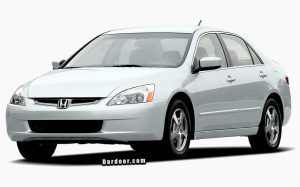
Get the official OEM workshop repair manual with the wiring diagram for the 2003-2007 Honda Accord, including the V6 Engine. in a fully searchable PDF format.
Overview
The 2003–2007 Honda Accord (7th generation) represents one of Honda’s most popular and well-regarded mid-size sedans. Available as both a sedan and coupe, this generation offered a balance of reliability, practicality, and driving dynamics that made it a segment leader.
Body Styles: 4-door sedan, 2-door coupe Production Years: 2003–2007 Platform: Honda CB platform Assembly:Marysville, Ohio (sedans); East Liberty, Ohio (coupes)
Technical Specifications
Engine Options
4-Cylinder Models:
- 2.4L i-VTEC I4 (K24A4)
- Horsepower: 160 hp @ 5,500 rpm
- Torque: 161 lb-ft @ 4,500 rpm
- Transmission: 5-speed manual or 5-speed automatic
- Fuel Economy: 24/34 mpg (city/highway)
V6 Models:
- 3.0L SOHC V6 (J30A4) – 2003–2005
- Horsepower: 240 hp @ 6,250 rpm
- Torque: 212 lb-ft @ 5,000 rpm
- Transmission: 5-speed automatic or 6-speed manual (coupe only)
- 3.0L SOHC V6 (J30A5) – 2006–2007
- Horsepower: 244 hp @ 6,250 rpm
- Torque: 211 lb-ft @ 5,000 rpm
- Transmission: 5-speed automatic or 6-speed manual (coupe only)
Dimensions & Capacity
Sedan:
- Length: 189.5 inches
- Width: 71.5 inches
- Height: 57.9 inches
- Wheelbase: 107.9 inches
- Cargo Volume: 14.0 cubic feet
- Curb Weight: 3,164–3,428 lbs
Coupe:
- Length: 191.5 inches
- Width: 72.7 inches
- Height: 54.5 inches
- Wheelbase: 107.9 inches
- Cargo Volume: 13.0 cubic feet
- Curb Weight: 3,131–3,417 lbs
Suspension & Brakes
- Front: Independent MacPherson strut
- Rear: Multi-link independent (sedan); Multi-link double wishbone (coupe)
- Brakes: 4-wheel disc with ABS
- Steering: Rack-and-pinion, power-assisted
Fuel System
- Fuel Tank Capacity: 17.1 gallons
- Fuel Type: Regular unleaded (87 octane recommended)
Top 10 Mechanical & Electrical Issues
1. Automatic Transmission Failure (V6 Models)
Symptoms:
- Harsh shifting or slipping between gears
- Transmission shuddering during acceleration
- Hesitation when accelerating from a stop
- Check Engine Light with transmission codes (P0730, P0740, P0741)
- Complete transmission failure
Root Cause: The 5-speed automatic transmission used in V6 models (2003–2005 particularly) had design flaws in the torque converter, clutch packs, and transmission fluid passages that caused premature wear and failure, often occurring between 60,000–100,000 miles.
Fix:
- Transmission fluid flush and filter replacement (temporary fix)
- Torque converter replacement
- Complete transmission rebuild or replacement
Cost:
- Fluid service: $150–$300
- Torque converter replacement: $1,200–$2,000
- Transmission rebuild: $2,500–$3,500
- Remanufactured transmission: $3,000–$4,500
2. Cracked Engine Block (V6 2003–2004)
Symptoms:
- Coolant loss with no visible external leaks
- White smoke from exhaust
- Overheating
- Coolant mixing with engine oil (milky appearance on dipstick)
- Engine misfires
Root Cause: A manufacturing defect in the cylinder block casting process caused porosity in the block walls, leading to internal coolant leaks into the cylinders. This primarily affected early V6 models.
Fix:
- Engine block replacement or complete engine replacement
- Honda extended warranty coverage for some affected vehicles
Cost:
- Engine replacement: $4,000–$7,000
- (Many cases covered under Honda’s extended warranty program)
3. Faulty Motor Mounts
Symptoms:
- Excessive engine vibration at idle (especially with A/C on)
- Clunking noise when shifting from Park to Drive/Reverse
- Vibration through steering wheel and floorboard
- Engine movement visible when accelerating/decelerating
Root Cause: The hydraulic front and rear motor mounts deteriorate over time, with the hydraulic fluid leaking out. The V6 models are particularly prone due to the engine’s higher torque output.
Fix:
- Replace worn motor mounts (typically front and rear)
- All four mounts should be inspected
Cost:
- Front motor mount: $200–$350 (parts + labor)
- Rear motor mount: $150–$300 (parts + labor)
- All four mounts: $600–$1,200
4. Power Steering Pump Failure
Symptoms:
- Whining or groaning noise when turning the wheel
- Stiff or heavy steering, especially at low speeds
- Power steering fluid leaks under the vehicle
- Intermittent loss of power steering assist
Root Cause: The power steering pump develops internal seal failures and bearing wear, leading to fluid leaks and reduced performance. The pump is driven by the serpentine belt and generates high pressure.
Fix:
- Power steering pump replacement
- Power steering fluid flush
- Check for leaking hoses and rack seals
Cost:
- Power steering pump replacement: $400–$650
- Hoses/lines: $100–$300 each
- Rack and pinion (if leaking): $800–$1,500
5. Starter Motor Failure
Symptoms:
- Clicking sound when turning the key, but engine won’t crank
- Intermittent no-start condition (works sometimes, fails other times)
- Grinding noise during starting
- Complete failure to engage
Root Cause: The starter solenoid contacts wear out over time, and the starter motor brushes deteriorate, causing intermittent or complete failure. This is common on higher-mileage vehicles (100,000+ miles).
Fix:
- Starter motor replacement
- Check battery and connections first to rule out electrical issues
Cost:
- Starter replacement: $350–$600 (parts + labor)
- OEM starter: $200–$350 (part only)
- Aftermarket starter: $100–$200 (part only)
6. Door Lock Actuator Failure
Symptoms:
- Doors won’t lock/unlock with key fob or door switches
- Clicking or buzzing sound from inside the door
- One or more doors operating independently from others
- Intermittent operation
Root Cause: The plastic gears inside the door lock actuators strip over time, preventing proper operation. This is a common wear item, particularly in driver’s and front passenger doors.
Fix:
- Replace failed door lock actuator(s)
- Typically driver and passenger front doors fail first
Cost:
- Single actuator replacement: $150–$300 (parts + labor)
- All four doors: $600–$1,200
- DIY parts cost: $40–$80 per actuator
7. Wheel Bearing Failure
Symptoms:
- Grinding, humming, or growling noise that increases with speed
- Noise changes when turning (louder on one side)
- Vibration in steering wheel
- Uneven tire wear
- ABS warning light (in some cases)
Root Cause: Wheel bearings wear out due to normal use, contamination from road debris, or improper installation. Front wheel bearings typically fail first due to steering and braking loads.
Fix:
- Replace wheel bearing hub assembly
- Check and replace if necessary on both sides
Cost:
- Single front wheel bearing: $250–$450 (parts + labor)
- Single rear wheel bearing: $200–$400 (parts + labor)
- Both fronts: $500–$900
8. Ignition Coil Failure (4-Cylinder)
Symptoms:
- Check Engine Light with misfire codes (P0300-P0304)
- Rough idle and poor acceleration
- Engine hesitation or stumbling
- Reduced fuel economy
- Hard starting
Root Cause: Ignition coils deteriorate over time due to heat cycling and electrical stress. The 4-cylinder models use individual coil-on-plug ignition coils that can fail independently.
Fix:
- Replace failed ignition coil(s)
- Replace spark plugs at the same time
- Consider replacing all four coils preventatively
Cost:
- Single coil replacement: $120–$200
- All four coils: $400–$700
- Coil + spark plugs (all four): $500–$900
9. EVAP Canister Purge Valve Failure
Symptoms:
- Check Engine Light with codes P0441, P0445, P0446, or P1457
- Rough idle
- Difficulty starting (especially after refueling)
- Fuel smell near the vehicle
- Poor fuel economy
Root Cause: The EVAP purge valve can stick open or closed due to carbon buildup or electrical failure, preventing proper operation of the evaporative emissions system.
Fix:
- Replace EVAP purge valve
- Check for vacuum leaks in EVAP system
- Inspect fuel cap for proper seal
Cost:
- Purge valve replacement: $150–$300
- EVAP canister (if damaged): $300–$600
- Fuel cap: $15–$30
10. Alternator Failure
Symptoms:
- Battery warning light illuminated on dashboard
- Dimming headlights or interior lights
- Electrical accessories malfunctioning
- Dead battery after short drives
- Whining or grinding noise from engine bay
Root Cause: The alternator’s voltage regulator, diodes, or bearings fail over time, reducing charging capacity. This typically occurs after 100,000+ miles or 7–10 years of service.
Fix:
- Replace alternator
- Test battery condition
- Check drive belt tension and condition
Cost:
- Alternator replacement: $400–$700
- OEM alternator: $300–$500 (part only)
- Remanufactured alternator: $150–$300 (part only)
- Drive belt: $50–$100 (if needed)
Top 5 Competitors
1. Toyota Camry (2002–2006)
- Pros: Legendary reliability, comfortable ride, strong resale value
- Cons: Less engaging to drive, conservative styling
- Engines: 2.4L I4 (157 hp), 3.0L V6 (210 hp), 3.3L V6 (225 hp)
- Verdict: Slightly more reliable but less sporty than the Accord
2. Nissan Altima (2002–2006)
- Pros: Powerful V6 option, competitive pricing, stylish design
- Cons: CVT transmission reliability issues, interior quality below Accord
- Engines: 2.5L I4 (175 hp), 3.5L V6 (250 hp)
- Verdict: More powerful but less reliable transmission
3. Mazda6 (2003–2008)
- Pros: Sporty handling, attractive styling, available V6
- Cons: Rust issues, lower reliability ratings, smaller rear seat
- Engines: 2.3L I4 (160 hp), 3.0L V6 (220 hp)
- Verdict: More fun to drive but less reliable long-term
4. Ford Fusion (2006–2009)
- Pros: Comfortable, spacious interior, available AWD
- Cons: Higher maintenance costs, reliability concerns, depreciation
- Engines: 2.3L I4 (160 hp), 3.0L V6 (221 hp)
- Verdict: Good value used but higher ownership costs
5. Volkswagen Passat (2001–2005)
- Pros: Upscale interior, refined driving experience, strong engines
- Cons: Expensive repairs, complex electronics, reliability issues
- Engines: 1.8L turbo I4 (170 hp), 2.8L V6 (190 hp), 4.0L W8 (270 hp)
- Verdict: Premium feel but significantly higher maintenance costs
Top 10 Recalls, Advisories & TSB Highlights
Recalls
1. Airbag Inflator Recall (Takata) – NHTSA Campaign 14V351000
- Issue: Defective Takata airbag inflators can explode, sending metal fragments into the cabin
- Affected: Millions of Accords (2003–2007)
- Fix: Free airbag inflator replacement at Honda dealers
- Status: Ongoing – CHECK YOUR VIN at NHTSA.gov
2. Headlight Switch Recall – NHTSA Campaign 10V084000
- Issue: Headlight switch can overheat and melt, potentially causing fire
- Affected: 2003 Accord models
- Fix: Free headlight switch replacement
- Status: Completed
3. Seat Belt Anchor Recall – NHTSA Campaign 03V360000
- Issue: Front seat belt anchor may not be properly secured
- Affected: 2003 Accord sedan
- Fix: Free inspection and repair of seat belt anchors
- Status: Completed
4. Power Steering Hose Recall – NHTSA Campaign 10V005000
- Issue: Power steering hose can crack and leak fluid onto hot exhaust, creating fire risk
- Affected: 2003–2007 Accord V6 models
- Fix: Free power steering hose replacement with improved design
- Status: Completed
Technical Service Bulletins (TSBs)
5. TSB 04-048: Automatic Transmission Judder/Shudder
- Issue: Transmission shudder during light acceleration (V6 models)
- Fix: Transmission software update and fluid change
- Models: 2003–2005 Accord V6 automatic
6. TSB 06-012: Engine Block Coolant Leak
- Issue: Internal coolant leak from engine block (V6 models)
- Fix: Engine block replacement under extended warranty
- Models: 2003–2004 Accord V6
7. TSB 07-057: A/C Compressor Clutch Noise
- Issue: Squealing or chirping noise from A/C compressor
- Fix: A/C compressor clutch replacement
- Models: 2003–2007 Accord (all)
8. TSB 05-032: Brake Pulsation
- Issue: Brake pedal pulsation during light braking
- Fix: Resurface or replace front brake rotors with updated design
- Models: 2003–2005 Accord
9. TSB 06-078: Rattle from Dashboard
- Issue: Rattling noise from instrument panel area
- Fix: Install foam padding at specific locations
- Models: 2003–2007 Accord
10. TSB 04-063: Door Lock Actuator Noise
- Issue: Buzzing or grinding noise when locking/unlocking doors
- Fix: Replace door lock actuators
- Models: 2003–2007 Accord (all)
Maintenance Schedule
Every 5,000–7,500 Miles (or 6 Months)
- Engine oil and filter change
- Rotate tires
- Inspect brake pads and rotors
- Check fluid levels (coolant, brake, power steering, washer)
Every 15,000–30,000 Miles (or 12–24 Months)
- Replace engine air filter
- Replace cabin air filter
- Inspect drive belts
- Inspect battery and clean terminals
- Lubricate door hinges and locks
Every 30,000 Miles (or 24 Months)
- Replace engine air filter (if not done at 15k)
- Inspect suspension components
- Inspect exhaust system
- Brake fluid flush (every 3 years)
Every 60,000 Miles (or 48 Months)
- Replace spark plugs (iridium plugs)
- Inspect valve clearance (4-cylinder only)
- Replace timing belt CRITICAL (V6 models – interference engine)
- Replace water pump (recommended with timing belt)
- Replace drive belts
- Transmission fluid change (especially important for V6 automatic)
- Replace coolant
Every 90,000 Miles (or 72 Months)
- Repeat 60,000-mile services
- Inspect/replace motor mounts if showing wear
- Flush power steering fluid
Every 120,000 Miles (or 96 Months)
- Second timing belt replacement (V6 models)
- Second water pump replacement
- Inspect fuel system components
As Needed
- Brake pad replacement: 30,000–60,000 miles
- Brake rotor replacement: 60,000–100,000 miles
- Battery replacement: 3–5 years
- Tires: 40,000–70,000 miles (depending on type)
- Windshield wipers: 6–12 months
10 FAQs for Buyers
1. Should I buy a 4-cylinder or V6 Accord?
The 4-cylinder (2.4L) is the safer choice for reliability. It offers adequate power for daily driving, better fuel economy, and avoids the transmission and engine block issues that plagued early V6 models. Choose the V6 only if you need the extra power and are prepared for potential transmission repairs, particularly in 2003–2005 models.
2. What years should I avoid?
Avoid 2003–2004 V6 models due to engine block cracking issues and transmission problems. The 2006–2007 model years received improvements and are generally more reliable. If buying a V6, stick to 2006–2007 with documented transmission service history.
3. How long does the transmission last?
On 4-cylinder models with proper maintenance, the manual transmission can exceed 200,000 miles, while the automatic typically lasts 150,000–200,000 miles. V6 automatic transmissions are problematic, often failing between 60,000–120,000 miles, especially 2003–2005 models.
4. Is the timing belt expensive to replace?
V6 models require timing belt replacement every 60,000–90,000 miles at a cost of $600–$1,000 including the water pump. This is critical because the V6 is an interference engine—belt failure will cause catastrophic engine damage. The 4-cylinder uses a timing chain that typically lasts the life of the engine.
5. What mileage is too high for a used Accord?
With proper maintenance, these Accords can exceed 200,000 miles. Look for vehicles under 150,000 miles with complete service records. Avoid high-mileage V6 models with unknown transmission history. A well-maintained 4-cylinder with 180,000 miles is preferable to a neglected V6 with 80,000 miles.
6. Are parts expensive?
Parts are reasonably priced and widely available. Honda has extensive dealer and aftermarket support. Typical costs: oil filter ($5–$10), air filter ($15–$25), brake pads ($40–$80), alternator ($150–$300 aftermarket). Labor rates vary by region but are typically moderate.
7. How is the crash safety rating?
The 2003–2007 Accord received good crash test ratings for its era:
- NHTSA: 4–5 stars in most categories
- IIHS: “Good” ratings in frontal and side impacts
- Standard features: Dual front airbags, front side airbags, side curtain airbags (EX and above)
- Note: This generation lacks modern safety features like stability control (standard 2008+)
8. What are the common rust areas?
Rust is generally not a major issue on these Accords, but check:
- Rear wheel wells and lower fenders
- Rocker panels and door bottoms
- Rear subframe mounting points
- Exhaust system hangers and heat shields
- Battery tray area (if battery has leaked)
Vehicles in salt-belt states should be inspected carefully underneath.
9. Is the manual transmission reliable?
Yes, the manual transmission (5-speed on 4-cylinder, 6-speed on V6) is very reliable and can easily exceed 200,000 miles with basic clutch replacement around 100,000–150,000 miles ($800–$1,200). The manual also completely avoids the automatic transmission issues plaguing V6 models.
10. What should I look for during a test drive?
- Transmission (V6 auto): Smooth shifts, no slipping, shuddering, or hesitation
- Engine: No excessive vibration at idle, smooth acceleration, no smoke
- Steering: Check for whining noise (power steering pump)
- Brakes: No pulsation, pulling, or unusual noises
- Suspension: No clunking over bumps, smooth handling
- Electronics: Test all power windows, locks, climate control, radio
- Warning lights: None should be illuminated on dashboard
Final Buyer Recommendations
✅ RECOMMENDED TO BUY:
Best Choices:
- 2006–2007 Accord 4-cylinder (LX, EX, EX-L) – Most reliable configuration
- 2006–2007 Accord V6 with manual transmission – Avoids transmission issues
- 2005–2007 Accord 4-cylinder with manual transmission – Maximum reliability
Why These Are Good:
- Proven long-term reliability (200,000+ miles possible)
- Timing chain on 4-cylinder (no belt replacement needed)
- Lower maintenance costs
- Good fuel economy (28–34 mpg)
- Comfortable and practical
- Strong safety ratings for the era
- Parts readily available and affordable
- Later years have fewer recalls and TSBs
Ideal Buyer Profile:
- Seeking a reliable, affordable daily driver
- Budget-conscious with moderate maintenance budget ($500–$1,000/year)
- Willing to perform regular maintenance
- Doesn’t need cutting-edge technology
- Values proven dependability over features
⚠️ BUY WITH CAUTION:
Proceed Carefully:
- 2003–2005 Accord V6 automatic – High transmission failure risk
- 2003–2004 Accord V6 (any transmission) – Engine block cracking issues
- High-mileage examples (180,000+ miles) without service records
Conditions for Purchase:
- Only if transmission has been replaced/rebuilt with documentation
- Only if priced significantly below market (to account for repair risk)
- Complete service records available
- Pre-purchase inspection by Honda specialist
- Extended warranty available
❌ AVOID:
Do Not Buy:
- 2003–2004 Accord V6 automatic without transmission rebuild documentation
- Any Accord with unrepaired Takata airbag recall
- Examples with deferred maintenance or no service records
- Vehicles showing transmission warning signs (slipping, shuddering, harsh shifts)
- Examples with engine overheating history (potential cracked block)
🚩 Red Flags
- Milky oil or coolant (head gasket/cracked block)
- Transmission slipping or harsh shifts
- Outstanding safety recalls (check NHTSA.gov)
- Rust in critical structural areas
- Evidence of flood damage
- Accident history affecting frame/structure
💰 Expected Ownership Costs (Annual)
Low-Mileage, Well-Maintained Example (4-cylinder):
- Routine maintenance: $400–$700
- Unexpected repairs: $300–$600
- Insurance: $800–$1,500 (varies widely)
- Total: $1,500–$2,800/year
Higher-Mileage or V6 Automatic:
- Routine maintenance: $500–$900
- Unexpected repairs: $800–$2,000+
- Major service (timing belt, etc.): $600–$1,000 (every 60k miles)
- Total: $1,900–$3,900/year
Bottom Line
The 2003–2007 Honda Accord remains an excellent used car choice if you select the right configuration. The 4-cylinder models, especially 2006–2007, offer outstanding reliability, comfort, and value. They’re perfect for budget-conscious buyers seeking a dependable vehicle that can easily reach 200,000+ miles with proper care.
However, the V6 automatic transmission models, particularly 2003–2005, carry significant risk and should only be purchased if the transmission has been replaced or if you’re prepared for a $3,000+ repair bill. The engine block cracking issue in 2003–2004 V6 models is another serious concern.
Best value: A 2006–2007 Accord EX 4-cylinder with the 5-speed automatic, under 120,000 miles, with complete service records. Expect to pay $4,000–$7,000 depending on condition and location. This configuration gives you Honda reliability, good features, and minimal risk—a vehicle that could serve you well for another 100,000 miles with proper maintenance.
Always perform a pre-purchase inspection, verify all recall work has been completed (especially Takata airbags), and review maintenance records carefully. A well-maintained Accord from this generation can be one of the best used car values available, but due diligence is essential.