“2009-2012 Honda Ridgeline Repair Manual” has been added to your cart. View cart
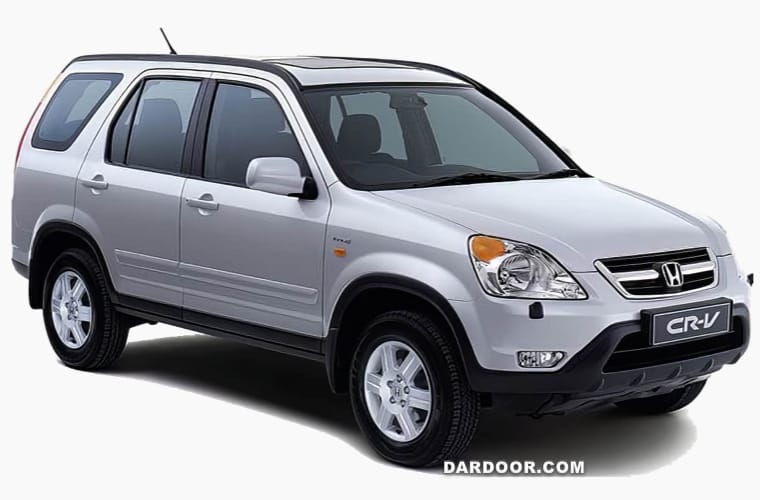
2002 Honda CR-V Repair Manual
Rated 4.93 out of 5 based on 14 customer ratings
$14.90
This is the original OEM workshop document for the 2002 Honda CR-V repair manual, second generation (RD2) with the wiring diagram in a simple PDF format.
Get the original factory workshop manual for the 2002 Honda CR-V. This fully indexed PDF is the same dealer-level documentation used by Honda technicians and includes step-by-step repair procedures, diagnostics, torque specifications, and complete electrical wiring diagrams to help you maintain and repair your CR-V with confidence.
File Format
PDF
File Language
English
You’ll Get
76.3 MB
Page Count
1,976
Delivery Method
Instant Digital PDF Download
Searchable & Printable
YES
Wiring Diagram
Included
Repair to factory standards—avoid guesswork and get the job done right the first time.
Key Features
Complete OEM Coverage
Factory procedures for service, repair, and maintenance across all systems.
Wiring Diagrams
Electrical schematics, connector views, ground points, and power distribution.
Diagnostics & DTCs
Honda fault codes with troubleshooting flowcharts and test values.
User-Friendly PDF
Searchable bookmarks and print-ready pages for workshop or home use.
What’s Inside
Maintenance schedules, fluids, capacities, and torque specs
Complete electrical system with wiring diagrams & connector locations
Body, interior, HVAC, and SRS/airbag systems
Diagnostic flowcharts and repair procedures
Download & Compatibility
Delivery: Instant digital PDF download Compatibility: Windows • macOS • iOS • Android
This manual provides detailed instructions for maintenance, disassembly, reassembly, component inspection, adjustment, and diagnostics—intended for use by experienced mechanics. Proper application of this guide will help ensure thorough repairs and maintain your vehicle in peak condition.
Important Note: Before purchasing this manual, please check whether your vehicle is subject to any active service recalls, as authorized dealerships may perform necessary repairs free of charge. When replacing parts, always use genuine OEM components to ensure safety, reliability, and long-term performance.
Table of Contents : 2002 Honda CR-V Repair Manual
Sample Pages
CAUTION: This OEM service and workshop repair manual provides detailed procedures for maintenance, disassembly, reassembly, inspection, adjustment, and diagnostics. It is intended as a comprehensive guide for experienced mechanics. To ensure thorough and accurate repairs that maintain your vehicle’s optimal performance, please read and follow this manual carefully. When replacing parts during any repair work, always use genuine Honda parts to ensure quality, safety, and reliability.
2002 Honda CR-V: Overview, Specs, Common Problems, Maintenance, Recalls, DTC Codes & Final Verdict
Quick Navigation
Overview
The 2002 Honda CR-V is part of the second-generation CR-V lineup and remains one of the most popular compact SUVs on the used market. It offers a durable 2.4L four-cylinder engine, real-time all-wheel drive availability, and excellent interior space for its size. While generally reliable, age-related wear, known Honda specific issues, and safety recalls must be considered by buyers today.
Technical Specs & Performance
Body style: Compact SUV (5-door)
Engine: 2.4L DOHC i-VTEC inline-4 (K24A1)
Power: ~160 hp / 162 lb-ft
Transmission: 5-speed manual or 4-speed automatic
Drivetrain: FWD or Real-Time AWD
0–60 mph: ~8.5–9.0 seconds
Towing capacity: Up to 1,500 lb
Top 10 Common Mechanical Issues
Automatic transmission slipping or harsh shifting
Symptoms: Delayed engagement, gear slipping, rough shifts, transmission shudder
Root Cause: Early-2000s Honda automatic transmission clutch wear and fluid breakdown
Fix: Drain/fill transmission fluid multiple times or rebuild transmission if damage is advanced
Cost to Fix: $180–$350 (fluid service) / $2,200–$4,000 (rebuild)
Valve clearance tightening
Symptoms: Hard starting, rough idle, misfires, burned exhaust valves
Root Cause: Valves tighten over time if not adjusted as scheduled
Fix: Perform valve lash adjustment to factory specification
Cost to Fix: $350–$700
Timing chain tensioner wear
Symptoms: Rattling noise on cold start, check engine light
Root Cause: Hydraulic tensioner wear and oil contamination
Fix: Replace timing chain tensioner and inspect chain guides
Cost to Fix: $600–$1,200
Rear differential binding (AWD models)
Symptoms: Shuddering during tight turns, vibration at low speed
Root Cause: Old or incorrect dual-pump differential fluid
Fix: Drain and refill with Honda-specific dual-pump fluid
Cost to Fix: $120–$250
Engine oil consumption
Symptoms: Low oil level between changes, oil warning light
Root Cause: Piston ring wear and extended oil intervals
Fix: Shorten oil change intervals; engine rebuild in severe cases
Cost to Fix: $80–$150 (maintenance) / $3,000+ (engine rebuild)
Engine mount failure
Symptoms: Excess vibration, clunk when shifting gears
Root Cause: Hydraulic mount deterioration over time
Fix: Replace failed engine mount(s)
Cost to Fix: $250–$700
Cooling system hose and radiator leaks
Symptoms: Coolant smell, overheating, visible leaks
Root Cause: Plastic radiator tanks and rubber hoses aging
Fix: Replace radiator and hoses, refill coolant
Cost to Fix: $300–$700
Power steering pump noise
Symptoms: Whining noise during steering, fluid leaks
Root Cause: Seal wear and fluid aeration
Fix: Replace pump or seals, flush system
Cost to Fix: $250–$600
Brake caliper seizure
Symptoms: Uneven braking, pulling to one side, hot wheels
Root Cause: Corrosion and stuck slide pins
Fix: Replace calipers and service brake hardware
Cost to Fix: $300–$800
Exhaust system corrosion
Symptoms: Loud exhaust, rattling noises, failed emissions test
Root Cause: Thin steel exhaust components rusting over time
Fix: Replace rusted exhaust sections or catalytic converter
Cost to Fix: $250–$1,200
Top 10 Common Electrical Issues
Airbag warning light (SRS)
Symptoms: SRS light illuminated, airbag system disabled
Root Cause: Faulty seat belt tension sensors or recalled inflator components
Fix: Diagnose SRS codes and complete recall repairs if applicable
Cost to Fix: $0 (recall) / $300–$1,200
Ignition switch failure
Symptoms: Engine stalls, no start, accessories flicker
Root Cause: Internal electrical wear in ignition switch
Fix: Replace ignition switch assembly
Cost to Fix: $150–$350
Power window master switch failure
Symptoms: Windows stop working intermittently
Root Cause: Internal switch contact wear
Fix: Replace driver-side master window switch
Cost to Fix: $120–$300
Oxygen sensor failure
Symptoms: Check engine light, poor fuel economy
Root Cause: Sensor aging and contamination
Fix: Replace failed O2 sensor and clear codes
Cost to Fix: $150–$350
Alternator failure
Symptoms: Battery warning light, dim lights, no start
Root Cause: Regulator and bearing wear
Fix: Replace alternator and test charging system
Cost to Fix: $350–$650
Blower motor resistor failure
Symptoms: HVAC fan only works on high speed
Root Cause: Resistor overheating and internal failure
Fix: Replace blower resistor pack
Cost to Fix: $120–$250
Instrument cluster gauge failure
Symptoms: Speedometer or fuel gauge not working
Root Cause: Solder joint fatigue in cluster circuit board
Fix: Repair or replace instrument cluster
Cost to Fix: $200–$600
Rear hatch wiring harness break
Symptoms: Rear wiper, lock, or lights fail intermittently
Root Cause: Wire fatigue at tailgate hinge
Fix: Repair or replace damaged wiring harness section
Cost to Fix: $150–$400
Crankshaft position sensor failure
Symptoms: Stalling, no start, check engine light
Root Cause: Heat-related sensor degradation
Fix: Replace crankshaft position sensor
Cost to Fix: $150–$300
ABS control module failure
Symptoms: ABS light on, loss of ABS function
Root Cause: Internal module solder failure
Fix: Replace or rebuild ABS module
Cost to Fix: $400–$1,200
Top 10 Mechanical and Electrical Issues Reported By Owners
1. Rear Differential Fluid Leak
Symptoms: Fluid puddles under rear of vehicle, whining noise from rear end, AWD system malfunction
Root Cause: Worn or damaged rear differential seals, often due to age and heat cycling
Fix: Replace differential seals and refill with proper Honda Dual Pump II fluid
Cost: $200-$400 (parts and labor)
2. A/C Compressor Clutch Bearing Failure
Symptoms: Squealing or grinding noise from engine bay, A/C not blowing cold, clutch won’t engage
Root Cause: Premature bearing wear in compressor clutch assembly, common design weakness
Fix: Replace A/C compressor or clutch assembly
Cost: $400-$800 (compressor replacement); $200-$350 (clutch only if available)
Root Cause: Worn bearings, failed voltage regulator, brush wear (common at 120,000+ miles)
Fix: Replace alternator and test charging system
Cost: $300-$500 (parts and labor)
9. Fuel Pump Failure
Symptoms: Engine won’t start, sputtering at highway speeds, loss of power under acceleration, whining from fuel tank
Root Cause: Wear from high mileage, contaminated fuel, running tank low regularly
Fix: Replace fuel pump assembly
Cost: $400-$700
10. Window Regulator Failure
Symptoms: Window won’t go up or down, slow window operation, grinding noise when operating window, window falls into door
Root Cause: Plastic regulator components break over time, worn cables
Fix: Replace window regulator assembly
Cost: $200-$400 per window (parts and labor)
Pros & Cons
Pros
Cons
Strong engine longevity
Automatic transmission weaknesses
Excellent interior space
Multiple safety recalls
Affordable parts and repairs
Outdated safety technology
Good fuel economy
Road noise at highway speed
Maintenance Schedule
Every 5,000-7,500 Miles:
Engine oil and filter change
Tire rotation
Visual inspection of brakes, suspension, exhaust
Every 15,000-30,000 Miles:
Air filter replacement
Cabin air filter (if equipped)
Brake fluid inspection
Every 30,000 Miles:
Transmission fluid change (especially for AWD models)
Rear differential fluid change (AWD)
Coolant inspection
Brake pad inspection
Every 60,000 Miles:
Spark plug replacement
Valve clearance adjustment check
Drive belt inspection and replacement if needed
Every 90,000-100,000 Miles:
Coolant flush and replacement
Transmission fluid flush
Comprehensive brake system service
As Needed:
Battery replacement (typically 3-5 years)
Wiper blades
Brake pads and rotors
Top 5 Competitors (2002 Model Year)
Toyota RAV4 – Similar size, comparable reliability, slightly less cargo space
Subaru Forester – Standard AWD, boxer engine, more rugged image
Ford Escape – Available V6 option, more powerful but less reliable
Mazda Tribute – Essentially a rebadged Escape with Mazda styling
Jeep Liberty – More off-road capable but significantly less reliable
Recalls, Advisories & Safety Alerts (Top 10)
Recalls:
Airbag Inflator Recall (Takata) – Affects millions of Hondas including 2002-2006 CR-Vs. Defective inflators can explode, sending metal fragments into cabin. Critical – check if completed
Ignition Switch Recall (2002-2006) – Switch could overheat and melt, potentially causing fire even when vehicle is off
Seat Belt Anchor Recall – Rear seat belt anchor bolts may not have been properly tightened during assembly
Technical Service Bulletins (TSBs):
Rear Differential Fluid Leak – TSB addressing leaks from rear differential seals, especially on AWD models
A/C Compressor Clutch Failure – TSB for premature A/C compressor clutch bearing failure causing noise and loss of A/C
Door Lock Actuator Noise – TSB addressing clicking/buzzing noises from door lock actuators
Transmission Shudder/Judder – TSB for automatic transmission shudder during light acceleration (1st-2nd gear shifts)
Moonroof Rattle – TSB for rattling noise from moonroof assembly, particularly on rough roads
Radio Display Failure – TSB for radio display dimming or failing completely
🔔 Note: All recalls and campaigns must be verified by VIN through official Honda or government recall databases.
DTC Trouble Codes
Engine Control Module (ECM)
Code
Description
Likely Cause
Fix
P0300
Random misfire
Ignition or fuel issue
Inspect plugs, coils, injectors
P0171
System too lean
Vacuum leak
Smoke test intake
P0420
Catalyst efficiency low
Failing catalytic converter
Replace converter
P0128
Coolant temp below spec
Thermostat stuck open
Replace thermostat
P1457
EVAP leak
Charcoal canister issue
Inspect EVAP system
P0135
O2 heater circuit
Sensor failure
Replace sensor
P0505
Idle control malfunction
IAC valve failure
Clean or replace IAC
P0700
Transmission control fault
TCM stored code
Scan TCM
P0335
Crank sensor failure
Sensor or wiring
Replace sensor
P0102
MAF low input
Dirty MAF
Clean or replace
Transmission Control Module (TCM)
P0730
Incorrect gear ratio
Internal wear
Transmission service
P0740
TCC fault
Torque converter issue
Repair converter
P0753
Shift solenoid A
Solenoid failure
Replace solenoid
P0758
Shift solenoid B
Solenoid failure
Replace solenoid
P0715
Input speed sensor
Sensor fault
Replace sensor
P0720
Output speed sensor
Sensor fault
Replace sensor
P0780
Shift malfunction
Hydraulic issue
Pressure test
P1768
Linear solenoid
Solenoid wear
Replace solenoid
P0705
Range sensor
Switch failure
Replace switch
P0748
Pressure solenoid
Electrical fault
Repair wiring
ABS / ESC
C0035
Wheel speed sensor
Sensor failure
Replace sensor
C0040
Wheel speed sensor
Sensor failure
Replace sensor
C0110
Pump motor circuit
ABS motor failure
Replace module
C0121
Valve relay
Relay fault
Replace relay
C0131
Pressure sensor
Sensor fault
Replace sensor
C0265
Relay circuit
Electrical fault
Repair wiring
C0277
Motor circuit
ABS motor
Replace module
C1234
Yaw sensor
Sensor failure
Calibrate
C1241
Low voltage
Battery issue
Test battery
C1300
ABS ECU
Internal fault
Replace ECU
SRS Airbag System
B0020
Driver airbag circuit
Clock spring
Replace clock spring
B0022
Passenger airbag
Inflator fault
Recall repair
B0051
Seat belt tensioner
Sensor fault
Replace tensioner
B0100
SRS unit
Module failure
Replace unit
B0131
Side airbag
Wiring fault
Repair wiring
B0140
Front sensor
Impact sensor
Replace sensor
B0157
OCS failure
Seat sensor
Calibrate
B1177
Battery voltage
Low voltage
Charge battery
B1200
Internal fault
ECU issue
Replace ECU
B1649
Sensor circuit
Harness issue
Repair wiring
Body Control / CAN
U0100
Lost comm ECM
CAN fault
Inspect wiring
U0121
Lost comm ABS
CAN fault
Repair network
U0140
Lost comm BCM
BCM power
Check fuses
B1241
Low voltage
Battery weak
Replace battery
B2312
Door lock
Actuator failure
Replace actuator
B2431
Rear hatch switch
Switch fault
Replace switch
B2600
Immobilizer
Key issue
Reprogram key
U0073
CAN bus off
Short circuit
Repair CAN
B1128
Gauge fault
Cluster issue
Repair cluster
B1330
Main relay
Relay failure
Replace relay
Frequently Asked Questions
1. What engine does the 2002 CR-V have? The 2002 CR-V came with a 2.4L 4-cylinder engine (K24A1) producing 160 horsepower and 162 lb-ft of torque, paired with either a 4-speed automatic or 5-speed manual transmission.
2. Is the 2002 CR-V all-wheel drive? Yes, it features Honda’s Real Time 4WD system, which is essentially an on-demand all-wheel drive that engages automatically when slippage is detected.
3. What’s the fuel economy? EPA estimates are approximately 20-22 mpg city and 25-27 mpg highway, depending on transmission and driving conditions.
4. How reliable is the 2002 CR-V? Generally very reliable. Honda’s reputation holds true, though this generation does have some known issues (see mechanical issues section below).
5. What’s the cargo capacity? Approximately 67.3 cubic feet with rear seats folded, 33.5 cubic feet with seats up.
6. Does it have a timing belt or chain? Timing chain, which doesn’t require replacement like a timing belt would.
7. What safety features does it have? Dual front airbags, ABS (anti-lock brakes) standard, side airbags optional. No stability control or side curtain airbags.
8. What trim levels were available? LX and EX trims, with the EX adding features like alloy wheels, moonroof, and upgraded audio.
9. What’s a fair price for a 2002 CR-V today? Depending on condition and mileage, typically $3,000-$7,000, though prices vary significantly by region and condition.
10. What mileage is too high? With proper maintenance, these can easily exceed 200,000 miles. Focus more on maintenance history than odometer reading.
Final Buying Tips
Check recall status at NHTSA.gov using VIN – especially the Takata airbag recall
Look for maintenance records – especially transmission and differential fluid changes
Inspect for rust – particularly on undercarriage, rear wheel wells, and exhaust
Test the AWD system – ensure it engages properly and no whining from rear differential
Check all electrical functions – windows, locks, A/C, radio
Consider a pre-purchase inspection – these are 20+ year old vehicles, professional inspection worth the cost
🔔 Note: The 2002 CR-V is generally a reliable vehicle that can provide many years of service with proper maintenance, but being aware of these common issues will help you make an informed purchase decision.
This website uses cookies to improve your experience while you navigate through the website. Out of these, the cookies that are categorized as necessary are stored on your browser as they are essential for the working of basic functionalities of the website. We also use third-party cookies that help us analyze and understand how you use this website. These cookies will be stored in your browser only with your consent. You also have the option to opt-out of these cookies. But opting out of some of these cookies may affect your browsing experience.
Necessary cookies are absolutely essential for the website to function properly. This category only includes cookies that ensures basic functionalities and security features of the website. These cookies do not store any personal information.
Any cookies that may not be particularly necessary for the website to function and is used specifically to collect user personal data via analytics, ads, other embedded contents are termed as non-necessary cookies. It is mandatory to procure user consent prior to running these cookies on your website.