This manual provides detailed instructions for maintenance, disassembly, reassembly, component inspection, adjustment, and diagnostics—intended for use by experienced mechanics. Proper application of this guide will help ensure thorough repairs and maintain your vehicle in peak condition.
Important Note: Before purchasing this manual, please check whether your vehicle is subject to any active service recalls ↗, as authorized dealerships may perform necessary repairs free of charge. When replacing parts, always use genuine OEM components ↗ to ensure safety, reliability, and long-term performance.
CAUTION ↗: This OEM service and workshop repair manual provides detailed procedures for maintenance, disassembly, reassembly, inspection, adjustment, and diagnostics. It is intended as a comprehensive guide for experienced mechanics. To ensure thorough and accurate repairs that maintain your vehicle’s optimal performance, please read and follow this manual carefully. When replacing parts during any repair work, always
use genuine Porsche parts to ensure quality, safety, and reliability.
✅ Overview
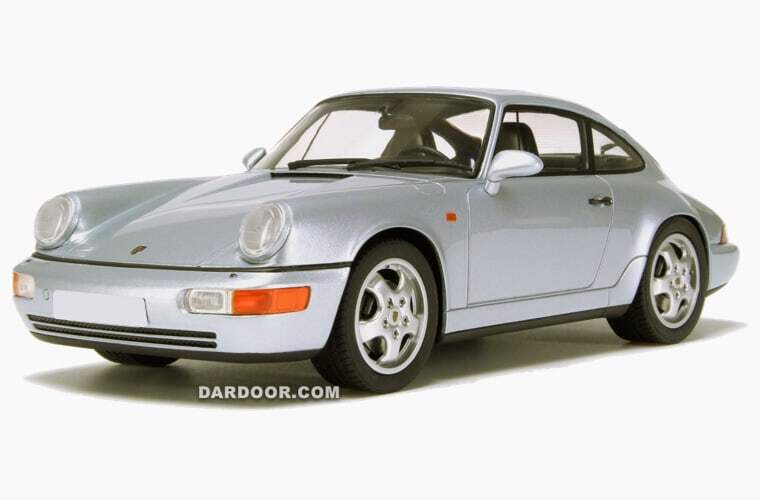
The Porsche 964 (model years 1989–1993 production) is the “bridge” 911: still air-cooled and compact, but with a big modernization jump—coil springs (instead of torsion bars), ABS, power steering, an electric rear spoiler, and more refined HVAC and electronics than earlier cars.
- 🌀 Layout: Rear-engine, RWD (Carrera 2) or AWD (Carrera 4)
- 🧊 Cooling: Air/oil-cooled 3.6L flat-six (M64)
- 🛡️ Safety tech: ABS standard; airbags added for many markets around early 1990s (varies by region/spec)
- 💡 Reality: Amazing to drive, but early examples can be expensive if the known updates weren’t done
📊 Technical Specs & Performance
Engine & Drivetrain (Most Common 964 Carrera Configurations)
- 🧰 Engine: 3.6L flat-six (M64), ~250 PS / ~184 kW (market-dependent)
- ⚙️ Transmission: 5-speed manual; Tiptronic 4-speed available (varies by year/market)
- 🧲 Drive: Carrera 2 (RWD) or Carrera 4 (AWD)
Note: Exact outputs/options vary by year, market, and emissions equipment. Use your VIN/options sticker to confirm.
Performance Benchmarks (Period-Correct, Real-World Useful)
- 🏎️ 0–60 mph: ~5.5 sec (Carrera 2 manual)
- 🏁 Top speed: ~162 mph (Carrera 2 manual)
- ⚖️ Curb weight (example): ~3,252 lb (Carrera 4 coupe example spec)
Dimensions (Example Spec Snapshot)
| Item |
Value |
| Length |
~167.3 in (4,250 mm) |
| Wheelbase |
~89.45 in (2,272 mm) |
| Width |
~65.0 in (1,651 mm) |
| Height |
~51.9 in (1,318 mm) |
Source example: 964 Carrera 4 coupe spec listing.
🔧 Top 10 Common Mechanical Issues (Reported by Owners)
👉 Tip: These are the “usual suspects” discussed across buyer checklists and enthusiast communities. Always verify with service records and a proper PPI.
1- Cylinder Head-to-Cylinder Oil Seep (Early Cars)
-
- Symptoms: Oil dampness at head/cylinder joint, burnt-oil smell, smoke after stopping, messy lower engine.
- Root cause: Early engines are known for head sealing leaks / updates over time.
- Fix: Confirm updated sealing work; proper repair can involve top-end reseal/engine-out labor.
- Cost to fix (range): $3,500–$9,000+ (depends on scope, studs, “while you’re in there”).
2- Broken Cylinder Head Stud(s)
-
- Symptoms: Ticking under load, leaks/misfire at higher RPM, poor compression on one cylinder bank.
- Root cause: Known risk on aging air-cooled engines; can show up as leaks or running issues.
- Fix: Top-end rebuild to replace studs; inspect valves/guides while open.
- Cost to fix (range): $6,000–$15,000+ (shop rate + rebuild scope).
3- Dual-Mass Flywheel (DMF) Wear / Failure (Manual Cars)
-
- Symptoms: Knocking/clunking at idle, vibration, rough engagement, “diesel-like” chatter.
- Root cause: Early DMF designs are a known 964 talking point; many cars were updated.
- Fix: Replace flywheel with updated unit during clutch service.
- Cost to fix (range): $2,000–$4,500 (clutch + flywheel + labor varies).
4- Timing Chain Housing / Cam Cover Oil Leaks
-
- Symptoms: Oil drips, wet chain covers, smoke near heat exchangers, recurring “mystery” leaks.
- Root cause: Gaskets and sealing surfaces age; common discussion item on 964 leak threads.
- Fix: Reseal affected covers; replace hardware/seals; do it properly (not just “tighten it”).
- Cost to fix (range): $600–$3,000+ (depends on what’s leaking + fasteners).
5- Power Steering Leaks (Pump/Rack/Lines)
-
- Symptoms: Wet lines, red/brown fluid, groan when turning, drops on garage floor.
- Root cause: Aging hoses/seals; commonly reported leak area.
- Fix: Replace leaking hoses/seals; inspect rack boots; flush correct fluid.
- Cost to fix (range): $250–$2,000 (line vs rack rebuild).
6- HVAC / A/C Weak Performance or Failure
-
- Symptoms: Barely-cool air, noisy blower, intermittent fan, fogging windows.
- Root cause: Classic 911 HVAC complexity + age; relays, resistors, seals, and tired compressors.
- Fix: Pressure test, repair leaks, service blower/resistor, refresh seals; convert refrigerant properly if needed.
- Cost to fix (range): $400–$2,500+ (small electrical vs full A/C rehab).
7- Suspension Bushing Wear / Loose Rear Feel
-
- Symptoms: Wandering, clunks, uneven tire wear, unstable braking over bumps.
- Root cause: Rubber bushings age out; 964 alignment sensitivity makes it obvious.
- Fix: Replace bushings/shocks as needed; proper alignment + corner balance.
- Cost to fix (range): $1,200–$5,000 (refresh vs full suspension rebuild).
8- Clutch Wear / Hydraulic Leaks
-
- Symptoms: High engagement point, slipping, stiff pedal, fluid loss.
- Root cause: Normal wear + old hydraulics (master/slave seals).
- Fix: Replace clutch components; rebuild/replace hydraulics; inspect rear main seal “while you’re there.”
- Cost to fix (range): $1,800–$4,500.
9- Exhaust Fastener Corrosion / Leaks
-
- Symptoms: Ticking on cold start, exhaust smell, failed emissions, rattles.
- Root cause: Heat cycles + corrosion; seized hardware is a known pain point.
- Fix: Replace studs/nuts, repair leaks; budget extra time for broken hardware.
- Cost to fix (range): $300–$2,000+ (easy gasket vs snapped studs).
10- CV Boot Tears / Axle Grease Sling
-
- Symptoms: Grease sprayed underbody, clicking in turns (if ignored), torn boots.
- Root cause: Rubber boot aging + heat.
- Fix: Replace boots (or complete axle) before joint damage.
- Cost to fix (range): $250–$1,200 (boot kit vs axle replacement).
Top 10 Common Electrical Issues (Reported by Owners)
1- Distributor Belt Failure (Twin Distributor)
-
- Symptoms: Sudden rough running/misfire, poor power, no-start (worst case), odd ignition behavior.
- Root cause: Ozone buildup inside distributor housing can degrade the belt; vent kit is the known preventative.
- Fix: Confirm vent kit installed; replace belt/inspect cap/rotor; verify timing.
- Cost to fix (range): $250–$1,200 (belt/service) or more if secondary damage occurs.
2- ABS / PDAS Warning Lights
-
- Symptoms: ABS light, PDAS/AWD warnings (C4), warning chimes, inconsistent ABS operation.
- Root cause: Sensor/switch faults (e.g., brake switch), hydraulic unit/valve faults; codes require proper diagnostic tool.
- Fix: Read stored faults with correct tool; test wheel sensors, brake switch, wiring; repair/bleed as required.
- Cost to fix (range): $150–$2,500 (switch/sensor vs ABS hydraulic repairs).
3- Airbag System Sensor/Control Issues (Where Equipped)
-
- Symptoms: Airbag warning lamp, stored fault that won’t clear, intermittent warning.
- Root cause: Aging sensors/connectors; older sensors may be superseded by updated part strategy.
- Fix: Diagnose properly; replace sensor(s) as recommended; address power supply requirements per service info.
- Cost to fix (range): $250–$1,800 (sensor vs deeper wiring/module).
4- Charging/Voltage Gremlins (Low System Voltage)
-
- Symptoms: Hard starts, dim lights, random warning lights, radio dropouts.
- Root cause: Aging alternator/regulator, grounds, battery, or parasitic draw.
- Fix: Load test battery; test alternator output; clean grounds; trace draw.
- Cost to fix (range): $150–$1,200.
5- HVAC Blower Resistor / Rear Heater Circuit Risks
-
- Symptoms: Burning smell, intermittent blower, heat issues, melted connector.
- Root cause: Known recall territory for rear heater blower resistor/fire risk on 1989–1992 Carreras.
- Fix: Verify recall completed; inspect wiring/resistor area; replace affected parts.
- Cost to fix (range): $0–$600 (recall vs private repair).
6- Instrument Cluster / Warning Light Intermittency
-
- Symptoms: Flickering gauges, dead backlight, random warning lamp behavior.
- Root cause: Aging solder joints, grounds, bulbs, cluster connectors.
- Fix: Clean/reseat connectors; refurbish cluster; repair grounds.
- Cost to fix (range): $80–$900.
7- Ignition Switch / Electrical Contact Wear
-
- Symptoms: No-crank, accessories cut out, key feels “weird,” intermittent start.
- Root cause: Worn electrical portion of switch from decades of use.
- Fix: Replace ignition switch electrical portion; inspect starter signal circuit.
- Cost to fix (range): $150–$650.
8- DME Relay / Fuel Pump Power Interrupt
-
- Symptoms: Random stall, crank/no-start, runs then dies when warm.
- Root cause: Relay contacts age; classic “carry a spare” Porsche reality.
- Fix: Replace relay; confirm fuel pressure and pump condition.
- Cost to fix (range): $40–$250.
9- Central Locking / Window Switch Issues
-
- Symptoms: Slow windows, one door not locking, intermittent operation.
- Root cause: Switch wear, tired regulators, vacuum leaks (where applicable).
- Fix: Replace switches; service regulator tracks; repair vacuum lines.
- Cost to fix (range): $120–$1,000.
10- Engine Sensor Faults (AFM/O2/Temp) → Poor Running
-
- Symptoms: Surging idle, poor fuel economy, hesitation, stored DME faults.
- Root cause: Aging airflow meter/O2/temperature sensors; DME stores OBD-I style codes on 964.
- Fix: Read codes; smoke test intake; test/replace faulty sensors; reset adaptations.
- Cost to fix (range): $150–$1,500.
Pros & Cons
| 👍 Pros |
👎 Cons |
| Iconic air-cooled feel with more usable modern tech (ABS, PS) |
“Unsorted” cars can be brutally expensive |
| Steering/chassis balance that feels alive at sane speeds |
Oil leaks and sealing work are common discussions |
| Strong long-term value if maintained properly |
964-specific updates (DMF, distributor vent, seals) matter a lot |
| Carrera 4 adds all-weather confidence (when healthy) |
ABS/PDAS troubleshooting can be tool-dependent |
🗓️ Maintenance Schedule (Practical Owner Version)
| Interval |
Service |
Why it matters |
| Every 5,000 mi / 8,000 km or 6 months |
Oil + filter, inspection for leaks |
Air-cooled engines reward clean oil and early leak detection |
| Yearly |
Battery/charging check, grounds clean |
Prevents voltage gremlins |
| Every 2 years |
Brake fluid flush |
ABS longevity + pedal feel |
| Every 30,000 mi / 50,000 km |
Plugs/filters, ignition inspection |
Twin-plug ignition health matters |
| Every 4–6 years |
Tires, alignment, bushings inspection |
964 feels “off” quickly when worn |
| As needed (common) |
Distributor vent kit verification + belt condition |
Prevents distributor belt failure risk |
Tip: If you track maintenance, track leak points and updates completed (DMF, head sealing work, vent kit) like they’re options—because on a 964, they basically are.
🏁 Top 5 Competitors (Same Era, Same Money, Same “Weekend Hero” Energy)
🚨 10 Recalls, Advisories & TSB Highlights
✅ Safety Recalls / Official Campaigns
- Fuel line wear-through risk (potential leak/fire) – inspect/replace/reroute line (1989).
- Brake pressure reduction valve tolerances could cause rear wheel lock-up (1991–1993).
- Rear heater blower resistor fire risk (1989–1992 Carrera) – replace resistor.
- Cruise control linkage defect – repair/replace linkage (1989–1990).
- Steering universal joint defect – replace joint (1989–1992).
- Front hood lock manufacturing issue (hood could open unexpectedly) – replace lock components (example notice).
🛠️ TSB / Service Info Highlights (Owner-Relevant)
- Airbag sensor replacement guidance (service info for 911 (964), MY 1990–1994).
- Brake booster / steering line service procedure (911 (964) technical info).
- Porsche Classic motor oil approvals covering 911 (964) (service information reference).
- Factory maintenance checklist availability (dealer/service reference list).
Note: Recalls/campaigns vary by country and VIN. Always verify open campaigns using Porsche’s VIN recall lookup.
🧠 DTC / Fault Code Lists (10 Codes per Module)
Important: The 964 is largely OBD-I / tool-specific. Code formats vary by diagnostic tool/market. Tables below include commonly referenced codes and examples used in Porsche diagnostics literature and tools.
Engine Control Module (ECM / DME) — Porsche 964 Fault Codes (Common List)
| Code |
Description |
What it usually points to |
| 11 |
Supply voltage |
Battery/alternator/grounds |
| 12 |
Idle speed contact ground short |
Throttle switch/wiring |
| 13 |
Full load contact |
Throttle switch adjustment |
| 14 |
Engine temperature sensor 2 |
CHT/temp sensor fault |
| 15 |
Idle speed contact break |
Throttle switch/wiring |
| 21 |
Air flow sensor |
AFM/Mass air measurement issues |
| 22 |
Idle speed control activation |
ISV/idle circuit |
| 23 |
Oxygen regulation stop |
Lambda control issue |
| 24 |
Oxygen sensor signal |
O2 sensor/wiring/exhaust leaks |
| 25 |
Intake air temperature sensor |
IAT sensor fault |
Source: Porsche 964 fault-code list (tool reference).
Transmission Control Module (TCM) — Example Diagnostic Codes (Tiptronic-equipped cars)
| Code |
Description |
Typical checks |
| P0700 |
Transmission control system fault |
Read trans-specific codes with proper tool |
| P0715 |
Input/turbine speed sensor |
Sensor, wiring, connector |
| P0720 |
Output speed sensor |
Sensor, harness, signal integrity |
| P0730 |
Incorrect gear ratio |
Clutch packs, pressure, solenoids |
| P0740 |
Torque converter clutch circuit |
TCC solenoid, valve body, fluid |
| P0748 |
Pressure control solenoid |
Solenoid resistance, valve body |
| P0750 |
Shift solenoid A |
Solenoid, wiring, ATF condition |
| P0755 |
Shift solenoid B |
As above |
| P0760 |
Shift solenoid C |
As above |
| P0710 |
Transmission fluid temperature sensor |
Sensor, wiring, overheating |
Note: Code naming/availability can differ by tool. For Porsche-specific P-code references, see Porsche club lists.
ABS / ESC (Brake System) — Common Diagnostic References
| Code |
Description |
Typical checks |
| 32 |
ABS fault code #32 (example reference) |
Valve/specific circuit per tool, verify with scan |
| C0035 |
Front left wheel speed sensor |
Sensor, tone ring, wiring |
| C0040 |
Front right wheel speed sensor |
Sensor, tone ring, wiring |
| C0045 |
Rear left wheel speed sensor |
Sensor, wiring |
| C0050 |
Rear right wheel speed sensor |
Sensor, wiring |
| C0110 |
Pump motor circuit |
Pump, relay, power/ground |
| C0121 |
Valve relay / valve circuit |
Valve block, wiring |
| C0131 |
Pressure sensor circuit |
Hydraulic unit, sensor |
| C0161 |
Brake switch signal |
Brake pedal switch |
| C0265 |
ABS relay circuit |
Relay, supply voltage |
ABS code example reference (fault code 32) and tool-dependent reading guidance.
SRS Airbag System — Example Codes
| Code |
Description |
Typical checks |
| B0001 |
Driver airbag circuit |
Clock spring/connector/harness |
| B0002 |
Passenger airbag circuit |
Connector/harness/module |
| B0020 |
Side/front crash sensor circuit |
Sensor, mounting, wiring |
| B0051 |
Seat belt pretensioner (LH) |
Connector under seat, wiring |
| B0052 |
Seat belt pretensioner (RH) |
Connector under seat, wiring |
| B1000 |
SRS control module internal |
Module diagnosis/replace |
| B1015 |
SRS low voltage event |
Battery/charging/grounds |
| B1020 |
Sensor power supply |
Power feed, fuse, wiring |
| B1030 |
Crash sensor plausibility |
Sensor pair checks |
| B1040 |
Warning lamp circuit |
Lamp, cluster, wiring |
For 964 airbag repairs and sensor replacement service guidance, see Porsche technical information.
Body Control / CAN Communication — Example Porsche P-Codes
| Code |
Description |
Typical checks |
| P1600 |
CAN timeout (system dependent) |
Power/grounds, module comms |
| P1601 |
CAN timeout instrument cluster |
Cluster feed, wiring |
| P1671 |
DME relay/control module monitoring |
Relay, supply voltage |
| P1674 |
Engine compartment purge fan output stage |
Fan control, relay |
| P1657 |
Overrun recirculating air valve output stage |
Vacuum valve/control |
| P1659 |
Overrun recirculating air valve output stage |
As above |
| P1654 |
Cooling water shutoff valve (generic Porsche list) |
System dependent |
| P1655 |
Cooling water shutoff valve (generic Porsche list) |
System dependent |
| P1656 |
Coolant shutoff valve (generic Porsche list) |
System dependent |
| P1602 |
CAN timeout instrument cluster (variant listing) |
Confirm on scanner/tool |
Reference: Porsche club DTC PDF list (P-codes; system applicability varies).
Frequently Asked Questions
Is the Porsche 964 reliable?
Yes—when it’s maintained and updated. The core engine is tough, but the 964 punishes neglect: oil leaks, old seals, distributor belt issues, and suspension wear are common talking points.
What are the “must-have” updates before buying?
Service history matters more than mileage. Key items: distributor vent kit, evidence of DMF update (manual cars), and proof of leak/sealing work if applicable.
Are oil leaks normal on a 964?
Some seepage is common, but “normal” doesn’t mean “ignore it.” Chain housings/covers and early head sealing leaks are well discussed—get a PPI and identify exactly where it’s coming from.
Carrera 2 or Carrera 4?
C2 feels simpler and lighter; C4 adds traction and confidence but brings extra complexity (and diagnostics) when warning lights appear.
Should I worry about the rear heater blower recall?
Yes—verify it was completed. This is one of those “don’t guess” items: confirm with documentation or VIN recall lookup.
Can I scan it with a normal OBD-II scanner?
Not reliably. The 964 is OBD-I/tool-specific. Use the correct Porsche-capable diagnostic tools and references for your market and ECU.
What’s the most expensive “surprise” on a 964?
Top-end work: head studs/sealing and deep oil leaks can escalate fast—especially if you discover extra issues once the engine is out.
What should a perfect service file include?
Proof of regular fluid service, leak repairs with notes/photos, distributor service/vent kit confirmation, clutch/DMF records (manual), suspension refresh, brake fluid flush history, and recall completion documentation.
🏁 Final Verdict
The 964 is the kind of 911 that makes you feel like a hero without requiring race-track speeds. It’s modern enough to use, classic enough to matter, and raw enough to remind you why people still obsess over air-cooled cars.
But here’s the deal: you’re not buying a car—you’re buying a history file. If the updates are done and the leaks are managed, it’s amazing. If not, it’s a premium-priced project with a Porsche tax on every mistake.
✅ Buy one if: you want the most “classic” 911 that still feels legitimately usable, and you’ll pay for a proper pre-purchase inspection.
❌ Skip it if: your plan is “I’ll fix it slowly” or you don’t have a repair reserve fund.