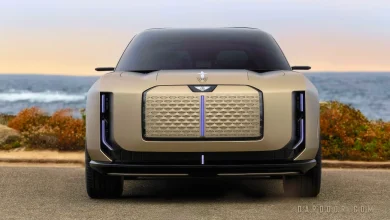
Volkswagen ID.7 Tourer Pro S (MY26) ★★★★☆
Available since July 2025
Volkswagen ID.7 Tourer Pro S (MY26)
The Volkswagen ID.7 Tourer Pro S (2024) is VW’s entry into the upper mid-size electric station wagon segment, blending long-range efficiency with everyday practicality. It competes directly with premium rivals such as the BMW i5 Touring, Nio ET5 Touring, and Opel Astra Sports Tourer Electric.
| Combined Efficiency | 165 Wh/km |
|---|---|
| Total System Power | 210 kW (286 PS) |
| Total Torque | 560 Nm |
| 0–100 km/h | 6.7 s |
| Top Speed | 180 km/h |
| Drive | Rear-wheel drive |
Price & Regional Availability
| Country/Region | MSRP | Order/On-Sale | Status / Notes |
|---|---|---|---|
| United Kingdom | £55,280 | Since Jul 2025 | Available to order |
| The Netherlands | €57,990 | Since Jul 2025 | Available to order |
| Germany | €59,895 | Since Jul 2025 | Available to order |
| North America | — | TBD | Model availability/pricing not listed |
| South America | — | TBD | Not listed |
Prices shown are recommended retail prices for the specified countries and do not include any indirect incentives. Pricing and included options can differ by region. Dates shown are order dates.
Real-World Range Estimates
Between 375-740 Km (233- 460 Mile)
| Condition | City | Highway (110 km/h) | Combined |
|---|---|---|---|
| Mild Weather (23 °C, no A/C) | 740 km (460 Mile) | 490 km (304 Mile) | 600 km (373 Mile) |
| Combined | — | — | 520 km (323 Mile) |
| Cold Weather (−10 °C, heating) | 490 km (304 Mile) | 375 km (233 Mile) | 435 km (270 Mile) |
Indication of real-world range in several situations. Cold weather: “worst-case” based on −10 °C and use of heating. Mild weather: “best-case” based on 23 °C and no use of A/C. For “Highway” figures a constant speed of 110 km/h is assumed. The actual range will depend on speed, style of driving, weather and route conditions.
Long Distance Suitability (1-Stop Range)
| First Stop Distance | 382 km (237 Mile) | First Stop Duration | 3h 28min |
| Charging Stop | 0km | Charging Stop | 15 min |
| Second Stop Distance | 207 km (128 Mile) | Second Stop Duration | 1h 53min |
| Total Distance | 589 km (366 Mile) | Total Duration | 5h 36min |
| Weather | 1-Stop Range |
|---|---|
| Mild | 678 km (421 Mile) |
| Average | 589 km (366 Mile) → ★★★★☆ |
| Cold | 521 km (324 Mile) |
The “long distance suitability” is a 5-star rating that indicates how suitable a vehicle is for long trips. The rating is based on the 1-Stop Range: the total distance a vehicle can cover with one charging stop of 15 minutes.
Assignment of Stars in 2025:
- 0★: <200 km; (< 124 Mile)
- 1★: 200–325 km; (124- 201 Mile)
- 2★: 325–450 km; (124-280 Mile)
- 3★: 450–575 km; (280-357 Mile)
- 4★: 575–700 km; (357-435 Mile)
- 5★: >700 km. (> 435 Mile)
Half-stars are possible via linear interpolation.
Battery Details
| Nominal / Usable Capacity | 91.0 kWh / 86.0 kWh |
|---|---|
| Battery Type / Cathode | Lithium-ion • NCM |
| Architecture / Nominal Voltage | 400 V • 383 V nominal |
| Cells / Pack Config | 312 cells • 104s3p |
| Thermal Management | Active cooling & heating; battery preconditioning supported |
| Warranty | 8 years / 160,000 km (99,419 Mile) |
Charging Overview
| Category | Details |
|---|---|
| Home / Destination (AC) | Type 2 (right-rear); 11 kW onboard charger. 0→100% ≈ 9 h 15 m via 11 kW; ≈ 56–57 km/h. |
| Fast DC (CCS) | CCS (right-rear); peak 200 kW; average ~145 kW (10→80%). 10→80% ≈ 26 min; up to ~840 km/h session rate. |
| Plug & Charge | Supported (ISO 15118-2). Autocharge: not supported. |
| Battery Preconditioning | Supported; automatic when navigating to a DC fast charger. |
Actual AC/DC charging speeds depend on grid connection, site load, ambient temperature, cable rating, and initial state of charge.
Home & Destination Charging (0 → 100%)
Charging is possible by using a regular wall plug or a charging station. Public charging is always done through a charging station. How fast the EV can charge depends on the charging station (EVSE) used and the maximum charging capacity of the EV. The table below shows all possible options for charging the Volkswagen ID.7 Tourer Pro S. Each option shows how fast the battery can be charged from empty to full. Charging in Europe varies by country (some are primarily 1-phase, others 3-phase).
| Europe — Type 2 (IEC 62196) | ||||
|---|---|---|---|---|
| Charging Point | Max. Power | Power | Time (0→100%) | Rate |
| Wall Plug (230 V / 1×10 A) | 2.3 kW | 2.3 kW | 44 h | 12 km/h |
| 1-Phase 16 A (230 V) | 3.7 kW | 3.7 kW | 27 h 30 m | 19 km/h |
| 1-Phase 32 A (230 V) | 7.4 kW | 7.4 kW | 13 h 45 m | 38 km/h |
| 3-Phase 16 A (400 V) | 11 kW | 11 kW | 9 h 15 m | 56 km/h |
| 3-Phase 32 A (400 V) | 22 kW | 11 kW † | 9 h 15 m | 56 km/h |
† limited by onboard charger
Fast Charging (10 → 80%)
Connector: Combined Charging System (CCS Combo 2). Rapid charging enables longer journeys by adding as much range as possible in the shortest amount of time. Charging power will decrease significantly after ~80% state-of-charge; typical rapid sessions end at or before 80%.
| Charging Point | Max. Power | Average Power | Time (10→80%) | Rate |
|---|---|---|---|---|
| CCS 50 kW | 50 kW | 50 kW | 76 min | 280 km/h |
| CCS 100 kW | 100 kW | 90 kW † | 42 min | 520 km/h |
| CCS 150 kW | 150 kW | 115 kW † | 33 min | 660 km/h |
| CCS 175 kW | 175 kW | 130 kW † | 29 min | 750 km/h |
| CCS 350 kW | 200 kW † | 145 kW † | 26 min | 840 km/h |
† = Limited by charging capabilities of vehicle. Autocharge: allows automatic initiation at supported CCS stations (not supported here). Plug & Charge: automatic session initiation at supported CCS stations per ISO 15118 (supported here). Actual charging rates may differ from data shown due to factors like outside temperature, state of the battery and driving style.
Claimed Charging Specs (Manufacturer)
Max. Power: maximum power provided by charge point. Avg. Power: average power over a session from 10% to 80%. Time: time needed to charge from 10% to 80%. Rate: average charging speed over a session from 10% to 80%.
| Max. Power | Charge From | Charge To | Time |
|---|---|---|---|
| 200 kW | 10 % | 80 % | 26 min |
Performance & Drivetrain
| Total Power / Torque | 210 kW (286 PS) • 560 Nm |
|---|---|
| 0–100 km/h | 6.7 s |
| Top Speed | 180 km/h (112 mile/h) |
| Drive | RWD (rear motor) |
Bidirectional Charging (V2X/BPT)
Vehicle-to-Load (V2L)
| V2L Supported | No |
| Max. Output Power | – |
| Exterior Outlet(s) | – |
| Interior Outlet(s) | – |
Vehicle-to-Home (V2H)
| V2H via AC Supported | No |
| Max. Output Power | – |
| V2H via DC Supported | Announced |
| Max. Output Power | No Data |
Vehicle-to-Grid (V2G)
| V2G via AC Supported | No |
| Max. Output Power | – |
| V2G via DC Supported | Announced |
| Max. Output Power | No Data |
Energy Consumption & Efficiency
| Standard / Basis | Range | Rated Consumption | Vehicle Consumption | Rated Fuel-eq. |
|---|---|---|---|---|
| Real Range * | 520 km | — | 165 Wh/km | 1.9 L/100 km (veh.) |
| WLTP Rating | 690 km | 140 Wh/km | 125 Wh/km | 1.6 / 1.4 L/100 km |
TEL = Test Energy Low | TEH = Test Energy High (if applicable). Rated = official figures as published by manufacturer; rated consumption and fuel-equivalency include charging losses. Vehicle = calculated battery energy consumption used by the vehicle for propulsion and on-board systems.
Real Energy Consumption Estimation
Between 116-229 Wh/km
| Scenario | City | Highway | Combined |
|---|---|---|---|
| Cold Weather * | 176 Wh/km | 229 Wh/km | 198 Wh/km |
| Mild Weather * | 116 Wh/km | 176 Wh/km | 143 Wh/km |
* = estimated value where indicated. Average energy consumption and range are based on moderate climate and driving style. Real-life values may differ significantly. Pricing information might not be actual for some regions. No rights can be derived from the information on this site.
Indication of real-world energy use in several situations. Cold weather: “worst-case” based on −10 °C and use of heating. Mild weather: “best-case” based on 23 °C and no use of A/C. For “Highway” figures a constant speed of 110 km/h is assumed. The energy use will depend on speed, style of driving, climate and route conditions.
Safety Rating ★★★★★ (Rating Year 2023)
| Region | Rating | Details |
|---|---|---|
| Europe (Euro NCAP) | — (category scores) | 95% Adult, 88% Child, 83% VRU*, 80% Safety Assist |
| North America | — | NHTSA / IIHS — not listed for this exact spec |
| South America | — | Latin NCAP — not listed |
- VRU: Vulnerable Road Users
Regional safety ratings vary by market and model year. Refer to Euro NCAP, NHTSA, IIHS, or Latin NCAP for official results where applicable.
Dimensions & Weight
| L × W × H | 4961 × 1862 × 1551 mm (width with mirrors 2141 mm) |
|---|---|
| Wheelbase | 2971 mm |
| Weight Unladen (EU) / GVWR / Payload | 2235 kg / 2700 kg / 540 kg |
| Cargo Volume (seats up / max / frunk) | 605 L / 1714 L / 0 L |
| Roof Load | 75 kg |
| Tow Hitch | Possible • 750 kg unbraked / 1000 kg braked • 75 kg vertical load |
| Turning Circle | 10.9 m |
| Platform | VW MEB • EV-dedicated |
| Body / Segment / Roof Rails | Station/Estate • E – Executive • Yes |
| Heat Pump | Available (optional) |
Miscellaneous
| Seats / ISOFIX | 5 seats • ISOFIX ×3 |
|---|---|
| Platform | VW MEB (EV-dedicated) |
| Segment | E – Executive |
We Measured It for You: VW ID.7 Tourer Pro S
As we’ve been developing our format, many of you have asked us to share specific measurements. We take all measurements by hand using a simple tape measure. While we can’t guarantee perfect accuracy, we hope this info makes your decision about the VW ID.7 Tourer a little easier.
| Seats Measurements | |
| Height from floor to seat bolster (center) / height of seat bolster | 65/7 cm |
| Distance between the front seats (center) | 22 cm |
| Depth of the seat cushion | 4955 cm |
| Outisde Trunk Measurements | |
| Loading sill height / behind to the trunk floor | 71 cm |
| Standing height under the trunk lid | 186 cm |
| Height of the open trunk lid (for garages) | 210 cm |
| Trunk inside – Measurements | |
| Trunk width (narrowest point) | 100 cm |
| Trunk height | 67 to 77 cm |
| Height to the privacy screen | 43 to 53 cm |
| Depth to the top of the rear seat | 78 to 84 cm |
| Depth to the rear seat bench below | 109 cm |
| Depth to the folded back seat backrest | 170 cm |
| Depth up to the pushed-forward passenger seat | 212 cm |
Technical Specifications
| Drive Motor Specs | |
| Motor: | electric motor |
| Gearbox: | 1-speed reduction gear |
| Top speed: | 180 km/h |
| Acceleration: | 6.5 seconds from 0 to 100 km/h seconds |
| Power Consumption | |
| Fuel: | Electricity |
| CO2 emissions (combined): | 0 grams per kilometer |
| Trunk / Loading Area | |
| Loading sill height: | 71 centimeters |
| Trunk volume: | 605 liters |
| .. with the rear seat folded down: | 1,714 liters |
| Dimensions | |
| Length: | 4.96 meters |
| Wheelbase: | 2.97 meters |
| Height: | 1.54 meters |
| Width: | 1.86 meters |
| Width with exterior mirrors: | 2.14 meters |
| Turning circle: | 10.9 meters |
| Weights | |
| Roof load: | 75 kilograms |
| Support load: | 75 kilograms |
| Trailer load (braked): | 1,200 kilograms |
| Trailer load (unbraked): | 750 kilograms |
| Equipment test car | |
| Equipment line: | Pro S |
| Infotainment: | 15 inch supports/offers: Apple CarPlay, Android Auto, DAB |
Preceding Model
| Metric | ID.7 Tourer Pro S (MY24–25) | ID.7 Tourer Pro S (MY26) | Δ (New − Prev) |
|---|---|---|---|
| Real Range (Combined) | ≈ similar | 520 km | ≈ same |
| 0–100 km/h | 6.7 s | 6.7 s | — |
| Efficiency (Vehicle) | ≈ similar | 165 Wh/km | ≈ same |
MY26 succeeds MY24–25 with broadly similar performance, range and efficiency according to the listed specifications.
Safety & Build
Manufactured in Emden, Germany, the ID.7 Tourer boasts strong safety credentials. It earned a 5-star rating in the 2023 EURO NCAP crash tests, achieving:
- 95% for adult occupants
- 88% for child occupants
- 83% for vulnerable road users
- 80% for safety assist systems
Powertrain & Performance
Beneath the sleek body, the ID.7 Tourer Pro S is powered by a rear-axle-mounted electric motor delivering:
- 210 kW (286 hp)
- 545 Nm torque
- Single-speed reduction gear
- Rear-wheel drive layout
This setup launches the car from 0–100 km/h in 6.5 seconds, with a top speed electronically limited to 180 km/h.
Battery & Charging
Equipped with a 91.0 kWh battery (86 kWh net), the Tourer Pro S offers an estimated range of up to 687 km (WLTP). Charging times are competitive:
- DC fast charging (200 kW): 10–80% in under 30 minutes
- AC wallbox (11 kW): full charge in ~8 hours
- 22 kW AC charging: not offered
- Heat pump: optional
- Vehicle-to-Load (V2L): supported
Design & Features
Our test car came in Stone Washed Blue Metallic, paired with 20-inch alloy wheels (standard on Pro S). Wheel options range from 19-inch (base Pro) to 21-inch upgrades.
The Pro S trim adds premium features, including:
- IQ.LIGHT LED Matrix headlights with an illuminated VW logo crossbar
- Dynamic Light Assist for adaptive beam control
- Optional 3D LED rear lights with animated braking and dynamic indicators
Practicality
True to its wagon heritage, the ID.7 Tourer emphasizes space and utility:
- Trunk capacity: 605 liters
- Cargo capacity (rear seats folded): 1,714 liters
- Towing capacity: 1,200 kg (braked), 750 kg (unbraked)
1-Stop Range Definition ⚡
For vehicles without fast-charging capability, only the distance of the first stop is considered.
🚗 Driving Profile
- Begin with a fully charged battery
- Stop 1: Drive until the battery reaches 10% state-of-charge (SoC)
- Perform a 15-minute fast charge
- Stop 2: Continue driving until the battery again reaches 10% SoC
📋 Assumptions
- Driving speed, climate, and environmental conditions are based on Real Range Highway data
- No additional time required to initiate or stop the charging session
- The charging station always delivers the maximum power requested by the vehicle
- The battery is assumed to be in optimal health and condition
⚠️ Important Note : In real-world driving, it is practically impossible to replicate these conditions exactly.
This benchmark should therefore be viewed as a comparative metric, designed to evaluate vehicles under standardized conditions rather than predict exact trip distances.
5-Star Rating Definition
Assignment of Stars in 2025
- ☆ 0 less than 200 km
- ★ from 200 km to 325 km
- ★★ from 325 km to 450 km
- ★★★ from 450 km to 575 km
- ★★★★ from 575 km to 700 km
- ★★★★★ more than 700 km
Based on 2025 thresholds: 3 stars awarded for 490 km average. Half-stars interpolated. Vehicles with a rating between these values receive a rating based on a linear scale.
Fast Charging (10 -> 80%)
- Max. Power: maximum power provided by charge point
- Avg. Power: average power provided by charge point over a session from 10% to 80%
- Time: time needed to charge from 10% to 80% Rate: average charging speed over a session from 10% to 80%
© 2025 Dardoor.com • Data for guidance only.