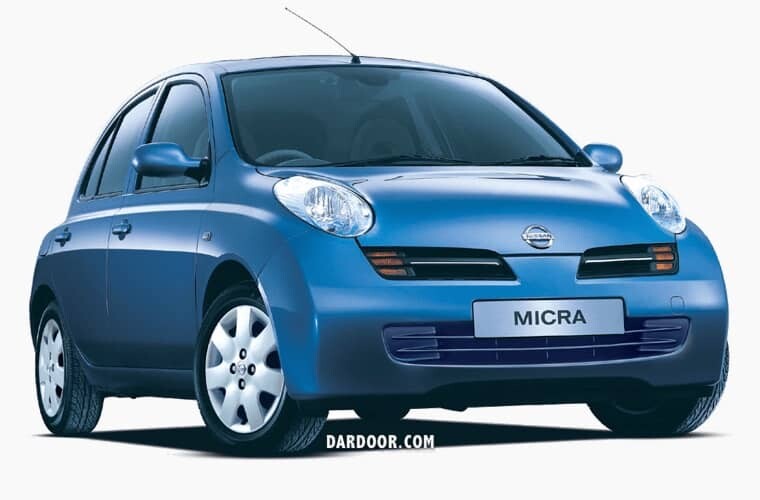
Get the complete and original OEM workshop manual for the 2003–2006 Nissan Micra (K12 Series), also known in some markets as the Nissan Tida. This factory PDF is the same documentation used by Nissan dealer technicians, containing all instructions and guidance required to accurately diagnose, service, and repair your vehicle.
File Format
PDF
File Language
English
You’ll Get
303 MB
Wiring Diagrams
Included
Delivery Method
Instant Download
Repair your Nissan Micra with the same trusted manual used by Nissan dealer technicians.
Service schedules, fluids, capacities & torque specifications
Download & Compatibility
Delivery: Instant digital PDF download Compatibility: Windows • macOS • iOS • Android
This manual provides detailed instructions for maintenance, disassembly, reassembly, component inspection, adjustment, and diagnostics—intended for use by experienced mechanics. Proper application of this guide will help ensure thorough repairs and maintain your vehicle in peak condition.
Important Note: Before purchasing this manual, please check whether your vehicle is subject to any active service recalls, as authorized dealerships may perform necessary repairs free of charge. When replacing parts, always use genuine OEM components to ensure safety, reliability, and long-term performance.
Table of Contents : 2003-2006 Nissan Micra Repair Manual
SAMPLE PAGES
CAUTION: This OEM service and workshop repair manual provides detailed procedures for maintenance, disassembly, reassembly, inspection, adjustment, and diagnostics. It is intended as a comprehensive guide for experienced mechanics. To ensure thorough and accurate repairs that maintain your vehicle’s optimal performance, please read and follow this manual carefully. When replacing parts during any repair work, always use genuine Nissan parts to ensure quality, safety, and reliability.
2003–2006 Nissan Micra (K12): Overview, Specs, Common Problems, Maintenance, Recalls/TSBs, DTC Codes & Final Verdict
🧭 Overview
The 2003–2006 Nissan Micra (3rd generation K12) is a lightweight, city-friendly hatchback known for simple mechanicals, low running costs, and easy parking. Most problems are predictable and fixable—especially if you keep up with fluids, sensors, and wear items.
🎯 Who This Guide Is For
Built for owners, buyers, and DIY/technicians who want quick answers on reliability, symptoms, fixes, and diagnostic codes for the 2003–2006 Nissan Micra (K12).
🧰 Notes: Exact power/trim varies by country; always verify by VIN/engine code on the vehicle.
🏁 Performance & Driving
🏙️ City use: Light steering, compact footprint, and good visibility makes it an easy daily driver.
⛽ Efficiency: Small-displacement engines are typically economical when maintained (air filter, plugs, correct tire pressures).
🛣️ Highway: Stable enough, but noise and power reserves depend heavily on engine size and gearing.
🛠️ Top 10 Common Mechanical Issues (Owner-Reported)
⛓️ Timing chain rattle / stretch (more common on early K12)
👀 Symptoms: Cold-start rattle, rough idle, loss of power, possible MIL (check engine).
🔎 Root Cause: Chain and/or tensioner wear; on some early builds chain batches were more failure-prone.
✅ Fix: Confirm with scan/live data + noise localization; replace timing chain kit (chain, guides, tensioner); verify timing.
💰 Cost to Fix: $650–$1,600 (typical) / $1,600–$2,400 (if additional timing components needed).
🛢️ Oil leaks (rocker/valve cover, crank seals)
👀 Symptoms: Oil smell, wet engine, drips, smoke near exhaust, low oil level between services.
🔎 Root Cause: Aging gaskets and seals; heat cycles harden rubber over time.
✅ Fix: Clean, UV dye test if needed; replace leaking gasket/seal; recheck PCV system (pressure can worsen leaks).
💰 Cost to Fix: $120–$450 (simple gasket) / $450–$1,100 (multiple seals or labor-heavy access).
🧊 Cooling system seepage / thermostat issues
👀 Symptoms: Overheating, temp fluctuations, weak heater, coolant smell, low coolant.
🔎 Root Cause: Thermostat sticking, aging hoses/clamps, radiator seam seepage, water pump wear.
✅ Fix: Pressure test; replace thermostat/hose(s) as needed; bleed system properly; verify fan operation.
💰 Cost to Fix: $180–$650 / $650–$1,300 (radiator or water pump replacement).
🛞 Front suspension wear (links/bushes/struts)
👀 Symptoms: Clunks over bumps, vague steering, uneven tire wear, knocking at low speed.
🔎 Root Cause: Wear in anti-roll bar links, control arm bushes, strut top mounts (age + rough roads).
✅ Fix: Inspect for play; replace worn links/bushes/struts; alignment after suspension work.
💰 Cost to Fix: $120–$350 (links) / $450–$1,200 (arms/struts + alignment).
🧭 Steering play / rack seep
👀 Symptoms: Steering feels loose, knocks, fluid seep (if hydraulic), wandering alignment.
🔎 Root Cause: Tie-rod wear, rack seal aging, pothole impacts.
✅ Fix: Inspect tie rods/ball joints first; repair leaks; replace rack only if confirmed worn/leaking internally.
💰 Cost to Fix: $180–$520 (tie rods) / $700–$1,900 (rack replacement).
🛑 Brake vibration / premature pad wear
👀 Symptoms: Steering shake on braking, squeal, longer stopping distance, uneven pad wear.
🔎 Root Cause: Rotor thickness variation, seized caliper slides, cheap pad material.
✅ Fix: Service slide pins; replace pads/rotors as a set if needed; bed-in procedure; flush brake fluid if old.
💰 Cost to Fix: $220–$650 (axle set) / $650–$1,100 (both axles + fluid service).
⚙️ Clutch wear / high bite point (manual)
👀 Symptoms: Slipping in higher gears, burning smell, hard shifting, high pedal bite point.
🔎 Root Cause: Normal wear; driving style; occasional oil contamination from seal leaks.
✅ Fix: Confirm slip; replace clutch kit; inspect flywheel; fix any rear main seal leak if present.
💰 Cost to Fix: $700–$1,500 / $1,500–$2,200 (flywheel + seals).
🧰 Transmission shudder or delayed engagement (automatic)
👀 Symptoms: Harsh shifts, delayed reverse/drive, shudder under light throttle.
🔎 Root Cause: Old ATF, adaptation issues, solenoid wear (age/mileage dependent).
✅ Fix: Scan for TCM codes; fluid service with correct spec; adaptation reset; deeper diagnosis if persists.
💰 Cost to Fix: $180–$420 (fluid service) / $650–$2,200 (solenoids/valve body or rebuild).
⚡ Top 10 Common Electrical Issues (Owner-Reported)
🧭 Camshaft position sensor failure
👀 Symptoms: Hard starting, stalling, limp mode, MIL, rough idle (often worse when hot).
🔎 Root Cause: Sensor aging/heat soak; sometimes worsened by timing chain wear affecting correlation.
✅ Fix: Scan for related codes; test sensor signal; replace sensor; verify timing chain condition if codes return.
💰 Cost to Fix: $120–$320 / $320–$900 (if wiring/diagnosis time is high).
🚪 Central locking / door actuator failure
👀 Symptoms: Door won’t lock/unlock, inconsistent remote locking, buzzing in door.
🔎 Root Cause: Actuator motor wear and dried latch mechanisms.
✅ Fix: Confirm power/ground; replace actuator; clean/lube latch/rods.
💰 Cost to Fix: $180–$450 per door / $450–$900 (multiple doors).
🪟 Power window slow or intermittent
👀 Symptoms: Slow window, stops mid-way, click but no movement.
🔎 Root Cause: Regulator wear, dry channels, failing motor, switch contact wear.
✅ Fix: Lube channels; test switch voltage drop; replace regulator/motor if binding or weak.
💰 Cost to Fix: $90–$220 (service) / $220–$650 (regulator/motor).
🧯 ABS warning light from wheel speed sensor
👀 Symptoms: ABS light on, traction control disabled, occasional speedometer oddities.
🔎 Root Cause: Sensor contamination, cracked tone ring, wiring damage near wheel well.
✅ Fix: Read ABS codes; clean sensor; inspect wiring; replace sensor if signal drops out.
💰 Cost to Fix: $120–$320 / $320–$850 (tone ring/bearing involvement).
🌡️ HVAC blower resistor or fan issues
👀 Symptoms: Fan only works on one speed, no blower, burning smell from vents.
🔎 Root Cause: Resistor pack overheating, worn blower motor drawing high amps.
✅ Fix: Replace resistor; test blower current draw; replace blower motor if over-amping.
💰 Cost to Fix: $120–$280 / $280–$650 (blower motor included).
🚗 Immobilizer/key recognition glitches
👀 Symptoms: Cranks but won’t start, immobilizer light flashing, intermittent no-start with one key.
🔎 Root Cause: Weak key battery (if equipped), antenna ring issues, key transponder problems.
✅ Fix: Try spare key; check antenna ring wiring; reprogram keys if necessary using proper tools.
💰 Cost to Fix: $0–$25 (simple) / $180–$650 (diagnosis + programming).
📟 Instrument cluster/interior electronics glitches
👀 Symptoms: Flickering dash, intermittent gauges, random warning lights after bumps.
🔎 Root Cause: Low voltage events, aging connectors/grounds, moisture intrusion in cabin connectors.
✅ Fix: Battery/alternator test; clean grounds; inspect/secure cluster connectors; check for water leaks.
💰 Cost to Fix: $90–$320 / $320–$950 (cluster repair/replacement if needed).
⚠️ Is It Safe to Drive?
🛑 Stop driving if you have: overheating, brake warning + poor braking, severe steering play, or airbags/ABS lights with confirmed faults.
🚦 Drive cautiously to a shop if you have: intermittent stalling, severe misfire, or transmission slipping.
✅ Usually safe short-term (but fix soon): minor oil seepage, single bulb out, slow windows, mild suspension noise.
✅ Pros & ❌ Cons (Table)
✅ Pros
❌ Cons
💸 Low running costs and easy basic maintenance
⛓️ Timing chain/sensor issues can appear if neglected
🏙️ Great city car: compact and easy to park
🛣️ Highway noise/power depends heavily on engine size
Important: Recalls are country- and VIN-specific. Always run a VIN lookup before purchase or repair booking.
Ignition relay defect (global recall themes for March/Micra era builds)
Risk: engine may stall or fail to restart.
Action: dealer replaces ignition relay (where applicable).
Steering wheel/column fastener concern (global steering-related campaign themes for March/Micra)
Risk: loose fastener could affect steering control in extreme cases.
Action: dealer inspection/torque correction (where applicable).
Door lock concern (early build advisory/recall themes in some markets)
Risk: door may not lock properly.
Action: inspect lock mechanism; replace/adjust parts as directed.
General airbag inflator campaign awareness (Takata-type programs vary by region)
Risk: airbag inflator rupture (VIN-specific).
Action: use official recall checker and complete repair immediately if open.
ATF service; solenoid testing; valve body inspection
P0750
Shift Solenoid A
Solenoid/wiring
Electrical test; replace solenoid if needed
P0755
Shift Solenoid B
Solenoid/wiring
Electrical test; replace solenoid if needed
P0760
Shift Solenoid C
Solenoid/wiring
Electrical test; replace solenoid if needed
P0841
Transmission Fluid Pressure Sensor Range/Perf
Sensor or hydraulic issue
Verify data; inspect wiring; hydraulic diagnosis if needed
🛑 ABS / ESC (Brake System)
DTC
What It Means
Likely Root Cause
Recommended Fix
C1101
FR Wheel Speed Sensor
Sensor/wiring/tone ring
Inspect gap, wiring; replace sensor if bad
C1102
FL Wheel Speed Sensor
Sensor/wiring/tone ring
Inspect gap, wiring; replace sensor if bad
C1103
RR Wheel Speed Sensor
Sensor/wiring/tone ring
Inspect gap, wiring; replace sensor if bad
C1104
RL Wheel Speed Sensor
Sensor/wiring/tone ring
Inspect gap, wiring; replace sensor if bad
C1110
ABS Pump Motor
Pump/relay/power
Check power/ground, relay; test pump
C1111
ABS Solenoid Valve
Hydraulic unit issue
Scan data; inspect unit; repair/replace as required
C1143
Yaw/Accel Sensor
Sensor calibration/failure
Calibrate; replace if values out of range
C1145
Steering Angle Sensor
Calibration lost
Perform steering angle calibration procedure
C1155
Stop Lamp Switch
Switch misadjusted/failing
Inspect/adjust/replace stop lamp switch
C1201
Engine Control System Fault (ABS request)
ECM fault triggers ABS/VDC
Fix engine codes first; clear and retest
🎈 SRS Airbag System
DTC
What It Means
Likely Root Cause
Recommended Fix
B1018
Airbag Diagnosis Sensor Unit
Module fault/power
Check power/ground; replace module if confirmed
B1049
Driver Airbag Module
Clock spring/connector
Inspect clock spring; repair connectors
B1054
Passenger Airbag Module
Connector/wiring
Inspect harness; verify resistance; repair as needed
B1065
Side Airbag (LH)
Seat harness/connector
Inspect under-seat connectors; repair wiring
B1066
Side Airbag (RH)
Seat harness/connector
Inspect under-seat connectors; repair wiring
B1070
Curtain Airbag Circuit
Pillar/roof connector
Inspect connectors; repair wiring
B1090
Seat Belt Pretensioner
Pretensioner/wiring
Inspect connectors; replace pretensioner if needed
B1145
Front Crash Sensor
Sensor/corrosion
Inspect; replace sensor if faulty
B1150
OCS/Passenger Detection
Seat sensor/calibration
Calibrate OCS; inspect seat wiring
B1193
Airbag Warning Lamp Circuit
Cluster wiring/lamp circuit
Check wiring; cluster diagnosis
📡 Body Control / CAN Communication
DTC
What It Means
Likely Root Cause
Recommended Fix
U0100
Lost Comm With ECM/PCM
Low voltage, CAN wiring
Battery/charging test; inspect CAN/grounds
U0121
Lost Comm With ABS
ABS power/ground, CAN fault
Check ABS supply; verify CAN continuity
U0140
Lost Comm With BCM
BCM power/CAN
Check fuses/grounds; connector integrity
U0155
Lost Comm With Cluster
Cluster supply/CAN
Inspect cluster connector; check voltage drop
U0164
Lost Comm With HVAC
Module or CAN issue
Scan network; isolate modules if bus drops
U0184
Lost Comm With Audio Unit
Head unit power/CAN
Check audio power/ground; inspect connectors
B2109
Ignition Relay Signal
Relay/BCM signal
Test relay control and output; replace relay if faulty
B2190
Key/Immobilizer Signal
Key, antenna ring, BCM
Try spare key; scan immobilizer; reprogram if needed
B2601
Exterior Lamp Circuit
Bulb/connector/corrosion
Inspect sockets; repair corrosion; replace bulb
U0073
Control Module Comm Bus Off
CAN short/open, module pulling bus
Isolate modules; inspect CAN wiring; repair fault
🧠 Pro tip: If you get multiple U-codes at once, test the battery + alternator first—low voltage is the #1 cause of “network chaos.”
❓ Frequently Asked Questions (FAQ)
Is the 2003–2006 Nissan Micra reliable?
Yes—when maintained. The most common reliability killers are neglected oil changes, ignored timing chain noise, and untreated sensor faults (cam/crank) that cause stalling/no-start.
What’s the most expensive common repair?
Timing chain kit replacement and automatic transmission issues can be the priciest if ignored early. Catching chain rattle and servicing ATF early can prevent big bills.
Which engine is best to buy?
It depends on your market and use. Smaller engines are economical for city driving; larger options feel better on highways. Regardless of engine, prioritize service history and a quiet cold start.
Is timing chain rattle an emergency?
It’s a “fix soon” issue. Continued driving with a noisy chain/tensioner can eventually cause timing problems and poor running. Diagnose early and budget for a proper timing kit if confirmed.
Why does my Micra stall when hot?
Common causes include cam/crank sensors failing under heat soak, weak battery/charging, or wiring/connectors. Scan for codes and verify sensor signal stability.
Can I drive with the ABS light on?
You can still have normal braking, but ABS may be disabled—stopping performance can be worse on wet/loose surfaces. Scan ABS codes and repair wheel speed sensor issues promptly.
What maintenance prevents most problems?
Oil changes on time, cooling system health checks, spark plugs at interval, clean grounds/battery checks, and early diagnosis of chain noise and sensor faults.
How do I check recalls for my Micra?
Use your country’s official Nissan VIN recall/service campaign checker (and complete any open safety recalls immediately).
🏆 Final Verdict
The 2003–2006 Nissan Micra (K12) is a smart buy if you want a compact, low-cost runabout. It’s at its best when you choose a car with a clean service record and you verify (1) no timing chain drama, (2) sensors are healthy (cam/crank), and (3) no open recalls in your region. Fix issues early and it can stay cheap and dependable for years.
This website uses cookies to improve your experience while you navigate through the website. Out of these, the cookies that are categorized as necessary are stored on your browser as they are essential for the working of basic functionalities of the website. We also use third-party cookies that help us analyze and understand how you use this website. These cookies will be stored in your browser only with your consent. You also have the option to opt-out of these cookies. But opting out of some of these cookies may affect your browsing experience.
Necessary cookies are absolutely essential for the website to function properly. This category only includes cookies that ensures basic functionalities and security features of the website. These cookies do not store any personal information.
Any cookies that may not be particularly necessary for the website to function and is used specifically to collect user personal data via analytics, ads, other embedded contents are termed as non-necessary cookies. It is mandatory to procure user consent prior to running these cookies on your website.