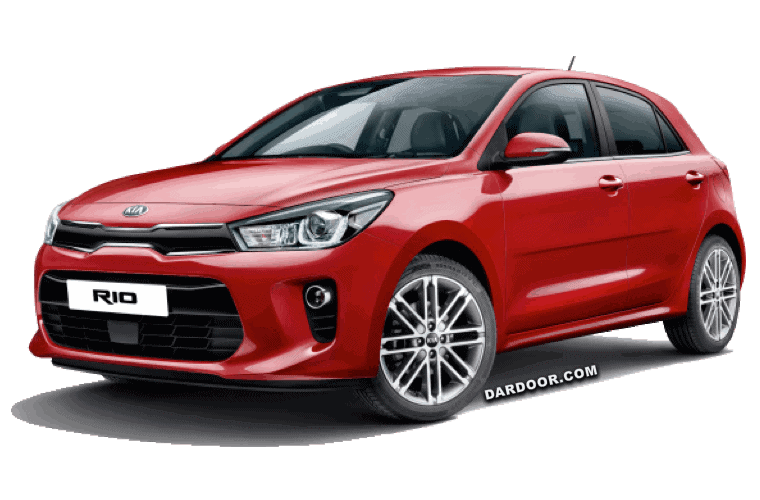
2011–2017 Kia Rio (Third Generation UB) — OEM Workshop Service & Repair Manual (PDF)
Get the official OEM workshop repair manual for the 2011–2017 Kia Rio (Third Generation UB). This comprehensive PDF is the same resource used by Kia dealership mechanics, providing factory-approved repair procedures, diagnostics, and complete electrical wiring diagrams to help you service and repair your Rio with confidence.
File Format
PDF
File Language
English
You’ll Get
65 MB
Wiring Diagram
Included
Delivery Method
Instant Download
Vehicle Coverage
Model Years: 2011, 2012, 2013, 2014, 2015, 2016, 2017
Generation: Third Generation (UB)
Body Styles: Sedan & Hatchback
Key Features
Complete OEM Coverage
Factory service, repair, and maintenance procedures for all major systems.
Full Wiring Diagrams
Electrical schematics, connector views, pinouts, grounds, and power distribution.
Diagnostics & DTCs
Official troubleshooting flowcharts and fault-code repair steps.
User-Friendly PDF
Fully searchable, bookmarked, and printable for workshop or home use.
What’s Inside
Routine maintenance schedules, fluids, and torque specifications
Engine mechanical repair and adjustments
Manual & automatic transmission service
Suspension, steering, and brake systems (ABS/ESC)
Complete electrical system with wiring diagrams
Body, interior, HVAC, and SRS/airbag systems
Diagnostic Trouble Codes (DTCs) and repair procedures
Download & Compatibility
Delivery: Instant digital PDF download Compatibility: Windows • macOS • iOS • Android
This manual provides detailed instructions for maintenance, disassembly, reassembly, component inspection, adjustment, and diagnostics—intended for use by experienced mechanics. Proper application of this guide will help ensure thorough repairs and maintain your vehicle in peak condition.
Important Note: Before purchasing this manual, please check whether your vehicle is subject to any active service recalls, as authorized dealerships may perform necessary repairs free of charge. When replacing parts, always use genuine OEM components to ensure safety, reliability, and long-term performance.
Table of Contents : 2011-2017 Kia Rio Repair Manual
1- Service and Repair Manual (with 1.6L GDI Gasoline)
1-General Information.
2-Automatic Transaxle System (A6GF1).
3-Body (Interior And Exterior).
4-Body Electrical System.
5-Brake System.
6-Clutch System.
7-Driveshaft And Axle.
8-Emission Control System.
9-Engine Electrical System.
10-Engine Mechanical System.
11-Fuel System.
12-Heating, Ventilation, Air Conditioning.
13-Manual Transaxle System (M6CF1).
14-Restraint.
15-Steering System.
16-Suspension System.
CAUTION: This OEM service and workshop repair manual provides detailed procedures for maintenance, disassembly, reassembly, inspection, adjustment, and diagnostics. It is intended as a comprehensive guide for experienced mechanics. To ensure thorough and accurate repairs that maintain your vehicle’s optimal performance, please read and follow this manual carefully. When replacing parts during any repair work, always use genuine Kia parts to ensure quality, safety, and reliability.
🚗 2011–2017 Kia Rio (Third Generation UB) – Specs, Common Problems (Root Cause + Fix), Recalls/TSBs & Owner Guide
Quick overview 🧩: The 3rd-gen Kia Rio (UB) is a practical subcompact offered as sedan or hatchback. Powertrains and features vary by region, but most models share simple mechanics, low running costs, and a few repeat trouble spots (EVAP/MIL lights, shift-lock quirks, interior electronics, and corrosion/fire-related campaigns on specific VIN ranges).
⚙️ Technical Specs & Performance
🌍 Note: Specs vary by market and engine. North America commonly uses the 1.6L with 6-MT/6-AT, while other regions may have 1.25/1.4 petrol and diesel options. Wheelbase and key dimensions are shared across most UB bodies.
🧰 Platform/Generation: Kia Rio (UB) – 3rd generation global model
📏 Wheelbase: ~2570 mm
⛽ Common engine (NA markets): 1.6L I4 (Gamma/GDI depending on year/trim) ~138 hp / ~123 lb-ft
⚙️ Transmissions: 6-speed manual or 6-speed automatic (NA spec examples)
🚦 Drivetrain: FWD
📐 Typical dimensions (hatch example): ~4045 mm L / ~1720 mm W / ~1455 mm H
🧳 Typical hatch trunk (minimum): ~224 L
🏎️ Real-world performance (typical 1.6 NA)
⚡ Acceleration feel: “Quick enough” for the class with the 1.6L, but can be noisy at high RPM (varies by insulation/tires).
🛣️ Best use: City commuting + short highway trips; prioritize maintenance and TSB updates for smooth ownership.
🔧 Top 10 Common Mechanical Issues (with Root Cause ✅ + Fix 🛠️)
Issue 🔧
Common Root Cause 🧠
Typical Fix 🛠️
1) Engine “knock/ping” under load 🔊
ECM calibration sensitivity (knock logic) on certain 1.6 GDI applications
ECM software update/reflash per Kia bulletin; confirm latest calibration and test drive
2) MIL on: EVAP purge flow / P0441 ⛽
EVAP logic + purge/vent control behavior; sometimes CCV sticking or logic thresholds
Apply ECU upgrade for P0441 logic improvement; if needed replace CCV per bulletin
3) MIL on: P0326 and/or P0441 🚨
ECM strategy/thresholds triggering DTCs on a defined production range
ECM reprogramming per service action bulletin (verify VIN applicability)
4) Fuel filler/EVAP refuel difficulties ⛽🌀
Filler neck air drain case / venting path issues on certain builds
Inspect and replace air drain case as described in bulletin; confirm proper vent routing
5) Rough idle or intermittent driveability 🧯
Carbon deposits (GDI), vacuum leaks, or aging coils/plugs depending on mileage
Scan for DTCs, inspect intake/vacuum, clean throttle/intake as needed, replace plugs/coils as maintenance dictates
6) Brake vibration / pulsation 🛑
Rotor thickness variation from heat cycles, stuck slide pins, or uneven pad deposits
Service caliper slides, measure rotors, resurface/replace rotors + pads; brake fluid service if overdue
7) Suspension clunks over bumps 🧱
Worn stabilizer links/bushings or front strut mounts (age + road conditions)
Inspect and replace worn links/bushings; torque to spec; align if components replaced
8) A/C water on passenger floor 💧❄️
Condensation forming on insufficiently insulated evaporator lines
Add insulating material to evaporator lines per bulletin instructions
9) Underbody corrosion in road-salt regions 🧂
Exposure to heavy road salt; underbody coating insufficient on certain vehicles/areas
Apply additional anti-corrosion material per campaign bulletin; inspect regularly
10) Engine compartment fire risk (specific recall) 🔥
HECU (Hydraulic Electronic Control Unit) internal electrical short causing overcurrent
Safety Recall: replace specified fuses / update label; follow interim notice guidance until parts available
💡 Top 10 Common Electrical Issues (with Root Cause ✅ + Fix 🛠️)
Issue 💡
Common Root Cause 🧠
Typical Fix 🛠️
1) Shift-lock won’t come out of Park 🔒
Poor ground at rear combination lamps affecting inputs/shift-lock logic
Inspect/clean grounds (GF01/GF02), inspect bulbs/sockets and related inputs per bulletin
2) Rear-view camera intermittent / blank 📷
Camera unit failure, connector pin fitment, or harness/ground issues
Diagnose per Kia procedure; repair wiring/replace camera as required
3) IPM / module fault setting DTC C1611 🧠
In-Panel Module (IPM) internal failure on certain production ranges
Replace IPM per bulletin procedure; clear codes and validate functions
4) Immobilizer/anti-theft update campaign 🔐
Vehicles without immobilizer needing logic upgrade to deter theft attempts
Perform BCM/IBU software logic upgrade and install decals per CS2307
5) Random battery drain 🔋
Aftermarket accessories, failing door switch, or module not sleeping
Parasitic draw test; pull fuses to isolate; repair offending circuit/module; verify sleep current
6) Door lock / keyless glitches 🚪
Door latch switch wear, weak actuator, or BCM logic quirks
Scan BCM, confirm switch state, replace actuator/latch if failing; reinitialize if required
7) TPMS light on 🛞
Sensor battery aging or mismatch after wheel swaps
Verify sensor IDs, replace dead sensors, perform relearn procedure
8) Alternator/charging warnings ⚡
Weak alternator/regulator or belt/tension issues
Load test battery, measure charging voltage, inspect belt; replace alternator if out of spec
9) Intermittent lighting issues 💡
Ground corrosion, bulb socket heat damage, or harness strain
Catalyst System Efficiency Below Threshold (Bank 1)
P0128
Coolant Thermostat (Temp Below Regulating Temp)
P0326
Knock Sensor Range/Performance
P0456
EVAP System Very Small Leak Detected
P0441
EVAP Incorrect Purge Flow
P050A
Cold Start Idle Air Control System Performance
⚙️ Transmission Control Module (TCM)
Code
Meaning
P0700
Transmission Control System Malfunction
P0715
Input/Turbine Speed Sensor Circuit
P0720
Output Speed Sensor Circuit
P0730
Incorrect Gear Ratio
P0741
TCC Performance/Stuck Off
P0753
Shift Solenoid A Electrical
P0763
Shift Solenoid C Electrical
P0776
Pressure Control Solenoid B Performance
P0796
Pressure Control Solenoid C Performance
P0868
Transmission Fluid Pressure Low
🛑 ABS / ESC (Brake System)
Code
Meaning
C0035
LF Wheel Speed Sensor Circuit
C0040
RF Wheel Speed Sensor Circuit
C0045
LR Wheel Speed Sensor Circuit
C0050
RR Wheel Speed Sensor Circuit
C1102
ABS Pump Motor Circuit
C1200
ABS Control Unit Fault
C1210
Valve Relay / Solenoid Relay Circuit
C1260
Yaw Rate Sensor Signal Fault
C1277
Steering Angle Sensor Signal Fault
C2402
ESC System Malfunction
🎈 SRS Airbag System
Code
Meaning
B1000
SRS Control Module Internal Fault
B1101
Driver Airbag Circuit Resistance High
B1102
Driver Airbag Circuit Resistance Low
B1111
Passenger Airbag Circuit Fault
B1120
Clock Spring / Driver Squib Circuit Fault
B1212
Side Impact Sensor (LH) Fault
B1213
Side Impact Sensor (RH) Fault
B1322
Seat Belt Pretensioner Circuit Fault
B1412
Occupant Classification System Fault
B1620
Passenger Airbag ON/OFF Indicator Circuit Fault
🧠 Body Control / CAN Communication
Code
Meaning
U0001
High Speed CAN Communication Bus
U0100
Lost Communication with ECM/PCM
U0121
Lost Communication with ABS Control Module
U0140
Lost Communication with BCM
U0155
Lost Communication with Instrument Cluster
U1111
CAN Message Timeout / Invalid Data
B2100
Central Lock Relay / Actuator Circuit Fault
B2500
Interior Lamp Circuit Fault
B2610
Ignition / Key Switch Circuit Fault
B2701
Immobilizer / Key Recognition Fault
✅ Final VerdictThe 2011–2017 Kia Rio (UB) is a smart, budget-friendly commuter when maintained properly.
The biggest “make-or-break” items are keeping ECU/TSB updates current for EVAP/MIL complaints, checking shift-lock/ground integrity, and verifying recall completion—especially the HECU fire-risk campaign. If you want the easiest ownership experience, buy one with documented dealer service history and a clean recall record, then follow the maintenance plan above.
This website uses cookies to improve your experience while you navigate through the website. Out of these, the cookies that are categorized as necessary are stored on your browser as they are essential for the working of basic functionalities of the website. We also use third-party cookies that help us analyze and understand how you use this website. These cookies will be stored in your browser only with your consent. You also have the option to opt-out of these cookies. But opting out of some of these cookies may affect your browsing experience.
Necessary cookies are absolutely essential for the website to function properly. This category only includes cookies that ensures basic functionalities and security features of the website. These cookies do not store any personal information.
Any cookies that may not be particularly necessary for the website to function and is used specifically to collect user personal data via analytics, ads, other embedded contents are termed as non-necessary cookies. It is mandatory to procure user consent prior to running these cookies on your website.