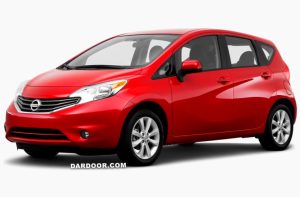
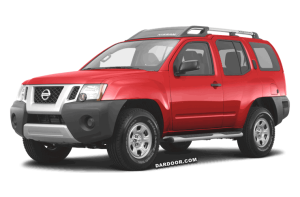
2017 Nissan Sentra (B17) — OEM Workshop Service & Repair Manual (PDF)
Format: PDF • Chassis: B17 • Delivery: Instant Download
Get the
same expert guidance Nissan dealership technicians use with the official OEM workshop manual for the
2017 Nissan Sentra (B17). This comprehensive, fully indexed PDF includes
factory-authorized procedures, torque specs, diagnostics, and
detailed wiring diagrams so you can service and repair your Sentra with confidence.
| File Format |
PDF |
| File Language |
English |
| You’ll Get |
68 MB |
| Wiring Diagram |
Included |
| Delivery Method |
Instant Download |
Key Features
Official OEM Manual
Identical to dealer service documentation—complete, accurate, and trusted.
Complete Coverage
Engine, transmission (manual & CVT), brakes, suspension, steering, HVAC, body, and more.
Detailed Wiring Diagrams
Clear schematics, connector views, pinouts, grounds, and power distribution.
Diagnostics & DTCs
Flowcharts, troubleshooting routines, and repair solutions for fault codes.
User-Friendly PDF
Searchable index and bookmarks; print only the pages you need.
What’s Inside
- Maintenance schedules, fluids, and torque specifications
- Step-by-step repair procedures and adjustments
- Engine, fuel, intake/exhaust, and cooling systems
- Manual & Xtronic CVT service procedures
- ABS/ESC, steering, suspension, and brakes
- Electrical: modules, CAN, connector locations, and wiring
- Body, interior, HVAC, and restraint systems
Download & Compatibility
Delivery: Instant digital PDF download
Compatibility: Windows, macOS, iOS, Android
This manual provides detailed instructions for maintenance, disassembly, reassembly, component inspection, adjustment, and diagnostics—intended for use by experienced mechanics. Proper application of this guide will help ensure thorough repairs and maintain your vehicle in peak condition.
Important Note: Before purchasing this manual, please check whether your vehicle is subject to any active service recalls, as authorized dealerships may perform necessary repairs free of charge. When replacing parts, always use genuine OEM components to ensure safety, reliability, and long-term performance.
Table of Contents : 2017 Nissan Sentra Repair Manual
General Information
Engine
-
- Engine Lubrication System
- Engine Cooling System
- Engine Control System
- Engine Mechanical
- Fuel System
- Starting System
- Exhaust System
- Accelerator Control System
Transaxle & Transmission
-
- Transaxle & Transmission
- Front Axle
- Rear Axle
Suspension
-
- Front Suspension
- Rear Suspension
- Road Wheels & Tires
Brake
-
- Brake System
- Parking Brake System
- Brake Control System
Steering
-
- Steering System
- Steering Control System
Restraints
-
- Seat Belt
- SRS Airbag
- SRS Airbag Control System
Ventilation, Heater & Air Conditioner
-
- Ventilation System
- Heater & Air Conditioning System
- Heater & Air Conditioning Control System
Body Interior
-
- Interior
- Instrument Panel
- Seat
Body Exterior, Doors, Roof & Vehicle Security
-
- Door & Lock
- Security Control System
- Glass & Window System
- Power Window Control System
- Exterior
- Body Repair
- Roof
Driver Controls
-
- Mirrors
- Exterior Lighting System
- Interior Lighting System
- Wiper & Washer
- Defogger
- Horn
Electrical & Power Control
-
- Power Outlet
- Body Control System
- LAN System
- Charging System
- Power Control System
- Power Supply, Ground & Circuit Elements
Driver Information & Multimedia
-
- Meter, Warning Lamp & Indicator
- Warning Chime System
- Audio, Visual & Navigation System
Cruise Control & Driver Assistance
-
- Cruise Control System
- Driver Assistance System
- Drive Mode System
Maintenance
Owner’s Manual
-
- 2017 Nissan Sentra Owner’s Manual
SAMPLE PAGES
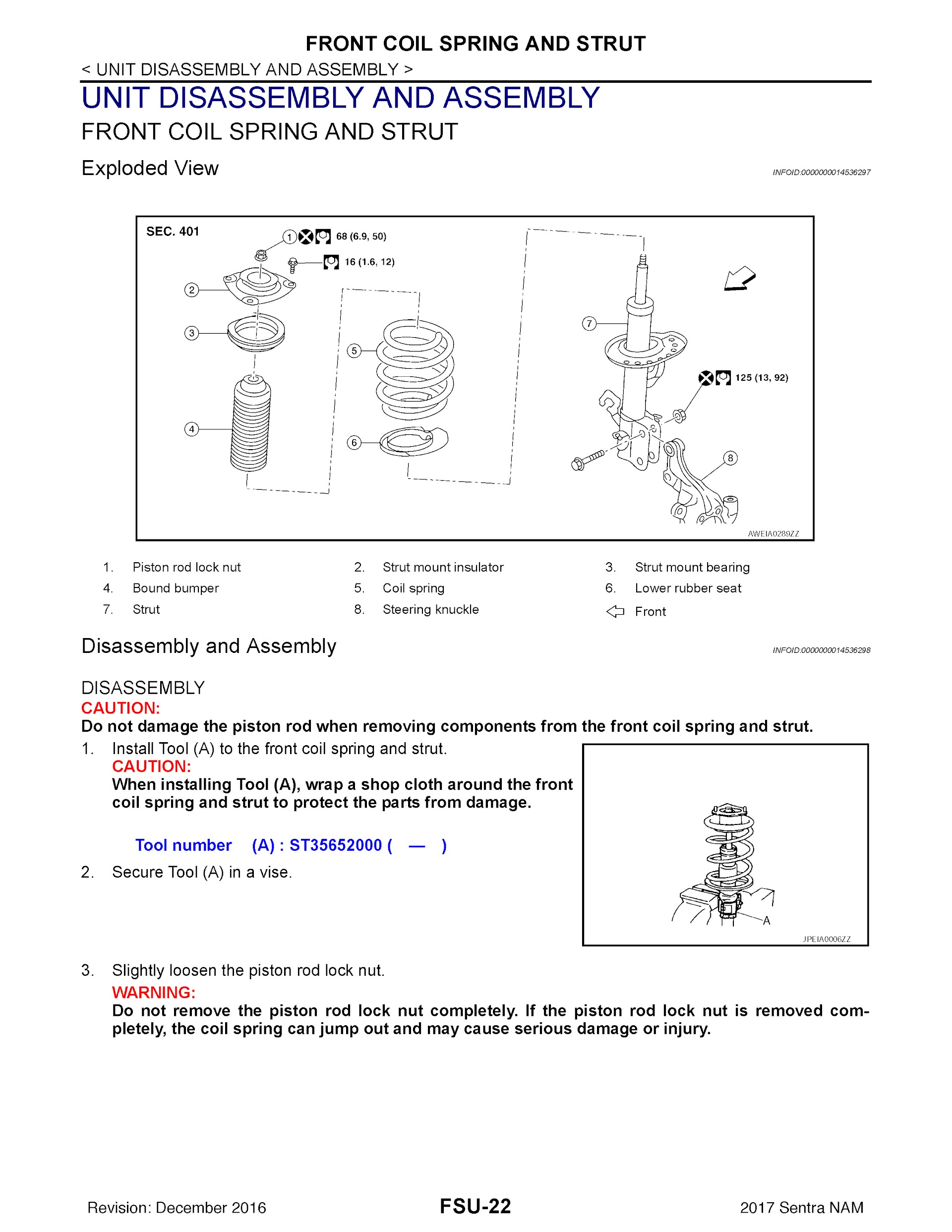
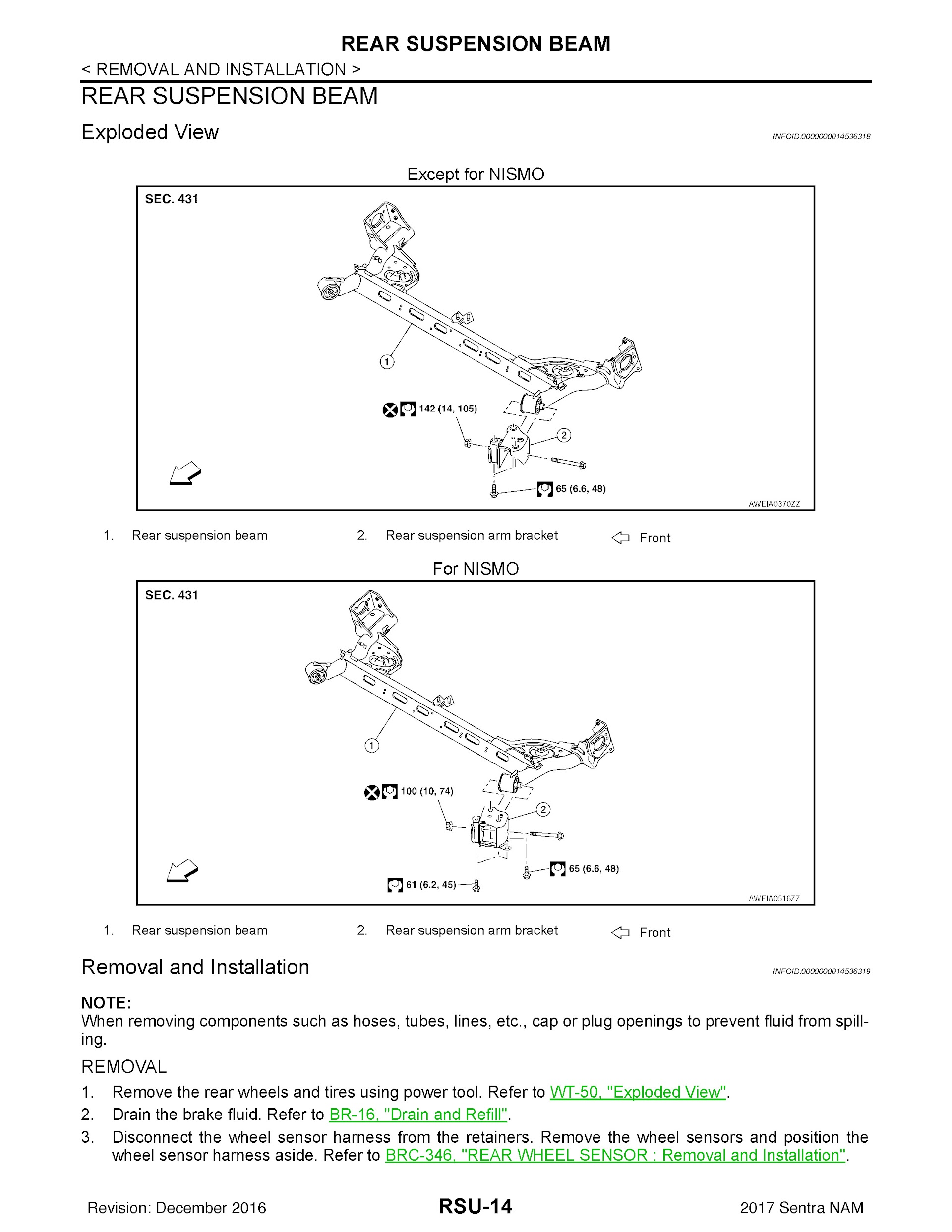
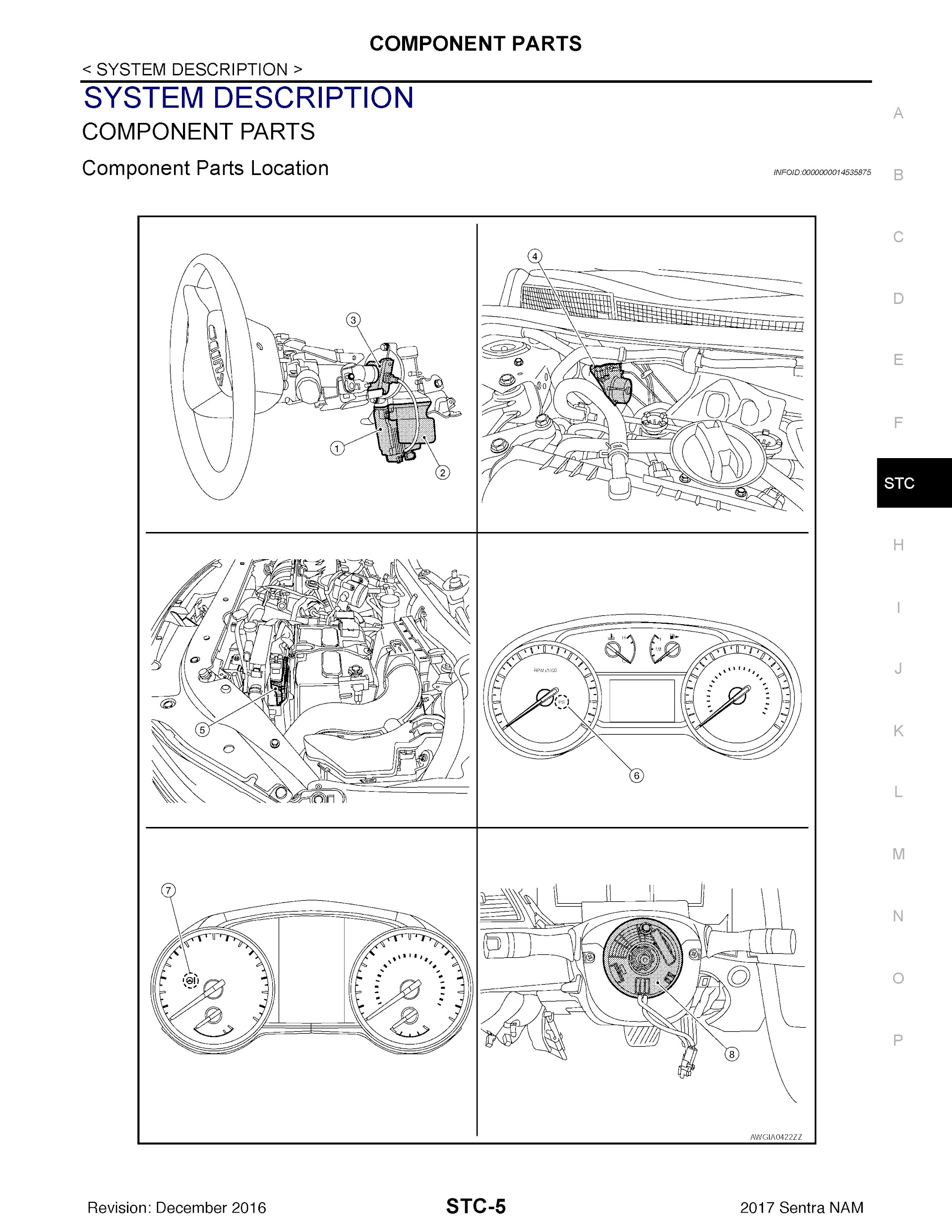
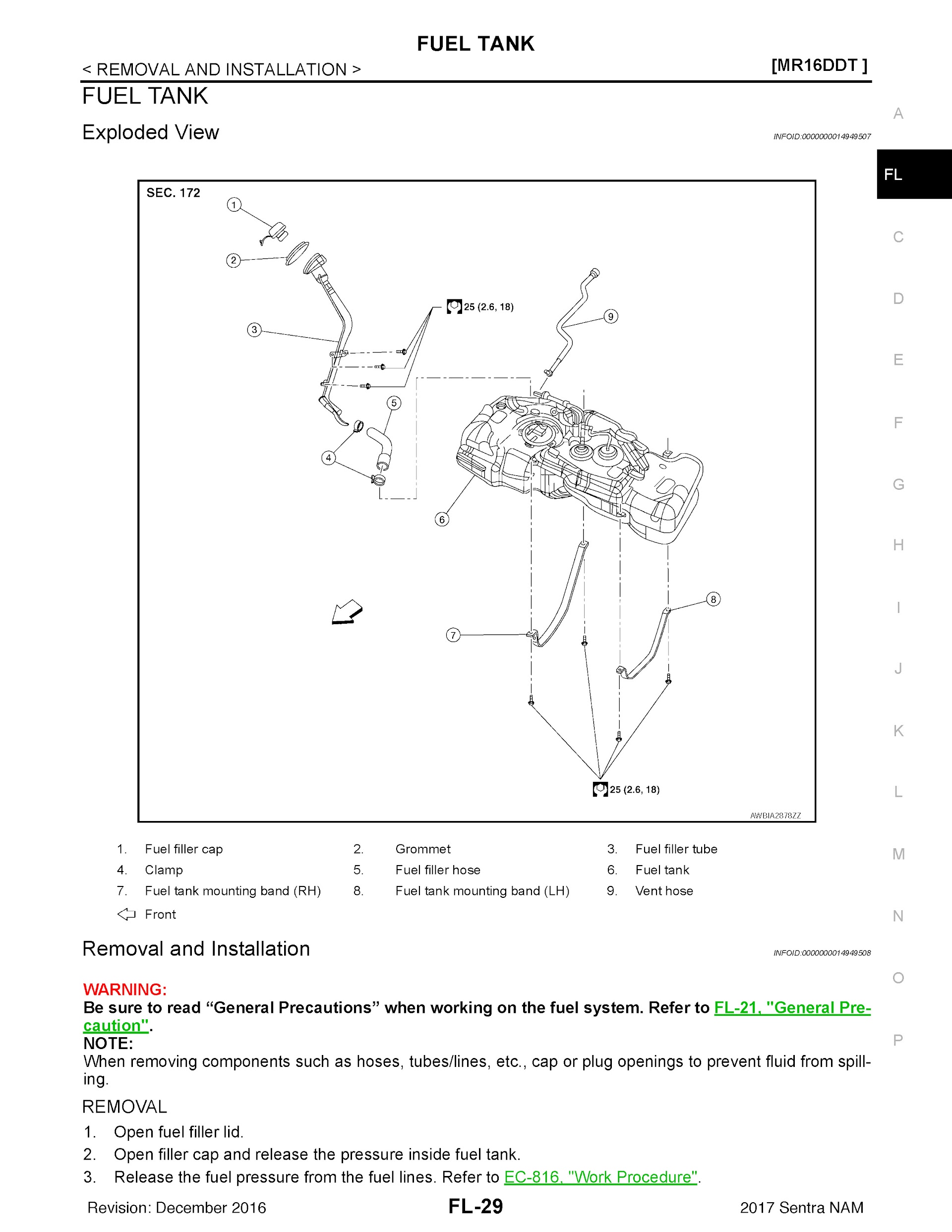
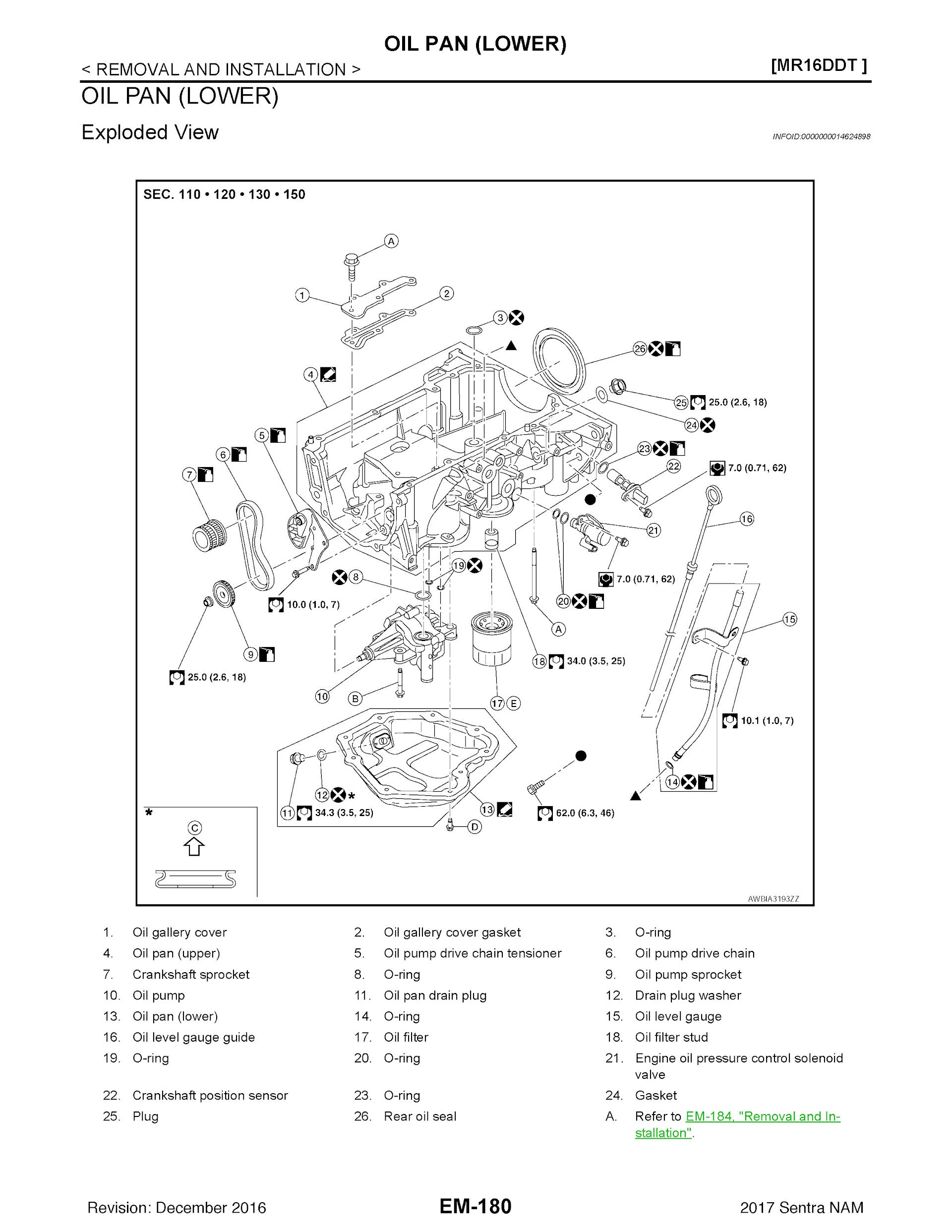
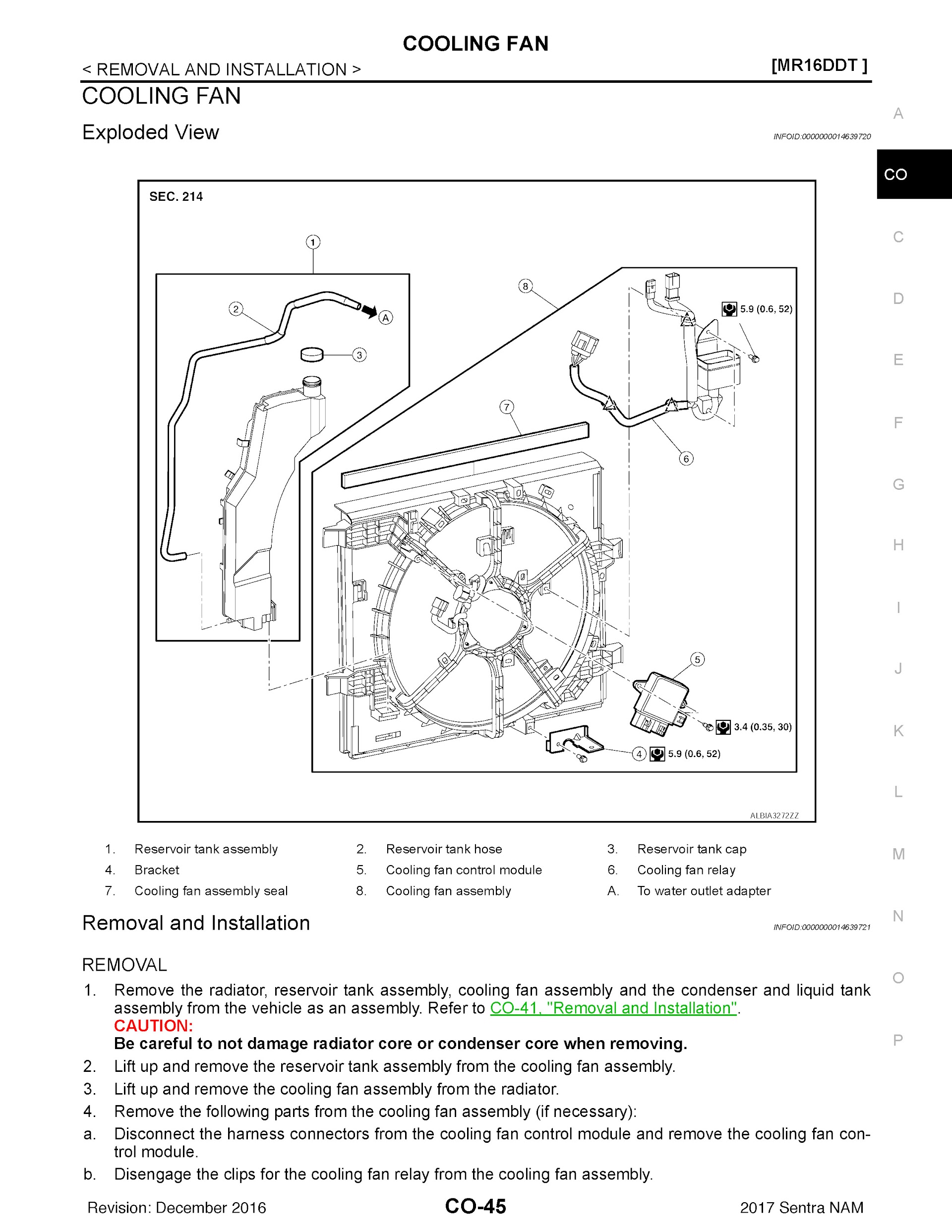
CAUTION: This OEM service and workshop repair manual provides detailed procedures for maintenance, disassembly, reassembly, inspection, adjustment, and diagnostics. It is intended as a comprehensive guide for experienced mechanics. To ensure thorough and accurate repairs that maintain your vehicle’s optimal performance, please read and follow this manual carefully. When replacing parts during any repair work, always use genuine Nissan parts to ensure quality, safety, and reliability.
🚗 2017 Nissan Sentra – Full Vehicle Overview, Issues, Maintenance & DTC Guide
The 2017 Nissan Sentra (B17 series) is a compact sedan known for its affordability, fuel economy, and practicality. Competing in the crowded compact sedan market, it offered a smooth ride, decent interior space, and modern tech features for its class. Available in several trims, it came with the reliable 1.8L I4 and the sportier 1.6L turbocharged SR variant, paired with CVT or manual transmission options.
⚙️ Technical Specifications & Performance
- Engine Options: 1.8L DOHC I4, 1.6L Turbo I4
- Power Output: 124 hp (1.8L) / 188 hp (1.6L Turbo)
- Transmission: 6-speed manual or Xtronic CVT
- Drivetrain: Front-wheel drive (FWD)
- 0–100 km/h: 9.9–7.5 seconds (depending on engine)
- Fuel Efficiency: 7.1–8.5 L/100km combined
- Trunk Capacity: 428L
🔧 Top 10 Common Mechanical Issues (Cause & Repair)
- CVT Transmission Overheating
Cause: CVT fluid degradation and poor cooling system.
Repair: Replace CVT fluid regularly, install updated cooling unit.
- Engine Stalling at Idle
Cause: Faulty throttle body or clogged idle air control valve.
Repair: Clean or replace throttle body/IAC valve.
- Excessive Oil Consumption
Cause: Worn piston rings or valve seals.
Repair: Replace piston rings/valve seals, monitor oil levels.
- Premature Brake Wear
Cause: Undersized rotors and aggressive pad material.
Repair: Upgrade to higher quality rotors and ceramic pads.
- Suspension Noise Over Bumps
Cause: Worn sway bar bushings or strut mounts.
Repair: Replace sway bar bushings and strut mounts.
- Clutch Wear in Manual Versions
Cause: Weak OEM clutch materials.
Repair: Install reinforced aftermarket clutch kit.
- Engine Vibration at Idle
Cause: Broken engine mounts.
Repair: Replace engine and transmission mounts.
- Power Steering Pump Noise
Cause: Fluid contamination or failing pump bearings.
Repair: Flush fluid and replace pump if needed.
- Exhaust Rattle
Cause: Loose heat shield or worn hanger.
Repair: Secure heat shield, replace rubber hangers.
- Coolant Leaks
Cause: Weak radiator and plastic thermostat housing.
Repair: Replace radiator and housing with updated parts.
💡 Top 10 Common Electrical Issues (Cause & Repair)
- Airbag Warning Light On
Cause: Faulty seat occupancy sensor.
Repair: Replace seat sensor or wiring harness.
- Battery Draining Overnight
Cause: BCM parasitic draw from stuck relay.
Repair: Reflash BCM or replace faulty relay.
- Infotainment System Freezing
Cause: Outdated firmware.
Repair: Update software at dealership.
- AC Blower Not Working
Cause: Failed blower motor resistor.
Repair: Replace blower motor resistor pack.
- Power Windows Slow/Failing
Cause: Worn regulator cable.
Repair: Replace window regulator assembly.
- Key Fob Not Detected
Cause: Weak key fob battery or faulty antenna.
Repair: Replace fob battery or antenna module.
- Instrument Cluster Malfunctions
Cause: CAN-BUS communication error.
Repair: Reprogram BCM or repair wiring fault.
- Headlight Flickering
Cause: Weak alternator or grounding issues.
Repair: Replace alternator and check ground points.
- Rear Camera Blackout
Cause: Damaged wiring harness.
Repair: Repair/replace harness.
- ABS Light On
Cause: Faulty wheel speed sensor.
Repair: Replace affected ABS sensor.
📊 Pros and Cons
| Pros 👍 |
Cons 👎 |
| Excellent fuel economy |
CVT reliability issues |
| Spacious cabin for compact sedan |
Weak engine performance in base model |
| Affordable purchase and running cost |
Cheap interior plastics |
| Comfortable ride quality |
Brake wear is common |
| Good safety features for its class |
Electrical glitches reported |
🛠️ Maintenance Schedule
| Interval ⏱️ |
Maintenance Task 🔧 |
| Every 10,000 km / 6 months |
Engine oil & filter replacement |
| Every 20,000 km |
Cabin air filter, tire rotation |
| Every 40,000 km |
CVT fluid inspection, brake fluid replacement |
| Every 60,000 km |
Replace spark plugs (1.8L), engine air filter |
| Every 80,000 km |
Coolant flush, check suspension bushings |
| Every 100,000 km |
Replace CVT fluid, inspect timing chain |
⚠️ Recalls, Advisories & Safety Alerts
- Airbag Recall: Takata inflators risk rupture – major recall across trims (2019).
- Brake Switch Failure: Could prevent brake lights from activating (2018).
- CVT Control Module Update: Reprogramming to prevent overheating (2020).
- Front Passenger Occupant Sensor: Inconsistent airbag deployment – recall 2017–2018.
- Fuel Pump Issue: Risk of stalling due to defective impeller (2021).
🧾 DTC Trouble Codes
Engine Control Module (ECM)
| Code |
Description |
| P0171 |
System Too Lean |
| P0300 |
Random Cylinder Misfire |
| P0420 |
Catalyst Efficiency Below Threshold |
| P0507 |
Idle Control System RPM Higher Than Expected |
| P0605 |
Internal Control Module Fault |
| P1122 |
Throttle Control Fault |
| P1138 |
Swirl Control Valve Control |
| P1148 |
Closed Loop Control Function |
| P1217 |
Engine Over Temperature |
| P2101 |
Throttle Actuator Control Motor |
Transmission Control Module (TCM)
| Code |
Description |
| P0700 |
Transmission Control System Malfunction |
| P0715 |
Input/Turbine Speed Sensor Circuit |
| P0720 |
Output Speed Sensor Circuit |
| P0740 |
TCC Circuit Malfunction |
| P0750 |
Shift Solenoid A Malfunction |
| P0777 |
Pressure Control Solenoid B Stuck On |
| P0868 |
Transmission Fluid Pressure Low |
| P0965 |
Pressure Control Solenoid C |
| P17F0 |
CVT Judder |
| P17F1 |
CVT Belt Slip |
ABS / ESC
| Code |
Description |
| C1111 |
ABS Pump Motor |
| C1143 |
Pressure Sensor Failure |
| C1163 |
Stop Lamp Switch |
| C1180 |
ABS Actuator Malfunction |
| C1203 |
Brake Light Relay |
| C1210 |
Rear Wheel Speed Sensor |
| C1235 |
Yaw Rate Sensor |
| C1241 |
Low Battery Positive Voltage |
| C1273 |
Pressure Transducer Main |
| C1288 |
Steering Sensor |
SRS Airbag System
| Code |
Description |
| B1018 |
Airbag ECU Malfunction |
| B1020 |
Driver Airbag Module Open |
| B1023 |
Passenger Airbag Module Open |
| B1049 |
Front Crash Sensor Left |
| B1054 |
Side Airbag RH Module |
| B1059 |
Seat Belt Pretensioner RH |
| B1065 |
Airbag Warning Lamp Circuit |
| B1073 |
Passenger Seat Occupant Sensor |
| B1080 |
OCS Control Module Fault |
| B1090 |
Airbag Cutoff Switch Fault |
Body Control / CAN
| Code |
Description |
| B2108 |
Door Lock Actuator Circuit |
| B2112 |
Power Window Switch |
| B2128 |
Wiper Motor Circuit |
| B2141 |
Ignition Relay Circuit |
| B2182 |
Horn Relay Circuit |
| B2190 |
Immobilizer Key Error |
| B2601 |
Sunroof Control Switch |
| B2615 |
HVAC Control Module |
| B2622 |
Headlamp Relay Circuit |
| B2652 |
CAN Communication Error |
✅ Final Verdict & Conclusion :The 2017 Nissan Sentra remains a practical, fuel-efficient, and affordable compact sedan, but reliability concerns — particularly with the CVT — hold it back compared to competitors. With proper maintenance, especially CVT servicing, it can deliver dependable service. However, buyers seeking stronger performance and fewer transmission concerns may lean toward rivals like the Corolla or Civic. Overall, the Sentra is a value-oriented choice for budget-conscious drivers prioritizing efficiency and comfort.