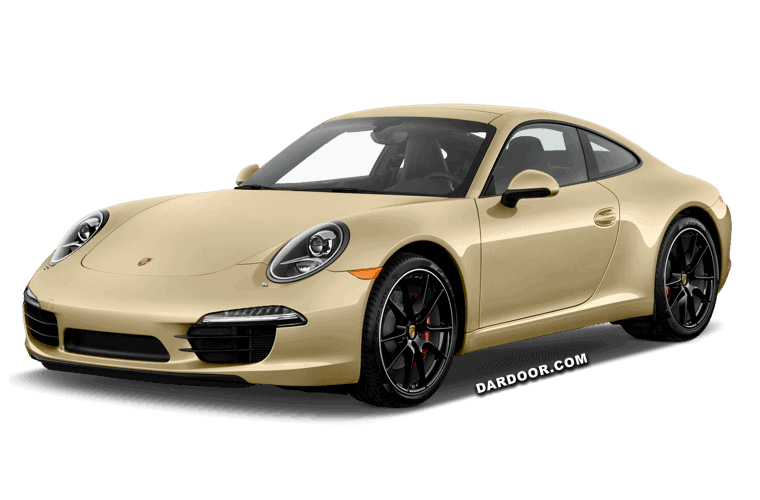
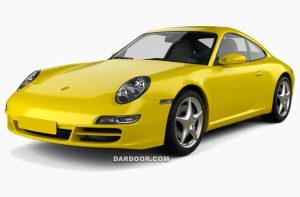
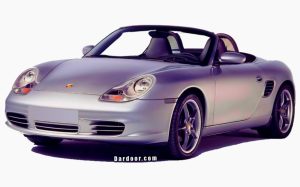
Get the complete OEM workshop manual for the 2005–2013 Porsche 911 (997). This comprehensive PDF is the same expert-level documentation used by Porsche dealer mechanics and technicians, providing factory-authorized repair procedures, diagnostics, specifications, and detailed electrical wiring diagrams across all trims.
Covers Carrera • Targa • Turbo • GT3 • GT2
Format: PDF • Delivery: Instant Download • Includes: Full Wiring Diagrams
Complet OEM Manual
Dealer-Level Procedures
Searchable & Printable
Exclusive on Dardoor
File Format
PDF
File Language
English
You’ll Get
1.37 GB
Wiring Diagram
Included
Delivery Method
Instant Download
Repair and maintain your Porsche 911 with the same trusted information used by factory-trained technicians.
Key Features:
Official OEM Manual: The same repair guide used by Porsche dealership mechanics.
Complete Coverage: Includes all repair, maintenance, and service procedures for every 997 trim (Carrera, Targa, Turbo, GT3, GT2).
Detailed Wiring Diagrams: Precise electrical schematics for accurate troubleshooting.
Simple PDF Format: Easily accessible on any device for convenient use.
Authorized Procedures: Follows Porsche’s manufacturer-approved repair and service instructions.
Large File Size: Due to the extensive content, ensure a stable internet connection for downloading. A shared folder can be provided via Google Drive for easier access anytime.
What’s Inside
Engine mechanical, lubrication, fuel, intake & exhaust systems
Manual & PDK transmission service and diagnostics
AWD systems (where equipped), suspension, brakes & steering
Complete electrical system with wiring diagrams and module locations
Delivery: Instant digital PDF download Compatibility: Windows • macOS • iOS • Android
This manual provides detailed instructions for maintenance, disassembly, reassembly, component inspection, adjustment, and diagnostics—intended for use by experienced mechanics. Proper application of this guide will help ensure thorough repairs and maintain your vehicle in peak condition.
Important Note: Before purchasing this manual, please check whether your vehicle is subject to any active service recalls ↗, as authorized dealerships may perform necessary repairs free of charge. When replacing parts, always use genuine OEM components↗ to ensure safety, reliability, and long-term performance.
Table of Contents : 2005-2013 Porsche 911 (997) Repair Manual
A – Workshop Manual High-Level Contents
Expand To Read Full Contents
B – Workshop Manual Detailed Contents
Expand To Read Full Contents
C – Wiring Diagrams High-Level Contents.
Expand To Read Full Contents
D – Wiring Diagrams Detailed Contents
Expand To Read Full Contents
Sample Pages
CAUTION ↗: This OEM service and workshop repair manual provides detailed procedures for maintenance, disassembly, reassembly, inspection, adjustment, and diagnostics. It is intended as a comprehensive guide for experienced mechanics. To ensure thorough and accurate repairs that maintain your vehicle’s optimal performance, please read and follow this manual carefully. When replacing parts during any repair work, always use genuine Porsche parts↗ to ensure quality, safety, and reliability.
Looking for a buyer-friendly, owner-focused guide to the Porsche 911 (997)? Below is a complete breakdown: trims & performance, the top mechanical and electrical issues reported by owners (with Symptoms + Root Cause + Fix + Cost ranges), a maintenance schedule, recall/TSB highlights, and diagnostic trouble codes (DTCs) grouped by module.
Overview
The Porsche 911 (997) is the sixth-generation 911, sold for model years 2005–2013. It brought back the classic round headlights and refined the interior and driving feel compared to the 996, while keeping the rear-engine layout and the iconic flat-six formula. The range includes Carrera/Carrera S, AWD Carrera 4 variants, Targa, Turbo, and track-focused GT3/GT3 RS models.
997.2 update (2009–2013): Many trims received major improvements including PDK dual-clutch availability and updated engines/tech depending on model.
Technical Specs
Item
Typical 997 Range / Notes
Production
MY2005–MY2013 (997 generation)
Body styles
Coupé • Cabriolet • Targa (varies by trim)
Layout / Drive
Rear-engine; RWD or AWD (Carrera 4 / Turbo models)
Engines (broad)
Flat-6: 3.6L / 3.8L (NA & Turbo variants; special models up to 4.0L)
Performance varies massively by trim (Carrera vs Turbo vs GT3). The 997 range includes everything from quick grand-touring Carreras to supercar-fast Turbo S models.
Metric
Typical Range (997 family)
Horsepower
~325 hp (early Carrera) up to ~620 hp (Turbo S, late special models)
0–60 mph
~4.7 sec (Carrera examples) down to ~2.7–2.9 sec (Turbo S / Turbo with PDK)
Example: 2009 Carrera (997.2)
345 hp; PDK option; improved efficiency vs Tiptronic S on comparable cars
Top 10 Common Mechanical Issues (Reported by Owners)
IMS Bearing Risk (early 997.1 models)
Symptoms: Metallic debris in oil filter; knocking; oil pressure anomalies; sudden engine failure in worst cases.
Root Cause: Intermediate shaft bearing design/aging on certain early water-cooled flat-six configurations.
Recommended Fix: Preventive IMS retrofit (when applicable) + frequent oil analysis; combine with clutch service if manual.
Estimated Cost: $2,000–$5,000 (retrofit during clutch) | $6,000–$20,000+ if engine damage occurs.
Rear Main Seal (RMS) Oil Leak
Symptoms: Oil spots under bellhousing; burning oil smell; low oil warning over time.
Root Cause: Seal wear; crankcase ventilation issues; age/heat cycles.
Recommended Fix: Replace RMS seal; inspect AOS/PCV function; do with clutch if manual.
Estimated Cost: $900–$2,500 (more if combined work or if contamination occurs).
Bore Scoring (more common on some 3.8L applications)
Symptoms: Ticking/knocking when warm; high oil consumption; sooty tailpipe on one bank; misfires.
Root Cause: Cylinder wall wear from heat/load/oil film breakdown on certain engines and usage patterns.
Recommended Fix: Borescope confirmation; rebuild with upgraded liners/pistons if confirmed; strict oil/temperature habits.
Estimated Cost: $10,000–$25,000+ (engine rebuild depends on scope of damage).
Cooling System Leaks (hoses, fittings, radiators)
Symptoms: Coolant smell; low coolant warning; wet areas near radiators or rear coolant connections; overheating.
Root Cause: Aging plastic fittings/hose ends; stone damage to front radiators; clamp fatigue.
Recommended Fix: Pressure test; replace leaking hoses/fittings; clean debris from front intakes; radiator replacement if needed.
Estimated Cost: $300–$2,500 (minor leak to radiator replacement).
Water Pump Failure
Symptoms: Coolant weep; bearing noise; overheating at idle; coolant loss.
Root Cause: Pump bearing/seal wear from heat cycles.
Recommended Fix: Replace water pump + thermostat; refresh coolant.
MY2005–2006 911 Carrera/Carrera S recall notice — safety recall documentation exists (confirm applicability by VIN).
TSB/ATI: Porsche technical bulletins exist across systems — Porsche publishes technical bulletins list (radio/alarm/diagnostics examples).
Airbag/SRS advisories — always scan SRS faults immediately; if any recall applies, dealer remedy is typically free (VIN-check recommended).
Brake/ABS/PSM advisories — warning lights should be treated as a safety issue (sensor/hub wiring commonly implicated).
Exhaust-related advisories — cracking, broken studs, or muffler issues should be addressed quickly to avoid heat damage.
Cooling system advisories — overheating events can be catastrophic; pressure test at first sign of coolant loss.
Transmission advisories (PDK/Tiptronic) — software adaptations and fluid health are key; scan at first shift irregularity.
Note: Items 6–10 are owner-safety advisories / TSB-style highlights (not necessarily formal recalls). Always verify official recall applicability by VIN using Porsche’s tool.
🧠 DTC Trouble Codes (Quick Reference Tables)
Pro tip:Codes can differ by engine, market, and ECU generation. Use these as a starting point, then confirm with a Porsche-capable scan tool (PIWIS-level or equivalent).
Engine Control Module (ECM) — 10 Common OBD-II Codes
DTC
Meaning
Likely Cause
Typical Fix
P0300
Random/multiple misfire
Coils, plugs, fuel/air imbalance
Inspect coils/plugs, smoke test, fuel trims
P0301
Misfire cyl 1
Coil/plug/injector
Swap-test coil, replace plug, injector test
P0306
Misfire cyl 6
Coil/plug/injector
Swap-test coil, compression/leakdown if persistent
P0171
System too lean (Bank 1)
Vacuum leak, MAF, fuel pressure
Smoke test, MAF check, fuel pressure test
P0174
System too lean (Bank 2)
Vacuum leak, MAF, fuel pressure
Same as above
P0420
Catalyst efficiency low (Bank 1)
Cat aging, O2 sensor, exhaust leak
Check leaks/O2 data; replace cat if needed
P0430
Catalyst efficiency low (Bank 2)
Cat aging, O2 sensor, exhaust leak
Check leaks/O2 data; replace cat if needed
P2187
System too lean at idle (Bank 1)
Vacuum leak/AOS issue
Smoke test; inspect AOS and intake boots
P2189
System too lean at idle (Bank 2)
Vacuum leak/AOS issue
Smoke test; inspect AOS and intake boots
P0128
Coolant thermostat (below temp)
Stuck-open thermostat
Replace thermostat; verify coolant bleeding
Transmission Control Module (TCM) — 10 Common Codes
DTC
Meaning
Likely Cause
Typical Fix
P0700
TCM requested MIL
Stored trans fault
Scan TCM for specific codes
P0715
Input/Turbine speed sensor
Sensor/wiring
Inspect harness; replace sensor
P0720
Output speed sensor
Sensor/wiring
Inspect harness; replace sensor
P0730
Incorrect gear ratio
Clutch slip/valve body issue
Fluid service; adaptation; internal diagnosis
P0741
TCC performance/stuck off
Torque converter/valve body
Valve body check; converter diagnosis
P0750
Shift solenoid A
Solenoid/valve body
Solenoid test; valve body service
P0760
Shift solenoid C
Solenoid/valve body
Solenoid test; valve body service
P0841
Trans fluid pressure sensor
Sensor/wiring/pressure issue
Test sensor; check pressure and fluid
P17BF
PDK clutch adaptation limit (example)
Wear/adaptation drift
Service fluid; adaptations; clutch/mechatronic eval
P17A1
PDK hydraulic pressure control (example)
Mechatronic/solenoid
Mechatronic diagnosis/repair
ABS / ESC (Brake System) — 10 Common Codes
DTC
Meaning
Likely Cause
Typical Fix
C0035
LF wheel speed sensor
Sensor/hub wiring
Replace sensor; inspect harness
C0040
RF wheel speed sensor
Sensor/hub wiring
Replace sensor; inspect harness
C0045
LR wheel speed sensor
Sensor/hub wiring
Replace sensor; inspect harness
C0050
RR wheel speed sensor
Sensor/hub wiring
Replace sensor; inspect harness
C0110
Pump motor circuit
ABS pump/module
Power/ground test; module repair
C0131
Brake pressure sensor
Sensor/calibration
Sensor test; recalibrate if supported
C0161
ABS/PSM supply voltage
Low voltage/charging
Battery/alternator test; clean grounds
C0196
Yaw rate sensor signal
Sensor fault/calibration
Calibrate; replace if failed
C0245
Wheel speed mismatch
Tire size mismatch/sensor
Verify tire sizes; diagnose sensors
C1380
Hydraulic system fault
ABS hydraulic unit
Bleed procedure; module diagnosis
SRS Airbag System — 10 Common Codes
DTC
Meaning
Likely Cause
Typical Fix
B0100
Driver airbag circuit
Clock spring/connector
Inspect connectors; test clock spring
B0101
Passenger airbag circuit
Connector/seat harness
Seat harness inspection; repair wiring
B1000
Airbag control module fault
Module internal error
Module diagnosis/replace + coding
B0020
Left side impact sensor
Sensor/wiring
Replace sensor; repair wiring
B0022
Right side impact sensor
Sensor/wiring
Replace sensor; repair wiring
B0051
Seat belt pretensioner (driver)
Connector/high resistance
Inspect connector; replace pretensioner if needed
B0053
Seat belt pretensioner (passenger)
Connector/high resistance
Inspect connector; replace pretensioner if needed
B0070
Occupant detection
Seat sensor mat/module
Calibrate or replace sensor mat/module
B0092
Crash data stored
Post-collision event
Module reset/replace per policy
B0108
Clock spring range/performance
Clock spring wear
Replace clock spring; clear codes
Body Control / CAN Communication — 10 Common Codes
DTC
Meaning
Likely Cause
Typical Fix
U0100
Lost comm with ECM
CAN wiring/module power
Check CAN, fuses, grounds
U0101
Lost comm with TCM
CAN wiring/module power
Check CAN, fuses, grounds
U0121
Lost comm with ABS
ABS module power/CAN
Power/ground + CAN integrity test
U0140
Lost comm with BCM
BCM supply/connector
Connector clean; voltage drop tests
U0155
Lost comm with cluster
Cluster supply/CAN
Inspect connectors; cluster diagnostics
U0164
Lost comm with HVAC
HVAC module/CAN
Check HVAC module power + CAN
U0184
Lost comm with radio
PCM/radio module
Module reset; wiring check; coding
U0401
Invalid data from ECM
Sensor/module mismatch
Check for tuning, updates, sensor faults
U0415
Invalid data from ABS
ABS sensor/module issue
Diagnose wheel sensors/ABS module
U1100
CAN fault (generic)
Bus wiring/terminations
CAN resistance test; isolate module
FAQ
1) Which 997 years are generally “safer bets” for daily driving?
Many buyers prefer later cars (especially post-refresh models) because the lineup received meaningful updates and drivetrain options like PDK on various trims.
2) Is the 997 expensive to own?
It can be. The 997 is a high-performance sports car with tight packaging and premium parts. A well-documented service history matters more than low mileage.
3) What should I check before buying?
✅ Full service records (oil, plugs, brake fluid, cooling work)
✅ Pre-purchase inspection (PPI) with bore-scope on higher-risk engines
✅ Scan all modules for stored faults
✅ Verify recalls by VIN using Porsche’s official tool
4) PDK or manual?
Manual offers classic engagement; PDK delivers faster shifts and strong performance. The best choice depends on your driving style and your willingness to maintain the transmission properly (fluid/adaptation).
Our Final Verdict
If you want the most “classic-modern” 911 feel, the 997 is one of the sweet spots: timeless design, huge trim variety, and real driver connection. The catch is simple: buy on condition and documentation, not on mileage or cosmetics. A sorted 997 is brilliant; a neglected one can become expensive quickly. Use the maintenance schedule above, verify recalls by VIN, and scan all modules before you commit.
This website uses cookies to improve your experience while you navigate through the website. Out of these, the cookies that are categorized as necessary are stored on your browser as they are essential for the working of basic functionalities of the website. We also use third-party cookies that help us analyze and understand how you use this website. These cookies will be stored in your browser only with your consent. You also have the option to opt-out of these cookies. But opting out of some of these cookies may affect your browsing experience.
Necessary cookies are absolutely essential for the website to function properly. This category only includes cookies that ensures basic functionalities and security features of the website. These cookies do not store any personal information.
Any cookies that may not be particularly necessary for the website to function and is used specifically to collect user personal data via analytics, ads, other embedded contents are termed as non-necessary cookies. It is mandatory to procure user consent prior to running these cookies on your website.