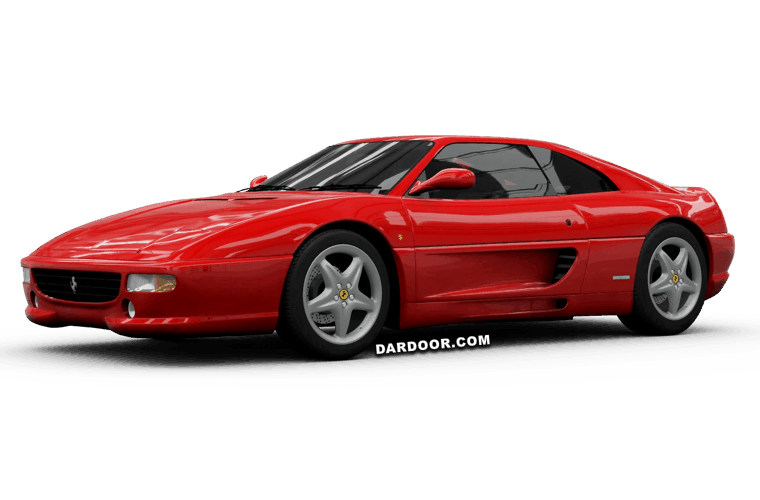
1995-1999 Ferrari F355 OEM Workshop Service & Repair Manual – PDF Download
Get the original OEM workshop service and repair manual for the 1995-1999 Ferrari F355 in convenient PDF format. This factory manual provides the same professional-level repair and maintenance information used to service one of Ferrari’s most iconic V8 models.Whether you are carrying out scheduled maintenance, troubleshooting a mechanical issue, or restoring your F355 to peak condition, this manual gives you the detailed technical guidance needed to work with confidence and precision.
| File Format |
PDF |
| File Language |
English, Deutch, Italian, French |
| You’ll Get |
1.37 GB |
| Volume 1 |
639.5 MB |
| Page Count = 356 |
| Volume 2 |
401.4 MB |
| Page Count = 222 |
| Volume 3 |
328.6 MB |
| Page Count = 210 |
| Delivery Method |
Instant Download |
| Wiring Diagram |
Included |
Get the trusted OEM repair information your Ferrari F355 deserves in one easy-to-use PDF manual.
Coverage
- Model: Ferrari F355
- Years: 1995, 1996, 1997, 1998, 1999
- Format: Digital PDF Workshop Manual
- Use: Service, maintenance, diagnostics, and repair procedures
Key Features
Original OEM Content
Factory-authorized repair and maintenance information for accurate servicing.
Complete Workshop Guidance
Covers major mechanical, electrical, and service procedures in a professional format.
Easy PDF Access
Open on desktop, tablet, or mobile and print only the pages you need.
Ideal for Professionals & Enthusiasts
Useful for restoration projects, workshop repairs, and enthusiast ownership.
What’s Inside
- Factory service and repair procedures
- Routine maintenance schedules and service information
- Engine and cooling system guidance
- Transmission, drivetrain, and chassis procedures
- Suspension, braking, and steering information
- Electrical diagnostics and technical references
- Component descriptions, diagrams, and workshop instructions
Why Choose This Ferrari F355 Manual?
Generic repair guides often miss the depth required for a precision-built vehicle like the Ferrari F355. This
OEM workshop manual gives you a trusted source of technical information so repairs can be performed correctly and efficiently.
- Factory-level repair information
- Better accuracy for diagnostics and maintenance
- Convenient instant PDF download
- Useful for collectors, restorers, and specialist workshops
Download & Compatibility
Delivery: Instant Digital PDF Download
Compatibility: Windows • macOS • iOS • Android
This manual provides detailed instructions for maintenance, disassembly, reassembly, component inspection, adjustment, and diagnostics—intended for use by experienced mechanics. Proper application of this guide will help ensure thorough repairs and maintain your vehicle in peak condition.
Important Note: Before purchasing this manual, please check whether your vehicle is subject to any active service recalls, as authorized dealerships may perform necessary repairs free of charge. When replacing parts, always use genuine OEM components to ensure safety, reliability, and long-term performance.
Table of Contents : 1995-1999 Ferrari F355 Repair Manual
Volume 1
- Index
- General Information
- Engine
- Injection – Ignition (1994-1998)
- Injection – Ignition (1999)
- Clutch – Gearbox (1994-1999)
- Clutch – Gearbox (1999)
Volume 2
- Clutch – Gearbox F355 F1
- Suspension
- Brakes (1994-1996)
- Brakes (1997-1998)
- Brakes (1999)
Volume 3
- Control (1994-1996)
- Controls (1997 and F1)
- Air Conditioning
- Electrical System
Sample Pages
CAUTION: This OEM service and workshop repair manual provides detailed procedures for maintenance, disassembly, reassembly, inspection, adjustment, and diagnostics. It is intended as a comprehensive guide for experienced mechanics. To ensure thorough and accurate repairs that maintain your vehicle’s optimal performance, please read and follow this manual carefully. When replacing parts during any repair work,
always use genuine Ferrari parts to ensure quality, safety, and reliability.
1995–1999 Ferrari F355: Comprehensive Buyer’s Guide
Overview
The Ferrari F355 (1995–1999) represents one of the most celebrated mid-engine V8 Ferraris ever built. As the successor to the 348, the F355 refined the formula with improved handling, more power, and striking Pininfarina styling. It’s widely considered the last “analog” Ferrari before the brand moved toward more electronic driver aids.
Body Styles
- Berlinetta (coupe) – Fixed roof, most common
- GTS (targa) – Removable roof panel
- Spider (convertible) – Fully retractable soft top
Production Numbers
Approximately 11,000 units produced across all variants, making it one of Ferrari’s most successful models of the 1990s.
Technical Specifications
| Specification |
Details |
| Engine |
3.5L naturally aspirated V8 (F129B) |
| Configuration |
Mid-mounted, 90-degree V8 |
| Valvetrain |
5 valves per cylinder (40 valves total) |
| Power |
375 hp @ 8,250 rpm |
| Torque |
268 lb-ft @ 6,000 rpm |
| Transmission |
6-speed manual or F1 paddle-shift automated manual |
| 0-60 mph |
4.6 seconds |
| Top Speed |
183 mph |
| Weight |
2,976 lbs (Berlinetta) |
| Drive Layout |
Rear-wheel drive |
| Suspension |
Independent double wishbones front/rear |
| Brakes |
Ventilated discs all around (cross-drilled) |
| Wheels/Tires |
18-inch Challenge-style wheels |
Top 10 Mechanical & Electrical Issues
1. Timing Belt and Engine-Out Service
-
- Symptoms: No immediate symptoms until catastrophic failure; due every 3–5 years or 15,000–30,000 miles
- Root Cause: Timing belt degrades over time; F355 is an interference engine, so belt failure causes valve-to-piston contact and destroys the engine
- Fix: Complete “engine-out” service: remove engine, replace timing belts, tensioners, water pump, cam seals, accessory belts, clutch inspection
- Cost: $8,000–$15,000 (varies by specialist and additional work needed)
2. Exhaust Manifold Cracking
-
- Symptoms: Loud ticking/tapping noise from engine bay (especially on cold start), exhaust leak smell, loss of power
- Root Cause: Cast iron manifolds crack due to heat cycling and thermal stress; very common on F355s
- Fix: Replace with upgraded stainless steel headers (aftermarket recommended) or OEM manifolds
- Cost: $3,000–$6,000 (parts + labor; aftermarket headers last longer)
3. F1 Transmission Actuator/Pump Failure
-
- Symptoms: Grinding during shifts, failure to engage gears, transmission stuck in neutral, warning lights
- Root Cause: Hydraulic pump and actuators wear out; F1 system is early paddle-shift technology with reliability issues
- Fix: Replace hydraulic pump, actuators, accumulator, and fluid; some owners convert to manual transmission
- Cost: $5,000–$10,000 (repair); $15,000–$25,000 (manual conversion)
4. Sticky/Failed Throttle Position Sensor (TPS)
-
- Symptoms: Rough idle, stalling, hesitation, check engine light, poor throttle response
- Root Cause: TPS sensors degrade and send incorrect readings to ECU; heat exposure accelerates failure
- Fix: Replace throttle position sensors (one per bank)
- Cost: $800–$1,500
5. Leaking Fuel Tank and Fuel Lines
-
- Symptoms: Gasoline smell in cabin/garage, visible fuel stains under car, fuel gauge inaccuracy
- Root Cause: Rubber fuel tank bladder deteriorates over time; fuel lines crack from heat and age
- Fix: Replace fuel tank bladder and all rubber fuel lines
- Cost: $3,000–$5,000 (tank bladder replacement is labor-intensive)
6. Sticky/Failed Tubi-Style Exhaust Valve Motors
-
- Symptoms: Exhaust flaps stuck open or closed, loss of adjustable exhaust sound, warning lights
- Root Cause: Exhaust valve actuator motors seize from corrosion and lack of use
- Fix: Replace or rebuild exhaust valve motors; some owners bypass system entirely
- Cost: $1,200–$2,500
7. Leaking Cam Cover Gaskets
-
- Symptoms: Oil pooling on top of engine, oil smell, low oil level
- Root Cause: Valve cover gaskets harden and crack over time; heat cycles accelerate degradation
- Fix: Replace all cam cover gaskets and seals (typically done during major service)
- Cost: $2,000–$3,500 (often included in engine-out service)
8. Failed Engine Mounts
-
- Symptoms: Excessive engine vibration, clunking during acceleration/deceleration, visible engine movement
- Root Cause: Rubber engine mounts deteriorate from heat and oil exposure
- Fix: Replace all engine mounts (typically 4)
- Cost: $1,500–$3,000
9. Sticky Throttle Cables
-
- Symptoms: Throttle sticking at high RPM, slow throttle return, uneven throttle response
- Root Cause: Throttle cables bind or fray inside their housings; lack of lubrication
- Fix: Replace throttle cable assembly; lubrication is temporary fix
- Cost: $800–$1,500
10. Alternator Failure
-
- Symptoms: Battery warning light, dimming lights, dead battery, electrical system issues
- Root Cause: High heat environment causes alternator bearings and voltage regulator to fail
- Fix: Rebuild or replace alternator
- Cost: $1,200–$2,000
Top 5 Competitors (1995–1999)
- Engine: 3.6L twin-turbo flat-6, 408 hp
- 0-60 mph: 3.7 seconds
- Price (new): ~$105,000
- Comparison: More reliable, all-weather capable with AWD, faster but less exotic/emotional
2. Acura NSX (NA1/NA2)
- Engine: 3.0L/3.2L V6, 270–290 hp
- 0-60 mph: 5.0 seconds
- Price (new): ~$90,000
- Comparison: Far more reliable, easier to live with daily, slower but better built quality
3. Dodge Viper GTS
- Engine: 8.0L V10, 450 hp
- 0-60 mph: 4.0 seconds
- Price (new): ~$66,000
- Comparison: Raw American muscle, much cheaper, brutal acceleration but less refined
4. Lotus Esprit V8
- Engine: 3.5L twin-turbo V8, 350 hp
- 0-60 mph: 4.4 seconds
- Price (new): ~$85,000
- Comparison: Exotic styling, similar performance, even more quirky/unreliable
- Engine: 5.7L V8, 345–385 hp
- 0-60 mph: 4.5 seconds
- Price (new): ~$40,000
- Comparison: Bargain performance, reliable LS engine, lacks exotic cachet
Top 10 Recalls, Advisories & TSB Highlights
1. Fuel Tank Recall (1995–1997 models)
- Issue: Fuel tank may crack and leak
- Solution: Inspect and replace fuel tank if necessary
2. Seat Belt Anchor Recall
- Issue: Seat belt anchor may detach in collision
- Solution: Reinforce seat belt mounting points
3. Brake Master Cylinder Failure
- Issue: Master cylinder may fail, causing brake loss
- Solution: Replace brake master cylinder
4. Airbag Deployment Issue
- Issue: Passenger airbag may not deploy properly
- Solution: Replace airbag control module
5. Power Steering Hose Leak
- Issue: High-pressure power steering hoses crack and leak
- Solution: Replace power steering hoses preemptively
6. Coolant Expansion Tank Cracking
- Issue: Plastic expansion tank cracks, causing coolant loss and overheating
- Solution: Replace with aluminum aftermarket tank
7. Speedometer Cable Failure
- Issue: Speedometer cable breaks, causing inaccurate speed readings
- Solution: Replace speedometer cable assembly
8. Air Conditioning Compressor Failure
- Issue: A/C compressor seizes due to heat and lack of use
- Solution: Replace A/C compressor and receiver/dryer
9. Window Regulator Failure
- Issue: Power window regulators fail, windows won’t operate
- Solution: Replace window regulator mechanisms
10. Battery Drain Issues
- Issue: Parasitic electrical draw kills battery when parked
- Solution: Install battery disconnect switch; diagnose electrical draw
Maintenance Schedule
Every Year or 3,000–5,000 Miles
- Oil and filter change (high-quality synthetic)
- Brake fluid flush
- Inspect belts, hoses, fluids
- Check tire pressure and condition
- Lubricate throttle cables
Every 2 Years or 10,000 Miles
- Replace spark plugs
- Replace air filters
- Inspect brake pads and rotors
- Check suspension components
- Inspect exhaust system
Every 3–5 Years or 15,000–30,000 Miles
- MAJOR SERVICE (Engine-Out):
- Replace timing belts and tensioners
- Replace water pump
- Replace cam seals and valve cover gaskets
- Replace all accessory belts
- Inspect/replace clutch (if needed)
- Inspect engine mounts
- Replace fuel filter
- Replace coolant
- Replace differential oil
- Replace transmission oil
As Needed
- Tire replacement (every 3–5 years or 15,000–20,000 miles)
- Brake pad replacement (every 15,000–25,000 miles depending on use)
- Battery replacement (every 3–4 years)
- Clutch replacement (every 30,000–50,000 miles)
Annual Storage Prep (if not driven regularly)
- Fuel stabilizer
- Battery tender
- Tire rotation/flat spot prevention
- Cover and climate-controlled storage
10 Buyer FAQs
1. Manual vs. F1 transmission – which should I buy?
Answer: Manual transmission is strongly preferred. The F1 paddle-shift system was Ferrari’s first-generation automated manual—it’s slow, jerky, expensive to maintain, and less engaging. Manual cars command a 20–30% premium and are far more reliable and enjoyable.
2. What should a pre-purchase inspection (PPI) include?
Answer: Compression test, leak-down test, timing belt service history verification, undercarriage inspection for rust/damage, F1 system diagnostic (if applicable), exhaust manifold inspection, fuel system check, electrical system test. Use a Ferrari specialist, not a general mechanic.
3. How much does it cost to own a F355 annually?
Answer: Budget $8,000–$15,000/year for maintenance if you drive 3,000–5,000 miles annually. Major service years can spike to $15,000–$20,000. Insurance, storage, and fuel add another $5,000–$8,000/year.
4. Are parts still available?
Answer: Yes, Ferrari Classic division supports all older models. OEM parts are expensive but available. Strong aftermarket exists for common wear items. Some specialists stock rebuilt components.
5. Can I daily drive a F355?
Answer: Not recommended. The F355 is temperamental, lacks modern safety features, has poor visibility, uncomfortable in traffic, and expensive to run. Best as a weekend/occasional car driven 2,000–5,000 miles/year.
6. What’s the timing belt service really cost?
Answer: $8,000–$15,000 depending on location and what else needs attention. Don’t skip this—engine failure from broken belt costs $40,000–$60,000 to rebuild.
7. Berlinetta vs. Spider vs. GTS – which is best?
Answer: Berlinetta is purest, lightest, most rigid. Spider is most desirable (top price premium) but adds weight/complexity. GTS offers middle ground with removable targa top. Berlinetta recommended for driving experience; Spider for collector value.
8. What should I pay for a good F355?
Answer: (Early 2026 prices) Manual Berlinetta: $75,000–$110,000; Manual Spider: $95,000–$140,000; F1 models: 20–30% discount. Low mileage, full service history, and original paint command top dollar.
9. Are there any F355s to avoid?
Answer: Avoid: High-mileage F1 transmissions (>40,000 miles), cars without timing belt service records, salvage titles, modified/tracked cars, cars with deferred maintenance. Insist on complete service history.
10. How reliable is the F355 compared to other Ferraris?
Answer: More reliable than 348 (predecessor) but less reliable than 360 Modena (successor). Proper maintenance is critical. Well-maintained examples are reasonably dependable for exotic car standards, but still expensive to keep running.
Final Buyer Recommendations
✅ BUY IF:
- You have a $15,000+/year maintenance budget
- You want the last “analog” V8 Ferrari before electronic nannies
- You can store it properly and use it 2,000–5,000 miles/year
- You have access to a qualified Ferrari specialist
- You’ve verified complete service history (especially timing belt)
- You’re buying a manual transmission Berlinetta or Spider
- You understand this is a collector/enthusiast car, not transportation
❌ DON’T BUY IF:
- You need reliable daily transportation
- Your budget is tight or maintenance costs worry you
- You’re considering an F1 transmission model (unless heavily discounted)
- Service history is incomplete or questionable
- You lack access to qualified Ferrari service
- You expect modern safety, comfort, or technology
- This would be your only car
🔧 GOLDEN RULES FOR F355 OWNERSHIP:
- Service history is everything – A $90,000 car with full records beats a $70,000 car with gaps
- Budget for the major service NOW – Even if “just done,” plan for the next one
- Manual > F1 – Worth paying the premium for reliability and engagement
- Use a specialist – General mechanics will cost you more in the long run
- Drive it regularly – Sitting kills these cars faster than driving them
- Join the community – Ferrari forums and clubs are invaluable resources
- PPI is mandatory – Never skip pre-purchase inspection by Ferrari specialist
- Plan for depreciation plateau – Well-maintained F355s are stabilizing in value; may appreciate long-term
Our Final Word
The F355 is one of the greatest driver’s Ferraris ever made—raw, involving, and intoxicating. But it demands commitment, expertise, and financial resources. Buy the best example you can afford with impeccable service history, budget generously for maintenance, and you’ll own a piece of automotive history that still delivers thrills 25+ years later. Skip the F1 transmission, embrace the manual, and prepare for one of the most rewarding ownership experiences in the exotic car world.
Final verdict: RECOMMENDED for experienced enthusiasts with proper budget and realistic expectations. Not recommended for first-time exotic car buyers or anyone seeking practical transportation.