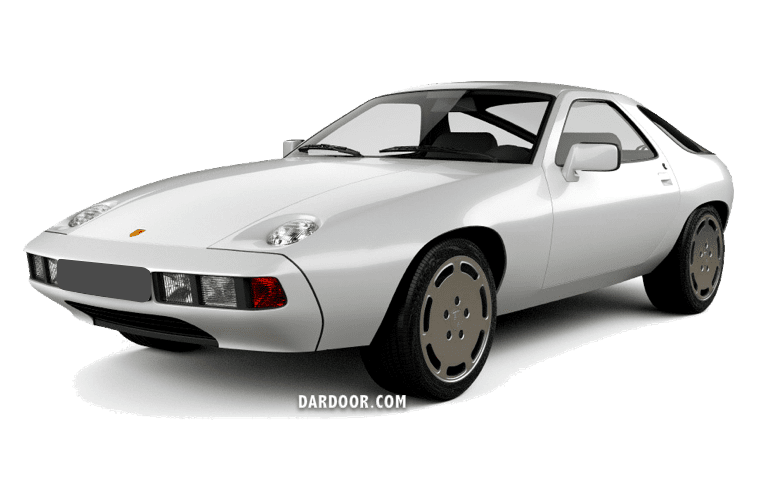
1978–1994 Porsche 928 — OEM Workshop Service & Repair Manual (7 Volumes, PDF)
| File Format |
PDF |
| File Language |
English |
| You”ll Get |
353.6 MB |
| Pages Count |
2,836 |
| Searchable and Printable |
YES |
| Wiring Diagrams Included |
YES |
| Delivery method |
Instant Download |
Get the complete OEM workshop service and repair manual for the 1978–1994 Porsche 928. This comprehensive set includes 7 full volumes of factory service information, wiring diagrams, and technical specifications—all in a simple, searchable PDF format. It’s the same set of manuals used by Porsche dealership technicians for professional diagnosis and maintenance.
Key Features
Complete OEM Coverage
Includes all factory repair, service, and maintenance procedures across every system.
Wiring Diagrams
Full electrical schematics, connector views, pinouts, power distribution, and fuse box layouts.
Technical Specifications
Torque specs, adjustments, and factory tolerances for all components and systems.
Diagnostics & Troubleshooting
Official flowcharts, test procedures, and mechanical/electrical troubleshooting methods.
User-Friendly PDF
Searchable bookmarks and print-ready pages for workshop or personal use.
What’s Inside
- Engine mechanical, fuel, lubrication, and cooling systems
- Transmission and drivetrain service (manual & automatic)
- Suspension, steering, and braking systems
- Electrical wiring diagrams and component locations
- Body, interior, HVAC, lighting, and SRS systems
- Routine maintenance, fluids, and service intervals
- Full technical specifications and torque values
Download & Compatibility
Delivery: Instant Digital PDF Download
Compatibility: Windows • macOS • iOS • Android
This manual includes the procedures for maintenance, disassembling, reassembling, inspection, and adjustment of components and diagnostics for guidance of experienced mechanics. Please peruse and utilize this manual fully to ensure complete repair work to keep your vehicle in optimum condition. When replacement of parts during repair work is needed, be sure to use Porsche OEM genuine parts.
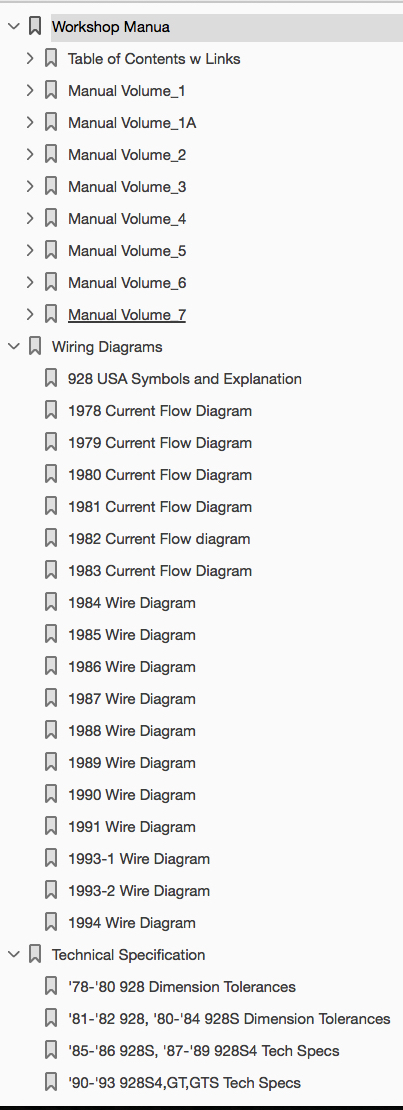
Table of Contents : 1978-1994 Porsche 928
A- Seven volumes of Workshop Service and Repair Manuals
B- Four technical specifications for models:-
1- ’78-’80 928 Dimension Tolerances
2- ’81-’82 928, ’80-’84 928S Dimension Tolerances
3- ’85-’86 928S, ’87-’89 928S4 Tech Specs
4- ’90-’93 928S4,GT,GTS Tech Specs.
C- 18 wiring diagram files for models from 1978- 1994.
Sample Pages
CAUTION: This OEM service and workshop repair manual provides detailed procedures for maintenance, disassembly, reassembly, inspection, adjustment, and diagnostics. It is intended as a comprehensive guide for experienced mechanics. To ensure thorough and accurate repairs that maintain your vehicle’s optimal performance, please read and follow this manual carefully. When replacing parts during any repair work, always use genuine Porsche parts to ensure quality, safety, and reliability.
🚗 1978–1994 Porsche 928 – Full Vehicle Overview, Issues, DTCs & Maintenance Guide
About Porsche 928
The Porsche 928 is a luxury grand tourer produced by Porsche AG of Germany from 1978 until 1995. Originally intended to replace the company’s iconic 911, the 928 combined the power, poise, and handling of a sports car with the refinement, comfort, and equipment of a luxury sedan. The 928 became the top-of-the-line production car sold by Porsche. Porsche executives believed such a flagship would have wider appeal than the compact 911.
The 928 has the distinction of being the company’s first production V8-powered model and its only coupé powered by a front-mounted V8 engine.
This legendary car was the first Porsche to feature a front-mounted V8 engine and rear transaxle layout for ideal weight distribution. Its engineering excellence, futuristic styling, and robust build quality made it one of the most technologically advanced GT cars of its era.
⚙️ Technical Specifications & Performance
- Engine Options: 4.5L to 5.4L V8 (219–345 hp depending on model year)
- Transmission: 5-speed manual, 3/4-speed automatic (Mercedes-derived)
- Drivetrain: Front-engine, rear transaxle, rear-wheel drive (RWD)
- 0–100 km/h: 5.5–7.0 seconds (varies by model)
- Top Speed: Up to 275 km/h (928 GTS)
- Fuel Efficiency: 14–17 L/100 km combined
- Dimensions: Length 4,520 mm, Width 1,830 mm, Height 1,310 mm
- Curb Weight: 1,550–1,650 kg
🔧 Top 10 Common Mechanical Issues (Root Cause & Fix)
- Timing belt failure
🔍 Root Cause: Belt degradation and skipped timing due to age.
🛠️ Fix: Replace timing belt and tensioners every 60,000 miles or 5 years.
- Cooling system leaks
🔍 Root Cause: Radiator end tank cracks and worn hoses.
🛠️ Fix: Replace radiator and coolant hoses; flush system.
- Oil leaks
🔍 Root Cause: Aging gaskets and seals (camshaft and rear main seal).
🛠️ Fix: Replace gaskets, reseal engine where needed.
- Automatic transmission slipping
🔍 Root Cause: Worn valve body seals or dirty fluid.
🛠️ Fix: Replace transmission filter, seals, and fluid; rebuild if needed.
- Fuel pump failure
🔍 Root Cause: Pump wear or corrosion due to ethanol fuel.
🛠️ Fix: Replace pump and fuel filter; clean lines.
- Brake master cylinder wear
🔍 Root Cause: Internal seal degradation.
🛠️ Fix: Replace master cylinder and flush brake fluid.
- Suspension bushing wear
🔍 Root Cause: Rubber bushing deterioration over time.
🛠️ Fix: Replace with polyurethane or OEM bushings.
- Water pump failure
🔍 Root Cause: Bearing wear and coolant contamination.
🛠️ Fix: Replace pump during timing belt service.
- Clutch hydraulic leaks
🔍 Root Cause: Slave cylinder deterioration.
🛠️ Fix: Replace master and slave cylinders; bleed system.
- Exhaust manifold cracks
🔍 Root Cause: Heat cycling stress.
🛠️ Fix: Replace with stainless steel manifold or weld repair.
💡 Top 10 Common Electrical Issues (Root Cause & Fix)
- Dashboard cluster failure
🔍 Root Cause: Aging solder joints and capacitors.
🛠️ Fix: Reflow solder and replace capacitors.
- Headlight motor malfunction
🔍 Root Cause: Worn motor gears and relays.
🛠️ Fix: Rebuild or replace motor assembly.
- Central locking failure
🔍 Root Cause: Vacuum leaks in locking system.
🛠️ Fix: Replace vacuum lines and check actuators.
- Blower motor resistor failure
🔍 Root Cause: Overheating resistor pack.
🛠️ Fix: Replace resistor pack and clean vents.
- Power seat malfunction
🔍 Root Cause: Faulty seat switch or motor.
🛠️ Fix: Replace switch/motor assembly.
- Alternator charging issues
🔍 Root Cause: Worn brushes or voltage regulator.
🛠️ Fix: Rebuild or replace alternator.
- Window motor failure
🔍 Root Cause: Motor wear or switch fault.
🛠️ Fix: Replace motor or repair switch.
- Instrument illumination flicker
🔍 Root Cause: Corroded ground connections.
🛠️ Fix: Clean and tighten grounds.
- Fuel gauge inaccuracy
🔍 Root Cause: Sender unit corrosion.
🛠️ Fix: Replace fuel level sender.
- Alarm system faults
🔍 Root Cause: Aging relay contacts.
🛠️ Fix: Replace or bypass alarm control relay.
📊 Pros & Cons Comparison with Competitors
| Model |
Pros 👍 |
Cons 👎 |
| Porsche 928 |
Powerful V8; Balanced handling; Luxurious GT comfort |
Complex maintenance; Costly parts; Heavy weight |
| Ferrari 400i |
Prestige; V12 smoothness |
High running costs; Reliability concerns |
| Jaguar XJS |
Comfortable ride; Elegant styling |
Electrical issues; Rust problems |
| BMW 8-Series (E31) |
V12 refinement; Great build quality |
Expensive upkeep; Weighty handling |
| Mercedes SL (R129) |
Excellent reliability; Luxury interior |
High parts cost; Heavy chassis |
| Chevrolet Corvette C4 |
Affordable performance; Simple mechanics |
Less refinement; Lower quality interior |
🛠️ Maintenance Schedule
| Interval ⏱️ |
Maintenance Task 🔧 |
| Every 5,000 miles / 6 months |
Engine oil & filter replacement |
| Every 15,000 miles |
Inspect brakes, suspension, belts |
| Every 30,000 miles |
Replace air & fuel filters; check coolant system |
| Every 45,000 miles |
Transmission fluid & differential oil change |
| Every 60,000 miles |
Timing belt & water pump replacement |
| Every 90,000 miles |
Replace spark plugs & ignition wires |
| Every 120,000 miles |
Inspect engine mounts, rebuild suspension bushings |
⚠️ Recalls, Advisories & Safety Alerts
- Fuel line leaks (1978–1983): Risk of fire due to loose clamps.
- Rear suspension arm cracking (1980–1984): Stress fractures under load.
- Seatbelt retractor fault (1983–1986): Belts failed to lock properly.
- Headlight motor relay fault (1984–1987): Risk of lights failing to rise.
- ABS system warning (1986–1990): Faulty wheel speed sensors.
- Fuel pump relay recall (1987–1989): Overheating relays caused stalling.
- Power steering leak advisory (1988–1991): High-pressure line failure.
- Transmission shift cable (1989–1992): Improper installation caused disengagement.
- Air conditioning fire risk (1990–1993): Electrical short at compressor relay.
- Brake fluid contamination advisory (1993–1994): Incorrect fluid led to corrosion.
🧾 Diagnostic Trouble Codes (DTC) Tables
💻 Engine Control Module (ECM)
| Code |
Description |
| P0100 |
MAF Sensor Malfunction |
| P0120 |
Throttle Position Sensor Malfunction |
| P0171 |
System Too Lean |
| P0300 |
Random Cylinder Misfire |
| P0325 |
Knock Sensor Malfunction |
| P0400 |
EGR Flow Malfunction |
| P0420 |
Catalyst Efficiency Below Threshold |
| P0505 |
Idle Control System Malfunction |
| P0560 |
System Voltage Malfunction |
| P1309 |
Misfire Detection Malfunction |
⚙️ Transmission Control Module (TCM)
| Code |
Description |
| P0700 |
Transmission Control System Fault |
| P0715 |
Input Speed Sensor Malfunction |
| P0720 |
Output Speed Sensor Circuit |
| P0730 |
Incorrect Gear Ratio |
| P0740 |
TCC Circuit Malfunction |
| P0750 |
Shift Solenoid A Malfunction |
| P0755 |
Shift Solenoid B Malfunction |
| P0765 |
Shift Solenoid D Malfunction |
| P0780 |
Shift Malfunction |
| P0841 |
Transmission Fluid Pressure Sensor |
🛑 ABS / ESC System
| Code |
Description |
| C0110 |
ABS Pump Motor Circuit |
| C0121 |
Brake Pressure Sensor |
| C0200 |
Front Wheel Speed Sensor |
| C0210 |
Rear Wheel Speed Sensor |
| C1223 |
ABS System Malfunction |
| C1234 |
Wheel Speed Correlation Fault |
| C1252 |
ABS Hydraulic Pump Failure |
| C1300 |
Control Module Internal Fault |
| C1310 |
ABS Communication Error |
| C1401 |
Brake Lamp Switch Fault |
🎈 SRS Airbag System
| Code |
Description |
| B1000 |
Airbag ECU Internal Fault |
| B1015 |
Driver Airbag Circuit Low |
| B1020 |
Passenger Airbag Circuit Short |
| B1050 |
Side Airbag Fault |
| B1101 |
Airbag Sensor Low Voltage |
| B1209 |
Seat Occupant Sensor Fault |
| B1302 |
Crash Sensor Supply Circuit |
| B1352 |
Crash Event Storage Full |
| B1401 |
Seat Belt Pretensioner Fault |
| B1503 |
Passenger Airbag Deactivation Fault |
📡 Body Control / CAN Communication
| Code |
Description |
| U0100 |
Lost Communication with ECM |
| U0121 |
Lost Communication with ABS |
| U0140 |
Lost Communication with BCM |
| U0155 |
Lost Communication with Cluster |
| U1110 |
CAN Bus Off |
| U1130 |
Lost Communication with Climate Control |
| U1140 |
Lost Communication with Lighting Control |
| U1200 |
Lost Communication with Immobilizer |
| U1255 |
Invalid Data from ABS |
| U1410 |
Invalid Data Received from PCM |
✅ Final Verdict & Conclusion
The Porsche 928 remains one of the most iconic and misunderstood grand tourers ever made. Its V8 engine, near-perfect balance, and luxurious interior positioned it decades ahead of its time. While ownership costs can be high due to complex electronics and aging components, a well-maintained 928 delivers a truly unique driving experience blending comfort, performance, and classic Porsche character.