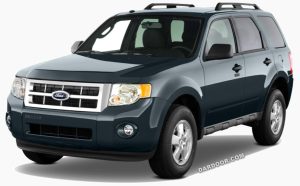
This is the original OEM workshop electrical manual for the 2018 Ford Escape wiring diagram in PDF format.
Overview
The 2018 Escape targets drivers who want a maneuverable SUV with optional turbo power and available AWD. Proper maintenance matters most for turbo models (oil quality/intervals, cooling system health, and timely diagnostics). If you’re shopping used, prioritize complete service history and confirm all recall work is complete.
Technical Specs & Performance
Key Specs (typical for 2018 Escape lineup)
| Item | Spec |
|---|---|
| Class | Compact SUV |
| Transmissions | 6-speed automatic |
| Drivetrain | FWD or AWD |
| Engines (by trim/market) | 2.5L I-4 (base), 1.5L EcoBoost turbo I-4, 2.0L EcoBoost turbo I-4 |
| Power (notable) | 2.0L EcoBoost rated at 245 hp (commonly cited figure for the 2.0T option) |
Notes 📝: Engine availability and exact outputs can vary by trim, market, and drivetrain. The 2.0L EcoBoost 245 hp figure is widely published for 2018 Escape optioning. (Source example: Freedom Ford research page)
Reference: 2018 Escape engine options include 2.5L, 1.5L EcoBoost, 2.0L EcoBoost (245 hp noted for 2.0L).
Top 10 Common Mechanical Issues
-
EcoBoost Coolant Intrusion (1.5L)
Symptoms : Low coolant level, white exhaust smoke, rough running/misfire, MIL on, overheating warnings.
Root cause : Coolant intrusion into cylinder bores on certain 1.5L EcoBoost engines (documented in Ford TSB/CSP coverage).
Fix : Confirm intrusion via diagnostics; short block replacement per Ford procedure when criteria are met.
Cost : ~$2,500–$7,500+ (if out of coverage); may be covered under applicable Ford program/TSB for eligible vehicles/conditions.
Refs: Ford TSB describing low coolant/white smoke/misfire and short block repair; Ford CSP 21N12 coverage for 2017–2019 Escape 1.5L coolant intrusion. -
EcoBoost Coolant Intrusion (2.0L)
Symptoms : Coolant loss, misfire/rough idle, smoke, MIL, overheating under load.
Root cause : Known coolant intrusion condition in certain 2.0L EcoBoost applications referenced by Ford service documentation covering Escape model years.
Fix : Diagnose and replace engine long block per TSB procedure (where applicable).
Cost : ~$3,500–$9,000+ depending on labor/parts and region.
Ref: Ford TSB labor operations for 2017–2019 Escape 2.0L EcoBoost engine long block replacement. -
6-Speed Automatic Shudder/Harsh Shifts
Symptoms : Shudder on acceleration, delayed engagement, harsh 2–3/3–4 shifts, vibration at cruising.
Root cause : Often linked to torque converter wear/overheating, fluid degradation, or valve body/control issues (varies by vehicle).
Fix : Verify with scan data/road test; fluid service where appropriate; torque converter replacement if confirmed; update calibrations if applicable.
Cost : ~$250–$450 (service) to ~$1,800–$4,000 (torque converter/major work).
-
Under-Hood Shift Cable Bushing Wear
Symptoms : Gear selected doesn’t match PRNDL position, difficulty shifting, vehicle may roll even after selecting Park.
Root cause : Shift cable bushing degradation/detachment on certain vehicles (subject to safety recall).
Fix : Replace bushing and add protective cap (recall remedy).
Cost : $0 if repaired under recall; otherwise ~$120–$350 typical retail repair.
Ref: NHTSA recall summary for shift cable bushing and remedy details. -
Brake Hose Chafing / Fluid Leak Risk
Symptoms : Soft brake pedal, brake warning light, visible fluid leak, longer stopping distance.
Root cause : Incorrect front brake hoses on certain vehicles may chafe and leak (subject to recall).
Fix : Dealer inspection and hose replacement if incorrect.
Cost : $0 under recall; otherwise ~$250–$600 depending on parts/labor.
Ref: NHTSA recall summary for brake hose chafing/leak. -
Power Liftgate Won’t Cinch / Bounces Back
Symptoms : Liftgate reverses while closing, won’t latch fully, repeated beeps, intermittent latch.
Root cause : Striker/latch/margins adjustment issue noted in Ford service bulletin for 2017–2019 Escape.
Fix : Adjust striker position/striker wings and verify latch operation.
Cost : ~$80–$250 (adjustment) to ~$300–$700 (if latch/actuator replacement needed).
Ref: Ford TSB 19-2056 liftgate bounce back / will not cinch. -
Turbo Underboost / Boost Leaks (EcoBoost)
Symptoms : Sluggish acceleration, whistle/hiss under load, MIL, reduced power.
Root cause : Charge pipe/intercooler coupler leaks, wastegate control issues, or sensor faults.
Fix : Smoke/pressure test intake tract, repair leaks, check wastegate and related sensors; clear and validate.
Cost : ~$150–$900 (leak repair) to ~$900–$2,500 (turbo/wastegate related repairs).
-
Engine Mount Wear / Excess Vibration
Symptoms : Cabin vibration at idle, clunk on throttle on/off, vibration when in gear.
Root cause : Mount bushing deterioration (common wear item, accelerated by heat/torque).
Fix : Replace worn mounts; verify no misfire contributing to vibration.
Cost : ~$250–$900 depending on mount(s) and labor.
-
Cooling System Leaks (Hoses/Reservoir/Water Pump)
Symptoms : Coolant smell, puddles, low coolant light, overheating.
Root cause : Aging hoses/clamps, reservoir cracks, water pump seepage (varies).
Fix : Pressure test cooling system; replace leaking component; refill/bleed properly.
Cost : ~$120–$1,200 depending on leak source.
-
Suspension Clunks (Sway Bar Links / Struts)
Symptoms : Clunk over bumps, looseness on rough roads, uneven tire wear.
Root cause : Wear in stabilizer links/bushings or strut mounts.
Fix : Inspect front end; replace worn links/bushings/struts; align vehicle.
Cost : ~$180–$1,200 depending on parts replaced.
Top 10 Common Electrical Issues
-
EVAP / Fuel Vapor System DTCs (P0456/P0496 etc.)
Symptoms : Check engine light, fuel smell (sometimes), difficult refuel, poor fuel economy.
Root cause : EVAP system faults can be misdiagnosed; Ford guidance advises specific EVAP testing before replacing parts in some cases.
Fix : Run full EVAP leak tests using proper scan tool procedures; repair verified leaks/failed components only.
Cost : ~$80–$250 (diagnosis) to ~$150–$900 (component replacement depending on findings).
Ref: Ford SSM 50306 notes EVAP DTCs and emphasizes test procedure prior to replacing purge valve/components. -
Misfire DTCs & MIL Related to Coolant Intrusion
Symptoms : MIL on with misfire codes, rough idle, loss of power.
Root cause : Coolant intrusion condition can trigger specific misfire/overheat-related DTC patterns.
Fix : Follow Ford diagnostic criteria; short block repair when confirmed.
Cost : ~$2,500–$7,500+ if not covered.
Ref: Ford TSB lists DTC patterns and repair path (short block). -
SYNC / Infotainment Freezes, Reboots, Bluetooth Drops
Symptoms : Screen lag, random reboots, phone won’t connect, audio cuts out.
Root cause : Software instability, corrupted cache, or failing APIM (module) in some cases.
Fix : Master reset + software update; inspect power/ground; replace APIM if confirmed faulty.
Cost : ~$0–$150 (update/reset) to ~$600–$1,500 (module replacement programmed).
-
Backup Camera Intermittent / Black Screen
Symptoms : Blue/black screen, delayed image, intermittent display.
Root cause : Camera failure, wiring/connector corrosion, or module communication faults.
Fix : Check connector/harness; test camera feed; replace camera if confirmed.
Cost : ~$180–$650.
-
Battery Drain / No-Start After Sitting
Symptoms : Slow crank, dead battery overnight, repeated jump starts.
Root cause : Aging battery, parasitic draw from modules, weak alternator output.
Fix : Battery test + charging system test; parasitic draw test; reprogram/repair offending circuit/module.
Cost : ~$180–$350 (battery) to ~$250–$900+ (diagnosis/repairs).
-
Door Ajar / Latch Sensor False Alerts
Symptoms : “Door ajar” warning, interior lights stay on, alarm issues.
Root cause : Worn latch microswitch or contamination in latch mechanism.
Fix : Clean/lubricate latch where appropriate; replace latch assembly if switch fails.
Cost : ~$120–$450 per door.
-
TPMS Light Stays On
Symptoms : TPMS warning even after inflating tires.
Root cause : Sensor battery failure, sensor damage, or relearn not completed.
Fix : Scan for sensor ID; perform relearn; replace failed sensor(s).
Cost : ~$60–$120 (relearn/diagnosis) to ~$60–$120 per sensor + labor.
-
Key Fob Not Detected / Push-Button Start Issues
Symptoms : Intermittent “No key detected,” remote range reduced, start failures.
Root cause : Weak fob battery, antenna module issues, or BCM-related faults.
Fix : Replace fob battery; scan BCM for codes; test antennas; repair/replace module if needed.
Cost : ~$5–$20 (battery) to ~$200–$900+ (module/antenna repairs).
-
AWD Warning / PTU/RDU Control Faults (if equipped)
Symptoms : AWD disabled message, traction issues, warning lights.
Root cause : Sensor faults, wiring issues, or control module communication problems.
Fix : Scan AWD/ABS modules, verify wiring, update software, replace faulty sensor/module where confirmed.
Cost : ~$150–$1,200+ depending on fault.
-
Random CAN Communication Codes (U-Codes)
Symptoms : Multiple warning lights, intermittent module dropouts, no-crank conditions.
Root cause : Low system voltage, poor grounds, water intrusion at connectors, or failing module.
Fix : Battery/charging verification first; load-test grounds; inspect connectors; isolate failing node on CAN.
Cost : ~$150–$1,500+ depending on root cause.
Pros & Cons
| Pros | Cons |
|---|---|
| Comfortable size for city + highway | EcoBoost coolant intrusion reports (certain engines/years) |
| Available AWD for winter climates | Some owners report transmission drivability (shudder/harsh shifts) |
| Strong performance with 2.0L EcoBoost option | Infotainment and intermittent electrical complaints are not rare |
| Good cargo flexibility for a compact SUV | Recall history: brake hoses / airbags / shift cable bushing (verify completed) |
Maintenance Schedule
| Interval | Service Items | Notes |
|---|---|---|
| Every 5,000–7,500 mi (8,000–12,000 km) or 6 months | Engine oil & filter, tire rotation, brake inspection | Turbo engines benefit from conservative oil intervals. |
| Every 15,000 mi (24,000 km) or 12 months | Cabin air filter 🌬️, check suspension/steering, check battery/charging | Replace cabin filter sooner in dusty regions. |
| Every 30,000 mi (48,000 km) | Engine air filter , brake fluid check/condition test, inspect coolant system | Brake fluid often recommended every 2–3 years depending on moisture. |
| Every 45,000–60,000 mi (72,000–96,000 km) | Spark plugs (especially EcoBoost), transmission fluid service (severe use) 🔁 | Short trips/towing/hot climates = “severe.” |
| Every 60,000–100,000 mi (96,000–160,000 km) | Coolant service , serpentine belt inspection/replace, PCV check | Use the correct coolant spec; pressure-test after service. |
Reminder 📝: Always follow the maintenance schedule in the OEM service manual for your exact engine/drivetrain and local climate/usage.
Top 6 Competitors
- Toyota RAV4 ↗
- Honda CR-V ↗
- Chevrolet Equinox ↗
- Hyundai Tucson ↗
- Subaru Forester ↗
- Mazda CX-5 (2017–2020) ↗
Recalls, Advisories & Safety/TSB Highlights
Important : Confirm completion using your VIN at your dealer or official recall lookup tools.
Verify recalls: NHTSA VIN Lookup ↗ | Ford Recalls ↗
- Recall (22V413000) — Shift cable bushing may degrade/detach; vehicle may not shift as intended / may roll after Park; remedy replaces bushing + protective cap.
- Recall (18V104000) — Incorrect front brake hoses may chafe and leak, increasing stopping distance; remedy includes inspection/replacement.
- Recall (17V803000) — Side curtain air bag component may detach during deployment (projectile risk); remedy replaces curtain airbags as needed.
- Customer Satisfaction Program (21N12) — 2017–2019 Escape 1.5L: one-time short block repair if coolant intrusion is confirmed (time/mileage terms apply).
- TSB (20-2100) — 2017–2019 Escape 1.5L EcoBoost: low coolant/white smoke/rough running with specific DTCs; procedure outlines short block + head gasket replacement.
- TSB (Power Liftgate 19-2056) — 2017–2019 Escape: liftgate bounces back or won’t cinch; adjust striker/latch alignment.
- TSB (2.0L EcoBoost coolant intrusion) — Escape model years covered in Ford documentation include engine long block replacement labor ops for 2.0L EcoBoost coolant intrusion conditions.
- TSB (EVAP vapor line/quick connections) — 2017–2019 Escape: inspection guidance for vapor line quick connections / purge valve connection concerns.
- SSM 50306 — Notes EVAP DTCs (e.g., P0496, P0456, P0455, etc.) and recommends specific EVAP testing before replacing purge valve/components.
- TSB (2017–2019 Escape 1.5L coolant intrusion labor ops) — Service documentation includes labor operations for diagnosing and replacing short block on Escape 1.5L.
Note 📝: The 2018 model year may be included in some “2017–2019 Escape” service documents depending on build date/engine. Always validate eligibility by VIN.
DTC Trouble Code Tables
Note: Use FORScan or Ford IDS for model-specific diagnostics, freeze frame data, and live system testing. Always address root causes before clearing DTCs.
Engine Control Module (ECM / PCM) — 10 Common Codes
| DTC | Meaning (plain-English) | Common Direction |
|---|---|---|
| P0300 | Random/multiple cylinder misfire | Ignition, fueling, compression, coolant intrusion checks |
| P0301 | Cylinder 1 misfire | Plug/coil/injector/compression |
| P0302 | Cylinder 2 misfire | Plug/coil/injector/compression |
| P0303 | Cylinder 3 misfire | Plug/coil/injector/compression |
| P0304 | Cylinder 4 misfire | Plug/coil/injector/compression |
| P1299 | Cylinder head overtemperature protection active | Cooling system, thermostat, low coolant, hot spots |
| P0171 | System too lean (bank 1) | Vacuum leaks, MAF, fuel delivery, EVAP leaks |
| P0420 | Catalyst efficiency below threshold | Exhaust leaks, O2 sensors, catalyst condition |
| P0456 | EVAP very small leak detected | Gas cap, EVAP hoses/valves, leak test |
| P0234 | Turbo overboost condition | Wastegate control, boost solenoid, sensor verification |
Transmission Control Module (TCM) — 10 Common Codes
| DTC | Meaning | Common Direction |
|---|---|---|
| P0700 | Transmission control system fault (request MIL) | Check TCM codes; don’t replace parts blindly |
| P0715 | Input/turbine speed sensor circuit | Sensor, wiring, connector |
| P0720 | Output speed sensor circuit | Sensor, wiring, tone wheel |
| P0730 | Incorrect gear ratio | Clutch slip, valve body, internal wear |
| P0733 | Gear 3 incorrect ratio | Hydraulics/solenoids/internal clutch |
| P0734 | Gear 4 incorrect ratio | Hydraulics/solenoids/internal clutch |
| P0741 | TCC stuck off / performance | Torque converter, fluid, valve body |
| P0751 | Shift solenoid A performance/stuck | Solenoid/valve body wiring |
| P0761 | Shift solenoid C performance/stuck | Solenoid/valve body |
| P2701 | Friction element apply time range/performance | Fluid, valve body, internal wear |
ABS / ESC (Brake System) — 10 Common Codes
| DTC | Meaning | Common Direction |
|---|---|---|
| C003A | Left front wheel speed sensor | Sensor/hub wiring, debris, bearing play |
| C003B | Right front wheel speed sensor | Sensor/hub wiring |
| C0037 | Left rear wheel speed sensor | Sensor/hub wiring |
| C003A-64 | Signal plausibility fault (example subcode) | Compare live speeds, harness inspection |
| C0051 | Steering angle sensor | Calibration, sensor, clock spring checks |
| C0061 | Yaw rate sensor | Calibration, mounting, sensor |
| C111A | ABS pump motor | Power/ground, pump, module |
| C1145 | Brake pressure sensor | Sensor plausibility, hydraulic checks |
| U0121 | Lost communication with ABS module | Voltage/grounds/CAN wiring |
| C0001 | General ABS control module fault | Confirm power/ground; module diag |
SRS Airbag System — 10 Common Codes
| DTC | Meaning | Common Direction |
|---|---|---|
| B0001 | Driver airbag circuit fault | Clock spring, connectors, wiring |
| B0004 | Passenger airbag circuit fault | Connectors, wiring |
| B0020 | Left side airbag circuit | Seat connector, harness routing |
| B0022 | Right side airbag circuit | Seat connector, harness routing |
| B0050 | Driver seatbelt pretensioner | Pretensioner circuit, connector |
| B0051 | Passenger seatbelt pretensioner | Pretensioner circuit, connector |
| B0070 | Occupant classification system | OCS calibration, seat sensor checks |
| B1193 | Crash sensor communication fault | Sensor power/ground/CAN |
| U0151 | Lost comm with restraints control module | Voltage/CAN diagnostics |
| B10D7 | Airbag indicator/cluster request fault | Cluster comm + wiring verification |
Body Control / CAN Communication — 10 Common Codes
| DTC | Meaning | Common Direction |
|---|---|---|
| U0100 | Lost comm with ECM/PCM | Battery/grounds, CAN wiring, module health |
| U0101 | Lost comm with TCM | CAN wiring, connectors, module power |
| U0121 | Lost comm with ABS | Voltage stability, network checks |
| U0140 | Lost comm with BCM | BCM power/ground, fuse checks |
| U0155 | Lost comm with IPC (cluster) | Cluster power/CAN |
| U0164 | Lost comm with HVAC module | Connector/water intrusion checks |
| B10A2 | Low battery voltage | Battery/alternator/load test |
| B11D9 | Door latch/ajar input fault | Latch switch, wiring, moisture |
| B1D55 | Ignition/run/start circuit | Switch, wiring, BCM logic |
| U3003 | Battery voltage abnormal (module level) | Charging system + ground integrity |
Disclaimer 📝: DTC meanings can vary by scan tool labeling and subcodes. Always diagnose with freeze-frame/live data—do not replace parts based on a code alone.
📚 References
-
- Ford Motor Company Service Bulletins
- NHTSA.gov ↗ – Recall Search
- Dardoor.com Repair Manuals ↗
FAQ
1) What’s the biggest “must-check” issue on a used 2018 Escape?
For EcoBoost models, cooling system health and any history of coolant loss/misfire are top priority. Ford service documentation exists for coolant intrusion patterns on certain Escape years/engines.
2) How do I know if the shift cable bushing recall is done?
Verify by VIN with a dealer or official recall lookup. This recall addresses the shifter cable bushing and adds a protective cap.
3) My Escape shudders when accelerating—what should I do first?
Start with a scan for TCM/PCM codes and a road test with live data. Confirm whether it’s misfire, torque converter shudder, or boost-related drivability before authorizing repairs.
4) The liftgate won’t latch—does it always need parts?
Not always. Ford issued guidance that adjustment of striker/latch alignment may resolve bounce-back and cinch issues on 2017–2019 Escape.
5) Are EVAP codes always a bad purge valve?
No—Ford guidance cautions that some purge valves tested “good,” and recommends running proper EVAP system tests before replacing components.
6) What oil interval is safest for EcoBoost engines?
If your driving includes short trips, winter idling, or towing, shorter intervals (around 5,000 miles / 8,000 km) are generally safer for turbo longevity.
7) Should I service the transmission fluid even if it’s “lifetime”?
Many owners and shops prefer fluid service under “severe use” to reduce wear and improve shift quality. Use correct fluid spec and procedure.
8) Which competitor is closest in size and use-case?
RAV4, CR-V, CX-5, Equinox, and Tucson are the most direct cross-shoppers (see the Dardoor manual links above).
Final Verdict
Best for Drivers who want a compact SUV with available AWD and (with the right engine/maintenance) strong performance.
Watch-outs Verify recall completion, and for EcoBoost models take coolant history and misfire patterns seriously—those are the highest-cost scenarios when neglected. Use a professional pre-purchase inspection with a full scan, cooling system pressure test, and a thorough road test.
Bottom line A good 2018 Escape can be a solid value, but the best ownership experience comes from (1) verified recall/TSB work, (2) conservative maintenance, and (3) quick response to early symptoms like coolant loss, shuddering, or repeated warning lights.