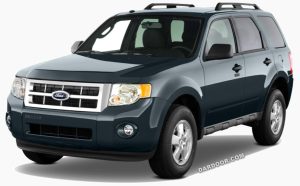
Access the official repair manual for the 2013-2014 Ford Fusion ↗, complete with detailed wiring diagrams, in a convenient PDF format. This OEM manual provides comprehensive guidance for servicing, maintenance, and repairs, just like the one used by Ford dealership mechanics.
File Format
PDF
File Language
English
File Size
31.5 MB
Page Count
1,020
wiring Diagram
Included
Delivery Method
Instant Download
Key Features:
Full wiring diagrams for all electrical systems
Step-by-step instructions for service and repair procedures
Manufacturer-authorized diagnostics and maintenance guidance
User-friendly PDF format for easy reference
Get the trusted information you need to maintain and repair your Ford Fusion with this original OEM workshop manual.
This manual provides detailed instructions for maintenance, disassembly, reassembly, component inspection, adjustment, and diagnostics—intended for use by experienced mechanics. Proper application of this guide will help ensure thorough repairs and maintain your vehicle in peak condition.
Important Note: Before purchasing this manual, please check whether your vehicle is subject to any active service recalls, as authorized dealerships may perform necessary repairs free of charge. When replacing parts, always use genuine OEM components to ensure safety, reliability, and long-term performance.
Table of Contents : 2013-2014 Ford Fusion Repair Manual
2.5L DIAGNOSTIC TROUBLE CODE (DTC) P061A – BUILT ON OR BEFORE 12/19/2013
SAMPLE PAGES: 2013-2014 Ford Fusion
CAUTION ↗: This OEM service and workshop repair manual provides detailed procedures for maintenance, disassembly, reassembly, inspection, adjustment, and diagnostics. It is intended as a comprehensive guide for experienced mechanics. To ensure thorough and accurate repairs that maintain your vehicle’s optimal performance, please read and follow this manual carefully. When replacing parts during any repair work, always use genuine Ford parts to ensure quality, safety, and reliability.
2013–2014 Ford Fusion: Overview, Specs, Common Problems, Maintenance, Recalls, DTC Codes & Verdict
The 2013–2014 Ford Fusion delivers sharp styling, solid safety, and strong turbo options, but it’s known for cooling-system leaks, harsh 6F35 shifting, SYNC/APIM screen failures, and door-latch/brake-hose recall items. Use this guide to spot symptoms early, budget repairs, and follow a smart maintenance plan.
📌 Overview
The 2013–2014 Ford Fusion (2nd generation) is a midsize sedan known for modern design, available turbocharged EcoBoost power, and strong crash-safety tech. It came with multiple engine choices and a 6 speed automatic (most trims), plus hybrid/plug-in variants in the same generation.
Some owners have experienced engine stalling, often linked to coolant system problems. These issues can lead to overheating and potential engine damage if not addressed promptly. community.cartalk.com ↗
Transmission Problems:
Reports indicate instances of transmission failures, including rough shifting and, in some cases, complete transmission failure. These issues can result in significant repair costs. community.cartalk.com ↗
Power Steering Failures:
There have been reports of sudden loss of power steering assistance, making the vehicle difficult to steer and increasing the risk of accidents. reddit.com ↗
Fuel System Issues:
Owners have reported problems such as stalling, poor fuel economy, and unusual noises from the fuel tank. These issues are often attributed to components like the purge canister valve. copilotsearch.com ↗
✅ Pros & ❌ Cons
✅ Pros
❌ Cons
Modern styling + comfortable ride
6F35 shift quality complaints on some vehicles
Strong 2.0 EcoBoost performance
Cooling leaks/overheating risk if neglected
Good safety tech availability
SYNC/APIM black screen issues
Wide trim/engine choices
Recall items: door latches, brake hoses (check VIN)
Side air curtain inflator “diffuser” concern (17V-803): air curtain may not fully inflate; projectile risk in deployment.
Service bulletins commonly address infotainment resets/updates: SYNC software updates & resets used to resolve lockups (not always a safety recall).
Brake system advisories: any brake warning light + fluid loss should be treated as urgent; some vehicles fall into hose-related campaigns.
Door latch “won’t close” symptom campaigns: reported as a frequent safety-related service topic due to latch failure risk.
General note: Fusion recall applicability can depend on plant/build date; confirm in Ford OASIS/dealer system or VIN lookup. NHTSA VIN database ↗
High Priority Recalls:
Engine Fire Risk:
Ford recalled certain 2013-2014 Fusion models equipped with 1.6L GTDI engines due to the potential for engine fires caused by overheating. cars.com ↗
Door Latch Failure:
A recall was issued for 2013-2014 Fusion vehicles due to a component within the door latch that could crack, potentially resulting in the door not closing properly. cars.com ↗
Transmission Shift Cable Detachment:
Ford recalled certain 2013-2016 Fusion vehicles equipped with 2.5L engines because the bushing that attaches the transmission shifter cable to the transmission may degrade, potentially causing the transmission to not remain in the intended gear. media.ford.com ↗
Always verify by VIN with the manufacturer/NHTSA tools. above are high-impact items known to include 2013–2014 Fusion in certain build ranges.
🧾 DTC Trouble Code List
🧠 Engine Control Module (ECM) — 10 Common OBD-II Codes
DTC
Meaning (Plain English)
Common Checks
P0171
System Too Lean (Bank 1)
intake leaks, MAF, fuel pressure
P0300
Random/Multiple Misfire
plugs, coils, compression, fuel
P0301
Misfire Cylinder 1
coil/plug/injector, compression
P0420
Catalyst Efficiency Low
O2 sensors, exhaust leaks, cat
P0456
EVAP Small Leak
gas cap, purge/vent, smoke test
P0480
Cooling Fan Control
fan relay, wiring, fan module
P0299
Turbo Underboost
boost leaks, wastegate, sensors
P0087
Fuel Rail/System Pressure Low
pump, filter, HPFP (if equipped)
P0117
ECT Sensor Low Input
sensor, wiring, coolant level
P2196
O2 Sensor Signal Biased/Rich
O2 sensor, fuel trims, injector leak
🧲 Transmission Control Module (TCM) — 10 Common Codes
DTC
Meaning
Common Checks
P0700
Transmission Control System (MIL Request)
scan TCM for subcodes
P0715
Input/Turbine Speed Sensor
sensor, wiring, connector
P0720
Output Speed Sensor
OSS sensor, harness, fluid contamination
P0731
Gear 1 Incorrect Ratio
slip, valve body, clutch wear
P0732
Gear 2 Incorrect Ratio
adaptives, pressure control, wear
P0741
TCC Performance/Stuck Off
fluid, solenoids, converter
P0751
Shift Solenoid A Performance
solenoid, valve body, wiring
P0761
Shift Solenoid C Performance
solenoid/valve body issues
P0776
Pressure Control Solenoid B Performance
line pressure, solenoid, wear
P087A
Transmission Fluid Pressure Sensor/Switch
sensor, internal pressure, wiring
🛑 ABS / ESC (Brake System) — 10 Common Codes
DTC
Meaning
Common Checks
C0031
LF Wheel Speed Sensor
sensor, tone ring, wiring
C0034
RF Wheel Speed Sensor
sensor, bearing play, harness
C0037
LR Wheel Speed Sensor
sensor, corrosion, connector
C0040
RR Wheel Speed Sensor
sensor, debris, wiring
C0045
Brake Pedal Position Sensor
sensor calibration, wiring
C1095
Hydraulic Pump Motor Circuit
pump, relay, fuse, ground
C1102
ABS Valve Relay / Power
power supply, module relay
C1145
Yaw Rate Sensor
sensor calibration, mounting
C1288
Steering Angle Sensor
alignment, calibration, sensor
U0121
Lost Communication With ABS
CAN wiring, module power/ground
🎈 SRS Airbag System — 10 Common Codes
DTC
Meaning
Common Checks
B0010
Driver Airbag Circuit
clock spring, connectors
B0020
Passenger Airbag Circuit
dash connectors, wiring
B0051
Seatbelt Pretensioner Circuit
seat connector, harness
B0070
Passenger Presence System
seat sensor mat/calibration
B0092
Crash Event Storage Full/Stored
module reset/replacement
B141B
Driver Seat Position Sensor
sensor alignment, wiring
B0028
Side Curtain Airbag Circuit
curtain inflator, connector
B1193
Airbag Diagnostic Monitor
module power/ground
U0151
Lost Comm With Restraints Control
CAN, power/ground
B1869
Occupant Classification Fault
OCS calibration, seat components
🔌 Body Control / CAN Communication — 10 Common Codes
DTC
Meaning
Common Checks
U0100
Lost Communication With ECM/PCM
CAN wiring, module power
U0121
Lost Communication With ABS
CAN, ABS module power
U0140
Lost Communication With BCM
BCM power/grounds, network
U0155
Lost Communication With Instrument Cluster
cluster connector, CAN
U0184
Lost Communication With Radio
APIM/radio power, CAN
B1325
System Voltage Out of Range
battery, alternator, grounds
B108C
Keyless Entry Antenna Fault
antenna/module wiring
B11DB
Door Ajar Switch Circuit
latch switch, wiring
B1D00
Exterior Lighting Control Fault
grounds, connectors, BCM
U3003
Battery Voltage / Module Internal Fault
charging test, module scan
FAQ ❓
Is the 2013–2014 Fusion a good used car?
Yes—if you choose a well-maintained one, confirm recall work by VIN, and test for transmission shift quality + infotainment stability.
Which engine is the safest pick?
The 2.5L is typically the simplest. The 2.0 EcoBoost is strong but benefits from strict oil/cooling maintenance. (Always inspect service history.)
If my SYNC screen is black, what should I try first?
Try a system reset/master reset procedure; if it returns, the APIM/display may need repair or replacement.
Can harsh shifting be “fixed” without a rebuild?
Sometimes. A correct fluid service, adaptive relearn, and addressing mounts can improve it. If internal wear exists, repairs can escalate.
🏆 Final Verdict
The 2013–2014 Ford Fusion is still a strong-looking, comfortable midsize sedan with great trim variety and solid safety potential. To own it confidently, prioritize cooling-system health, verify recall completion (especially door latch and brake hose items), and test-drive for cold shift behavior plus SYNC/APIM stability. A clean service history makes all the difference.
⭐ Best for: drivers who want style + comfort and will stay on top of maintenance
⚠️ Avoid if: you can’t verify recall/service history or you feel severe transmission slamming on test drive
This website uses cookies to improve your experience while you navigate through the website. Out of these, the cookies that are categorized as necessary are stored on your browser as they are essential for the working of basic functionalities of the website. We also use third-party cookies that help us analyze and understand how you use this website. These cookies will be stored in your browser only with your consent. You also have the option to opt-out of these cookies. But opting out of some of these cookies may affect your browsing experience.
Necessary cookies are absolutely essential for the website to function properly. This category only includes cookies that ensures basic functionalities and security features of the website. These cookies do not store any personal information.
Any cookies that may not be particularly necessary for the website to function and is used specifically to collect user personal data via analytics, ads, other embedded contents are termed as non-necessary cookies. It is mandatory to procure user consent prior to running these cookies on your website.