The Legendary Pontiac GTO: A Historical Journey from 1964 to 2006
The Pontiac GTO is more than just a car—it’s a symbol of raw American horsepower, rebellious spirit, and muscle car mythology. Often hailed as the progenitor of the American muscle car era, revolutionized automotive culture with its blend of power, style, and affordability. From its audacious debut in 1964 to its brief revival in the 2000s. But behind this legend is the story of one man’s defiance of corporate rules: John Z. DeLorean, the then-chief engineer at Pontiac. The GTO carved a legacy that continues to resonate among enthusiasts. Let’s explore its evolution across four distinct generations.
Genesis of a Muscle Car (1963–1964)
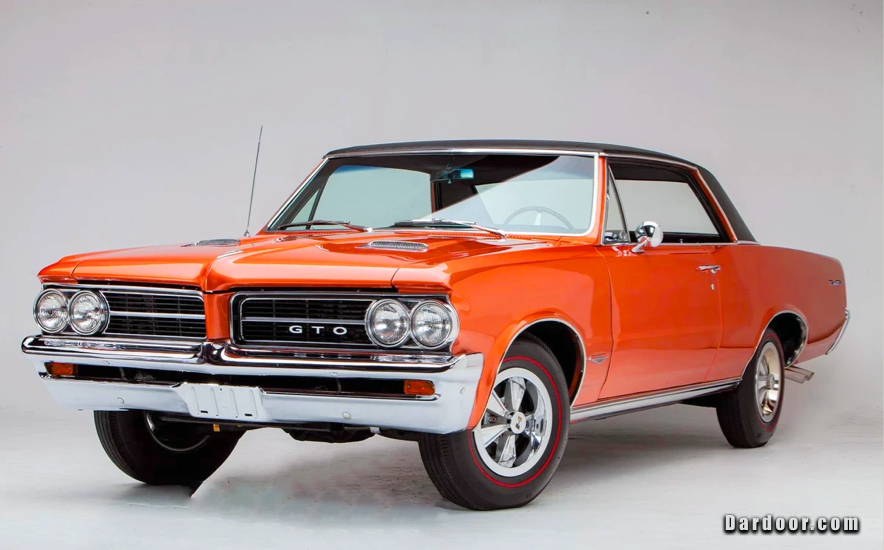
The GTO’s story begins in early 1963, as DeLorean and his engineering team experimented with Pontiac’s compact Tempest, introduced just a year prior. The Tempest’s standard four-cylinder engine was unrefined and underpowered. But because it shared engine mounts with Pontiac’s V8, an idea was born: why not drop a massive 389 cubic inch V8 into this modest mid-size sedan?
A prototype was soon created using a Tempest LeMans coupe as a testbed. The engine came from the full-size Bonneville, paired with a four-barrel carburetor and a heavy-duty four-speed manual transmission. The result? A shockingly fast and fun-to-drive car that would forever change the performance landscape.
The name GTO—short for Gran Turismo Omologato—was borrowed from Ferrari, where it referred to homologated grand touring race cars. Though controversial, Pontiac had no issue adopting the initials since they couldn’t be copyrighted.
Interestingly, a popular rumour suggests GTO also stood for “Grand Tempest Option”, a nod to its origins as a LeMans upgrade.
Skirting the Rules: The GTO Sneaks In
At the time, GM policy limited intermediate-sized cars to 10 pounds of weight per cubic inch of engine displacement. The 3,500-pound GTO’s 389ci engine technically violated that policy. But DeLorean sidestepped the rule by offering the GTO as a performance package for the LeMans, rather than a standalone model—avoiding scrutiny from upper management.
Pontiac’s sales team initially committed to just 5,000 units for 1964. But public response was overwhelming. Dealers sold out almost immediately, and by the end of the year, 32,450 GTO-equipped LeMans models had been built—six times the forecast.
The GTO wasn’t even listed in Pontiac’s official brochures—its existence spread quietly through automotive enthusiast publications and word of mouth.
First Generation (1964–1967): The Birth of a Legend
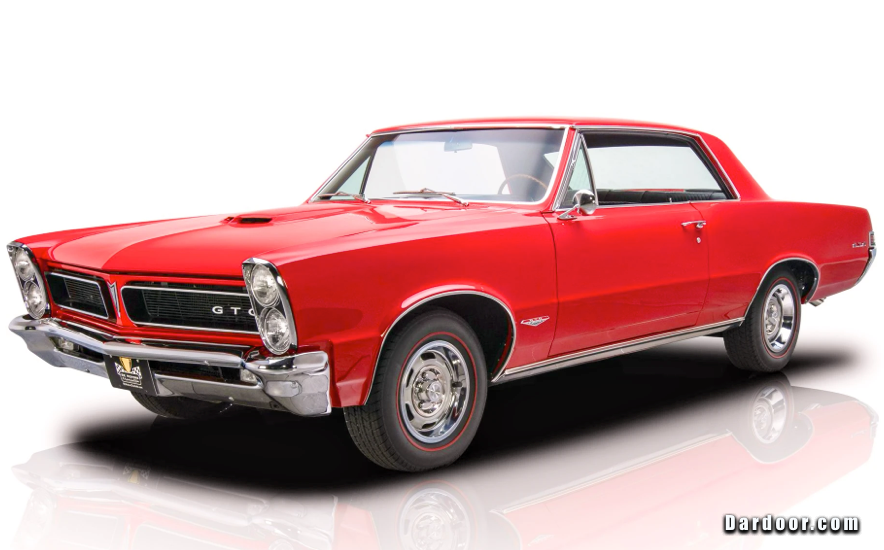
As mentioned above, In 1964, Pontiac defied corporate restrictions by introducing the GTO as an optional package for the Tempest LeMans. Spearheaded by John DeLorean, the GTO (Grand Turismo Omologato) borrowed its Italian moniker from Ferrari, evoking racing pedigree. Under the hood lay a 389 cubic-inch V8 engine, producing 325 horsepower. By 1965, tri-power carburetors boosted output to 360 horsepower.
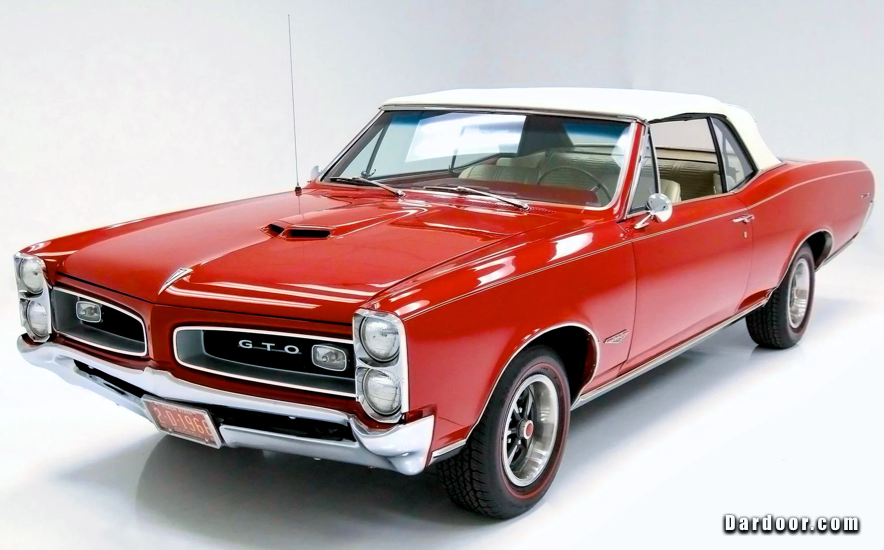
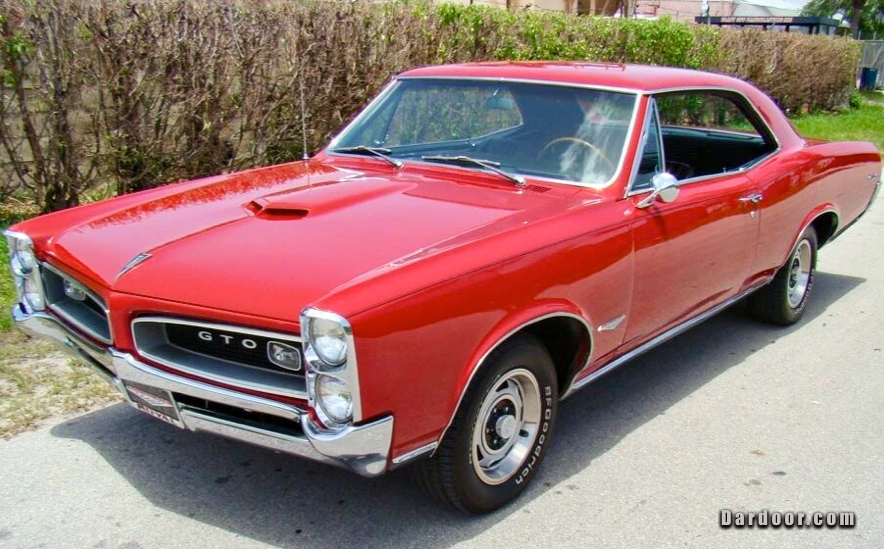
The 1966 model featured a sleek redesign with stacked headlights and a curvaceous body, cementing its status as a cultural icon. Sales soared, with over 96,000 units sold in 1966 alone. The GTO became synonymous with youth rebellion, immortalized in songs like Little GTO and epitomizing the golden age of muscle cars.
Explosive Growth (1965–1972)
- 1965: GTO got sleeker styling, a revamped front end, and more power. Sales soared past 75,000 units.
- 1966: GTO became a standalone model for the first time. Its popularity pushed rivals like Ford, Chevrolet, and Dodge to join the muscle car race.
- 1967: Upgraded to a 400ci engine and added safety improvements.
Second Generation (1968–1972): The Golden Era
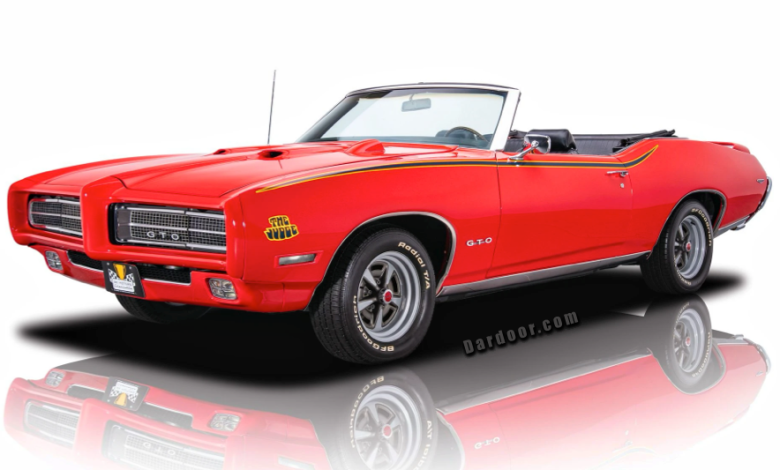
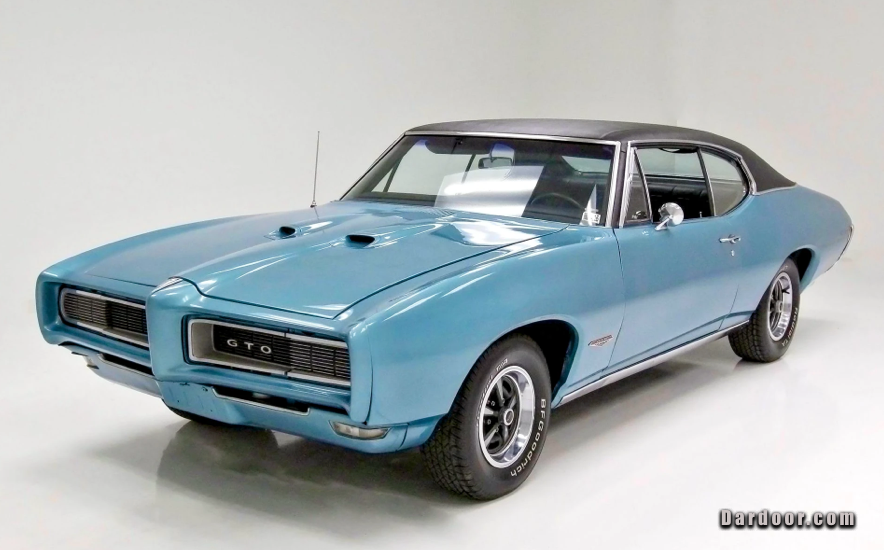
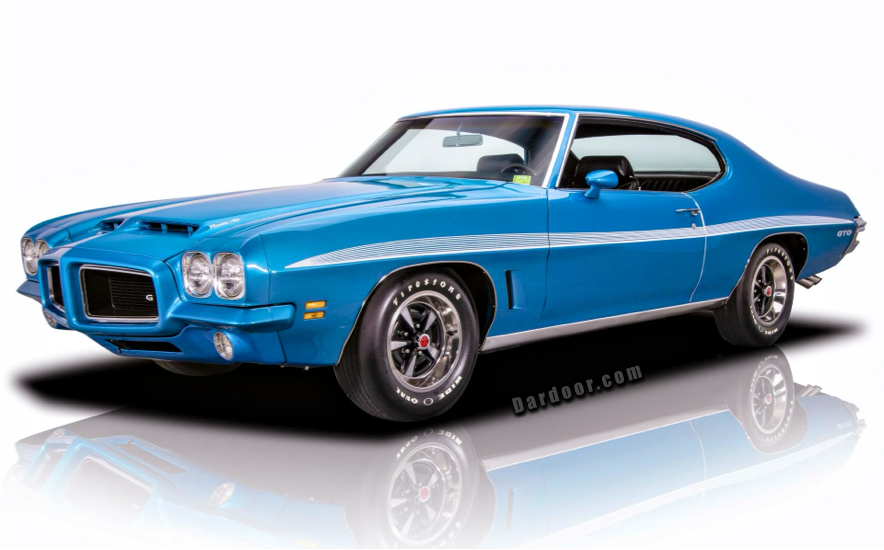
Redesigned in 1968 with muscular Coke-bottle styling, the GTO embraced aggression. This era introduced the Ram Air engines, with the Ram Air IV (370 hp) dominating drag strips. The 1969 GTO “The Judge” debuted as a flamboyant trim, boasting a 366 hp Ram Air III engine and psychedelic decals.
In 1970, Pontiac unleashed the 455 cubic-inch V8, generating 360 horsepower. However, tightening emissions regulations and the 1971 switch to SAE net horsepower ratings (reducing the 455 to 300 hp) marked the beginning of the end. Despite these challenges, the GTO remained a performance benchmark until 1972.
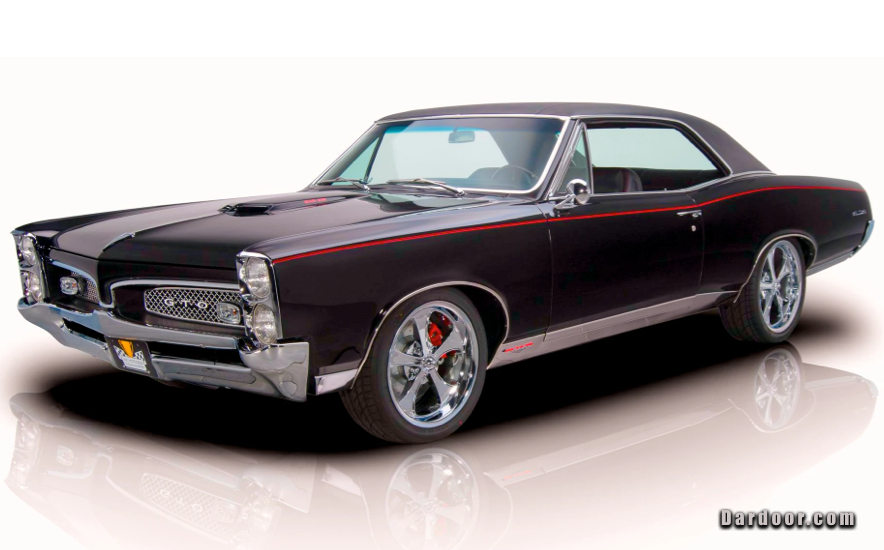
The second generation (1968–1972) saw a full redesign:
- New “Coke-bottle” styling
- Optional hidden headlights
- Legendary trims like “The Judge“ (1969), which featured bold graphics, a rear spoiler, and Ram Air power.
However, the early 1970s brought change. Insurance premiums rose, government regulations tightened, and fuel efficiency became a growing concern. Performance began to fade, and muscle cars slowly declined.
Decline and Disappearance; Third Generation (1973–1974): The Decline
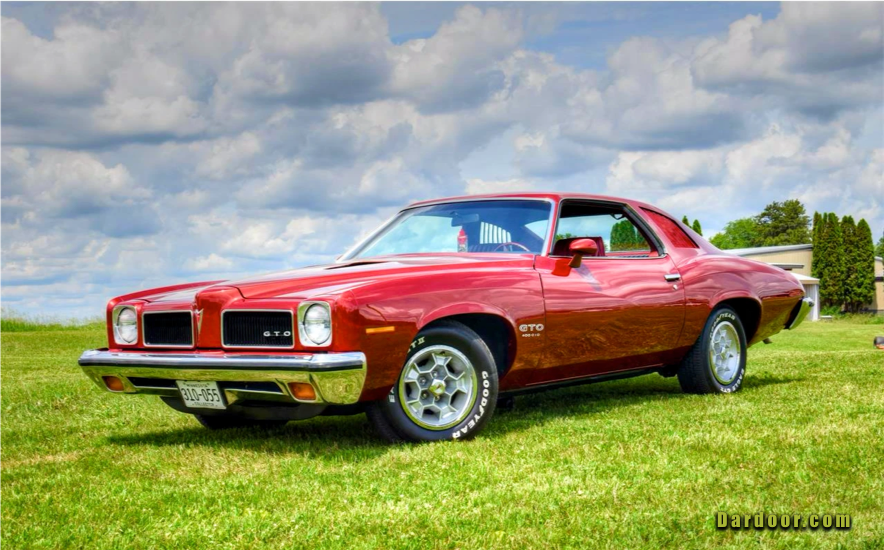
The 1973 oil crisis and stringent regulations forced Pontiac to downsize. The GTO shifted to the compact Ventura platform, offering a modest 230 hp 350 V8 or a 200 hp 400 V8. By 1974, the base engine dwindled to a 170 hp 350ci engine, and production ceased amid declining sales. The GTO’s flame flickered out, a victim of changing times.



Revival (2004–2006): The 21st-Century GTO
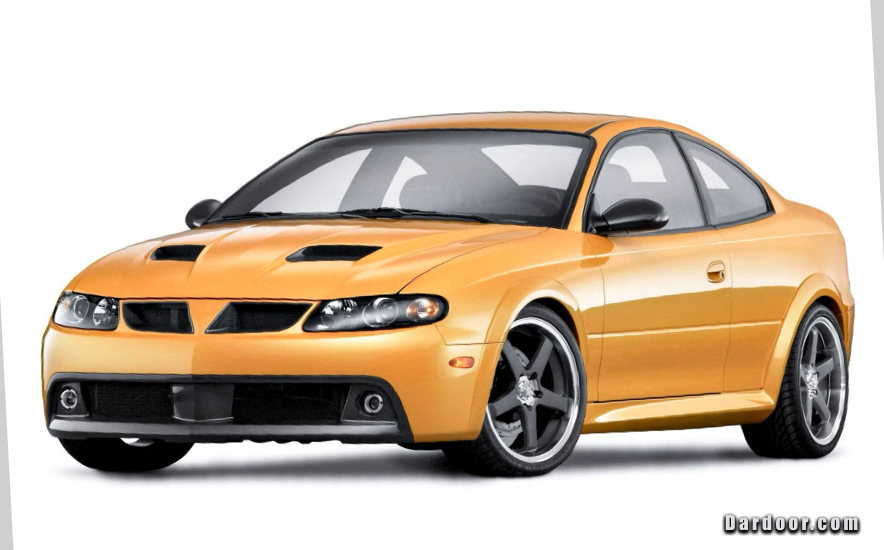
Pontiac resurrected the GTO in 2004, spearheaded by GM executive Bob Lutz, who saw potential in the high-performing, V8-powered Holden after reading a glowing Car and Driver review. Rebadging Australia’s Holden Monaro, a 2-door coupe derived from the Holden Commodore. The revival was Despite corporate resistance, Lutz pushed for the Monaro’s U.S. debut as the new GTO. It was the first Pontiac captive import since the early ’90s.The revival featured a Corvette-sourced 5.7L LS1 V8 (350 hp) and a refined interior. In 2005, a 6.0L LS2 V8 boosted output to 400 hp. Despite critical acclaim for performance, the subdued styling and lack of retro cues disappointed purists. Sales faltered, leading to discontinuation in 2006. Yet, the revival proved the GTO spirit endured, blending modern engineering with raw power.
2004 Model
- 5.7L LS1 V8, 350 hp
- 6-speed manual or 4-speed auto
- Subtle styling drew criticism, but performance was strong (0–60 in 5.3 seconds)
- Priced higher than expected due to currency shifts, limiting its appeal

2005 Model
- Upgraded to 6.0L LS2 V8, now with 400 hp and 400 lb-ft of torque
- 0–60 mph in 4.7 seconds; 13.0-second quarter mile
- Visual tweaks: hood scoops, split dual exhaust, bigger brakes, optional 18″ wheels
2006 Model
- Minor refinements: blacked-out taillights, new colors, interior updates
- Production ended in June 2006 due to new airbag regulations
- Total production (2004–2006): 40,808 units
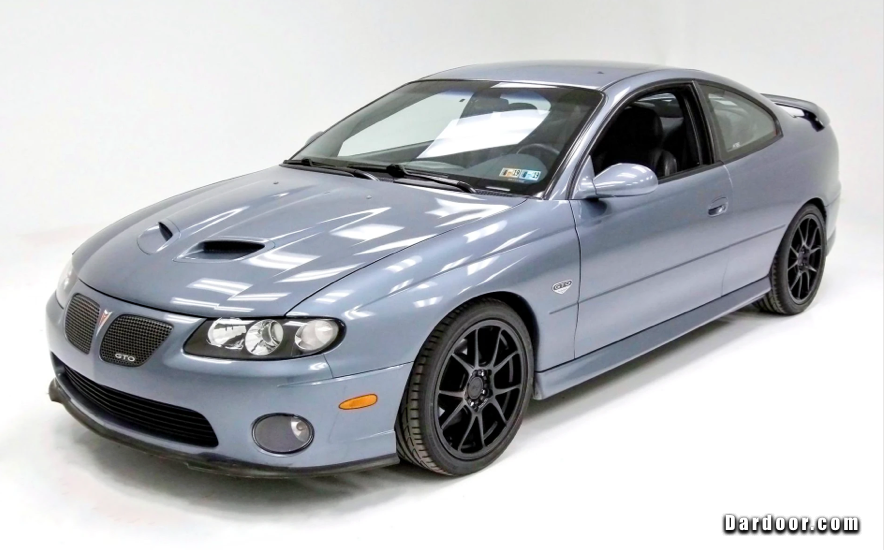
Though short-lived, the fifth-gen GTO offered world-class performance and became a cult classic among enthusiasts.
The End of Pontiac
The GTO’s discontinuation foreshadowed Pontiac’s fate. The brand phased out the Firebird in 2002, and after 2006, only models like the Solstice, Vibe, and G8 remained. None captured the muscle car essence.
In 2009, amid GM’s financial crisis, the company announced Pontiac would be discontinued. The last Pontiac rolled off the line in January 2010, and by October that year, all dealer agreements had expired.
Why the GTO Is Called “The Goat”
GTO fans affectionately call the car “The Goat.” The origin of the nickname is debated:
- Some say it was from a marketing campaigns that claimed Pontic provided everything you would need except Gas, Oil And Tires.
- Others claim it came from simply rearranging “GTO” into “GOT,” which phonetically morphed into “Goat”
- According to Pontiac marketing legend Jim Wangers, the name “Goat” evolved during ad campaigns and stuck—despite GM leadership’s dislike of the animal reference
Regardless of how it started, “Goat” became a badge of honor among owners, leading to “Gatherings of the Goats” and a passionate following that persists today.
Legacy of a Legend
From 1964 to 2006, the Pontiac GTO ignited the muscle car revolution, influenced generations of gearheads, and built a name synonymous with performance. Whether it was the rebellious 389-powered coupe of the ‘60s or the LS2 beast of the 2000s, the GTO always stood for power, attitude, and innovation.
Legacy and Conclusion
The Pontiac GTO’s legacy is undeniable. It ignited the muscle car wars, inspiring rivals like the Chevrolet Chevelle SS and Ford Mustang GT. Though its revival was short-lived, the GTO’s influence permeates modern classics like the Dodge Challenger and Chevrolet Camaro. Collectors cherish original models, particularly the 1969 Judge and Ram Air variants, while the 2004–2006 models gain retro appreciation.
The GTO’s story is one of innovation, adaptation, and enduring passion—a testament to America’s love affair with speed. As the first true muscle car, it remains a symbol of automotive freedom, forever etched in the annals of history. Even though the Pontiac badge is gone, the legend of the GTO—the original muscle car—lives on in garages, shows, and the hearts of car enthusiasts around the world.