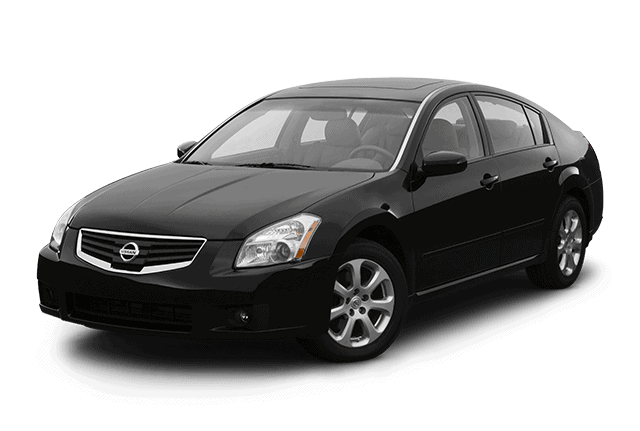
2007 Nissan Maxima (A34) — OEM Workshop Service & Repair Manual + Wiring Diagram (PDF)
Download the original OEM workshop service and repair manual for the 2007 Nissan Maxima (A34 series), provided in a simple, user-friendly PDF format. This is the same manual used by Nissan dealership technicians to diagnose, service, and repair the Maxima—complete with step-by-step procedures, factory specifications, and wiring diagrams for accurate electrical troubleshooting.
| File Format |
PDF |
| File Language |
English |
| You’ll Get |
104.3 MB |
| Wiring Diagram |
Included |
| Delivery Method |
Instant Download |
Work to factory standards—reduce guesswork and get repairs right the first time.
Key Features
- Official OEM Coverage; Factory-approved repair methods across all vehicle systems—no generic shortcuts.
- Wiring Diagrams Included; Complete electrical schematics with connector views, grounds, and power distribution.
- Diagnostics & Troubleshooting; DTC references, test values, and flowcharts to pinpoint faults quickly.
- Searchable PDF; Fast navigation, printable pages, and easy access on desktop or mobile.
What’s Inside
- Maintenance schedules, fluids, capacities, and torque specifications
- Engine mechanical procedures, cooling, lubrication, fuel & emissions
- Transmission and drivetrain service procedures
- Brakes (ABS), suspension, and steering repairs
- Electrical: wiring diagrams, connector pinouts, grounds, and module networks
- Body, interior, HVAC, and SRS/airbag systems
- Diagnostic trouble codes (DTCs) and step-by-step troubleshooting
Download & Compatibility
Delivery: Instant digital PDF download
Compatibility: Windows • macOS • iOS • Android
This manual provides detailed instructions for maintenance, disassembly, reassembly, component inspection, adjustment, and diagnostics—intended for use by experienced mechanics. Proper application of this guide will help ensure thorough repairs and maintain your vehicle in peak condition.
Important Note: Before purchasing this manual, please check whether your vehicle is subject to any active service recalls, as authorized dealerships may perform necessary repairs free of charge. When replacing parts, always use genuine OEM components to ensure safety, reliability, and long-term performance.
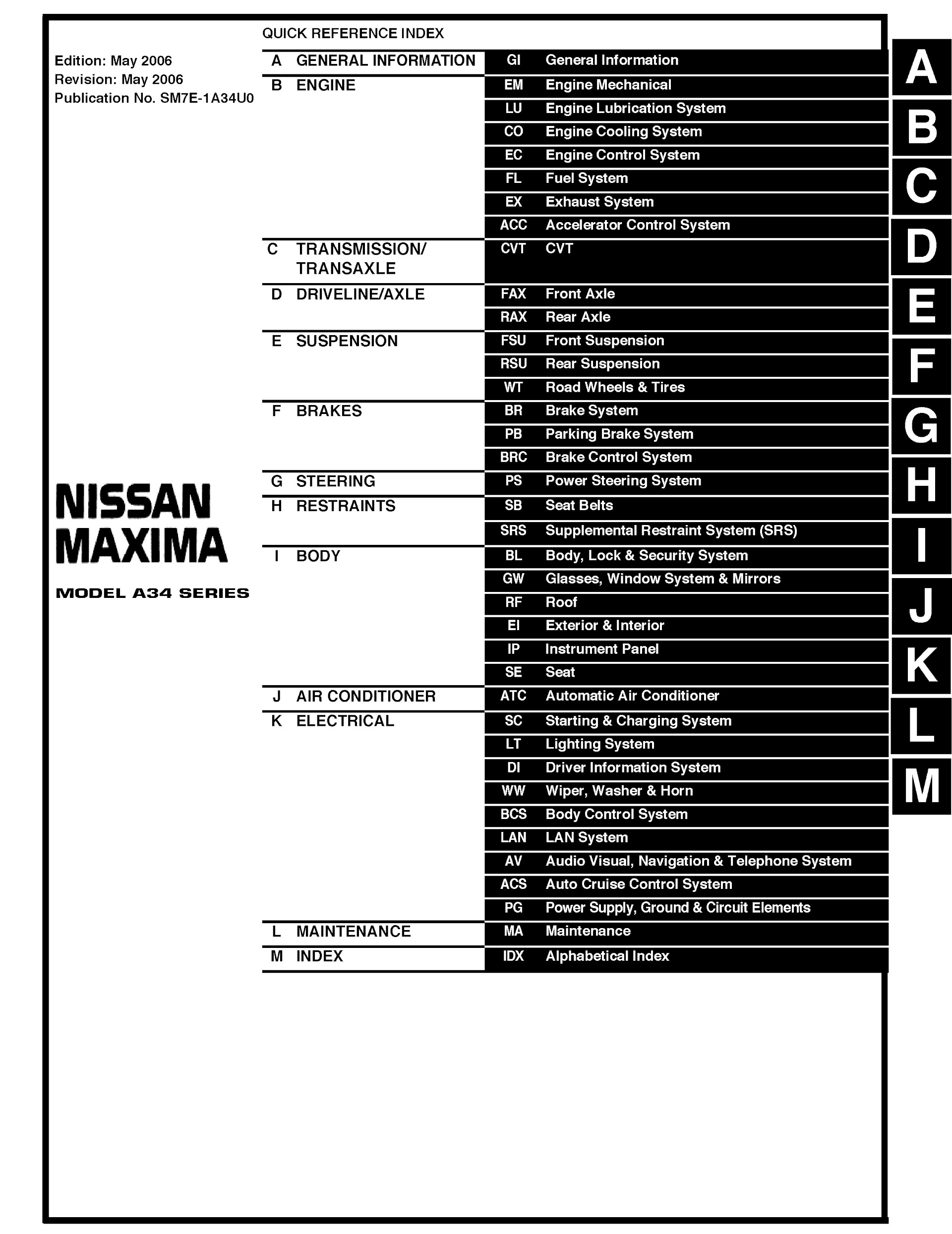
Table of Contents : 2007 Nissan Maxima Repair Manual
Sample Pages
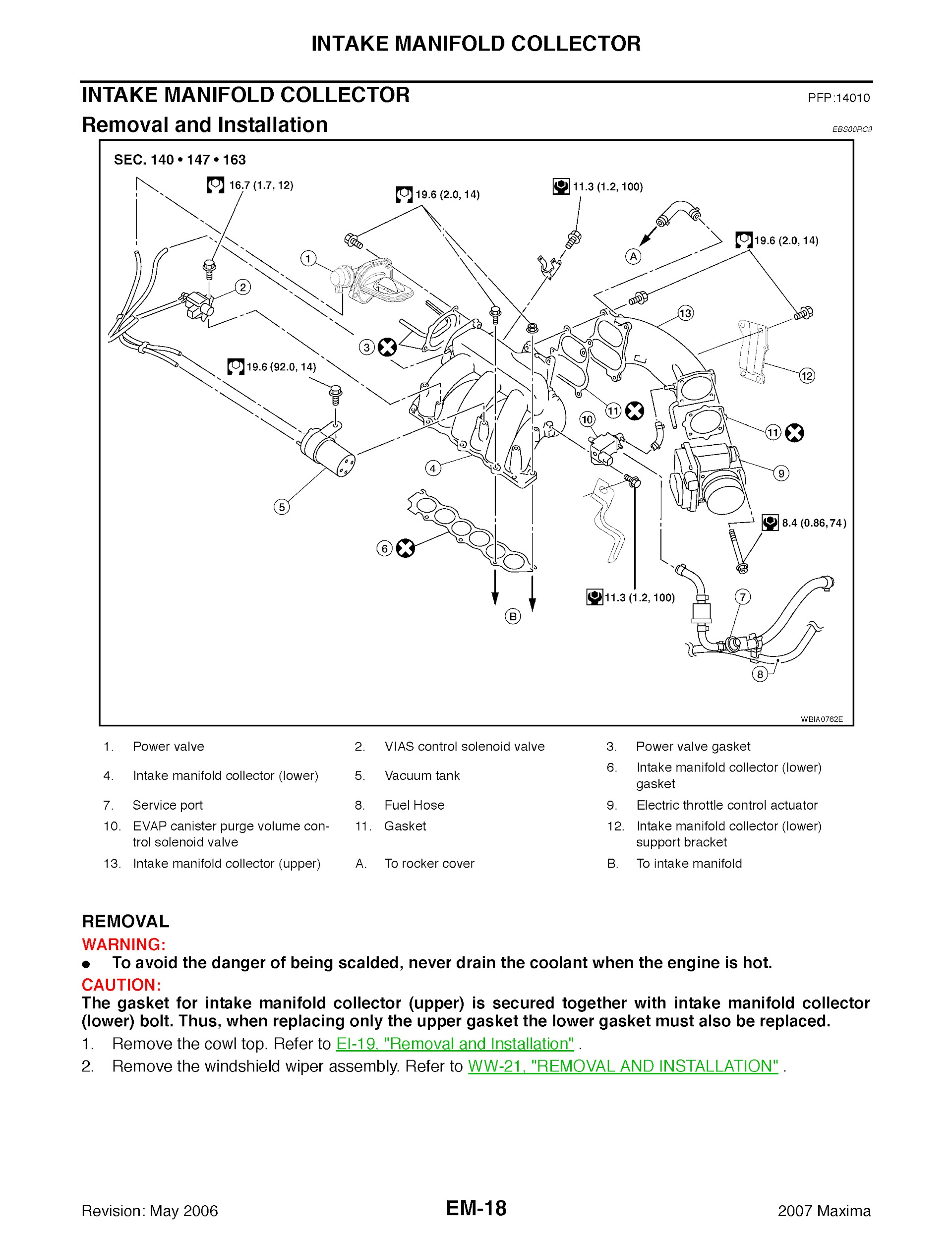
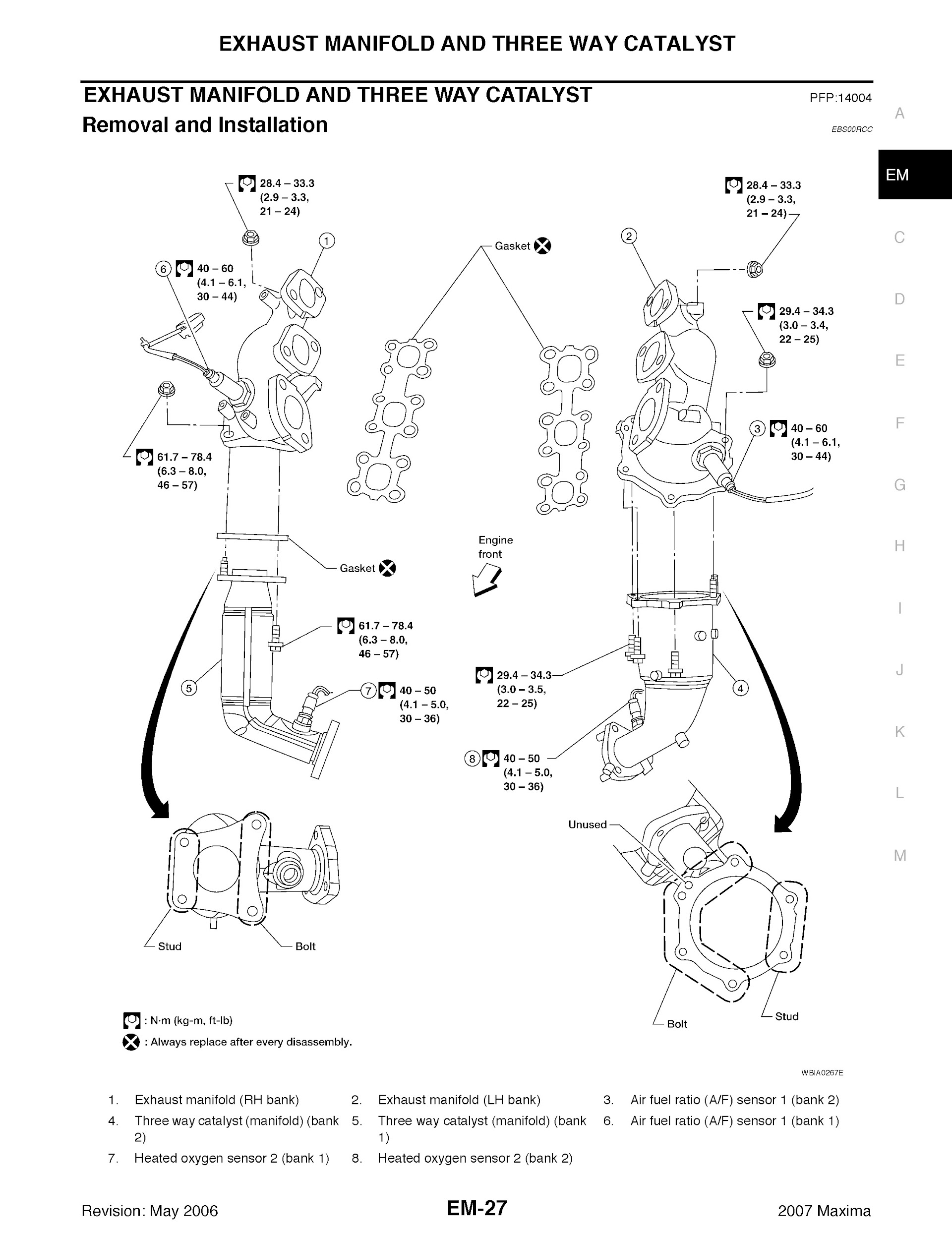
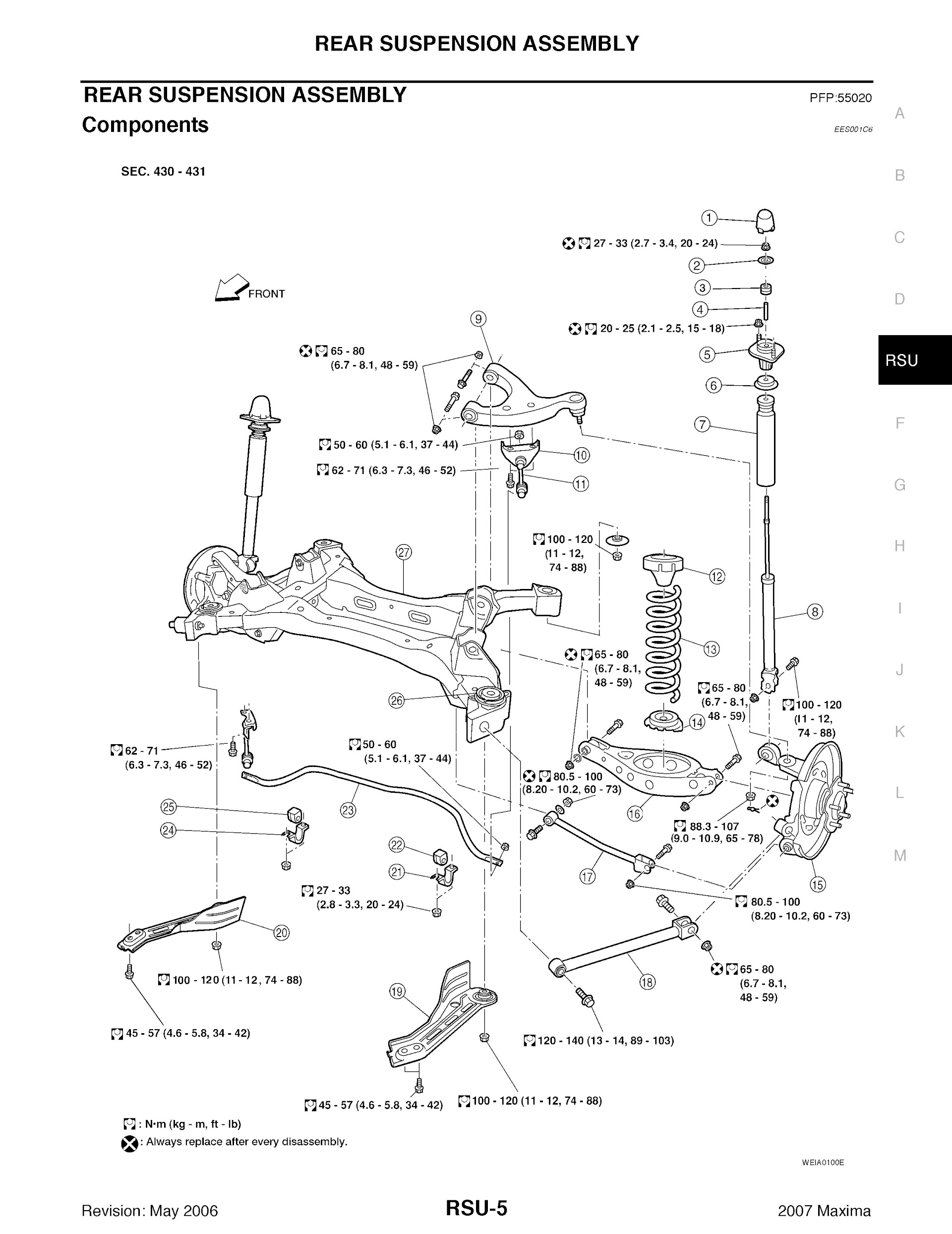
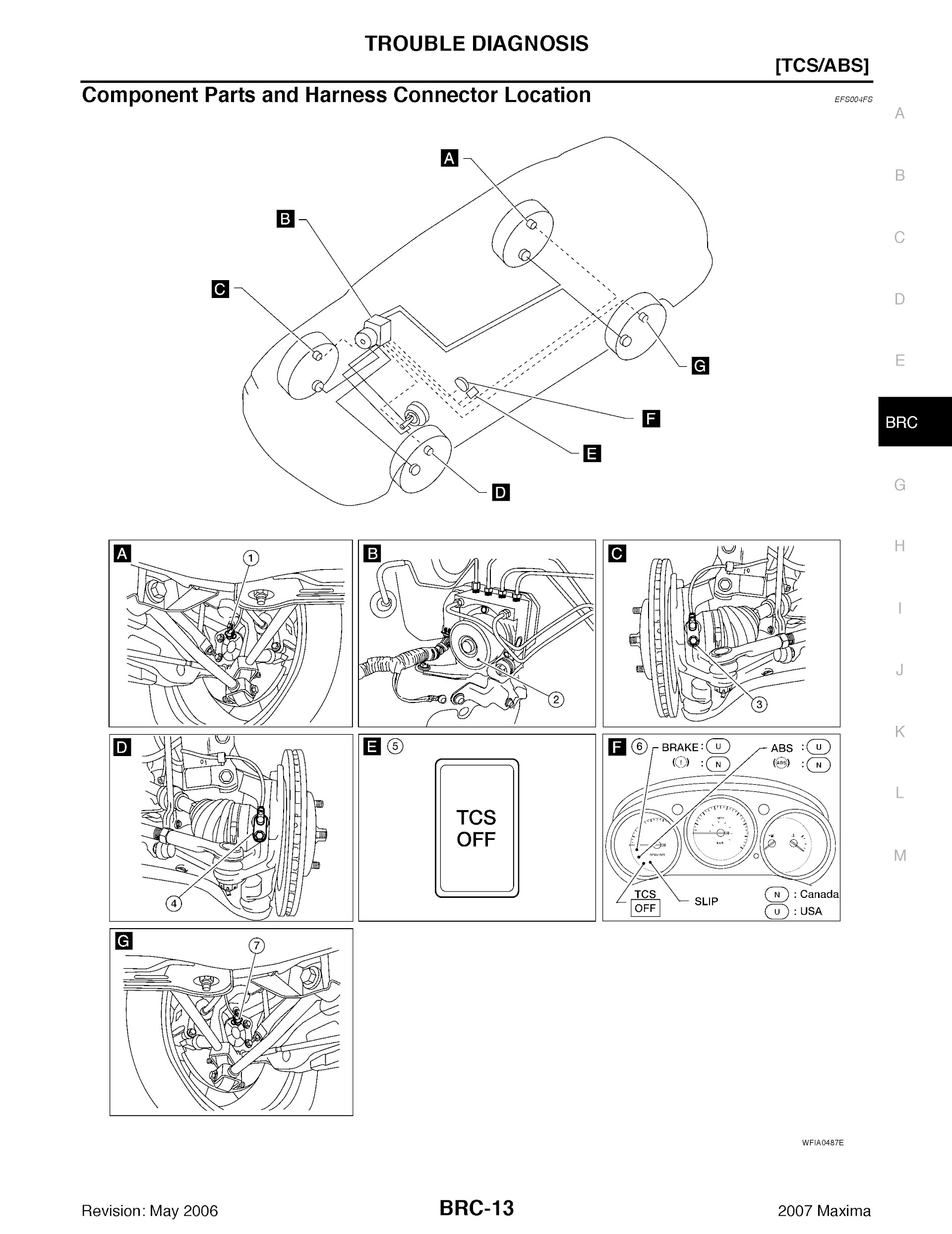
CAUTION: This OEM service and workshop repair manual provides detailed procedures for maintenance, disassembly, reassembly, inspection, adjustment, and diagnostics. It is intended as a comprehensive guide for experienced mechanics. To ensure thorough and accurate repairs that maintain your vehicle’s optimal performance, please read and follow this manual carefully. When replacing parts during any repair work, always use genuine Nissan parts to ensure quality, safety, and reliability.
2007 Nissan Maxima – Comprehensive Buyer’s Guide
Overview
The 2007 Nissan Maxima is a full-size sport sedan that represented the sixth generation (A34) of Nissan’s flagship sedan. Marketed as a “4-Door Sports Car,” it offered a balance of performance, comfort, and luxury features.
Key Highlights:
- Last year of the sixth generation before the 2009 redesign
- Available in three trims: 3.5 S, 3.5 SE, and 3.5 SL
- Known for its powerful V6 engine and smooth ride
- Spacious interior with premium materials
- Strong performance credentials for its class
Technical Specifications
Engine:
- 3.5L V6 VQ35DE engine
- Horsepower: 255 hp @ 6,000 rpm
- Torque: 246 lb-ft @ 4,400 rpm
- Variable Valve Timing (VVT)
Transmission:
- 5-speed automatic with manual mode
- Front-wheel drive (FWD)
Dimensions:
- Length: 191.5 inches
- Width: 70.3 inches
- Height: 58.5 inches
- Wheelbase: 109.3 inches
- Curb Weight: 3,471–3,565 lbs
Performance:
- 0-60 mph: ~6.5 seconds
- Top Speed: ~130 mph (electronically limited)
- EPA Fuel Economy: 20 city / 28 highway mpg
Suspension:
- Front: Independent MacPherson strut
- Rear: Multi-link independent
Brakes:
- Front: 11.7-inch vented discs
- Rear: 11.5-inch vented discs
- ABS standard
Wheels & Tires:
- 17-inch or 18-inch alloy wheels (depending on trim)
- Tire sizes: 225/55R17 or 245/45R18
Seating Capacity: 5 passengers
Cargo Space: 14.2 cubic feet
10 Top Mechanical and Electrical Issues
1. Mass Air Flow (MAF) Sensor Failure
Symptoms:
- Rough idle or stalling
- Poor acceleration and hesitation
- Check Engine Light (CEL) with codes P0101, P0102, P0171, or P0174
- Poor fuel economy
Root Cause: Carbon buildup or sensor contamination from dirty air filters or oil vapors affecting the hot-wire sensor element.
Fix: Clean the MAF sensor with specialized cleaner; replace if cleaning doesn’t resolve the issue. Replace air filter if dirty.
Cost: $15-30 for cleaning; $150-350 for replacement (parts + labor)
2. Transmission Slipping and Failure
Symptoms:
- Delayed engagement when shifting from Park to Drive
- Harsh or jerky shifts
- Slipping between gears
- Transmission overheating
- Check Engine Light with transmission codes
Root Cause: Worn internal clutch packs, valve body issues, or torque converter problems. The Nissan RE5F22A transmission is known for premature wear, especially in high-mileage vehicles.
Fix: Transmission fluid flush may help early symptoms. Severe cases require valve body replacement, torque converter replacement, or full transmission rebuild/replacement.
Cost: $150-250 for fluid service; $1,500-3,000 for valve body replacement; $2,500-4,500 for rebuild/replacement
3. Crankshaft Position Sensor Failure
Symptoms:
- Intermittent stalling, especially when warm
- No-start condition
- Engine cranks but won’t start
- Check Engine Light with codes P0335 or P0340
- Poor idle quality
Root Cause: Heat-related sensor degradation causing intermittent signal loss to the ECU, preventing proper ignition timing.
Fix: Replace crankshaft position sensor and camshaft position sensor (often done together as preventive measure).
Cost: $150-350 for crankshaft sensor replacement; $200-450 if replacing both sensors
4. Motor Mount Failure
Symptoms:
- Excessive engine vibration, especially at idle
- Clunking sounds during acceleration or deceleration
- Engine movement visible under hood during gear changes
- Vibration through steering wheel or floorboards
Root Cause: Hydraulic fluid leaking from engine mounts or rubber deterioration due to age and heat exposure. The front and rear mounts are most prone to failure.
Fix: Replace failed motor mount(s). Often recommended to replace multiple mounts simultaneously.
Cost: $200-400 per mount (parts + labor); $600-1,200 for all mounts
5. Catalytic Converter Failure
Symptoms:
- Check Engine Light with codes P0420 or P0430
- Rattling noise from underneath vehicle
- Reduced performance and acceleration
- Failed emissions test
- Sulfur/rotten egg smell from exhaust
Root Cause: Internal catalyst substrate breakdown due to high mileage, engine running rich, or oil contamination entering the exhaust system.
Fix: Replace catalytic converter(s). The 2007 Maxima has two catalytic converters.
Cost: $800-1,500 per converter (parts + labor); $1,600-3,000 for both
6. Alternator Failure
Symptoms:
- Battery warning light illuminated
- Dimming headlights or interior lights
- Electrical accessories malfunctioning
- Battery repeatedly dying
- Whining or grinding noise from alternator
- Dead battery after short drives
Root Cause: Worn bearings, failed voltage regulator, or diode failure within the alternator assembly. High electrical demand accelerates wear.
Fix: Replace alternator. Test battery and charging system to confirm diagnosis.
Cost: $350-600 (parts + labor)
7. Wheel Speed Sensor Failure
Symptoms:
- ABS warning light illuminated
- Traction control light on
- VDC (Vehicle Dynamic Control) light on
- ABS system non-functional
- Check Engine Light with codes C1113-C1116
Root Cause: Sensor contamination from road debris, corrosion of connector pins, or damaged sensor wiring, particularly on rear wheel sensors.
Fix: Clean sensors and connectors first; replace faulty wheel speed sensor if cleaning doesn’t work.
Cost: $150-300 per sensor (parts + labor)
8. Power Steering Pump Failure
Symptoms:
- Whining or groaning noise when turning
- Heavy or difficult steering, especially at low speeds
- Steering wheel vibration
- Power steering fluid leaks
- Squealing noise on startup
Root Cause: Worn pump bearings, internal seal failure, or contaminated power steering fluid causing pump damage.
Fix: Replace power steering pump. Flush and replace power steering fluid. Check for leaks in hoses and rack.
Cost: $400-700 (parts + labor)
9. Valve Cover Gasket Oil Leaks
Symptoms:
- Oil smell in cabin or under hood
- Visible oil on top of engine or dripping onto exhaust
- Oil residue on spark plug tubes
- Burning oil smell during driving
- Low oil level between changes
- Oil pooling in spark plug wells causing misfires
Root Cause: Valve cover gasket deterioration from age and heat cycles, causing compression loss and oil seepage.
Fix: Replace valve cover gaskets, spark plug tube seals, and PCV valve. Clean oil residue from engine.
Cost: $300-600 (parts + labor)
10. EVAP Purge Control Valve Failure
Symptoms:
- Check Engine Light with codes P0441, P0442, P0443, or P0446
- Rough idle when cold
- Difficulty refueling (pump clicking off repeatedly)
- Gas smell near vehicle
- Failed emissions test
Root Cause: Stuck or failed purge valve preventing proper fuel vapor management, or faulty vent control valve in the EVAP system.
Fix: Replace EVAP purge control valve and/or vent control valve. Inspect for vacuum leaks in EVAP hoses.
Cost: $150-350 (parts + labor)
Top 5 Competitors
- Pros: Superior reliability, comfortable ride, spacious interior, excellent resale value
- Cons: Less sporty handling, conservative styling, softer suspension
- Key Difference: More reliable but less engaging to drive than the Maxima
- Pros: Excellent reliability, strong V6 engine, good fuel economy, lower maintenance costs
- Cons: Smaller interior, less standard luxury features
- Key Difference: More reliable with better handling dynamics, but less spacious
- Pros: Bold styling, available V8 engine, rear-wheel drive, spacious interior
- Cons: Lower reliability, higher fuel consumption, less refined
- Key Difference: More imposing presence and available V8, but less reliable
4. Buick Lucerne (2007)
- Pros: Comfortable ride, spacious interior, quiet cabin, good value
- Cons: Dated technology, poor handling, lower resale value
- Key Difference: More traditional American luxury focus versus Maxima’s sportiness
- Pros: Premium badge, excellent build quality, advanced technology, strong performance
- Cons: Higher price, more expensive maintenance, firm ride
- Key Difference: Upscale alternative with better materials but higher ownership costs
Top 10 Recalls, Advisories & TSB Highlights
Recalls
1. NHTSA Campaign 10V388000 – Fuel Pressure Sensor
- Issue: Fuel pressure sensor O-ring may deteriorate causing fuel leaks
- Risk: Fire hazard
- Fix: Replace fuel pressure sensor
2. NHTSA Campaign 13V423000 – Passenger Airbag
- Issue: Takata airbag inflator may rupture
- Risk: Serious injury from metal fragments
- Fix: Replace passenger airbag inflator (ongoing Takata recall)
3. NHTSA Campaign 16V244000 – Passenger Frontal Air Bag
- Issue: Extended Takata recall for passenger airbag
- Risk: Inflator rupture causing injury/death
- Fix: Replace airbag inflator assembly
Technical Service Bulletins (TSBs)
4. NTB07-078a – Transmission Judder/Vibration
- Issue: Vibration felt during light acceleration at 15-30 mph
- Solution: Software update and transmission fluid replacement with updated fluid
5. NTB08-009 – Engine Runs Rough/Stalls
- Issue: Rough idle or stalling due to MAF sensor
- Solution: Replace mass air flow sensor with updated part
6. NTB07-091 – Rattling Noise from Exhaust
- Issue: Catalytic converter internal substrate failure causing rattle
- Solution: Replace affected catalytic converter
7. NTB08-055 – Power Steering Noise
- Issue: Whining/groaning noise from power steering
- Solution: Replace power steering pump and flush system
8. NTB07-034 – Brake Noise/Judder
- Issue: Brake pulsation or noise during braking
- Solution: Resurface or replace brake rotors, replace pads with updated parts
9. NTB08-018 – Instrument Cluster Issues
- Issue: Intermittent gauge operation or warning lights
- Solution: Update instrument cluster software or replace cluster
10. NTB07-103 – Wind Noise from Doors
- Issue: Excessive wind noise at highway speeds
- Solution: Adjust door alignment and replace weatherstripping
Maintenance Schedule
Every 3,750–5,000 Miles or 3–6 Months
- Engine oil and filter change
- Tire rotation
- Visual inspection of brakes, belts, hoses
Every 15,000 Miles or 12 Months
- Cabin air filter replacement
- Inspect brake pads and rotors
- Lubricate door hinges and latches
- Battery inspection and cleaning
Every 30,000 Miles or 24 Months
- Engine air filter replacement
- Replace engine coolant (first time)
- Inspect drive belts
- Transmission fluid check
- Brake fluid inspection
- Power steering fluid check
Every 60,000 Miles or 48 Months
- Replace spark plugs
- Replace transmission fluid (critical)
- Replace engine coolant (subsequent intervals)
- Replace brake fluid
- Inspect suspension components
- Replace fuel filter
- Inspect exhaust system
Every 105,000 Miles or 84 Months
- Replace drive belts
- Inspect timing chain tensioners and guides (listen for rattling)
- Comprehensive inspection of all systems
As Needed
- Replace wiper blades (every 6-12 months)
- Replace battery (every 3-5 years)
- Wheel alignment check (annually or after hitting potholes)
- Replace tires (every 40,000-60,000 miles depending on type)
Critical Maintenance Notes:
- Transmission fluid change at 60K miles is essential to prevent premature transmission failure
- Monitor oil level regularly; VQ35DE engines can consume oil as they age
- Use Nissan Matic-S or equivalent ATF for transmission service
- Replace coolant with Nissan Long Life Coolant or equivalent
10 FAQs for Buyers
1. Is the 2007 Nissan Maxima reliable?
The 2007 Maxima has average reliability. While the VQ35DE engine is generally durable, the transmission is the weak point. Regular maintenance, especially transmission fluid changes, is critical. Expect higher maintenance costs than comparable Honda or Toyota models.
2. What are the most common problems?
Transmission issues (slipping, harsh shifts), mass air flow sensor failure, crankshaft position sensor failure, catalytic converter failure, and motor mount deterioration are the most frequently reported problems.
3. How long does the transmission last?
With proper maintenance (fluid changes every 60K miles), the transmission can last 150,000-200,000 miles. However, many have failed prematurely between 80,000-120,000 miles due to design weaknesses and lack of maintenance.
4. What’s the fuel economy in real-world driving?
Expect 18-20 mpg in city driving and 25-27 mpg on the highway. Combined average is typically around 21-23 mpg with mixed driving.
5. Is it expensive to maintain?
Moderate to moderately expensive. Routine maintenance is reasonable, but repairs (especially transmission work) can be costly. Budget $800-1,200 annually for maintenance and minor repairs on a well-maintained example.
6. Should I buy one with high mileage?
Be cautious with high-mileage examples (over 120,000 miles). Thoroughly inspect the transmission, check for oil leaks, and verify maintenance records. A well-maintained example with records is preferable to a cheaper neglected one.
7. What should I check before buying?
- Complete transmission test drive (smooth shifts, no slipping)
- Check for oil leaks (valve covers, oil pan)
- Scan for error codes
- Test all electrical systems
- Check for Takata airbag recall completion
- Verify transmission fluid changes in maintenance records
- Listen for engine noise (timing chain rattle, motor mount clunking)
8. Are parts expensive?
Parts are moderately priced. OEM Nissan parts are more expensive than aftermarket alternatives. Common wear items (brakes, filters, sensors) are affordable, but major components (transmission, catalytic converters) are expensive.
9. How does it compare to the Toyota Avalon?
The Maxima is sportier with better handling and more engaging driving dynamics. The Avalon is more reliable, more comfortable, and has lower long-term ownership costs. Choose the Maxima if you prioritize performance; choose the Avalon for reliability and comfort.
10. What’s a fair price for a 2007 Maxima?
Prices vary by condition, mileage, and location:
- High mileage (150K+): $3,000-5,000
- Average mileage (100-150K): $5,000-7,500
- Lower mileage (under 100K): $7,500-10,000
- Excellent condition, low miles: $10,000-12,000
Always factor in needed repairs when negotiating.
Final Buyer Recommendations
Should You Buy a 2007 Nissan Maxima?
Buy if:
- You want a sporty, powerful sedan with V6 performance
- You prioritize driving engagement over ultimate reliability
- You can find a well-maintained example with documented transmission services
- You’re comfortable with moderate to high maintenance costs
- You want spacious interior with good standard features
- You prefer the Maxima’s styling over more conservative competitors
Avoid if:
- You need maximum reliability (choose Toyota/Honda instead)
- You’re on a tight budget for repairs
- You’re looking at high-mileage examples without maintenance records
- You primarily do city driving (poor fuel economy)
- You can’t verify transmission fluid has been changed regularly
- The vehicle shows signs of neglect or has transmission issues
Best Practices for Ownership:
- Change transmission fluid every 60,000 miles religiously (most critical maintenance item)
- Keep up with oil changes every 5,000 miles with quality synthetic oil
- Address Check Engine Lights promptly to prevent secondary damage
- Replace motor mounts at first sign of excessive vibration
- Budget $100-150/month for maintenance and repairs
- Find a reputable independent Nissan specialist for service
- Check and complete any open recalls immediately (especially Takata airbags)
- Monitor oil level between changes as these engines can consume oil
- Use quality parts (OEM or premium aftermarket) for critical components
Our Verdict
The 2007 Nissan Maxima is a capable sport sedan that offers strong performance, comfortable accommodations, and good features for the price. However, it requires diligent maintenance and comes with known reliability issues, particularly with the transmission. It’s best suited for enthusiasts who appreciate its driving dynamics and are willing to invest in proper maintenance. If you prioritize reliability over performance, competitors like the Toyota Avalon or Honda Accord V6 are better choices.
Rating: 6.5/10 – Good performance and features, but reliability concerns and transmission issues prevent a higher recommendation. A well-maintained example with full service records can be a good value, but buyer beware of neglected vehicles.