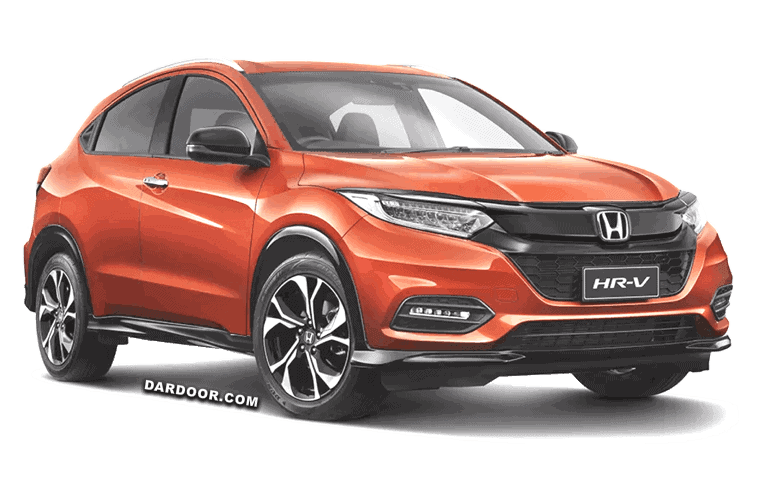
2016-2018 Honda HR-V Repair Manual

$16.90

Get the original OEM workshop repair manual for the 2016–2018 Honda HR-V —the exact same documentation used by Honda dealership technicians.

 Get the original OEM workshop repair manual for the 2016–2018 Honda HR-V —the exact same documentation used by Honda dealership technicians. This easy-to-use PDF provides factory-authorized service procedures, detailed diagnostics, and complete electrical wiring diagrams, allowing you to confidently perform maintenance and repairs yourself.

File Format PDF
File Language English
You’ll Get  111.2 MB
Page Count 5,977
Wiring Diagram Included
Delivery Method Instant Download


Vehicle Coverage

  • Model Years: 2016, 2017, 2018
  • Model: Honda HR-V
  • Engines: 1.8L I4 (R18 series)
  • Transmissions: CVT & 6-speed manual (market dependent)

Key Features

Complete OEM Coverage

All service, repair, and maintenance procedures across every vehicle system.

Wiring Diagrams Included

Factory electrical schematics, connector views, grounds, and power distribution.

Diagnostics & DTCs

Dealer troubleshooting flowcharts and diagnostic trouble codes.

User-Friendly PDF

Fully searchable and printable for use on desktop, tablet, or mobile.


What’s Inside

  • Routine maintenance schedules, fluids, and torque specifications
  • Engine mechanical repair and servicing
  • Transmission and drivetrain service
  • Brakes, suspension, steering & ABS systems
  • Complete electrical system with wiring diagrams
  • Body, interior, HVAC, and SRS/airbag systems
  • Step-by-step troubleshooting and repair procedures

Download & Compatibility

Delivery: Instant digital PDF download
Compatibility: Windows • macOS • iOS • Android


This manual provides detailed instructions for maintenance, disassembly, reassembly, component inspection, adjustment, and diagnostics—intended for use by experienced mechanics. Proper application of this guide will help ensure thorough repairs and maintain your vehicle in peak condition.

Important Note: Before purchasing this manual, please check whether your vehicle is subject to any active service recalls , as authorized dealerships may perform necessary repairs free of charge. When replacing parts, always use genuine OEM components to ensure safety, reliability, and long-term performance.

Table of Contents: 2016-2018 Honda HR-V Repair Manual

Table of Contents: 2016-2018 Honda HR-V Repair Manual

Sample Pages


CAUTION : This OEM service and workshop repair manual provides detailed procedures for maintenance, disassembly, reassembly, inspection, adjustment, and diagnostics. It is intended as a comprehensive guide for experienced mechanics. To ensure thorough and accurate repairs that maintain your vehicle’s optimal performance, please read and follow this manual carefully. When replacing parts during any repair work, always use genuine Honda parts to ensure quality, safety, and reliability.

2016–2018 Honda HR-V (RU) — Technical Specs, Common Problems (With Fixes), Recalls/TSBs, Maintenance & DTC Codes


Below is detailed 2016–2018 Honda HR-V guide covering specs, the most reported mechanical/electrical problems with root causes and fixes, maintenance schedule, top recalls/TSBs, competitors, and DTC lists for ECM/TCM/ABS/SRS/BCM.


⚙️ Technical Specs & Performance (2016–2018 HR-V)

The 2016–2018 HR-V is a practical subcompact crossover, typically powered by a 1.8L 4-cyl and offered with a CVT (and available AWD). Many trims focus on efficiency and cargo versatility (Magic Seat-style flexibility in many markets).

Item Details
Engine 1.8L inline-4 (i-VTEC family)
Transmission CVT (common) / 6-MT (some 2WD trims/markets)
Drivetrain FWD or available AWD
Fuel economy (example) 2WD CVT is commonly rated around 28 city / 35 highway / 31 combined MPG in U.S. testing contexts
Seating 5 passengers
Cargo capacity (behind rear seats) ~24.3 cu.ft. (trim/config dependent)
Drive type / curb weight (example) FWD example listed around 2,933 lb (varies by trim/AWD)

Notes: Cargo/weight figures vary by trim, drivetrain, and equipment; the values above reflect commonly published U.S. spec listings. Sources include Edmunds spec summaries and widely cited MPG figures.

Top 10 Common Mechanical Issues (Reported by Owners) — Root Cause + Fix

# Problem Likely Root Cause Recommended Fix
1 CVT judder/shudder or flare PCM pressure control logic + belt/pulley wear can increase belt surface pressure and accelerate deterioration PCM software update + CVT inspection (magnet/debris check); replace CVT if inspection fails
2 Loss of acceleration / D light flashing Early-stage CVT belt failure; updated logic adds earlier detection and may set related warning behavior Update software/diagnostics; inspect CVT; repair/replace transmission as directed by bulletin procedure
3 Oil seepage around valve cover Valve cover gasket hardening over time + heat cycles Replace gasket set; clean PCV passages; verify no crankcase overpressure
4 Overheating in traffic Cooling fan relay/thermostat aging; restricted radiator fins; low coolant Test fan operation & relays; replace thermostat if sticking; flush and refill coolant; clean radiator/condenser fins
5 Front-end clunk over bumps Worn stabilizer links/bushings or strut mount play Inspect suspension; replace sway links/bushings; align after any component replacement
6 Brake pulsation Rotor thickness variation from heat spots + uneven pad transfer Measure runout; resurface/replace rotors; install quality pads; bed-in properly
7 Uneven tire wear / humming Alignment drift; worn wheel bearings (less common but reported) Alignment check; rotate/balance; diagnose bearing noise and replace affected hub assembly if needed
8 Weak A/C or intermittent cooling Low refrigerant from small leaks; condenser damage; clutch/relay issues Leak test with dye; repair leak; evacuate and recharge to spec; verify condenser airflow
9 Exhaust rattle / metallic buzz at certain RPM Heat shield or underbody component resonance Inspect shields/hangers; tighten/replace clamps; apply updated repair procedure if applicable
10 AWD vibration (if equipped) Rear diff fluid aging or driveline imbalance; mismatched tire diameters stress AWD system Use matched tires; service rear diff fluid at intervals; inspect prop shaft/CV joints for play

CVT product update & warranty extension themes are widely documented in Honda communications and NHTSA-posted bulletins.

Top 10 Common Electrical Issues (Reported by Owners) — Root Cause + Fix

# Problem Likely Root Cause Recommended Fix
1 Push-button start “KEYLESS START SYSTEM ERROR” / no start Start/stop switch failure can store DTC B12C5 per Honda communications Scan for B12C5; replace start/stop switch assembly per bulletin guidance; verify key fob battery health
2 Battery drain (parasitic draw) Aftermarket accessories, stuck relay, or module not sleeping Perform parasitic draw test; isolate circuit; update module software if applicable; replace failing battery
3 Intermittent CAN communication faults Low battery voltage events, loose grounds, corroded connectors Load-test battery; clean grounds; inspect harness connectors; scan for network codes and re-test
4 Rear camera/intermittent display issues Head unit/display power/connection issues (varies by build/market) Check connectors behind head unit; apply available software updates; replace head unit if confirmed faulty
5 TPMS warning light stays on Sensor battery aging, incorrect tire pressures, or relearn needed Correct pressures; perform TPMS calibration/relearn; replace failing sensor(s) if equipped
6 Headlights/fog lights flicker Poor bulb seating, ground resistance, or failing switch/relay Inspect grounds; verify charging voltage; replace relay/switch if hot/loose; use OEM-quality bulbs
7 Power windows intermittent Switch contact wear or regulator motor strain Confirm with scan/voltage drop; clean/replace master switch; service regulator if binding
8 Infotainment freezing / Bluetooth dropouts Software bugs or phone compatibility issues Update head unit firmware if available; delete/re-pair device; reset head unit; inspect antenna connections
9 ABS/VSA lights after battery service Low voltage during crank; steering angle/yaw calibration may be needed Recharge battery; clear codes; perform calibration procedures; inspect wheel speed sensors if codes persist
10 Fuel gauge inaccurate (some AWD builds) Known complaint area in Honda dealer messages for certain AWD vehicles Confirm sender readings; inspect wiring/connectors; follow manufacturer diagnostic steps for affected VINs

Examples of Honda-published communications include the keyless start/B12C5 owner letter and other manufacturer messages indexed by NHTSA/TSB listings.

 Pros & Cons

Pros Cons
Flexible cargo & practical size for city driving CVT belt/pressure-control concerns on some vehicles (software update/inspection campaigns exist)
Strong real-world efficiency for a small crossover Acceleration is “adequate,” not sporty (1.8L focus is efficiency)
Available AWD in many markets Road noise can be noticeable on some trims/tires
Comfortable seating + everyday usability Some nuisance electrical complaints (start/stop switch, infotainment quirks)
Good serviceability with OEM documentation Brake/rotor sensitivity if driven hard without proper bedding

🛠️ Maintenance Schedule (Simple & Practical)

Interval What to Do Tips
Every 5,000–7,500 mi (or 6–12 months) Oil & filter, tire rotation, general inspection Short trips/cold climate = shorten interval
Every 15,000 mi Replace engine air filter (inspect sooner if dusty); inspect brakes Brake inspection helps prevent rotor damage
Every 20,000–30,000 mi Cabin air filter; clean HVAC intake Helps A/C performance and reduces odor
Every 30,000–40,000 mi CVT fluid service (if applicable); AWD rear diff fluid (if equipped) Use OEM fluid; don’t mix tire sizes on AWD
Every 60,000 mi Spark plugs (inspect/replace as needed), coolant inspection Follow the maintenance minder where supported
As needed Brake pads/rotors, wiper blades, battery test, alignment Fix small pulls/vibrations early to save tires

Always follow the under-hood label, owner’s manual, and maintenance minder for your exact trim/market. For step-by-step OEM procedures, use the factory manual linked above.

📣 Top Recalls & TSB Highlights (Mix of Recalls + TSBs)

  1. Brake system compliance recall (2018–2019 HR-V): Honda issued a recall related to FMVSS No. 135 brake requirements for certain HR-V vehicles.
  2. TSB/Product Update A21-046: PCM value may cause a CVT pressure problem leading to belt stress; software update + inspection procedure.
  3. TSB/Warranty Extension A21-047: Warranty extension addressing possible early CVT belt deterioration on certain CVT models.
  4. Owner letter / product update notice: Honda communications note CVT software monitoring improvements to detect early belt failure.
  5. CVT replacement guidance bulletin: Some campaign guidance references inspection first, then CVT replacement when required.
  6. DTC early warning update (P271E): Honda materials note adding DTC P271E to help detect early-stage belt failure and reduce sudden loss of acceleration risk.
  7. Push-button start no-start (B12C5): Communications describe “KEYLESS START SYSTEM ERROR” with DTC B12C5 and related repairs.
  8. CVT fill plug/vent cap issue: A service article notes pressure at the fill plug due to a plugged vent cap (debris), potentially causing leaks.
  9. Metallic buzz/rattle at certain speeds/RPM: Service bulletin references underbody/exhaust-type rattle conditions and repair guidance.
  10. Always verify open recalls by VIN: Use NHTSA and Honda recall lookup tools to confirm open recalls for your specific vehicle (VIN-based results are most accurate).

Top Competitors

Competitor links point to relevant OEM manuals/diagrams available on Dardoor (model years may differ by listing availability).


DTC Trouble Code List

Below are common diagnostic trouble codes you may encounter on the HR-V platform. Always confirm with a scan tool, freeze-frame data, and the OEM diagnostic workflow.

Engine Control Module (ECM)

DTC Description
P0101 Mass/Volume Air Flow Circuit Range/Performance
P0113 Intake Air Temperature Circuit High Input
P0128 Coolant Thermostat (Temp Below Regulating Temperature)
P0134 O2 Sensor Circuit No Activity (Bank 1 Sensor 1)
P0171 System Too Lean (Bank 1)
P0300 Random/Multiple Cylinder Misfire Detected
P0420 Catalyst System Efficiency Below Threshold (Bank 1)
P0456 EVAP System Leak Detected (Very Small Leak)
P0505 Idle Control System Malfunction
P219A Air-Fuel Ratio Imbalance

Transmission Control Module (TCM/CVT)

DTC Description
P0700 Transmission Control System Malfunction (Request MIL)
P0715 Input/Turbine Speed Sensor Circuit
P0720 Output Speed Sensor Circuit
P0746 Pressure Control Solenoid Performance/Stuck Off
P0796 Pressure Control Solenoid “C” Performance
P0841 Transmission Fluid Pressure Sensor/Switch “A” Range/Performance
P0868 Transmission Fluid Pressure Low
P0962 Pressure Control Solenoid “A” Control Circuit Low
P271E CVT Belt/Deterioration Early Warning (used in Honda diagnostic updates)
P2765 Input/Turbine Speed Sensor “B” Circuit

Honda diagnostic updates discussing early CVT belt failure detection and DTC P271E are referenced in NHTSA-posted bulletins.

ABS / ESC (Brake System)

DTC Description
C0035 Left Front Wheel Speed Sensor Circuit
C0040 Right Front Wheel Speed Sensor Circuit
C0045 Left Rear Wheel Speed Sensor Circuit
C0050 Right Rear Wheel Speed Sensor Circuit
C0077 Low Tire Pressure System Fault (if equipped)
C0121 ABS Pump Motor Circuit
C0131 ABS Pressure Sensor Circuit
C1145 Wheel Speed Signal Correlation
C1214 Brake Pressure Sensor Range/Performance
C1236 Yaw Rate / Lateral Acceleration Sensor Circuit

SRS Airbag System

DTC Description
B0010 Driver Frontal Airbag (Stage 1) Circuit
B0020 Passenger Frontal Airbag (Stage 1) Circuit
B0030 Driver Seat Belt Pretensioner Circuit
B0040 Passenger Seat Belt Pretensioner Circuit
B0051 Occupant Classification/Detection System Fault
B0070 Side Impact Sensor Circuit
B0090 SRS Control Unit/Internal Fault
B0101 Driver Seat Position Sensor Circuit
B0115 Side Airbag Module Circuit
B0129 Passenger Weight Sensor/ODS Circuit

Body Control / CAN Communication

DTC Description
U0100 Lost Communication with ECM/PCM
U0121 Lost Communication with ABS Control Module
U0140 Lost Communication with Body Control Module (BCM)
U0155 Lost Communication with Instrument Panel Cluster
U0401 Invalid Data Received from ECM/PCM
B12C5 Engine Start/Stop Switch Failure (commonly referenced in Honda communications)
B1177 Driver Door Lock Switch Circuit
B1241 Display/Audio Unit Communication Error
B1302 Wiper Motor Circuit
B2610 Ignition Relay Circuit

Honda communications describing the start/stop error message and DTC B12C5 are indexed in TSB listings.

Final Verdict

The 2016–2018 Honda HR-V is a smart, efficient, and practical small crossover with great day-to-day usability. The main ownership “watch-outs” center around CVT-related campaigns (software update + inspection/warranty extension) and occasional nuisance electrical complaints (notably start/stop switch behavior on some vehicles). If you confirm campaign completion, maintain CVT fluids properly, and follow a sensible maintenance routine, the HR-V is typically a solid long-term value.

For factory procedures, torque specs, wiring diagrams, and diagnostic flowcharts: download the OEM HR-V workshop manual .