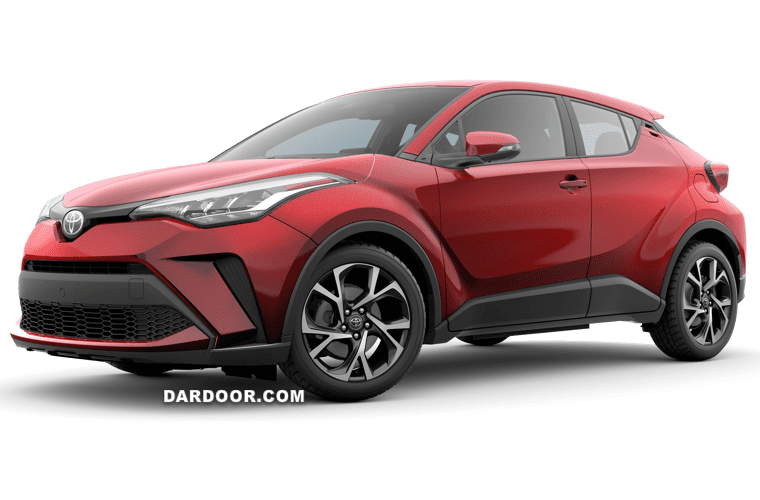
This is the original OEM manual for the 2018-2022 Toyota C-HR Wiring Diagrams (LHD North America, Engine 3ZR-FAE), in a simple PDF file format.
🔧 Top 10 Common Mechanical Issues (Root Cause + Recommended Fix)
- ⚙️ CVT hesitation / “rubber band” feel
Root cause: CVT calibration behavior, adaptive learning, or low/aged CVT fluid.
Fix: Perform scan for CVT-related codes, confirm fluid condition/level, do proper CVT service (correct fluid), update calibration if applicable. - 🛞 Front suspension clunk (low speed bumps)
Root cause: Worn sway bar links/bushings or strut mount play.
Fix: Inspect links/bushings/strut mounts; replace worn components; align afterward. - 🛑 Brake squeal / vibration
Root cause: Pad material glazing, rotor runout, or stuck slide pins.
Fix: Clean/lube slide pins, measure rotors, resurface/replace rotors and pads as needed; bed-in properly. - 🌡️ A/C weak cooling
Root cause: Low refrigerant from seepage, condenser damage, or compressor control issues.
Fix: Leak test + UV dye, repair leak, evacuate/recharge to spec, confirm fan operation. - 💧 Water intrusion (doors/hatch area)
Root cause: Door/hatch seal fitment, blocked drain paths, or body seam sealing issues.
Fix: Inspect drains/seals, clear drains, replace compromised seals, reseal as required. - 🛞 Tire cupping / uneven wear
Root cause: Alignment drift, worn dampers/struts, improper tire pressure/rotation intervals.
Fix: Alignment, inspect shocks/struts, rotate tires consistently, maintain correct pressures. - 🔊 Wheel bearing humming
Root cause: Bearing wear from mileage/impact or water ingress.
Fix: Road-test to isolate corner; replace hub/bearing assembly; recheck alignment. - 🔥 Engine oil consumption (some vehicles)
Root cause: Extended oil intervals, stuck oil control rings (rare), PCV issues.
Fix: Shorten oil interval, inspect PCV, monitor consumption; address internal causes if confirmed. - 🧯 Exhaust rattle (heat shields)
Root cause: Loose/broken exhaust heat shield clips after corrosion.
Fix: Re-secure/replace shield hardware; inspect exhaust hangers. - 🚦 Rough idle / stalling (intermittent)
Root cause: Dirty throttle body, MAF contamination, vacuum leak, or weak battery affecting idle control learning.
Fix: Clean throttle body/MAF properly, smoke test for leaks, battery/charging system test.
💡 Top 10 Common Electrical Issues (Root Cause + Recommended Fix)
- 📱 Infotainment freezing / rebooting
Root cause: Head unit software bugs or corrupted cache.
Fix: Update head unit software (dealer/official update), perform reset, check grounds/connectors. - 🔋 Battery drain / weak starting
Root cause: Parasitic draw (modules staying awake), aging battery, or frequent short trips.
Fix: Parasitic draw test, update module software if needed, replace battery, check alternator output. - 🔑 Smart key / push start intermittent
Root cause: Weak fob battery, antenna module sensitivity, or RF interference.
Fix: Replace fob battery, resync if needed, scan BCM for related codes, inspect antenna wiring. - 🚨 TPMS light stays on
Root cause: Sensor battery failure, mismatched IDs after tire change, wrong pressure spec.
Fix: Read sensor IDs, re-register/program, replace dead sensors, set pressures to door-jamb spec. - 💡 LED/DRL flicker or outage
Root cause: Driver module issues, moisture in housing, connector pin fretting.
Fix: Inspect for moisture, clean/secure connectors, replace driver/module or housing if required. - 📷 Backup camera intermittent image
Root cause: Loose hatch harness, moisture at camera connector, software glitches.
Fix: Inspect harness at hatch hinge, repair wiring, reseal connector, update system software if available. - 🧠 Random warning lights (CAN glitches)
Root cause: Low battery voltage, corroded grounds, or intermittent CAN wiring issues.
Fix: Load-test battery, clean chassis grounds, scan all modules, inspect CAN junctions/connectors. - 🪟 Power window slow/non-responsive
Root cause: Window regulator wear, switch contact issues.
Fix: Test switch outputs, re-learn auto-up/down, replace regulator/motor if weak. - 🧊 HVAC controls erratic
Root cause: Blend door actuator wear or control panel fault.
Fix: Run actuator calibration, scan HVAC module (if equipped), replace failing actuator. - 🧯 Airbag/SRS light on
Root cause: Seat connector disturbance, clock spring wear, or sensor faults.
Fix: Read SRS codes, inspect seat/clock spring wiring, repair/replace components; clear and re-test.
📊 Pros & Cons (Quick Table)
| Pros 👍 | Cons 👎 |
|---|---|
| 🎯 Stylish design + city-friendly size | ⚙️ CVT feel not sporty for some drivers |
| 🛡️ Strong safety tech availability (varies by trim) | 🧳 Rear visibility + cargo practicality can be limiting |
| ⛽ Good efficiency for a non-turbo crossover | 🪑 Rear seat/door opening feel tight for some families |
| 🔧 Generally low routine maintenance needs | 💡 Infotainment glitches reported by some owners |
🛠️ Maintenance Schedule (Practical Owner-Friendly)
| Interval ⏱️ | Service 🧰 |
|---|---|
| Every 5,000–10,000 km (or 6 months) | 🛢️ Oil + filter, tire pressure check, quick inspection (brakes/fluids/tires) |
| Every 15,000–20,000 km | 🛞 Tire rotation, brake inspection/clean & lube, cabin filter check |
| Every 30,000–50,000 km | 🧽 Engine air filter, alignment check, clean throttle body if needed |
| Every 60,000–100,000 km | ⚙️ CVT fluid service (use correct Toyota fluid), coolant check, belt inspection |
| Every 160,000 km (typical long-life) | 🔌 Spark plugs (confirm exact interval by engine/market), coolant replacement as specified |
Always follow the exact interval in your owner’s manual for your region/engine. Severe-duty driving (short trips, heat, towing) = shorter intervals.
🏁 Top Competitors
- 🚙 Honda HR-V ↗
- 🚙 Mazda CX-30 ↗
- 🚙 Hyundai Kona
- 🚙 Kia Seltos
- 🚙 Nissan Kicks ↗
- 🚙 Toyota Corolla Cross ↗
📢 Top 10 Recalls & TSB Highlights (Verify by VIN)
- 📌 Recall: 2018 C-HR electronic control unit software update related to EPB (Electronic Parking Brake) operation.
- 📌 Recall: 2019–2020 C-HR rear seat belt locking mechanism may not lock as intended (NHTSA 19V-877).
- 📌 Service Campaign/Recall Notice: 2021 C-HR Pre-Collision System (PCS) may be inoperative without warning indicator (campaign 22TA02 referenced in renotification list).
- 🛠️ TSB Theme: Audio/head unit software updates for stability (freezing/reboots) have been documented across model years.
- 🛠️ TSB Theme: Wind noise / door sealing or water management checks (drains, seals, fitment) addressed via service guidance in some cases.
- 🛠️ TSB Theme: Brake noise/vibration diagnostic steps and pad/rotor service guidance.
- 🛠️ TSB Theme: HVAC performance diagnostics (blend door/actuator checks, calibration procedures).
- 🛠️ TSB Theme: CAN communication troubleshooting procedures and connector/ground checks.
- 🔎 Owner Action: Check Toyota open campaigns by VIN (Canada/US portals).
- 🔎 Owner Action: Check NHTSA recalls/investigations by VIN or year/make/model.
✅ Quick Note: Specs/recalls can vary by country/trim. Always verify open recalls by VIN via Toyota + NHTSA tools.
🧾 DTC Trouble Code List
🚗 Engine Control Module (ECM)
| DTC | Description |
|---|---|
| P0171 | System Too Lean (Bank 1) |
| P0172 | System Too Rich (Bank 1) |
| P0300 | Random/Multiple Cylinder Misfire |
| P0301 | Cylinder 1 Misfire |
| P0420 | Catalyst System Efficiency Below Threshold (Bank 1) |
| P0128 | Coolant Thermostat (Below Regulating Temp) |
| P0113 | Intake Air Temperature Sensor Circuit High |
| P0101 | MAF Sensor Range/Performance |
| P0441 | EVAP Incorrect Purge Flow |
| P0455 | EVAP Gross Leak Detected |
⚙️ Transmission Control Module (TCM)
| DTC | Description |
|---|---|
| P0700 | Transmission Control System Malfunction |
| P0715 | Input/Turbine Speed Sensor Circuit |
| P0720 | Output Speed Sensor Circuit |
| P0741 | TCC Performance or Stuck Off (if equipped) |
| P0746 | Pressure Control Solenoid Performance/Stuck |
| P0776 | Pressure Control Solenoid Performance |
| P0796 | Pressure Control Solenoid “C” Performance |
| P0841 | Transmission Fluid Pressure Sensor Range/Perf |
| P0868 | Transmission Fluid Pressure Low |
| P2765 | Input/Turbine Speed Sensor “B” Circuit |
🛑 ABS / ESC (Brake System)
| DTC | Description |
|---|---|
| C1201 | Engine Control System Malfunction Signal |
| C1231 | Wheel Speed Sensor (Front Left) Circuit |
| C1232 | Wheel Speed Sensor (Front Right) Circuit |
| C1235 | Wheel Speed Sensor (Rear Right) Circuit |
| C1236 | Wheel Speed Sensor (Rear Left) Circuit |
| C1241 | Low/High Battery Positive Voltage |
| C1242 | Power Supply Voltage Malfunction |
| C1336 | Zero Point Calibration of Yaw Rate Sensor Undone |
| C1391 | Abnormal Leak of ACC Pressure |
| C1441 | Steering Angle Sensor / VSC Related Fault |
🎈 SRS Airbag System
| DTC | Description |
|---|---|
| B1801 | Driver Airbag Squib Circuit (Open) |
| B1802 | Driver Airbag Squib Circuit (Short) |
| B1811 | Passenger Airbag Squib Circuit (Open) |
| B1812 | Passenger Airbag Squib Circuit (Short) |
| B1821 | Side Airbag Squib (LH) Circuit |
| B1826 | Side Airbag Squib (RH) Circuit |
| B1831 | Curtain Airbag Squib (LH) Circuit |
| B1836 | Curtain Airbag Squib (RH) Circuit |
| B1861 | Seat Belt Pretensioner Circuit |
| B1900 | SRS ECU Malfunction |
🧠 Body Control / CAN Communication
| DTC | Description |
|---|---|
| U0100 | Lost Communication With ECM/PCM |
| U0121 | Lost Communication With ABS Control Module |
| U0140 | Lost Communication With Body Control Module |
| U0155 | Lost Communication With Instrument Cluster |
| U0073 | Control Module Communication Bus “A” Off |
| U1110 | CAN Communication Fault (OEM-specific) |
| B1248 | Back-Up Camera Signal Malfunction |
| B2312 | Power Door Lock Circuit Fault |
| B2780 | Immobilizer / Smart Key System Malfunction |
| B1500 | ECU Power Supply / IG Circuit Fault |
DTC lists are “common examples” used across Toyota platforms; exact code sets depend on engine, region, and module version. Always scan with a Toyota-capable tool for confirmed diagnostics.
✅ Final Verdict
⭐ Bottom line: The 2018–2022 Toyota C-HR is a dependable, stylish city crossover with generally strong durability, but owners most often complain about CVT driving feel, occasional infotainment glitches, and practical tradeoffs (rear visibility/cargo). Keep up with oil service, tire rotations, and CVT fluid intervals, and always check recall/campaign status by VIN to maximize long-term reliability.