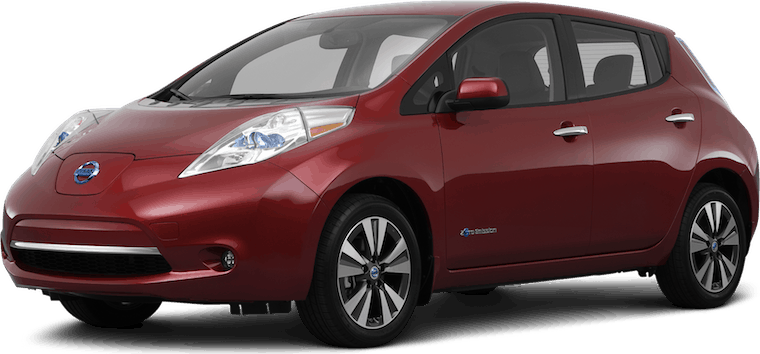
2013 Nissan Leaf (ZE0) OEM Workshop Service & Repair Manual – PDF Download
Get the original OEM workshop service and repair manual for the 2013 Nissan Leaf (ZE0 Series) in a simple and easy-to-use PDF format. This is the same factory-authorized manual used by Nissan dealer technicians to diagnose, service, and repair the Leaf with precision and confidence.
| File Format |
PDF |
| File Language |
English |
| You’ll Get |
109.8 MB |
| Wiring Diagram |
Included |
| Delivery Method |
Instant Download |
Work to factory standards and repair your 2013 Nissan Leaf with confidence.
Whether you are performing routine maintenance, troubleshooting electrical issues, or working on the EV drivetrain, this comprehensive manual gives you the same expert guidance trusted by dealership professionals.
Key Features
- Official OEM Manual, The exact factory workshop document used by Nissan dealership technicians.
- Complete Repair Coverage, Includes service, maintenance, diagnostics, and repair procedures for all major systems.
- EV System Information, Covers high-voltage components, battery systems, charging systems, and electric drive units.
- Wiring Diagrams & Diagnostics, Detailed electrical schematics, troubleshooting steps, and diagnostic flowcharts.
- User-Friendly PDF, Fully searchable and printable for quick access from desktop, tablet, or mobile.
What’s Inside
- Factory maintenance schedules and service procedures
- Electric motor and EV drivetrain repair information
- High-voltage battery system coverage and safety procedures
- Charging system, inverter, converter, and control module diagnostics
- Complete electrical wiring diagrams and connector views
- Brake, suspension, steering, and chassis service procedures
- HVAC, body, interior, and safety system repairs
- Diagnostic trouble codes (DTCs), troubleshooting charts, and repair steps
Why Choose This Manual?
This OEM Nissan Leaf repair manual gives you dealership-level information in one convenient PDF file. It is ideal for professional mechanics, EV specialists, and DIY owners who want accurate, factory-approved instructions without relying on incomplete or generic guides.
Download & Compatibility
Delivery: Instant Digital PDF Download
Compatibility: Windows • macOS • iOS • Android
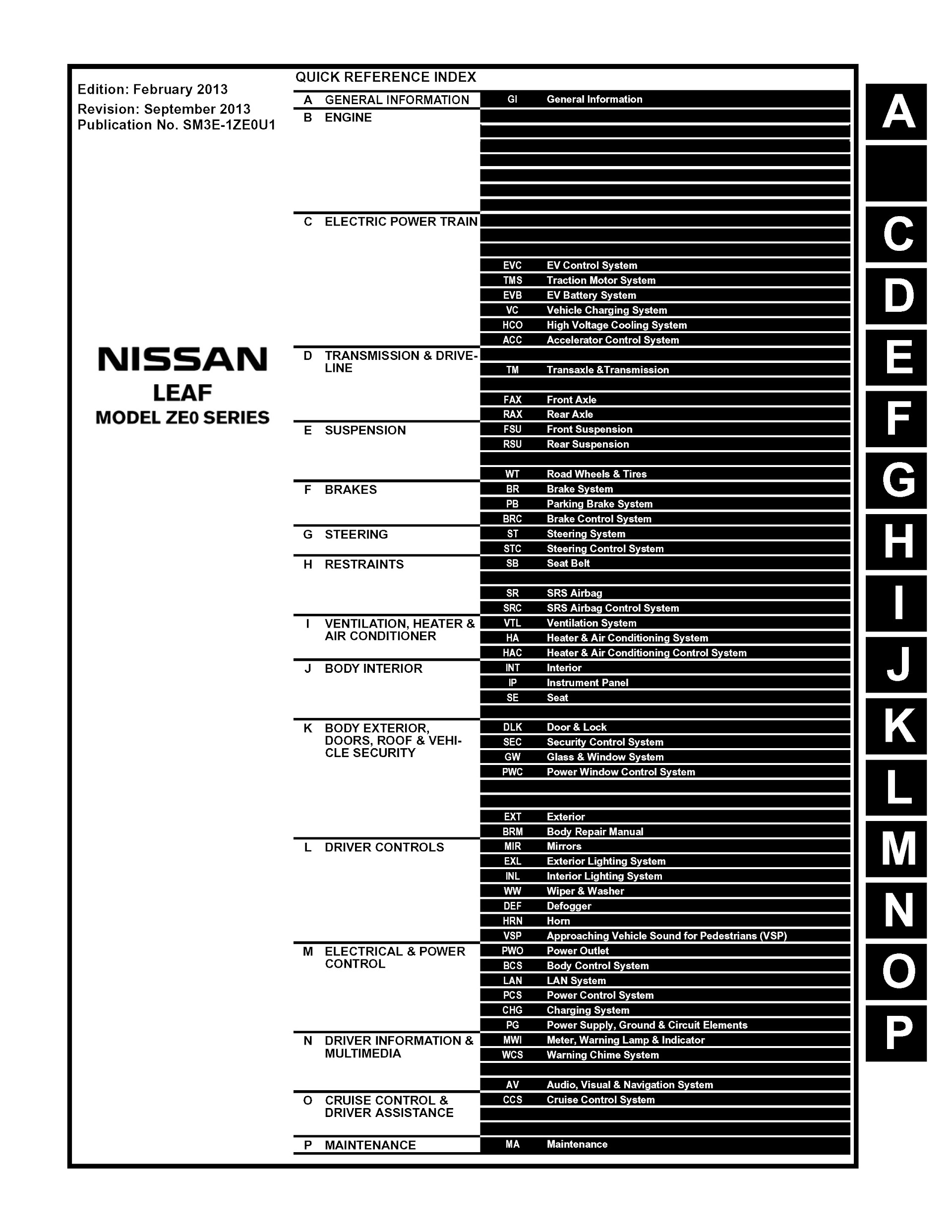
Table of Contents : 2013 Nissan Leaf Repair Manual
SAMPLE PAGES
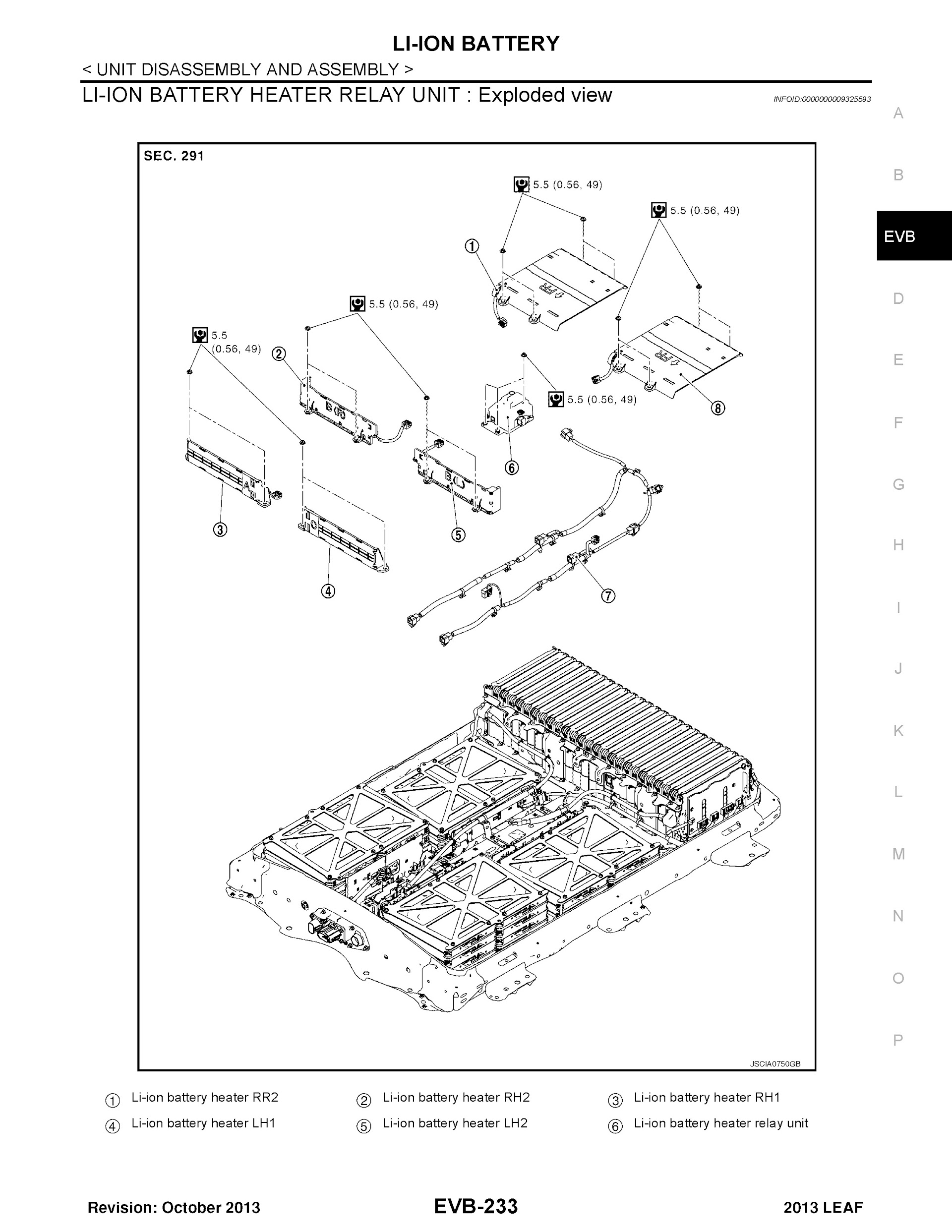
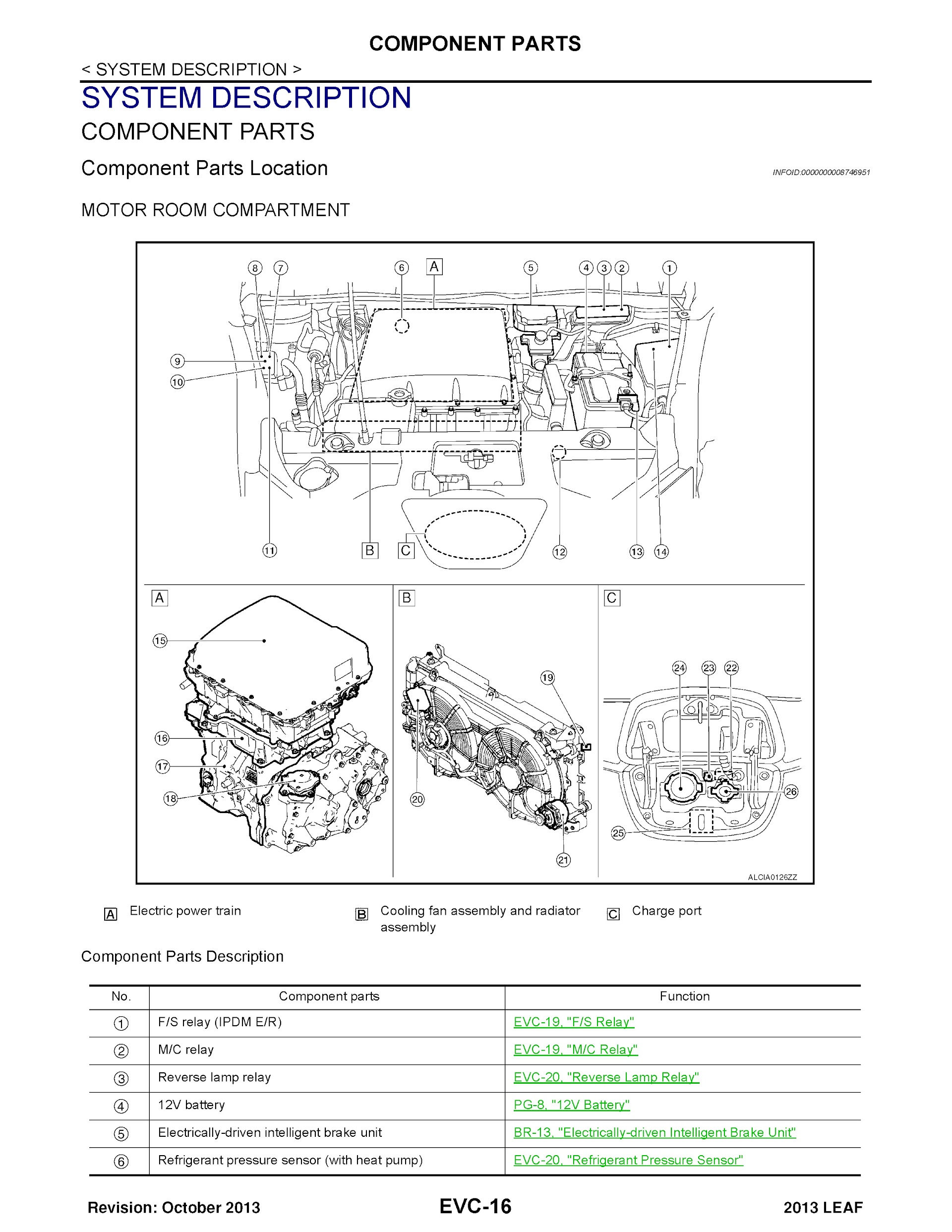
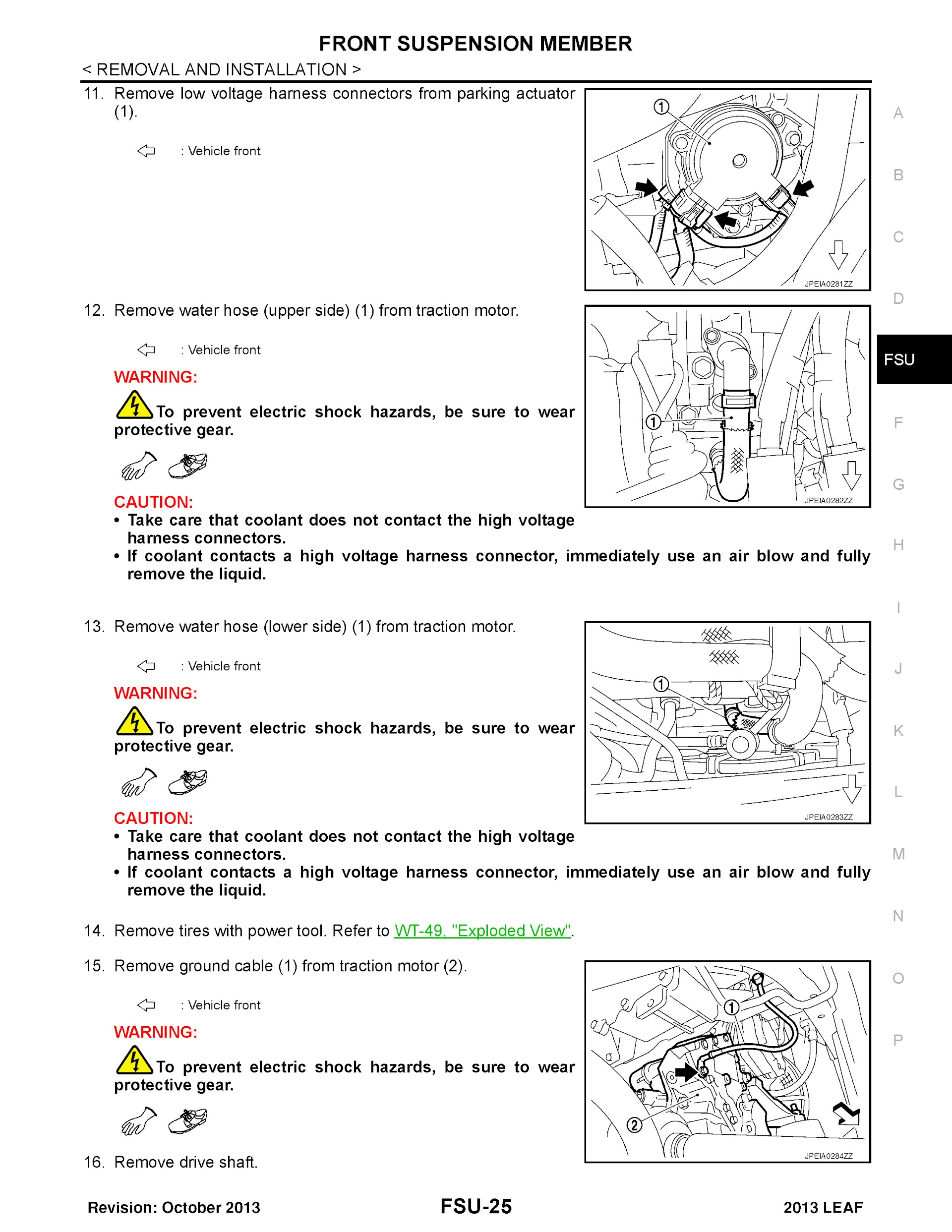
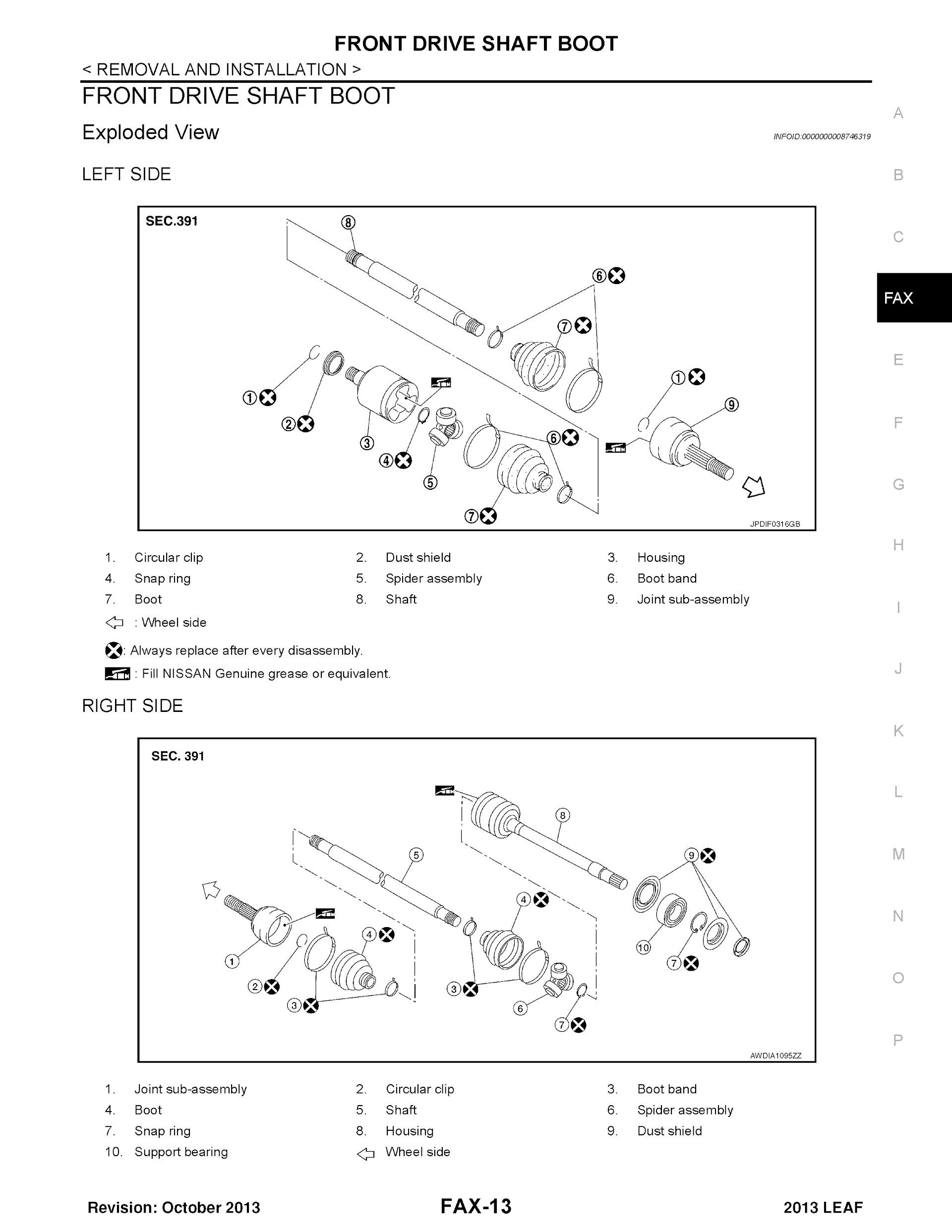
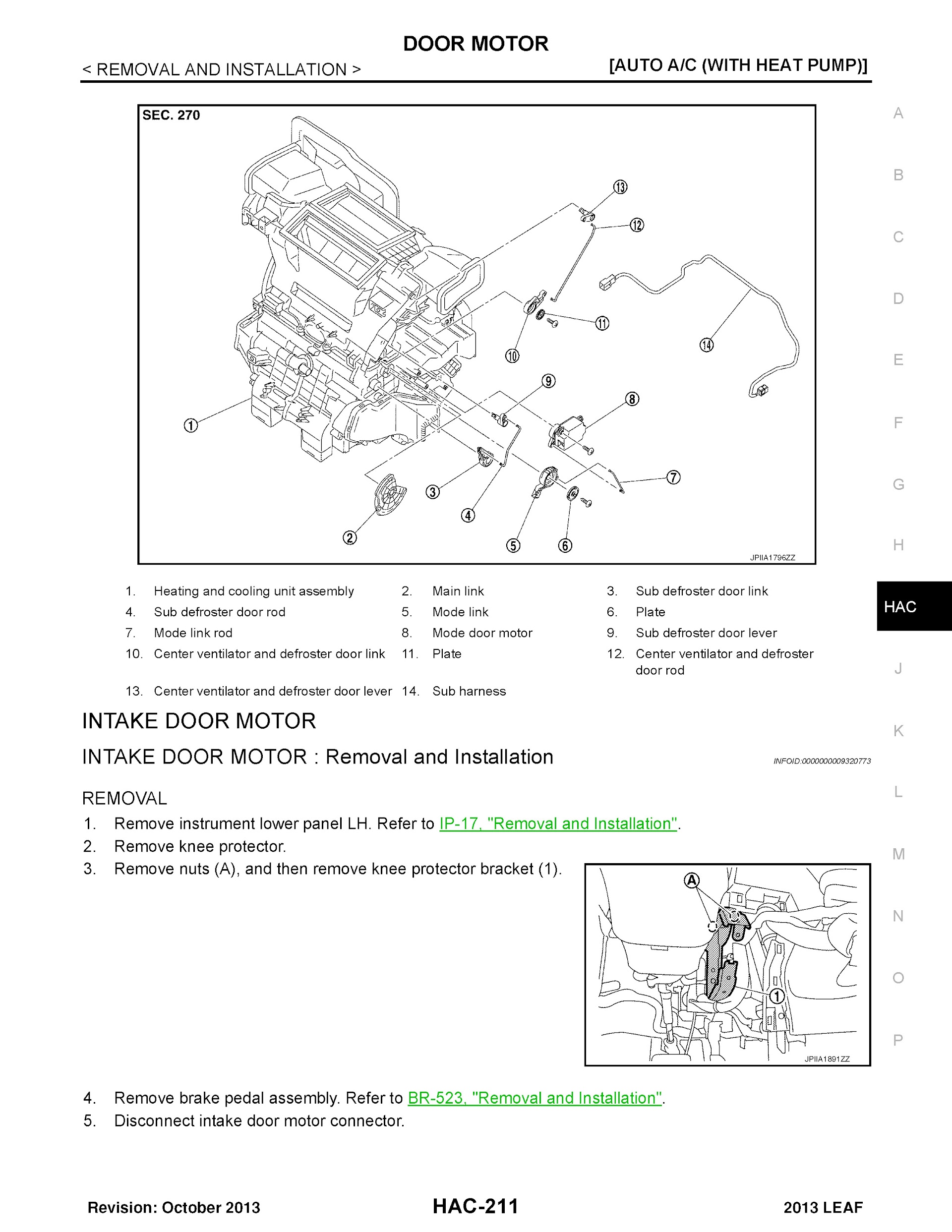
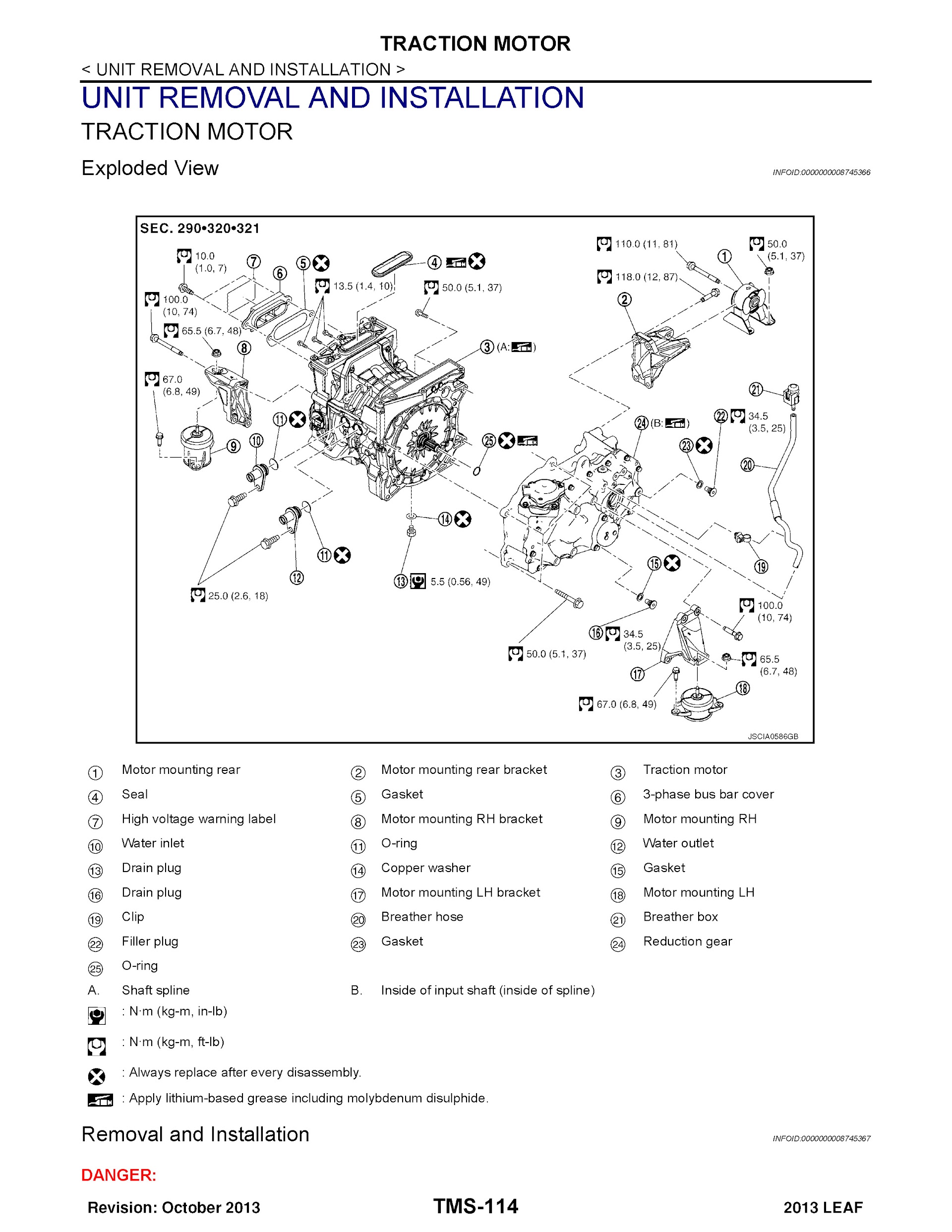
CAUTION: This manual provides detailed instructions for maintenance, disassembly, reassembly, component inspection, adjustment, and diagnostics—intended for use by experienced mechanics. Proper application of this guide will help ensure thorough repairs and maintain your vehicle in peak condition.
Important Note: Before purchasing this manual, please check whether your vehicle is subject to any active service recalls, as authorized dealerships may perform necessary repairs free of charge. When replacing parts, always use genuine OEM components to ensure safety, reliability, and long-term performance.
2013 Nissan Leaf: Complete Buyer’s Guide
Overview
The 2013 Nissan Leaf was part of the first generation of Nissan’s pioneering all-electric vehicle, representing one of the earliest mass-market EVs available to consumers. This zero-emission hatchback helped establish the modern EV market but comes with significant considerations for used buyers, particularly regarding battery degradation.
Key Highlights:
- 100% electric vehicle with zero tailpipe emissions
- 24 kWh lithium-ion battery pack
- EPA-estimated range: 75 miles (new)
- 107 horsepower electric motor
- 5-passenger seating capacity
- Front-wheel drive
- Single-speed automatic transmission
Technical Specifications
| Specification |
Details |
| Powertrain |
Electric motor |
| Power Output |
107 hp / 80 kW |
| Torque |
187 lb-ft |
| Battery Capacity |
24 kWh lithium-ion |
| Range (EPA, new) |
75 miles |
| 0-60 mph |
~11.5 seconds |
| Top Speed |
90 mph (electronically limited) |
| Charging Time (Level 2) |
~7 hours (empty to full) |
| Charging Time (DC Fast) |
~30 minutes (80% charge) |
| Curb Weight |
3,366 lbs |
| Seating Capacity |
5 passengers |
| Cargo Space |
14.5 cu ft (rear seats up), 30 cu ft (seats folded) |
| Wheelbase |
106.3 inches |
| Length |
175 inches |
10 Top Mechanical & Electrical Issues
1. Battery Degradation
Symptoms: Significantly reduced driving range (often 40-60 miles or less), rapid battery capacity loss, fewer capacity bars on dashboard display
Root Cause: Normal lithium-ion battery aging accelerated by hot climates, frequent fast charging, and lack of active thermal management system
Fix: Battery pack replacement or refurbishment
Cost: $5,500-$8,500+ for replacement; some refurbished options $3,000-$5,000
2. 12V Auxiliary Battery Failure
Symptoms: Car won’t start, warning lights illuminate, complete electrical system failure, accessories not working
Root Cause: Small 12V battery (like conventional cars) powers accessories and control systems; fails after 3-5 years
Fix: Replace 12V battery
Cost: $150-$300 including labor
3. Onboard Charger Failure
Symptoms: Unable to charge using Level 1 or Level 2 charging, charging error messages, no charging indicator lights
Root Cause: Internal component failure in the onboard charging module, moisture intrusion, electrical surge damage
Fix: Replace or repair onboard charger module
Cost: $1,200-$2,500 for replacement
4. DC Fast Charging Port Issues
Symptoms: CHAdeMO fast charging not working, error messages during fast charging attempts, loose connection
Root Cause: Worn charging pins, corrosion, internal connector damage from frequent use
Fix: Replace CHAdeMO charging port assembly
Cost: $500-$1,200 including parts and labor
5. Electric Motor Bearing Failure
Symptoms: Grinding or whining noise from motor, vibration during acceleration, reduced power output
Root Cause: Bearing wear over time, inadequate lubrication, manufacturing defects in early models
Fix: Motor bearing replacement or complete motor replacement
Cost: $1,500-$3,000 for bearing replacement; $4,000-$6,000 for motor replacement
6. Battery Management System (BMS) Faults
Symptoms: Inaccurate state of charge readings, turtle mode (limp mode), warning lights, unexpected shutdowns
Root Cause: Software glitches, sensor failures, communication errors between battery cells
Fix: Software update, BMS module replacement, sensor replacement
Cost: $200-$500 for software updates; $800-$1,500 for module replacement
7. Reduction Gear Oil Leak
Symptoms: Oil spots under vehicle, grinding noises, reduced efficiency, low gear oil warning
Root Cause: Worn seals, gasket deterioration, overfilling during service
Fix: Replace seals and gaskets, refill with proper gear oil
Cost: $300-$600
8. Brake Actuator Problems
Symptoms: ABS warning light, brake pedal feels spongy or inconsistent, reduced regenerative braking, grinding during braking
Root Cause: Brake actuator module failure, air in brake lines, software calibration issues
Fix: Brake actuator replacement, brake system bleeding and calibration
Cost: $1,500-$2,500 for actuator replacement
9. Climate Control System Failure
Symptoms: Heat or A/C not working, weak airflow, compressor not engaging, cabin temperature fluctuations
Root Cause: Electric compressor failure, refrigerant leaks, control module malfunction
Fix: Compressor replacement, refrigerant recharge, control module repair
Cost: $1,000-$2,000 for compressor; $200-$400 for refrigerant service
10. Power Inverter Failure
Symptoms: Loss of power, inability to drive, warning lights, reduced acceleration, vehicle won’t move
Root Cause: Internal component failure, overheating, electrical short circuits
Fix: Power inverter replacement
Cost: $2,500-$4,000+
Top 5 Competitors (2013)
- Type: Plug-in hybrid electric vehicle (PHEV)
- Electric Range: 38 miles
- Total Range: 380 miles (with gas engine)
- Advantage: Extended range capability eliminates range anxiety
- Price (2013 MSRP): ~$39,995
- Type: All-electric
- Range: 76 miles EPA
- Battery: 23 kWh
- Advantage: Similar range, better handling dynamics
- Price (2013 MSRP): ~$39,200
3. Tesla Model S (2013)
- Type: All-electric luxury sedan
- Range: 208-265 miles depending on battery
- Battery: 60-85 kWh options
- Advantage: Significantly longer range, premium features, performance
- Price (2013 MSRP): ~$69,900+
- Type: Plug-in hybrid
- Electric Range: 11 miles
- Total Range: 540+ miles
- Advantage: Proven reliability, excellent fuel economy, no range anxiety
- Price (2013 MSRP): ~$32,000
- Type: All-electric
- Range: 62 miles EPA
- Battery: 16 kWh
- Advantage: Lower price point, compact size for city driving
- Price (2013 MSRP): ~$29,975
Top 10 Recalls, Advisories & TSB Highlights
Recalls
1. Parking Brake Recall (2013-2015)
- Issue: Parking brake may not hold vehicle on incline
- Fix: Dealer inspection and parking brake adjustment/replacement
- NHTSA Campaign: 15V-421
2. Inverter Software Recall (2013-2014)
- Issue: Inverter software glitch could cause loss of drive power
- Fix: Software update to inverter control module
- NHTSA Campaign: 14V-153
3. Brake Lamp Switch Recall (2013)
- Issue: Brake lamps may not illuminate or shift interlock may fail
- Fix: Replace brake lamp switch
- NHTSA Campaign: Multiple campaigns
Technical Service Bulletins (TSBs)
4. Battery Capacity Loss TSB
- Issue: Accelerated battery degradation in hot climates
- Solution: Software update to improve battery thermal management; extended warranty coverage
5. Onboard Charger Noise TSB
- Issue: High-pitched whining during charging
- Solution: Replace onboard charger with updated version
6. 12V Battery Drain TSB
- Issue: 12V battery drains when vehicle sits unused
- Solution: Software update to reduce parasitic drain
7. HVAC Odor TSB
- Issue: Musty smell from climate control system
- Solution: Replace cabin air filter, clean evaporator
8. Charging Port Door TSB
- Issue: Charging port door difficult to open or close
- Solution: Adjust or replace charging port door mechanism
9. Navigation System Update TSB
- Issue: Outdated maps and software glitches
- Solution: Navigation system software and map updates
10. Regenerative Braking Calibration TSB
- Issue: Inconsistent regenerative braking feel
- Solution: Brake system software recalibration
Maintenance Schedule
Every 7,500 Miles or 6 Months
- Tire rotation
- Visual inspection of brake pads and rotors
- Check tire pressure and tread depth
- Inspect wipers and washer fluid
Every 15,000 Miles or 12 Months
- Cabin air filter replacement
- Brake fluid inspection
- 12V battery inspection and load test
- Inspect charging cables and ports
- Multi-point inspection
Every 30,000 Miles or 24 Months
- Brake fluid replacement
- Reduce gear oil inspection
- Coolant system inspection (battery cooling)
- High-voltage battery inspection
Every 60,000 Miles or 48 Months
- Replace 12V auxiliary battery (if not done sooner)
- Reduction gear oil replacement
- Comprehensive battery health check
- Brake pad replacement (if needed – often last longer due to regen braking)
Every 100,000 Miles
- Electric coolant replacement (battery thermal system)
- Comprehensive electrical system inspection
As Needed
- Wiper blade replacement
- Tire replacement
- Software updates (check with dealer periodically)
Note: EVs require significantly less maintenance than gas vehicles – no oil changes, transmission services, spark plugs, or exhaust system work.
10 FAQs for Buyers
1. What kind of real-world range can I expect from a 2013 Leaf today?
Most 2013 Leafs now have 8-10 capacity bars remaining (out of 12), resulting in 40-60 miles of real-world range depending on driving conditions, climate control use, and driving style. Cold weather can reduce this by 20-30%.
2. How can I check battery health before buying?
Check the battery capacity bars on the dashboard (right side of display). 12 bars = full capacity; 8-9 bars is typical for a 2013 model. Request a battery state-of-health report from a Nissan dealer using their diagnostic tools.
3. Is the 2013 Leaf suitable as a daily driver?
Only if your daily commute is under 30-40 miles round-trip with charging available at home or work. It’s best suited as a second vehicle for short local trips rather than a primary car.
4. What charging options are available?
- Level 1 (120V): Standard household outlet – very slow (~20 hours for full charge)
- Level 2 (240V): Home or public charging station – ~7 hours full charge
- DC Fast Charging (CHAdeMO): ~30 minutes to 80% at compatible public stations
5. How much does it cost to charge?
At average electricity rates of $0.13/kWh in Canada, a full charge costs approximately $3.12. This works out to roughly 5-6 cents per mile, significantly cheaper than gasoline.
6. What happens when the battery dies completely?
The car will enter “turtle mode” (limp mode) with severely reduced power to get you to a charging station. If completely depleted, it needs to be towed to a charger – the battery cannot be “jump started.”
7. Can I replace just some battery cells instead of the whole pack?
Some independent EV specialists offer cell-level repairs or module replacements at lower cost than full pack replacement, but availability varies by location and Nissan doesn’t officially support this.
8. Are there any government incentives for buying a used EV?
This varies by province. Some Canadian provinces offer incentives for used EVs. Check current provincial programs, though most incentives favor newer EVs.
9. How long will a 2013 Leaf last?
The electric motor and drivetrain can easily last 200,000+ miles with minimal maintenance. The limiting factor is battery degradation. Many 2013 Leafs are still operational but with significantly reduced range.
10. What should I budget for repairs and maintenance annually?
Budget $500-$800 annually for routine maintenance and minor repairs. However, set aside an emergency fund of $2,000-$3,000 for potential major repairs (12V battery, onboard charger, etc.). Battery replacement is the biggest wildcard at $5,500+.
Final Buyer Recommendations
✅ Consider Buying If:
- Your daily commute is under 35 miles round-trip
- You have reliable home charging (Level 2 preferred)
- You’re looking for a low-cost second vehicle for local errands
- You live in a moderate climate (not extreme heat or cold)
- You can find one with 9+ battery capacity bars for under $6,000-$8,000
- You’re mechanically inclined or have access to affordable EV specialists
- You understand the limitations and are comfortable with restricted range
❌ Avoid Buying If:
- You need a vehicle for long commutes or road trips
- You don’t have home charging capability
- This will be your only vehicle
- You live in an extremely hot climate (accelerates battery degradation)
- The battery has fewer than 8 capacity bars remaining
- You need consistent range in cold Canadian winters
- You’re expecting modern EV features and performance
- The asking price is over $9,000
Smart Buying Tips:
- Battery is everything – Always get a battery health report from a Nissan dealer before purchase (~$100-$150 diagnostic fee is worth it)
- Price accordingly – Fair market value for a 2013 Leaf ranges from $5,000-$9,000 depending on mileage, battery health, and condition
- Check charging equipment – Ensure the Level 1 charging cable is included; a Level 2 home charger adds $500-$1,000 in value
- Review maintenance records – Look for regular 12V battery replacements, software updates, and proper care
- Test drive thoroughly – Test acceleration, regenerative braking, charging function, climate control, and all electrical systems
- Budget for battery replacement – Consider the vehicle’s total cost including a potential $5,500 battery replacement in 2-4 years
- Compare to newer options – 2015+ Leafs have better range and battery chemistry; 2018+ models have significant improvements
What is the final verdict?
The 2013 Nissan Leaf is a historic vehicle that pioneered mass-market EVs, but it’s now showing its age significantly. With degraded batteries offering 40-60 miles of range, it’s best suited as an ultra-cheap second vehicle for short local trips. At the right price ($5,000-$7,000 with decent battery health), it can serve specific needs well – grocery runs, short commutes, around-town errands.
However, most buyers would be better served by a 2016-2018 Leaf with the 30 kWh battery, or exploring other used EV options with better battery thermal management and longer range. The 2013 model’s limitations make it suitable only for buyers with very specific use cases and realistic expectations about range and longevity.
Best Use Case: Budget-conscious second car for a household with another primary vehicle, used exclusively for trips under 30 miles in moderate climates.