CAUTION: This manual provides detailed instructions for maintenance, disassembly, reassembly, component inspection, adjustment, and diagnostics—intended for use by experienced mechanics. Proper application of this guide will help ensure thorough repairs and maintain your vehicle in peak condition.
Important Note: Before purchasing this manual, please check whether your vehicle is subject to any active service recalls, as authorized dealerships may perform necessary repairs free of charge. When replacing parts, always use genuine OEM components to ensure safety, reliability, and long-term performance.
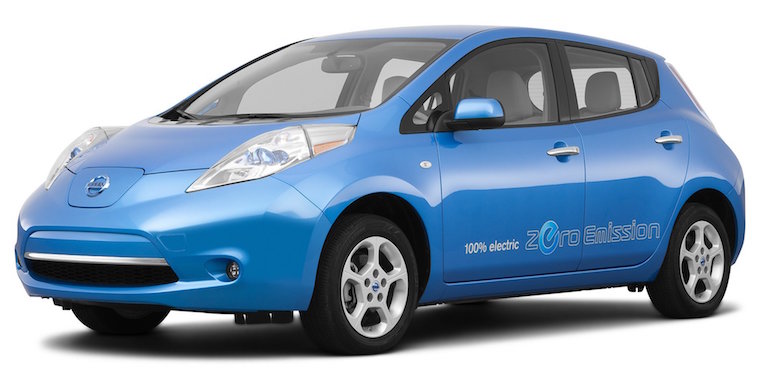
2012 Nissan Leaf (ZE0 Series) – Comprehensive Buyer’s Guide
Overview
The 2012 Nissan Leaf was part of the first-generation electric vehicle lineup (ZE0 series, 2011–2017) and represented Nissan’s pioneering effort in mass-market EVs. As one of the earliest affordable all-electric vehicles, it helped establish the modern EV market but came with first-generation technology limitations that buyers should understand.
Market Position: The 2012 Leaf was groundbreaking as an affordable, practical EV for everyday use, though its limited range and battery degradation issues became well-documented concerns.
Technical Specifications
| Specification |
Details |
| Battery |
24 kWh lithium-ion battery pack |
| Motor |
80 kW (107 hp) AC synchronous motor |
| Torque |
187 lb-ft (254 Nm) |
| Range (EPA) |
73 miles (new) |
| Real-World Range |
50-70 miles (varies with degradation) |
| 0-60 mph |
~10 seconds |
| Top Speed |
90 mph (electronically limited) |
| Charging (Level 2) |
~7 hours (240V, 3.3 kW onboard charger) |
| Charging (CHAdeMO DC) |
80% in ~30 minutes (optional) |
| Drive Type |
Front-wheel drive |
| Seating |
5 passengers |
| Cargo Space |
14.5 cubic feet |
| Curb Weight |
~3,300 lbs |
Top 10 Mechanical & Electrical Issues
1. Battery Capacity Degradation
- Symptoms: Significantly reduced driving range (often 40-50 miles or less), loss of battery bars on dashboard display, rapid charge depletion
- Root Cause: Lithium-ion battery chemistry degradation accelerated by heat (no active thermal management system), frequent fast charging, and age. The 2012 Leaf uses passive air cooling which is insufficient in hot climates
- Fix: Battery pack replacement is the only permanent solution
- Cost: $5,500-$8,500 for refurbished/aftermarket packs; new OEM packs were $8,000+ (rarely available now)
2. 12V Auxiliary Battery Failure
- Symptoms: Vehicle won’t start, “READY” light won’t illuminate, warning lights on dashboard, electrical accessories not working, clicking sound when trying to start
- Root Cause: The 12V battery powers vehicle computers and accessories. It’s charged by the main traction battery but can fail from age, parasitic drain, or being left in “ON” mode without “READY”
- Fix: Replace 12V battery (typically Group 51R or equivalent)
- Cost: $150-$250 (battery + labor)
3. On-Board Charger (OBC) Failure
- Symptoms: Vehicle won’t charge on Level 1 (120V) or Level 2 (240V), charging light flashing, “EV System” warning message, no charging indicator
- Root Cause: Internal component failure in the 3.3 kW charger module, often due to power surges, moisture intrusion, or component wear
- Fix: Replace on-board charger module
- Cost: $1,200-$2,500 (parts + labor)
4. Electric Motor Reduction Gear Grinding/Noise
- Symptoms: Grinding, whining, or humming noise during acceleration, especially from cold starts, metallic clicking sounds
- Root Cause: Inadequate lubrication or bearing wear in the reduction gear assembly that connects the motor to the wheels
- Fix: Replace reduction gear lubricant or rebuild/replace reduction gear assembly
- Cost: $500-$800 (fluid service); $2,000-$3,500 (bearing/gear replacement)
5. Brake Actuator Failure
- Symptoms: ABS warning light, VDC (Vehicle Dynamic Control) warning light, brake warning light, loss of regenerative braking, unusual brake pedal feel, grinding noise when braking
- Root Cause: The brake actuator assembly integrates regenerative and friction braking. Internal solenoids, sensors, or the pump can fail due to wear or corrosion
- Fix: Replace brake actuator assembly
- Cost: $2,000-$3,500 (parts + labor)
6. High-Voltage Battery Contactors Sticking
- Symptoms: Vehicle won’t go into “READY” mode, clicking sound from under hood, “EV System” warning, intermittent power loss, turtle mode (reduced power)
- Root Cause: High-voltage contactors (relays) that connect the battery to the motor can stick or weld due to arcing from repeated opening/closing cycles
- Fix: Replace battery main contactors/relays
- Cost: $800-$1,500 (parts + labor)
7. Charging Port Door Actuator Failure
- Symptoms: Charge port door won’t open or close, stuck charge port, grinding noise from charge port area, error messages related to charging
- Root Cause: Electric actuator motor failure or mechanical linkage breakage due to repeated use and plastic component wear
- Fix: Replace charge port door actuator/motor assembly
- Cost: $300-$600 (parts + labor)
8. DC-DC Converter Failure
- Symptoms: 12V battery repeatedly dying, electrical accessories malfunctioning, warning lights, vehicle won’t start even with good 12V battery
- Root Cause: The DC-DC converter steps down high voltage from the traction battery to charge the 12V system. Component failure can occur from heat, electrical stress, or age
- Fix: Replace DC-DC converter module
- Cost: $1,000-$1,800 (parts + labor)
9. Heat Pump/Climate Control Issues (SL/SV trim with heat pump)
- Symptoms: Inconsistent cabin heating, reduced range in cold weather, climate control system error messages, compressor not engaging
- Root Cause: Heat pump compressor failure, refrigerant leaks, or electric heater element failure in cold weather operation
- Fix: Repair or replace heat pump compressor, seal refrigerant leaks, replace heater elements
- Cost: $1,500-$2,800 (depending on component)
10. Inverter Cooling System Issues
- Symptoms: “EV System” warning light, reduced power (turtle mode), overheating warnings, coolant leaks under vehicle, high-pitched whining from motor bay
- Root Cause: Coolant pump failure, coolant leaks from hoses/connections, or air in cooling system affecting inverter and motor cooling
- Fix: Replace coolant pump, repair leaks, bleed cooling system, refill with proper EV coolant
- Cost: $400-$900 (pump replacement); $200-$400 (leak repair/bleeding)
Top 5 Competitors (2012 Model Year Context)
- Type: Plug-in Hybrid Electric Vehicle (PHEV)
- Electric Range: 38 miles
- Total Range: 380 miles (with gas engine)
- Key Advantage: Extended range capability eliminates range anxiety
- Price When New: ~$39,000
- Type: Battery Electric Vehicle (BEV)
- Electric Range: 76 miles (EPA)
- Key Advantage: Slightly more range than Leaf, better thermal management
- Price When New: ~$39,200
- Type: Battery Electric Vehicle (BEV)
- Electric Range: 62 miles (EPA)
- Key Advantage: Lower price point, compact city car
- Price When New: ~$29,000
4. Tesla Model S (2012)
- Type: Battery Electric Vehicle (BEV)
- Electric Range: 160-265 miles (depending on battery)
- Key Advantage: Premium luxury, superior range, performance
- Price When New: ~$57,000-$77,000
- Type: Plug-in Hybrid Electric Vehicle (PHEV)
- Electric Range: 11 miles
- Total Range: 540+ miles (with gas engine)
- Key Advantage: Toyota reliability, no range anxiety, proven hybrid technology
- Price When New: ~$32,000
Verdict: The Leaf was the most affordable purpose-built BEV with practical range for daily commuting, though PHEVs like the Volt offered more versatility for buyers concerned about range.
Top 10 Recalls, Advisories & TSB Highlights
Recalls
- R13-006 (January 2013) – Brake Lamp Switch
- Issue: Brake lamp switch could fail, preventing brake lights from illuminating and affecting ability to shift out of Park
- Fix: Replace brake lamp switch
- Vehicles Affected: ~47,000 Leafs (2011-2012)
- R16-019 (June 2016) – Airbag Inflator
- Issue: Takata airbag inflator recall – driver airbag inflator could rupture
- Fix: Replace driver airbag inflator
- Vehicles Affected: Part of broader Takata recall
- R14-007 (April 2014) – Body Control Module
- Issue: Body control module software could cause vehicle to stall while driving
- Fix: Software update to body control module
- Vehicles Affected: ~21,000 Leafs (2013-2014, but software-related to earlier models)
Technical Service Bulletins (TSBs)
- NTB13-055a – Battery Capacity Loss
- Issue: Guidance on battery capacity loss and warranty coverage in hot climates
- Action: Nissan extended battery capacity warranty in certain regions
- NTB12-031 – Reduction Gear Noise
- Issue: Grinding or whining noise from reduction gear on cold starts
- Action: Software update to motor control and lubricant service
- EL12-004 – Charging System Issues
- Issue: Inability to charge, charging errors, or slow charging
- Action: Diagnose and repair on-board charger or replace if necessary
- NTB13-017 – 12V Battery Drain
- Issue: Repeated 12V battery discharge
- Action: Check for parasitic drain, update software, replace battery if needed
- IT13-012 – Navigation/Infotainment Freezing
- Issue: Navigation system freezing or touchscreen unresponsive
- Action: Software update or head unit replacement
- NTB14-088 – Climate Control Performance
- Issue: Reduced heating performance in cold weather
- Action: Software update to climate control system
- CH13-002 – Charging Port Communication Errors
- Issue: Vehicle won’t communicate with certain charging stations
- Action: Software update to charging system controller
Maintenance Schedule
Every 7,500 Miles or 12 Months
- Tire Rotation: Rotate tires to ensure even wear ($25-$50)
- Cabin Air Filter Inspection: Replace if dirty ($20-$40 DIY; $50-$80 dealer)
- Brake System Inspection: Check pads, rotors, fluid (minimal wear due to regenerative braking)
- 12V Battery Check: Test voltage and connections
Every 15,000 Miles or 24 Months
- Brake Fluid Replacement: Essential for brake system health ($80-$120)
- Wiper Blade Replacement: As needed ($15-$40)
- Tire Inspection: Check tread depth and tire condition
Every 30,000 Miles or 36 Months
- Reduction Gear Oil Replacement: Check/replace reduction gear lubricant ($150-$250)
- Inverter/Motor Coolant Inspection: Check level and condition
- High-Voltage System Inspection: Dealer inspection of HV battery, connections, and cables ($100-$150)
Every 60,000 Miles or 60 Months
- Inverter Coolant Replacement: Replace coolant in inverter/motor cooling system ($200-$350)
- Comprehensive Brake Inspection: Inspect brake actuator and regenerative braking system
Annual/As Needed
- 12V Battery Replacement: Typically every 3-5 years ($150-$250)
- Software Updates: Check with dealer for available updates (often free)
- Tire Replacement: Every 30,000-50,000 miles depending on driving ($400-$700 for set)
Special Considerations
- Battery Health Monitoring: Check battery capacity bars monthly (2012 models show 12 bars when new)
- Charging Equipment: Inspect charging cables and connections regularly
- Winter Preparation: Consider battery preconditioning in cold climates
Annual Maintenance Cost Estimate: $300-$600 (significantly lower than gas vehicles due to fewer moving parts)
10 FAQs for Buyers
1. How much range can I realistically expect from a 2012 Leaf?
Expect 40-60 miles of real-world range in a typical 2012 Leaf today, depending on battery degradation. New, they offered 70-73 miles. Battery health varies significantly—check how many capacity bars remain (12 when new, 9-10 acceptable, 8 or fewer indicates significant degradation). Hot climate vehicles degrade faster.
2. How do I check battery health before buying?
Check the battery capacity indicator on the right side of the dashboard (12 bars = full capacity). Ask for a battery state-of-health (SOH) report from a Nissan dealer (shows percentage). Use apps like Leaf Spy Pro with an OBD-II Bluetooth adapter to read detailed battery data including SOH percentage, individual cell voltages, and temperature. Aim for 75%+ SOH for reasonable usability.
3. What’s the battery warranty situation?
Original warranty was 8 years/100,000 miles against capacity loss below 9 bars (approximately 70-75% capacity). Most 2012 Leafs are now out of warranty. Some vehicles in hot climates received extended capacity warranties due to settlement programs. Used batteries have no remaining warranty coverage in most cases.
4. Can I replace the battery pack affordably?
Aftermarket refurbished 24 kWh packs cost $5,500-$8,500 installed. Some owners upgrade to 30 kWh or 40 kWh packs from newer Leafs ($7,000-$12,000). Battery replacement is expensive but can make economic sense if the vehicle is otherwise in excellent condition and you plan to keep it long-term.
5. Is the 2012 Leaf suitable as a primary vehicle?
Only if your daily driving is under 40-50 miles round-trip with home charging available. It’s ideal as a commuter car or second vehicle but impractical for road trips or unpredictable driving patterns. Consider your charging infrastructure, climate (cold reduces range 20-40%), and backup transportation options.
6. What charging equipment do I need?
At minimum, use the included Level 1 (120V) charging cable (adds ~4 miles/hour—very slow). Highly recommended: Install a Level 2 (240V) charger at home for ~25 miles/hour charging (~7 hours for full charge). CHAdeMO fast charging is optional on 2012 models—check if equipped. Public charging infrastructure has improved but may be limited in rural areas.
7. How does cold weather affect the Leaf?
Expect 20-40% range reduction in freezing temperatures. The 2012 Leaf has a resistive heater (SV/SL trims have a heat pump, which is more efficient). Battery performance decreases in cold, and charging slows. Preconditioning the cabin while plugged in helps. The Leaf lacks active battery thermal management, making it vulnerable to temperature extremes.
8. What should I pay for a 2012 Leaf in 2026?
Market prices vary by region, mileage, and battery health: Good battery health (9-12 bars, 75%+ SOH): $4,000-$7,000 | Fair battery health (8-9 bars, 65-75% SOH): $2,500-$4,500 | Poor battery health (7 bars or less): $1,500-$3,000 or avoid. Always factor in potential battery replacement costs. Verify battery health before purchase—a cheap Leaf with a degraded battery is not a bargain.
9. Are parts and service still available?
Yes, Nissan dealers still service the Leaf, and many parts remain available. However, specialized components (battery modules, inverters) may have limited availability. Independent EV specialists and aftermarket suppliers offer alternatives. The active Leaf owner community provides excellent DIY support and resources.
10. What are the biggest deal-breakers to walk away from?
Avoid if: (1) Battery health below 8 bars or 65% SOH without budget for replacement, (2) “EV System” warning lights that can’t be diagnosed, (3) Evidence of flood damage or severe collision repair, (4) Missing or non-functional charging equipment, (5) Vehicles from hot climates (Arizona, California desert) showing rapid degradation, (6) No home charging available and you rely on public charging, (7) Rust or corrosion on high-voltage battery components.
Final Buyer Recommendations
✅ Buy a 2012 Leaf If:
- Your commute is under 40 miles round-trip with consistent, predictable driving patterns
- You have reliable home charging (Level 2 preferred) and can charge overnight
- You need an ultra-low-cost second vehicle for local errands and short trips
- Battery health is 75%+ SOH (9+ capacity bars) with documented history
- You understand EV limitations and have backup transportation for longer trips
- You’re mechanically inclined or willing to work with EV specialists for repairs
- Purchase price reflects battery condition ($3,000-$5,000 for good examples)
❌ Avoid or Reconsider If:
- Battery shows 8 or fewer capacity bars unless priced under $2,500 and you plan immediate replacement
- You need range over 50 miles regularly or lack consistent charging access
- Vehicle history is unclear (especially hot climate use, salvage title, flood damage)
- You need a primary vehicle for unpredictable driving or family use
- Charging infrastructure is limited in your area
- You’re not comfortable with older EV technology and potential repair costs
🔍 Pre-Purchase Inspection Checklist:
- Battery capacity test with Leaf Spy Pro (target: 75%+ SOH)
- Check all 12 capacity bars on dashboard
- Test drive including highway speeds to verify full power
- Inspect charging port and cables for damage
- Check for fluid leaks (coolant under vehicle)
- Verify no warning lights (EV System, ABS, VDC, brake)
- Test climate control (heating and cooling)
- Review maintenance records and battery warranty history
- Get Nissan dealer diagnostic if possible ($100-$150 well spent)
- Negotiate price based on battery health and needed repairs
Our Final Verdict
The 2012 Nissan Leaf offers exceptional value as an ultra-affordable EV for the right buyer. With typical purchase prices of $3,000-$6,000, it’s one of the cheapest ways to enter electric vehicle ownership. Operating costs are minimal (electricity costs ~$1-$2 per “fill-up”), maintenance is simple, and it’s perfect for predictable, short-range commuting.
However, the 2012 Leaf is a first-generation EV with known limitations. Battery degradation is inevitable, and replacement costs can exceed the vehicle’s value. It’s best suited as a specialized commuter car or second vehicle rather than a primary family vehicle.
Bottom Line: At the right price with good battery health, the 2012 Leaf is an excellent entry-level EV for short-range duty. Just ensure you’re buying with eyes wide open about its limitations and potential future costs. Budget $1,000-$2,000 annually for potential repairs, and consider it a learning platform for EV ownership before upgrading to a modern electric vehicle.