Original OEM Service and Repair Manual for 2012 Nissan 370Z Coupe (Z34) – PDF
Get the complete original OEM service and repair manual for the 2012 Nissan 370Z Coupe, model Z34, available in a simple PDF file format. This manual contains all the essential instructions required to repair and maintain your Nissan 370Z. It is the same guide used by Nissan dealer technicians for accurate diagnostics and repairs.
| File Format |
PDF |
| File Language |
English |
| You’ll Get |
101.9 MB |
| Delivery Method |
Instant Download |
Key Features:
- Official OEM Manual: Trusted by Nissan dealership technicians for professional-grade repairs.
- Complete Coverage: Detailed instructions for all service, repair, and maintenance tasks for the 2012 Nissan 370Z Coupe (Z34).
- Dealer-Approved Procedures: Follow the same steps used by certified Nissan technicians.
- User-Friendly PDF Format: Easily downloadable and accessible on any device for quick reference.
Download the trusted manual today and ensure your Nissan 370Z is repaired and maintained with expert precision.
Table of Contents : 2012 Nissan 370Z Repair Manual
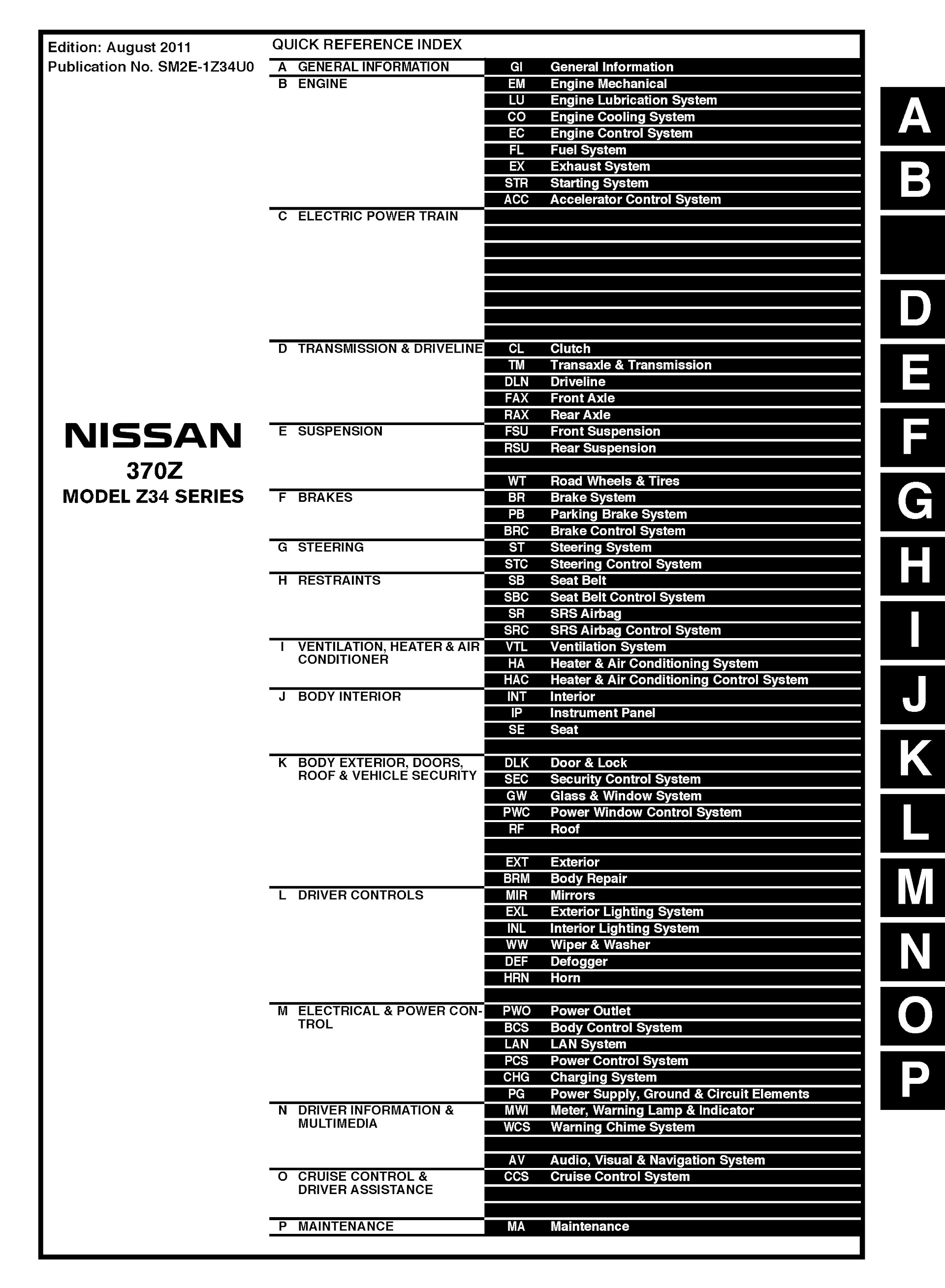
SAMPLE PAGES
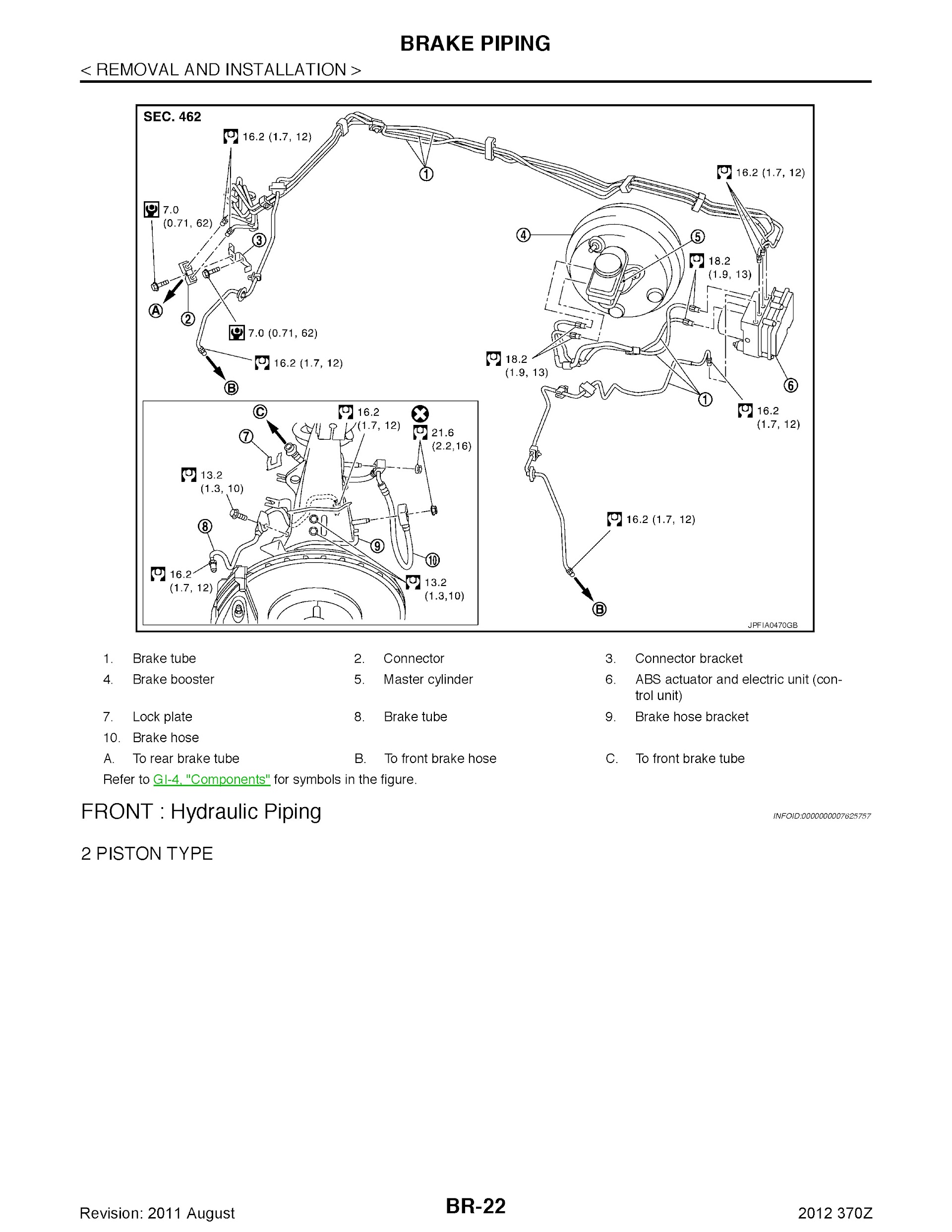
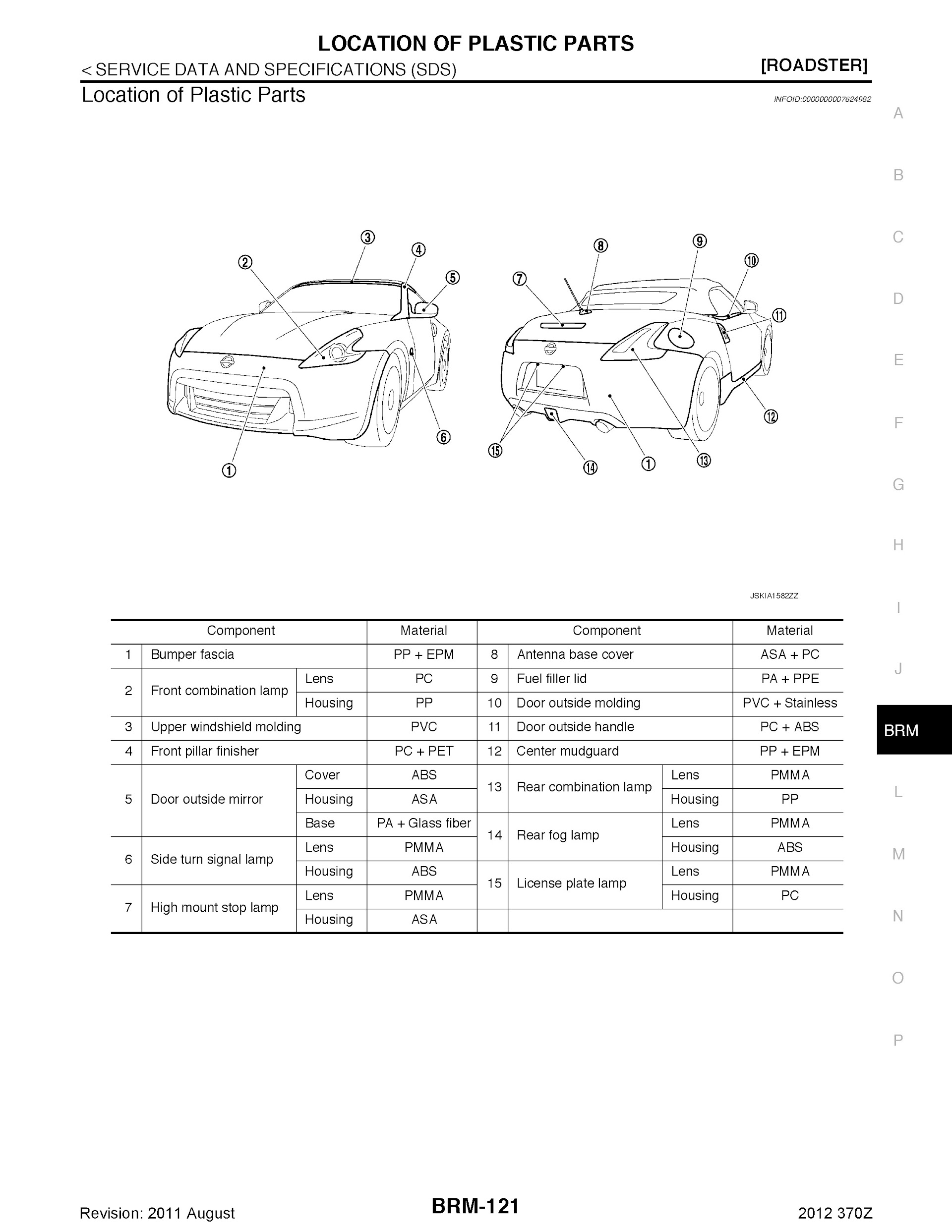
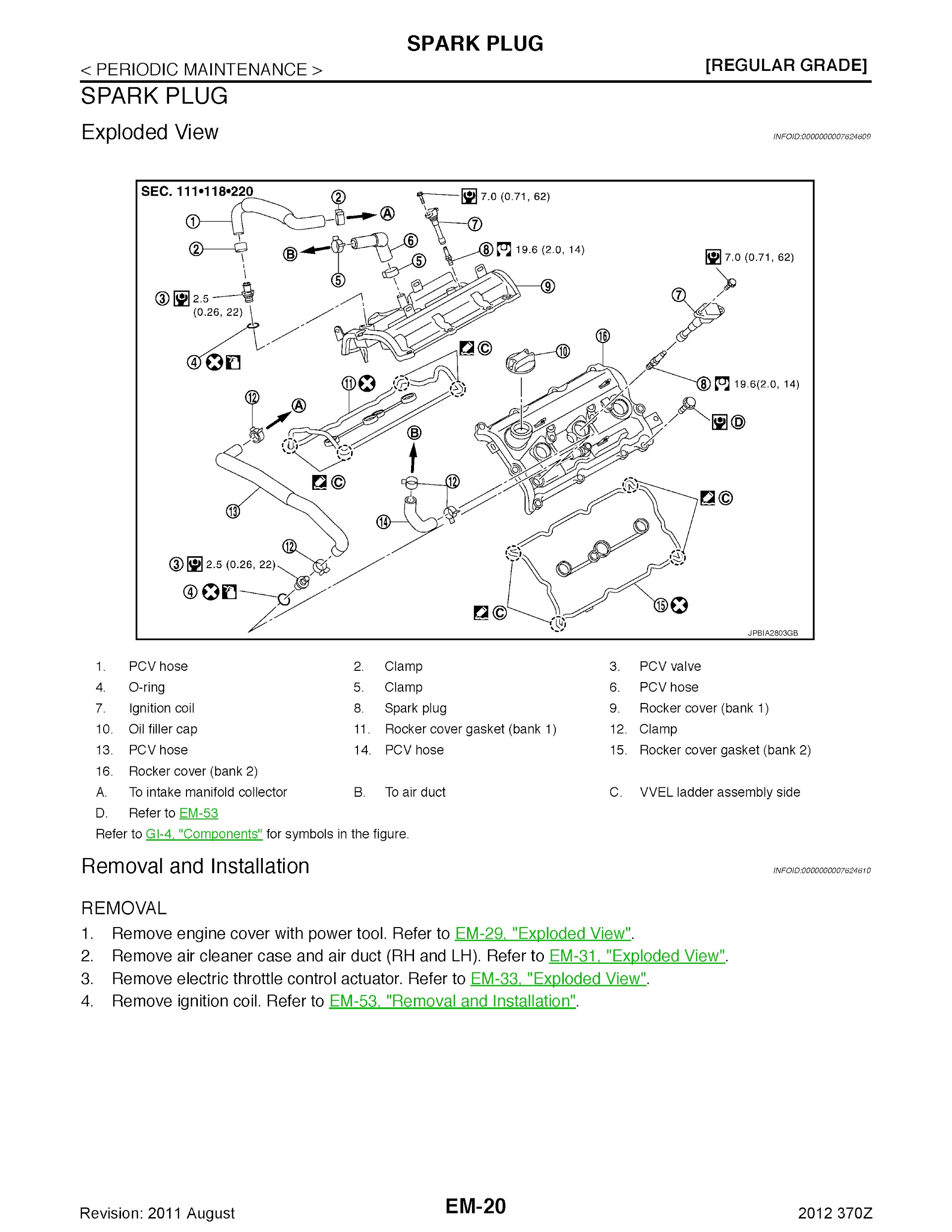
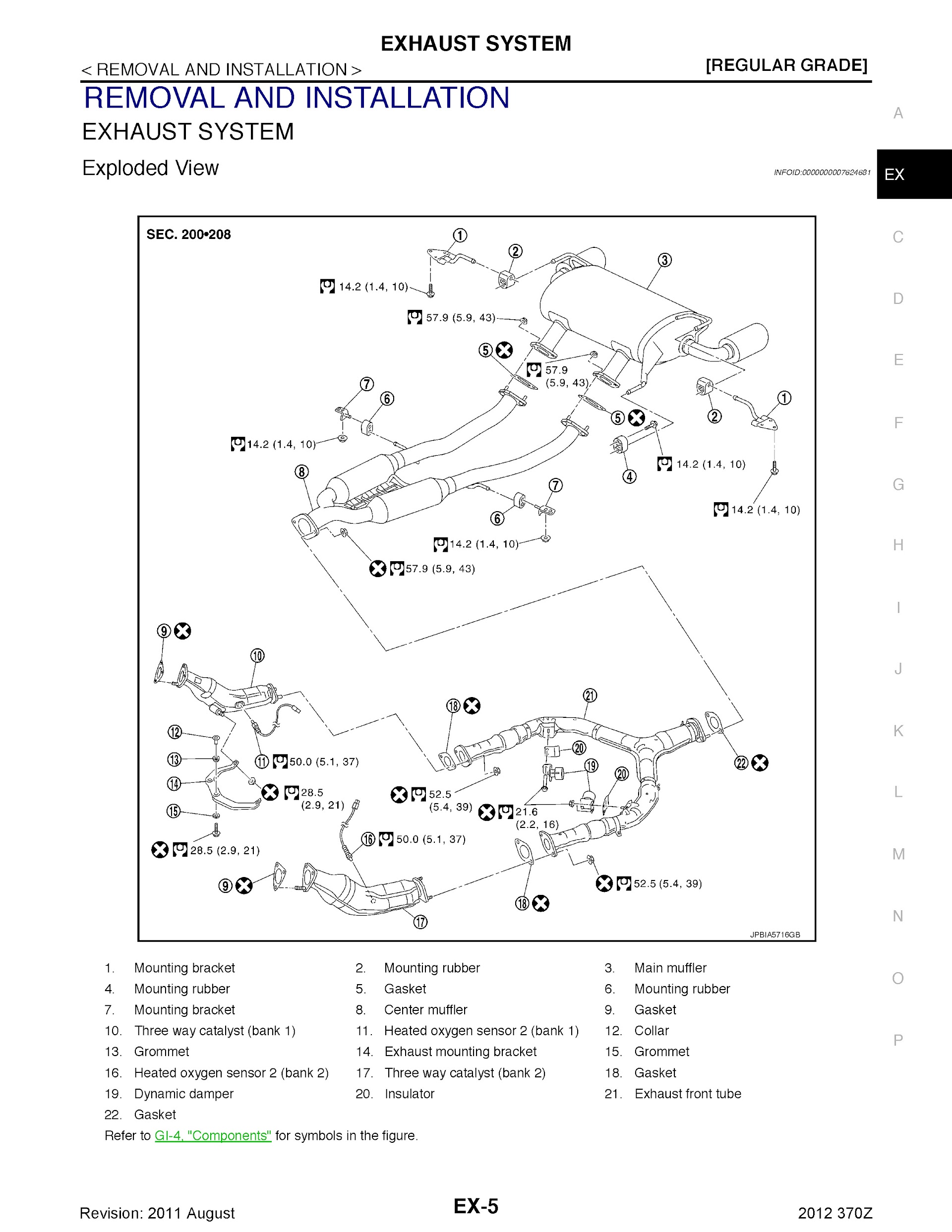
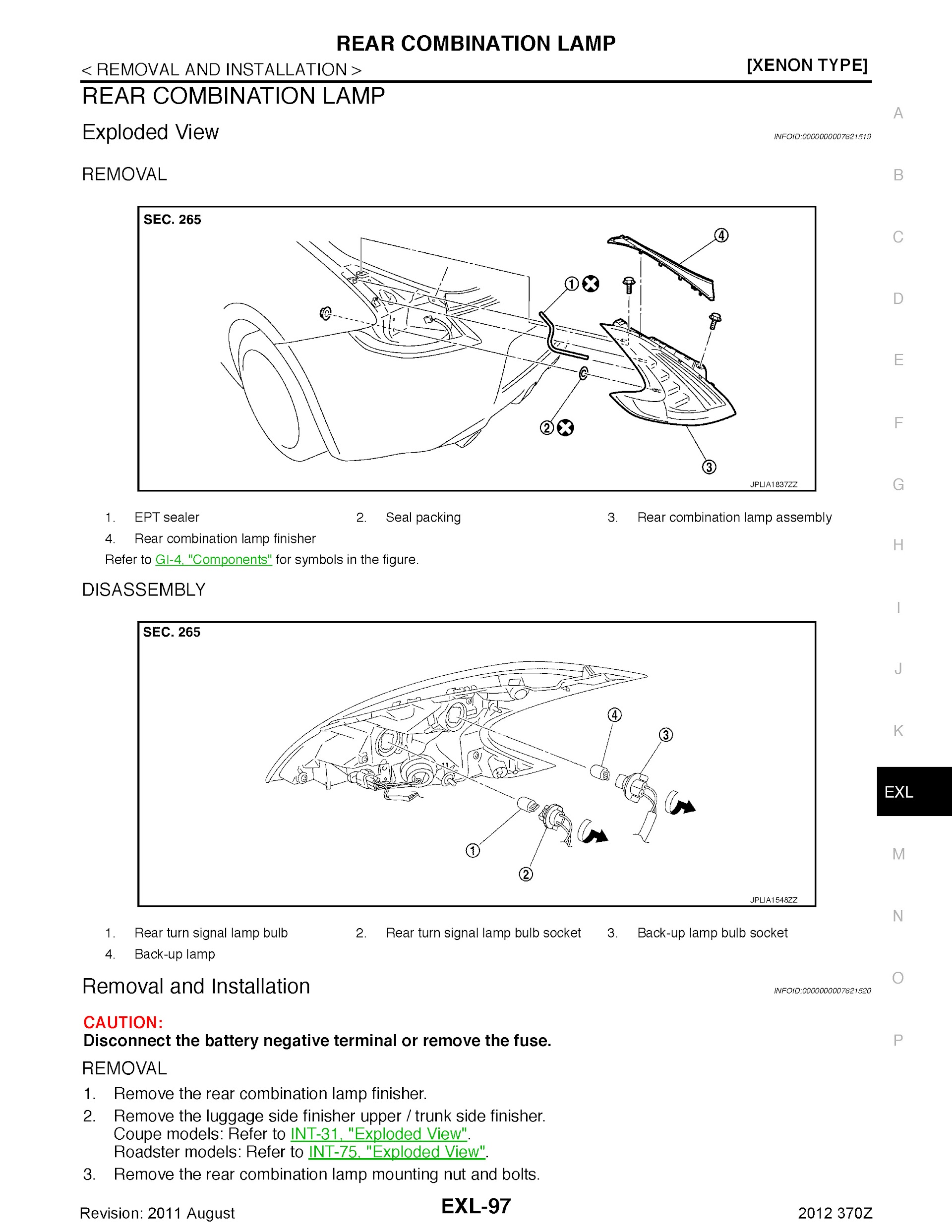
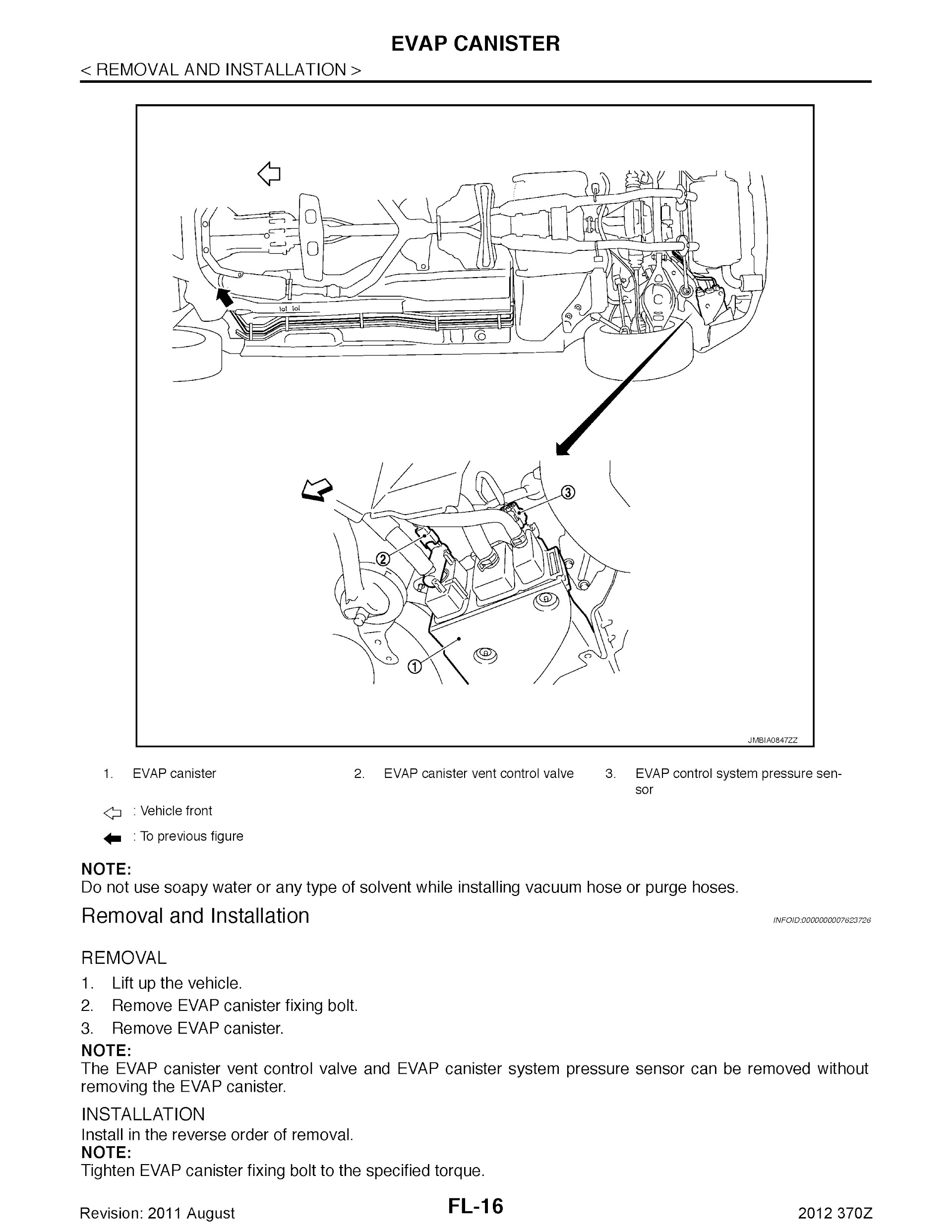
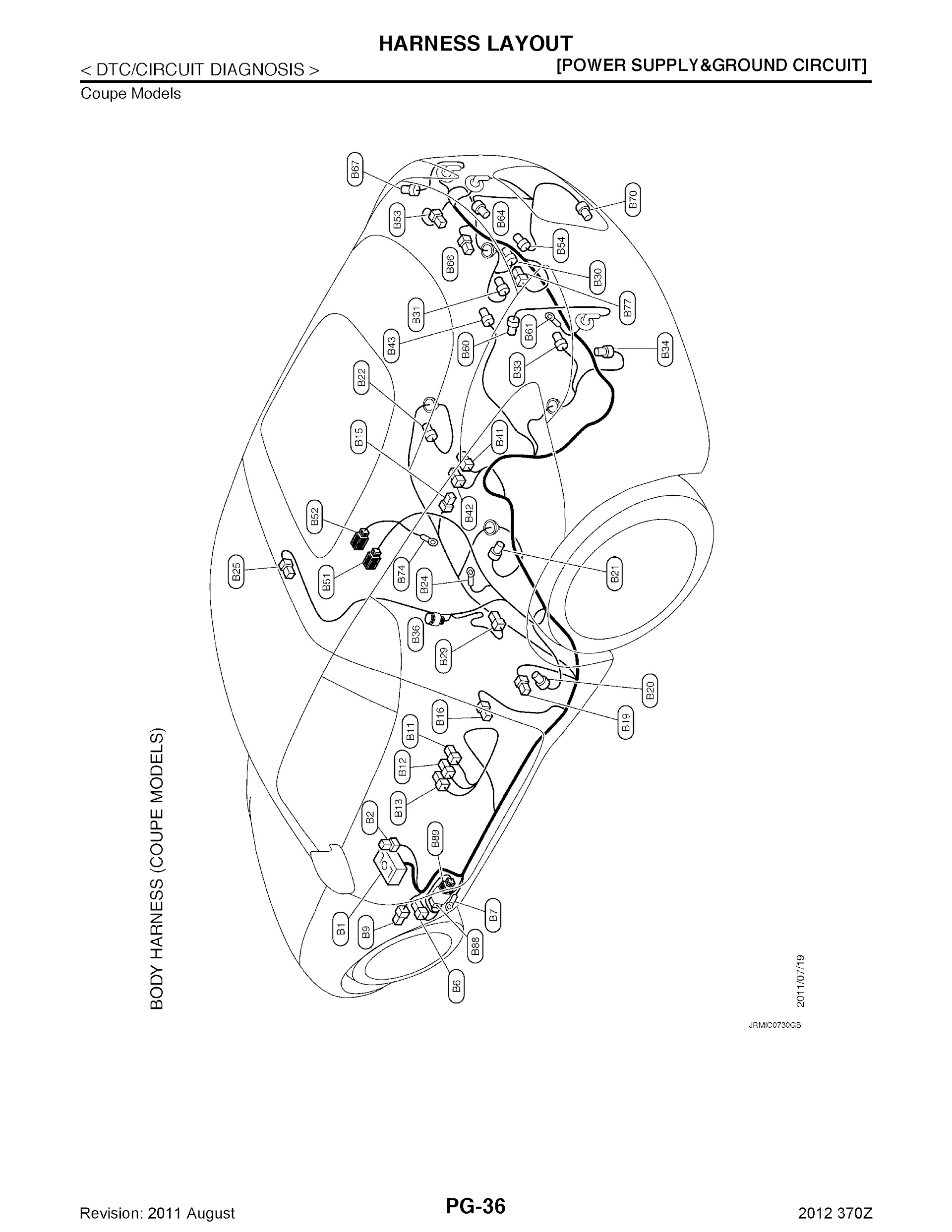
CAUTION: This manual provides detailed instructions for maintenance, disassembly, reassembly, component inspection, adjustment, and diagnostics—intended for use by experienced mechanics. Proper application of this guide will help ensure thorough repairs and maintain your vehicle in peak condition.
Important Note: Before purchasing this manual, please check whether your vehicle is subject to any active service recalls, as authorized dealerships may perform necessary repairs free of charge. When replacing parts, always use genuine OEM components to ensure safety, reliability, and long-term performance.
2012 Nissan 370Z Coupe (Z34) – Comprehensive Guide
Overview
The 2012 Nissan 370Z is a two-seat sports car that represents the sixth generation of Nissan’s Z-car lineage. It offers pure, old-school sports car thrills with a naturally aspirated V6 engine, rear-wheel drive, and available manual transmission.
Available Trims:
- Base Coupe
- Touring
- Sport Package
- NISMO (track-focused variant)
Technical Specifications
| Specification |
Details |
| Engine |
3.7L VQ37VHR V6 |
| Horsepower |
332 hp @ 7,000 rpm |
| Torque |
270 lb-ft @ 5,200 rpm |
| Transmission |
6-speed manual or 7-speed automatic |
| Drivetrain |
Rear-wheel drive (RWD) |
| 0-60 mph |
~5.1 seconds (manual) |
| Top Speed |
155 mph (electronically limited) |
| Fuel Economy |
18 city / 26 highway mpg (manual) |
| Curb Weight |
3,232-3,428 lbs |
| Wheelbase |
100.4 inches |
| Length |
167.5 inches |
| Width |
72.6 inches |
| Height |
51.8 inches |
| Fuel Tank |
19.0 gallons |
| Brakes |
4-wheel disc (Brembo on Sport/NISMO) |
| Suspension |
Independent double-wishbone front, multi-link rear |
Top 10 Mechanical & Electrical Issues
1. Steering Lock Failure
-
- Symptoms: Car won’t start, steering wheel locked, “Steering Lock Malfunction” warning message, clicking noise from steering column
- Root Cause: The electronic steering lock mechanism fails, often due to a faulty motor or control unit in the steering column. This is a known widespread issue on 2009-2010 models but can affect 2012s as well.
- Fix: Replace the steering lock assembly or install a steering lock elimination kit (aftermarket solution)
- Cost: $500-$1,000 (dealer replacement) or $100-$300 (elimination kit + installation)
2. CSC (Concentric Slave Cylinder) Failure
-
- Symptoms: Clutch pedal stays to the floor, difficulty shifting gears, clutch engagement point changes, grinding when shifting, clutch fluid leaks
- Root Cause: The internal concentric slave cylinder (inside the transmission bell housing) fails due to heat exposure and seal deterioration. This is extremely common on manual transmission 370Zs.
- Fix: Replace CSC; requires transmission removal. Many owners upgrade to aftermarket heavy-duty CSC or external slave cylinder conversion.
- Cost: $800-$1,500 (OEM replacement at shop) or $1,200-$2,000 (upgraded aftermarket CSC with installation)
3. Fuel Gauge/Fuel Pump Issues
-
- Symptoms: Erratic fuel gauge readings, fuel starvation during hard cornering or acceleration, engine sputtering/hesitation at 1/4 tank or less, check engine light
- Root Cause: Fuel level sending unit failure or inadequate fuel pickup design causes fuel starvation during spirited driving, especially with less than half tank.
- Fix: Replace fuel level sensor or install aftermarket fuel pump assembly with improved baffling
- Cost: $400-$800 (fuel sender replacement) or $1,200-$1,800 (upgraded fuel pump system)
4. VDC/ABS/SLIP Light Issues
-
- Symptoms: VDC, ABS, and SLIP warning lights illuminate simultaneously, traction control disabled, ABS may not function properly
- Root Cause: Faulty ABS actuator, wheel speed sensor failure, or corroded wiring connections to wheel speed sensors
- Fix: Replace faulty wheel speed sensor(s), clean/repair wiring connections, or replace ABS actuator (rare)
- Cost: $150-$400 (wheel speed sensor) or $1,500-$2,500 (ABS actuator if needed)
5. Oil Consumption Issues
-
- Symptoms: Excessive oil consumption (1 quart per 1,000-2,000 miles), low oil warning light, blue smoke from exhaust during acceleration
- Root Cause: Piston ring wear or valve stem seal deterioration, particularly in engines driven hard or with aggressive driving history
- Fix: Monitor oil levels closely; severe cases may require engine rebuild or replacement. Many owners consider this “normal” for sports cars driven hard.
- Cost: $5,000-$8,000+ (engine rebuild) – most owners simply add oil regularly
6. Clutch Fluid Contamination
-
- Symptoms: Clutch pedal feels soft or spongy, difficulty shifting, clutch engagement point inconsistent, dark/dirty clutch fluid
- Root Cause: Moisture absorption in brake/clutch fluid or internal seal degradation causes fluid contamination, which accelerates CSC failure
- Fix: Flush and replace clutch/brake fluid with high-quality DOT 4 fluid; should be done annually
- Cost: $100-$200 (fluid flush at shop) or $40-$80 (DIY)
7. Window Regulator Failure
-
- Symptoms: Power windows move slowly, windows make grinding/clicking noise, windows fail to go up or down, window drops into door
- Root Cause: Plastic window regulator components break or wear out, particularly the plastic clips and guides
- Fix: Replace window regulator assembly
- Cost: $300-$600 per window (parts + labor)
8. Hatch Lift Supports Failure
-
- Symptoms: Hatchback won’t stay open, drops slowly or suddenly, difficulty opening hatch
- Root Cause: Gas-charged lift support struts lose pressure over time due to seal wear
- Fix: Replace both hatch lift supports (always replace as a pair)
- Cost: $80-$150 (parts + DIY installation) or $150-$250 (with shop labor)
9. Differential Bushing Wear
-
- Symptoms: Clunking noise from rear during acceleration/deceleration, vibration under load, driveline shudder
- Root Cause: Differential mounting bushings deteriorate, allowing excessive movement of the differential assembly
- Fix: Replace differential bushings with OEM or upgraded polyurethane bushings
- Cost: $400-$800 (OEM rubber bushings) or $500-$900 (upgraded polyurethane)
10. Door Handle Mechanism Failure
-
- Symptoms: Exterior door handle feels loose or floppy, door won’t open from outside, handle breaks off, clicking sound when pulling handle
- Root Cause: Plastic components inside the door handle assembly break due to repeated use and material fatigue
- Fix: Replace door handle assembly
- Cost: $200-$400 per handle (parts + labor)
Top 5 Competitors (2012 Model Year)
- Price: $52,600+ (significantly higher)
- Advantages: Superior handling, premium interior, Porsche badge
- Disadvantages: Much more expensive, higher maintenance costs, less powerful base engine
- Price: $49,000+
- Advantages: More power (430 hp LS3 V8), removable roof panel, better aftermarket support
- Disadvantages: Larger size, dated interior, less nimble handling
- Price: $30,000+
- Advantages: V8 power (412 hp), lower price, back seats, larger aftermarket
- Disadvantages: Heavier, live rear axle (until 2015), less refined handling
- Price: $27,000+
- Advantages: Lower price, back seats, good warranty, turbo 2.0T option
- Disadvantages: Less powerful (348 hp), front-engine balance not as good, cheaper interior
- Price: $25,000+
- Advantages: Better handling balance, lower price, excellent steering feel, more tossable
- Disadvantages: Much less power (200 hp), slower in straight line, smaller
Top 10 Recalls, Advisories & TSB Highlights
Recalls:
1. Steering Control (NHTSA Campaign 13V435000)
- Issue: Steering lock mechanism may fail, preventing vehicle from starting
- Models Affected: Some 2009-2010 models (extended to early production 2012s)
- Fix: Replace steering lock assembly
2. Fuel Pressure Sensor (NHTSA Campaign 13V567000)
- Issue: Fuel pressure sensor O-ring may leak, causing fuel odor or fire risk
- Models Affected: Select 2013 models (check if applies to late 2012 production)
- Fix: Replace fuel pressure sensor O-ring
3. Passenger Airbag (Takata – NHTSA Campaign 15V335000)
- Issue: Takata airbag inflator may rupture, causing injury
- Models Affected: Various model years including 2012
- Fix: Replace passenger airbag inflator
Technical Service Bulletins (TSBs):
4. TSB NTB13-084: Clutch Judder/Chatter
- Issue: Clutch judder during engagement, particularly when cold
- Solution: Replace clutch disc with updated part, resurface flywheel
5. TSB NTB12-055: Steering Wheel Off-Center
- Issue: Steering wheel not centered when driving straight
- Solution: Adjust steering wheel position, check alignment
6. TSB NTB11-078: Bluetooth Connectivity Issues
- Issue: Phone won’t pair or drops connection with Bluetooth system
- Solution: Software update for head unit
7. TSB IT11-004: Navigation System Freezing
- Issue: Navigation screen freezes or becomes unresponsive
- Solution: Software update for navigation system
8. TSB NTB10-090: Transmission Gear Grind
- Issue: Grinding noise when shifting into 5th or 6th gear
- Solution: Replace synchronizer assembly if worn
9. TSB NTB12-018: Wind Noise from Doors
- Issue: Excessive wind noise from door seals at highway speeds
- Solution: Adjust door strikers, replace weatherstripping if damaged
10. TSB NTB13-021: Paint Chipping on Front Bumper
- Issue: Paint chips easily on front bumper/hood edge
- Solution: Repaint affected areas; consider clear bra/paint protection film
Maintenance Schedule
Every 3,750 Miles or 3 Months:
- Engine oil and filter change (or synthetic at 5,000-7,500 miles)
Every 15,000 Miles or 12 Months:
- Rotate tires
- Inspect brake pads and rotors
- Inspect drive belts
- Check all fluid levels
Every 30,000 Miles or 24 Months:
- Replace engine air filter
- Replace cabin air filter
- Inspect exhaust system
- Inspect suspension components
- Inspect steering linkage
- Replace brake fluid (CRITICAL for performance driving)
- Replace clutch fluid (shared with brake fluid)
Every 60,000 Miles or 48 Months:
- Replace spark plugs
- Replace engine coolant
- Inspect/replace transmission fluid (manual)
- Inspect CVT fluid (automatic – 7-speed)
- Inspect differential fluid
- Replace fuel filter (if equipped)
Every 105,000 Miles:
- Replace timing chain (inspection-based; VQ37 uses chain, not belt)
- Replace drive belts
As Needed:
- Brake pads: 20,000-40,000 miles (varies greatly with driving style)
- Tires: 20,000-40,000 miles (performance tires wear faster)
- Battery: 3-5 years
- Wiper blades: 6-12 months
Special Note for Track/Performance Driving:
- Change oil every 3,000 miles
- Flush brake fluid every 12 months
- Inspect brake pads after each track day
- Check tire pressures and condition regularly
10 FAQs for Buyers
1. Is the 2012 370Z reliable?
Generally yes, with caveats. The VQ37 engine is robust and reliable. However, the manual transmission CSC is a known weak point that WILL eventually fail. Budget for this. Other issues like steering lock and fuel gauge are less common but documented. With proper maintenance, the 370Z can be reliable for a sports car.
2. Should I buy manual or automatic?
Manual is the enthusiast choice—more engaging, better control, lighter. However, the CSC issue is a significant concern. The 7-speed automatic is smooth and quick but doesn’t offer the same involvement. For daily driving or traffic, automatic; for pure driving pleasure and track use, manual (but budget for CSC replacement/upgrade).
3. What’s the real-world fuel economy?
Expect 16-19 mpg in mixed driving, 20-24 mpg on highway, and 12-15 mpg in spirited/city driving. Premium fuel (91+ octane) is required. Budget ~$200-$300/month for gas with regular driving.
4. Is it practical as a daily driver?
It can be, but with compromises:
- Pros: Relatively reliable, comfortable seats, decent visibility
- Cons: No back seats, limited cargo space, firm ride, road noise, poor visibility over shoulders, low ground clearance, wide turning radius Best for singles or couples without kids, short commutes, or as a second car.
5. How much should I pay for a 2012 370Z?
Current Market (2026):
- Base/Touring: $18,000-$23,000
- Sport Package: $20,000-$25,000
- NISMO: $25,000-$32,000 Prices vary by mileage, condition, and modifications. Low-mileage, stock examples command premium. Modified cars require careful inspection.
6. What should I look for when inspecting a used 370Z?
- CSC condition (manual): Test clutch engagement, check for leaks
- Service history: Oil changes, brake fluid flushes critical
- Accident history: Check alignment, frame damage
- Tire wear: Uneven wear indicates suspension/alignment issues
- Modifications: Inspect quality of any mods; aggressive mods may indicate hard use
- Steering lock: Ensure no warning lights or starting issues
- Undercarriage: Check for scrapes, damage from lowering or hard driving
- Compression test: Ensures engine health
- Test drive: Listen for transmission grinding, differential noise, suspension clunks
7. How expensive is maintenance and insurance?
Maintenance: $800-$1,200/year for regular maintenance (oil, tires, brakes). Budget $2,000-$3,000/year if including tires and brake pads (performance driving wears them faster).
Insurance: Expect $1,500-$3,000/year depending on age, location, driving record. It’s a sports car with theft risk and accident history—insurance reflects this.
8. Can I use it in winter/snow?
Not recommended. RWD + low ground clearance + summer performance tires = dangerous in snow. If you must: install winter tires, drive extremely carefully, avoid deep snow. Even with winter tires, ground clearance is an issue. Ideally, store it or use a winter beater.
9. What’s the aftermarket like?
Excellent. The 370Z has strong aftermarket support:
- Performance: Exhausts, intakes, headers, supercharger/turbo kits, suspension, brakes
- Popular brands: Stillen, Fast Intentions, AAM Competition, Z1 Motorsports, SPL Parts
- Cost: Basic bolt-ons ($500-$2,000), forced induction ($5,000-$10,000+), full track build ($15,000+) Many parts shared with Infiniti G37.
10. Should I buy a 370Z or wait for something else?
Buy if:
- You want a pure, naturally aspirated sports car experience
- You appreciate the Z-car heritage
- You’re comfortable with DIY maintenance or have a good independent shop
- You want something fun for weekend drives or occasional track days
Wait/consider alternatives if:
- You need daily practicality (back seats, cargo space)
- You’re not prepared for CSC and other common issues
- You want the latest tech/safety features
- You prefer turbocharged power delivery
- Budget is very tight (newer Miata, BRZ/86 might be better values)
Final Buyer Recommendations
✅ Buy This Car If:
- You’re an enthusiast seeking driving purity over modern technology
- You have mechanical aptitude or access to a good independent Nissan/Z specialist
- You’re buying as a second car/weekend toy rather than sole transportation
- You can budget for the CSC replacement/upgrade upfront (manual)
- You appreciate naturally aspirated engine character
- You’re comfortable with a firm, sporty ride
- You don’t need back seats or significant cargo space
⚠️ Proceed with Caution If:
- This will be your only car and you need daily practicality
- You drive in harsh winters without alternative transportation
- Your budget is extremely tight (maintenance and repairs add up)
- You’re not mechanically inclined and don’t have a trusted shop
- You expect modern infotainment, driver aids, and tech features
- You’re not prepared for premium fuel costs and lower MPG
❌ Avoid This Car If:
- You need back seats for passengers or car seats
- You require significant cargo capacity
- You drive primarily in stop-and-go traffic daily (especially with manual)
- You can’t afford $2,000-$3,000 in unexpected repairs
- You expect Lexus-level reliability without intervention
- You want a quiet, comfortable cruiser
Our Summary & Value Proposition
The 2012 370Z is a focused sports car that delivers genuine driving thrills at a relatively affordable price point in 2026. The VQ37 engine is a gem—smooth, powerful, and sounds fantastic. The chassis is capable, with balanced handling that rewards skilled drivers.
However, this is not a carefree ownership experience. The CSC issue on manuals is not “if” but “when,” and several other known issues require attention. Plan to replace or upgrade the CSC preventively ($1,200-$2,000) and budget for regular brake fluid changes, oil consumption monitoring, and eventual wear items.
Best Use Case: Weekend sports car, occasional track day car, or second vehicle for an enthusiast who appreciates analog driving dynamics and doesn’t mind wrenching or finding a good independent shop.
Bottom Line: At $18,000-$25,000 in today’s market, the 370Z offers excellent performance-per-dollar if you go in with eyes open about the known issues. It’s one of the last affordable, naturally aspirated Japanese sports cars—a future classic. Just make sure you’re ready for the ownership reality, not just the driving dream.
Final Score: 7.5/10 — Excellent driver’s car with known issues that require proactive management. Worth it for the right buyer who values driving engagement over convenience.