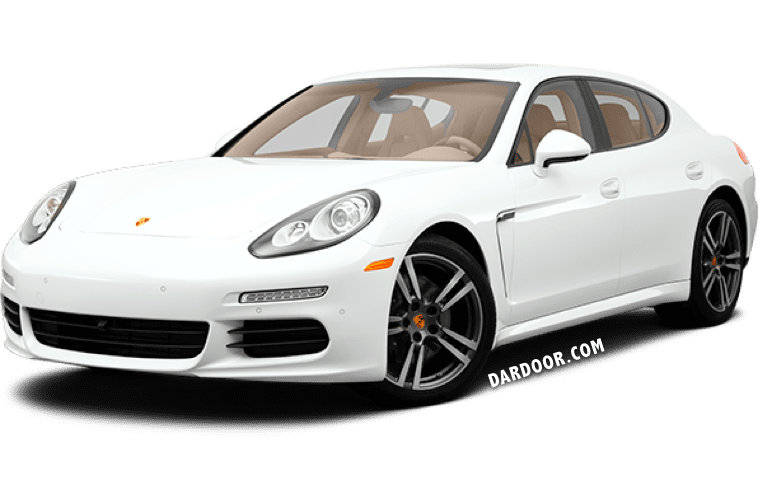
Get the same comprehensive information that Porsche dealer mechanics and technicians rely on with this official OEM workshop manual with the wiring diagram for the 2011-2014 Porsche Panamera.
The first-generation Panamera launched in 2010 (970) with three variants: the S and 4S (4.8L naturally aspirated V8) and the Turbo (4.8L twin-turbo V8). Porsche soon added base Panamera and Panamera 4 models with a 3.6L V6.
The 2011 model year brought significant expansion. The GTS became the enthusiast favorite—a sharper-tuned 4S with a 424-hp version of the 4.8L V8. The diesel offered a turbocharged V6 with 247 hp and 406 lb-ft of torque, while the S Hybrid combined a supercharged V6 and electric motors for 375 hp and 428 lb-ft. The Turbo S joined as the range-topper.
The 2014 mid-cycle refresh replaced the S model’s naturally aspirated V8 with a more efficient 3.0L twin-turbo V6 and introduced the E-Hybrid. An Executive long-wheelbase variant (adding 150mm) became available in select markets, accompanied by updated styling across the lineup.
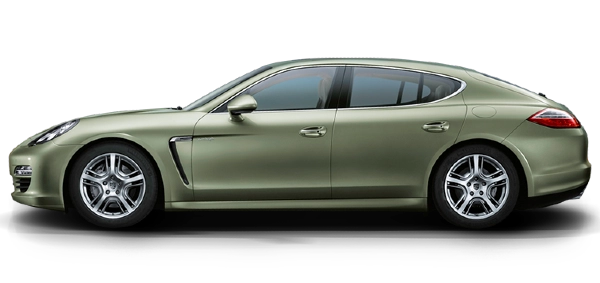
Overview
- Type: 970 (970.1 & 970.2)
- Generation: First Generation (970), Chassis G1
- Manufacturer: Porsche AG
- Production Years: April 2009 – 2016
- Model Years: 2010 – 2016
- Platform: Porsche Panamera 970 (2011–2014 model years; 2014 includes facelift 970.2 depending on market/trim)
- Designer: Michael Mauer
- Typical drivetrains: RWD or AWD (Panamera 4/4S), V6/V8, plus Hybrid and Diesel in some markets
- Transmissions: 7-speed PDK dual-clutch on most models; some variants/markets may differ
- What it’s best at: High-speed comfort, real handling for a big sedan, strong brakes, premium build
- What to watch: Cooling system age, air suspension wear, PDK service history, electrical/infotainment quirks
- Body Style: 5-Door Liftback
- Layout: Front-engine, RWD & AWD
- Market launch: September 2009
Technical Specs (common configurations)
| Item | Typical Range (by trim/market) |
|---|---|
| Engines | 3.0 L V6 turbodiesel, 3.6 L V6, 3.0 L supercharged V6 (Hybrid), 4.8 L V8, 4.8 L twin-turbocharged V8 |
| Induction | Naturally aspirated or twin-turbo (Turbo models) |
| Transmission | 6-speed manual, 7-speed ZF 7DT PDK, 8-speed Aisin Tiptronic S Automatic |
| Drivetrain | RWD or AWD (Panamera 4 / 4S / Turbo variants) |
| Suspension | Steel springs or optional air suspension (PASM/air varies by trim/options) |
| Brakes | Large vented discs; PCCB optional on many trims |
Performance (real-world expectations)
- Acceleration: Trim-dependent — V6 models feel quick; V8/Turbo models feel genuinely fast.
- Highway stability: Excellent. This platform was made for long, fast highway runs.
- Handling: Surprisingly agile for size, especially with PASM/air suspension and proper tires.
- Fuel economy: Varies widely; condition and maintenance matter more than brochure numbers.
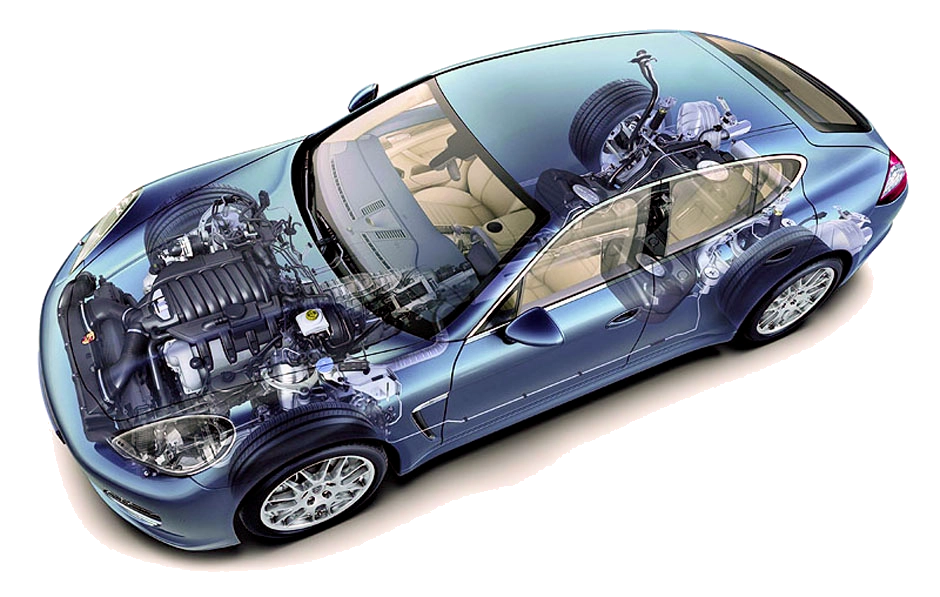
Top 10 Common Mechanical Issues Reported by Owners
1) Cooling system leaks (coolant pipes, thermostat housing, water pump)
- Symptoms: Coolant smell, low coolant warnings, puddles under front/middle, overheating, heater performance changes
- Root cause: Heat cycling + aging seals/O-rings; plastic housings and gaskets harden over time
- Fix: Pressure test; replace leaking pipes/seals/thermostat/water pump as needed; refill with correct coolant and bleed properly
- Estimated cost (USD): $600–$2,500 (depends on access + parts replaced)
2) Air suspension faults (leaks, compressor wear, valve block issues)
- Symptoms: Sagging overnight, uneven ride height, harsh ride, “chassis system fault” messages
- Root cause: Air struts leak with age; compressor overworks; valve block can stick/bleed
- Fix: Diagnose with scan tool + leak test; replace leaking struts/compressor/valve block; recalibrate ride height
- Estimated cost (USD): $1,200–$6,000+
3) PDK shift quality problems (fluid aging, mechatronic wear, clutch adaptation)
- Symptoms: Jerky low-speed shifts, hesitation, limp mode, delayed engagement hot/cold
- Root cause: Old fluid/filter, mechatronic valve wear, adaptation drift; sometimes software/calibration
- Fix: Verify service history; PDK fluid & filter service; adaptation reset; if persistent, deeper mechatronic diagnostics/repair
- Estimated cost (USD): $600–$4,500+ (service vs mechatronic work)
4) Driveshaft/CV joint wear (especially higher mileage)
- Symptoms: Vibration on acceleration, clicking in turns, driveline “thump”
- Root cause: CV boots crack; grease loss; joint wear; high torque loads (AWD/turbo trims more stress)
- Fix: Inspect boots/joints; replace axle/CV assemblies as needed; alignment check
- Estimated cost (USD): $500–$2,000 per side
5) Oil leaks (valve cover gaskets, timing covers, rear main area)
- Symptoms: Burning oil smell, smoke near exhaust, oil spots, low oil warnings
- Root cause: Gaskets harden; crankcase ventilation issues can increase pressure and worsen leaks
- Fix: Clean and confirm source; replace gaskets/seals; check PCV/venting system
- Estimated cost (USD): $500–$3,500+
6) Turbocharger-related issues (Turbo/Turbo S trims)
- Symptoms: Power loss, boost faults, whining, smoke, check engine light
- Root cause: Heat stress, oil feed/return issues, wastegate/actuator wear; some years had recall-related turbine concerns
- Fix: Diagnose boost system; verify oil supply; repair/replace turbos/actuators as required
- Estimated cost (USD): $2,500–$10,000+
7) Brake wear and vibration (heavy car, performance brakes)
- Symptoms: Steering wheel shake under braking, squeal, long pedal, uneven wear
- Root cause: Heat + weight; cheap pads/incorrect bedding; rotor deposits mistaken as “warping”
- Fix: Quality pads/rotors; correct bedding; flush brake fluid; inspect calipers/slides
- Estimated cost (USD): $600–$3,500+ (PCCB much higher)
8) Engine misfires (coils/plugs/injectors depending on engine)
- Symptoms: Rough idle, flashing CEL, hesitation, fuel smell, reduced power
- Root cause: Coil pack aging, worn plugs, injector issues, vacuum leaks
- Fix: Scan for misfire counters; replace plugs/coils; smoke test intake; address injectors if needed
- Estimated cost (USD): $250–$2,500+
9) Exhaust system leaks/rattles (gaskets, clamps, mounts)
- Symptoms: Ticking on cold start, louder exhaust, cabin fumes, rattling at idle
- Root cause: Aging gaskets/hardware; heat cycling; broken brackets
- Fix: Inspect on lift; replace gaskets/clamps/mounts; fix broken brackets
- Estimated cost (USD): $250–$1,800+
10) Cooling fan and auxiliary pump issues (overheating at idle, AC performance)
- Symptoms: Overheating in traffic, AC weak at idle, fan loud/erratic
- Root cause: Fan controller/module wear; auxiliary pumps age; wiring/connector corrosion
- Fix: Activate fans/pumps via scan tool; replace faulty modules/pumps; repair connectors
- Estimated cost (USD): $400–$2,200
Top 10 Common Electrical Issues Reported by Owners
1) Battery drain / low-voltage faults
- Symptoms: Slow crank, random warning lights, modules not waking up, repeated dead battery
- Root cause: Aging battery, parasitic draw, comfort access/infotainment modules not sleeping
- Fix: Battery test + registration/coding (if applicable); parasitic draw test; update software if needed
- Estimated cost (USD): $250–$1,200
2) PCM infotainment glitches (freezing, rebooting, Bluetooth dropouts)
- Symptoms: Black screen, reboot loops, navigation errors, audio dropouts
- Root cause: Software instability, aging storage/media modules, fiber optic loop faults (MOST)
- Fix: Software update; check MOST loop; repair/replace failing module(s)
- Estimated cost (USD): $200–$2,500+
3) Parking sensors / camera intermittent
- Symptoms: “ParkAssist unavailable,” false beeps, camera not showing
- Root cause: Sensor water intrusion, wiring/connector corrosion, control module issues
- Fix: Scan for faults; test sensor outputs; replace failed sensors; repair wiring
- Estimated cost (USD): $200–$1,800
4) TPMS sensor failures
- Symptoms: TPMS warning, wrong pressures displayed, intermittent faults
- Root cause: Sensor batteries expire; damage during tire work
- Fix: Replace sensor(s) and relearn/program as required
- Estimated cost (USD): $80–$450 per sensor installed
5) Window regulator / door module issues
- Symptoms: Window stuck, auto-up/down fails, mirror/lock odd behavior
- Root cause: Regulator wear, door module faults, moisture intrusion
- Fix: Replace regulator/motor; reseal vapor barriers; diagnose door module if needed
- Estimated cost (USD): $300–$1,200
6) HVAC blower control unit faults
- Symptoms: Fan stops, fan runs oddly, burning smell, HVAC errors
- Root cause: Moisture/water ingress causing electrical short risk on certain models/years
- Fix: Recall remedy where applicable (harness/relay + reseal); otherwise diagnose and replace control unit
- Estimated cost (USD): $300–$1,500 (often $0 if recall open)
7) Adaptive headlight/lighting faults
- Symptoms: Headlight warning, condensation, aim errors, intermittent lighting
- Root cause: Seal/cap issues, moisture ingress, leveling sensor faults
- Fix: Inspect caps/seals; repair moisture source; replace sensor/module if required
- Estimated cost (USD): $150–$2,500+
8) Keyless entry / start authorization intermittents
- Symptoms: Key not recognized, delayed start, intermittent “no key” messages
- Root cause: Weak key battery, antenna faults, module communication issues
- Fix: Replace key battery; scan immobilizer/comfort module; repair antenna/module as needed
- Estimated cost (USD): $20–$1,200
9) Instrument cluster/driver display glitches
- Symptoms: Pixel issues, intermittent warnings, gauge anomalies
- Root cause: Aging electronics, voltage instability, CAN communication noise
- Fix: Confirm charging system health; scan for CAN faults; repair/replace cluster if necessary
- Estimated cost (USD): $250–$2,500+
10) CAN communication faults (multiple random warnings)
- Symptoms: Multiple modules throwing errors, limp mode, sporadic system failures
- Root cause: Low voltage, water intrusion in connectors, failing module on network
- Fix: Voltage + ground integrity test; inspect known water paths; isolate failing module via scan diagnostics
- Estimated cost (USD): $200–$3,500+
Pros & Cons
| Pros | Cons |
|---|---|
| Genuinely sporty for a big luxury sedan | Complex systems = expensive surprises without history |
| Strong highway refinement and stability | Air suspension and PDK repairs can be costly |
| Wide trim/engine variety (from V6 to Turbo) | Cooling system age-related leaks are common |
| High-quality interior and braking performance | Electrical/infotainment quirks can be annoying |
Maintenance Schedule (practical owner-focused)
| Interval | Service Items | Notes |
|---|---|---|
| Every 7,500–10,000 miles (or yearly) | Engine oil & filter | Shorter interval is smart for city driving and turbo models |
| Every 20,000–30,000 miles | Cabin air filter, brake inspection, alignment check | Replace earlier if dusty/salty climate |
| Every 40,000 miles | Spark plugs (many trims), serpentine belt inspection | Misfires often show up when plugs/coils age |
| Every 40,000–60,000 miles | PDK fluid & filter service (where applicable) | Critical for shift quality and longevity |
| Every 2 years | Brake fluid flush | Especially important for performance braking |
| Every 4–5 years | Coolant service + inspection of pipes/thermostat | Preventative cooling work beats an overheat event |
| As needed | Battery replacement, TPMS sensors, suspension components | Voltage health prevents “ghost” electrical problems |
Top 10 Competitors
- BMW 7 Series (2008–2015) ↗
- BMW 6 Series (2004–2010) ↗
- Audi A6 / A7 ↗
- Audi A8 (2014–2018) ↗
- Jaguar XJ (2014–2019) ↗
- Mercedes-Benz CLS-Class (C218, 2012–2017) ↗
- Mercedes-Benz E-Class (W212, 2010–2016) ↗ — especially E550/E63 AMG
- Maserati Quattroporte (M156, 2013–2016) ↗
- Aston Martin Rapide (2010–2018) ↗
- Cadillac CTS-V (2012–2014) ↗ / Cadillac CT6 (2016–2020) ↗ as US alternatives
Recalls, Advisories, Safety Alerts & TSB Highlights
- Camshaft controller fasteners (Recall 17V368): fastening screws may strain/loosen, potentially affecting timing and causing stall risk; remedy replaces fasteners (and controllers if necessary). (NHTSA report)
- A/C blower control unit water ingress (Recall 19V322 / AKA7): water can enter and short the unit, increasing fire risk; remedy adds relay harness and reseals. NHTSA ↗ NHTSA ↗, 6speedonline ↗,
- Headlight sealing cap missing (Recall 22V656): missing caps can allow moisture/contamination into headlight housing, raising lighting failure risk; remedy installs caps. :contentReference[oaicite:2]{index=2}
- Fuel line quick connector (Recall 12V107): locking mechanism may disengage and leak fuel; fuel odor/leak may be noticed. Cars.com ↗
- Turbocharger turbine wheel defect (Recall 12V329): turbine wheel may fracture from casting defect, reducing performance and potentially damaging turbo shaft.
- Fuel injection system leak (Recall 15V016): certain hybrid applications may have leak risk; remedy replaces affected fuel components.
- TSB highlight: PDK shift quality complaints often trigger software/adaptation checks plus fluid condition verification (especially if service history is unknown).
- TSB highlight: Cooling system seepage at aging pipes/housings is commonly addressed via targeted pressure testing and seal/pipe replacement during service.
- TSB highlight: Air suspension “overnight sag” typically leads to leak isolation (strut/valve block) and compressor health testing before parts replacement.
- TSB highlight: PCM/infotainment freezing can be improved by updates and MOST network diagnostics when a module begins failing.
👉 Note: Recall applicability depends on VIN, production date, and market. Always verify open campaigns using Porsche’s official recall lookup.
DTC Trouble Code Lists
Important: These are commonly encountered OBD-II / network-related codes seen in diagnostics. Exact Porsche-specific fault numbering can vary by scan tool and control unit variant.
Engine Control Module (ECM) — 10 Common Codes
| Code | Description |
|---|---|
| P0101 | MAF sensor range/performance |
| P0171 | System too lean (Bank 1) |
| P0174 | System too lean (Bank 2) |
| P0300 | Random/multiple cylinder misfire detected |
| P0301 | Cylinder 1 misfire detected |
| P0420 | Catalyst system efficiency below threshold (Bank 1) |
| P0430 | Catalyst system efficiency below threshold (Bank 2) |
| P0442 | EVAP small leak detected |
| P0456 | EVAP very small leak detected |
| P2187 | System too lean at idle (Bank 1) |
Transmission Control Module (TCM/PDK) — 10 Common Codes
| Code | Description |
|---|---|
| P0700 | Transmission control system malfunction (request MIL) |
| P0715 | Input/turbine speed sensor circuit |
| P0720 | Output speed sensor circuit |
| P0730 | Incorrect gear ratio |
| P0731 | Gear 1 incorrect ratio |
| P0741 | Torque converter clutch performance (variant/tool dependent) |
| P0796 | Pressure control solenoid performance/stuck |
| P0841 | Transmission fluid pressure sensor range/performance |
| P0871 | Transmission fluid pressure sensor/switch range |
| P2714 | Pressure control solenoid D performance/stuck off |
ABS / ESC (Brake System) — 10 Common Codes
| Code | Description |
|---|---|
| C0035 | Left front wheel speed sensor circuit |
| C0040 | Right front wheel speed sensor circuit |
| C0045 | Left rear wheel speed sensor circuit |
| C0050 | Right rear wheel speed sensor circuit |
| C0110 | ABS pump motor circuit |
| C0121 | Valve relay circuit |
| C0245 | Wheel speed signal fault |
| C0550 | ECU internal malfunction |
| C1234 | Steering angle sensor signal fault |
| C1290 | Brake pressure sensor circuit |
SRS Airbag System — 10 Common Codes
| Code | Description |
|---|---|
| B1000 | SRS control unit fault (generic) |
| B1010 | Airbag ECU internal fault |
| B1020 | Crash sensor circuit fault |
| B1035 | Driver airbag circuit resistance high/low |
| B1040 | Passenger airbag circuit resistance high/low |
| B1055 | Seat belt pretensioner circuit fault |
| B1060 | Side airbag circuit fault |
| B1070 | Occupant detection system fault |
| B1080 | Airbag warning lamp circuit fault |
| B1090 | SRS power supply/voltage fault |
Body Control / CAN Communication — 10 Common Codes
| Code | Description |
|---|---|
| U0100 | Lost communication with ECM/PCM |
| U0121 | Lost communication with ABS control module |
| U0140 | Lost communication with body control module |
| U0155 | Lost communication with instrument cluster |
| U0164 | Lost communication with HVAC control module |
| U0184 | Lost communication with radio/infotainment |
| U0401 | Invalid data received from ECM/PCM |
| U0415 | Invalid data received from ABS module |
| U0422 | Invalid data received from body control module |
| U1000 | General CAN communication fault (manufacturer-specific) |
Essential FAQs for First-Generation Porsche Panamera (970) Buyers
1) Is the 2011–2014 Porsche Panamera reliable?
It can be, but reliability depends heavily on maintenance history and diagnostic transparency. Cooling system care, air suspension condition, and stable electrical voltage are the big themes.
2) Which model years are better: 2011–2013 or 2014?
2014 (970.2 facelift) generally benefits from updates, but condition matters more than year. A well-maintained 2012 can be a smarter buy than a neglected 2014.
3) Which engine is the safest bet?
In general, simpler configurations with strong service records are safest. Turbo models are extremely capable but can be more expensive to fix when heat/boost-related parts age.
4) Is PDK a problem on these cars?
PDK can be excellent when maintained. Many complaints trace back to fluid age, adaptation issues, or mechatronic wear. Confirm service history and test-drive behavior in traffic and when warm.
5) What are the biggest “walk away” red flags?
Overheating history, repeated low-voltage warning chaos, air suspension collapsing/sagging, unresolved PDK faults, or a seller who won’t allow a proper scan/pre-purchase inspection.
6) Are air suspension repairs always expensive?
Not always, but they can be. A single leaking strut is manageable; a tired compressor plus multiple leaking corners escalates quickly. A proper leak test saves money.
7) What’s the most expensive common repair?
On many trims, major air suspension repairs or turbo-related work (Turbo/Turbo S) can be among the biggest bills, especially if multiple components are replaced at once.
8) How do I verify open recalls and campaigns?
Use your VIN in Porsche’s official recall lookup and cross-check with national databases (NHTSA in the US, Transport Canada in Canada). Always confirm completion with dealer records.
9) Can I daily-drive one without a Porsche specialist?
You can, but ownership is smoother with a Porsche-capable shop and diagnostic tools, especially for module coding, chassis calibration, and PDK-related diagnostics.
11) Which Panamera 970 model offers the best balance of performance and reliability?
The Panamera 4S strikes an excellent balance with its naturally aspirated 4.8L V8 (400 hp), proven reliability, and all-wheel-drive capability. The GTS offers similar DNA with sharper dynamics and 424 hp, while the base V6 models provide solid performance with lower running costs.
12) What are the most common problems with the 970 Panamera?
Key issues include coolant pipe failures (especially on V8 models), air suspension leaks, PDK transmission mechatronic unit failures, and PCM (Porsche Communication Management) screen delamination. Water pump failures and engine mounts are also common on higher-mileage examples.
13) How much should I budget for maintenance and repairs?
Expect $2,000–$4,000 annually for routine maintenance at independent specialists, or significantly more at Porsche dealers. Major services at 40k, 80k, and 120k miles can cost $3,000–$6,000. Budget an additional $2,000–$5,000 reserve for unexpected repairs like air suspension or coolant system work.
14) Is the air suspension reliable, or should I look for steel spring models?
Air suspension adds comfort but is prone to leaks and compressor failures ($3,000–$6,000 to repair). Steel spring models are more reliable and less costly to maintain, though air suspension can be worth it if recently serviced and you value the ride quality.
15) What mileage is too high for a used Panamera 970?
With proper maintenance, these cars easily reach 150,000+ miles. Examples under 60,000 miles command premium prices, while 80,000–120,000-mile cars offer better value if maintenance records are complete. Avoid neglected high-mileage examples regardless of price.
16) Should I buy a naturally aspirated or turbocharged model?
Naturally aspirated V8s (S, 4S, GTS) are generally more reliable and offer wonderful sound and throttle response. Turbocharged models (Turbo, Turbo S, post-2014 S with 3.0L V6) provide more power but add complexity. The V6 Turbo S models are surprisingly robust.
17) What should I look for during a pre-purchase inspection?
Check for coolant leaks around pipes and connections, test air suspension at all height settings, verify PDK shifts smoothly in all modes, inspect PCM screen condition, check for oil leaks from engine mounts and valve covers, and review complete service history—especially coolant pipe replacement and major service completion.
18) Are parts and repairs expensive compared to other luxury sedans?
Yes, but less than you might expect. Independent Porsche specialists charge 30–50% less than dealers. Many parts are shared with Cayenne and other VAG products, reducing costs. DIY maintenance is feasible for mechanically inclined owners, significantly lowering ownership costs.
19) How does fuel economy compare across the range?
V6 models achieve 16–18 mpg city / 24–26 mpg highway. V8 models deliver 14–16 mpg city / 22–24 mpg highway. Turbo models get 13–15 mpg city / 21–23 mpg highway. Hybrid models can achieve 20+ mpg combined with mindful driving, though real-world figures vary significantly.
20) What’s a fair price for a well-maintained Panamera 970 in 2025?
Base V6 models: $18,000–$28,000. Panamera S/4S: $22,000–$35,000. GTS: $30,000–$45,000. Turbo: $28,000–$48,000. Turbo S: $35,000–$55,000. Well-documented cars with recent major service command premiums, while neglected examples should be heavily discounted or avoided entirely.