2010 Nissan Altima Hybrid — OEM Workshop Service & Repair Manual (PDF)
| File Format | PDF |
| File Language | English |
| You’ll Get | 40 MB |
| Page Count | 4,465 |
| Wiring Diagram | Included |
| Delivery Method | Instant Download |
Get the same expert guidance used by Nissan dealership technicians with the official OEM workshop manual for the 2010 Nissan Altima Hybrid. This comprehensive, fully indexed PDF delivers factory-authorized procedures, torque specs, diagnostics, and complete wiring diagrams for both high-voltage (HV) and 12V systems—so you can service and repair with confidence.
Powertrain Coverage
- Gasoline Engine: 2.5L I4 QR25DE (Hybrid)
- Hybrid Drive: Electric motor system with eCVT (hybrid transaxle)
- Electrical: HV battery pack, inverter, DC/DC converter, charging & isolation checks
Key Features
Official OEM Content
Identical to dealer service documentation—accurate, complete, and trusted.
Detailed Wiring Diagrams
Schematics, connector views, pinouts, grounds, power distribution (HV & 12V).
Diagnostics & DTCs
Flowcharts, test values, fault code references, and troubleshooting steps.
HV Safety Procedures
Lockout/tagout, service plug handling, PPE notes, and isolation testing guidance.
User-Friendly PDF
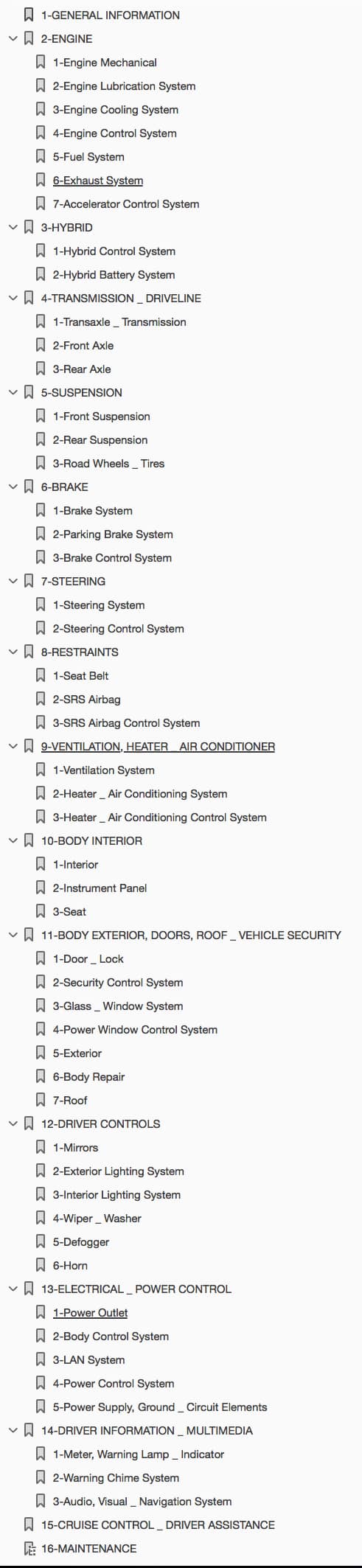
Searchable bookmarks for fast navigation; print only the pages you need.
What’s Inside
- Maintenance schedules, fluids, capacities, and torque specifications
- Engine mechanical, fuel, intake/exhaust, and cooling systems
- eCVT hybrid transaxle diagnostics and repair procedures
- Hybrid components: HV battery, BMS, inverter, relays, interlock, DC/DC
- Chassis: brakes (incl. regenerative), ABS/ESC, suspension, steering
- Body, SRS/airbags, HVAC (heat management), lighting & infotainment
- Electrical networks: CAN/LIN, module locations & connector maps
Download & Compatibility
Delivery: Instant Digital PDF Download
Compatibility: Windows, macOS, iOS, Android
This manual provides detailed instructions for maintenance, disassembly, reassembly, component inspection, adjustment, and diagnostics—intended for use by experienced mechanics. Proper application of this guide will help ensure thorough repairs and maintain your vehicle in peak condition.
Important Note: Before purchasing this manual, please check whether your vehicle is subject to any active service recalls, as authorized dealerships may perform necessary repairs free of charge. When replacing parts, always use genuine OEM components to ensure safety, reliability, and long-term performance.
Contents: 2010 Nissan Altima Hybrid Repair Manual
Sample Pages
CAUTION: This OEM service and workshop repair manual provides detailed procedures for maintenance, disassembly, reassembly, inspection, adjustment, and diagnostics. It is intended as a comprehensive guide for experienced mechanics. To ensure thorough and accurate repairs that maintain your vehicle’s optimal performance, please read and follow this manual carefully. When replacing parts during any repair work, always use genuine Nissan parts to ensure quality, safety, and reliability.
🚗 2010 Nissan Altima Hybrid – Complete Technical & Reliability Guide
The 2010 Nissan Altima Hybrid combined Nissan’s popular midsize sedan with Toyota’s Hybrid Synergy Drive (HSD) technology, delivering improved fuel economy, lower emissions, and smooth performance. Available only in select U.S. states, it was produced in limited numbers but remains a solid choice for drivers seeking a balance between efficiency and comfort.
⚙️ Technical Specifications & Performance
- Engine: 2.5L I4 Hybrid (QR25DE + Toyota HSD)
- Electric Motor: 40 hp (Hybrid Synergy Drive system)
- Total System Output: 198 hp
- Transmission: Electronically controlled CVT (eCVT)
- Drivetrain: Front-Wheel Drive (FWD)
- Fuel Economy: ~35 mpg city / 33 mpg highway
- Battery: Nickel-Metal Hydride (244.8V)
- 0–60 mph: ~7.5 seconds
🔧 Common Mechanical Issues (Cause & Repair)
- Hybrid battery degradation
Cause: Aging NiMH cells losing charge capacity.
Repair: Replace battery pack or recondition modules.
- Brake booster/ABS actuator noise
Cause: Hydraulic accumulator cycling frequently.
Repair: Replace ABS actuator or booster assembly.
- Excessive oil consumption
Cause: Piston ring wear in QR25DE engine.
Repair: Replace rings or rebuild top end.
- Engine stalling at idle
Cause: Throttle body carbon buildup.
Repair: Clean throttle body; reset idle relearn.
- Inverter cooling pump failure
Cause: Electric pump wear causes overheating.
Repair: Replace inverter coolant pump.
- CVT transmission hesitation
Cause: Overheating or fluid degradation.
Repair: Replace CVT fluid (NS-2); update TCM software.
- Front strut mount noise
Cause: Worn bearings in upper strut mount.
Repair: Replace mount and bearing assembly.
- Water pump leaks
Cause: Seal wear over mileage.
Repair: Replace pump and flush coolant.
- Exhaust manifold cracking
Cause: Thermal stress from heat cycles.
Repair: Replace manifold with updated part.
- Steering wheel vibration
Cause: Warped brake rotors.
Repair: Resurface or replace rotors.
💡 Common Electrical Issues (Cause & Repair)
- Instrument cluster warning lights
Cause: Hybrid ECU communication fault.
Repair: Reflash ECU; repair wiring if damaged.
- HV battery cooling fan failure
Cause: Dust buildup restricts airflow.
Repair: Clean or replace cooling fan.
- ABS light on
Cause: Faulty wheel speed sensor.
Repair: Replace failed sensor.
- Keyless entry not working
Cause: Weak fob battery or faulty BCM.
Repair: Replace fob battery or reprogram BCM.
- Airbag light
Cause: Seat occupancy sensor fault.
Repair: Replace mat sensor in passenger seat.
- Power window intermittency
Cause: Switch wear or regulator motor failure.
Repair: Replace faulty switch or motor.
- HV ECU overheating
Cause: Poor thermal compound or cooling.
Repair: Reapply thermal paste; replace ECU if needed.
- Hybrid system won’t start
Cause: Weak 12V auxiliary battery.
Repair: Replace 12V battery.
- Radio/infotainment resets
Cause: Capacitor aging inside unit.
Repair: Replace or repair head unit.
- HV isolation fault
Cause: Moisture intrusion in battery pack.
Repair: Inspect seals; dry and reseal pack; replace damaged modules.
📊 Pros and Cons
| Pros 👍 |
Cons 👎 |
| Strong fuel economy for midsize sedan |
Limited availability in select states |
| Smooth Toyota HSD hybrid system |
Expensive hybrid battery replacement |
| Spacious, comfortable cabin |
Less powerful than V6 Altima |
| Good crash safety ratings |
CVT issues under heavy use |
| Lower emissions |
Hybrid-specific parts scarce |
🛠️ Maintenance Schedule
| Interval ⏱️ |
Task 🔧 |
| 5,000 miles |
Engine oil & filter change, tire rotation |
| 15,000 miles |
Inspect brakes, replace cabin filter |
| 30,000 miles |
Replace air filter, inspect hybrid cooling system |
| 60,000 miles |
Replace CVT fluid, inverter coolant |
| 100,000 miles |
Replace spark plugs, inspect hybrid battery cooling fan |
⚠️ Recalls, Advisories & Safety Alerts
- Hybrid inverter pump recall: Electric cooling pump failure could cause overheating. ✅ Free replacement performed by dealers.
- Brake system recall: Possible brake pressure sensor faults caused extended stopping distance.
- Airbag recall: Certain Takata inflators replaced due to rupture risk.
🧾 Diagnostic Trouble Codes (DTC)
💻 Engine Control Module (ECM)
| Code |
Description |
| P0101 |
Mass Air Flow Sensor Range/Performance |
| P0171 |
System Too Lean |
| P0300 |
Random/Multiple Misfire |
| P0420 |
Catalyst Efficiency Below Threshold |
| P0A0F |
Hybrid System Engine Failed to Start |
| P3190 |
Engine Power Too Low |
| P0A93 |
Inverter Cooling System Performance |
| P0128 |
Coolant Thermostat Below Regulating Temp |
| P0113 |
Intake Air Temperature Sensor High |
| P0507 |
Idle Control RPM Higher Than Expected |
⚙️ Transmission Control Module (TCM)
| Code |
Description |
| P0700 |
Transmission Control System Malfunction |
| P0717 |
Input Speed Sensor No Signal |
| P0720 |
Output Speed Sensor Circuit |
| P0741 |
TCC Stuck Off |
| P0776 |
Pressure Control Solenoid B Performance |
| P0796 |
Pressure Control Solenoid C Performance |
| P2714 |
Pressure Control Solenoid D Performance |
| P2763 |
Turbine Speed Sensor High |
| P2813 |
Shift Solenoid G Performance |
| P2857 |
Transmission Hydraulic Pressure Loss |
🛑 ABS / ESC System
| Code |
Description |
| C0035 |
Left Front Wheel Speed Sensor Circuit |
| C0040 |
Right Front Wheel Speed Sensor Circuit |
| C0055 |
Rear Wheel Speed Sensor |
| C0110 |
ABS Pump Motor Circuit |
| C0121 |
ABS Control Module Fault |
| C1234 |
Steering Angle Sensor Not Initialized |
| C121C |
Torque Request Signal Denied |
| C1403 |
Brake Booster Pressure Sensor |
| C1112 |
Yaw Rate Sensor Malfunction |
| C10AC |
Longitudinal Acceleration Sensor Failure |
🎈 SRS Airbag System
| Code |
Description |
| B1016 |
Driver Airbag Circuit Open |
| B1020 |
Passenger Airbag Circuit Short |
| B140F |
Seat Belt Tensioner Fault |
| B1000 |
Airbag Control Module Internal Fault |
| B1053 |
Side Airbag Deployment Loop Fault |
| B1101 |
Airbag Sensor Module Low Voltage |
| B108A |
Seat Position Sensor Fault |
| B1302 |
Crash Sensor Supply Circuit |
| B1352 |
Crash Event Storage Full |
| B1209 |
Occupant Classification System Fault |
📡 Body Control / CAN Communication
| Code |
Description |
| U0100 |
Lost Communication with ECM/PCM |
| U0140 |
Lost Communication with BCM |
| U0121 |
Lost Communication with ABS Module |
| U0155 |
Lost Communication with Instrument Cluster |
| U0415 |
Invalid Data Received from ABS |
| U1110 |
CAN Data Bus Off |
| U1403 |
Invalid Data from Climate Control |
| U113E |
Lost Communication with Park Assist Module |
| U1123 |
Lost Communication with TPMS |
| U0184 |
Lost Communication with Radio |
✅ Final Verdict & Conclusion
The 2010 Nissan Altima Hybrid was a limited-run model blending Nissan’s sedan practicality with Toyota’s hybrid reliability. While hybrid-specific parts may be harder to source, proper maintenance ensures long life. With strong fuel economy, decent power, and Toyota’s HSD underpinnings, it remains an excellent used hybrid option for eco-conscious drivers seeking affordability.