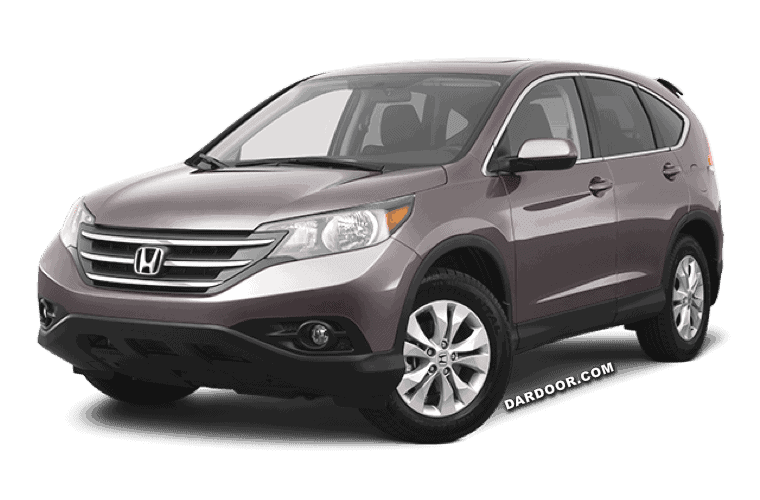
The 2007–2011 Honda CR-V (3rd generation) is a compact crossover focused on reliability, efficiency, and everyday usability. Powered by Honda’s 2.4L K24 inline-4 , it became one of the best-selling SUVs in North America. While generally dependable, these years have several repeat mechanical and electrical issues owners should understand before buying or maintaining one.
– Table of Contents
Technical Specs & Performance
Engine : 2.4L K24Z1 / K24Z4 Inline-4Output : ~166 hp / 161 lb-ftTransmission : 5-speed automatic or 5-speed manual (rare)Drivetrain : FWD or Real Time AWDFuel economy : ~21 mpg city / 28 mpg highwayTowing capacity: 1,500 lbCurb weight: ~3,400–3,600 lb
Top 10 Common Mechanical Issues (Symptoms · Cause · Fix · Cost)
Excessive Engine Oil Consumption Symptoms: Low oil level between changes, oil warning light, engine noiseRoot Cause: Piston ring design allows oil to bypass and burn, especially on high-mileage enginesFix: Frequent oil monitoring; piston/ring replacement in severe casesCost to Fix: $80–$150 (monitor/top-up) · $2,500–$4,000 (engine repair) Timing Chain Stretch / Rattle Rear Differential Binding (AWD models) Air Conditioning Compressor Failure Engine Mount Deterioration Power Steering Pump Whine Brake Rotor Warping Suspension Bushing Wear Valve Cover Gasket Oil Leak Wheel Bearing Noise
Top 10 Common Electrical Issues (Symptoms · Cause · Fix · Cost)
Power Window Regulator Failure Door Lock Actuator Failure Check Engine Light (EVAP Codes) TPMS Warning Light Starter Motor Failure Blower Motor Resistor Failure Dashboard Backlight Failure Radio Display Failure Battery Drain Issues Keyless Entry Failure
Pros & Cons
Pros
Cons
Legendary Honda reliability
Oil consumption on some engines
Low maintenance costs
AC compressor failures
Spacious, practical interior
Outdated infotainment
Good fuel economy
Underpowered compared to rivals
2007–2011 Honda CR-V Maintenance Schedule
Regular Maintenance Intervals Every 5,000–7,500 Miles (or 6 Months)
Oil and filter change – Use 0W-20 synthetic oil (recommended) or 5W-20
Tire rotation – Promotes even tire wear
Multi-point inspection – Fluids, lights, brakes, suspension
Cabin air filter inspection – Replace if dirty (typically every 15k-30k miles)
Every 15,000 Miles (or 12 Months)
All items above, plus:
Engine air filter inspection – Replace if dirty or every 30k miles
Brake inspection – Pads, rotors, fluid condition
Every 30,000 Miles
All items above, plus:
Engine air filter replacement
Rear differential fluid change (AWD models only) – Use Honda Dual Pump Fluid
Inspect drive belt – Replace if cracked or worn
Tire alignment check – If uneven wear is noticed
Every 45,000 Miles
Transmission fluid replacement – Use Honda ATF-Z1 or DW-1 fluid (critical for longevity)
Coolant replacement – First change at 45k, then every 60k miles
Spark plug replacement – Iridium plugs
All 15k mile services
Every 60,000 Miles
All items above, plus:
Timing chain inspection – Check for excessive wear/noise (this engine has a chain, not a belt)
Valve clearance adjustment – Check and adjust if necessary
Brake fluid replacement – Fresh DOT 3 brake fluid
Cabin air filter replacement
Fuel filter inspection (in-tank; rarely needs replacement)
Every 90,000 Miles
Drive belt replacement – Serpentine/accessory belt
Replace rear differential fluid (AWD)
All 45k mile services
Every 105,000 Miles
Transmission fluid replacement
Coolant replacement
All 15k mile services
Severe Driving Conditions You’re under “severe” conditions if you:
Drive mostly short trips (less than 5 miles)
Drive in dusty/muddy conditions
Tow a trailer regularly
Drive in extreme heat or cold
Idle extensively or drive in stop-and-go traffic
Severe schedule modifications:
Oil changes every 3,750–5,000 miles
Air filter every 15,000 miles
Transmission fluid every 30,000 miles
Rear differential fluid every 15,000 miles (AWD)
Critical Fluids & Specifications
Fluid Type Capacity
Engine Oil
0W-20 or 5W-20
4.4 quarts (with filter)
Coolant
Honda Long Life Coolant
6.0 quarts
Transmission
Honda ATF-Z1 or DW-1
3.0 quarts (drain/fill)
Brake Fluid
DOT 3
As needed
Power Steering
Honda PS Fluid
Check reservoir
Rear Differential (AWD)
Honda Dual Pump Fluid
1.1 quarts
Items That DON’T Need Regular Replacement
Timing chain – Lasts the life of the engine under normal conditions (not a timing belt)Fuel filter – In-tank, rarely needs servicePCV valve – Integrated into valve cover
Expected Component Lifespan
Brake pads (front): 40,000–70,000 milesBrake pads (rear): 60,000–100,000 milesBattery: 3–5 yearsTires: 40,000–60,000 miles (varies by brand/driving)Spark plugs: 105,000 miles (iridium)Serpentine belt: 90,000–100,000 miles
Owner Tips
Oil consumption check: If you have a 2008–2011 model, monitor oil levels between changes due to the known consumption issue.Use Honda fluids: Especially for transmission and differential—aftermarket fluids can cause shifting problems.Keep records: Document all maintenance for resale value and warranty claims.Winter prep: Check battery, antifreeze concentration, and tire tread before cold weather.Listen for noises: VTC actuator rattle on cold starts is common but should be investigated if excessive.
Estimated Annual Maintenance Cost
Normal driving: $800–$1,200/year (including oil changes, tires, brakes over time)Major service years (45k, 60k, 90k): $1,500–$2,500 with transmission service, coolant flush, spark plugs, etc.
👉 Tip: Following this schedule will help ensure your CR-V reaches 200,000+ miles, which is very achievable with this generation!
Top 5 Competitors
1. Toyota RAV4 (2006–2012) ↗
2. Mazda CX-7 (2007–2012) ↗
3. Subaru Forester (2009–2013) ↗
4. Nissan Rogue (2008–2013) ↗ More fuel-efficient CVT transmission, third-row seating option (rare in segment), but less reliable overall.
5. Ford Escape (2008–2012) ↗
Recalls, Advisories & TSB Highlights (10)
1. Ignition Switch Recall (2007–2011) The ignition switch could wear out and allow the key to be removed while not in the PARK position, potentially causing the vehicle to roll away. Affects hundreds of thousands of vehicles.
2. Power Steering Hose Recall (2007–2011) Power steering hose could crack and leak fluid, potentially causing a fire. Honda issued multiple recalls for this issue across several model years.
3. Driver’s Airbag Inflator Recall – Takata (2007–2011) Part of the massive Takata airbag crisis. Defective inflators could explode, sending metal fragments into the cabin. Critical—verify this has been completed.
4. Passenger Airbag Inflator Recall – Takata (2007–2011) Similar to the driver’s side issue. Multiple recall campaigns have been issued as replacement parts became available.
5. Fuel Pump Strainer Recall (2007–2009) Fuel pump strainer could deteriorate, potentially causing engine stalling or failure to start.
Technical Service Bulletins (TSBs) & Common Issues:
6. Excessive Oil Consumption (2008–2011) Some engines consumed excessive oil due to piston ring design. Honda extended the warranty for affected vehicles and offered piston ring replacement.
7. A/C Compressor Clutch Failure (2007–2011) Air conditioning compressor clutches were prone to premature failure. TSB issued for diagnosis and repair procedures.
8. Rear Differential Fluid Leak (AWD models) Rear differential seals could leak on AWD models. Honda issued guidance for inspection and seal replacement.
9. VTC Actuator Noise (2007–2011) Variable Timing Control actuator could make rattling noises on cold starts. TSB provided for software updates and actuator replacement if necessary.
10. Navigation System Issues (2007–2010) GPS navigation systems (EX-L with Navigation) experienced freezing, slow response, and incorrect routing. Software updates were released.
DTC Trouble Code Tables
🔔 Note: These are common OBD-II / system codes seen on 2007–2011 Honda CR-V platforms. Always confirm with a proper scan tool + freeze-frame data before replacing parts.
Engine Control Module (ECM) — 10 Common Codes
DTC
What It Means
Likely Root Cause
Recommended Fix
P0171
System Too Lean (Bank 1)
Vacuum leak, dirty MAF/MAP, weak fuel delivery
Smoke test intake; clean/inspect MAP/MAF; check fuel pressure; repair leaks
P0300
Random/Multiple Misfire
Ignition coils/plugs, vacuum leak, injector issue
Check misfire counters; inspect plugs/coils; smoke test; injector balance test
P0301
Misfire Cylinder 1
Coil/plugs, injector, compression
Swap coil; inspect plug; compression/leakdown if persistent
P0420
Catalyst Efficiency Below Threshold (Bank 1)
Aging catalytic converter, exhaust leak, O2 sensor drift
Check exhaust leaks; verify O2 sensor patterns; fix misfires; replace cat if confirmed
P0135
O2 Sensor Heater Circuit (B1S1)
Failed sensor heater, wiring, fuse
Check heater power/ground; repair wiring; replace sensor if faulty
P0325
Knock Sensor Circuit Malfunction
Knock sensor failure, wiring damage
Inspect harness; verify signal; replace sensor if confirmed
P0128
Coolant Thermostat Below Regulating Temp
Thermostat stuck open, low coolant
Replace thermostat; bleed system; check coolant level/leaks
P0455
EVAP System Large Leak
Loose cap, cracked hose, vent valve issue
Smoke EVAP; check cap seal; inspect hoses/vent valve
P0443
EVAP Purge Control Valve Circuit
Purge solenoid failure, wiring
Check power/ground; command test solenoid; replace if defective
P2263
Turbo/Super Charger Boost System (Generic)
Often set by scan tools as generic/erroneous on NA engines
Verify applicability; confirm other codes; ignore if not supported and no symptoms
Transmission Control Module (TCM) — 10 Common Codes
DTC
What It Means
Likely Root Cause
Recommended Fix
P0700
Transmission Control System (MIL Request)
TCM stored fault present
Read Honda-specific TCM codes; diagnose underlying issue
P0730
Incorrect Gear Ratio
Low/dirty ATF, clutch wear, pressure control issue
Check ATF level/condition; service ATF; perform pressure tests if needed
P0740
Torque Converter Clutch Circuit
TCC solenoid, wiring, internal wear
Electrical checks; command tests; fluid service; internal diagnosis if persistent
P0741
TCC Performance / Stuck Off
Fluid breakdown, solenoid/valve body wear
Verify slip data; ATF service; solenoid/valve body diagnosis
P0753
Shift Solenoid “A” Electrical
Solenoid failure, wiring
Check resistance; connector inspection; replace solenoid if faulty
P0758
Shift Solenoid “B” Electrical
Solenoid failure, wiring
Same approach as P0753
P0780
Shift Malfunction
ATF condition, solenoid control, mechanical wear
Scan live data; ATF service; solenoid tests; mechanical check if needed
P0847
Transmission Fluid Pressure Sensor/Switch
Sensor failure, wiring, pressure issue
Verify sensor output; inspect harness; confirm line pressure
P0962
Pressure Control Solenoid “A” Control Circuit Low
Solenoid/wiring, TCM output
Check wiring; solenoid resistance; test TCM output
P2769
Turbine/Input Speed Sensor “B” Circuit
Sensor failure, wiring
Inspect sensor; check signal; replace if confirmed
ABS / ESC (Brake System) — 10 Common Codes
DTC
What It Means
Likely Root Cause
Recommended Fix
C0035
LF Wheel Speed Sensor Circuit
Sensor damage, tone ring, wiring
Inspect sensor + wiring; check tone ring; replace sensor if faulty
C0040
RF Wheel Speed Sensor Circuit
Sensor damage, tone ring, wiring
Same checks as above
C0045
LR Wheel Speed Sensor Circuit
Sensor damage, tone ring, wiring
Same checks as above
C0050
RR Wheel Speed Sensor Circuit
Sensor damage, tone ring, wiring
Same checks as above
C0110
ABS Pump Motor Circuit
Motor/relay fault, wiring
Check fuses/relay; verify power/ground; test motor
C0131
ABS Pressure Sensor Circuit
Sensor failure, wiring
Scan live pressure; inspect harness; replace sensor if faulty
C0196
Yaw Rate/Acceleration Sensor
Sensor drift, calibration needed
Perform calibration; replace sensor if values out-of-range
C0200
ABS ECU Internal Failure (Generic)
ECU fault or power/ground issue
Confirm power/ground; inspect connectors; ECU replacement if confirmed
C1214
VSA System Malfunction
Linked engine/ABS fault
Fix underlying ECM/ABS DTCs first; clear and retest
C1241
Low Battery Voltage
Weak battery/charging system
Battery load test; alternator output test; clean grounds
SRS Airbag System — 10 Common Codes
DTC
What It Means
Likely Root Cause
Recommended Fix
B0001
Driver Airbag Stage 1 Circuit
Clock spring, connector, wiring
Inspect clock spring; check SRS connectors; repair wiring
B0002
Driver Airbag Stage 2 Circuit
Clock spring, wiring
Same checks as above
B0012
Passenger Airbag Circuit
Connector/wiring, module
Inspect connectors; verify resistance per spec; repair as needed
B0020
Side Airbag (Driver) Circuit
Seat harness/connector
Inspect seat wiring; repair/replace connector or harness
B0022
Side Airbag (Passenger) Circuit
Seat harness/connector
Same approach
B0031
Side Curtain Airbag Circuit
Pillar/roof harness issue
Inspect harness routing; check connectors; repair wiring
B0040
Front Impact Sensor Circuit
Sensor fault, corrosion
Inspect sensor; replace if faulty
B0051
Seat Belt Pretensioner (Driver)
Pretensioner/wiring fault
Inspect connectors; replace pretensioner if required
B0052
Seat Belt Pretensioner (Passenger)
Pretensioner/wiring fault
Inspect connectors; replace pretensioner if required
B0090
OPDS/OCS (Occupant Detection) Malfunction
Seat sensor/calibration
Run OCS calibration; inspect wiring under seat
Body Control / CAN Communication — 10 Common Codes
DTC
What It Means
Likely Root Cause
Recommended Fix
U0100
Lost Communication With ECM/PCM
Low voltage, CAN wiring fault
Test battery/charging; inspect CAN wiring/connectors; repair opens/shorts
U0121
Lost Communication With ABS
ABS module power/ground, CAN issue
Check ABS fuses/grounds; inspect connectors; CAN continuity test
U0140
Lost Communication With BCM
BCM power/ground issue, network fault
Check BCM power/ground; inspect connector pins; network diagnosis
U0155
Lost Communication With Cluster
Cluster power/CAN
Verify cluster supply; check CAN lines; reseat connectors
U0164
Lost Communication With HVAC
HVAC control module or CAN fault
Check HVAC module power/ground; scan network; repair wiring
U0184
Lost Communication With Radio
Radio power, network issue
Check fuses; verify ground; inspect connectors; replace unit if needed
B1177
Immobilizer Key/Receiver Issue
Key chip, antenna, programming
Try spare key; scan immobilizer; reprogram keys if required
B1241
Low Battery Voltage (Body ECU)
Weak battery, alternator, poor ground
Battery/alternator test; clean chassis grounds
B1835
Door Lock/Unlock Circuit
Actuator or wiring fault
Test actuator; check harness in door jamb; replace actuator if needed
U0073
Control Module Communication Bus Off
CAN short/open or module pulling bus down
Isolate modules; inspect CAN wiring; repair; replace offending module if confirmed
👉 Pro Tip: If you see multiple U-codes at once, start with a battery + charging test. Low voltage can trigger “network” errors that disappear after voltage is restored.
Frequently Asked Questions
1. What engine does the 2007–2011 CR-V have? It features a 2.4L 4-cylinder engine (K24Z1) producing 166 horsepower and 161 lb-ft of torque, paired with a 5-speed automatic transmission.
2. What’s the fuel economy? Approximately 21 mpg city / 28 mpg highway for FWD models; AWD models get slightly less at 21/27 mpg.
3. Is the CR-V reliable? Yes, this generation is known for excellent reliability. Common issues are relatively minor compared to competitors, though some problems exist (see recalls section).
4. Should I get FWD or AWD? Honda’s Real Time AWD is excellent for light snow and slippery conditions, but it’s not for serious off-roading. FWD is fine for most climates and offers better fuel economy.
5. What’s the cargo capacity? 35.7 cubic feet behind the rear seats, expanding to 72.9 cubic feet with seats folded—very competitive for the segment.
6. What are common problems to watch for? Air conditioning compressor failures, excessive oil consumption (2008–2011 models), power steering hose leaks, and the ignition switch recall issue.
7. What’s the difference between LX, EX, and EX-L trims?
LX : Base model with cloth seats, steel wheelsEX : Adds sunroof, alloy wheels, better audioEX-L : Leather seats, heated front seats, satellite radio
8. How much can it tow? 1,500 lbs when properly equipped—suitable for small trailers or jet skis but not heavy-duty towing.
9. What’s a fair price for a used one? As of early 2025, expect to pay roughly $8,000–$15,000 depending on mileage, condition, and location. Higher mileage examples (150k+) may be $6,000–$9,000.
10. Is it good for tall drivers/passengers? Yes, the CR-V offers generous headroom and legroom in both rows, making it comfortable for taller individuals.
Bottom Line
The 2007–2011 Honda CR-V remains one of the most dependable compact SUVs ever built. Avoid neglected examples with oil starvation, and it rewards owners with low costs, excellent practicality, and long service life. A top choice for budget-conscious buyers.