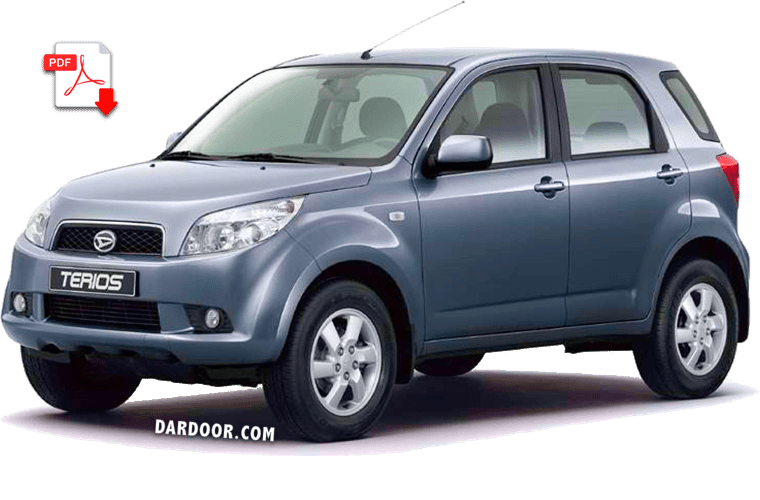
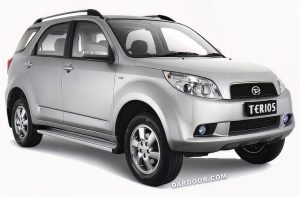
2006–2016 Daihatsu Terios (J200, J210, J211) — OEM Workshop Service & Repair Manual (PDF)
Get the official OEM workshop manual for the 2006–2016 Daihatsu Terios ↗, second generation (J200, J210, J211 – J2 Series). This factory-issued PDF manual is the same guide used by dealership technicians ↗, complete with service procedures, diagnostics, and torque specs for professional-level maintenance and repair.
Engines Covered
- 1.3 L K3-VE I4
- 1.5 L 3SZ-VE I4
| File Format |
PDF |
| File Language |
English |
| You’ll Get |
128 MB |
| Page Count |
2,052 |
| Delivery Method |
Instant Download |
Repair with confidence—get the same manual trusted by Daihatsu and Toyota professionals.
📌 Also Known As
- Daihatsu Be‣go (Japan)
- Toyota Rush
- Perodua Nautica (Malaysia)
🚗 Successors
- Daihatsu Rocky (A200) – Japan (successor to Be‣go)
- Toyota Raize – Japan (successor to Rush)
- Perodua Ativa – Malaysia (successor to Nautica)
🔧 Key Features
Complete OEM Coverage
Engine, transmission, brakes, suspension, HVAC, body systems, and more.
Step-by-Step Procedures
Clear instructions with torque values, sequences, and service intervals.
Diagnostics & DTCs
Includes troubleshooting flowcharts and fault code references.
📥 Download & Compatibility
Delivery: Instant Digital PDF Download
Compatibility: Windows, macOS, iOS, Android
This manual provides detailed instructions for maintenance, disassembly, reassembly, component inspection, adjustment, and diagnostics—intended for use by experienced mechanics. Proper application of this guide will help ensure thorough repairs and maintain your vehicle in peak condition.
Important Note: Before purchasing this manual, please check whether your vehicle is subject to any active service recalls, as authorized dealerships may perform necessary repairs free of charge. When replacing parts, always use genuine OEM components to ensure safety, reliability, and long-term performance.
CAUTION ↗: This OEM service and workshop repair manual provides detailed procedures for maintenance, disassembly, reassembly, inspection, adjustment, and diagnostics. It is intended as a comprehensive guide for experienced mechanics. To ensure thorough and accurate repairs that maintain your vehicle’s optimal performance, please read and follow this manual carefully. When replacing parts during any repair work, always
use genuine Daihatsu parts to ensure quality, safety, and reliability.
The 2006–2016 Daihatsu Terios is a compact SUV aimed at affordability, simplicity, and light off-road usability. Built on a lightweight ladder-style frame with available AWD in many markets, it prioritizes durability and low ownership costs over outright power or luxury. Engines are small-displacement petrol units, making the Terios popular in urban and developing markets.
- Body style: 5-door compact SUV
- Drivetrain: RWD or AWD (market-dependent)
- Engines:
- 1.3L inline-4 petrol
- 1.5L inline-4 petrol (most common)
- Transmission: 5-speed manual / 4-speed automatic
- Fuel economy (real-world): ~7–8 L/100 km combined
- Curb weight: ~1,150–1,250 kg
- Towing capacity: Light-duty only (market-limited)
- Timing chain stretch (1.5L engines)
– Symptoms: Rattling noise on cold start, rough idle, check engine light
– Root Cause: Chain and tensioner wear from extended oil intervals
– Fix: Inspect chain stretch; replace timing chain kit if noisy or out of spec
– Cost to Fix: $600–$1,400
- Engine overheating
– Symptoms: Rising temperature gauge, coolant smell, warning light
– Root Cause: Aging radiator, stuck thermostat, or leaking hoses
– Fix: Pressure-test system; replace faulty components; flush coolant
– Cost to Fix: $150–$700
- Oil consumption
– Symptoms: Low oil level between services, blue smoke (rare)
– Root Cause: Worn piston rings or valve stem seals at high mileage
– Fix: Monitor oil; replace seals or rebuild engine if severe
– Cost to Fix: $100–$2,500
- Manual transmission synchro wear
– Symptoms: Grinding during gear changes (2nd/3rd gear)
– Root Cause: High mileage, aggressive shifting, old gear oil
– Fix: Change gear oil; rebuild gearbox if grinding persists
– Cost to Fix: $120–$1,800
- CV joint wear (AWD models)
– Symptoms: Clicking noise on turns, vibration under load
– Root Cause: Torn CV boots allowing dirt ingress
– Fix: Replace CV axle or boot early to prevent joint damage
– Cost to Fix: $180–$600
- Premature brake wear
– Symptoms: Squealing, vibration, reduced braking performance
– Root Cause: Lightweight brake components on a tall vehicle
– Fix: Replace pads/rotors; ensure proper bedding
– Cost to Fix: $150–$500
- Clutch wear
– Symptoms: Slipping, high engagement point, burning smell
– Root Cause: City driving, towing, or aggressive launches
– Fix: Replace clutch kit; inspect flywheel
– Cost to Fix: $500–$1,200
- Exhaust rust (older models)
– Symptoms: Loud exhaust, rattling under vehicle
– Root Cause: Corrosion from moisture and road salt
– Fix: Replace muffler or exhaust sections
– Cost to Fix: $200–$700
- Wheel bearing noise
– Symptoms: Humming noise increasing with speed
– Root Cause: Bearing wear from mileage or water ingress
– Fix: Replace affected wheel bearing
– Cost to Fix: $180–$450
- Suspension bushing wear
– Symptoms: Clunking over bumps, uneven tire wear
– Root Cause: Rubber bushing deterioration with age
– Fix: Replace worn bushings; align vehicle
– Cost to Fix: $200–$900
- Weak battery / charging issues
– Symptoms: Slow cranking, warning lights, no start
– Root Cause: Aging battery or worn alternator
– Fix: Load-test battery; test alternator output
– Cost to Fix: $120–$450
- Dashboard warning lights staying on
– Symptoms: ABS, engine, or airbag light illuminated
– Root Cause: Sensor failure or low system voltage
– Fix: Scan codes; repair wiring or replace sensor
– Cost to Fix: $80–$600
- Power window failure
– Symptoms: Window stuck or slow operation
– Root Cause: Regulator motor wear
– Fix: Replace window regulator/motor
– Cost to Fix: $150–$450
- Central locking malfunction
– Symptoms: Doors fail to lock/unlock consistently
– Root Cause: Actuator motor wear or wiring issues
– Fix: Replace faulty door actuator
– Cost to Fix: $120–$350
- HVAC blower not working
– Symptoms: No airflow from vents
– Root Cause: Blower motor or resistor failure
– Fix: Replace blower motor or resistor
– Cost to Fix: $100–$400
- Radio / head unit failure
– Symptoms: No sound or power to radio
– Root Cause: Internal circuit failure or wiring fault
– Fix: Repair wiring or replace head unit
– Cost to Fix: $80–$600
- Immobilizer issues
– Symptoms: Engine cranks but won’t start
– Root Cause: Key transponder or antenna fault
– Fix: Reprogram or replace key/antenna
– Cost to Fix: $150–$500
- ABS sensor failure
– Symptoms: ABS light on, reduced braking assistance
– Root Cause: Sensor contamination or wiring damage
– Fix: Clean or replace ABS wheel speed sensor
– Cost to Fix: $120–$400
- Instrument cluster flicker
– Symptoms: Intermittent gauge operation
– Root Cause: Loose connectors or aging solder joints
– Fix: Reseat connectors or repair cluster
– Cost to Fix: $100–$600
- Blown fuses repeatedly
– Symptoms: Accessories stop working suddenly
– Root Cause: Short circuits or overloaded circuits
– Fix: Trace short; repair wiring; replace fuse
– Cost to Fix: $80–$500
| Pros |
Cons |
| Simple, durable mechanical design |
Slow acceleration |
| Fuel-efficient for an SUV |
Limited sound insulation |
| Capable AWD for light off-road use |
Small cargo area |
| Low ownership and repair costs |
Outdated infotainment |
| Easy to service |
Basic safety tech by modern standards |
| Interval |
Service |
Notes |
| Every 10,000 km |
Oil & filter |
Shorter intervals extend engine life |
| Every 20,000 km |
Tire rotation, brake inspection |
Check alignment |
| Every 40,000 km |
Air & cabin filters |
Earlier in dusty regions |
| Every 60,000 km |
Transmission & diff fluids |
AWD models especially |
| Every 100,000 km |
Spark plugs, coolant |
Inspect water pump |
- Airbag inflator recall (market/VIN dependent)
- Seatbelt anchorage inspection campaign
- Fuel hose leakage advisory
- ECU software update for idle stability
- Brake hose routing inspection
- Steering column bolt torque check
- ABS wiring harness protection update
- Fuel pump noise advisory
- Exhaust heat shield fastening check
- Child seat anchor inspection
⚠️ Always verify recalls by VIN with the manufacturer or local authority.
Engine Control Module (ECM)
| Code |
Description |
| P0171 |
System Too Lean |
| P0300 |
Random Misfire |
| P0100 |
MAF Circuit Fault |
| P0110 |
IAT Sensor Circuit |
| P0120 |
Throttle Position Sensor |
| P0130 |
O2 Sensor Circuit |
| P0420 |
Catalyst Efficiency |
| P0500 |
Vehicle Speed Sensor |
| P0606 |
ECU Processor Fault |
| P0700 |
Transmission Control Fault |
Transmission Control Module (TCM)
| P0715 |
Input Speed Sensor |
| P0720 |
Output Speed Sensor |
| P0730 |
Incorrect Gear Ratio |
| P0740 |
TCC Circuit |
| P0750 |
Shift Solenoid A |
| P0755 |
Shift Solenoid B |
| P0760 |
Shift Solenoid C |
| P0770 |
Shift Solenoid E |
| P0780 |
Shift Malfunction |
| P0795 |
Pressure Control Solenoid |
ABS / ESC
| C0035 |
Front Left Wheel Speed Sensor |
| C0040 |
Front Right Wheel Speed Sensor |
| C0045 |
Rear Left Wheel Speed Sensor |
| C0050 |
Rear Right Wheel Speed Sensor |
| C0110 |
Pump Motor Circuit |
| C0121 |
Valve Relay |
| C0196 |
Yaw Rate Sensor |
| C0200 |
ABS ECU Fault |
| C1241 |
Low Battery Voltage |
| C1300 |
ABS ECU Malfunction |
SRS Airbag System
| B1801 |
Driver Airbag Circuit |
| B1811 |
Passenger Airbag Circuit |
| B1820 |
Side Airbag Circuit |
| B1831 |
Curtain Airbag Circuit |
| B1000 |
SRS ECU Fault |
| B1100 |
Impact Sensor |
| B1150 |
Seat Belt Pretensioner |
| B1180 |
Passenger Sensor |
| B1650 |
OCS Malfunction |
| B1795 |
Airbag Cut-Off |
Body Control / CAN
| U0100 |
Lost Communication ECM |
| U0121 |
Lost Communication ABS |
| U0140 |
Lost Communication BCM |
| B2312 |
Door Lock Circuit |
| B2321 |
Rear Door Switch |
| B1241 |
Low Voltage |
| B2799 |
Immobilizer Fault |
| U0155 |
Cluster Communication |
| U0073 |
CAN Bus Off |
| B2400 |
Power Window Circuit |
Is the 2006–2016 Daihatsu Terios reliable?
Yes. With regular oil changes and cooling system maintenance, the Terios is considered very reliable for daily use.
What is the most expensive common repair?
Timing chain replacement or engine rebuilds due to oil neglect are typically the highest-cost repairs.
Is the Terios good for off-road driving?
AWD models are capable on gravel, snow, and light trails, but it is not intended for heavy off-roading.
Which engine is best?
The 1.5L petrol engine offers better balance of power and reliability.
Are parts easy to find?
In many markets, parts availability is good and relatively inexpensive.
Is it safe to drive with the check engine light on?
Minor faults may allow short driving, but flashing or persistent warnings should be diagnosed immediately.
The 2006–2016 Daihatsu Terios is a practical, no-nonsense compact SUV. It excels in affordability, simplicity, and ease of maintenance. While it lacks modern tech and strong performance, it rewards owners who value durability, light off-road capability, and low running costs.