

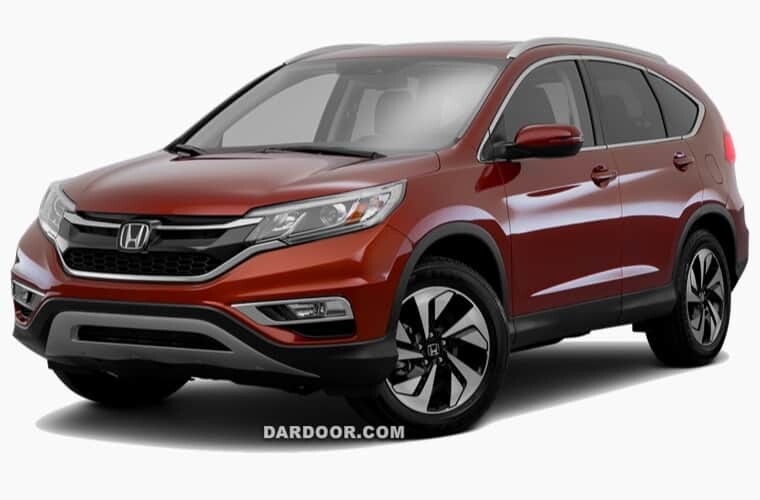
Get the original OEM workshop electrical manual for the 2015 Honda CR-V, featuring a comprehensive wiring diagram in convenient PDF format.
2015 Honda CR-V Wiring Diagram
$16.90
Get the original OEM workshop electrical manual for the 2015 Honda CR-V, featuring a comprehensive wiring diagram in convenient PDF format. This essential resource provides detailed electrical schematics and diagrams, indispensable for troubleshooting and repairing electrical systems with accuracy.
| File Format | |
| File Language | English |
| You’ll Get | 4.4 MB |
| Pages Count | 152 |
| Delivery Method | Instant Download |
| Searchable & Printable | YES |
Whether you’re performing routine maintenance or tackling electrical repairs, this manual is your go-to guide for understanding and working with the wiring system of the 2015 Honda CR-V.
Key Features:
– Original OEM workshop wiring diagram for the 2015 Honda CR-V.
– Detailed wiring diagram in PDF format.
– Ideal for technicians, DIY enthusiasts, and professionals.
– Essential for diagnosing and repairing electrical issues effectively.
This electrical wiring manual includes the procedures for maintenance, disassembling, reassembling, inspection, and adjustment of electrical components and diagnostics for guidance of experienced technicians. Please use this manual to ensure complete repair work to keep your vehicle in optimum condition.
Table of Contents : 2015 Honda CR-V Wiring Diagram
- AIR CONDITIONING
- ANTI-LOCK BRAKES
- ANTI-THEFT
- BODY CONTROL MODULES
- COMPUTER DATA LINES
- COOLING FAN
- CRUISE CONTROL
- DEFOGGERS
- ELECTRONIC POWER STEERING
- ENGINE PERFORMANCE 2.4L
- EXTERIOR LIGHTS
- GROUND DISTRIBUTION
- HEADLIGHTS
- HORN
- INSTRUMENT CLUSTER
- INTERIOR LIGHTS
- MEMORY SYSTEMS
- NAVIGATION
- POWER DISTRIBUTION
- POWER DOOR LOCKS
- POWER MIRRORS
- POWER SEATS
- POWER TOP-SUNROOF
- POWER WINDOWS
- RADIO
- SHIFT INTERLOCK
- STARTING-CHARGING
- SUPPLEMENTAL RESTRAINTS
- TRANSMISSION
- TRUNK, TAILGATE, FUEL DOOR
- WARNING SYSTEMS
- WIPER-WASHER
Sample Pages
CAUTION: This OEM service and workshop repair manual provides detailed procedures for maintenance, disassembly, reassembly, inspection, adjustment, and diagnostics. It is intended as a comprehensive guide for experienced mechanics. To ensure thorough and accurate repairs that maintain your vehicle’s optimal performance, please read and follow this manual carefully. When replacing parts during any repair work, always use genuine Honda parts to ensure quality, safety, and reliability.
2015 Honda CR-V: Comprehensive Buyer’s Guide
Overview
The 2015 Honda CR-V is a compact crossover SUV representing the fourth generation (2012-2016) of Honda’s popular CR-V lineup. Known for reliability, practicality, and fuel efficiency, it remains a strong choice in the used market.
Trim Levels: LX, EX, EX-L, Touring
Starting MSRP (2015): $23,320 – $33,270
Technical Specifications
Engine:
- 2.4L 4-cylinder DOHC i-VTEC
- Horsepower: 185 hp @ 6,400 rpm
- Torque: 181 lb-ft @ 3,900 rpm
Transmission:
- CVT (Continuously Variable Transmission)
Drivetrain:
- Front-wheel drive (FWD) standard
- Real Time AWD with Intelligent Control System (available)
Dimensions:
- Length: 179.4 inches
- Width: 71.6 inches
- Height: 66.1 inches
- Wheelbase: 103.1 inches
- Ground clearance: 7.8 inches
Cargo Capacity:
- Behind rear seats: 37.2 cubic feet
- Maximum (seats folded): 70.9 cubic feet
Fuel Economy (EPA):
- FWD: 27 city / 34 highway / 29 combined mpg
- AWD: 26 city / 33 highway / 29 combined mpg
Fuel Tank: 15.3 gallons
Towing Capacity: 1,500 lbs
Curb Weight: 3,434-3,599 lbs
Seating: 5 passengers
Safety Features:
- Multi-angle rearview camera (standard)
- Vehicle Stability Assist with Traction Control
- Anti-lock braking system (ABS)
- Side curtain airbags
- Lane Watch (passenger-side blind spot camera on EX and above)
Top 10 Mechanical & Electrical Issues
1. Air Conditioning Compressor Failure
-
- Symptoms: AC blows warm air, loud grinding or squealing noise from engine bay, compressor clutch won’t engage, burning smell
- Root Cause: Premature wear of the AC compressor clutch and internal components, often due to manufacturing defects or contamination in the system
- Fix: Replace AC compressor, flush AC system, replace receiver-drier, evacuate and recharge system
- Cost: $800-$1,400 (parts $400-$800, labor $400-$600)
2. VTC Actuator (Variable Timing Control) Rattle
-
- Symptoms: Loud rattling/knocking noise on cold start that lasts 1-3 seconds, noise disappears when engine warms up
- Root Cause: Worn VTC actuator on the intake camshaft allows oil to drain back when engine is off, causing delayed oil pressure on startup
- Fix: Replace VTC actuator, update engine software if applicable, use recommended Honda oil
- Cost: $400-$800 (parts $150-$300, labor $250-$500)
3. Power Steering Pump Whining/Failure
-
- Symptoms: Whining or groaning noise when turning, especially when cold, hard steering, fluid leaks under vehicle
- Root Cause: Defective power steering pump seals, contaminated fluid, or worn pump components
- Fix: Replace power steering pump, flush and replace power steering fluid, check for leaks in hoses
- Cost: $500-$900 (parts $200-$400, labor $300-$500)
4. CVT Transmission Judder/Shudder
-
- Symptoms: Vibration or shuddering during acceleration (especially 20-50 mph), hesitation, rough shifting feel
- Root Cause: Torque converter lockup clutch wearing prematurely, CVT fluid degradation, or software calibration issues
- Fix: CVT fluid flush and replacement with Honda CVT-F fluid, software update, torque converter replacement in severe cases
- Cost: $150-$400 for fluid service, $1,500-$3,500 for torque converter replacement
5. Rear Differential Fluid Leak (AWD Models)
-
- Symptoms: Fluid puddle under rear of vehicle, whining noise from rear axle, burning smell
- Root Cause: Faulty rear differential pinion seal or axle seals allowing fluid to leak
- Fix: Replace differential seals, refill with Honda Dual Pump Fluid II
- Cost: $300-$600 (parts $50-$150, labor $250-$450)
6. Ignition Coil Failure
-
- Symptoms: Check engine light, engine misfires, rough idle, poor acceleration, reduced fuel economy
- Root Cause: Ignition coils deteriorate over time from heat cycles and vibration, particularly common after 80,000+ miles
- Fix: Replace failed ignition coil(s), replace spark plugs if worn, clear diagnostic codes
- Cost: $150-$400 per coil (parts $50-$100, labor $100-$300) – often multiple coils need replacement
7. Door Lock Actuator Failure
-
- Symptoms: Doors won’t lock/unlock with key fob or power lock button, clicking noise from door, intermittent operation
- Root Cause: Plastic gears inside door lock actuators strip or break, internal motor failure
- Fix: Replace door lock actuator(s)
- Cost: $200-$400 per door (parts $80-$150, labor $120-$250)
8. Tire Pressure Monitoring System (TPMS) Sensor Failure
-
- Symptoms: TPMS warning light stays on, individual tire pressure readings show dashes or incorrect values
- Root Cause: TPMS sensor batteries die (typically 7-10 year lifespan), corrosion, or physical damage
- Fix: Replace TPMS sensor(s), reprogram system
- Cost: $50-$150 per sensor (parts $40-$80, labor/programming $10-$70 each)
9. Starter Motor Failure
-
- Symptoms: Clicking sound when turning key, engine won’t crank, intermittent starting issues, grinding noise during start
- Root Cause: Worn starter motor brushes, solenoid contacts deteriorate, or Bendix gear damage
- Fix: Replace starter motor, test battery and alternator to ensure proper charging system
- Cost: $400-$700 (parts $150-$300, labor $250-$400)
10. Exhaust System Vibration/Rattling
-
- Symptoms: Rattling or buzzing noise from under vehicle, especially at idle or specific RPM ranges, heat shield noise
- Root Cause: Loose or broken exhaust heat shields, deteriorated exhaust hangers, or resonator deterioration
- Fix: Secure or replace heat shields, replace worn exhaust hangers, repair or replace damaged exhaust components
- Cost: $100-$500 (heat shield repair $100-$200, hanger replacement $50-$150, component welding/replacement $200-$500)
Top 5 Competitors (2015 Model Year)
1. Toyota RAV4
- Pros: Excellent reliability, higher resale value, more powerful engine (176 hp)
- Cons: Less refined ride, smaller cargo space, dated interior
- Key Difference: Slightly more rugged, better off-road capability
2. Mazda CX-5
- Pros: More engaging driving dynamics, upscale interior, better handling
- Cons: Less cargo space, firmer ride, slightly lower fuel economy
- Key Difference: Sportier character, premium feel
3. Ford Escape
- Pros: Available turbocharged engines, more powerful options, MyFord Touch technology
- Cons: Lower reliability ratings, more complex systems, higher maintenance costs
- Key Difference: More engine choices, sportier styling
4. Subaru Forester
- Pros: Standard AWD, better ground clearance (8.7″), excellent visibility
- Cons: Less refined CVT, lower fuel economy, more road noise
- Key Difference: More rugged, better in snow/off-road conditions
5. Nissan Rogue
- Pros: Lower price point, good fuel economy, comfortable ride
- Cons: CVT reliability concerns, less powerful (170 hp), cheaper interior materials
- Key Difference: More affordable, family-focused features
Top 10 Recalls, Advisories & TSB Highlights
Recalls
1. Fuel Pump Recall (2019 – NHTSA 19V-120)
- Issue: Low-density impellers in fuel pump can deform, causing engine stall
- Vehicles Affected: 2015 CR-V (specific VIN ranges)
- Fix: Dealer replaces fuel pump at no cost
2. Driver’s Airbag Inflator Recall – Takata (Multiple campaigns 2015-2020)
- Issue: Front driver airbag inflator can explode, sending metal fragments into cabin
- Vehicles Affected: All 2015 CR-Vs
- Fix: Dealer replaces driver’s airbag inflator – CRITICAL SAFETY RECALL
3. Passenger Airbag Inflator Recall – Takata (Multiple campaigns)
- Issue: Front passenger airbag inflator can rupture
- Vehicles Affected: All 2015 CR-Vs
- Fix: Dealer replaces passenger airbag inflator – CRITICAL SAFETY RECALL
4. Software Update for VSA Modulator-Control Unit (2015 – NHTSA 15V-173)
- Issue: Vehicle Stability Assist system may not function properly
- Vehicles Affected: 2015 CR-V (certain production dates)
- Fix: Dealer updates VSA software
Technical Service Bulletins (TSBs)
5. TSB 16-049: AC Compressor Clutch Noise/Failure
- Issue: Premature AC compressor clutch failure causing noise or inoperative AC
- Solution: Replace AC compressor under extended warranty coverage
6. TSB 17-011: VTC Actuator Rattle on Cold Start
- Issue: Rattling noise from engine on cold start
- Solution: Replace VTC actuator, update software calibration
7. TSB 15-032: Power Steering Pump Whine/Groan
- Issue: Whining or groaning from power steering, especially when cold
- Solution: Replace power steering pump, flush system
8. TSB 14-056: CVT Judder or Shudder During Light Acceleration
- Issue: Vibration during acceleration
- Solution: CVT software update, fluid replacement with updated specification
9. TSB 15-078: Rear Differential Noise (AWD)
- Issue: Whining or humming from rear axle
- Solution: Replace rear differential fluid with updated specification
10. TSB 16-034: Door Lock/Unlock Issues
- Issue: Doors won’t lock or unlock properly with remote or switches
- Solution: Replace door lock actuator, update body control module software
Note: Before purchasing, check if all recalls have been completed using the VIN at NHTSA.gov or Honda’s recall website.
Maintenance Schedule
Every 5,000-7,500 Miles or 6 Months
- Engine oil and filter change (use 0W-20 synthetic oil)
- Rotate tires
- Inspect brakes, parking brake
- Check fluid levels
Every 15,000 Miles or 12 Months
- Replace engine air filter
- Inspect drive belt
- Inspect exhaust system
- Check tire pressure and condition
Every 30,000 Miles
- Replace cabin air filter
- Inspect front and rear brakes (pads, rotors, calipers)
- Inspect suspension components
- Check CVT fluid condition (AWD models)
Every 45,000 Miles
- Replace spark plugs (if not iridium)
- Inspect cooling system hoses and connections
Every 60,000 Miles
- Replace transmission (CVT) fluid – CRITICAL
- Replace rear differential fluid (AWD models)
- Replace brake fluid (every 3 years regardless of mileage)
- Inspect valve clearance
Every 90,000-100,000 Miles
- Replace timing chain tensioner (if showing signs of wear)
- Replace drive belt
- Replace engine coolant
- Inspect fuel lines and connections
As Needed
- Windshield washer fluid: Check monthly
- Battery: Test annually, replace every 4-5 years
- Wiper blades: Replace annually or when worn
- Brake pads: Typically 40,000-70,000 miles
- Tires: Replace at 4/32″ tread depth or 6 years
Important: Honda recommends more frequent service intervals for “severe” driving conditions (frequent short trips, dusty conditions, towing, etc.).
10 FAQs for Buyers
1. Is the 2015 CR-V reliable?
Yes, the 2015 CR-V is generally very reliable. It scores well in reliability ratings from Consumer Reports and J.D. Power. The main concerns are the AC compressor and VTC actuator issues mentioned above, but overall, it’s one of the more dependable compact SUVs from this era. Expect fewer problems than competitors like the Ford Escape or Nissan Rogue.
2. What mileage is too high for a 2015 CR-V?
With proper maintenance, the 2015 CR-V can easily exceed 200,000 miles. For a 2015 model, average mileage is around 100,000-120,000 miles (12,000-15,000 miles/year). Look for vehicles under 150,000 miles for best value. Over 150,000 miles, ensure CVT service records are documented and budget for potential repairs.
3. Should I buy FWD or AWD?
Choose based on your climate and needs. FWD is sufficient for most drivers, offers better fuel economy (1 mpg better), lower purchase price, and fewer maintenance costs. Choose AWD if you live in snowy regions, drive on unpaved roads frequently, or want extra traction security. The CR-V’s AWD system is excellent in snow but adds maintenance (rear differential service).
4. What should I check before buying a used 2015 CR-V?
- Recalls: Verify all recalls completed, especially Takata airbags and fuel pump
- CVT fluid: Must be changed at 60K intervals – verify service records
- Cold start noise: Listen for VTC actuator rattle
- AC function: Test AC thoroughly, check for compressor noise
- Steering: Listen for power steering whine when turning
- CarFax/AutoCheck: Check for accidents, flood damage, title issues
- Pre-purchase inspection: Have a trusted mechanic inspect before buying
5. How does the CVT transmission hold up?
The 2015 CR-V’s CVT is generally reliable when properly maintained. Key to longevity is changing CVT fluid every 60,000 miles with genuine Honda CVT-F fluid. Some owners report shudder issues (TSB 14-056), usually resolved with fluid service and software update. Avoid CVTs with no service history. The CVT is less problematic than Nissan’s but requires diligent maintenance.
6. What’s a fair price for a 2015 CR-V?
Prices vary by location, mileage, condition, and trim:
- LX FWD: $12,000-$15,000
- EX FWD: $13,500-$16,500
- EX-L AWD: $15,000-$18,500
- Touring AWD: $16,500-$20,000
Lower mileage (<80K), single owner, complete service records, and no accidents command premium prices. Vehicles with 100K+ miles or needing repairs should be significantly discounted.
7. What are the common rust issues?
The 2015 CR-V has good rust resistance compared to older models. Check these areas in salt-belt states:
- Rear subframe and suspension mounting points
- Exhaust system heat shields
- Door bottoms and rocker panels
- Wheel wells
- Undercarriage coating condition
Honda improved corrosion protection in this generation, but vehicles driven in winter salt states should be inspected underneath.
8. Is the 2.4L engine underpowered?
The 185 hp engine is adequate for daily driving but not sporty. Acceleration is modest (0-60 mph in about 9 seconds). It handles highway merging and passing acceptably but won’t feel quick. If you want more power, consider the Mazda CX-5 or Ford Escape with turbocharged engines. The CR-V prioritizes fuel economy and refinement over performance.
9. What are the biggest differences between trim levels?
- LX: Basic – cloth seats, 5″ screen, steel wheels, manual climate
- EX: Adds sunroof, LaneWatch, 7″ touchscreen, alloy wheels, power driver seat, Honda LaneWatch
- EX-L: Adds leather, heated seats, power tailgate (Touring only in 2015)
- Touring: Adds LED headlights, navigation, Honda Sensing (not available in 2015)
Most buyers find EX the sweet spot for value – key features without excessive cost.
10. Are parts and repairs expensive?
Parts and labor for the CR-V are moderate compared to luxury brands but slightly higher than Toyota. Common repair costs:
- Oil change: $40-$70
- Brake pads (front): $150-$300
- Battery: $150-$250
- Tires (set of 4): $400-$700
- Brake job (pads & rotors): $400-$700
Honda reliability means fewer repairs overall, and parts availability is excellent. Independent mechanics can service CR-Vs, saving money versus dealership rates.
Final Buyer Recommendations
✅ BUY IF:
- You want proven reliability and low ownership costs
- You need excellent cargo versatility and rear seat space
- Fuel economy is a priority (29 mpg combined is excellent for the class)
- You prefer a comfortable, refined ride over sporty handling
- You live in a snowy climate and need AWD (the CR-V’s system is excellent)
- You value easy-to-use technology and controls
- You plan to keep the vehicle long-term (200K+ miles achievable)
⚠️ PROCEED WITH CAUTION IF:
- The vehicle has no CVT fluid service history over 60K miles
- Takata airbag recalls haven’t been completed (check VIN)
- The AC compressor shows signs of failure (warm air, noise)
- Significant rust is present on undercarriage (salt-belt states)
- Service records are incomplete or missing
- The vehicle has had multiple owners in short time spans
- Price seems too good to be true (may indicate hidden issues)
❌ AVOID IF:
- You want sporty handling and quick acceleration (buy Mazda CX-5 instead)
- The CVT transmission shows shuddering/judder and seller won’t address it
- Major accidents appear on vehicle history report
- The seller refuses pre-purchase inspection
- You find evidence of flood damage or salvage title
- The vehicle needs immediate expensive repairs (AC, transmission, etc.) and isn’t priced accordingly
Best Used Buy Strategy:
- Target: 2015 EX or EX-L with 80,000-120,000 miles
- Must-haves: Complete service records, especially CVT fluid changes
- Budget: $14,000-$17,000 for clean examples with documented maintenance
- Inspection: Always get pre-purchase inspection from independent Honda specialist
- Negotiation leverage: Use any needed repairs (brakes, tires, AC, VTC rattle) to negotiate price down $500-$1,500
Our Overall Verdict
The 2015 Honda CR-V remains an excellent used buy for practical-minded buyers who value reliability, space, and efficiency. While not the most exciting to drive, it excels at being a dependable, comfortable, and versatile family vehicle. The key to a good ownership experience is buying a well-maintained example with documented service history, particularly CVT fluid changes. Address the Takata airbag recall immediately if not already completed.
At 9-10 years old, these vehicles are entering the sweet spot of depreciation where they offer tremendous value. Budget $500-$1,000 annually for maintenance and repairs beyond routine service, and you’ll likely enjoy many trouble-free years. For buyers who don’t need the absolute latest technology and are willing to accept modest performance, the 2015 CR-V delivers outstanding long-term value.
Our Bottom Line: Highly recommended as a used purchase, especially models with complete maintenance records and verified recall completion. One of the smarter choices in the used compact SUV segment.
| Brands | |
|---|---|
| File Format | |
| File Language | English |
| You'll Get | 4.4 MB |
| Page Count | 152 |
| Instant Download | YES |
Related products
-
2018-2020 Honda Civic Repair Manual
$24.90 Add to cart -
2012-2016 Honda CR-V Repair Manual
$19.90 Add to cart -
2005 Honda Accord Hybrid Repair Manual
$16.90 Add to cart -

2009-2010 Honda Pilot Repair Manual
$19.90 Add to cart -
2010-2011 Honda Insight Wiring Diagrams
$14.90 Add to cart -

2016-2018 Honda Pilot Repair Manual
$19.90 Add to cart -
2000-2006 Honda Insight Repair Manual
$14.90 Add to cart -

2007-2011 Honda CR-V Repair Manual
$19.90 Add to cart