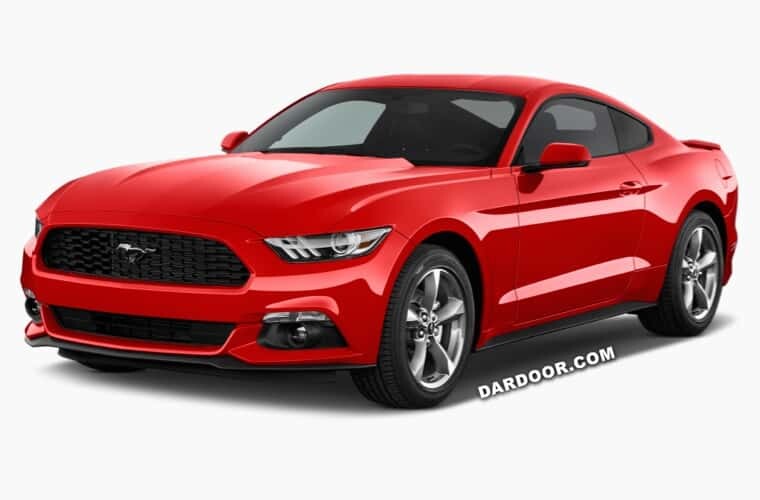
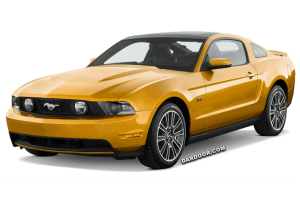
Get the same comprehensive information that your official Ford dealer uses with the original OEM workshop manual for the 2015-2018 Ford Mustang. This fully updated PDF includes detailed wiring diagrams and covers every aspect of service, repair, and maintenance.
| File Format |
PDF |
| File Language |
English |
| You’ll Get |
196.3 MB |
| Page Count |
9,517 |
| Wiring Diagrams |
Included |
| Delivery Method |
Instant Download |
Features:
- Complete Coverage: Exhaustive details on every service, repair, and maintenance task for Ford Mustang models from 2015 to 2018.
- Detailed Wiring Diagrams: Clear and precise wiring diagrams to assist in troubleshooting and repairs.
- Step-by-Step Instructions: Simple, illustrated instructions for everything from basic tasks to full engine rebuilds.
- Expert Guidance: Comprehensive information trusted by Ford technicians for accurate service and repair.
Ensure your Ford Mustang receives top-notch care with this indispensable manual. Get your PDF copy today and maintain your vehicle with confidence!
This manual provides detailed instructions for maintenance, disassembly, reassembly, component inspection, adjustment, and diagnostics—intended for use by experienced mechanics. Proper application of this guide will help ensure thorough repairs and maintain your vehicle in peak condition.
Important Note: Before purchasing this manual, please check whether your vehicle is subject to any active service recalls, as authorized dealerships may perform necessary repairs free of charge. When replacing parts, always use genuine OEM parts to ensure safety, reliability, and long-term performance.
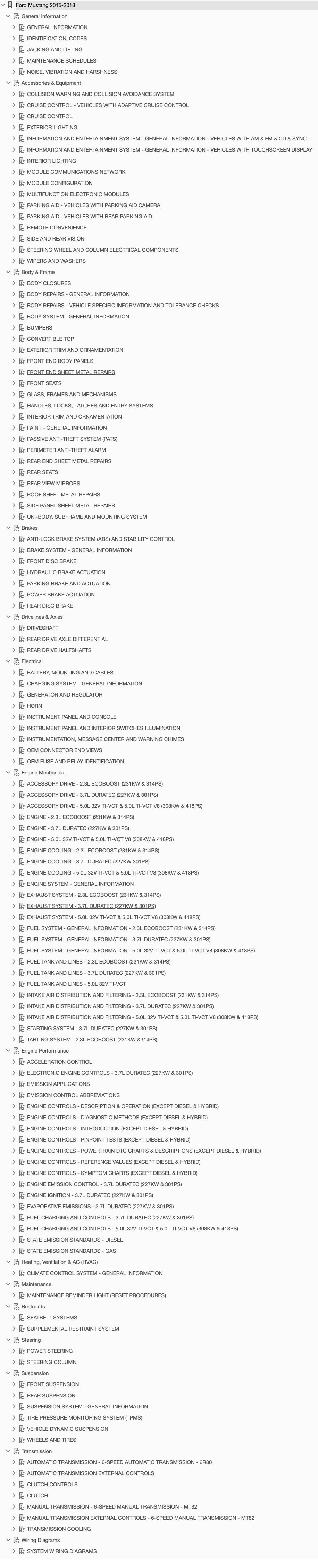
Table of Contents: 2015-2018 Ford Mustang Repair Manual
SAMPLE PAGES
A few pages will help you make the right decision
CAUTION: This OEM service and workshop repair manual provides detailed procedures for maintenance, disassembly, reassembly, inspection, adjustment, and diagnostics. It is intended as a comprehensive guide for experienced mechanics. To ensure thorough and accurate repairs that maintain your vehicle’s optimal performance, please read and follow this manual carefully. When replacing parts during any repair work, always use
genuine Ford parts to ensure quality, safety, and reliability.
🏁 2015–2018 Ford Mustang – Full Vehicle Overview, Common Issues, DTCs & Maintenance Guide
The 2015–2018 Ford Mustang (S550) introduced independent rear suspension, modern tech, and turbocharged EcoBoost power alongside the iconic 5.0L V8. Available in coupe and convertible forms, it blends classic muscle car character with improved handling, safety, and refinement, competing directly with other performance coupes and grand tourers worldwide.
⚙️ Technical Specifications & Performance
- Engine Options:
3.7L V6 (2015–2017, ~300 hp),
2.3L EcoBoost I4 (~310 hp),
5.0L Coyote V8 (435–460 hp GT),
5.2L V8 (Shelby GT350, high-performance variant)
- Transmissions: 6-speed manual, 6-speed automatic (2015–2017), 10-speed automatic (2018)
- Drivetrain: Rear-wheel drive (RWD)
- 0–100 km/h: ~5.5–6.0 sec (EcoBoost), ~4.3–4.7 sec (GT, conditions & spec dependent)
- Fuel Economy (combined): Approx. 9–11 L/100 km (EcoBoost), 11–14 L/100 km (V8), depending on spec & driving
- Platform: S550 with independent rear suspension (IRS)
- Body Styles: Fastback (coupe) and Convertible
🔧 Top 10 Common Mechanical Issues (Root Cause & Fix)
- EcoBoost overheating & power loss
🔍 Root Cause: Aggressive driving with marginal cooling capacity and heat soak in the 2.3L turbo system.
🛠️ Proposed Fix: Upgrade intercooler and cooling system, use high-quality synthetic oil, and ensure correct coolant level/bleeding.
- Driveshaft vibration at highway speeds
🔍 Root Cause: Imbalance or worn U-joints/center bearing in the driveshaft assembly.
🛠️ Proposed Fix: Inspect driveshaft for runout, replace or rebalance, check differential and transmission mounts.
- Rear differential whine
🔍 Root Cause: Improper gear mesh or low/contaminated gear oil in the differential, often after aggressive use.
🛠️ Proposed Fix: Change differential fluid with correct friction modifier, set up gears properly, replace bearings/gears if worn.
- Premature brake rotor warping
🔍 Root Cause: Heavy vehicle weight and repeated hard stops on standard non-performance rotors.
🛠️ Proposed Fix: Upgrade to performance rotors and pads, ensure proper torque on wheel lugs, and bed-in pads correctly.
- Clutch wear & chatter (manual models)
🔍 Root Cause: High torque output and enthusiastic driving on stock clutch components.
🛠️ Proposed Fix: Replace clutch and flywheel with upgraded kit; inspect hydraulic system and pilot bearing.
- Front suspension clunks
🔍 Root Cause: Worn strut mounts, sway bar links, or control arm bushings from rough roads/track use.
🛠️ Proposed Fix: Replace top mounts, links, and worn bushings; perform alignment afterward.
- Steering pull & alignment drift
🔍 Root Cause: Sensitive alignment settings combined with pothole impacts and uneven tire wear.
🛠️ Proposed Fix: 4-wheel alignment to factory or mild performance specs; inspect tires and steering components.
- Cooling system leaks (V8)
🔍 Root Cause: Radiator end-tank or hose deterioration under high temps and pressure.
🛠️ Proposed Fix: Replace radiator or hoses with OEM or upgraded components; pressure-test cooling system.
- Exhaust rattle & leaks
🔍 Root Cause: Loose exhaust hangers, failing clamps, or cracked welds near mufflers or resonators.
🛠️ Proposed Fix: Tighten/replace hangers and clamps; weld or replace damaged sections.
- Wheel bearing noise
🔍 Root Cause: High lateral loads from spirited cornering and large wheels/tires loading the hub bearings.
🛠️ Proposed Fix: Replace affected wheel bearings/hubs and verify alignment and torque settings.
💡 Top 10 Common Electrical Issues (Root Cause & Fix)
- SYNC / infotainment freezing or rebooting
🔍 Root Cause: Software glitches and memory fragmentation in the SYNC/MyFord Touch system.
🛠️ Proposed Fix: Update SYNC software to latest version, perform master reset; replace APIM (infotainment module) if needed.
- Backup camera intermittent image
🔍 Root Cause: Faulty camera module or wiring/connector issues in trunk lid harness.
🛠️ Proposed Fix: Inspect harness for pinched/damaged wires; replace camera and reseal as necessary.
- Airbag warning light on
🔍 Root Cause: Seat belt pretensioner or occupant sensor fault; connector issues under the seat.
🛠️ Proposed Fix: Scan SRS module for codes, repair/replace affected sensor or pretensioner, secure connectors.
- Battery drain overnight
🔍 Root Cause: Modules not going to sleep (BCM/infotainment), or aftermarket accessories drawing current.
🛠️ Proposed Fix: Perform parasitic draw test, reprogram/replace offending module, wire accessories to switched power.
- Power window auto-up/down issues
🔍 Root Cause: Loss of limit calibration or failing regulator/motor in door.
🛠️ Proposed Fix: Relearn window limits (reset procedure); replace regulator/motor if noisy or slow.
- Instrument cluster flicker or dead pixels
🔍 Root Cause: Internal cluster circuit/solder problems or voltage instability.
🛠️ Proposed Fix: Check charging system; repair/replace instrument cluster.
- ABS / traction control lights on
🔍 Root Cause: Faulty wheel speed sensors or damaged tone rings from debris or corrosion.
🛠️ Proposed Fix: Scan ABS module; replace affected sensor; clean/replace tone ring.
- Keyless entry / push-start issues
🔍 Root Cause: Weak key fob battery, interference, or antenna/module fault.
🛠️ Proposed Fix: Replace fob battery; check antennas; reprogram or replace keyless module if required.
- Headlight condensation & DRL failure
🔍 Root Cause: Inadequate housing sealing causing moisture and LED/ballast damage.
🛠️ Proposed Fix: Replace headlamp assembly, ensure proper venting/sealing, inspect wiring.
- Heated/cooled seat malfunction
🔍 Root Cause: Failed seat climate control module or broken heating/cooling elements.
🛠️ Proposed Fix: Test seat module and elements; replace faulty components.
📊 Pros & Cons Comparison with Competitors
| Model |
Pros 👍 |
Cons 👎 |
| Ford Mustang (2015–2018) |
Iconic styling; Strong V8 performance; Independent rear suspension; Wide aftermarket support |
EcoBoost heat/knock concerns; Interior materials mid-pack; Rear seat & trunk modest |
| Chevrolet Camaro |
Excellent chassis balance; Strong engine range; Track-focused trims |
Poor outward visibility; Cramped interior; Tight trunk opening |
| Dodge Challenger |
Huge power options; Roomy cabin; Comfortable cruiser |
Heavy & less agile; Older platform; Fuel consumption high on V8s |
| BMW 4 Series |
Premium interior; Refined ride; Strong turbo engines |
High purchase & repair costs; Less raw character |
| Nissan 370Z |
Simple, driver-focused; Strong V6; Good track capability |
Outdated interior/tech; Limited practicality; No rear seats |
| Toyota 86 / Subaru BRZ |
Excellent handling; Lightweight; Driver engagement |
Modest power; Rear seats tiny; Less straight-line performance |
| Audi A5 |
Upscale cabin; Quattro AWD; Smooth turbo engines |
Costly maintenance; Less muscle-car feel |
🛠️ Maintenance Schedule (General Guidelines)
| Interval ⏱️ |
Maintenance Task 🔧 |
| Every 8,000–10,000 km or 6 months |
Engine oil & filter change; visual fluid & belt inspection |
| Every 16,000–20,000 km |
Tire rotation; brake pad/rotor inspection; check suspension joints |
| Every 30,000 km |
Replace engine air filter; cabin filter; inspect spark plugs (EcoBoost) |
| Every 50,000–60,000 km |
Replace spark plugs (V8); inspect coolant & accessory belts |
| Every 60,000–80,000 km |
Change manual transmission & differential fluid; inspect driveshaft |
| Every 100,000–120,000 km |
Coolant replacement; comprehensive suspension & steering inspection |
📝 Always refer to the specific owner’s manual and regional service recommendations for exact intervals and fluid specifications.
⚠️ Recalls, Advisories & Safety Alerts (Typical Issues Reported)
- Passenger airbag inflator concerns: Certain vehicles involved in global airbag inflator recalls due to rupture risk.
- Door latch failures: Reports of doors not latching properly under heat/expansion; campaigns in some markets.
- Seatbelt pretensioner performance: Potential reduced restraint in specific crash scenarios; software or component updates issued in some cases.
- Reversing camera visibility issues: Camera image intermittently lost or distorted; wiring or module updates recommended.
- Fuel line/fuel pressure issues: Some engines subject to inspection or replacement of high-pressure fuel components.
- Parking brake/rollaway risk: Manual models requiring inspection of parking brake adjustment or rear caliper operation.
- Instrument cluster warnings not displaying correctly: Calibration/software updates to ensure proper warning behavior.
- Steering-related advisories: Inspection of steering column/EPAS hardware in specific production ranges.
- ECU/PCM software update campaigns: Driveability or emissions-related corrections (idle, stalling, OBD readiness).
- Rear suspension component inspection: Checks for possible cracks or incorrect torque on specific fasteners.
- Convertible top mechanism advisories (convertible models): Adjustments and part replacements for top alignment and latch operation.
📝 For exact recall applicability, owners should verify by VIN with a Ford dealer or official recall database in their region.
🧾 Diagnostic Trouble Codes (DTC) Reference Tables
💻 Engine Control Module (ECM)
| Code |
Description |
| P0171 |
System Too Lean (Bank 1) |
| P0300 |
Random/Multiple Cylinder Misfire Detected |
| P0301 |
Cylinder 1 Misfire Detected |
| P0302 |
Cylinder 2 Misfire Detected |
| P0303 |
Cylinder 3 Misfire Detected |
| P0304 |
Cylinder 4 Misfire Detected |
| P0420 |
Catalyst System Efficiency Below Threshold (Bank 1) |
| P0456 |
EVAP System – Small Leak Detected |
| P0299 |
Turbocharger/Supercharger Underboost (EcoBoost) |
| P0128 |
Coolant Thermostat – Below Regulating Temperature |
⚙️ Transmission Control Module (TCM)
| Code |
Description |
| P0700 |
Transmission Control System Malfunction |
| P0730 |
Incorrect Gear Ratio |
| P0741 |
TCC (Torque Converter Clutch) Performance/Stuck Off |
| P0750 |
Shift Solenoid A Malfunction |
| P0755 |
Shift Solenoid B Malfunction |
| P0760 |
Shift Solenoid C Malfunction |
| P0841 |
Transmission Fluid Pressure Sensor/Switch A Range/Performance |
| P0882 |
TCM Power Input Signal Low |
| P2714 |
Pressure Control Solenoid D Stuck Off |
| P2763 |
Turbine Speed Sensor Circuit High |
🛑 ABS / ESC (Brake System)
| Code |
Description |
| C0035 |
Left Front Wheel Speed Sensor Circuit |
| C0040 |
Right Front Wheel Speed Sensor Circuit |
| C0045 |
Left Rear Wheel Speed Sensor Circuit |
| C0050 |
Right Rear Wheel Speed Sensor Circuit |
| C0110 |
ABS Pump Motor Circuit Malfunction |
| C003A |
Wheel Speed Correlation Fault |
| C0065 |
Brake Pressure Sensor Circuit |
| C1234 |
Steering Angle Sensor Not Initialized |
| C121C |
Torque Request Signal Denied |
| C1380 |
ABS Control Module Internal Fault |
🎈 SRS Airbag System
| Code |
Description |
| B0001 |
Driver Frontal Stage 1 Deployment Loop (Open) |
| B0002 |
Driver Frontal Stage 2 Deployment Loop (Short) |
| B0010 |
Passenger Frontal Deployment Loop Fault |
| B0028 |
Side Airbag Deployment Loop Fault |
| B0070 |
Seat Belt Pretensioner Deployment Fault |
| B0090 |
Occupant Classification System Fault |
| B00A0 |
Restraints Control Module Internal Fault |
| B141B |
Crash Sensor Supply Circuit Fault |
| B1510 |
Passenger Airbag Disable Indicator Fault |
| B0084 |
Seat Position Sensor Fault |
📡 Body Control / CAN Communication
| Code |
Description |
| U0100 |
Lost Communication with ECM/PCM |
| U0121 |
Lost Communication with ABS/Brake Control Module |
| U0140 |
Lost Communication with Body Control Module |
| U0155 |
Lost Communication with Instrument Panel Cluster |
| U0184 |
Lost Communication with Radio |
| U0257 |
Lost Communication with Front Display Interface Module |
| U0422 |
Invalid Data Received from Body Control Module |
| U0415 |
Invalid Data Received from ABS Module |
| U0198 |
Lost Communication with Telematics Control Module |
| U1000 |
Generic CAN Communication Fault |
✅ Final Verdict & Conclusion
The 2015–2018 Ford Mustang successfully modernized an icon, bringing independent rear suspension, turbocharged power, and improved refinement while keeping the character and soundtrack enthusiasts expect. It does have known issues—especially with EcoBoost heat management, SYNC glitches, and some driveline/suspension wear—but most are manageable with proper maintenance and targeted upgrades. For drivers seeking a charismatic rear-drive coupe that can commute, tour, and play on weekends, the S550 Mustang remains a compelling and highly tunable choice.