Get the official OEM workshop service and repair manual for the 2012 Ford Flex in a fully searchable and printable PDF format.
🧰 A practical owner-focused guide to the 2012 Flex (Duratec V6 & EcoBoost): what breaks, what it costs, and what to check before you buy.
⚠️ CAUTION: This information is intended for experienced technicians and informed owners. Improper diagnosis or repairs, working without proper tools, or ignoring safety procedures can cause serious injury and/or vehicle damage. When repairs require part replacement, use OEM-quality components and follow factory torque specs and procedures.
📊 Technical Specs & Performance
⚙️ Engines (2012)
- 3.5L Duratec V6 (NA) — ~262 hp, ~248 lb-ft (paired with 6-speed automatic)
- 3.5L EcoBoost V6 (Twin-Turbo, DI) — ~355 hp, ~350 lb-ft (paired with 6-speed automatic; typically AWD on EcoBoost trims)
🧠 Transmission
- 6-speed automatic (Ford lists transmission codes including 6F50 and 6F55 for this model line)
🛞 Drivetrain / Trims (high level)
- SE/SEL/Limited commonly offered with the Duratec V6; EcoBoost available on higher trims (market/option dependent)
- FWD standard on many trims; AWD available/standard on certain configurations (especially EcoBoost)
🔧 Steering note (important for diagnostics)
- Owner documentation notes EcoBoost models equipped with Electric Power Steering (EPS) while Duratec V6 models use hydraulic steering—useful when chasing steering feel / warning messages.
🛠️ Top 10 Common Mechanical Issues (Reported by Owners)
👀 Symptoms: Coolant smell, overheating, milky oil, unexplained coolant loss, rough running after overheat
🔎 Root Cause: Water pump is driven by the timing chain; when it fails, coolant can leak internally and contaminate oil in some cases (often escalates quickly)
✅ Fix: Pressure test + inspect; replace water pump (timing cover service), timing components as needed; immediate oil service; verify bearings/tensioners
💰 Cost to Fix: $1,200–$2,800 (pump/timing labor heavy); $4,000–$9,000+ if engine damage occurs
2- 🛞 AWD PTU (Power Transfer Unit) Overheating / Failure
👀 Symptoms: Burning/“hot gear oil” smell, whining/humming, fluid leak, AWD fault/disable, vibration under load
🔎 Root Cause: Small fluid capacity + heat can break down lubricant; leaks or overheating accelerate wear and eventual failure
✅ Fix: Inspect for leaks; service/replace PTU fluid where applicable; repair leaks; replace PTU if noisy/overheated; verify venting
💰 Cost to Fix: $900–$2,400 (replace PTU); $150–$350 (service/inspection if caught early)
3- ⚡ Electric Power Steering (EPS) Assist Loss (EcoBoost / EPS-equipped)
👀 Symptoms: “Service Power Steering Now”, heavy steering at low speed, intermittent assist loss
🔎 Root Cause: EPS system fault (sensor/steering gear/control module logic) — also ties into known recall action paths on certain vehicles
✅ Fix: Scan PSCM/EPS codes; apply software update if applicable; replace steering gear if fault codes indicate hardware issue
💰 Cost to Fix: $250–$450 (diagnosis/software); $1,200–$2,800 (steering gear replacement)
👀 Symptoms: Whining/squeal, weak boost, smoke, loss of power, misfires under load
🔎 Root Cause: Turbo bearing wear, oiling issues, heat stress, boost leaks; neglected maintenance can worsen outcomes
✅ Fix: Smoke test + boost leak check; inspect oil feed/return; replace turbo(s) as required; verify cats/intercooler contamination
💰 Cost to Fix: $1,500–$4,500 (one side) / $3,000–$7,500 (both)
5- 🧯 Cooling System Leaks (radiator/hoses/thermostat/housing)
👀 Symptoms: Coolant loss, overheating in traffic, heater goes cold, dried coolant crust on fittings
🔎 Root Cause: Aged hoses/clamps, thermostat sticking, plastic housings and seals fatigue
✅ Fix: Pressure test; replace failed component; bleed system correctly; verify fan operation
💰 Cost to Fix: $180–$900 (typical leak/thermostat); $900–$1,600 (radiator replacement)
6- 🧱 Engine Mount Wear (vibration/harshness)
👀 Symptoms: Vibration at idle, clunk on shifts, harshness during acceleration
🔎 Root Cause: Rubber/hydraulic mounts degrade; heavier drivetrain loads (AWD/EcoBoost) can accelerate wear
✅ Fix: Inspect mounts; replace failed mount(s); verify exhaust flex and subframe bushings
💰 Cost to Fix: $350–$1,200 (depending on number/location)
7- 🛞 Wheel Bearing Noise
👀 Symptoms: Humming that changes with speed, louder in turns (load-dependent)
🔎 Root Cause: Bearing wear from mileage, impacts, water intrusion
✅ Fix: Confirm with road test + chassis ears; replace hub/bearing assembly; align if needed
💰 Cost to Fix: $320–$750 per corner
8- 🛑 Brake Pulsation (Warped rotors / sticking caliper)
👀 Symptoms: Steering wheel shake while braking, uneven pad wear, pulling to one side
🔎 Root Cause: Heat spots/rotor runout, seized slide pins, worn bushings, cheap friction parts
✅ Fix: Measure runout; replace/true rotors; service calipers/slides; flush fluid if contaminated
💰 Cost to Fix: $250–$900 (axle), $900–$1,600 (calipers/hoses/fluid)
9- 🧪 EVAP/Purge Related Driveability (varies)
👀 Symptoms: Hard start after fueling, rough idle, fuel smell, MIL
🔎 Root Cause: Purge valve/canister issues can create incorrect vapor flow and mixture faults
✅ Fix: Smoke test EVAP; test purge valve; replace faulty valve/canister components; confirm readiness monitors
💰 Cost to Fix: $180–$750
10- 🧩 Transmission Shift Quality (6-speed adaptive learning / fluid condition)
👀 Symptoms: Harsh/soft shifts, delayed engagement, flare or thump on downshift
🔎 Root Cause: Adaptive strategy behavior, aged fluid, solenoid wear, sensor issues (worse if overheating/towing)
✅ Fix: Scan for TCM/PCM codes; verify fluid level/condition; service fluid; re-learn/adaptation; repair solenoids if needed
💰 Cost to Fix: $250–$450 (service + relearn) / $1,800–$4,500+ (internal repair)
🔌 Top 10 Common Electrical Issues (Reported by Owners)
1- 🔒 Door Lock Actuator / Lock Rod Grommet Misalignment
👀 Symptoms: One or more doors won’t lock/unlock, intermittent lock cycling, manual lock feels “sticky”
🔎 Root Cause: Actuator wear or mechanical rod/grommet seating issue referenced in known service guidance (TSB discussion appears in owner communities)
✅ Fix: Inspect rod seating/grommets; adjust/secure; replace actuator if weak/noisy; verify wiring at door hinge area
💰 Cost to Fix: $120–$350 (adjust/minor repair) / $250–$650 per door (actuator replacement)
2- 🚪 “Door Ajar” Light Stays On
👀 Symptoms: Door ajar warning when doors are closed, interior lights stay on, alarm issues, battery drain
🔎 Root Cause: Door latch switch contamination/wear; latch not fully registering closed
✅ Fix: Inspect/clean latch; confirm switch data in scan tool; replace latch if recurring; verify alignment
💰 Cost to Fix: $80–$220 (clean/adjust) / $250–$650 (latch replacement)
3- 🧯 Battery Drain / Parasitic Draw
👀 Symptoms: Slow crank, dead battery after sitting, random module wake-ups, interior lights on
🔎 Root Cause: Latch/ajar circuits, infotainment/SYNC wake cycles, aging battery/cables, module sleep issues
✅ Fix: Draw test with ammeter; isolate fuse circuit; repair module/latch; replace weak battery and service terminals
💰 Cost to Fix: $150–$450 (diagnosis + simple fix) / $450–$1,200 (module/latch replacement + programming)
4- 🎛️ Instrument Cluster / Warning Lamps (intermittent)
👀 Symptoms: Random warnings, flicker, gauges drop, intermittent communication codes
🔎 Root Cause: Low voltage events, connector fretting, CAN communication errors
✅ Fix: Load-test battery/charging; clean grounds; inspect cluster connectors; scan for U-codes; repair wiring as needed
💰 Cost to Fix: $180–$900 (varies widely)
5- 📷 Rear Camera / Display Issues (equipment-dependent)
👀 Symptoms: Blank/intermittent image, distorted display, no camera on reverse
🔎 Root Cause: Camera module wear, connector corrosion, head-unit/software faults; Ford has issued camera-related recalls on some Flex model years (check VIN)
✅ Fix: Verify power/ground; inspect tailgate harness; update software if applicable; replace camera if failed; confirm recall eligibility by VIN
💰 Cost to Fix: $220–$650 (camera) / $650–$1,200 (harness + labor)
6- 🪟 Power Window Regulator / Switch Failure
👀 Symptoms: Window stuck, slow operation, clicking, one-touch fails
🔎 Root Cause: Regulator motor wear, cable fray, switch contact wear
✅ Fix: Check switch output; replace regulator/motor assembly; lubricate channels; reset one-touch if needed
💰 Cost to Fix: $250–$700 per window
7- 🧊 HVAC Blend Door Actuator / Temperature Control Glitches
👀 Symptoms: Temperature stuck hot/cold, clicking behind dash, inconsistent airflow modes
🔎 Root Cause: Blend door actuator gear wear, calibration issues, HVAC module logic after low voltage
✅ Fix: Run HVAC self-test; recalibrate; replace failed actuator; verify cabin temp sensors
💰 Cost to Fix: $220–$900 (access-labor varies)
8- 🔑 Keyless Entry / PATS No-Start (intermittent)
👀 Symptoms: Cranks/no-start, security light, “No key detected” (if equipped), random immobilizer behavior
🔎 Root Cause: Weak fob battery, antenna/receiver issues, low system voltage, parameter reset after module replacement not completed
✅ Fix: Test battery/charging; replace fob battery; scan for PATS codes; correct programming/parameter reset procedure
💰 Cost to Fix: $80–$250 (simple) / $350–$1,100 (programming/modules)
9- 📦 Power Liftgate / Liftgate Latch Electrical Faults (if equipped)
👀 Symptoms: Liftgate won’t open/close, beeps then stops, intermittent latch behavior, stuck closed
🔎 Root Cause: Weak latch actuator, low voltage, switch issues, liftgate harness wear at hinge, strut load
✅ Fix: Check fuses/switch; inspect hinge harness; reset system after low voltage; replace latch actuator if weak
💰 Cost to Fix: $250–$450 (diagnosis/repair) / $550–$850 (actuator/latch replacement)
10- 🧠 CAN Communication Glitches (U-codes)
👀 Symptoms: Multiple unrelated warnings, intermittent no-start, modules “offline”, random limp mode
🔎 Root Cause: Poor grounds, water intrusion at connectors, damaged harness, low voltage events
✅ Fix: Full scan; inspect grounds; wiggle-test harness; repair corrosion; verify battery health and charging stability
💰 Cost to Fix: $200–$1,500+ (depends on harness/module)
✅ Pros & ❌ Cons
| ✅ Pros | ❌ Cons |
|---|---|
| 🛋️ Spacious cabin and comfortable ride | 💸 Potentially expensive 3.5L water pump/timing service |
| 🚀 EcoBoost version is very quick for a family hauler | 🛞 AWD PTU failures can be costly if ignored |
| 🧳 Strong practicality (cargo + seating flexibility) | ⚡ Electrical gremlins can appear with age (doors/ajar, locks, liftgate) |
| 🛣️ Highway stability + long-trip comfort | 🔧 Repairs can be labor-heavy due to packaging |
🗓️ Maintenance Schedule (Owner-Friendly Table)
✅ Use this as a practical baseline. Always verify exact intervals for your engine/drivetrain and driving conditions using the factory owner information.
👉 Info: Ford’s owner literature confirms 6-speed automatic variants and general maintenance/spec sections for this model.
| Interval | Service | Notes |
|---|---|---|
| Every 5,000–7,500 mi (8,000–12,000 km) | 🛢️ Engine oil & filter | Shorter interval for towing, heavy city driving, extreme temps |
| Every 15,000 mi (24,000 km) | 🔍 Inspect brakes, tires, suspension, steering, fluids | Rotate tires; check for PTU seepage (AWD) |
| Every 30,000 mi (48,000 km) | 🧼 Engine air filter + cabin air filter | More often in dusty environments |
| Every 30,000–60,000 mi | 🧪 Transmission fluid service (as needed) | Earlier if towing/heat/harsh shifts; verify correct spec fluid |
| Every 40,000–60,000 mi | 🛑 Brake fluid flush | Prevents corrosion and ABS hydraulic issues |
| Every 60,000 mi | 🛞 AWD: PTU/RDU fluid check/service (if applicable) | Helps reduce overheating-related PTU wear (AWD) |
| Every 90,000–100,000 mi | ✨ Spark plugs | EcoBoost versions are more sensitive to plug condition |
| Every 100,000 mi / ~5 years | 🧊 Coolant service | Critical for water pump longevity and temperature control |
🥊 Top 5 Competitors
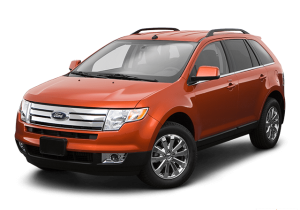
- 🚙 Ford Edge (similar crossover alternative)
- 🚙 Ford Explorer (3-row family SUV rival)
- 🚙 Toyota Highlander (reliability-focused competitor)
- 🚙 GMC Acadia (3-row crossover alternative)
- 🚙 Chevrolet Equinox (smaller crossover alternative)
🚨 Top 10 Recalls • Advisories • Safety Alerts • TSB Highlights
- 🧯 Steering assist may shut down (EPS) — NHTSA recall entry includes PSCM code check, software update, or steering gear replacement.
- 🎈 Driver frontal airbag may improperly inflate in second-stage deployment — inspection/replacement program noted under NHTSA recall entry.
- 🛞 PTU odor / “propane/natural gas smell” advisory — service guidance includes inspecting leaks and addressing PTU concerns.
- 🚪 Door ajar lamp illuminated when all doors closed (TSB) — reported under TSB listings for Flex-related vehicles.
- 🔒 Power door lock concerns linked to lock rod/grommet seating (TSB discussion) — commonly referenced as TSB #09-01-03 in owner community resources.
- 🧰 Turbo-related oil leak diagnostic guidance (SSM/TSB listings) — turbo oil supply/return tube leak guidance appears in TSB listings for turbo-equipped vehicles.
- 🧠 PCM/parameter reset no-start after PCM replacement (service bulletin) — bulletin listing references DTC P161A scenario and reset procedure.
- 🧪 Battery terminal replacement guidance (service bulletin) — bulletin listings note terminal service without complete harness replacement in some cases.
- 🛑 Brake warning lamp/VHR category flags (service bulletin) — bulletin listing notes brake system warning indicator concerns in certain SYNC-equipped vehicles.
- 📌 How to search Ford TSBs (official guidance) — Ford notes TSBs are not recalls and are accessed via Ford support/TSI resources.
Important: Recall applicability depends on VIN, region, and whether the remedy was already completed. Always verify with Ford/NHTSA by VIN before purchase.
🧾 DTC Trouble Code List
🔔 Note: Codes below are commonly encountered OBD-II / network codes used for diagnostics. Always confirm with a proper scan tool and the factory pinpoint tests.
🧠 Engine Control Module (ECM / PCM) — 10 Common Codes
| DTC | Meaning | Typical Checks |
|---|---|---|
| P0300 | Random/Multiple Cylinder Misfire | Plugs/coils, fuel trims, vacuum leaks |
| P0301 | Cylinder 1 Misfire | Coil swap test, plug, injector |
| P0171 | System Too Lean (Bank 1) | Intake leaks, MAF, fuel pressure |
| P0174 | System Too Lean (Bank 2) | Same as above + PCV/EVAP |
| P0012 | Cam Timing Over-Retarded (Bank 1) | Oil condition, VCT solenoid, timing |
| P0016 | Crank/Cam Correlation | Timing chain stretch, sensors |
| P0101 | MAF Range/Performance | MAF contamination, leaks, wiring |
| P0455 | EVAP Large Leak | Gas cap, purge/vent, smoke test |
| P0420 | Catalyst Efficiency Below Threshold (Bank 1) | Exhaust leaks, O2 sensors, cat |
| P1299 | Cylinder Head Overtemperature Protection Active | Cooling system, fan, thermostat |
⚙️ Transmission Control Module (TCM / PCM) — 10 Common Codes
| DTC | Meaning | Typical Checks |
|---|---|---|
| P0700 | Transmission Control System Malfunction | Scan TCM sub-codes, fluid condition |
| P0715 | Input/Turbine Speed Sensor Circuit | Sensor, wiring, connector, internal |
| P0720 | Output Speed Sensor Circuit | OSS sensor, harness, tone wheel |
| P0731 | Incorrect Gear Ratio (1st) | Solenoids, clutch slip, fluid |
| P0732 | Incorrect Gear Ratio (2nd) | As above |
| P0733 | Incorrect Gear Ratio (3rd) | As above |
| P0741 | TCC Performance / Stuck Off | Converter, valve body, fluid |
| P0750 | Shift Solenoid A | Solenoid resistance, valve body |
| P0776 | Pressure Control Solenoid Performance | Line pressure test, solenoid |
| P0796 | Pressure Control Solenoid “C” Performance | As above |
🛑 ABS / ESC (Brake System) — 10 Common Codes
| DTC | Meaning | Typical Checks |
|---|---|---|
| C003A | Wheel Speed Sensor Circuit (example) | Sensor gap, wiring, tone ring |
| C0040 | Right Front Wheel Speed Sensor | Sensor/hub, harness |
| C0045 | Left Front Wheel Speed Sensor | As above |
| C0050 | Right Rear Wheel Speed Sensor | As above |
| C0055 | Left Rear Wheel Speed Sensor | As above |
| C1095 | ABS Hydraulic Pump Motor Circuit | Power/ground, relay, module |
| C1145 | Steering Angle Sensor Signal | Calibration, sensor, wiring |
| C1288 | Brake Pressure Sensor Circuit | Sensor, connector corrosion |
| C1956 | Yaw Rate Sensor Circuit | Calibration, sensor |
| C0071 | ABS System Control Module | Module power, internal failure |
🎈 SRS Airbag System — 10 Common Codes
| DTC | Meaning | Typical Checks |
|---|---|---|
| B0001 | Driver Frontal Deployment Loop | Connectors, clockspring, module |
| B0004 | Driver Knee Airbag Circuit | Wiring, module |
| B0010 | Passenger Frontal Deployment Loop | Connectors, seat sensors |
| B0020 | Side Airbag Deployment Loop | Seat harness, connectors |
| B0028 | Side Curtain Airbag Circuit | Pillar harness, module |
| B0040 | Passenger Occupant Sensor | OCS calibration, seat mat |
| B0051 | Restraints Control Module (RCM) | Power/ground, water intrusion |
| B0070 | Seatbelt Pretensioner Circuit | Connector under seat |
| B0092 | Crash Sensor / Impact Signal | Sensor, mounting, wiring |
| B00A0 | Occupant Classification System Fault | OCS module, calibration |
📡 Body Control / CAN Communication — 10 Common Codes
| DTC | Meaning | Typical Checks |
|---|---|---|
| U0100 | Lost Communication with ECM/PCM | Battery/grounds, CAN wiring |
| U0101 | Lost Communication with TCM | CAN, module power |
| U0121 | Lost Communication with ABS Module | ABS power/ground, CAN |
| U0140 | Lost Communication with BCM | BCM connectors, water intrusion |
| U0155 | Lost Communication with IPC (Cluster) | Cluster power/ground, CAN |
| U0199 | Lost Communication with Telematics/SYNC | Module sleep/wake, battery drain |
| U0401 | Invalid Data Received from ECM/PCM | Software, sensor plausibility |
| B1318 | Battery Voltage Low | Charging system, battery health |
| B2103 | Antenna/Keyless Entry Signal Fault | Receiver, fob, wiring |
| B1D55 | Liftgate/Body Switch Circuit (example) | Switch, latch actuator, harness |
❓ Frequently Asked Questions (FAQ) — 2012 Ford Flex
1) Is the 2012 Ford Flex reliable?
Yes—when maintained properly. The biggest “make-or-break” items are the 3.5L internal water pump/timing service and, on AWD models, PTU condition. A clean service history matters more than mileage.
2) What is the most expensive common repair on a 2012 Flex?
The internal water pump (timing cover/timing chain area) can be one of the priciest jobs. If coolant leaks internally and contaminates oil, repairs can escalate quickly.
3) Which engine is better: 3.5L Duratec (NA) or 3.5L EcoBoost?
The Duratec is simpler and often cheaper to own long-term. The EcoBoost is much faster and stronger for passing/towing, but it adds turbo-related maintenance risk and higher repair costs if neglected.
4) What are the warning signs of an internal water pump problem?
Unexplained coolant loss, overheating, sweet coolant smell, milky oil, and temperature spikes under load. If you suspect it, stop driving and diagnose immediately.
5) Are AWD models worth it, or should I buy FWD?
AWD is great for winter traction and stability, but it adds PTU/RDU components that need monitoring. If you don’t need AWD, FWD can be cheaper to maintain.
6) What are the warning signs of PTU trouble (AWD)?
Burning gear-oil smell, whining/humming that changes with speed, fluid leaks, vibration under load, or AWD warnings. Catching PTU issues early can save money.
7) What should I check before buying a used 2012 Ford Flex?
Scan for stored/pending codes, look for coolant leaks and oil condition issues, test-drive for shift quality, check AWD operation (if equipped), and verify maintenance records (coolant, plugs, trans service).
8) What is a “Door Ajar” warning and why does it happen?
It’s usually a door latch sensor/latch issue (or contamination/wear) that makes the car think a door is open. It can cause interior lights to stay on and lead to battery drain.
9) Why does the 2012 Flex sometimes have battery drain problems?
Common causes include a weak aging battery, modules not going to sleep, “door ajar” circuits, infotainment wake-ups, or accessories wired incorrectly. A parasitic draw test pinpoints the circuit.
10) How do I check recalls and service campaigns for my exact 2012 Flex?
Use your VIN on Ford’s official recall lookup page (and your local transport authority if outside the U.S.). Recalls and campaigns can vary by build date and options.
🏁 Final Verdict
✅ The 2012 Ford Flex is a standout for space, comfort, and (in EcoBoost form) serious performance.
The smart buy is the one with documented maintenance and a clean diagnostic scan—especially regarding cooling/water pump history and AWD PTU condition.
If you want a roomy family hauler and you’re willing to stay ahead of preventative maintenance, the Flex can be a great value.
🔍 Pro tip: For the most accurate repairs and factory procedures, use the OEM workshop manual.
See: 2012 Ford Flex Repair Manual on Dardoor.
See: 2012 Ford Flex Repair Manual on Dardoor.