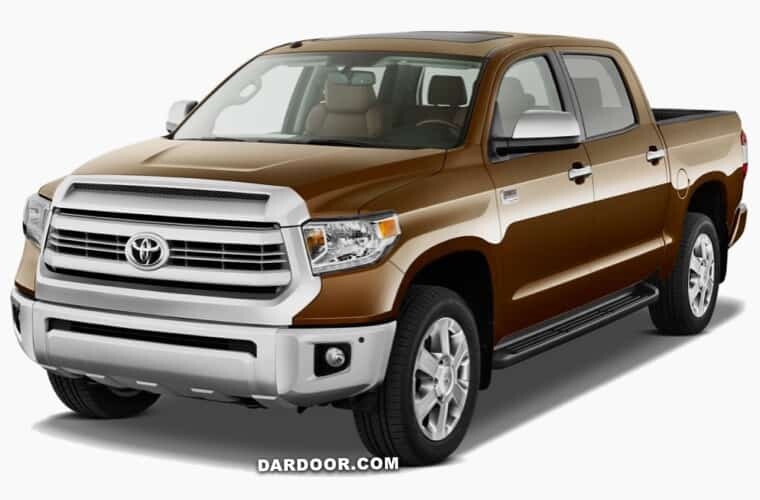
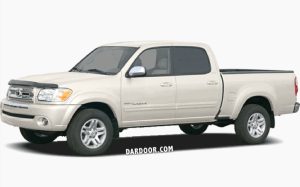
OEM Workshop Manual: 2008-2015 Toyota Tundra (Second Generation – XK50)
This is the original OEM workshop document for the 2008-2015 Toyota Tundra repair manual, covering the second-generation (XK50). It includes the wiring diagram in PDF format for comprehensive guidance.
| File Format |
PDF |
| File Language |
English |
| You’ll Get |
325 MB |
| Page Count |
13,762 |
| Wiring Diagram |
Included |
| Delivery Method |
Instant Download |
Applicable Models:
- UPK51, 56 Series,
- USK51, 52, 56, 57 Series
Engines Covered:
- 4.6L 1UR-FE V8 (VVT-i) 310 hp (2010 – 2019)
- 5.7L 3UR-FBE V8 (Dual VVT-i) 378 hp (2009-2014) (An E85 Ethanol fuel blend version of the 3UR-FE engine)
- 5.7L 3UR-FE V8 (Dual VVT-i) 381 hp (2007 – 2021)
Electrical Wiring Diagram Reference Manual:
Manual Features:
- Complete Coverage: Mechanical and electrical repair instructions for all 2008-2015 Toyota Tundra models.
- Wiring Diagrams: Detailed schematics for easy troubleshooting and electrical system repairs.
- Dealer-Grade Resource: The same professional-grade manual used by Toyota dealership technicians.
- Step-by-Step Instructions: Clear, concise guidance for regular maintenance, diagnostics, and repairs.
Applications:
This manual is perfect for:
- DIY enthusiasts handling repairs and maintenance.
- Professional mechanics needing accurate and reliable information.
- Owners wanting to ensure their Tundra runs smoothly for years to come.
Equip yourself with the trusted resource to handle everything from routine maintenance to complex repairs on your 2008-2015 Toyota Tundra! Download now to access all the details in a convenient PDF format.
This manual includes the procedures for maintenance, disassembling, reassembling, inspection, and adjustment of components and diagnostics for the guidance of experienced mechanics. Please use this manual to ensure complete repair work to keep your vehicle in optimum condition. When replacement parts during repair work are needed, be sure to use
Toyota OEM genuine parts.
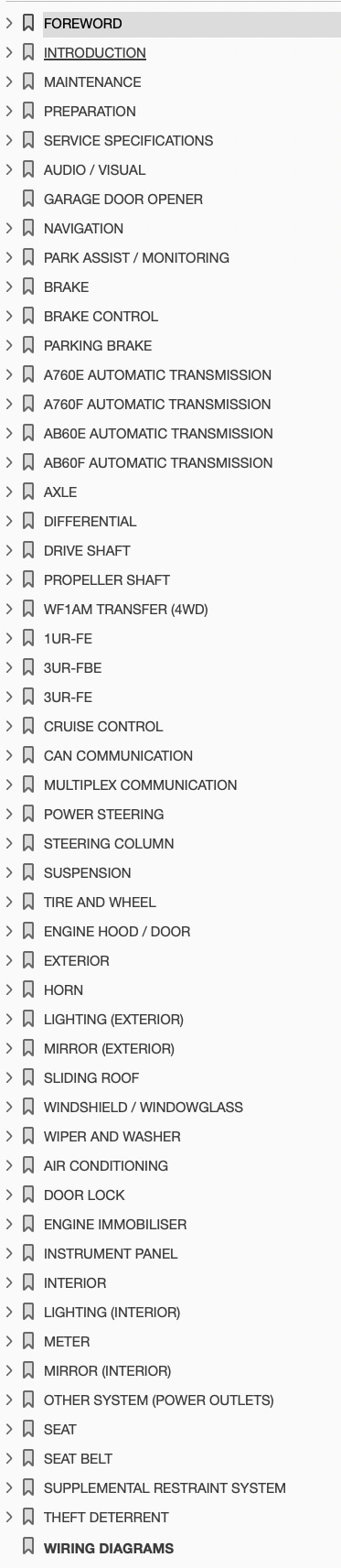
Table of Contents : 2008-2015 Toyota Tundra Repair Manual
Sample Pages
CAUTION: Please note that this manual is made for the use of persons who have special techniques and certifications. If non-specialized or uncertified technicians perform repairs or services only using this manual or without proper equipment or tools, this may cause severe injury to you or other persons nearby and also cause damage to your vehicle. In order to prevent dangerous operations and damage to your vehicle, please be sure to
follow the instructions thoroughly.
Common Issues with 2008-2015 Toyota Tundra
The 2008-2015 Toyota Tundra is a full-size pickup truck known for its reliability, strong engine options, and impressive towing and payload capacities. It competes with domestic trucks like the Ford F-150, Chevrolet Silverado, and RAM 1500, offering a Japanese alternative in the full-size truck segment. While the Tundra has a reputation for durability, there are some common issues to consider.
1. Air Injection Pump Failure
- Issue: The air injection pump system, designed to reduce emissions, is prone to failure. Problems with the pump or air switching valves can lead to reduced performance and trigger a check engine light.
- Symptoms: Reduced engine power, check engine light, or trouble codes P0418, P2440, or P2442.
- Solution: Replace the air injection pump and related components. Some owners install bypass kits to disable the system and avoid costly repairs.
2. Secondary Air Pump Malfunction
- Issue: In cold climates, condensation can form in the secondary air injection system, causing pump failure or valve sticking.
- Symptoms: Check engine light with reduced power mode.
- Solution: Toyota issued a warranty extension for certain models, so check with a dealership. Otherwise, replacement or bypass kits can resolve the issue.
3. Premature Ball Joint and Suspension Wear
- Issue: The Tundra’s front suspension, including ball joints and control arm bushings, is prone to wear, especially in vehicles used for towing or off-road driving.
- Symptoms: Clunking noises, uneven tire wear, or loose steering feel.
- Solution: Replace worn suspension components with high-quality or heavy-duty parts, and ensure proper alignment.
4. Transmission Shifting Issues
- Issue: Some Tundra models may experience rough or delayed shifting, particularly in higher-mileage vehicles or those used for towing.
- Symptoms: Hard shifts, hesitation when changing gears, or slipping transmission.
- Solution: Regularly replace transmission fluid at recommended intervals. In severe cases, transmission repairs or replacements may be needed.
5. Rear Differential Failures
- Issue: The rear differential has been known to develop leaks or fail prematurely, particularly in trucks that frequently tow or carry heavy loads.
- Symptoms: Whining noises from the rear axle, leaks, or reduced traction.
- Solution: Inspect the differential regularly for leaks and ensure the fluid is topped up or replaced as needed. Replace seals or rebuild the differential if necessary.
6. Brake Rotor Warping
- Issue: The Tundra’s brake rotors can warp prematurely, especially in models that tow heavy loads.
- Symptoms: Vibration or pulsing in the brake pedal during braking.
- Solution: Replace rotors with heavy-duty or aftermarket options designed for towing applications. Ensure proper torque during wheel installation to avoid uneven stress on the rotors.
7. Fuel Pump Problems
- Issue: Some owners report fuel pump issues, which can lead to difficulty starting or engine stalling.
- Symptoms: Hard starts, stalling, or reduced power delivery.
- Solution: Replace the fuel pump with a high-quality OEM or aftermarket unit.
8. Rust and Corrosion
- Issue: The frame and undercarriage on some Tundra models are prone to rust, particularly in regions where road salt is used during winter.
- Symptoms: Visible rust on the frame, suspension components, or undercarriage.
- Solution: Inspect the undercarriage regularly and apply rustproofing treatments. Toyota offered frame rust recalls for certain models, so check with the dealership for eligibility.
9. Door Handle Breakage
- Issue: Plastic door handles, especially on frequently used doors, are prone to breaking or becoming stuck.
- Symptoms: Difficulty opening doors or broken handles.
- Solution: Replace door handles with OEM or upgraded aftermarket options for improved durability.
Maintenance Tips for the 2008-2015 Toyota Tundra
- Oil Changes: Use high-quality synthetic oil and change it every 5,000–7,500 miles to maintain engine health.
- Transmission Fluid: Replace the fluid every 50,000–60,000 miles, especially if the truck is used for towing.
- Brake System: Inspect brake pads, rotors, and calipers regularly, especially if towing or driving in hilly areas.
- Rust Prevention: Apply undercoating or rustproofing treatments and wash the undercarriage frequently in winter.
- Suspension Maintenance: Check ball joints, control arms, and bushings periodically, especially if the truck is used off-road.
- Fuel System: Replace the fuel filter and clean the injectors as needed to ensure proper performance.
- Air Injection System: Inspect and maintain the air injection pump system to avoid costly failures.
Key Features of the 2008-2015 Toyota Tundra
- Engine Options:
- 4.0L V6 (2008-2014) with 236 horsepower.
- 4.6L V8 (introduced in 2010) with 310 horsepower.
- 5.7L V8 with 381 horsepower and 401 lb-ft of torque.
- Transmission: 5-speed automatic (V6) or 6-speed automatic (V8s).
- Towing Capacity: Up to 10,500 pounds with the 5.7L V8 engine.
- Payload Capacity: Up to 2,080 pounds, depending on the configuration.
- Cab Options: Regular Cab, Double Cab, and CrewMax.
- Notable Features:
- Available 4WD for off-road capability.
- Integrated trailer brake controller and tow package (optional).
- High trim levels like Platinum and 1794 Edition offer luxurious interiors with premium leather and wood accents.
Pros and Cons
Pros
- Reliable and powerful engine options, particularly the 5.7L V8.
- Excellent towing and payload capacities.
- Spacious and comfortable interior, especially in CrewMax models.
- Durable construction, with a reputation for longevity.
- Good resale value due to Toyota’s reliability reputation.
Cons
- Frame rust can be a significant concern in older models.
- Air injection pump issues can lead to costly repairs.
- Rough ride compared to competitors, especially when unloaded.
- Fuel economy is below average for its class, especially with the V8.
- Suspension and brake components may wear prematurely with heavy use.
Summary
The 2008-2015 Toyota Tundra is a dependable and capable full-size truck that excels in towing, payload, and long-term reliability. While issues such as air injection pump failures, rust, and suspension wear can arise, proper maintenance and addressing problems early can keep the Tundra performing well for many years. If you’re considering a used Tundra, check for rust, maintenance records, and whether recalls or warranty repairs (like the frame rust recall) have been addressed. With proper care, the Tundra remains a solid choice for both work and recreational use.
Common DTCs for the 2008-2015 Toyota Tundra
-
P0171 & P0174 – System Too Lean (Bank 1 & Bank 2)
- Possible Causes:
- Vacuum leaks
- Faulty mass air flow (MAF) sensor
- Clogged fuel injectors
- Exhaust system leaks
- Dirty or faulty oxygen sensor
-
P0300-P0308 – Engine Misfire Detected
- Possible Causes:
- Faulty spark plugs or ignition coils
- Clogged fuel injectors
- Compression issues
- Vacuum leaks
-
P0420 & P0430 – Catalyst System Efficiency Below Threshold (Bank 1 & 2)
- Possible Causes:
- Worn catalytic converter
- Faulty oxygen sensors
- Exhaust leaks
-
P0441, P0455, P0456 – EVAP System Codes
- Possible Causes:
- Loose or damaged gas cap
- Leaks in the EVAP system
- Faulty purge control valve
-
P2440 & P2442 – Secondary Air Injection System Malfunction
- Possible Causes:
- Faulty air pump or air switching valves
- Blockages in the air injection system
- Electrical issues with the system
-
U0100 – Lost Communication with ECM/PCM
- Possible Causes:
- Wiring or connection issues
- Faulty ECM/PCM
- Electrical interference or short circuits
-
C1201 – Engine Control System Malfunction
- Possible Causes:
- Communication issue between ECM and ABS system
- Faulty sensors or modules
Steps for Diagnosis and Repair:
- Retrieve Codes: Use an OBD-II scanner to retrieve the DTC(s) from the vehicle.
- Investigate the Cause: Research the specific code and check the related components (e.g., sensors, wiring, valves).
- Perform Visual Inspections: Look for visible damage, loose connections, or leaks.
- Replace or Repair Components: Depending on the issue, replace faulty parts or fix the wiring.
- Clear the Codes: After repair, clear the codes using the scanner and test drive the vehicle to see if the issue persists.