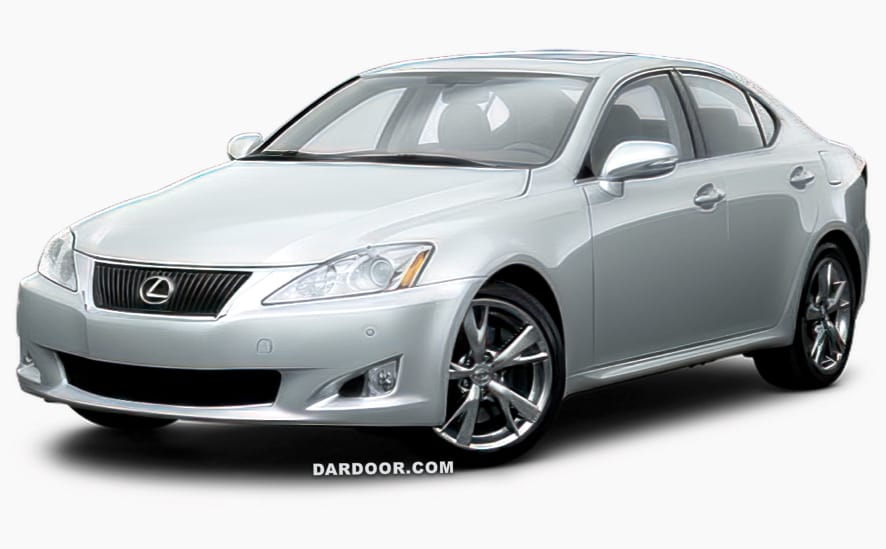
This is the original OEM Workshop Wiring Diagram Manual for the 2006 Lexus IS300, IS250, and IS220d, covering both Left-Hand Drive (LHD) and Right-Hand Drive (RHD) models. Supplied in a clear and easy-to-use PDF format, this manual provides complete and accurate electrical wiring diagrams directly from the manufacturer.
Perfect for maintaining, diagnosing, and repairing the electrical systems of your 2006 Lexus IS-series with confidence and accuracy.
Electrical Manual Reference:
| File Format |
PDF |
| File Language |
English |
| File Size |
14.9 MB |
| Page Count |
485 |
| Delivery Method |
Instant Download |
This is the same factory-authorized documentation used by Lexus dealership technicians for diagnostics, troubleshooting, and electrical repairs. The manual includes only genuine OEM procedures and schematics, making it ideal for professional mechanics and knowledgeable DIY users who want precise and reliable repair information.
This manual provides detailed instructions for maintenance, disassembly, reassembly, component inspection, adjustment, and diagnostics—intended for use by experienced mechanics. Proper application of this guide will help ensure thorough repairs and maintain your vehicle in peak condition.
Important Note: Before purchasing this manual, please check whether your vehicle is subject to any active service recalls, as authorized dealerships may perform necessary repairs free of charge. When replacing parts, always use genuine OEM components to ensure safety, reliability, and long-term performance.
Sample Pages: 2006 Lexus Wiring Diagram (IS300, IS250, IS220d)
CAUTION: This OEM service and workshop repair manual provides detailed procedures for maintenance, disassembly, reassembly, inspection, adjustment, and diagnostics. It is intended as a comprehensive guide for experienced mechanics. To ensure thorough and accurate repairs that maintain your vehicle’s optimal performance, please read and follow this manual carefully. When replacing parts during any repair work, always use
genuine Toyota parts to ensure quality, safety, and reliability.
🚗 2006 Lexus IS (IS300 / IS250 / IS220d) – Full Vehicle Overview, Issues, DTCs & Maintenance Guide
The 2006 Lexus IS launched the second-generation IS platform (XE20), bringing sharper handling, improved safety, and a more premium cabin. This lineup included the petrol IS250 (2.5L V6), select-market IS220d (2.2L turbo-diesel), and—depending on region/availability—an IS300 badge used in some markets for different powertrains. Overall, the 2006 IS is valued for refinement and reliability, but owners commonly report carbon buildup (direct injection), suspension wear, and (on diesel) DPF/EGR-related issues.
⚙️ Technical Specifications & Performance
- Platform: Lexus IS (XE20 / 2nd Gen, introduced for MY2006)
- Engines (varies by market): IS250 2.5L V6 (4GR-FSE, direct injection); IS220d 2.2L turbo-diesel I4 (2AD-FHV); IS300 badge may vary by market
- Transmission: 6-speed manual (select trims/markets), 6-speed automatic (common on IS250)
- Drivetrain: Rear-wheel drive (RWD); some markets offer AWD on other variants
- 0–100 km/h: ~7.8–8.5 sec (IS250 auto, typical); ~8.5–9.5 sec (IS220d, typical)
- Fuel Economy: Varies widely by engine/market/driving; diesel typically more efficient than petrol
- Body Style: 4-door sedan; compact executive class
🔧 Top 10 Common Mechanical Issues (Root Cause & Fix)
- IS250 carbon buildup (intake valves)
🔍 Root Cause: Direct injection (no fuel wash over intake valves) can lead to carbon deposits over time. [reddit.com]↗
🛠️ Fix: Intake valve cleaning (walnut blasting where available), quality fuel, regular long highway drives; address PCV/oil vapors.
- IS220d DPF clogging / regeneration issues
🔍 Root Cause: Short trips + soot load; EGR faults can worsen DPF loading. [lexusownersclub.co.uk]↗
🛠️ Fix: Diagnose EGR, ensure correct oil/spec, forced regen/DPF cleaning, update ECU strategies where applicable.
- IS220d EGR valve clogging
🔍 Root Cause: Soot deposits restrict EGR flow, affecting performance and emissions systems. [lexusownersclub.co.uk]↗
🛠️ Fix: Remove/clean or replace EGR valve/cooler; verify boost/MAF readings afterward.
- Oil leaks (valve cover / timing cover seepage)
🔍 Root Cause: Gasket aging and heat cycles cause seepage on higher-mileage engines.
🛠️ Fix: Replace gaskets; clean PCV system; monitor oil level.
- Front suspension wear (control arm bushings/ball joints)
🔍 Root Cause: Normal wear, potholes, heavier wheel/tire setups increase load.
🛠️ Fix: Replace worn arms/bushings/ball joints; perform alignment.
- Brake vibration (warped rotors)
🔍 Root Cause: Heat cycling and pad material transfer, especially with aggressive driving.
🛠️ Fix: Resurface/replace rotors; use quality pads; bed-in correctly.
- Automatic transmission shift harshness
🔍 Root Cause: Old ATF, adaptive shift logic drift, solenoid wear (age-related).
🛠️ Fix: Service ATF with correct spec; perform adaptation reset where supported; solenoid diagnosis if persistent.
- Manual gearbox notchiness (where equipped)
🔍 Root Cause: Syncro wear, old gear oil, clutch hydraulics issues (age-related). [rmsmotoring.com]↗ (diesel owner reports mention gearbox concerns)🛠️ Fix: Change gear oil to correct spec; inspect clutch master/slave; rebuild if synchros worn.
- Cooling system aging (radiator/hoses/thermostat)
🔍 Root Cause: Plastic end tanks and rubber hoses degrade over time.
🛠️ Fix: Replace radiator/hoses/thermostat preventatively if seepage or overheating appears.
- Exhaust/turbo issues (diesel)
🔍 Root Cause: Carbon/soot load, boost leaks, actuator wear on higher mileage diesels.
🛠️ Fix: Pressure test intake, clean sensors, repair leaks; inspect turbo actuator and vacuum lines.
💡 Top 10 Common Electrical Issues (Root Cause & Fix)
- Check engine light from sensor drift (MAF/O2)
🔍 Root Cause: Sensor aging/contamination; intake leaks affecting trims.
🛠️ Fix: Smoke test intake, clean/replace MAF, replace O2 sensors as needed.
- Battery drain / parasitic draw
🔍 Root Cause: Aging modules, aftermarket audio/alarm installs, trunk/door switches.
🛠️ Fix: Parasitic draw test; repair culprit circuit; replace weak battery.
- Dashboard warning lights (ABS/VSC/TRAC)
🔍 Root Cause: Wheel speed sensor faults, low voltage, or steering angle calibration issues.
🛠️ Fix: Scan ABS/VSC codes; replace sensor; perform calibration.
- Keyless entry / smart key intermittent
🔍 Root Cause: Weak fob battery, antenna/receiver issues, water ingress.
🛠️ Fix: Replace fob battery; inspect antenna wiring; reseal moisture sources.
- Power window switch/regulator failure
🔍 Root Cause: Motor/regulator wear; switch contact oxidation.
🛠️ Fix: Replace regulator/motor; clean/replace switch.
- Headlight/ballast issues (HID where equipped)
🔍 Root Cause: Ballast aging, igniter wear, moisture in housing.
🛠️ Fix: Replace ballast/igniter; reseal headlamp; confirm ground integrity.
- Audio/navigation glitches (where equipped)
🔍 Root Cause: Aging head unit components and wiring harness fatigue.
🛠️ Fix: Re-seat connectors; repair/replace head unit; check for water leaks into trunk.
- TPMS warning (where equipped)
🔍 Root Cause: Sensor battery end-of-life; wheel swap without re-learn.
🛠️ Fix: Replace TPMS sensors; re-learn IDs with scan tool.
- Airbag/SRS light
🔍 Root Cause: Seat connector looseness, clock spring wear, occupancy sensor faults.
🛠️ Fix: Inspect seat connectors; replace clock spring/OCS as diagnosed.
- CAN communication faults after low voltage
🔍 Root Cause: Weak battery/charging causes modules to drop offline and log U-codes.
🛠️ Fix: Load test battery/alternator; clear codes and recheck after voltage stability.
🏁 Pros & Cons Comparison with Competitors
| Model |
Pros 👍 |
Cons 👎 |
| 2006 Lexus IS (IS250/IS220d)↗ |
Refined cabin; Balanced RWD handling; Strong build quality; Good long-term reliability (petrol) |
IS250 carbon buildup; Diesel DPF/EGR complexity; Firm ride on sport trims |
| BMW 3 Series (E90)↗ |
Sporty chassis; Great steering; Strong engine options |
Higher maintenance costs; Cooling system/electronics age issues |
| Mercedes C-Class (W203/W204 early)↗ |
Comfortable ride; Prestige badge; Solid highway manners |
Electrical gremlins; Rust in some climates; Costly repairs |
| Audi A4 (B7)↗ |
High-quality interior; Quattro AWD option; Strong turbo tuning potential |
Timing chain/cam follower concerns (some engines); Costly suspension wear |
| Infiniti G35↗ |
Strong V6 power; RWD dynamics; Good aftermarket |
Fuel economy; Interior aging; Tire wear |
| Acura TSX↗ |
Reliable; Great manual gearbox; Practical daily driver |
FWD handling feel; Road noise; Smaller rear seat than some rivals |
🛠️ Maintenance Schedule
| Interval ⏱️ |
Maintenance Task 🔧 |
| Every 5,000–7,500 miles / 6–12 months |
Engine oil & filter replacement (use correct spec; shorten for severe use) |
| Every 15,000 miles |
Tire rotation; brake inspection; suspension/steering check |
| Every 30,000 miles |
Engine air filter + cabin filter; inspect belts/hoses; brake fluid check |
| Every 60,000 miles |
Automatic transmission service (fluid); coolant service if not done earlier |
| Every 60,000–90,000 miles |
Spark plugs (petrol V6); differential fluid (if applicable); alignment check |
| Diesel specific (as needed) |
EGR/DPF inspection; ensure regeneration completes; use correct low-ash oil |
⚠️ Recalls, Advisories & Safety Alerts
Important: Recalls vary by country and VIN. Always verify open recalls using official Lexus/Toyota tools before purchase or service. [lexus.ca]↗
- Airbag inflator campaigns (multiple years/models): Some Lexus models were affected by airbag inflator recalls; verify by VIN. [kbb.com]↗
- Possible fuel system service campaigns: Some recall databases list fuel system-related items for certain IS years; confirm by VIN. [dealerrater.ca]↗
- Manufacturer service bulletins: Dealer software updates for drivability, emissions monitoring, and module calibration may apply by VIN.
- Brake system advisories: ABS/VSC module diagnostics and repairs may be included in service guidance depending on market.
- Steering/suspension inspections: Some regions issued inspection guidance for wear components (ball joints/bushings) as vehicles age.
- Exterior lighting checks: Headlamp/HID ballast moisture and connector inspections are common dealer advisories.
- Seatbelt/SRS diagnostics: Pretensioner/OCS diagnostic procedures may be listed in service campaigns depending on market.
- Diesel emissions advisories (IS220d): EGR/DPF regeneration and soot load management guidance is common for diesel variants. [lexusownersclub.co.uk]↗
- ECU/TCU software updates: Updates may address shift logic, idle stability, and fault-code sensitivity over time.
- Corrosion/water ingress checks: Trunk/cowl drains and seal inspections may prevent module moisture damage.
🧾 Diagnostic Trouble Codes (DTC) Tables
💻 Engine Control Module (ECM)
| Code |
Description |
| P0171 |
System Too Lean (Bank 1) |
| P0300 |
Random/Multiple Cylinder Misfire |
| P0301 |
Cylinder 1 Misfire |
| P0101 |
MAF Sensor Range/Performance |
| P0113 |
Intake Air Temperature Sensor High Input |
| P0420 |
Catalyst System Efficiency Below Threshold (Bank 1) |
| P0456 |
EVAP System Small Leak Detected |
| P0505 |
Idle Control System Malfunction |
| P0606 |
ECM/PCM Processor Fault |
| P2195 |
O2 Sensor Signal Stuck Lean (Bank 1 Sensor 1) |
⚙️ Transmission Control Module (TCM)
| Code |
Description |
| P0700 |
Transmission Control System Malfunction (Request MIL) |
| P0717 |
Input/Turbine Speed Sensor No Signal |
| P0720 |
Output Speed Sensor Circuit |
| P0730 |
Incorrect Gear Ratio |
| P0741 |
Torque Converter Clutch Performance/Stuck Off |
| P0751 |
Shift Solenoid A Performance/Stuck Off |
| P0776 |
Pressure Control Solenoid Performance/Stuck Off |
| P2714 |
Pressure Control Solenoid D Performance/Stuck Off |
| P2769 |
TCC Solenoid Circuit Low |
| P2858 |
Clutch Pressure Control Solenoid Performance |
🛑 ABS / ESC (Brake System)
| Code |
Description |
| C0200 |
Right Front Wheel Speed Sensor Signal |
| C0205 |
Left Front Wheel Speed Sensor Signal |
| C0210 |
Right Rear Wheel Speed Sensor Signal |
| C0215 |
Left Rear Wheel Speed Sensor Signal |
| C1201 |
Engine Control System Malfunction (ABS/VSC Request) |
| C1223 |
ABS Control System Malfunction |
| C1231 |
Steering Angle Sensor Malfunction |
| C1336 |
Zero Point Calibration of Yaw Rate/Decel Sensor Undone |
| C1345 |
Linear Solenoid Valve Offset Learning Undone |
| C1464 |
Accumulator Pressure Low |
🎈 SRS Airbag System
| Code |
Description |
| B0100 |
Front Airbag Sensor (Driver) Circuit |
| B0105 |
Front Airbag Sensor (Passenger) Circuit |
| B0111 |
Driver Squib Circuit Open/Short |
| B0116 |
Passenger Squib Circuit Open/Short |
| B0121 |
Side Airbag (Driver) Circuit |
| B0126 |
Side Airbag (Passenger) Circuit |
| B0131 |
Curtain Airbag (LH) Circuit |
| B0136 |
Curtain Airbag (RH) Circuit |
| B1140 |
Occupant Classification System Malfunction |
| B1801 |
Driver Pretensioner Circuit |
📡 Body Control / CAN Communication
| Code |
Description |
| U0100 |
Lost Communication with ECM/PCM |
| U0121 |
Lost Communication with ABS Control Module |
| U0140 |
Lost Communication with Body Control Module |
| U0155 |
Lost Communication with Instrument Cluster |
| U0164 |
Lost Communication with HVAC Control Module |
| U0184 |
Lost Communication with Radio |
| U0293 |
Lost Communication with Hybrid/EV Control Module (if equipped; generic) |
| U1100 |
CAN Communication Bus Off |
| U1117 |
CAN Communication Malfunction (Network) |
| U1401 |
Implausible Data Received from ECM/PCM |
✅ Final Verdict & Conclusion
The 2006 Lexus IS is a strong choice for drivers who want a premium, reliable compact executive sedan with RWD balance and Lexus refinement. The IS250’s main long-term concern is intake carbon buildup typical of early direct-injection designs, while the IS220d can be rewarding for fuel economy but requires careful attention to DPF/EGR health. Buy the cleanest example you can, verify recalls by VIN, and prioritize maintenance history—done right, this generation can deliver many years of comfortable, confidence-inspiring ownership.