Alternator Wiring Diagram: Understanding and Troubleshooting Your Charging System
Alternator Wiring Diagram: Understanding and Troubleshooting Your Charging System ⚡️
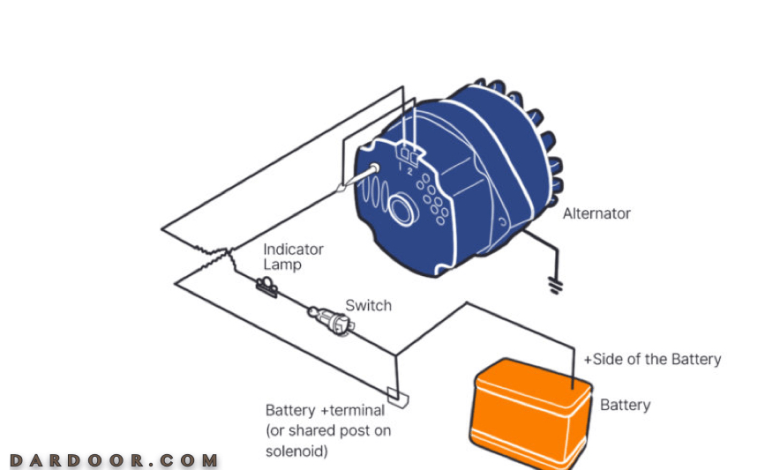
Accurate wiring diagrams are the foundation of effective diagnosis and repair. In this guide, we’ll explore the key connections in a typical automotive alternator wiring diagram, learn how each component interacts, and cover common troubleshooting scenarios.
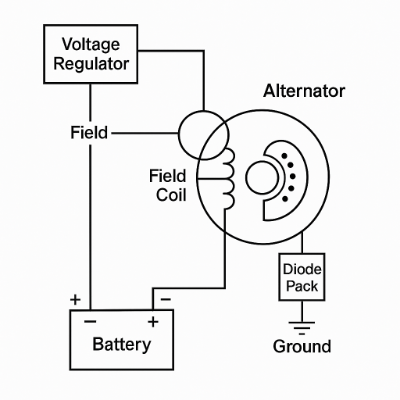
1. Key Components & Their Connections
A standard automotive alternator circuit includes:
-
- Battery (B+): Supplies initial field current and stores generated power.
- Alternator Output Terminal: Connects the alternator’s internal winding output through the diode pack to charge the battery.
- Voltage Regulator: Modulates field coil current to maintain system voltage (typically 13.8–14.5 V).
- Field Coil: Magnetizes the rotor; current flows from battery B+ through the regulator to the coil.
- Diode Pack: Rectifies AC generated in the stator windings into DC.
- Ground (B−): Completes the circuit via chassis or dedicated ground cable.
2. How the Circuit Operates
-
- With the engine running, the rotor spins inside the stator windings, inducing AC current.
- The diode pack converts AC to DC and feeds it through the output terminal back to the battery.
- The voltage regulator senses system voltage and adjusts field coil current to maintain a stable output.
- Excess voltage is shunted internally or signaled to warning lights to protect vehicle electronics.
3. Reading the Diagram: Wire Colors & Labels
Wire colors can vary by manufacturer, but common conventions include:
-
- Red (B+): Main charging output to battery.
- Brown/Black: Ground or chassis connection.
- Green/Yellow: Field current supply from regulator.
- Blue/White: Ignition or lamp circuit feed for excitation.
Always verify with OEM documentation for your specific vehicle model.
4. Common Faults & Troubleshooting
4.1 Open or Shorted Diode
Symptom: Battery drains with engine off or alternator output low.
Test: Use a multimeter’s diode mode between output terminal and ground. Expect one-direction conduction.
4.2 Faulty Voltage Regulator
Symptom: Overcharging (above 15 V) or undercharging (below 13 V).
Test: Measure voltage variation while revving engine—fluctuation indicates regulator failure.
4.3 Loose or Corroded Connections
Symptom: Intermittent charge, flickering lights.
Fix: Tighten and clean all terminal connections; apply dielectric grease.
5. Practical Tips for Wiring Repairs
-
- Always disconnect the negative battery terminal before working on wiring.
- Use heat-shrink tubing and proper crimp connectors for durable repairs.
- Label wires when unplugging multiple connectors to ensure correct reassembly.
- Reference your vehicle’s OEM service manual for wire routing and protective sheathing.
6. Conclusion
Mastering alternator wiring diagrams empowers you to quickly diagnose and resolve charging issues. Keep this guide handy, and pair it with accurate OEM schematics for your specific model to ensure reliable repairs and maintenance.
🔗 For more detailed circuit diagrams and step-by-step procedures, visit Comprehensive Guide to Diagnosing and Replacing Your Vehicle’s Alternator, on Dardoor.