Blog
Alternator Installation Manual: Step-by-Step Guide & Torque Specifications
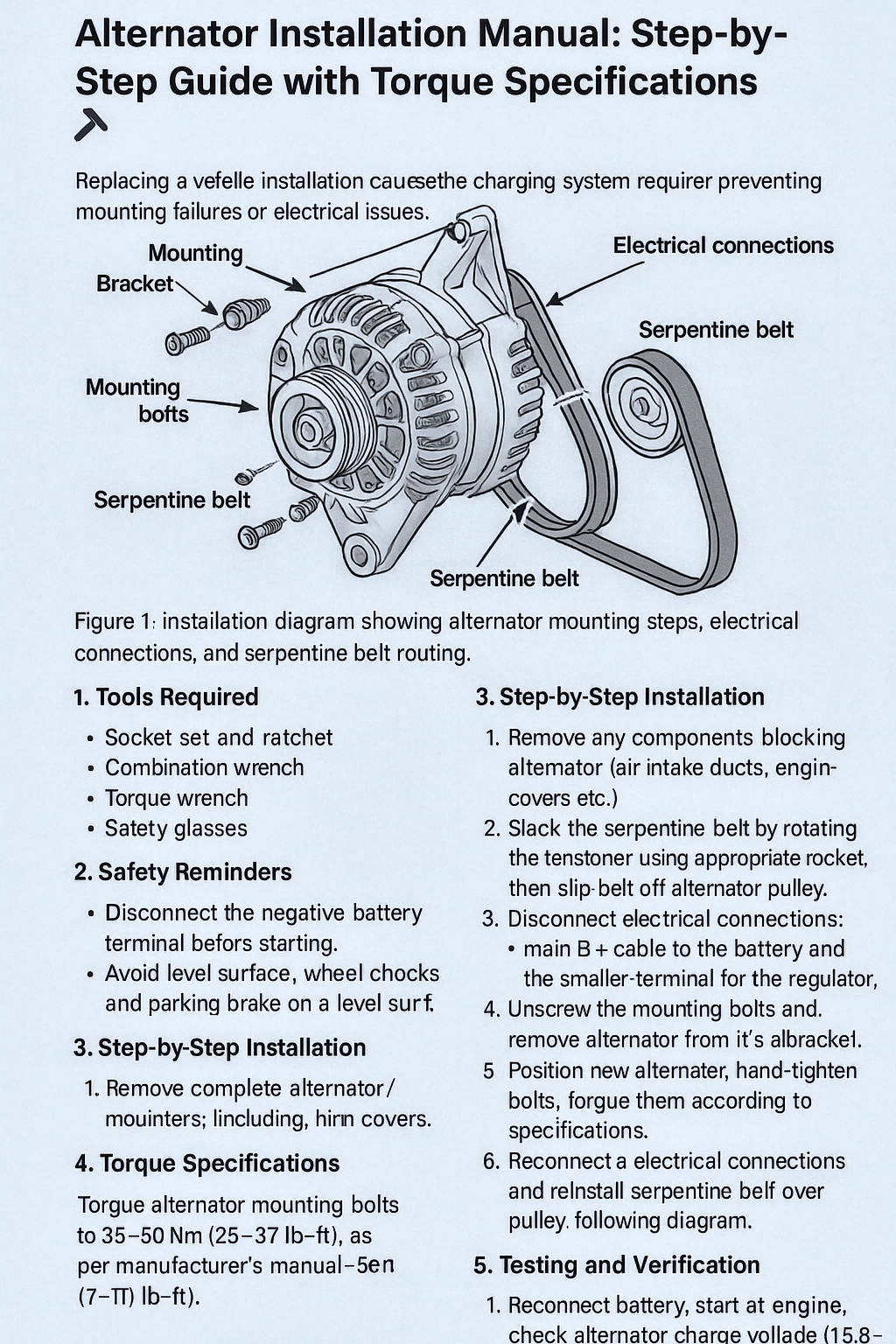
1. Tools & Materials Required 🛠️
- Socket set (8–19 mm) and ratchet
- Torque wrench (capable of 10–100 Nm)
- Combination wrenches
- Screwdrivers (flat & Phillips)
- Serpentine belt tool or breaker bar
- Protective gloves & safety glasses
- Dielectric grease
- OEM alternator or high-quality remanufactured unit
2. Safety Precautions ⚠️
- Park on a level surface; engage parking brake and use wheel chocks.
- Disconnect the negative battery terminal before starting.
- Allow engine to cool to avoid burns.
- Wear appropriate PPE—gloves and safety glasses.
3. Preparation Steps 🚦
- Remove engine covers or air intake ducts obstructing alternator access.
- Inspect belt condition; replace if cracked or glazed.
- Note belt routing by photographing or sketching before removal.
4. Step-by-Step Installation 🔩
- Relieve tension on the serpentine belt using the belt tool; slide belt off alternator pulley.
- Disconnect electrical connections:
- Main B+ cable from alternator output to battery (keep nut safe).
- Smaller field/regulator connector.
- Remove mounting bolts securing alternator to the bracket (usually two or three bolts).
- Carefully extract the old alternator from the engine bay.
- Position new alternator in the bracket; hand-start mounting bolts to avoid cross-threading.
- Torque mounting bolts to ⇨ 40 Nm (30 lb-ft) as per OEM specifications.
- Reconnect main B+ cable and plug in the field/regulator connector; apply dielectric grease to terminals.
- Reinstall the serpentine belt, ensuring it seats correctly on all pulley grooves.
- Reattach any engine covers or components removed earlier.
5. Torque Specifications 📐
| Component | Torque |
|---|---|
| Alternator mounting bolts | 40 Nm (30 lb-ft) |
| Battery cable nut | 12 Nm (8.8 lb-ft) |
6. Post-Installation Testing & Verification ✔️
- Reconnect battery negative terminal.
- Start engine and let idle; measure voltage at battery terminals—it should read between 13.8 V and 14.5 V.
- Switch on headlights, blower motor, and other electrical loads; voltage should remain above 13 V.
- Listen for any unusual noises; ensure alternator runs smoothly without vibration.
7. Final Notes & References 📘
Accurate alternator installation extends component life and prevents charging issues. For more model-specific procedures and wiring diagrams, visit Dardoor’s official guide:
🔗 Ultimate Guide to Maintaining and Upgrading Your Vehicle’s Alternator